Author: admin

  • D-Day Beaches from Bayeux: A Respectful 3-Day Normandy Itinerary

    D-Day Beaches from Bayeux: A Respectful 3-Day Normandy Itinerary

    The Normandy landing beaches are not one attraction. They form a long cultural landscape of beaches, cliffs, cemeteries, villages, batteries, museums and places where people still live. Trying to “do D-Day” in one rushed loop usually produces the least meaningful visit: too many car parks, too many display cases, and not enough time to understand how the geography fits the history.

    Bayeux is the most practical first base for many visitors. It has a direct rail connection with Paris, a walkable historic centre and good access to the central landing sectors. In 2026, the D-Day Landing Beaches were added to UNESCO’s World Heritage List as a serial property including Utah, Omaha, Gold, Juno, Sword and Pointe du Hoc. That recognition makes careful travel here even more important.

    How I would divide three days

    • Day 1: Bayeux orientation, Arromanches and Gold Beach context.
    • Day 2: Omaha Beach, the American Cemetery and Pointe du Hoc.
    • Day 3: choose Utah/Sainte-Mère-Église or the British-Canadian sectors around Juno and Sword.
    • Best base: Bayeux for a first trip, especially if arriving by train.
    • Car: useful for maximum flexibility, but not the only option in high season.

    Begin in Bayeux before driving to the coast

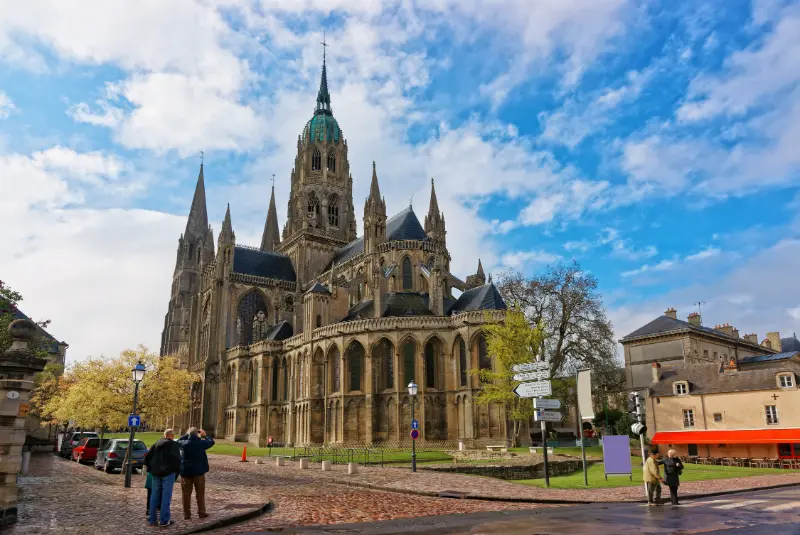
    Bayeux was the first major French town liberated after the landings and escaped the level of wartime destruction suffered by places such as Caen and Saint-Lô. Spend a few hours understanding the town before leaving it. The cathedral and medieval streets place 1944 within a much longer history, while a museum visit can provide the chronological framework you will need on the coast.

    This is also why I prefer sleeping in Bayeux rather than changing hotels between beach sectors. At the end of a day full of memorial sites, returning to a normal town with restaurants, shops and evening life provides useful emotional distance.

    Day 1: Arromanches and the logistics of the invasion

    Arromanches is one of the best places to understand that D-Day was not only about reaching the beach. The remains of the Mulberry harbour offshore reveal the enormous logistical challenge of supplying Allied forces after the landings. At low tide and from elevated viewpoints, the geography becomes particularly readable.

    Pair the town with Longues-sur-Mer if time allows. The preserved battery site helps explain the defensive landscape without requiring another large museum. Keep the afternoon deliberately light. One good museum plus outdoor sites is more effective than moving through three institutions until every object begins to blur together.

    If you are combining this region with a wider trip, our seven-day Normandy road trip shows how Bayeux fits between the Seine-side destinations, the landing coast and Mont-Saint-Michel.

    Day 2: Omaha Beach, Colleville-sur-Mer and Pointe du Hoc

    This is the day most visitors associate with the American sector. Start early and think geographically. Omaha is a long stretch of coast, not a single viewpoint. The bluffs above the beach help explain why the terrain mattered. Move slowly enough to connect what you see on the shore with the high ground behind it.

    The Normandy American Cemetery at Colleville-sur-Mer contains 9,387 graves. It is an active place of remembrance, not simply another stop. Allow time for the visitor centre and for silence. Avoid loud conversations, performative photos around graves and the tendency to race through because another museum is booked for the next hour.

    Continue to Pointe du Hoc, where the cliff landscape and bomb-cratered ground convey a different aspect of the assault. Paths and access can be affected by maintenance, weather and conservation needs, so follow on-site instructions. Here especially, leaving marked routes damages fragile ground and adds nothing to your understanding.

    Day 3: choose one story rather than the whole coastline

    For the western option, drive toward Utah Beach and Sainte-Mère-Église. This gives you a stronger airborne and Cotentin perspective and works well if you are continuing later toward western Normandy. For the eastern option, focus on Juno, Sword and the British-Canadian sectors closer to Caen. Both are valuable; doing both in a single day from Bayeux turns the visit into mileage.

    Your nationality does not have to determine your route. A Canadian visitor may naturally prioritise Juno; an American family may have a personal connection to Omaha or Utah. But broader understanding comes from remembering that the operation involved forces from many countries and that Norman civilians also suffered heavily during the fighting and bombardment.

    Museums: choose by question, not by star rating

    Before booking, decide what you want to understand. Some museums focus on a specific beach or unit, others on vehicles and equipment, others on airborne operations or the wider Battle of Normandy. A museum that answers your question is more useful than the one with the largest collection.

    Limit yourself to one substantial museum per half day. Historical travel becomes exhausting when every hour involves reading panels. Alternate interiors with landscape, cemeteries and town walks. That rhythm improves retention and makes the experience more respectful.

    Can you visit the D-Day beaches without a car?

    Yes, but you need a different strategy. Normandy Tourism notes that several major sites can be reached from Caen, Bayeux or Carentan without a car. In summer 2026, the NOMAD network operated a seasonal line serving a series of landing-beach sites, while cycling routes also cross the area. Guided small-group tours from Bayeux are another practical option when you do not want to drive.

    Public transport works best when you accept that you will see fewer sites. That is not necessarily a disadvantage. One beach sector understood well is more valuable than five sectors glimpsed through a coach window. Check current timetables because seasonal services should never be assumed outside their published dates.

    Where to stay in Bayeux

    Stay within walking distance of the historic centre if you are arriving by train and joining guided excursions. If you have a car, a property on the edge of town can be convenient, but verify parking rather than assuming a medieval-centre hotel has private spaces. Compare accommodation in Bayeux on Booking.com.

    Bayeux also gives you access to a completely different historical period through its cathedral and tapestry. That contrast is valuable; the town should not be reduced to a dormitory for battlefield tourism.

    How to behave at cemeteries and memorials

    Keep voices low, follow rules on photography, and never climb on memorial structures or military remains. If a ceremony is taking place, give participants space. At national cemeteries, remember that conventions differ slightly, but the underlying principle is the same: this is a burial and remembrance site before it is a visitor attraction.

    Children can visit, but prepare them for what they will see. A short explanation before arrival is better than trying to impose silence without context. Our France with kids guide includes broader advice on adapting cultural days to younger travellers.

    Best time to visit

    The landing sites are open as a landscape year-round, but museum hours vary. Early June brings commemorations and large visitor numbers. Spring and autumn can provide a quieter experience, though Atlantic weather changes quickly. Winter is atmospheric and peaceful but requires more attention to short daylight and seasonal closures.

    If you are visiting around 6 June, book accommodation far earlier than you would for an ordinary Normandy trip. Ceremonies, road restrictions and security arrangements may affect movement. Check official event information close to your travel date.

    Connect the beaches with the rest of Normandy

    After three days, do not simply drive across the region as if the coast were isolated. Continue west to Mont-Saint-Michel, east toward Honfleur and the Seine estuary, or inland through the towns rebuilt after 1944. The contrast between medieval, maritime and modern Normandy gives the region depth.

    If you are renting a car, read our driving in France guide before planning daily distances. Rural roads may be easy, but summer congestion and memorial-site traffic can make short distances slower than they look.

    Official planning links

    Research before you visit

    If you have a family connection to a particular unit, cemetery or village, research it before arrival and build the day around that location. Archives, museum collections and cemetery databases can sometimes identify precise burial or service information. That personal preparation is more meaningful than adding another generic stop.

    For travellers without a direct family connection, reading a clear overview of Operation Overlord and the Battle of Normandy before the trip helps enormously. The coast is geographically broad, and museums often assume basic knowledge of sectors, airborne operations and the progression inland. A little preparation allows the landscape to carry more meaning once you are there.

    Give the cemeteries and memorials enough time

    One mistake is treating the major cemeteries as quick photo stops between museums. They are places of remembrance, and the experience changes when you have time to walk quietly, read names and understand who is commemorated there. Avoid loud conversations, intrusive photography around grieving visitors and rushed group behaviour. If a ceremony or family visit is taking place, give people space.

    The same principle applies to small village memorials. Many communities across Normandy carry visible traces of the battle, civilian loss and liberation. A five-minute stop can be meaningful when you read the plaque and place it in the wider geography rather than simply collecting another location.

    Leave margin in the driving schedule

    Distances on a map can look modest, but coastal roads, parking searches, museum queues and unscheduled stops add time. Build at least one hour of slack into each day. That margin lets you stop at a viewpoint, stay longer in a museum that matters to you or handle traffic without sacrificing the final memorial of the day. It also makes the itinerary more respectful: remembrance travel should not feel like a race against a stopwatch.

    Deepen the history: D-Day museums and memorials guide and Bayeux travel guide.

  • Where to Stay in Brittany: Best Bases for Coast, Cities and Road Trips

    Where to Stay in Brittany: Best Bases for Coast, Cities and Road Trips

    Brittany is too large for one hotel base to make sense. The right place to stay depends on which coast you actually want to experience, whether you are travelling by car and how much you value evening atmosphere over day-trip efficiency.

    For a first trip I usually recommend two or three bases rather than changing accommodation every night. That gives you access to different landscapes without turning the holiday into a sequence of check-ins.

    The guide below compares the strongest bases by trip style, including car-free travel, islands, coast walking, family beaches and road trips.

    Quick decision table

    Saint-Malonorth coast, first visit, car-free trips
    Perros-GuirecPink Granite Coast and beaches
    Brest or Crozonwild western Finistère
    Quimper or ConcarneauSouth Finistère and culture
    VannesGulf of Morbihan and Carnac
    Belle-Îleisland-focused slow trip

    Saint-Malo: best for a first north-Brittany base

    Saint-Malo combines strong evening atmosphere, direct rail access and easy links toward Dinan, Cancale and the Emerald Coast. It is especially efficient for travellers without a car because the city itself is walkable and several classic excursions are possible by bus, boat or organised tour.

    Stay inside Intra-Muros for atmosphere if you do not mind noise and limited parking; choose near the station for easy luggage logistics; consider the Sillon side for beach access. Compare Saint-Malo accommodation.

    Dinan or Rennes: choose history or transport

    Dinan is better if you want a smaller medieval setting and evening walks after the day-trippers leave. Rennes is better if trains, restaurants and a broad range of services matter more. Rennes can support a car-free itinerary; Dinan feels more romantic but less connected for far-flung coastal days.

    If your trip begins or ends by TGV, one night in Rennes can remove a stressful connection while still giving you a worthwhile city day.

    House Brittany France

    Perros-Guirec: best for the Pink Granite Coast

    Perros-Guirec is the most practical base for Ploumanac’h, beaches and repeated GR34 walks. Staying locally lets you experience the pink granite in early or late light instead of arriving with the same midday crowds as every day visitor.

    Choose accommodation according to whether you prioritise Trestraou beach, the town centre or direct access toward Ploumanac’h. Compare Perros-Guirec accommodation.

    Brest or Crozon: two very different western bases

    Brest wins on rail access, museums, weather-proof attractions and car rental logistics. Crozon wins on immediate landscape. If your main goal is Pen-Hir, Cap de la Chèvre and beaches, sleeping on the peninsula saves hours of repeated road travel.

    A hybrid plan works well: one or two nights in Brest, then two or three on Crozon.

    Quimper or Concarneau: culture versus sea

    Quimper is a better rail-connected city base with cathedral, museums and a wider restaurant choice. Concarneau is better if you want to wake up beside the sea, walk the Ville Close early and keep a Glénan excursion within easy reach.

    For a four-night South Finistère stay, either can work; choose based on evenings rather than trying to calculate which is geographically central to every attraction. Compare Quimper accommodation.

    Vannes: best all-round southern Brittany base

    Vannes gives you a historic centre, restaurants, rail access and immediate entry to the Gulf of Morbihan. Carnac, Auray and boat trips become natural extensions, making Vannes one of the easiest first-time bases in the region.

    Stay near the old town or port if you want evenings on foot; use an outer hotel only when parking and road access matter more. Compare Vannes accommodation.

    Belle-Île: stay overnight if the island is a priority

    Belle-Île is the case where an overnight stay changes the trip most. A day visitor experiences ferry times; an overnight visitor gets early and late light, quieter ports and enough time to separate the wild west coast from Sauzon or Le Palais.

    Two or three nights are ideal for a first island-focused stay. Compare Belle-Île accommodation.

    Best bases without a car

    For a car-free trip, build first around Saint-Malo, Rennes, Quimper, Brest and Vannes because rail access is clear. Then add one smaller destination via bus, boat or local transfer rather than changing to a remote coastal base every night.

    Check seasonal bus and ferry schedules before booking non-refundable accommodation. A beautiful rural hotel can become inconvenient if the last connection ends before dinner.

    Best structure for a 7–10 day road trip

    A strong first road trip uses three bases: north coast, western or southern Finistère, and Morbihan. For example, Saint-Malo for three nights, Quimper or Crozon for three, then Vannes for three. A fourth base only makes sense if Belle-Île or the Pink Granite Coast is a major priority.

    This structure reduces packing, makes weather changes easier and still covers several distinct Breton landscapes.

    When to book

    Book islands and small coastal resorts first for July and August. City hotels usually offer more inventory, although major festivals can change availability quickly.

    Outside peak summer, flexible rates are valuable because Atlantic weather can influence which part of the trip you want to emphasise.

    Virgin Islands Creek Brittany France

    Official accommodation resources

    The official Brittany Tourism accommodation directory lists hotels, campsites, gîtes, guesthouses and other options by destination and accessibility features. Use it alongside commercial comparison sites to verify location and category.

    How to choose in one sentence

    Stay where you want to spend your evenings. Day trips are easier to tolerate when the base itself is enjoyable after 18:00, while a supposedly central hotel beside a ring road often adds transport to every meal.

    For regional context, read the Brittany Travel Guide, 10-day road trip and best things to do in Brittany.

    Common accommodation mistakes

    Do not compare only nightly price. Parking fees, ferry parking, breakfast, laundry, resort location and the cost of taxis after the last bus can change the real total substantially.

    Also check whether the property name uses a famous destination loosely. In rural Brittany, an address marketed as ‘near’ a coastal town may be 20 or 30 minutes away by car, which is fine only if you planned for it.

    Final advice

    Three good bases usually create a better Brittany holiday than seven average ones. Protect evenings from driving, keep one or two stays long enough to unpack properly and let the most weather-sensitive coast have more than one possible day.

    Once you know the kind of Brittany you want—walled towns, granite coast, wild Finistère, islands or Morbihan—the accommodation decision becomes much easier.

    Practical checks before choosing a base

    Choose accommodation with the kind of day trips you will actually make. For north-Brittany sights, Saint-Malo and Dinan serve different needs: the first suits seafront evenings and access to the Emerald Coast, while the second offers a quieter historic base. If the Pink Granite Coast is the main reason for travelling, sleeping near Perros-Guirec is far more practical than commuting repeatedly from Rennes.

    Before booking an island stay, compare the ferry arrival and departure times with your check-in arrangements and luggage needs. On Belle-Île, an overnight visit gives the coast more breathing room than a rushed round trip, but you should know how you will reach your accommodation from the port. Keep your booking reference and property address available offline on travel days.

    For road trips, calculate journeys to the places you intend to visit rather than to the nearest city shown on a map. A holiday rental on the far side of an estuary can turn a short-looking distance into a long drive. Check whether parking is included, whether narrow historic streets permit unloading, and if you can leave the car parked while exploring the town on foot.

    Without a car, prioritise a base close to a usable station or bus stop and check evening services before choosing an outlying guesthouse. Rennes is convenient for rail connections; Saint-Malo works well when the coast is your focus; Vannes makes sense for the Gulf of Morbihan. A cheaper room is not really cheaper if every day requires an expensive transfer.

    A good Brittany base should leave you time to come back to it. After an afternoon on the coast, being able to stroll to dinner or the harbour is more valuable than squeezing in a distant final viewpoint. For a week or more, two carefully placed bases often work better than either one exhausting daily drive or a different hotel every night.

    How to plan Where to Stay in Brittany without rushing

    Where to Stay in Brittany is easier to appreciate when the itinerary follows Brittany’s geography instead of trying to jump between distant highlights. Coastal roads, estuaries and peninsulas make travel times less predictable than straight-line distances suggest. Choose one compact area for the day, combine a town or village with one coastal walk, and leave a margin for viewpoints. This produces a much richer visit than spending the afternoon in the car trying to link places that belong to different parts of the region.

    Pont Aven Vilage Brittany Dramatic France

    Tides can completely change the appearance of the coast around Where to Stay in Brittany. A harbour, beach or causeway may look very different only a few hours later, so checking the local tide table is useful even when you are not planning a beach day. Low tide can reveal wide sands, rocks and shellfish areas; higher water can make ports and cliffs more dramatic. Treat the tide as part of the landscape rather than as a minor technical detail.

    Weather in Brittany is another reason to avoid an over-rigid schedule for Where to Stay in Brittany. Sunshine, wind and showers can alternate quickly, and that is normal rather than a sign that the day is lost. Keep one indoor visit available, carry a light waterproof layer and use clearer periods for exposed coastal sections. The changing weather is also part of Brittany’s visual character, especially when clouds and light move quickly across the sea.

    A good visit to Where to Stay in Brittany should include time for local food, but it does not need to become a restaurant itinerary. Crêperies, seafood, bakeries and markets are practical ways to build regional flavour into the day. Near the coast, menus often reflect what is landed locally, while inland towns may offer a stronger market and produce culture. One well-chosen meal plus a simple snack is usually enough to keep the day flexible.

    Last updated: 21 October 2026

  • 7 Days in France: Four Realistic One-Week Itineraries

    7 Days in France: Four Realistic One-Week Itineraries

    Seven days in France is enough for a memorable journey but not for a national highlights reel. The strongest one-week trips use two bases, or one region with several day trips. Every additional hotel change consumes time through packing, station transfers and the awkward hours between checkout and check-in.

    The four routes below solve different travel goals: a classic first visit, a history-focused journey, a food-and-city pairing and a Mediterranean break. Each assumes seven days on the ground. If arrival and departure occupy most of the first and last days, remove an excursion instead of compressing the middle.

    Quick planning overview

    Ideal structureTwo bases or one regional base
    Hotel changesOne, occasionally two
    Best transportTrain for cities; short car rental for rural days
    Reserve firstInternational travel and the longest rail leg
    Pace ruleOne anchor activity each day

    Route 1: Paris and the Loire Valley

    Spend four nights in Paris and three in Tours or Amboise. Paris supplies museums and neighbourhoods; the Loire brings gardens, châteaux, river landscapes and a calmer rhythm.

    My practical advice: Choose two major estates rather than four. Travel to the Loire after a relaxed Paris morning and avoid returning to Paris each night.

    Route 2: Paris and Normandy

    Use three or four nights in Paris, then base in Bayeux or Rouen. Bayeux suits the D-Day coast and tapestry; Rouen works for urban heritage and rail access.

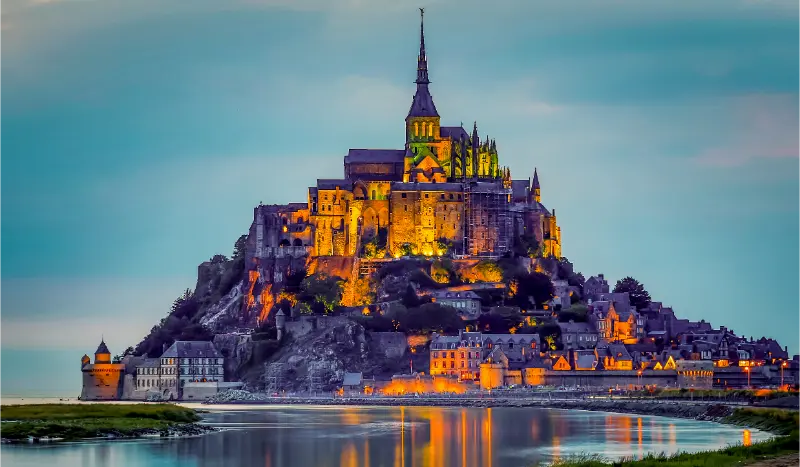
    My practical advice: Mont-Saint-Michel is not a casual addition to every Normandy plan. Include it only with a logical base, tour or extra night.

    Route 3: Paris and Lyon

    Four Paris nights and three Lyon nights create the easiest two-city first trip. Fast trains reduce transfer time, while Lyon adds Roman history, rivers, neighbourhood hills and a distinct food culture.

    Chateau de Chambord France

    My practical advice: Book the intercity train in advance and make Lyon a destination, not a one-night stop on the way south.

    Route 4: Nice and the Riviera

    Stay all seven nights in Nice or split five nights in Nice with two in Menton or Antibes. Local rail serves coastal towns, leaving the trip free from rental-car pressure.

    My practical advice: Pick three excursions at most and protect two full Nice days. Sea conditions and beach type matter as much as sunshine.

    Alternative: Provence in one region

    Use Avignon and Arles or Aix as two bases, with selected trips to Pont du Gard, the Luberon, Marseille or the Camargue. A short rental can cover village days.

    My practical advice: Do not include the Riviera as well. Provence alone easily fills a week when markets, heat and parking are treated realistically.

    Alternative: Strasbourg and Alsace

    Combine three nights in Strasbourg, two in Colmar and two around the wine villages, or stay in Strasbourg and use public transport for a fully car-free version.

    My practical advice: Check village connections by day of week and reserve extra time during the Christmas-market period.

    First trip and major art

    Choose Paris with the Loire or Lyon.

    Modern history and coast

    Choose Paris with Normandy, allowing time for respectful interpretation.

    Warm-weather relaxation

    Choose Nice and nearby coastal towns instead of crossing France.

    Markets and villages

    Choose Provence or Alsace and accept a slower local transport pattern.

    Where to stay

    For a short trip, stay close to transport you will actually use. A beautiful apartment requiring two buses for every departure wastes the advantage of fewer bases. Central stations can be convenient, but evaluate the exact street, noise and evening atmosphere. Book consecutive nights before individual excursions so a sold-out Saturday does not force an unnecessary hotel move.

    Compare accommodation in Paris on Booking.com

    Getting around

    Open-jaw flights can save a return to Paris, especially for Lyon or Nice, but compare the full fare and airport connection. Within France, direct trains are more important than raw distance. A car makes sense only for the regional routes where it changes access. Never collect it before completing central city days.

    Food and everyday rhythm

    One week offers enough time to notice regional contrast without organising every hour around reservations. Plan one important restaurant in each base, use markets and bakeries for flexible meals, and keep transfer-day food simple. In wine regions, pair tastings with a tour or non-drinking driver rather than building unsafe transport around them.

    Budget and booking strategy

    Two bases control hotel, transport and luggage costs. Advance rail fares can be economical, but the cheapest ticket may have strict exchange conditions. Paris and the Riviera usually raise room costs; Lyon, Strasbourg and regional bases can balance them. Set aside a contingency for a late arrival or missed local connection.

    How I would prepare before departure

    My planning starts with a simple map that includes Route 1: Paris and the Loire Valley, Route 4: Nice and the Riviera and Alternative: Strasbourg and Alsace. I mark the accommodation, stations or car parks, timed entrances and one realistic place to eat near each day’s main activity. This is not meant to create a rigid schedule. It reveals unnecessary crossings, arrival days that are too ambitious and places where a short distance hides a slow connection. For this france travel planning trip, I would confirm the hardest reservation first, then book transport and accommodation around it. I keep confirmation numbers, addresses and cancellation conditions in one offline note so a weak signal or empty battery does not turn into a crisis.

    Mistakes I would avoid

    • Trying to include Paris, Provence and the Riviera
    • Counting arrival day as a full sightseeing day
    • Sleeping in a different place every night
    • Choosing connections only by distance
    • Booking every evening before understanding energy levels

    Is one week enough for Paris and the South of France?

    It is possible, but Paris plus Lyon is easier. For the Mediterranean, a full week around Nice or Provence often feels richer.

    How many nights should I spend in Paris?

    Three is the practical minimum for a first visit; four gives major sights and neighbourhoods more room.

    Should I buy a rail pass?

    Compare point-to-point fares for the exact route. A simple two-base itinerary often needs only one advance intercity ticket.

    Can I travel with children?

    Yes. Use one base for at least three nights and alternate formal attractions with parks, boats or easy outdoor time.

    Useful official resources

    Continue planning your trip

    For the next step, read the best places in France, the first-time guide and the two-week alternative. These guides are designed to connect into a slower, more realistic France itinerary.

    Seven days in France means fewer bases than most sample routes show

    The practical problem in a one-week trip is not choosing famous sights; it is the overhead of transport, check-in, luggage and recovery. Decide first whether your week includes arrival and departure days. If it does, count those as partial days and protect the remaining time. A France itinerary covering Paris, Normandy, Bordeaux, Provence and Nice would be more travel than holiday. Two bases are usually ideal, three are reasonable with direct connections, and a fourth should have an unusually strong justification. Take a close look at train station locations and the actual time available between attractions, not only intercity journey durations.

    Option one: Paris and a Loire Valley base

    Spend three or four nights in Paris for neighborhoods, a selected art museum and familiar monuments. Take a train to Tours, Blois or Amboise depending on the château visits you value, and stay two or three nights in the Loire Valley. Some châteaux are accessible by train plus walking, while others need a bike, local bus, taxi or car; verify the specific last mile. Choose two major sites on one day at most, especially if they have gardens. This route gives a first-time visitor two contrasting kinds of France without wasting a full day crossing to another coastline.

    Option two: Lyon and northern Burgundy

    Lyon offers Roman sites, traboules, riverfront walks and excellent food culture, while Dijon or Beaune adds vineyards, medieval heritage and smaller-town rhythm. Begin with three nights in Lyon and use the remaining nights for Burgundy, selecting rail-accessible towns or renting a car only for rural winery appointments. Avoid trying to visit a new estate every hour. A day in Beaune with one museum or heritage site and one reserved tasting is a complete day. This itinerary works particularly well for repeat visitors who prefer regional depth over the Eiffel Tower and the conventional first-time highlights.

    Option three: a Riviera route built around trains

    Stay in Nice and take easy rail trips toward Antibes, Villefranche-sur-Mer and Menton as schedules and interests permit. Use the old town and seafront as your urban base, then select one coastal town per excursion day. The hilltop village of Èze is not at the railway platform itself; a train to Èze-sur-Mer still leaves a substantial ascent or onward transport. A ferry to the Lérins islands is a different kind of day and should not be squeezed between a long museum visit and an evening intercity transfer. This plan suits travelers seeking Mediterranean scenery without a full-time rental car.

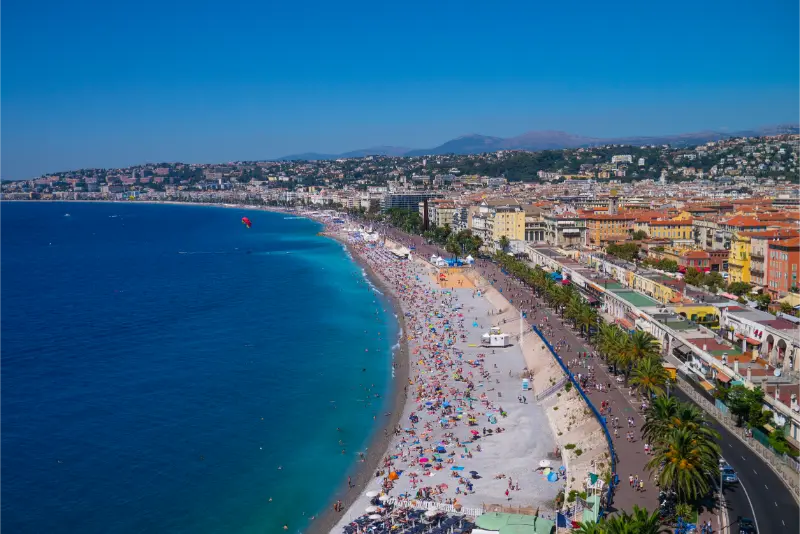
    Nice Coastline France

    Option four: two compact Brittany bases

    Choose Rennes and Saint-Malo to combine Breton city culture, a walled seaport and a possible excursion to Dinan or Cancale. Rennes is practical by rail; Saint-Malo’s tides determine whether some beaches and forts are approachable. Do not promise Mont-Saint-Michel, Dinan, Cancale and every coastal attraction in the same two days. A realistic week gives Rennes two nights and Saint-Malo three or four, with one deliberate excursion. If weather turns rough, the itinerary can still feature museums, markets and historic neighborhoods. This is better than an all-Brittany road trip with daily hotel changes.

    Costs that make a seven-day route unexpectedly expensive

    Intercity tickets bought at the last minute can cost more than expected, and some high-speed services require seat reservations. Add local transfers, airport journeys, baggage storage, attraction entries and parking to the budget. A hotel far outside the center may appear cheaper but require more time and transport every day. For families, compare connected rooms or apartments near transit with the cost of taxis. Keep one flexible meal or picnic per day rather than depending on reservation-heavy restaurants at every stop. Build a small contingency for strikes, canceled trains or bad weather, especially when you have a fixed flight home.

    How to edit the itinerary for children or reduced mobility

    Keep one major museum or monument per day and put an easy park, waterfront or food stop nearby. Avoid trains with very tight connections and check station elevators when luggage or mobility aids are involved. Many historic centers have cobbles, while cliff paths and vineyard trails are not equivalent to level city promenades. For children, a longer stay in one walkable base often provides more enjoyment than another new city on day five. If a historic sight is inaccessible, replace it with a suitable local experience rather than allowing one closed or difficult attraction to derail the entire week.

  • Dordogne Food and Markets Guide: What to Eat in Périgord and Where to Shop

    Dordogne Food and Markets Guide: What to Eat in Périgord and Where to Shop

    Food in Dordogne is not a separate attraction that begins when sightseeing ends. Markets occupy medieval squares, vineyards shape the landscape around Bergerac, walnut groves line country roads and seasonal products determine what appears on restaurant menus. A good Périgord food trip therefore starts with timing: what is actually in season, which market fits your route and how many rich meals you realistically want in one week.

    The region is famous for foie gras, duck, truffles and walnuts, but it would be a mistake to reduce the cuisine to four luxury ingredients. Strawberries, cèpes, chestnuts, local cheeses, farm vegetables, breads and Bergerac-Duras wines give the food culture much more range. Markets are the easiest place to see that diversity without committing to a formal tasting menu.

    Walnuts: the everyday Périgord product

    Walnuts are one of the most versatile local foods because they appear in oil, cakes, salads, pastries, liqueurs and simple market bags. Unlike truffles, you do not need a special season or expensive restaurant to make them part of the trip. Look for fresh kernels, walnut oil and products that identify their origin clearly rather than assuming every walnut souvenir was produced locally.

    Walnut oil is particularly useful for travellers staying in self-catering accommodation: a small bottle can transform a market salad or cheese plate. Keep it away from heat and strong light, especially if you are carrying it in a car during summer.

    Périgord strawberries

    Strawberries are a spring and summer pleasure rather than a year-round promise. The Dordogne tourism board highlights several varieties and notes the importance of the fruit to local production. Market shopping is at its best when you accept seasonality: a fragrant tray bought from a producer in May or June is a completely different experience from searching for strawberries out of season because a guidebook mentioned them.

    Medieval Castle Dordogne France

    Eat delicate fruit early in the trip rather than carrying it around in a hot car. If you have an apartment or picnic planned, strawberries are one of the easiest regional products to enjoy without restaurant preparation.

    Truffles: winter changes the food calendar

    The black Périgord truffle is strongly associated with winter. Official Dordogne tourism information describes the main truffle-market season as running roughly from December into March, with controlled markets in several towns. Production varies with weather, so dates and quantities are never a guarantee.

    If truffles are the reason for your trip, travel in winter and build around a verified market date rather than expecting every restaurant to serve fresh local truffle in summer. The official truffle-market calendar is the right place to check current locations and schedules.

    Duck, goose and foie gras

    Duck and goose appear in many traditional preparations: magret, confit, rillettes, terrines and foie gras. The official tourism board explains the IGP Périgord quality framework for foie gras and related products. Travellers who eat these foods should look for transparent origin information rather than assuming a Périgord address guarantees local production.

    Foie gras also raises animal-welfare questions for some travellers. You do not need to eat it to understand Périgord cuisine. Walnut dishes, mushrooms, strawberries, cheeses, breads and wine can form an equally regional food experience. Choose according to your own preferences rather than treating a specialty as an obligation.

    Cèpes and autumn cooking

    Cèpes are closely tied to the forests and autumn weather. Their appearance depends on warmth and rain, which means a market can be abundant one week and almost empty the next. If you see fresh cèpes, ask the seller how to clean and cook them rather than buying a large quantity on impulse.

    Restaurants may serve cèpes in omelettes, sauces or simple sautéed preparations. The best dishes usually let the mushroom remain recognisable instead of burying it under several other rich ingredients.

    Bergerac and Monbazillac wines

    The western part of Dordogne belongs to a wine landscape. Around Bergerac, appellations include dry, red and sweet styles, with Monbazillac especially known for sweet white wine. Quai Cyrano in Bergerac combines tourism information with the Maison des Vins and is a useful place to understand the range before visiting producers.

    Do not schedule four tastings and then plan to drive. One or two thoughtful visits, with food and water between them, are enough for most travellers. If everyone wants to taste, use a driver, taxi or guided wine arrangement.

    Sarlat market

    The Sarlat tourist office lists traditional markets on Wednesday and Saturday, with the Saturday market extending beyond food into a broader town event. Market morning is one of the most atmospheric times to see Sarlat, but it is also one of the busiest.

    Arrive early if you need parking and shop for perishable food near the end of your walk. On a hot day, a duck product, cheese or box of strawberries should not sit in a car while you spend three more hours sightseeing.

    Périgueux market

    Périgueux has a strong everyday market culture in the squares around the historic centre. Official Dordogne tourism information highlights Wednesday and Saturday mornings for the main producer-market rhythm. This is a good market for travellers who want the food scene of a working regional city rather than a village primarily visited by tourists.

    Autoire Villages Dordogne France

    Combine the market with Périgueux’s cathedral and Roman heritage. Buy lunch ingredients first, leave heavy shopping until later and use a cooler bag if you are continuing by car.

    Bergerac market

    Bergerac markets bring together produce from both Périgord and the surrounding wine country. The tourism board lists regular central markets and seasonal variations. A Bergerac market morning works particularly well before an afternoon in Monbazillac because you can buy picnic food, visit the town and then move into the vineyards.

    Brantôme, Monpazier and village markets

    Brantôme is associated with a Friday market, while Monpazier holds its traditional market on Thursday. These smaller markets are valuable because they fit directly into the historic spaces you came to see. In Monpazier, the market reinforces the original commercial function of the bastide square.

    Market days are not static museum schedules. Public holidays, seasonal expansions and local events can affect hours and locations. Verify dates close to travel, especially outside high season.

    How to shop a Dordogne market

    • Bring a reusable bag and, in summer, a small insulated bag for cheese or meat.
    • Shop by season instead of hunting for a checklist of famous products.
    • Ask about origin when provenance matters to you.
    • Buy realistic quantities if you are staying in hotels rather than self-catering accommodation.
    • Carry some cash because small producers may not handle every card situation.
    • Protect fragile food from a hot parked car.

    A simple food day in Périgord

    MorningMarket walk and breakfast coffee
    Late morningBuy picnic ingredients or visit one producer
    LunchPicnic or simple market-based meal
    AfternoonVillage, vineyard or countryside visit
    EveningOne regional restaurant dish rather than a huge tasting menu

    Food souvenirs that travel well

    Walnut oil, sealed walnut products, preserves, honey, properly packaged wine and shelf-stable regional goods are easier to transport than fresh meat or delicate fruit. Check airline liquid rules and customs restrictions for your destination before buying products you plan to take home. Within the EU, rules are simpler than for travellers crossing external borders, but packaging and weight still matter.

    Where to stay for a food-focused trip

    Sarlat is strongest for market atmosphere and access to Périgord Noir producers. Bergerac works best for wine. Périgueux offers a broader urban food scene and strong markets, while a rural gîte gives you a kitchen and makes market shopping far more useful. Our Dordogne accommodation guide can help you choose a base around the food experiences you actually want.

    Compare accommodation in Sarlat-la-Canéda on Booking.com

    Final advice

    Eat seasonally, shop early, and leave room for ordinary products as well as famous ones. A bag of walnuts, ripe strawberries, a market cheese and a glass of local wine can tell you as much about Périgord as a formal luxury meal. The region’s food culture is strongest when it remains connected to place, season and producer rather than becoming a list of dishes to tick off.

    A simple seasonal food calendar

    Périgord food changes with the season, which is one reason a market visit is more useful than following a fixed “must-eat” list. Spring brings strawberries and fresh greens; summer adds tomatoes, stone fruit and the ingredients of long outdoor meals; autumn is associated with walnuts, mushrooms and harvest flavours; winter is the classic period for truffles and richer preserved products. Exact harvest dates vary with weather, so use this calendar as a guide and buy what local stalls are actually proud to display.

    Castelnaud La Chapelle Castle Dordogne France

    How to order regional dishes without overdoing it

    Restaurant menus can become very rich very quickly when foie gras, duck, potatoes cooked in fat, cheese and walnut desserts appear together. You do not need every speciality in one sitting. Share an entrée where appropriate, choose one substantial regional main course and leave another speciality for the next town. This makes a multi-day Dordogne trip much more enjoyable and gives you a better chance to notice differences between a market lunch, a farm product and a more formal restaurant version.

    Market etiquette and practical shopping

    Carry a reusable bag, keep small notes or a payment card available and avoid handling produce unless the vendor invites you to. Ask before photographing people at close range. If you are buying cheese, meat or delicate fruit for a road trip, bring an insulated bag rather than leaving food in a hot car while sightseeing. Markets are working places for local residents as well as attractions, so moving aside while deciding and keeping entrances clear makes the experience better for everyone.

    What makes a good edible souvenir

    Walnut oil, sealed preserves, honey, mustard, biscuits and properly packaged local products travel more easily than fresh market food. Check customs rules if you are flying outside the European Union, especially for meat products. For wine, consider weight and baggage limits before buying a case. The best souvenir is one you can transport legally and safely, not the most fragile item on the stall.

  • Paris with Kids: A Realistic Family Guide by Age, Pace and Neighborhood

    Paris with Kids: A Realistic Family Guide by Age, Pace and Neighborhood

    Paris can be excellent with children, but only if you stop planning it like an adult checklist. A family does not experience the city in “top ten attractions”; it experiences queues, toilets, snack timing, walking distance, weather, metro stairs and whether there is somewhere to run after being told not to touch anything for two hours.

    The city has serious family strengths: compact neighbourhoods, parks, boats, science museums, carousels, bakeries, visual landmarks and one of Europe’s biggest theme-park resorts within easy reach. The goal is to combine them in a rhythm that fits your children. Our wider France with kids guide covers national travel; this page focuses only on Paris.

    The two-anchor rule for family days

    Plan no more than two major anchors in one day: one before lunch and one later. Everything else should be flexible. A major anchor can be the Eiffel Tower, Louvre, Cité des Sciences, a Seine cruise, Disneyland Paris or a long neighbourhood visit. A garden, bakery stop, carousel or short playground session is not an anchor; it is recovery time.

    This structure prevents the most common family failure: three prepaid attractions separated by cross-city transport. Adults see efficiency on paper. Children experience constant transitions and queues. Paris gives you enough density to build days where movement itself becomes part of the experience.

    Paris with toddlers and preschoolers

    For very young children, prioritise parks, boats and short visual visits. The Jardin du Luxembourg, Tuileries and large green spaces give adults a Paris setting while children get movement. A Seine cruise can function as sightseeing plus rest. The Eiffel Tower is exciting because it is visible and easy to understand, but long security and lift waits need to be planned around naps and meals.

    Paris Townscape France

    Strollers are useful on streets and parks but less pleasant in older metro stations full of stairs. Buses can sometimes be easier, especially for short central journeys where you also want to see the city. Do not assume every historic building has easy stroller circulation; check accessibility before a fixed visit.

    Paris with primary-school children

    This is a strong age for mixing famous landmarks with interactive places. Children can understand the idea of climbing the Eiffel Tower, spotting gargoyles, seeing Egyptian objects at the Louvre, riding a riverboat or following a treasure-hunt style museum visit. Give them a simple mission before entering a large museum so they are not only following adults from room to room.

    Paris je t’aime currently highlights family museums, aquariums, gardens, cruises and theme parks, and many institutions run workshops or child-focused visits from around age three upward. Check programmes for your exact dates because school-holiday activities change through the year.

    Paris with tweens and teenagers

    Older children often enjoy independence within a structured day. Let them choose one neighbourhood, one food stop or one activity. Street art in Belleville, views from Montmartre, shopping, football culture, science museums, fashion, photography and evening river cruises can feel more relevant than another ornate interior.

    Teenagers also notice when a trip has been designed entirely around adult interests. Give them ownership of part of the plan. The result is usually better than adding “teen-friendly” attractions without asking what they actually enjoy.

    Museums without family burnout

    The Louvre is possible with children, but not as an endurance event. Use our focused Louvre guide and shorten it further if needed. Choose a few objects, make the route visual and leave before everyone is tired. Smaller museums can be more successful because the story is easier to grasp and the exit never feels two kilometres away.

    The same principle runs through our Paris museum strategy: one large museum in a day is enough for most families. Pair it with outdoor time.

    The Eiffel Tower as a family visit

    Children usually enjoy the tower more when they understand the stages. Explain that there will be security, then a climb or lift, then viewing levels. Bring a layer for wind and do not schedule it after a morning that already involved hours of standing. Our Eiffel Tower guide explains the trade-off between second-floor and summit tickets.

    A Seine cruise is more useful than it looks

    A one-hour sightseeing cruise is not only a tourist activity; it is a recovery tool. Everyone sits down, many major monuments pass without another metro journey, and children can keep watching the river even if they stop caring about architectural names. Late-afternoon cruises are especially useful after a walking-heavy morning.

    See the options and timing advice in our Seine cruise guide. For families, I would prioritise an open or flexible sightseeing cruise over an elaborate dinner cruise unless the children genuinely enjoy long formal meals.

    Where to stay with children

    The best family base is not automatically next to the Eiffel Tower. Look for three things: a direct transport line to your most important sights, food options within five minutes, and a room configuration that lets everyone sleep. An apartment-style stay can be useful for breakfast and laundry, while a hotel with reception and luggage storage reduces logistics.

    Our Paris accommodation guide compares neighbourhoods in more detail. For many families, the Marais, Latin Quarter edges, 5th/6th arrondissement, parts of the 15th or well-connected residential areas can work better than a famous address on a noisy boulevard.

    Compare family-friendly accommodation in Paris on Booking.com

    Paris Les Invalides Aerial View France

    Getting around with children

    The metro is fast, but the network can involve long corridors and stairs. Learn the ticket system before the first busy morning with our Paris public transport guide. For 2026, single Metro-Train-RER and Bus-Tram tickets are separated by mode, so families should not assume one old-style paper ticket covers every transfer pattern.

    Walking is still your most important transport tool. Group sights geographically and use the metro to move between areas, not between every individual stop. A 12-minute walk can be easier than two staircases, a crowded platform and another staircase.

    Food with kids: remove the pressure

    You do not need every meal to be a “Paris restaurant experience”. Use bakeries, crêpes, markets and casual lunches to keep the day moving, then choose one meal when everyone has energy. French restaurants may eat later than your normal routine, but plenty of cafés and brasseries serve across broad hours.

    Carry water and a basic snack, especially before queues. The goal is not to replace local food with emergency snacks; it is to avoid choosing lunch only after a child is already exhausted and hungry.

    Rain and heat plans

    Families need a weather backup because Paris days can change quickly. For rain, keep one museum or covered attraction in reserve rather than pre-booking every indoor option. For heat, shift major outdoor walking to morning, use shaded gardens at midday and remember that some historic museum spaces are not fully air-conditioned.

    The Louvre itself notes that high temperatures can affect gallery openings, which is a useful reminder that “indoors” does not always mean cool. Build flexibility into summer days.

    Disneyland Paris: day trip or separate stay?

    Disneyland Paris is about 35 minutes from Nation by RER A according to Disneyland Paris, but the door-to-door day is much longer once you include hotel-to-station time, park opening, walking and the return. If Disney is a major purpose of the trip, consider an overnight stay. If it is one family day inside a longer Paris holiday, a day trip can work. Our Disneyland Paris from Paris guide breaks down the choice.

    Activities and tours

    Guided family walks, food tours and hands-on experiences can work well when the guide actively involves children. Read the minimum-age information and duration carefully. A two-hour interactive walk can be easier than a one-hour experience that requires standing still.

    A sample low-stress family day

    • Morning: one major attraction while energy is highest.
    • Late morning: bakery or market snack and a short walk.
    • Lunch: simple sit-down meal near the next area, not across the city.
    • Afternoon: garden, playground, boat ride or child-led neighbourhood stop.
    • Hotel break if needed.
    • Early evening: one visual experience such as a riverbank walk, carousel or viewpoint.

    The family rule that matters most

    Leave empty space. Paris is full of small moments that children enjoy precisely because nobody booked them: watching boats in a fountain, choosing a pastry, riding a bus across the river, finding a playground behind a church or listening to a street musician. A family trip becomes memorable when the plan supports those moments instead of squeezing them out.

    Sample family rhythms by age

    Ages 3–6: one visual landmark in the morning, a park before lunch, hotel or quiet-time break, then a short boat ride or carousel later. Ages 7–11: one museum mission, lunch, neighbourhood walk and an interactive or panoramic activity. Teenagers: give them responsibility for one part of the day — food, street art, shopping, photography or an evening activity — and keep the rest structured around shared priorities.

    Paris Louvre Museum Aerial View France

    These are not rigid schedules. They are reminders that attention span changes with age. A six-year-old who can happily spend two hours in a science museum may last fifteen minutes in a formal palace, while a teenager interested in art may want far more museum time than the adults expected.

    Toilets, water and the invisible family logistics

    Public toilets, cafés and museum facilities become part of route planning with children. Use the toilet when you see a practical opportunity rather than waiting until the next attraction. Carry refillable water bottles where permitted, especially in warm weather, and know that parks can be more useful than cafés for a quick reset when children need movement rather than another chair.

    Souvenirs without turning every stop into shopping

    Set a small souvenir rule early in the trip: one meaningful item, a postcard budget, or a final-day choice. Paris attractions place shops at convenient emotional moments, and children can spend half the day asking for something. A clear family rule removes repeated negotiation and leaves more attention for the places you came to see.

    Safety in crowded areas

    Crowded metro platforms, monument queues and busy squares require ordinary big-city awareness. Keep children close, agree on what to do if separated and make sure older children know the hotel name or a parent’s phone number. Do not frighten them with elaborate warnings; give them a simple plan. For adults, keep phones and wallets secure in dense crowds and avoid hanging bags open from stroller handles.

    \n\n\n

    More family planning: Bois de Vincennes for a green-space day · Paris in summer for heat and seasonal activities.

    \n
  • Loire à Vélo Guide: How to Plan a First Cycling Trip in the Loire Valley

    Loire à Vélo Guide: How to Plan a First Cycling Trip in the Loire Valley

    The Loire à Vélo is not one fixed holiday but a route system that can support everything from an afternoon ride to a multi-day journey. Its appeal lies in variety: river islands, vineyards, towns, villages and château detours arrive at cycling speed rather than through a windscreen. The planning challenge is not physical heroism. It is choosing stages that leave time for visits, knowing where a château sits away from the river, arranging luggage and understanding how bicycles interact with regional trains. This guide proposes a first five-day section through the central valley and gives practical rules that remain useful if you shorten or extend it.

    Quick planning snapshot

    Best forSlow travel, mixed heritage and flexible daily stages
    Comfortable first-trip rangeAbout 30–50 km a day with sightseeing
    Core planning toolsOfficial route planner, current train rules and booked rentals
    Do not overlookWind, heat, château detours and secure overnight storage

    Choosing the right section

    For a first trip, the central corridor between Blois, Amboise, Tours, Villandry, Chinon and Saumur offers strong rail access and frequent reasons to stop. Not every famous château lies directly on the river route: Chambord and Chenonceau require deliberate branches or separate days. Choose the landscape and stops first, then accept the resulting kilometres. A route that lists six headline monuments but leaves no time to enter any of them defeats the purpose of travelling slowly.

    A realistic five-day outline

    Day 1 can link Blois and Amboise with a chosen variation; Day 2 continues to Tours; Day 3 uses a shorter stage toward Villandry and Azay country; Day 4 moves through the Vienne landscape toward Chinon; Day 5 reaches Saumur according to selected route and capacity. Exact distance changes with detours, accommodation and closures, so build each day in the official planner. Add a rest or château day in Amboise or Tours rather than doubling daily mileage to collect sights.

    Chateau d Azay le Rideau Loire Valley France

    Bike choice and rental questions

    A standard hybrid suits many riders; an e-bike helps with range, wind and château detours but is heavier and requires charging. Before paying, confirm frame size, battery range, charger, helmet, lock, repair kit, panniers, breakdown support and return location. One-way fees can be worthwhile. Test brakes and saddle position before leaving the shop. A ten-minute adjustment at departure prevents several painful hours later.

    Trains with bicycles

    Regional bicycle rules depend on train type, season and capacity. Some services provide dedicated or bookable spaces, while peak-season initiatives may alter carriage arrangements. Never infer permission from a generic rail icon or an old article. Search the exact service, reserve when required and arrive early enough to find the designated area. Folding bikes in covers follow different rules. Build a backup plan because full bicycle capacity can affect the whole itinerary.

    Luggage and accommodation

    Two small panniers encourage better decisions than a heavy backpack. Carry rain protection, layers, sun protection, water and a basic repair kit, but avoid packing for every hypothetical emergency. If using luggage transfer, confirm collection times, label requirements and maximum weight. Ask accommodation about locked bicycle storage and e-bike charging before booking. “Bike friendly” should mean concrete facilities, not merely proximity to a route.

    Safety, families and weather

    Signed routes include a mixture of protected paths, low-traffic roads and interfaces where attention is essential. Children need a route matched to their road confidence, not only their stamina. Helmets, visible clothing and lights improve safety; water access cannot be assumed between towns. Heat, thunderstorms and headwinds can change a modest day. Start early in summer, stop before exhaustion and use a train only when bicycle carriage is confirmed.

    Navigation and route closures

    Use the official route planner and download or carry an offline map because riverside reception can fail. Follow temporary diversions even when the original path looks passable: flooding, works or bank damage may not be visible at the barrier. Signs can be missed at bridge approaches and town exits, so check after every complex junction rather than several kilometres later. A handlebar-mounted phone is safer than stopping in traffic, but battery consumption rises with navigation; carry a power bank and waterproof protection.

    Repair strategy for ordinary riders

    Learn to inflate tyres, refit a slipped chain and assess a puncture before departure. That does not mean carrying a workshop. A tube matched to tyre size, levers, pump and compact tool solve common delays when you know how to use them. Rental breakdown assistance may operate only in defined hours or areas, so save its number offline. Inspect tyres and brakes each morning. If a mechanical problem affects safe steering or braking, stop riding and contact support instead of improvising a dangerous repair.

    Budgeting the cycling journey

    Calculate rental or one-way fee, panniers, luggage transfer, accommodation, secure storage, admissions, meals and train supplements or reservations. E-bikes cost more but may prevent an expensive rescue taxi or missed hotel when ability levels differ. Conversely, luggage transfer can cost more than carrying two light panniers. Spend where logistics remove genuine risk. Pre-book the scarce components—suitable bicycles and small-town rooms—while leaving lunch and minor stops flexible enough for weather and appetite.

    Best time to visit

    Late spring and early fall are attractive for riding between Touraine and Anjou, when longer daylight hours combine with temperatures that are often more comfortable than midsummer. But the key condition is not the month alone: after heavy rain, a low riverside section may need a detour, and wind along exposed banks changes how far a day feels. The official Loire à Vélo route planner should be checked shortly before departure for temporary route changes. During summer, make a morning start and place longer stops in the middle of the day. Outside the tourist season, smaller accommodation and bike shops may have shorter hours. A first-time rider should build at least one flexible afternoon into a multi-day itinerary to cope with mechanical delays or weather.

    Gien Castle Old Bridge Across Loire Loiret France

    Travelling with children

    For children, the right stage is measured by traffic exposure and the time left for breaks, not by the advertised kilometres alone. Choose a section with frequent towns, easy access to food and a station that offers an exit if the weather changes. A short test ride with loaded panniers before the holiday can reveal difficulties that a family would not notice on an ordinary Sunday ride. Younger riders may need more stops than adults, and e-bikes in the group do not eliminate that mismatch. Helmets, visibility, water and a clear plan for regrouping matter more than trying to complete a predetermined distance. Check trailer and child-seat compatibility with the rental company before paying a deposit.

    Accessibility and practical comfort

    The Loire à Vélo includes dedicated paths, shared-use routes, quiet roads and urban approaches; it is not a continuous traffic-free riverside promenade. That distinction matters to people with children, handcycles or adapted bikes. Check individual sections for surfaces, gradients, barriers and bridge crossings instead of trusting an overall easy-route label. A hotel marked Accueil Vélo can be a useful starting point for secure storage and cyclist services, but confirm the exact facilities needed, especially charging or space for a larger cycle. At train stations, lifts and platform access deserve their own checks. Avoid committing to a route where a closed bridge or inaccessible station removes your only realistic way to shorten the stage.

    Where to stay

    A good cycling overnight is located near the route, not merely somewhere within the same town. In Tours or Saumur, compare the final approach from the river path with the actual hotel entrance: a steep street or a property inside a pedestrian zone can be awkward with luggage. Confirm that bicycles can be brought to a secure overnight area, that a late arrival is possible and that breakfast is early enough for the planned stage. A one-way rental can be practical but sometimes costs more or has a restricted return point. When travelling for several nights, two nights in one base may create space for a château visit without loading bags every morning. To compare possible stays, use Compare current places to stay in Tours on Booking.com.

    Tours, tickets and rental cars

    An organised cycling package may be good value when it includes correctly sized bikes, a workable route, accommodation and luggage transfer, but compare the underlying stages rather than focusing on the brochure distance. For a self-guided journey, ask the rental company about puncture support, after-hours emergency contacts and drop-off conditions. A support phone number is of limited use if the next transfer cannot reach a rural section. Train travel is a useful backup only when a suitable service accepts your particular bicycle. In 2026, the dedicated Train Loire à Vélo service requires a bicycle reservation between May 1 and September 27; other regional or long-distance trains have different rules. Reserve the rail leg as carefully as the hotel. For transport comparisons, see compare rental-car conditions and prices.

    Common mistakes to avoid

    • Planning daily distance without château visiting time
    • Renting an e-bike without confirming charger and one-way return
    • Assuming every train accepts unlimited bicycles
    • Booking accommodation without secure storage
    • Using a backpack instead of balanced panniers for a multi-day trip

    Continue through the Loire Valley cluster

    Readers deciding between cycling sections can use the Beaugency and Briare guides to understand the eastern route, while village and canoeing guides offer ways to vary a longer stay. These links are helpful only once the daily distance and train endpoints are realistic. Related routes and destination guides: Château de Chenonceau Guide; Château de Chambord Guide; Amboise Travel Guide; Blois Travel Guide; our five-day Loire Valley château road trip; our Loire Valley without a car itinerary.

    Chateau de la Roche beside the Loire River France

    Check before you travel

    Start with La Loire à Vélo’s official route advice and compare each stage with the live map and rail operator’s conditions. The organisers suggest approximately 30–40 kilometres a day for first-time touring, leaving time for sightseeing. For 2026, the dedicated bike-train reservation rule is described on the official train information page. These sources should take precedence over an old blog timetable. Download maps before the ride and keep the address of your accommodation accessible without mobile coverage. Additional source: the official visitor or destination website.

    A first Loire cycling trip should feel like a series of short discoveries rather than an endurance test. One day might centre on Amboise and riverside villages, another on changing fields and islands near Saumur; there is no requirement to ride every stage of the full route. Plan time for a château or market, make the cycling distance achievable and keep a train option for a difficult day. The river’s appeal is in the repeated changes of scale: broad banks, small villages, vineyards, bridges and major monuments all appear without asking you to travel at road-trip speed.

    More cycling-friendly eastern stops: Beaugency; Briare Aqueduct.

    Add variety to a cycling trip: explore the best Loire Valley villages or swap one riding day for canoeing or kayaking.

  • 5 Days in Alsace: Strasbourg, Colmar, Wine Villages and the Vosges

    5 Days in Alsace: Strasbourg, Colmar, Wine Villages and the Vosges

    With 5 days in Alsace, you can see Strasbourg and Colmar properly, spend a day among Wine Route villages and still choose between castles or the Vosges. The route works best with two bases rather than changing hotel every night.

    The Alsace Wine Route runs for more than 170 kilometres from the northern vineyards toward Thann, passing dozens of villages. Five days is not enough to “do” the whole route—and that is an advantage. Choose a compact central section and leave room for meals, tastings and walks.

    Quick planning summary

    • Days 1–2: Strasbourg.
    • Days 3–4: Colmar + selected Wine Route villages.
    • Day 5: Haut-Koenigsbourg, a castle day or the Vosges.
    • Use train for Strasbourg–Colmar; rent a car only if your chosen village circuit needs it.
    • Two bases are enough for most first trips.

    Day 1 — Strasbourg essentials

    Start with the cathedral and Grande Île, then walk Petite France and the covered bridges. Keep the afternoon for Neustadt or a museum rather than racing out of the city.

    Strasbourg deserves an evening because the centre changes once day visitors leave.

    Day 2 — Strasbourg beyond the postcard

    Use the second day for the European Quarter, parks, museums or a food-focused walk. If you want an excursion, Obernai is an easy candidate but should replace part of the city day, not be added to it.

    A second Strasbourg day gives the itinerary depth before you move south.

    Day 3 — Colmar

    Take the train to Colmar and explore the old town, Little Venice, covered market and Unterlinden Museum according to your interests.

    Do not immediately leave for the villages. Colmar is more useful when treated as a destination and base, not just a gateway.

    Day 4 — Wine Route villages

    Choose three villages at most. Eguisheim, Kaysersberg, Riquewihr, Ribeauvillé, Turckheim and Bergheim are all strong, but the day improves when you spend longer in fewer places.

    Castle Lichtenberg Vosges Mountains Bas Rhin Alsace France

    If you do not want to drive, seasonal tourist shuttles and organised options can cover parts of the central Wine Route.

    Day 5 — castles or mountains

    Haut-Koenigsbourg is the strongest single castle visit. For nature, use the Route des Crêtes, Munster Valley or a lower-level Vosges walk depending weather.

    Make the final day conditional on the forecast; the mountain option is only worthwhile when conditions cooperate.

    Where to stay

    Use Strasbourg for the first two nights and Colmar for the next three. This reduces backtracking and makes the Wine Route day easier.

    A village stay is atmospheric, but it is best when you have a car or when the village itself is the point of the evening.

    The five-day route should change depending on whether you have a car

    Without a car, make Strasbourg and Colmar the anchors and use trains for the transfer between them. Add Wine Route villages only where the bus or seasonal shuttle makes sense, and accept that two well-chosen villages are better than five awkward connections. With a car, keep the cities car-light and use the vehicle for the vineyard corridor, Haut-Koenigsbourg and the Vosges.

    A useful compromise is to spend the first two nights in Strasbourg, transfer by train to Colmar, then collect a car only for the final two days. That avoids city parking while preserving freedom where it matters.

    How much time Strasbourg really needs

    Give Strasbourg at least a full day and preferably part of a second. The cathedral and Petite France are the obvious highlights, but the city makes more sense when you also see the Neustadt, European district, riverfront or one substantial museum. Treating Strasbourg as a three-hour photo stop leaves you with the least distinctive version of the city.

    Stay for dinner if possible. The centre feels different after day-trippers leave, and a proper evening in a winstub gives the trip a food experience rather than another attraction.

    How to make Colmar more than a postcard stop

    Colmar is compact, which tempts people to rush it. Use the first part of the day for Little Venice, the market area and the historic streets, then choose one museum, food experience or slow neighbourhood walk. The value is in noticing the transition from tourist centre to an ordinary Alsatian town, not only photographing the same canal from three bridges.

    Colmar also works as the best base for the central Wine Route. If you stay overnight, you can leave for villages before the main day-trip wave and return for dinner without another long drive.

    One Wine Route day: choose a coherent cluster

    Do not attempt Eguisheim, Kaysersberg, Riquewihr, Ribeauvillé and several wineries in one day. Choose a northern or southern cluster. Kaysersberg, Riquewihr and Ribeauvillé make a logical northern sequence; Eguisheim and Turckheim work well closer to Colmar. Add one tasting or vineyard walk, not both plus five villages.

    Medieval Half Timbered Street in Alsace France

    The Alsace Wine Route stretches far beyond the best-known stops, so a quieter village can be more rewarding than a third famous one. The goal is to experience the landscape between villages as well as the centres themselves.

    Castle day or Vosges day?

    Choose Haut-Koenigsbourg if you want a major historic site with a structured visit and broad views. Pair it with Sélestat or one nearby village rather than another large detour. Choose the Vosges if landscapes, walking and mountain roads matter more than interiors. In that case, weather should decide the exact route.

    Trying to combine a full castle visit, the Route des Crêtes, a long hike and a wine village makes the fifth day too fragile. Pick one dominant theme and let the final stop remain optional.

    Food should shape the route

    Alsatian meals can be substantial, so plan them into the day. A long lunch followed by three winery visits and a mountain drive is not a sensible sequence. Use one day for a traditional winstub meal, another for a lighter lunch in a village, and leave space for bakery stops, kougelhopf, cheese and seasonal specialities.

    If wine tasting is part of the itinerary, designate a driver or use a tour/transport solution. The region is easy to enjoy without turning tasting into a quantity exercise.

    A weather-proof version of the five days

    Keep Strasbourg and Colmar as the two indoor-capable days and assign the best forecast to the Wine Route and Vosges. Haut-Koenigsbourg can work in mixed conditions, but views and the exterior experience are stronger when visibility is good. If heavy rain arrives, move a museum-rich city day forward rather than driving from village to village under umbrellas.

    This is another reason not to pre-book every minor stop. Reserve accommodation and any essential tasting, then let the daily order respond to conditions.

    Where the itinerary can go wrong—and how to fix it

    The first problem is too much driving. Strasbourg, Colmar, the Wine Route, Haut-Koenigsbourg and the Vosges can fit into five days, but only if each day has a clear geographical focus. Zigzagging back to Strasbourg after every excursion or driving from southern villages to a northern castle late in the afternoon wastes the region’s compactness. A split stay between Strasbourg and Colmar is often more efficient than one base when you have a car-heavy plan.

    The second problem is treating every village as a separate attraction. Once you have seen two or three famous centres, the experience improves when you add a vineyard walk, tasting, castle, mountain road or museum. This gives the trip contrast and prevents half-timbered-house fatigue. The third problem is booking tastings too tightly: allow time to park, talk to the producer and eat before driving again.

    Le Hohwald Vosges Mountains Alsace France

    If weather disrupts the mountain day, do not force it. Move Strasbourg or Colmar forward, keep the Vosges for the clearest forecast, and use the flexibility built into the fifth day.

    A simple luggage strategy for a split stay

    If you divide the trip between Strasbourg and Colmar, pack so the transfer day remains a sightseeing day. Keep documents, a light layer and anything needed before hotel check-in in one small bag, while the main luggage stays closed. Travel between the two cities early enough that you can leave bags at the second hotel and continue without losing half a day to check-in logistics.

    Do not collect a rental car until you are ready to leave Colmar for villages or mountains. Carrying luggage to a rental office, finding central parking and then walking back into the old town is exactly the sort of avoidable friction that makes a five-day itinerary feel rushed.

    Adjust the route to your transport

    If this is your first Alsace visit, decide on accommodation and transport before adding extra villages. The where-to-stay comparison explains the advantages of Strasbourg and Colmar, while Alsace without a car helps when you want to rely on rail and local buses. If five days feels too compressed for vineyards and the Vosges, see the seven-day itinerary for a gentler alternative. The Alsace travel guide provides a wider regional overview before you choose which of the five days to devote to wine villages or the Vosges.

    Official information

    Check TER train timetables, village bus connections, castle opening arrangements and mountain weather before finalising the two countryside days of this itinerary. You can also consult the official tourism website for local updates.

    Final thoughts

    Five days work best when the itinerary has two clear anchors: Strasbourg for its cathedral and urban heritage, and Colmar for nearby wine villages. Add just one memorable countryside day rather than racing through every famous stop along the route. Save the Vosges or a longer castle visit for the day with the best weather, and leave space for an unhurried winstub meal.

    Tours & activities

    Last updated: 21 October 2026

  • French Alps Travel Guide: How to Choose a Mountain Base in Every Season

    French Alps Travel Guide: How to Choose a Mountain Base in Every Season

    ‘The French Alps’ describes lakeside cities, high-mountain valleys, purpose-built ski resorts and traditional villages with very different transport and seasonal calendars. Choosing a base by a beautiful photograph is the fastest way to discover that the lifts, trails or restaurants you expected are closed.

    This guide starts with the purpose of the trip—snow sports, hiking, scenery, family activities or a car-free mountain taste—and then matches it to a base and season. Safety information and live local conditions always outrank a fixed itinerary.

    Quick planning overview

    First decisionWinter snow, summer hiking, lake holiday or scenic city break
    Easy gatewayAnnecy, Grenoble, Chambéry or Geneva-area transfers
    Car-free optionA connected town or resort with verified local transport
    Critical checksLift calendar, trail status, weather and insurance
    Family clueLook for suitable services, not only a famous resort name

    Choosing the right Alpine experience

    Annecy and its lake

    Annecy combines a historic town, cycling, water and accessible mountain views, making it a gentle introduction rather than a high-alpine expedition.

    My practical advice: Event dates can transform prices and crowds; check the official calendar before booking.

    Chamonix Valley

    Chamonix offers dramatic Mont Blanc scenery and extensive lift-supported access, but high altitude and exposed terrain demand respect.

    My practical advice: A cable car does not remove altitude effects or weather risk. Follow official closure and mountain guidance.

    Large linked ski areas

    Major resorts provide broad terrain and services, often in purpose-built settings with complex pass choices.

    My practical advice: Select accommodation by actual lift access and beginner needs, not vague ‘ski-in/ski-out’ marketing.

    Traditional villages

    Smaller bases may offer atmosphere and gentler pace but fewer late services, lifts or snow-sure runs.

    My practical advice: Read the seasonal operating calendar and transport frequency before choosing charm over convenience.

    French Alps Village and Green Mountain Meadows

    Summer hiking

    Marked routes range from lakeside walks to serious alpine terrain. Snow can remain high while valley temperatures feel summery.

    My practical advice: Use local trail reports, carry layers and turn back when conditions or ability require it.

    Shoulder seasons

    Late spring and autumn can be beautiful and quiet, but lifts, refuges and restaurants may close between operating periods.

    My practical advice: Confirm every essential service directly; low room prices may reflect limited access.

    Four useful base profiles

    Scenic first visit

    Annecy for lake-and-mountain variety with strong urban services.

    High-mountain drama

    Chamonix for iconic scenery and well-developed access, with serious safety awareness.

    Dedicated ski week

    A resort selected for terrain level, altitude, transfer and non-ski needs.

    Summer family stay

    A valley with swimming, easy walks, lifts, rain alternatives and verified medical access.

    Where to stay

    Apartment residences suit week-long ski trips but may require cleaning, linen or food planning. Hotels simplify short breaks. In summer, valley heat and lack of air-conditioning can surprise visitors; in winter, boot storage and shuttle distance matter. Confirm the exact altitude and village, because one resort name can cover several levels.

    Compare accommodation in Chamonix on Booking.com

    Getting around

    Trains reach Alpine gateways, then buses, shuttles or mountain railways complete the journey. Private transfers simplify luggage but cost more. Driving brings snow-equipment duties, parking and mountain-road conditions. Never assume the last urban train connects with the final resort bus.

    Food and everyday rhythm

    Cheese dishes such as fondue, raclette and tartiflette suit cold days but are not the whole regional table. Mountain restaurants, bakeries and self-catering all follow seasonal supply and opening. Carry food and water on hikes, while respecting refuge rules and waste limits.

    Budget and booking strategy

    Lift passes, equipment, lessons and transfers can exceed lodging costs. Price the full package before choosing a resort. In summer, lifts and parking still cost money, but valley cycling and walking can balance the budget. Insurance must cover the planned activity and rescue context.

    How I would prepare before departure

    I would begin an Alps itinerary by asking what the traveller wants to do rather than searching for the highest mountain on a map. Annecy makes sense for lake scenery, town life and gentler outings; Chamonix is attractive for big-mountain views and a strong alpine identity; a purpose-built ski resort may be more convenient for a family whose priority is lifts and lessons. Mountain valleys are not interchangeable bases, and a pretty hotel can be far from the activity you came for. Choose one principal valley for a short stay instead of losing days transferring between ski areas and separate mountain towns.

    Before booking anything that depends on a lift, I would check the operator’s specific opening calendar. Summer cable-car access does not mean every winter lift runs year-round, and maintenance closures can fall during shoulder seasons. Mountain weather can also close an attraction on an otherwise pleasant day at lake level. For Chamonix, compare the published access conditions and altitude considerations of the excursion you want, rather than assuming all visitors should head to the same summit. In Annecy, distinguish lakeside transport from trips into surrounding mountains. Book flexible accommodation where possible and verify the availability of local buses before relying on them to reach a trailhead.

    The bad-weather plan differs between an alpine valley and a lake town. Around Annecy, the old streets, covered cultural attractions and lower-level walks offer alternatives to exposed ridges. In Chamonix, a museum, village exploration or a low-elevation experience can replace a cancelled summit lift, but a rainy valley day is not necessarily safe for high-altitude hiking. In winter, heavy snowfall and road disruption demand patience; in summer, thunderstorms can build quickly on higher routes. Follow local forecasts and professional advice, turn back when conditions worsen and do not substitute a harder trail just because a planned cable car is unavailable.

    Alps France

    Accessibility and responsible travel

    Alpine accessibility must be evaluated for each activity, not each resort name. A lakeside promenade may be relatively level, while the route from the accommodation to a ski lift can involve snow, steep streets or shuttle transfers. High-altitude viewing platforms and cable cars publish their own restrictions, including information that may matter for visitors with certain medical conditions. Families with young children should look at lift policies, protective clothing needs, weather and the availability of sheltered facilities. Ask hotels about steps, equipment storage and the distance to the actual bus stop. ‘Ski-in, ski-out’ is not automatically convenient for someone who will not ski.

    The mountain environment is fragile even when visitor infrastructure looks highly developed. Stay on marked paths, follow wildlife and grazing-animal guidance, take rubbish back down and avoid shortcuts that damage slopes. A mountain refuge operates with limited water and supplies; treat it differently from an urban restaurant and book when necessary. In winter, never mistake tracks left by other people for evidence that off-piste terrain is safe. In summer, respect temporary trail closures after rockfall or storms. Spending several nights in one valley also reduces unnecessary transfers and gives a deeper experience of alpine communities beyond the most famous viewpoints.

    Mistakes I would avoid

    • Choosing a resort only by fame
    • Ignoring interseason closures
    • Treating lift access as guaranteed safety
    • Booking the wrong village level
    • Underinsuring mountain activities

    The avoidable mistake is matching a season to the wrong expectation. Spring in a high valley may still be wintry even when lowland France is green, and autumn can bring magnificent colour alongside lift closures. For a dedicated ski holiday, select a resort for the actual ability of the group, lesson options and realistic transport, not only for the size of its interconnected piste map. For hikers, a ‘moderate’ trail classification does not replace checking ascent, exposure and weather. I would also avoid transferring between Chamonix, Annecy and another large resort during a short trip just to claim three destinations; the mountains deserve unhurried time.

    Frequently asked questions

    Are the French Alps only for skiing?

    No. Summer hiking, cycling, lakes, wellness and heritage create a strong warm-season trip.

    Can I visit without a car?

    Yes if you select a rail- or shuttle-connected base and verify local schedules.

    Is Annecy in the high mountains?

    Annecy is a lakeside city surrounded by mountains; it offers access and views rather than a high-alpine resort experience.

    When is hiking season?

    It varies by altitude, snow and route. Local current conditions matter more than a general month label.

    Useful official resources

    For official information, Chamonix tourism and the relevant lift operators cover the Chamonix Valley, while Lake Annecy Tourism helps with the lake and surrounding walks. Météo-France’s mountain service is important for changing weather, but local trail offices and mountain professionals provide additional context on conditions. France Montagnes is useful for comparing resorts without treating them all as identical. Check any pass against the specific lifts and dates you expect to use; similar pass names can cover different services. In winter, use recognised avalanche information and never interpret a good town forecast as reassurance about unsupervised mountain terrain.

    Continue planning your trip

    For the next step, read the best time to visit France, France with children, three days in Lyon and the French Pyrenees guide. These guides are designed to connect into a slower, more realistic France itinerary.

    A successful Alps visit is often simpler than the destination photographs suggest. One carefully selected base, a few appropriate excursions and time in local villages can deliver far more satisfaction than moving accommodation every night. Lake Annecy’s rhythm of markets and water contrasts with Chamonix’s high mountains; both are rewarding, but they create different days. Build time for a weather window rather than book every outdoor hour in advance. A cable-car panorama may be impressive, yet a lower valley walk with a view back to the summits can become the most memorable part of the trip when the landscape is given room.

    Alps France

    A final decision checklist

    I would define the season and group before comparing hotels. For a winter beginner, proximity to a nursery slope, lesson meeting point and shuttle matters more than luxury at an outlying chalet. For a summer family, playgrounds, easy lake access and short walks may justify an Annecy-area base. For photographers or confident hikers, the Chamonix Valley provides a different range of perspectives but demands more attention to altitude and conditions. Check if accommodation prices rise around local events and school holidays, and whether a quoted stay includes practical extras such as parking or secure sports-equipment storage.

    Transport is a decisive planning filter. Rail and bus connections can make parts of the region accessible without driving, but the last trip to a cable-car station or remote trailhead must be checked separately. If arriving with skis or bulky luggage, walking distances from the terminal matter. A car may help with outlying valleys but can be inconvenient in crowded resorts and problematic on snowy roads without appropriate equipment. Clarify legal winter-equipment requirements for the area and season before hiring a vehicle. For a first mountain trip, the simplest connection is often worth more than a marginally cheaper, isolated room.

    Before you commit, write one sentence describing your holiday: lakes and villages, serious skiing, family-friendly summer walking or dramatic high-alpine views. Then make sure the base, season, transport and booked activities all support that sentence. Keep a lower-altitude alternative for every exposed excursion, verify lift calendars and leave time for weather changes. The French Alps cannot be reduced to one climate or one travel style. Good planning here means choosing an appropriate corner of a vast region and enjoying its particular landscape, rather than attempting every iconic mountain image in a single itinerary.

  • 3 Days in Nantes: Art, History and the Reinvented Loire Waterfront

    3 Days in Nantes: Art, History and the Reinvented Loire Waterfront

    Nantes is difficult to reduce to one identity. It was a ducal capital, a major Atlantic port and an industrial city; today, art appears along streets and the former shipyard landscape has become a public cultural district. That combination makes Nantes more interesting than a single attraction weekend.

    Three days allows the Château des ducs de Bretagne, the central art route, the Machines de l’Île and serious engagement with maritime history. A flexible third day can extend along the Loire estuary or into the Muscadet vineyards. The green line marked through the city helps navigation, but it should guide curiosity rather than dictate every minute.

    Quick planning overview

    Stay3 nights
    Best baseCentre, Bouffay edge or near a useful tram
    TransportWalking, tram, bicycle and seasonal boat
    ReserveMachines de l’Île experiences and special exhibitions
    Planning toolThe official green-line art route

    A three-day Nantes plan

    Day 1: château and historic centre

    Begin at the Château des ducs de Bretagne and its city-history museum, then walk through Bouffay, the cathedral area and Passage Pommeraye. The sequence connects medieval power, commerce and the present centre.

    My practical advice: Give the museum enough time and check current access around restoration or events. Cobblestones and level changes require realistic footwear.

    Day 1 evening: the art trail

    Follow selected sections of the green line through public artworks and lively squares. The route changes how ordinary streets are read and can lead beyond a standard monument circuit.

    My practical advice: Choose a coherent section rather than completing the entire line. Temporary works and construction make the official map the current authority.

    Day 2: Machines de l’Île

    The former shipyard area combines engineering imagination, performance and public space. The gallery, carousel and mechanical elephant have different tickets and operating patterns.

    My practical advice: Decide which experience matters before booking; seeing the district does not require purchasing every component.

    Day 2: maritime memory

    Continue toward the Memorial to the Abolition of Slavery and the Loire quays. Nantes’ prosperity and Atlantic connections require honest engagement with the history of the slave trade.

    My practical advice: Treat the memorial as a place for reflection, keep voices low and use the interpretive material rather than reducing it to a riverfront photo stop.

    Day 3: museums, gardens or Trentemoult

    Choose the Musée d’Arts, Jardin des Plantes and neighbourhood streets, or cross toward colourful Trentemoult when transport and weather suit. Each creates a different final day.

    My practical advice: Trentemoult is residential. Keep doorways clear and avoid treating painted homes as public sets.

    Optional extension: estuary or vineyards

    The Loire estuary art route toward Saint-Nazaire and the Muscadet vineyards extend the city’s stories into landscape. They require a full-day transport plan rather than an improvised afternoon.

    My practical advice: Check seasonal boat, rail, bicycle and tour options directly; not every artwork is accessible by one continuous public route.

    How to personalise Nantes

    For families

    Prioritise the Machines district, château story, parks and short public-art discoveries.

    For art travellers

    Add the Musée d’Arts and current Voyage à Nantes installations, checking temporary exhibition dates.

    For history

    Give the château museum and slavery memorial unhurried time, then connect them through the port landscape.

    For cyclists

    Use official routes along the Loire and understand surface, distance, ferry or train return options before departure.

    Where to stay

    The centre provides walking access to the château, restaurants and trams. Bouffay is lively and can be noisy, while areas near the station simplify arrival and the Jardin des Plantes. The island works for contemporary architecture but requires more transport for some evenings. Confirm which station exit and tram stop serve the accommodation.

    Compare accommodation in Nantes on Booking.com

    Getting around

    Nantes is well suited to a car-free break. Trams, buses, bicycles and selected river services cover the city, while the main station sits close to the historic core. Estuary and vineyard trips need separate planning. A car can help rural travel but should be collected after central sightseeing rather than parked throughout the stay.

    Food and everyday rhythm

    Nantes connects Loire produce, Atlantic seafood, butter-rich baking and Muscadet wines. Markets and contemporary restaurants reveal more than one signature dish. Use the official local dining guide as a starting point, then choose according to current menu and sourcing. Arrange non-driving transport for winery visits and ask before photographing vendors.

    Nantes Aerial View France

    Budget and booking strategy

    The green-line walk, waterfront and many public artworks are free, allowing money for the château museum, Machines experiences or a guided history visit. Compare the Nantes Pass with the attractions and transport you genuinely plan to use. A central hotel can remove enough journeys to outweigh a small outer-area saving.

    How I would prepare before departure

    Nantes rewards a three-day plan arranged by river and island rather than by a list of attractions. Begin around the Château des ducs de Bretagne and Bouffay, continue to Passage Pommeraye and the city-centre art trail, then devote a separate day to the Île de Nantes. The Loire is not scenery at the edge of town: former shipyards and new cultural projects explain why Nantes looks so different from a preserved medieval city. Stay close to a useful tram corridor if possible, and allow walking time between sites. If arriving by train, distinguish the station exits and save the route to your accommodation before you start sightseeing with luggage.

    For Les Machines de l’Île, choose the actual experience you want, because viewing the Grand Éléphant from outside is different from booking a ride or entering the Galerie des Machines. Opening days, technical closures and reservations can change, so use the operator’s ticket page instead of an old itinerary screenshot. At the château, the city-history museum adds context to Nantes’s maritime trade and its connections with the Atlantic slave trade; treating this history seriously is essential to understanding the prosperity visible in its streets. Do not plan both visits as quick photograph stops if either interpretation genuinely interests you.

    When rain arrives, adjust the Nantes plan by moving from the riverfront to the château museum, Musée d’arts de Nantes or covered Passage Pommeraye. The passage is a beautiful nineteenth-century shopping arcade, but it is also a working retail space; browse respectfully rather than blocking staircases. A wet evening may still suit the central streets around Bouffay, where cafés and restaurants provide easy breaks. For a windy waterfront day, replace long bridgeside wandering with shorter walks and one carefully chosen exhibition. The Le Voyage à Nantes trail changes through exhibitions and installations, so check the current official map instead of assuming every previous work remains on view.

    Accessibility and responsible travel

    Accessibility in Nantes depends on which part of the city you are visiting. Central tram lines can make travel easier, while the historic château’s ramparts and older streets require individual route checks. On the Île de Nantes, some regenerated quays provide broad promenades, but temporary installations and construction may alter access. Before buying a Machines ticket, inspect each experience’s accessibility information, especially boarding procedures and lift availability. Families using strollers should also check whether their chosen river crossing and afternoon route avoid unnecessary stairs. A hotel next to a tram stop is useful only if the accessible stop and correct platform serve your real journeys.

    The riverside setting makes Nantes a good place to think about responsible urban tourism. The former port and industrial zones are still part of a living metropolitan area, not an outdoor theme park. Follow rules near working docks, respect cyclists on shared paths, and keep clear of private entrances in Trentemoult, a residential village across the Loire. If visiting local markets, buy what you can eat and avoid obstructing traders while taking photographs. The city can be explored largely by foot and public transport; renting a car for an entirely urban three-day stay usually adds parking demands without bringing a useful new experience.

    Mistakes I would avoid

    • Visiting only the mechanical elephant
    • Treating the slavery memorial as a quick attraction
    • Trying to complete the entire green line in one day
    • Assuming all estuary art is beside one train line
    • Driving into the centre for a short city break

    A frequent planning mistake is trying to combine the Machines, a full château visit, Trentemoult and a vineyard excursion in a single day. Each experience involves different travel directions and schedules, and crossings of the Loire are not instantaneous. Trentemoult is a pleasant change of pace when its transport connection is running conveniently, but it is not a substitute for the city’s maritime-history exhibits. Another error is assuming every artwork on an old green-line itinerary is permanent; check the latest Le Voyage à Nantes programme. For families, book the attraction with the tightest timeslot first, and leave the parks and riverside as flexible time.

    Frequently asked questions

    Is three days enough for Nantes?

    Yes. Two days cover central highlights; a third allows deeper museums, neighbourhoods or an excursion.

    Is Nantes walkable?

    The centre is walkable and trams connect wider districts. Bicycles help along suitable riverside routes.

    Do I need to reserve the Machines de l’Île?

    Popular experiences and time-specific activities may require advance booking. Check the official site for the exact visit.

    Can I visit the Atlantic coast?

    Yes, but give Saint-Nazaire or another coastal destination a proper day and verify connections.

    Useful official resources

    The three official checks I would make are the Les Machines de l’Île calendar, the Château des ducs de Bretagne visitor information and the current Le Voyage à Nantes route. The local transit operator is essential for a late evening or cross-river connection. Museum exhibitions and special events may alter opening days or access, even when the main building appears open. Keep a backup daytime activity for any mechanical interruption at the Machines. If you plan to add a Loire estuary art trip, confirm the actual departure point and return rather than assuming it runs like an ordinary city tram.

    Continue planning your trip

    For the next step, read the Atlantic coast guide, the Brittany road trip and France by train. These guides are designed to connect into a slower, more realistic France itinerary.

    Nantes is interesting because its cultural image has been reinvented without erasing its difficult history. Spend enough time at the château to learn about the port economy and the slave trade; then observe how the post-industrial island has become a setting for mechanical art and public space. The contrast between a historic fortified residence, elaborate nineteenth-century shopping architecture and converted shipyards is the story of the trip. If you are here for a weekend, pick the two sites that best illustrate that transformation rather than trying to complete a checklist. A slower visit gives you more time to notice everyday Nantes between the major sights.

    A final decision checklist

    My favourite three-day distribution keeps day one in the centre, day two on the Île de Nantes and day three open for either the Musée d’arts, Jardin des Plantes or Trentemoult. That gives the itinerary a museum day, a creative day and a choice day. If a child is excited by the Grand Éléphant, move the Machines to the most reliable opening slot. If you prefer contemporary art, let the seasonal art trail determine the route. Keep meals near the day’s activities: crossing town to reach a fashionable dinner address can undo the advantage of a compact plan.

    Before leaving for Nantes, I would reserve the most important Machines experience, check whether the château’s permanent collections and temporary shows share admission arrangements, and verify the latest tram timetable. Save the address of your arrival station and hotel, plus an indoor alternative for rain. If adding Muscadet vineyards outside the city, decide who will drive and whether a guided or public-transport option is possible before scheduling tastings. A boat trip on the Loire has more weather sensitivity than a museum; keep its place flexible. These checks make the itinerary usable without turning each hour into a timed appointment.

    The final question is whether the trip feels like Nantes rather than a generic city break. You should be able to describe something learned at the château, remember the industrial landscape around the Machines and name a street or riverside corner you enjoyed without buying a ticket. If the plan has only transport connections and admissions, add an unscheduled walk between Bouffay, Passage Pommeraye and the Loire. If the plan has only free outdoor stops, include a museum that explains the city. Nantes becomes memorable when its historical layers and current creativity are allowed to speak to each other.

  • Free Things to Do in Paris: 15 Experiences That Are Actually Worth Your Time

    Free Things to Do in Paris: 15 Experiences That Are Actually Worth Your Time

    Paris is expensive, but a good day in the city does not have to be. Some of the strongest experiences cost nothing: walking the Seine, entering Notre-Dame, using city gardens, exploring neighbourhoods and visiting the permanent collections of several municipal museums. The key is knowing which “free” experiences are genuinely worthwhile and which are merely cheap substitutes for something better.

    Paris Musées states that the permanent collections of the City of Paris museums have been free since 2001, while temporary exhibitions can require paid tickets. Paris je t’aime also maintains updated listings of free museums, monuments and events. Always check current conditions before travelling across the city for a specific free opening.

    1. Walk the Seine through the historic centre

    Start with the simplest experience: walk the river. A route from Île de la Cité toward the Louvre and Tuileries gives you bridges, façades, river traffic and some of the city’s most recognisable views without an entrance fee.

    Do not treat the walk as wasted time between attractions. It is one of the best ways to understand how central Paris fits together.

    2. Visit Notre-Dame Cathedral

    Entry to the cathedral itself is free under the current system, though specific areas or experiences may require separate arrangements. Because capacity and visitor procedures can change, check the official cathedral information before arriving.

    Our Notre-Dame guide explains how to combine the cathedral with Île de la Cité without spending the whole morning in queues.

    3. Use the free permanent collections of Paris municipal museums

    Several City of Paris museums offer free permanent collections. Strong examples include the Musée Carnavalet for the history of Paris and the Petit Palais for fine arts. Temporary exhibitions may be paid, and booking procedures can differ.

    Paris Townscape France

    This is one of the best ways to reduce a cultural budget without lowering quality. Instead of visiting a weak attraction because it is free, choose a genuinely excellent municipal collection.

    4. Explore Le Marais on foot

    Le Marais rewards walking more than ticket-buying. Place des Vosges, historic streets, courtyards and changing architectural details create a full afternoon even if you never enter a paid museum.

    Use our Le Marais walking guide for a route that goes beyond the busiest shopping streets.

    5. Walk Montmartre beyond Sacré-Cœur

    The neighbourhood itself is the experience. Streets, staircases, views and the exterior spaces around Sacré-Cœur can fill several hours. The basilica’s worship area has traditionally been accessible without the kind of admission fee charged by major monuments, while special areas can have separate conditions.

    Our Montmartre guide helps you avoid spending the entire visit around Place du Tertre.

    6. Sit in Luxembourg Gardens

    Luxembourg Gardens is free to enter during its seasonal opening hours. It works as both an attraction and a recovery space, which is useful when you are trying to save money without exhausting yourself.

    Read our Luxembourg Gardens guide for the current seasonal-hour strategy and the best route through the garden.

    7. Walk the Tuileries

    The Tuileries create an easy connection between the Louvre area and Place de la Concorde. Chairs, sculpture and long perspectives make the garden much more than a shortcut.

    Pair it with the Louvre exterior and Seine rather than paying for another attraction simply because you have an empty hour.

    8. See the Eiffel Tower sparkle from outside

    You do not need a tower ticket to enjoy the Eiffel Tower at night. The official tower website states that after nightfall the monument sparkles for five minutes at the start of each hour until the lighting programme ends for the night.

    Trocadéro and the Champ de Mars offer classic views, though both can be busy. Our Eiffel Tower guide explains how a paid tower visit differs from simply enjoying the monument from ground level.

    9. Find a free rooftop view

    The Galeries Lafayette Haussmann rooftop terrace is one of the best-known free elevated viewpoints when open to the public. Access can change because it is part of a commercial building, so verify on the day rather than treating it like a guaranteed monument.

    The value is the context: you see Opéra Garnier, rooftops, Montmartre and the Eiffel Tower without paying for a dedicated observation deck.

    10. Explore the covered passages

    Galerie Vivienne, Passage des Panoramas, Jouffroy and other arcades can be explored without an entrance ticket during their opening hours. They are especially useful in poor weather.

    Our covered passages guide gives a route from Palais-Royal toward the Grands Boulevards.

    11. Walk Canal Saint-Martin

    Canal Saint-Martin gives you locks, bridges and a more residential side of Paris. It is ideal when you want a low-cost afternoon that feels different from the monumental centre.

    Paris Les Invalides Aerial View France

    Use our Canal Saint-Martin walking guide to connect the waterway with the Bassin de la Villette.

    12. Visit Père-Lachaise respectfully

    Père-Lachaise is a working cemetery and memorial landscape rather than a paid attraction. Entry is free during opening hours. Maps and famous graves attract visitors, but the space deserves respectful behaviour.

    Our Père-Lachaise guide offers a route that avoids turning the visit into a celebrity scavenger hunt.

    13. Browse food markets without turning them into a shopping challenge

    Markets are free to enter, even though the food is not. Walking through Marché d’Aligre or other neighbourhood markets can be part of understanding daily Paris.

    Go with a small budget for fruit, bread or cheese rather than treating the market as a staged attraction. Our Paris markets guide explains the differences between food, covered and flea markets.

    14. Walk Saint-Germain and the Latin Quarter

    Both neighbourhoods reward slow exploration. Churches, university streets, bookshops and public squares create an excellent free route.

    Choose one full walk rather than rushing through both. See our Saint-Germain guide and Latin Quarter guide.

    15. Enjoy Place des Vosges

    Place des Vosges is one of the most coherent historic squares in Paris and a natural pause inside a Marais walk. The central garden is free. Sit, look at the arcades and resist the temptation to convert every stop into a café bill.

    Free museum days: useful but not always the best strategy

    Some museums and monuments offer free admission on specific Sundays, evenings or national events. These opportunities can be excellent, but they can also attract much larger crowds.

    If your trip is short, paying for a quieter timed slot may be worth more than saving the admission. Free is not automatically better if it costs you half a day in a queue.

    Under-26 free admission

    Many national museums and monuments have free-admission rules for qualifying visitors under 26, particularly EU nationals and certain residents. The exact conditions vary by institution.

    Check each official attraction page. This can change the economics of your entire trip and may make a Paris Museum Pass unnecessary.

    A full free day that actually works

    Start at Notre-Dame and walk along the Seine. Continue through the Louvre courtyard and Tuileries. Cross toward the covered passages and Palais-Royal, then finish at Galeries Lafayette for the rooftop view if open. In the evening, return toward the river or Trocadéro for illuminated Paris.

    You will have seen architecture, gardens, historic streets and a skyline without paying an entrance fee. Food and transport are the only unavoidable costs if you bring water and use walking strategically.

    A second free day on the Left Bank

    Begin in Luxembourg Gardens, walk through the Latin Quarter and Saint-Germain, visit free churches that are open, then follow the Seine west. Add a municipal museum with a free permanent collection if you want an indoor stop.

    Paris Louvre Museum Aerial View France

    This route is especially strong in mild weather.

    Where spending money is actually worth it

    A low-budget trip should still include one or two paid experiences you care about. If the Louvre is a lifelong priority, pay for it. If seeing Paris from the Eiffel Tower matters, book it. If a Seine cruise would make the trip special, do that instead of five mediocre souvenirs.

    Our Paris budget guide can help with broader spending decisions if available in your itinerary planning.

    Save on accommodation without losing hours

    Staying far outside Paris can reduce the room rate but increase transport cost and daily fatigue. Compare total value rather than nightly price alone.

    Our where to stay in Paris guide explains the trade-offs. You can also compare Paris accommodation for your dates.

    Common mistakes on a free Paris trip

    • Building the whole itinerary around free-admission days and crowds.
    • Assuming every church or rooftop is open at all times.
    • Travelling long distances just to save a small admission fee.
    • Treating markets as free entertainment while buying expensive impulse food.
    • Forgetting that parks have seasonal closing times.
    • Spending nothing on the one attraction you actually care about.

    Paris can be generous if you use the city itself

    The most important free attraction is Paris as a walkable city. Riverbanks, bridges, gardens, neighbourhoods, façades and public life provide hours of genuine travel experience. Use free museums and viewpoints as additions to that structure, not as a list you must complete.

    A thoughtful free day can be better than an expensive day packed with attractions you never wanted in the first place.

  • Carcassonne and Cathar Country: A 4-Day Medieval France Itinerary

    Carcassonne and Cathar Country: A 4-Day Medieval France Itinerary

    Carcassonne is visually immediate: double walls, towers and a hilltop silhouette that seems built for fantasy. The danger is to treat it as a stage set. A better visit connects the restored medieval Cité with the lower Bastide, the Canal du Midi and the wider fortified landscapes often marketed as Cathar Country.

    Four days provides two nights in or near Carcassonne and time for carefully chosen rural sites. Historical labels need nuance, and several castle routes involve steep, exposed terrain. This itinerary balances context, scenery and practical access rather than promising a complete circuit of every ruin.

    Quick planning overview

    Length4 days / 3 or 4 nights
    BaseCarcassonne, then optional rural night
    CarUseful after the city
    ReserveRamparts or guided visits in peak periods
    TerrainCobbles, stairs and exposed castle paths

    A four-day Carcassonne and Cathar Country route

    Day 1: the fortified Cité

    Enter the Cité early enough to notice gates, defensive layers and the relationship between public streets and the château. A guided or audio interpretation helps separate medieval fabric from nineteenth-century restoration.

    My practical advice: Stay after day-trip hours for quieter walls and dinner, but compare atmosphere with the limited practical choices inside the fortifications.

    Day 2: ramparts and the Bastide

    Complete the château and rampart visit, then cross the Aude toward the Bastide Saint-Louis. The lower town, market life and river views prevent the destination from becoming only a citadel.

    My practical advice: Check timed entry and temporary closures on the monument’s official site. Wear shoes suitable for polished stone and steps.

    Day 2 alternative: Canal du Midi

    A walk, cycle or seasonal boat segment adds a gentler landscape and connects Carcassonne to a larger engineering story recognised by UNESCO.

    My practical advice: Confirm boat schedules and bicycle surfaces; shade and services vary, so choose a realistic out-and-back distance.

    Day 3: Lastours

    The castles of Lastours rise above a rugged valley and demand more effort than a roadside viewpoint suggests. The site is rewarding for walkers who prepare for gradients and exposure.

    My practical advice: Check opening, weather, fire risk and route difficulty the same day. Carry water and turn back if conditions or fitness make the climb unsafe.

    Day 4: Minerve and the Minervois

    Minerve combines a stone village, gorge setting and complex medieval memory. Pair it with one wine or landscape stop rather than an ambitious loop of distant castles.

    My practical advice: Park where directed outside the village and approach historical claims critically; simplified legends can obscure people and chronology.

    Alternative southern loop

    For a longer trip, bases around Limoux or Quillan can lead toward Peyrepertuse, Quéribus and the Corbières, but these require additional nights and mountain-road confidence.

    My practical advice: Do not add the southern fortresses to a four-day plan unless you remove Lastours and accept longer driving.

    Building historical context

    Start with Carcassonne

    Use the main monument and museum interpretation to establish chronology before visiting remote ruins.

    Question the label

    The term Cathar castle is convenient but can simplify later royal fortresses and complex local histories.

    Choose terrain honestly

    Read official access details, not only photographs; several sites involve steep trails without shade.

    Use a specialist guide

    A well-qualified guide can connect religion, politics, architecture and landscape without turning legend into certainty.

    Where to stay

    Inside the Cité offers unforgettable evening atmosphere but can mean cobbles, restricted vehicle access and tourist-focused dining. The Bastide provides stations, shops and ordinary city life. A rural second base makes sense only for a longer southern loop. Confirm parking instructions before arrival and never assume a hotel inside the walls has door-side access.

    Compare accommodation in Carcassonne on Booking.com

    Getting around

    Carcassonne is reachable by rail from Toulouse, Narbonne and other regional centres. The Cité lies uphill from the station and lower town, with local bus or taxi options. A car becomes useful for Lastours, Minerve and remote fortresses; choose daylight driving, download maps and refuel before sparsely served stretches.

    Food and everyday rhythm

    Occitanie meals may feature cassoulet, duck, regional cheeses and Minervois wines, but quality matters more than choosing the first menu beside the walls. Compare dining inside the Cité with the Bastide and surrounding villages. If tasting wine, arrange a driver or guided outing and leave space for water and lunch.

    Carcassonne Historic Village View France

    Budget and booking strategy

    The exterior Cité streets can be explored freely, while the château and ramparts require admission. Rural sites may charge modest entry or parking, but car costs accumulate. One guided historical tour often adds more value than several souvenir attractions. Book peak summer rooms early and weigh an atmospheric interior stay against access and dining limitations.

    How I would prepare before departure

    For a four-day Cathar Country trip, I would set Carcassonne as the initial base and choose one compact direction for the following days. Start with the lower town and the fortified Cité as separate experiences: the Bastide Saint-Louis has the station and everyday city life, while the Cité concentrates the famous walls and château. On later days, choose either the Montagne Noire landscapes, the Aude valley and Limoux, or a selected group of hilltop fortresses. These places are farther apart than their scenic photographs imply. Combining too many mountain sites wastes time on winding roads and leaves little opportunity to learn the difficult history behind the ruins.

    The medieval Cité’s freely walkable streets are not the same as entry to the Château Comtal and its ramparts, which are managed as a ticketed monument. The official castle site lists seasonal opening patterns and recommends booking because capacity is limited; check the relevant date rather than relying on an old price quote. Before any Cathar fortress excursion, confirm opening days, last entry, road access and whether the final ascent is on foot. Some ruins require a substantial climb after parking, and bad weather can change safety conditions. A guide who explains religious persecution and medieval political geography may add more value than a fourth fortress visit.

    A rainy day should focus on Carcassonne’s historic interpretation and the lower town rather than a remote exposed ridge. The Château Comtal’s exhibits and covered parts offer one alternative, subject to current access, but sections of the ramparts remain outdoors and slippery. In the Aude countryside, a low-cloud morning may erase the dramatic views that justified a mountain-drive itinerary. Consider a food-focused stop in Limoux or a village museum where open instead. Do not use a forecast for Carcassonne itself as a guarantee for a fortress at greater elevation. The mountain approach and the summit can have different conditions within minutes.

    Accessibility and responsible travel

    The Cité’s picturesque cobbles, sloping lanes and stairs require realistic access planning. A wheelchair user may enjoy selected accessible approaches and views but should ask the château for the current accessible route before expecting to cover all towers or ramparts. Farther into Cathar Country, steep stone paths, uneven steps and sometimes exposed terrain make some monuments unsuitable for mobility-limited visitors or young children. Carrying a stroller up a fortress trail is rarely practical. Choose a base where lodging has verified vehicle access, and identify a village-level viewpoint or interpretation center that delivers meaningful history without a strenuous ascent.

    The fortified Cité is an extraordinarily popular monument set inside a functioning tourist town. Visit early or later in the day where opening rules permit, avoid blocking narrow gateways with group photographs and support independent businesses outside the busiest lanes. On rural days, do not shortcut across private vineyards or follow an unverified GPS track toward a castle. These are fragile archaeological and natural settings, not just dramatic backdrops. Carry water, respect closure notices and return with your rubbish. Reading about the Cathars also means acknowledging the historical violence without trivializing it as a fantasy-medieval adventure.

    Mistakes I would avoid

    • Visiting only at the busiest midday hour
    • Treating restoration as untouched medieval fabric
    • Calling every fortress a Cathar castle without nuance
    • Underestimating heat and steep paths
    • Driving an enormous castle loop in one day

    The largest itinerary error is equating the Cité de Carcassonne with the entire area. Two hours of rampart photographs do not explain the 13th-century conflict, the urban life below the walls or the variety of fortifications across the region. The second error is chasing names such as Peyrepertuse, Quéribus and Montségur without checking their geographic separation or walking requirements. Select the sites that tell complementary stories and allow time for roads that climb, bend and occasionally narrow. If traveling by train, recognize that Carcassonne is reachable without a car but outlying castles often require a separate tour or carefully planned transport.

    Frequently asked questions

    How long should I spend in Carcassonne?

    One full day covers the Cité and part of the Bastide; two days allow a slower visit and the canal or museums.

    Can I visit without a car?

    Yes for Carcassonne itself. A car or organised tour is useful for Lastours, Minerve and remote fortresses.

    Is the Cité accessible?

    Some public streets are reachable, but cobbles, gradients and monument stairs create barriers. Check official accessibility details for the exact route.

    When is the best time to visit?

    Spring and autumn offer cooler walking. Summer has long days and events but also heat, crowds and possible fire-risk restrictions.

    Useful official resources

    I would use the Château et remparts de la cité de Carcassonne’s official visitor information for ticket rules and closures, then consult individual monument operators for every outlying fortress. Tourism offices in Carcassonne and the Aude can clarify practical routes and seasonal events, while regional transport providers determine whether a car-free rural outing is viable. Avoid assuming that a ticket valid for the Carcassonne château provides admission to other castles. If visiting in summer, revisit heat alerts and any site-specific access restrictions shortly before departure; in winter, short daylight and reduced services influence the whole schedule.

    Continue planning your trip

    For the next step, read three days in Toulouse, the Dordogne road trip, France by train and the guide to driving in France. These guides are designed to connect into a slower, more realistic France itinerary.

    Carcassonne is at its best when the fortified silhouette is balanced by a closer look at construction, restoration and the everyday life that surrounds it. The celebrated 19th-century restoration associated with Viollet-le-Duc is itself part of the story visitors see today. Spend time comparing views from the bridge and lower town with the experience of walking inside the ramparts. In Cathar Country, choose one elevated fortress where the landscape explains its defensive value, then return to a village for an unhurried meal. Four days provide enough space for history, scenery and contemporary life without manufacturing a medieval-themed obstacle course.

    A final decision checklist

    The itinerary I would approve has day one for the Bastide, river crossings and first Cité views; day two for the Château Comtal and a slower exploration of the fortified city; day three for one focused rural excursion; and day four for a second modest outing or departure. A second rural day is worthwhile only when travel times and seasonal openings line up. Travelers primarily interested in hilltop fortresses may want a village base outside Carcassonne, but it should have parking and food options. Everyone else gains convenience by staying near the city and choosing fewer distant sites.

    One week before arrival, confirm the château entry window, parking or public-transport approach to the Cité and the opening status of the chosen outlying site. The monument’s official information distinguishes high and low seasons, so verify which ticket applies to your dates. Save a route from the station to lodging in the Bastide if arriving by rail. Bring secure walking shoes for both cobbles and any mountain trail, and schedule the most exposed fortress in the coolest safe part of the day. A backup indoor or low-level attraction is not optional when the rural road conditions are uncertain.

    A family visiting Carcassonne will often enjoy towers and city walls but may need shorter interpretive sections and reliable shade. A history enthusiast can spend longer comparing fortification systems, while a mobility-limited traveler should favor accessible viewpoints and the parts of the Cité confirmed usable. Be wary of adding a difficult summit after a hot morning among ramparts. Choose a local lunch, allow time to return to the hotel, and treat the wider Cathar landscape as a place to understand rather than collect. A four-day itinerary succeeds when the narrative makes sense and the day remains physically feasible.

  • 3 Days in Toulouse: Markets, Brick Architecture and the Garonne

    3 Days in Toulouse: Markets, Brick Architecture and the Garonne

    Toulouse earns its Pink City name through brick that changes character with the light, but colour is only the beginning. Romanesque and Gothic landmarks, the Garonne, market culture, university energy and an aerospace industry create a city that feels historic and forward-looking at once.

    Three days allows the centre to unfold on foot while leaving one full day for either aerospace, canals or a nearby excursion. This plan groups sights naturally, protects time for lunch and avoids turning every square and church into a hurried stop.

    Quick planning overview

    Stay3 nights
    Best baseHistoric centre or a direct metro corridor
    TransportWalking, metro, tram and bus
    ReserveCité de l’espace or an aerospace visit
    EveningGaronne banks and central squares

    A three-day Toulouse plan

    Day 1: Capitole and old Toulouse

    Start at Place du Capitole, then walk through the merchant streets and private-mansion quarter toward the river. The brick façades reveal their detail when the day is not reduced to a photo circuit.

    My practical advice: Enter courtyards only where access is clearly public and check whether municipal rooms in the Capitole are open during your visit.

    Day 1 evening: the Garonne

    Cross Pont Neuf and view the city from the Saint-Cyprien side before returning along the quays. Sunset gathers residents as well as visitors and explains the river’s role better than a quick daytime crossing.

    My practical advice: Keep away from unprotected edges, respect temporary closures and choose a licensed venue rather than leaving litter on the banks.

    Day 2: Saint-Sernin and the Jacobins

    Pair the Romanesque Basilica of Saint-Sernin with the southern Gothic Jacobins complex. The contrast reveals Toulouse’s religious and pilgrimage history without requiring specialist knowledge.

    My practical advice: Check service times and dress respectfully. Quiet observation is more appropriate than treating active churches as decorative halls.

    Toulouse City View France

    Day 2 lunch: market culture

    Marché Victor Hugo is the best-known food reference, while Carmes and neighbourhood shops offer other perspectives. Browse first, then choose a counter or upstairs restaurant deliberately.

    My practical advice: Markets are busiest before lunch and many stalls close earlier than general retail. Verify opening days and avoid blocking working aisles.

    Day 3: space and aviation

    Choose Cité de l’espace for broad, family-friendly interpretation or an aviation-focused visit such as Aeroscopia when aircraft history matters more. Each deserves a real time block outside the centre.

    My practical advice: Reserve where required and confirm the journey before leaving. Do not assume industrial visits operate like a walk-in museum.

    Alternative day 3: canals and slower Toulouse

    Walk or cycle a section of the Canal du Midi, explore Saint-Cyprien and Les Abattoirs, or use the day for gardens and cafés when museums are not the priority.

    My practical advice: A short, shaded canal section can be more enjoyable than pursuing distance in midday heat. Use a reputable bicycle operator and secure the bike properly.

    Ways to personalise the weekend

    For food travellers

    Book one market or culinary experience and leave the remaining meals close to the day’s neighbourhood.

    For families

    Prioritise Cité de l’espace, river walks and parks, with short church visits and a flexible lunch.

    For art

    Add Fondation Bemberg or Les Abattoirs after checking exhibitions and reopening information directly.

    For a fourth day

    Consider Albi or Carcassonne by train, but give either destination a full day rather than combining both.

    Where to stay

    The centre around Capitole, Esquirol and Carmes maximises walking and dining, though street noise can matter. Saint-Cyprien offers local character across the river, while Matabiau is practical for early trains if the exact street and route feel comfortable. Confirm lift access and air-conditioning in older buildings, especially during warm weather.

    Compare accommodation in Toulouse on Booking.com

    Getting around

    Toulouse Matabiau is the main rail gateway. Metro, tram and buses cover the wider city, but central days work mainly on foot. The airport connection and ticket products can change, so consult Tisséo before travel. A car is unnecessary for the city and becomes useful only for a wider Occitanie route.

    Food and everyday rhythm

    Cassoulet is the famous dish, yet Toulouse eating also includes sausages, duck, cheeses, pastries and produce from the southwest. Traditional portions can be substantial, so plan a light meal around a special dinner. Ask market vendors before photographing close-up and learn whether a restaurant’s version is house-made rather than choosing only by tourist visibility.

    Budget and booking strategy

    Many essential experiences—streets, churches when open, riverbanks and canal walks—are free. Use a city pass only when its exact admissions and transport match the plan. Aerospace attractions and guided tours are the main discretionary costs. A central hotel may remove enough transport to justify a slightly higher rate.

    How I would prepare before departure

    For three days in Toulouse, I would group sights by the natural barrier of the Garonne rather than scattering them randomly across a city map. Place du Capitole, Saint-Sernin and the Jacobins can share a central day. Pont Neuf and Saint-Cyprien belong to a river-focused afternoon, while Cité de l’espace or Aeroscopia requires a deliberate trip away from the historic streets. Mark the three nearest metro stops for your hotel and an easy walking route to the river at sunset. The old center is compact enough to explore without a car, but not every aerospace attraction can be squeezed between two museum stops.

    Check the opening rhythm of Marché Victor Hugo before making it a lunch anchor. Food halls in France often close earlier than travelers expect, and a busy stall should not be treated as a sightseeing exhibit. If you want an aerospace day, compare the experiences honestly: Cité de l’espace offers space-science exhibits, while Aeroscopia concentrates on aviation history and aircraft. These are different sites with separate practical transport considerations. Confirm tickets and bus or tram-plus-walk access with Tisséo and the attraction, rather than relying on an outdated map showing a convenient direct connection that may no longer operate.

    On rainy mornings, the Musée des Augustins or a suitable temporary exhibition may be a better choice than an extended canal walk, subject to each venue’s current opening and renovation status. Saint-Sernin and the Jacobins can offer architectural depth in poor weather, but worship or special-event closures take precedence over tourism. If the river is high or paths are slippery, view Pont Neuf from street level instead of walking down to a lower embankment. Families can adjust the aerospace day according to age and attention span: an interactive museum is only useful when there is enough time to engage rather than race through it.

    Compans Caffarelli Japanese Garden Toulouse France

    Accessibility and responsible travel

    Toulouse is fairly manageable on foot in its central districts, but surfaces change rapidly between wide squares, old narrow lanes and river ramps. Check step-free entry at major churches and temporary exhibitions individually. The walk from Capitole toward Saint-Cyprien involves bridges and a full afternoon of pavement; travelers with limited stamina may be better served by a short metro journey in one direction. Ask your hotel about an elevator and access from the taxi drop-off point, not just whether the building is ‘central.’ A day at Cité de l’espace brings a different demand: larger grounds and potentially long periods standing.

    The Garonne quays are public gathering places, not just evening photo spots. Respect safety barriers and avoid approaching the water’s edge after rain or in poor light. In the Canal du Midi area, walkers and cyclists share constrained routes, so an e-bike still needs moderate speed and courtesy at bridges. Pick up food from market traders without blocking counters, and do not leave picnic rubbish on the river steps. Using metro and bus rather than a rental car reduces both congestion and the practical headache of finding parking in the center. These choices also leave more time for the city’s ordinary street life.

    Mistakes I would avoid

    • Treating Toulouse as only a gateway to Carcassonne
    • Scheduling two large aerospace attractions in half a day
    • Ignoring market opening hours
    • Underestimating summer heat beside exposed streets
    • Renting a car for a central weekend

    Toulouse’s biggest itinerary trap is underestimating the distance to aerospace attractions. Aeroscopia and Cité de l’espace are not adjacent wings of the same museum; they occupy different areas, and putting both into one afternoon usually produces more transportation than interpretation. A second mistake is assuming market opening hours resemble restaurant hours. Buy market food in the morning, then plan a sit-down lunch elsewhere if the hall is closing. Finally, give the Garonne a clear time slot: the view from the Saint-Cyprien bank near evening reveals more about the Pink City than a hurried photograph on the way to a taxi.

    Frequently asked questions

    Is three days enough for Toulouse?

    Yes. Two days cover the historic centre and river; a third allows aerospace, canals or a slower neighbourhood day.

    Is Toulouse walkable?

    The centre is compact and walkable, with metro and buses useful for outer attractions.

    When should I visit?

    Spring and early autumn often balance comfortable walking weather with active city life. Summer can be hot.

    Can I visit Carcassonne as a day trip?

    Yes by train, but leave early and give the fortified city and lower town enough time.

    Useful official resources

    Before departure, use Toulouse’s tourist office for current cultural exhibitions, Tisséo for the exact connection between accommodation and aerospace attractions, and each museum’s own site for admission rules. For a day trip to Albi, check the return train rather than only the outward departure; for Carcassonne, do the same and allow a separate transfer from the lower town to the fortified Cité. Restaurants serving cassoulet should be chosen for quality and atmosphere, not merely because they advertise the most famous dish. Markets, museums and transport all have distinct schedules, and they should not be checked from the same generic itinerary page.

    Continue planning your trip

    For the next step, read France by train, the Carcassonne and Cathar Country itinerary, the two-week France itinerary and three days in Montpellier. These guides are designed to connect into a slower, more realistic France itinerary.

    The most memorable thread connecting Toulouse is the city’s working identity. Medieval and early-modern brick merchants built a wealthy center, the canal linked it to broader trade, and the aerospace industry brought a new generation of engineering and international work. A three-day visit should make space for all three eras. Sit in Place du Capitole at different times, cross the river at least once, and choose either the space or aviation museum that genuinely interests you. The trip then feels like a portrait of a living city, not a shortlist of identical pink façades.

    Cite de l Espace Space Theme Park Toulouse France

    A final decision checklist

    My final three-day decision would be simple: day one is the core between Capitole, Saint-Sernin and the Jacobins; day two takes the river, Saint-Cyprien and a food-market morning; day three goes deep into one aerospace attraction, or stays local with museums and the canal. Keep any Albi or Carcassonne excursion as a replacement for a day rather than an addition. The choice protects the city itself from disappearing behind train rides. If your accommodation is near Matabiau, allow the walk to the center and remember the airport connection must be checked separately from the local rail network.

    On the final logistics check, save your chosen market opening times, museum reservations and Tisséo route names. Confirm whether the Capitole’s interiors are accessible on your dates, because civic events may change visitor access. Wear shoes suitable for stone streets and long museum floors. If you are planning a canal bike outing, check where a rental must be returned and whether the route you want is safe with children. For a hot July day, shift the river walk to the morning or evening rather than forcing an exposed midday crossing with tired travelers.

    A realistic Toulouse day also needs room for the unexpected: a market conversation, a long southwestern lunch or an exhibition that deserves longer than an hour. People interested in art may substitute Les Abattoirs for part of the aerospace program; travelers with children may prefer interactive exhibits and shaded playground time. In either case, avoid treating a three-day city break as a race to use a transport pass. The best test is whether the plan still works after a late breakfast or a sudden shower. If it does, the city has enough space to reveal itself.

  • Best Things to Do in Normandy: 25 Experiences Worth Planning Around

    Best Things to Do in Normandy: 25 Experiences Worth Planning Around

    The best things to do in Normandy are not simply the most photographed places. Mont-Saint-Michel, the D-Day beaches and Étretat deserve their reputation, but a memorable trip also depends on smaller experiences: a quiet abbey, a cider-country road, a harbour market, a coastal walk or an evening in a medieval centre after day-trippers leave.

    This list is organised by travel value, not by how many social-media images a place generates. The first group contains experiences that can shape an entire itinerary; later ideas are excellent additions when they fit your route. Use the guide to choose a coherent trip rather than trying to complete all 25.

    Quick planning summary

    • Top first-trip priorities: Mont-Saint-Michel, D-Day coast, Rouen, Bayeux, Étretat and Honfleur.
    • Best for history: Bayeux, Caen, landing beaches, Falaise and Rouen.
    • Best for coast: Étretat, Cotentin, Fécamp, Granville and Côte Fleurie.
    • Best for food: Pays d’Auge, Camembert, cider and seafood towns.
    • Best planning rule: combine experiences by area instead of driving across Normandy for isolated attractions.

    1–5: the experiences that can define a first trip

    1. Mont-Saint-Michel deserves enough time for the approach, village and abbey. 2. The D-Day beaches and memorial landscape require context and respect. 3. Rouen gives you a major Gothic and medieval city. 4. Bayeux combines an attractive old centre with historic depth. 5. Étretat delivers the region’s most recognisable cliff scenery.

    These five are not meant to fit into one frantic weekend. Mont-Saint-Michel is far west, while Rouen and Étretat sit in the east. Build the itinerary in clusters and let at least one of these experiences have a full day.

    Benedictine Palace Museum Normandy France

    6–10: ports, seaside towns and the Norman coast

    6. Honfleur is best early or late, when the harbour feels less like a day-trip stage set. 7. Fécamp adds maritime heritage and cliffs. 8. Dieppe combines a working port, market and seafront. 9. Deauville and Trouville show the Belle Époque resort side of Normandy. 10. Granville offers an old town, sea views and access to the Chausey Islands.

    The coast changes character as you travel. Do not assume that after Étretat you have “seen the Normandy coast.” The Cotentin feels much wilder than the Côte Fleurie, and fishing ports create a different atmosphere from resort towns.

    11–15: history beyond the most obvious sites

    11. Falaise Castle helps place William the Conqueror in a Norman context. 12. Château Gaillard above Les Andelys connects medieval history with one of the Seine’s best views. 13. Jumièges Abbey offers monumental ruins and a slower atmosphere. 14. Le Bec-Hellouin combines abbey heritage with a beautiful village. 15. Caen is valuable for both medieval history and the Second World War.

    These sites work best when linked to a route. Jumièges naturally fits the Seine valley; Falaise works in southern Normandy; Caen belongs with D-Day planning. Geography should decide what makes the final itinerary.

    16–20: landscapes and slower rural Normandy

    16. The Pays d’Auge is the classic countryside of orchards, half-timbered buildings and dairy products. 17. Suisse Normande gives active travellers hiking and canoeing in a greener, hillier landscape. 18. The Cotentin Peninsula rewards a multi-day road trip. 19. Veules-les-Roses is a gentle village-and-coast stop. 20. Lyons-la-Forêt works well for a slower day in eastern Normandy.

    These are the experiences that stop a Normandy trip from becoming a sequence of monuments. Give the countryside time. A scenic road with one village and a long lunch can be a full and satisfying day.

    21–25: food, art and memorable details

    21. Taste cider and cheese in the Pays d’Auge. 22. Explore Impressionist connections around Rouen and the Seine. 23. Visit a local market rather than relying only on restaurants. 24. Walk a section of coastal path at a safe, weather-appropriate location. 25. Stay overnight near a major sight such as Mont-Saint-Michel to experience it outside the busiest hours.

    None of these requires a huge checklist. They are about changing the texture of the trip. Normandy becomes more memorable when you mix high-profile history with food, landscape and ordinary local rhythms.

    How to choose your own top ten

    Start with three anchors: one historical theme, one coastal theme and one town or city. Then add experiences that sit on the route between them. A D-Day-focused traveller might choose Bayeux, the beaches, Caen and Mont-Saint-Michel; an art-and-coast traveller might prefer Rouen, the Seine, Étretat, Honfleur and the Pays d’Auge.

    This approach prevents the common mistake of driving from one corner of Normandy to another because each individual place looks appealing. The best itinerary is not the one with the most famous names; it is the one where travel time stays proportionate to experience time.

    For a second price check, the Expedia search below can be useful when you want to compare flight-and-stay options or simply see a different accommodation inventory while planning best things to do in Normandy.

    Benedictine Palace Museum Normandy France

    Best things to do without a car

    Rouen, Caen, Bayeux, Le Havre, Deauville/Trouville and some coastal towns can be reached by rail, and guided excursions can connect travellers to places that are awkward by public transport. The train works particularly well when your trip prioritises cities and a limited number of organised day trips.

    Do not attempt to reproduce a car itinerary exactly. A no-car Normandy trip should be designed around strong bases and selected excursions. That can feel less spontaneous, but it removes parking and driving from the day.

    What to prioritise with only three days

    Choose one geographic half of the region. For a first history-focused trip, Bayeux plus D-Day and Mont-Saint-Michel is possible but busy. For a mixed coast-and-city trip, Rouen, Honfleur and Étretat form a more compact eastern route.

    Do not add both ends of Normandy just because you have a rental car. The hours spent crossing the region are hours not spent walking, learning or eating. Three days should feel selective.

    What to prioritise with a week

    A week can combine Rouen and the coast, Bayeux and D-Day, plus Mont-Saint-Michel if you move logically. Alternatively, stay entirely in western Normandy and add the Cotentin. The extra days are most valuable when they deepen the route rather than multiply hotel changes.

    Use one flexible day for weather. Coastal conditions can change, and a rainy or windy day may be better for museums, cathedrals and indoor historical sites than for cliff walks.

    Useful guides to read next

    If you are building a wider itinerary, these guides fit naturally with this article: Normandy Travel Guide, Best towns and villages, D-Day museums guide, Best beaches in Normandy.

    A note on realistic daily distances

    Normandy is larger than many short-break itineraries imply. Motorway sections can be straightforward, but coastal roads, village centres and historical sites add time. Build the day around one geographic zone. A route that looks modest in kilometres can still be full once you include parking, museum visits, meals and the emotional pace of remembrance sites. For this guide, keep the main question — best things to do in Normandy — at the centre of those trade-offs.

    Reservations and flexibility

    Reserve accommodation and any priority guided tour, especially around major events, summer weekends and commemorative dates. Keep secondary stops flexible because weather on the Channel coast can change quickly. A museum, cathedral or market can replace an exposed coastal walk without making the day feel like a compromise. For this guide, keep the main question — best things to do in Normandy — at the centre of those trade-offs.

    Official planning resource

    For current practical information that may affect best things to do in Normandy, check Normandy Tourism before your trip. Opening arrangements, transport services and event calendars can change, especially outside the main season.

    Frequently asked questions

    What is the number one thing to do in Normandy?

    For many first-time visitors it is Mont-Saint-Michel, but D-Day history can be equally important depending on your interests. Both deserve enough time rather than a rushed stop.

    What should I skip if I only have a weekend?

    Skip geographic spread. Choose eastern Normandy around Rouen/Honfleur/Étretat or western Normandy around Bayeux/D-Day/Mont-Saint-Michel.

    War Memorial Caen Calvados Normandy France

    Is Normandy good for nature?

    Yes. The Cotentin, Suisse Normande, coastal paths, cliffs and rural Pays d’Auge provide very different landscapes.

    Are the D-Day beaches suitable for children?

    They can be, especially with age-appropriate museums and explanation. Choose fewer sites and focus on context rather than an exhausting sequence of memorials.

    One final planning principle

    When refining this Normandy plan around best things to do in Normandy, compare the value of another attraction with the value of unstructured time. A coffee stop, a market, a viewpoint or an early return to your base can be the moment that gives the day shape. The practical goal is not to maximise entries on a list but to keep enough margin for traffic, weather, meals and the places that deserve longer than expected. That margin is especially important on a first visit, when every transfer and parking system is new.

    Building useful buffer into the day

    A practical itinerary should include buffer for parking, queues, weather changes and meals. When the central question is best things to do in Normandy, that buffer is not wasted time: it is what lets the plan survive real travel conditions. If a stop runs long because it is more interesting than expected, remove the least important item instead of rushing the rest of the day.

    Final thoughts

    Use this list as a menu, not a scorecard. Six well-chosen Normandy experiences with time to absorb them will beat 20 hurried stops. Geography, your interests and the season should decide what belongs in your personal top ten.

    Tours & activities

  • Eiffel Tower Guide: Tickets, Best Levels, Views and How to Avoid Wasting Time

    Eiffel Tower Guide: Tickets, Best Levels, Views and How to Avoid Wasting Time

    The Eiffel Tower is easy to recognise and surprisingly easy to plan badly. The common mistake is to treat it as a single stop: buy any ticket, arrive around midday, go as high as possible and assume the experience will take care of itself. In reality, your choice of level, access method and time of day changes the visit more than most first-time travellers expect.

    This guide is designed to help you make those decisions before you reach the security barriers. If you are building a first trip, place the tower inside our four-day Paris itinerary rather than planning an entire day around it. If you are still choosing a base, our where to stay in Paris guide explains which areas make early or late visits easier.

    Start with the ticket, not the viewpoint

    The official ticket menu is based on two questions: how high do you want to go, and do you want to use lifts or stairs for part of the route? The second floor is already high enough to read the city clearly. The summit gives a wider horizon and the satisfaction of reaching the top, but it also adds waiting, weather exposure and another lift stage. On a short trip, the second floor can be the smarter choice if your priority is the view rather than the achievement.

    Stair tickets change the rhythm completely. You move through the iron structure, notice how the tower is built and reach the first and second floors gradually. They suit active visitors and can feel more memorable than standing in a lift queue. The summit, however, requires a lift for the final section. People with limited mobility should check the official accessibility information because the summit and stairways have restrictions.

    Paris Eiffel Tower at Night Panorama

    Why booking in advance matters

    The official Eiffel Tower website releases dated and timed tickets, and availability can be very different between ordinary weekdays and peak holiday periods. Buying early is most valuable when you need a specific summit time. The official site also warns that opening hours and summit access can change because of weather, security or heavy attendance. Check the official rates and opening-times page close to your visit rather than copying an old timetable from a blog.

    Do not confuse “timed ticket” with “no queue”. You still pass security and may wait for lifts inside the monument. The useful advantage is that your visit has a defined starting window. Plan a buffer before any restaurant reservation, train departure or fixed museum slot afterwards.

    The best time is about light, not only crowds

    Early morning is the easiest choice for a calmer visit and cleaner logistics. Late afternoon into sunset is the most atmospheric because the city changes underneath you, but it is also the slot most likely to be in demand. Night visits create a different map of Paris: monuments stand out while the residential city becomes a field of lights. Midday offers the clearest orientation on bright days, yet harsh light and larger crowds can make photographs less interesting.

    A useful compromise is to book a slot roughly ninety minutes before sunset. You may see the city in daylight, watch the light soften and leave after dark. The problem is that sunset times vary dramatically through the year, so check the date rather than relying on a generic “6 p.m.” recommendation.

    Which level gives the best view?

    The first floor is underrated because many visitors treat it as a transfer point. It is close enough to the ground for people, bridges and the Champ de Mars to retain scale, and it gives you time to understand the structure. The second floor is the best all-round observation level for most travellers: central Paris is legible, landmarks remain distinct and you can trace the Seine rather than seeing only a distant urban mass.

    The summit is about perspective and atmosphere. On clear days the horizon expands far beyond central Paris, but individual streets and façades become less important. Wind and cold can also be much stronger than at street level. If visibility is poor, do not assume the summit automatically creates a better view. In mist or low cloud, the second floor can be more satisfying.

    A practical route through the tower

    • Before entry: approach with only what you need; the tower has security checks and no left-luggage facility for large bags.
    • First floor: stop deliberately instead of rushing through it. Look down through the structure and orient yourself toward the Seine and Champ de Mars.
    • Second floor: make this your main viewing session. Walk the full perimeter before taking photographs so you know which side has the light you want.
    • Summit: if your ticket includes it, expect another queue and a noticeably different temperature. Treat it as the final layer, not the entire purpose of the visit.
    • Descent: if conditions and your knees allow, stairs down from the second floor can be more enjoyable than another lift queue.

    Where to photograph the Eiffel Tower before or after

    The classic Trocadéro axis is effective but busy. For a more varied sequence, combine the tower with the Seine embankment, Pont de Bir-Hakeim, Rue de l’Université viewpoints and the Champ de Mars. The aim is not to collect every Instagram angle. Choose one wide view, one street-level view and one close architectural view, then move on.

    Paris Eiffel Tower View from the River Seine

    This is where the broader Paris neighborhoods guide helps. The tower sits in a polished part of western Paris, but your day becomes more interesting if you continue toward a residential market street, the Invalides area or the river rather than remaining within the monument zone.

    Visiting with children

    For families, the main enemy is waiting rather than height. Give children food and a toilet stop before the security sequence, avoid stacking the tower after a long museum morning, and explain that the visit has several stages. Younger children often enjoy the first and second floors more than adults expect because the city still looks tangible. A summit queue after an already long day can be the point where the experience stops being fun.

    If Paris is a family trip, use the tower as one anchor inside our Paris with kids guide rather than trying to combine it with three other headline attractions.

    How much time should you allow?

    For second-floor access, two hours is a sensible planning block from security to exit, though quieter visits can be shorter. Add more time for the summit, sunset or a meal inside the tower. Never schedule the Louvre or a train immediately after your nominal ticket time. The tower is a place where small delays accumulate: security, lift loading, summit queues, photographs and simply staying longer because the light improves.

    Tours and guided experiences

    A guided visit can be useful if you want the engineering story, historical context or help navigating ticket types. It is less valuable if your only objective is independent photography. Compare exactly what a tour includes: some packages provide tower access, others are exterior walks or combine the tower with a Seine cruise.

    Where to stay for an Eiffel Tower-focused visit

    Staying in the 7th arrondissement gives you easy early-morning access and evening walks, but it can feel quiet after dinner and hotel prices often reflect the postcode. Areas around the 15th, Passy or the Arc de Triomphe can offer different balances of transport and neighbourhood life. Do not pay a large premium for a “tower view” without checking whether the room actually faces the landmark and whether the view is from the room rather than a shared terrace.

    Compare places to stay in Paris on Booking.com

    My preferred way to fit the Eiffel Tower into a Paris trip

    I would not make it the first thing I do after arriving from the airport. Give yourself time to settle, learn the metro and see the tower from a distance first. Visit it on the second or third day, when the skyline already has meaning. From the second floor, you will recognise the Louvre, Montmartre, the Arc de Triomphe and the curves of the Seine rather than looking at anonymous shapes.

    If you are choosing what comes next, pair the tower with a Seine cruise or a neighbourhood walk, not another high-intensity attraction. For museum planning, use our Paris museum strategy so your itinerary still has room to breathe.

    Eiffel Tower with Tourist on Champ de Mars Paris

    Final planning checklist

    • Buy the exact access type you want rather than assuming every ticket reaches the summit.
    • Check the official site again shortly before visiting because hours and summit access can change.
    • Allow more time than the elevator journey suggests.
    • Bring a layer even on mild evenings; wind at height changes the temperature quickly.
    • Plan the tower as part of a neighbourhood or river day, not as an isolated checklist stop.

    Security, bags and the approach to the monument

    The Eiffel Tower is surrounded by controlled access and security screening, so the visit begins before you reach a lift. Large luggage is a poor fit because there is no ordinary left-luggage service at the monument. If you are checking out of a hotel on the same day, store suitcases before coming rather than arriving with everything you own. This sounds like a small detail, but it can decide whether the morning runs smoothly.

    The approach also changes the experience. Walking from Trocadéro gives you the classic reveal across the Seine. Arriving from École Militaire through the Champ de Mars keeps the tower in view as it grows larger. Coming from Bir-Hakeim adds a bridge and river perspective. Choose the approach that matches the rest of your day instead of automatically using the nearest station shown by your phone.

    Three easy half-day combinations

    For a first visit, I like three combinations. Tower + Seine is the lowest-stress option because the attractions sit close together and the cruise becomes a rest. Tower + Invalides works well for history and architecture without crossing the city. Tower + Passy gives you a more residential western-Paris walk after the monument. Each plan keeps the day geographically coherent.

    What I would avoid is Tower + Montmartre + Louvre in one day. Those places are individually worthwhile, but the sequence wastes time in transport and forces every stop into a timetable. Paris feels smaller when you plan by neighbourhood and larger when you chase landmarks in different directions.

    More Paris planning: Arc de Triomphe guide

  • Best Towns and Villages in Normandy: 12 Places Worth Building a Trip Around

    Best Towns and Villages in Normandy: 12 Places Worth Building a Trip Around

    Normandy is not one destination. Rouen, Bayeux, Honfleur, Étretat and the Cotentin coast can feel like different trips, and the distances between them matter. The useful question is not “what are the prettiest towns?” but “which places belong together for the kind of trip I want?”

    Useful planning links: 7-day Normandy road trip · Normandy without a car · Mont-Saint-Michel guide

    How to use this list

    This is not a ranking. Normandy is too varied for one “best” town to beat the others. Instead, use the places below to build a route by landscape: medieval cities, ports, seaside resorts, cliff towns and rural villages each solve a different travel problem.

    For a first trip, choose three or four bases rather than sleeping in a new town every night. Day trips are easy within subregions; cross-Normandy zigzags are less efficient than the map suggests.

    Rouen: best for a historic city start

    Rouen combines one of Normandy’s great cathedrals with timber-framed streets, Joan of Arc history, museums and strong rail access from Paris. It is the logical eastern gateway for travellers arriving without a car.

    Stay one or two nights. The city is large enough for good restaurant choice but compact enough that most first-time sights fit into walking days.

    Bayeux: best base for the D-Day coast

    Bayeux has a beautifully preserved centre and excellent access to guided D-Day tours. In 2026, remember that the Bayeux Tapestry Museum is closed for renovation until autumn 2027, so build your stay around the cathedral, town and war-history context rather than an unavailable exhibit.

    Two to three nights work well if the landing beaches are a priority.

    Caen: best for medieval and WWII layers

    Caen is more urban than Bayeux and less immediately picturesque, but the castle, Abbaye aux Hommes, Abbaye aux Dames and Mémorial de Caen create one of Normandy’s strongest historical combinations.

    Benedictine Palace Museum Normandy France

    Choose it if you want a regional city base, train convenience and a broad view of Norman history rather than only postcard streets.

    Honfleur: best for harbour atmosphere

    Honfleur’s Vieux Bassin is iconic for good reason. The trick is timing: stay until evening or wake early enough to experience the harbour outside the busiest day-trip window.

    One night can transform the visit. Pair it with Deauville/Trouville or a carefully planned coast day rather than trying to cover all of northern Normandy at once.

    Étretat: best for dramatic cliffs

    Étretat is about landscape first. Come for marked cliff walks, beach-level views and weather. Respect closures and rockfall warnings; this is an actively eroding coast, not a theme-park lookout.

    An overnight is helpful for sunrise, evening light and avoiding peak arrival traffic, but a well-planned day can work.

    Deauville and Trouville: best paired resort towns

    Deauville brings grand resort architecture, Les Planches and event culture. Trouville adds fishing-port atmosphere, markets and a more casual coastal feel. Together they make one of the easiest seaside breaks by train.

    They are especially useful if you want the Normandy coast without renting a car.

    Fécamp: best alternative on the Alabaster Coast

    Fécamp offers maritime history and a working-town feel that contrasts with Étretat. It is a logical addition for travellers who want more of the Côte d’Albâtre without spending the entire trip at famous viewpoints.

    Use it as a base or half-day depending on your transport. The coast between towns is attractive, but driving or bus times still need real space in the itinerary.

    Veules-les-Roses: best for a small-village stop

    Veules-les-Roses is known for its compact village landscape and tiny coastal river. It works as a slower stop between larger destinations rather than a place that needs a long checklist.

    Visit early or outside peak summer periods if you want the village to feel relaxed. Small places are often the first to feel crowded when parking fills.

    Lyons-la-Forêt: best inland village atmosphere

    Lyons-la-Forêt offers a very different Normandy image: half-timbering, forest and a small inland village setting. It is more useful on a driving itinerary than a rail trip.

    Pair it with eastern Normandy rather than forcing it into a western D-Day route. Its value is the change of pace.

    Barfleur: best Cotentin village for maritime character

    Barfleur sits far enough into the Cotentin Peninsula that it should be part of a dedicated western route, not a casual detour from Rouen. The harbour, granite and coastal light feel distinct from the Seine estuary towns.

    Combine it with other Cotentin stops if you have at least two days in that area.

    Granville: best western coast base before Mont-Saint-Michel

    Granville gives you a lively harbour, high town and rail access on Normandy’s western side. It can be useful for travellers who want a coastal base that is more urban and connected than a tiny village.

    Its position can also fit itineraries moving toward Mont-Saint-Michel, though transport planning should be checked carefully.

    Domfront and southern Normandy

    Southern Normandy receives far fewer first-time visitors than the coast. Domfront’s medieval character and inland setting make it worthwhile for road trippers who want to escape the classic Paris–D-Day–Mont-Saint-Michel line.

    Add it only if you are genuinely exploring the south; otherwise the detour can consume more time than the visit itself.

    How to choose the right places for your trip

    • For first-time history: Rouen + Bayeux + Mont-Saint-Michel.
    • For coast and atmosphere: Honfleur + Étretat + Deauville/Trouville.
    • For D-Day: Bayeux + Caen + one western or eastern beach sector.
    • For car-free travel: Rouen + Caen/Bayeux + Deauville/Trouville.
    • For slower road trips: add Fécamp, Veules-les-Roses, Lyons-la-Forêt or Cotentin villages.

    The goal is not to maximise town count. It is to create contrast without losing half the trip to check-in, parking and backtracking.

    Mistakes to avoid

    • Changing hotels every night because villages look close on the map.
    • Calling every Norman town a “day trip from Paris.”
    • Skipping Caen because it is less photogenic than Bayeux.
    • Visiting Honfleur only at midday.
    • Treating Étretat as a casual cliff-edge photo stop.
    • Adding the Cotentin Peninsula to a short eastern Normandy weekend.

    How many bases for one week?

    For seven nights, three bases is usually enough. For example: Rouen for two nights, Bayeux or Caen for three, then Honfleur/Deauville or Mont-Saint-Michel area for two. Adding five different hotels may increase town count but reduces time actually experiencing each place.

    Benedictine Palace Museum Normandy France

    With a car, choose bases with parking outside the tightest historic cores. Without a car, choose station proximity first and day-trip range second.

    Season changes the best choices

    Summer favours coast and long evenings but brings crowds to Étretat, Honfleur and Mont-Saint-Michel. Spring and autumn often improve walking and city breaks. Winter can make Rouen, Bayeux and food-focused stays attractive while small coastal businesses reduce hours.

    There is no single best Normandy route year-round. Adjust the town mix to daylight, weather and what is actually open.

    Practical planning checklist

    The first choice in a Normandy village itinerary is geographic. Rouen, Lyons-la-Forêt and parts of the Seine valley can form an eastern group; Bayeux, Caen and D-Day coast stops form a central group; Barfleur, Granville and the western coast require another cluster. Treating all twelve places as equal stops encourages exhausting travel days. With five days, choose perhaps one city base and two smaller outings in the same part of the region. Check whether your chosen village has restaurants open on the intended weekday; small-town lunch service can be more restricted than in Rouen or Caen. Rail travellers can reach major towns comfortably but should not assume a small village with a picturesque name has regular bus services. For Honfleur and Étretat, parking and traffic can decide whether a day remains enjoyable. The aim is to make time for a market square and a long walk, not to drive through a different village every forty minutes.

    Normandy’s weather affects villages differently. In rainy conditions, Rouen and Caen offer museums, covered stops and cafés that can justify a longer visit. Étretat’s exposed cliff trails should be shortened or skipped in high wind, while Honfleur can still reward a brief harbour walk between showers. A small inland village such as Lyons-la-Forêt often works well for architecture and a café, but check whether shops and the market are operating before making it the only destination of the day. On the Cotentin coast, Barfleur’s maritime character remains appealing in grey light, although a lengthy seafront walk may not. Carry footwear for stone streets and gravel rather than expecting smooth urban pavements everywhere. For families, combine a short historical core, an open space and a genuine meal stop; the day works better when children are allowed to explore rather than being marched through a list of half-remembered town names.

    Build a Norman week around two regions instead of every coast. An eastern option might combine Rouen, the Seine valley and Honfleur, with Étretat as a weather-dependent excursion; a central option could put Bayeux and Caen together with carefully selected landing sites. To include Barfleur or Granville, give the western part of Normandy at least a couple of nights so those places do not become motorway detours. Domfront offers a different inland landscape and historic atmosphere, but it belongs on a purposeful southern route rather than a hurried drive between the D-Day beaches and the Alabaster Coast. Choose accommodation after deciding the clusters, and check current road or train connections for the transfer day. A town is often at its best early in the morning or after day visitors leave; overnight stops let you encounter ordinary street life that a two-hour coach visit misses.

    A 10-day route using these towns

    A balanced ten-day route could begin with two nights in Rouen, move to Honfleur or Deauville for two nights, continue to Bayeux for three nights and finish with two nights near Mont-Saint-Michel, leaving one flexible night for Caen, the Cotentin or a slower coast stop. This is only one model, but it respects geography.

    The important principle is direction. Move broadly east to west or west to east instead of bouncing between the Seine estuary, D-Day coast and Mont-Saint-Michel. Every time you reverse direction, you pay with driving or connection time that could have been spent walking, eating or resting.

    Small places that deserve future standalone guides

    Once the core Normandy cluster is established, places such as Dieppe, Fécamp, Veules-les-Roses, Lyons-la-Forêt, Barfleur, Cherbourg, Granville and the Suisse Normande all justify deeper articles. They appeal to different travellers and should not be compressed permanently into one list.

    War Memorial Caen Calvados Normandy France

    The most satisfying smaller-town stops depend on the part of Normandy you are already exploring. Veules-les-Roses fits an Alabaster Coast itinerary where a short village walk can contrast with the exposed cliffs; Barfleur makes more sense during a Cotentin coast stay than as a detour from Rouen. Lyons-la-Forêt pairs naturally with an eastern inland drive, while Domfront suits a southern Normandy route. Before setting out, choose one place with a market, heritage feature or walking circuit that actually interests you, and check what is open on that weekday. A village visit improves when you have time to sit in the square or follow an unexpected lane instead of arriving only to photograph the name sign. On a seven-day trip, two well-chosen smaller stops are often more memorable than a list of ten towns crossed off in a hurry.

    Where to stay

    For a towns-and-villages holiday, accommodation should support the route’s geography. Rouen suits rail arrivals and medieval city interests, Bayeux is helpful for the western landing coast, and Honfleur suits an overnight harbour stay; no single base is ideal for every place listed here. If you drive, compare parking and access to old pedestrianised streets. In small villages, confirm whether evening restaurants operate midweek and whether the property offers breakfast when bakeries are closed. Staying on the edge of a historic centre may mean easier unloading and a five-minute walk rather than difficult navigation through cobbles and one-way streets. You can compare accommodation on Booking.com, but judge location against the precise cluster you are visiting, not a generic claim that it is ‘central in Normandy.’ Two carefully placed bases will usually be more relaxing than a chain of one-night hotels.

    Final thoughts

    The strongest Normandy itinerary usually includes one historic city, one coastal landscape and one slower town or village. Choose fewer places, stay longer, and the region will feel much more varied than a list of twelve rushed stops.

  • Aix-en-Provence Travel Guide: Markets, Cézanne, Fountains and Sainte-Victoire

    Aix-en-Provence Travel Guide: Markets, Cézanne, Fountains and Sainte-Victoire

    Aix-en-Provence is easy to misunderstand if you approach it as a checklist city. Its appeal is distributed through fountains, squares, markets, pale stone, shaded streets and the recurring presence of Paul Cézanne. The centre is compact, but the experience becomes richer when you connect it to Sainte-Victoire and the landscapes that influenced the painter.

    Our 3-day Aix itinerary gives a day-by-day schedule. Here I focus on the city’s essential pieces and how to choose between them if you have one or two days.

    Quick planning overview

    QuestionPractical answer
    Ideal stay2 nights gives time for the centre plus Cézanne or Sainte-Victoire.
    Car needed?No for the city; useful for flexible countryside exploration.
    Best rhythmMarket morning, historic-centre walk, art/Cézanne focus, then landscape.
    Good pairingMarseille, Luberon or Sainte-Victoire depending on the trip.

    Begin with the historic centre

    The Cours Mirabeau is the obvious spine, but Aix becomes more interesting as soon as you leave it. Walk north into the older streets, follow fountains rather than a strict route and let markets dictate part of the morning. The city has a polished surface, yet the details — doorways, small squares, traces of older mansions and changing light — matter more than any single photograph.

    An early start helps in warmer months. You can cover the pedestrian core comfortably before lunch, then move indoors for a museum or rest during the hottest part of the day.

    Use the markets as part of the day

    Aix has several market traditions rather than one universal market experience. Food, flowers, textiles and antiques appear in different places and on different schedules. Check the tourism office calendar shortly before visiting, because day-specific market information matters more than a generic list copied months in advance.

    Traditional Stone House with Brown Shutters Provence France

    I like to treat the market as breakfast and picnic planning rather than a separate attraction. Buy what you will actually eat, then continue walking instead of carrying bags through every museum.

    Follow Cézanne without turning the city into a scavenger hunt

    Cézanne’s connection to Aix is fundamental, but it is best understood through a few significant places. The Atelier des Lauves preserves the atmosphere of his final studio, while the Jas de Bouffan estate and the Bibémus quarries connect his work to family life and landscape. The official tourism office maintains a dedicated page for the Cézanne sites: Aix-en-Provence Tourism.

    Access to Cézanne sites has changed during restoration and reopening projects, including the 2026 season, so reserve where required and verify current opening before building a day around a specific property.

    Museums and art beyond Cézanne

    Aix has enough art and history to justify a second indoor stop, but I would choose one major museum rather than rush between several. The Granet Museum is the natural option for many visitors. Pairing a museum with a market morning and a long lunch creates a much better day than squeezing museum visits between countryside drives.

    Sainte-Victoire is not just a backdrop

    Montagne Sainte-Victoire is part of the identity of Aix and a major outdoor landscape in its own right. You do not need to attempt a long summit hike to appreciate it. Scenic viewpoints, shorter walks and guided options can give context without exposing yourself to unnecessary heat.

    In summer, forest access can be restricted according to fire risk. Check official local guidance on the day before any hike and be prepared to replace an outdoor plan with a city or museum day.

    Eating and drinking in Aix

    Aix works well for travellers who enjoy lingering over food rather than hunting for one famous dish. Calissons are the obvious local sweet, while markets make seasonal produce visible. For wine, remember that tasting and driving do not mix: choose a walking-based tasting, a guided excursion or designate a driver before the first glass.

    Restaurant terraces around the most famous streets are convenient, but walking a few blocks away often produces a calmer meal. In summer, book dinner if you have a specific place in mind.

    How to get there and whether to rent a car

    Aix TGV station lies outside the historic centre, with road transport linking it to town. Once you are in central Aix, a car is more liability than asset for sightseeing. If your next stage is the Luberon or Verdon, collect the rental vehicle when leaving the city.

    This split approach — rail for the city, car for rural Provence — keeps the first days simple and reduces parking stress.

    A one-day plan

    Start with the historic centre and market activity, then spend late morning on the Cézanne trail or one significant site. Have a proper lunch, choose a museum or shaded city walk for the hottest hours, and finish with an early evening circuit around the Cours Mirabeau and surrounding streets.

    If Sainte-Victoire is the priority, make it a separate half-day rather than adding it after a full museum schedule.

    A two-day plan

    Use day one for the city and art. On day two, give the morning to Sainte-Victoire or another landscape excursion and return to Aix for a relaxed evening. This is a much more balanced use of two days than driving to three Luberon villages and back.

    How Aix fits into Provence

    Aix is an excellent southern anchor for a Provence trip. It pairs with Marseille, Sainte-Victoire and the eastern Luberon, while Avignon and Arles work better for western Provence. If you are following our 7-day Provence route, Aix makes sense near the end of the trip rather than as a base for everything.

    Narrow Street in a Stone Village Provence France

    Aix with children and on a slower itinerary

    Aix is not an attraction-heavy family destination, which can be an advantage. Fountains, markets, ice-cream stops, small squares and short museum visits break the day naturally. With older children, Cézanne becomes easier to understand when you connect one studio or landscape site with a viewpoint toward Sainte-Victoire rather than presenting a long sequence of biographical facts.

    For slower travellers, choose a hotel inside or just outside the walkable centre and separate the city from countryside excursions. Cobbled or uneven streets, summer heat and crowded market mornings can be tiring, so an early walk followed by a long lunch is often more comfortable than continuous sightseeing from 10:00 to 18:00.

    Plan Aix around its contrasts, not a fountain checklist

    Cours Mirabeau is the famous boulevard, but Aix-en-Provence is best understood by moving from it into the compact historic lanes and then across to the more formal Mazarin quarter. The city’s fountains are part of its urban history, not a scavenger hunt in which every basin deserves equal time. Start in the old market streets in the morning, look at the cathedral and townhouses, then use the broad Cours as an orientation line. Pavement can be uneven and the center busy on market days, so choose a few interconnected blocks rather than repeatedly crossing town for individual photographs.

    Cézanne sites require separate planning

    Paul Cézanne’s studio, the Atelier des Lauves, is a different experience from walking the center or seeing paintings in a museum. Capacity, conservation work and visitor formats can change, so check its official website before assuming you can simply arrive. The Bibémus quarries and places associated with Mont Sainte-Victoire involve more complex transport and sometimes guided access or restrictions. Think of them as a second thematic day rather than add-ons after a long market morning. For visitors who mainly love painting, a focused Cézanne itinerary is more rewarding than combining every possible monument, café and distant viewpoint in one afternoon.

    Make the markets useful for an actual meal

    Market stalls in Aix may offer olives, herbs, seasonal vegetables, cheese and local specialties, but different squares host different markets on particular days. Verify the current schedule rather than believing that every picturesque square is filled every morning. Buy ingredients for lunch or picnic before the warmest part of the day and ask producers about storage if you are driving onward. Calissons are associated with Aix and make a distinctive gift, while bakeries and small food shops give the city its everyday flavor. An elegant terrace on Cours Mirabeau is atmospheric, but a quiet lane nearby may offer a better value lunch.

    Mont Sainte-Victoire deserves its own conditions check

    The mountain associated with Cézanne is more than a distant background in photographs. Walking routes vary from simple viewpoints to strenuous ascents on rocky exposed terrain. In warm months, wildfire prevention rules may close parts of the massif; consult the official access updates rather than assuming any trail is open. A scenic stop or carefully chosen lower trail is sufficient for many first-time visitors. Carry water and sun protection, and turn back in worsening weather. If you are not driving, research how to reach your selected trailhead and return; a bus route serving a nearby village does not necessarily reach the start of a walk.

    A two-day Aix itinerary with room to enjoy it

    Give day one to the historic center: market, cathedral, Cours Mirabeau and the Mazarin quarter, with a museum or cultural visit in the afternoon. Use day two for a bookable Cézanne-related experience or a carefully chosen Sainte-Victoire outing. On a rainy day, choose museums and indoor heritage rather than a slippery quarry route. Nearby Marseille is accessible by rail or bus, but it is a substantial city deserving its own time. The point of staying in Aix is to enjoy its café rhythm and architecture, not to use it as a place to sleep between rushed excursions.

    L Isle sur la Sorgue Canal Provence France

    Transport, accommodation and summer comfort

    Aix’s central bus and rail options are not identical to the high-speed TGV station, which lies outside the core. Verify transfer details before finalizing a short stay. Hotels in the old town offer excellent walking access but sometimes challenging vehicle approaches; properties on the perimeter are easier for drivers. Summer heat can make the pleasant-looking afternoon streets exhausting, and shaded breaks are part of sensible planning. If using Aix as a base for Luberon villages, check whether a car or organized excursion is necessary for the particular stops you want. Do not assume a single regional transit pass will cover every rural connection.

    Families and accessibility without overpromising

    The market and fountain-lined streets can be enjoyable with children, provided the day is not built around hours of art interpretation. Use one museum, a snack and a park or open square as an achievable program. Older quarters include cobbles, curbs and buildings whose access varies, so contact ticketed venues for current wheelchair arrangements. For Sainte-Victoire, a gentle scenic stop may be more appropriate than a difficult footpath. Keep the afternoon flexible and make sure restaurant meal times suit your group, especially outside the season when establishments may close between lunch and dinner.

    A hotel near Cours Mirabeau and one out toward the TGV station mean different transfer arrangements. For current options, use Compare places to stay on Booking.com and verify the exact address before reserving.

  • Bordeaux Wine Tours Guide: Saint-Émilion, Médoc, Graves and Sauternes

    Bordeaux Wine Tours Guide: Saint-Émilion, Médoc, Graves and Sauternes

    “Bordeaux wine tour” sounds like one product, but the vineyard regions around the city offer very different days. Saint-Émilion combines medieval heritage with Merlot-led Right Bank estates; the Médoc is a long northbound château route through famous Left Bank appellations; Pessac-Léognan and Graves are closer to the city and can work efficiently on a half-day; Sauternes adds sweet wines and a different landscape south of Bordeaux. Choosing the right area matters more than choosing the tour with the longest list of stops.

    This guide is about logistics as much as wine. Estate visits are usually by appointment, roads through wine country are slower than the map suggests, and responsible tasting means somebody else should drive. Bordeaux Tourism currently lists numerous organised vineyard excursions departing from the city, ranging from half-day Saint-Émilion trips to private and low-impact options. Use those products as a starting point, then compare group size, languages, estate style and how much time is actually spent at each stop.

    At a glance

    Best all-round first wine daySaint-Émilion
    Best classic château roadMédoc
    Closest quality wine regionPessac-Léognan
    Best for sweet wineSauternes
    Best transport for tastingsOrganised tour or private driver

    Saint-Émilion: the strongest first choice

    Saint-Émilion is the easiest recommendation for travellers who want more than tasting. The medieval village, underground monuments and UNESCO-listed cultural landscape make the day rewarding even for a companion who is not deeply interested in wine. Many organised tours combine one or two estates with time in the village. This mix also gives your palate breaks between tastings.

    The limitation is popularity. The village can become crowded at midday, and large-group tours sometimes follow similar routes. Look for a programme that allows real time in the landscape rather than only a coach stop and cellar visit. If the village itself matters, consider travelling independently by train and booking a separate estate or local tour rather than joining a fixed Bordeaux departure.

    Bordeaux City View France

    Médoc: the château-road experience

    The Médoc is visually defined by prestigious estates, long vineyard corridors and appellation villages such as Margaux, Saint-Julien, Pauillac and Saint-Estèphe. It is the classic Left Bank route for travellers interested in Cabernet Sauvignon, the 1855 classification and architecture ranging from restrained manor houses to theatrical château façades. Distances are greater than in Saint-Émilion, so a full day is usually more satisfying than a rushed half-day.

    Independent driving is possible, but it only works if the driver is not tasting. Appointments are essential at many estates, and spontaneous arrivals are a poor strategy. A guided small-group tour removes navigation and alcohol concerns while adding explanation between visits. When comparing tours, I would prefer two substantial estate visits plus a village or scenic stop over four abbreviated tastings.

    Pessac-Léognan and Graves: efficient from the city

    South of Bordeaux, Pessac-Léognan is geographically convenient and produces both red and white wines. Some estates sit surprisingly close to the metropolitan area, so the transition from tram-and-stone Bordeaux to vines can be rapid. This region works especially well for travellers who have only half a day or want to combine wine with a city morning.

    Graves continues farther south and has a longer wine history reflected in its name, which refers to the gravelly soils. Do not assume a shorter transfer means a less serious wine experience. The main practical advantage is simply efficiency: less road time can mean more conversation at the property. If you are in Bordeaux for two days rather than four, this can be the most rational vineyard choice.

    Sauternes and Barsac: a different tasting rhythm

    Sauternes is famous for botrytised sweet wines, which makes the visit qualitatively different from a standard red-wine itinerary. The landscape south of Bordeaux is quieter, and the production process gives guides a reason to discuss harvest timing, noble rot and blending in detail. Travellers who think they “do not like sweet wine” are often surprised by the balance of acidity and concentration when tasting at the source.

    The challenge is variety. A full day consisting only of sweet-wine tastings can become repetitive for some visitors. Combine Sauternes with Graves, a château lunch or a cultural stop if your tour offers it. The region is especially rewarding in autumn, but harvest periods can also affect visit availability, so confirm appointments well ahead.

    Group tour, private driver or self-drive?

    Group tours are the simplest balance of cost and convenience. They normally include transport, appointments and commentary, and they remove the question of who drives after tasting. Private tours cost more but allow you to choose appellations, estate style and pace. They become more attractive for four or more travellers, collectors with specific château interests, or families needing flexibility.

    Self-driving offers freedom but requires discipline. Designate a driver who is genuinely not tasting, book every estate in advance and keep the schedule light. Spittoons are normal professional tools, but they do not turn tasting into safe driving if you consume alcohol. Rural taxi availability is not something to improvise after the final appointment.

    Tours City View France

    How many wineries should you visit?

    Two winery visits in a day are enough for most travellers. A third can work if distances are short and the formats differ, but four serious visits usually produce tasting fatigue. Each estate often explains vineyard work, fermentation, ageing and its own history; after several repetitions, attention drops even when the wine changes.

    Time between visits matters. A village walk, lunch or scenic drive resets your senses and gives context to the labels. If a tour advertises an extremely high number of tastings, check whether that means short shop-style pours rather than full estate visits. Quality wine tourism is about conversation, place and understanding, not simply counting glasses.

    What to ask before booking

    Check group size, tour language, exact departure point, lunch arrangements, accessibility, cancellation terms and whether tasting fees are included. Ask whether the programme visits classified growths, family estates, organic producers or a mix; none is automatically “better,” but the style changes the experience. If you care about a particular château, do not assume the operator can substitute it on the day without affecting your satisfaction.

    Also verify return time. A tour listed as eight hours can run later because estate visits are conversational and traffic entering Bordeaux is unpredictable. Do not book a non-refundable dinner or evening train too close to the advertised end. Wine-country days are more enjoyable when the return window is flexible.

    Wine tours for families and non-drinkers

    Saint-Émilion is the easiest area for mixed-interest groups because the village and underground heritage create a substantial non-wine component. Some estates offer grape juice, family activities or vineyard walks for children; the Saint-Émilion tourism office specifically promotes family-oriented wine experiences. Always confirm age rules and the format before booking.

    Non-drinkers can still enjoy architecture, vineyard landscapes and production explanations, but they should not pay a premium solely for tasting volume. Private or very small-group tours are easier to customise. If one traveller has no interest in wine at all, consider splitting for half a day rather than forcing the entire group through multiple cellar visits.

    Best season for a vineyard excursion

    Spring gives green vineyards and generally comfortable temperatures; early summer has long daylight; harvest season can be exciting but operationally busy; late autumn and winter are quieter and some properties reduce visitor hours. There is no single perfect month. The best period depends on whether you prioritise vineyard colour, estate availability, low crowds or city weather.

    During harvest, never assume that the most famous estates will welcome casual visitors. Production comes first. Book earlier than usual and accept that working wineries may adjust tour routes. In winter, choose a region with short transfers and confirm heating and indoor arrangements if comfort matters.

    A responsible tasting day

    Eat breakfast, drink water and have a proper lunch. Wine tourism can disguise alcohol consumption because tastings are educational and portions are small, but the total still matters. Use spittoons confidently; they are normal in professional tasting. If you are driving, the only reliable approach is not to drink.

    Tours Aerial View France

    Finally, avoid turning the day into a purchasing competition. Shipping rules, luggage limits and taxes vary by destination. Buy bottles you genuinely want, record the producer and cuvée, and ask the estate about shipping before making assumptions. The memory of a well-paced vineyard day is more valuable than a rushed car boot full of wine.

    Wine etiquette without intimidation

    You do not need expert vocabulary to enjoy a Bordeaux tasting. Smell the wine, take a small sip, ask questions and describe what you actually notice. Guides are used to visitors with different experience levels. Spitting is normal and often encouraged when several wines are served. Avoid pretending to recognise aromas you do not perceive; genuine curiosity produces a better conversation than performance.

    Purchasing is usually optional unless clearly stated, but buying a bottle after a generous private visit can be a thoughtful gesture when you genuinely like the wine. Ask about shipping and airline limits before buying quantities that are difficult to transport.

    Useful official resources

    For bordeaux wine tours, opening hours, tour schedules, transport timetables and access conditions can change. Check the official pages shortly before travel, especially for timed visits and seasonal services.

    Continue planning your trip

    Continue with our Saint-Émilion travel guide, the Médoc wine route guide and the Bordeaux travel guide.
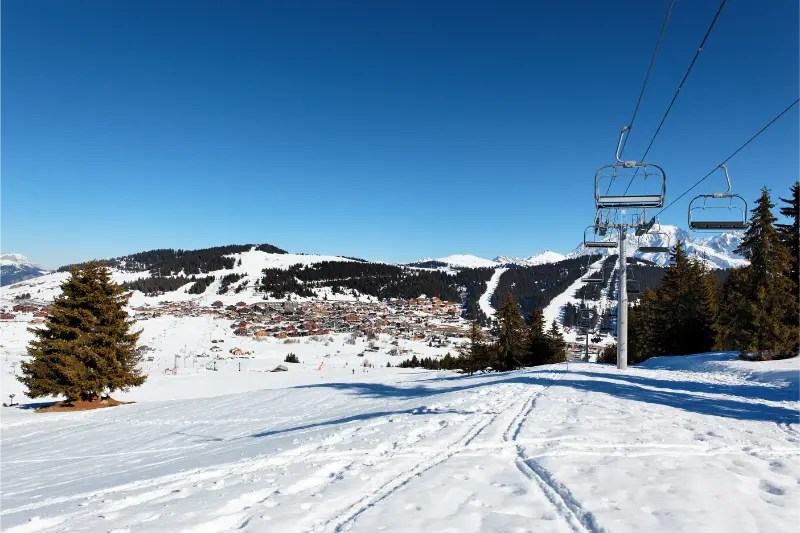
    Final thought: Finally, avoid turning the day into a purchasing competition. A good visit is not about fitting in the maximum number of stops; it is about understanding the geography well enough to choose the right ones.

    Explore the southern vineyards: Go deeper with our Pessac-Léognan guide, Graves Wine Route and Sauternes guide.

    More ideas: Explore more Bordeaux wine country with our Côtes de Bordeaux guide, Lalande-de-Pomerol guide and Moulis-en-Médoc guide.

  • Normandy in Winter: Christmas Markets, Quiet Coasts and a 5-Day Off-Season Itinerary

    Normandy in Winter: Christmas Markets, Quiet Coasts and a 5-Day Off-Season Itinerary

    Winter changes Normandy more than it simply cools it down. Seaside resorts become quiet, Mont-Saint-Michel and Étretat can feel dramatically less crowded, museums become more important and the rhythm of the trip shifts toward long lunches, markets and shorter daylight. It is a good season for travellers who value atmosphere and lower pressure, but only if they accept that some rural attractions reduce opening days. This guide includes a realistic five-day route and current 2026 festive information.

    Useful related guides: Rouen · Caen · Mont-Saint-Michel · Étretat · Normandy road trip. Use them to connect this stop with a wider Normandy itinerary rather than treating it as an isolated pin on the map.

    What winter in Normandy actually feels like

    Expect damp air, wind on the coast, frequent cloud and short daylight rather than a guaranteed snowy postcard. Temperatures are often moderate compared with inland continental Europe, but wind and humidity can make the coast feel colder than the number suggests. Waterproof footwear, a wind-resistant outer layer and gloves matter more than packing a single very heavy coat.

    The advantage is space. Normandy Tourism explicitly promotes winter for quieter iconic sites, easier circulation and often better-value accommodation. A nearly empty beach at Trouville or a misty morning near Mont-Saint-Michel can be more memorable than peak summer—provided you are dressed for it.

    Christmas 2026: Rouen and Caen as practical festive bases

    For 2026, Rouen’s official Christmas market is scheduled on the cathedral square from 25 November to 27 December, with around fifty chalets and extended weekend hours. Caen’s 2026 Christmas market is scheduled from 28 November to 29 December with roughly fifty chalets spread through the city centre. These dates make the two cities strong winter bases because heritage, food and evening atmosphere are concentrated within walkable areas.

    Benedictine Palace Museum Normandy France

    Smaller markets take place across Normandy, but many run for only one weekend. The regional tourism calendar lists dozens of 2026 events; check the exact date before building a detour around a village market. For a first winter trip, I would prioritise one dependable city market rather than chasing several small events by car.

    A realistic 5-day winter itinerary

    Day 1: Rouen—cathedral, old town, museum or covered indoor stop, then Christmas lights if travelling in late November or December. Day 2: a Seine Valley excursion such as Jumièges if opening hours work, returning before dark. Day 3: train or drive to Caen, with castle or museum time. Day 4: choose Bayeux and one D-Day museum rather than an all-day exposed coastal circuit. Day 5: finish at Honfleur or a resort such as Trouville, using the beach for a short bracing walk and lunch as the real event.

    Mont-Saint-Michel can replace the coast if it is a priority, but winter daylight makes a same-day return from the wrong base exhausting. Stay nearby or plan the transport carefully. Keep one day flexible so strong wind or persistent rain can be swapped with an indoor city day.

    Winter coast: beautiful, but not casual

    Étretat, the Cotentin and the D-Day beaches can be spectacular in winter, yet exposed cliffs and shorelines demand more caution. Strong wind, wet paths and early darkness turn a normal summer walk into a different activity. Do not approach cliff edges for a photograph, and do not assume a coastal path is safe simply because other people are using it.

    For a gentler winter sea day, choose a resort with a promenade, cafés and easy parking. Trouville, Cabourg, Dieppe and Granville give you a clear retreat if weather worsens. A 45-minute walk followed by seafood or hot chocolate is often a better winter plan than a heroic four-hour hike.

    Museums, food and the pleasure of slower days

    Winter is the season to lean into Normandy’s indoor strengths: Rouen’s museums, the Mémorial de Caen, Cité de la Mer, castle interpretation and cathedral interiors. Check weekday closures because low-season schedules matter more. Book major restaurants for weekends, but keep lunch flexible enough to absorb weather changes.

    Food feels particularly suited to the season: cheese, cream sauces, seafood, apple desserts and cider-based cooking are comforting after a cold walk. If drinking cider or Calvados, keep the driver alcohol-free. Winter rural roads deserve full attention, especially after dark.

    How long to stay and how to pace the visit

    Five days is enough for one city pair plus a coast or heritage excursion. Seven days lets you add Mont-Saint-Michel or the Cotentin without turning every daylight hour into transport. In winter, fewer bases are better because check-in and driving after dark consume a larger share of the day.

    Winter travel around Normandy requires planning the light before the sightseeing list. In December the day is short enough that a coastal detour can consume most of the useful afternoon; enjoy an open-air stop early and reserve a museum, warm lunch or city stroll for later. Rouen and Caen work as sensible bases because they offer indoor alternatives and evening services even when a rural attraction closes. Choose a route that can be shortened if the coast is windy or roads are wet, and check opening times for the exact weekday. One atmospheric harbor, an excellent meal and a carefully chosen historical visit can make a stronger winter day than a hurried attempt to see every famous view.

    Getting there and getting around

    Rail travel between Paris, Rouen and Caen is attractive in winter because you avoid dark-road fatigue. A car is useful for abbeys and rural coast, but build generous margins and check weather before long evening drives. Keep fuel or charging stops simple rather than leaving them to chance in small villages.

    Winter itineraries are easiest when you use a rail-connected city as the main base. Rouen offers historic streets, cathedral views, restaurants and museums within a compact urban stay; Caen gives access to the memorial and a different side of Normandy’s history. If you want Honfleur, the Alabaster Coast or an abbey in the countryside, treat local buses and daylight as real constraints or rent a car for those specific days. A vehicle is useful but not magic: fog, frost and heavy rain can make rural lanes slower, and an attractive coastal road might add little on a grey afternoon. Choose accommodation that allows a warm evening meal on foot rather than assuming every seaside town will have abundant open restaurants in January.

    Benedictine Palace Museum Normandy France

    Best time to visit

    For Christmas atmosphere, late November through December is the obvious window. January and February are quieter still and can offer excellent value, but festive events disappear and some attractions close for maintenance. March starts to regain daylight while still feeling off-season.

    November and December have a different appeal from January and February. The festive season can bring illuminated streets and holiday markets, but dates and stall locations should be checked against the actual year’s municipal calendar; they are not guaranteed on every evening. January often means especially quiet seafronts, shorter attraction hours and more frequent midweek closures. February can still be chilly and wet but is rewarding for uncrowded city museums and atmospheric harbors. Plan outdoor visits near midday when light is strongest and reserve flexible time for the forecast. Normandy’s winter charm lies in a few deliberate stops, a seafood lunch or a good museum, not in trying to reproduce a summer road trip under shorter daylight.

    Normandy in winter with children

    Families should choose one outdoor winter activity at a time and have an indoor backup ready. Christmas markets, aquariums and castles can work beautifully; long exposed coastal days are harder with small children. Pack spare gloves or socks because wet cold ends family enthusiasm quickly.

    With children, make the winter city your anchor and keep coastal exposure brief. In Rouen, combine the old streets with an indoor museum or a bakery stop; in Caen, choose one history visit appropriate for the children’s ages rather than a full day of solemn exhibits. Pack waterproof boots, gloves and spare socks, especially if you plan to see the beach or Mont-Saint-Michel in windy weather. Holiday lights can be enchanting in December, but young children may be tired by the time they begin; choose accommodation near the evening activity. A family could enjoy a winter beach for 20 minutes and still have an excellent day if a warm café and an indoor alternative are planned in advance.

    Accessibility and mobility

    Wet cobbles and reduced daylight can make mobility more difficult even in places that are accessible in summer. Choose central accommodation, minimise evening transfers and confirm lifts or accessible entrances at museums rather than improvising in bad weather.

    Rain-slick cobbles, uneven quays and coastal wind require a different accessibility plan in winter. The compact center of Rouen has some pedestrian areas, but historic surfaces and occasional gradients still matter; choose a hotel with confirmed step-free access, not simply an ‘accessible’ label. In smaller coastal towns, public toilets, buses and open cafés may be scarcer outside the summer season. Drivers should ask about nearby parking and whether it is covered, since repeatedly crossing wet streets can be tiring for travellers with reduced mobility. Do not force a cliff viewpoint onto the plan on a stormy day. A sheltered harbor view, museum or accessible indoor attraction can provide a richer experience with far less risk.

    Common mistakes to avoid

    • Building a summer-style 12-hour sightseeing day despite winter daylight.
    • Assuming every rural attraction keeps normal opening days in January or February.
    • Driving cliff roads or walking exposed paths in severe wind because the site is “famous”.
    • Booking a small Christmas market without checking that it runs on your exact date.
    • Adding a distant stop simply because the driving time looks short on a navigation app.
    • Assuming small museums, abbeys or visitor centres are open every day and through lunch.
    • Choosing accommodation only by headline price and ignoring parking, station access or the need to drive to dinner.
    • Treating rain as a failed day instead of reordering outdoor and indoor activities.

    Where to stay

    For current availability, compare winter stays in Normandy on Booking.com. I would prioritise a base that matches the way you are travelling: walkable centre for a town stay, easy parking for a road trip, or direct station access if you are car-free. A cheaper room 20 minutes away can cost more in time and transport than it saves.

    Winter rewards central hotels: being able to walk from a museum to dinner without returning to the car is worth paying for. In Rouen and Caen, a station-or-centre base also makes bad-weather plan changes easy.

    War Memorial Caen Calvados Normandy France

    Tours and activities

    A winter guided tour works best when the guide understands what is actually open and how to adapt to weather, rather than offering a fixed summer-style circuit. A short walking tour in Rouen may connect the Gothic cathedral, medieval lanes and the city’s literary associations, with stops to warm up. A specialist D-Day trip from Caen can be valuable in the off-season, but verify museum closures and allow for shorter daylight at coastal memorials. Avoid committing to non-refundable outdoor experiences long before a December or January forecast is available. Travellers interested mainly in food may enjoy a market or culinary visit in an active town more than a coach tour through shuttered beach resorts.

    A final planning note

    Before a winter visit, confirm each attraction’s actual December-to-February hours and do not rely on a summer listing. Holiday markets in Rouen and Caen publish calendars for individual years, while museums may close on public holidays or selected weekdays. For regional suggestions, start with Normandy Tourism, then follow the local institution’s current information. Coastal weather reports are more important than attractive photographs of a sunny winter afternoon, especially around cliffs and exposed beaches. Carry a flexible plan that allows an outdoor stop to become an indoor one without abandoning the day. Winter rewards travellers who value quiet and atmosphere, but it does not reward careless scheduling.

    Winter Normandy is a different trip, not a discounted summer version. Embrace the shorter days, choose fewer places, eat well, walk the coast when conditions are kind and use the region’s cities and museums when they are not.

  • Calanques National Park from Marseille: How to Visit Without Damaging the Place

    Calanques National Park from Marseille: How to Visit Without Damaging the Place

    The Calanques are one of the places where bad travel planning creates real environmental damage. The white limestone inlets between Marseille, Cassis and La Ciotat look close to the city, but access involves steep terrain, summer fire restrictions, limited shade, fragile vegetation and, at some sites, visitor quotas. A beautiful photograph is not evidence that a route is safe or open today.

    The most useful first decision is how you want to experience the national park: on foot, from the sea, or through a short viewpoint-focused outing. Do not combine all three automatically. If Marseille is your base, our four-day Marseille guide helps place the Calanques inside a broader city trip.

    Choose one access style

    • Hiking: best for landscape immersion, but requires fitness, water and current access checks.
    • Boat trip: gives a strong geological overview without trail pressure, though sea conditions matter.
    • Public transport + short walk: useful if you want a lighter day and are flexible about the exact calanque.
    • Kayak or guided activity: can be excellent when conditions and regulations permit; use reputable operators.

    The 2026 Sugiton reservation rule matters

    Sugiton and Pierres Tombées have suffered severe erosion from very high visitor numbers. In 2026, the national park requires a free reservation for access on 20–21 June, every day from 27 June to 30 August, and again on 5–6 and 12–13 September. The park states that reservations open three days before the visit and close the evening before, subject to availability.

    This system exists to protect soil and vegetation, not to make travel inconvenient. Do not look for unofficial ways around it. If you cannot obtain a reservation, choose another legal route or experience the park from the sea. Always recheck the official site because dates and procedures can change from one year to the next.

    Calanques National Park Marseilles France

    Fire risk can close the massif entirely

    Summer access to natural areas around Marseille is regulated according to wildfire risk. A trail can be legally inaccessible even when the sky looks perfect. Check the official risk level and national-park information on the morning of your outing. If authorities close an area, there is no responsible alternative route through the same closed massif.

    This is why I avoid building an entire Marseille trip around one fixed Calanques hiking date. Keep a museum, market, beach or city day available as a swap. The best time to visit France guide explains wider seasonal trade-offs, but local fire conditions always take priority.

    Hiking: distance is not the only difficulty

    Calanques trails can be rocky, exposed and steep. Heat, glare and lack of shade matter as much as kilometres. Wear proper shoes, carry enough water, bring sun protection and start early. Do not count on finding drinking water inside the park.

    Offline mapping is useful, but it does not replace marked trails or closure notices. Limestone can be slippery when polished or wet. If you are uncomfortable scrambling or descending steep paths, choose an easier route rather than following a social-media itinerary designed for somebody else’s fitness level.

    Which calanque should a first-time visitor choose?

    There is no universal “best.” Sugiton is accessible from the Marseille side but now subject to reservation on specified high-season dates. Sormiou and Morgiou have dramatic settings but road access can be restricted and parking is not a simple visitor solution. En-Vau is spectacular but the hiking approach can be demanding. Port-Miou near Cassis is easier to integrate into a coastal walk but has a different feel.

    Choose based on your transport, fitness, weather and legal access that day. The best calanque is the one you can reach safely without contributing to erosion, illegal parking or rescue risk.

    A boat trip is not a second-rate option

    Seeing the coast from the water reveals the scale of the cliffs and the sequence of inlets in a way that hiking cannot. Departures commonly operate from Marseille and Cassis, with different routes and durations. Sea state can alter or cancel itineraries, so treat the exact route as weather-dependent.

    If you are prone to seasickness, plan accordingly. Choose operators that explain national-park rules and avoid any activity that encourages landing in prohibited zones. A boat outing can also be the best choice during periods when walking access is restricted, provided maritime conditions and regulations allow it.

    Getting there from central Marseille

    Public transport can bring you toward several trailheads, but the last part is often on foot. This is a strength, not a flaw: reducing private-car pressure is part of protecting the park. Check RTM and national-park access guidance for the specific calanque you intend to visit.

    Do not assume you can drive into Sormiou or Morgiou because a map shows a road. Seasonal barriers and resident/service access rules may apply. Parking illegally creates safety problems and can obstruct emergency access.

    Where to stay for a Calanques-focused trip

    Central Marseille is still the most versatile base because you have city transport, restaurants and access to boat departures. Compare accommodation in Marseille on Booking.com. If hiking from the eastern side is your priority, Cassis can reduce travel time but often costs more and becomes very busy in summer.

    Staying near the Old Port is convenient for first-time Marseille sightseeing. Staying farther south can shorten some approaches to the park but may make city evenings less convenient. Choose based on the balance of city and nature days, not on a single hike.

    Swimming and cliff jumping

    Swimming can be beautiful, but entry points are rocky and there are no lifeguards at many natural coves. Check sea conditions and do not jump from cliffs. Water depth, submerged rocks and wave action are not reliably visible from above. Rescue access is difficult in remote areas.

    Bring back everything you carry in. Do not leave food waste, cigarette ends or “biodegradable” rubbish. The park is not a beach club, and the lack of bins in natural areas is a reason to reduce waste, not to abandon it beside a trail.

    Travel with children

    Families can enjoy the Calanques, but route choice matters. A short coastal walk, viewpoint or boat trip is often better than a long exposed hike. Carry significantly more water than for an ordinary city day, and avoid the hottest hours. Young children should not be taken onto cliff-edge paths that require constant physical control.

    For a broader family itinerary, combine one nature day with Marseille’s museums, harbour and easier waterfront spaces. Our France with kids guide includes pacing ideas that apply here particularly well.

    Combine the park with Provence without rushing

    The Calanques pair naturally with Marseille and, on a longer trip, Aix-en-Provence. The Aix itinerary gives you markets, Cézanne context and a completely different urban atmosphere. Farther east, the Verdon road trip is another limestone landscape but should be treated as its own multi-day journey.

    Responsible travel here is mostly about restraint: one legal trail instead of three, one refillable bottle instead of disposable waste, one backup plan instead of entering during a closure. The park does not need visitors to conquer it; it needs visitors to leave it intact.

    Official planning links

    What to carry for a Calanques day

    My minimum kit is more substantial than for an ordinary city walk: sturdy shoes, sun hat, high-SPF protection, enough drinking water for the route, a fully charged phone, offline map, small first-aid kit and a light layer for wind. In spring or autumn, add a compact waterproof. Keep hands free on rocky descents rather than carrying loose beach bags.

    Tell somebody your route if you are hiking independently, especially outside the busiest paths. Start with more phone battery than you think you need and avoid relying on continuous mobile reception. These are simple precautions, but they reduce the chance that a scenic outing becomes a rescue incident.

    Calanques National Park Marseilles France

    Choose one objective, not three

    The Calanques look close together on a map, which can encourage visitors to imagine several coves in one day. On foot, heat, elevation and rocky terrain make that plan much harder than it appears. Choose one principal objective and treat anything else as a bonus. A shorter route with time to rest, swim where permitted and return safely is better than turning a national park into an endurance test.

    If your priority is scenery rather than hiking, consider seeing the coastline from the water with a licensed operator and keep your land walk short. If your priority is hiking, skip the pressure to add a boat excursion on the same day. Marseille offers enough evenings and viewpoints that you do not need to squeeze every perspective into one outing.

    Respect seasonal restrictions even when they disrupt the plan

    Access rules exist because summer fire risk can become severe and because some fragile areas receive extraordinary visitor pressure. A closure or reservation requirement is not an inconvenience to work around. Check official information immediately before departure and have a Marseille alternative ready: the Old Port, museums, coastal neighbourhoods or the islands can rescue a day without putting the landscape at risk.

    This flexibility is part of responsible travel. The Calanques are not a theme-park attraction guaranteed to be available on demand; they are a protected Mediterranean ecosystem beside a major city. Visiting well means accepting that conservation and safety sometimes take priority over the itinerary you imagined months earlier.

    Approaching the Calanques from the east? the Cassis travel guide adds Port-Miou, Cap Canaille, parking and AOC wine to the national-park planning.

  • Best Things to Do in Bordeaux: 20 Essential Sights and Experiences

    Best Things to Do in Bordeaux: 20 Essential Sights and Experiences

    The best things to do in Bordeaux are not all wine-related. Wine explains much of the city’s history and economy, but the visitor experience is equally about architecture, the Garonne, neighbourhood markets, museums, public spaces and the ability to move around without a car. This list is organised to help you build a trip rather than simply accumulate attractions. Several entries naturally combine into the same half-day, while others—especially the Cité du Vin and vineyard excursions—deserve dedicated time.

    Bordeaux’s historic centre forms part of the UNESCO-listed Port of the Moon, and its scale is one of the city’s strengths. You can move from eighteenth-century monumental planning to medieval gates, a major market and contemporary waterfront architecture within a day, yet there is enough depth for a long weekend. The sequence below begins with the places that establish the city visually, then moves into culture, food and excursions.

    1. See Place de la Bourse from the riverfront

    Place de la Bourse is the image most travellers recognise before arriving. Its classical façades were built as Bordeaux opened itself toward the Garonne in the eighteenth century, replacing the defensive logic of the older walled city with a ceremonial river frontage. Visit once in daylight to appreciate the architecture and again around blue hour if your schedule allows. The square is public and does not require a ticket, so it is an easy anchor around which to build the rest of a walking route.

    2. Walk through the Miroir d’Eau when it is operating

    Opposite Place de la Bourse, the Miroir d’Eau alternates a thin reflective layer with mist and dry phases. It is especially appealing on warm days and for families, but it is seasonal. Bordeaux Tourism states that the installation is normally not in service during winter maintenance, from around November until April. If your trip falls in that period, the square remains worth visiting; just do not plan the stop around a reflection photograph that may be impossible.

    Bordeaux City View France

    3. Explore Saint-Pierre and the lanes behind the quays

    The Saint-Pierre quarter is where Bordeaux feels most immediately suited to wandering. Small squares, restaurant terraces and narrow streets sit just behind the monumental riverfront. Instead of searching for one famous street, trace a loose loop through Place du Parlement, Place Camille Jullian and the passages leading toward Porte Cailhau. Go early if you want architecture and photography; return later if you want the district’s evening atmosphere.

    4. Pass under Porte Cailhau

    Porte Cailhau combines ceremonial architecture with the memory of the city’s medieval defences. Even viewed only from outside, it creates a useful historical transition between the Garonne and the older streets. Interior access can vary, so check current opening information if climbing is important to you. Otherwise treat it as a stop on a route rather than a destination that dictates the day.

    5. Visit the Grosse Cloche

    The Grosse Cloche is one of Bordeaux’s most characterful monuments: a surviving gate and belfry whose heavy bell still marks selected civic dates. The interior includes former prison spaces. In 2026, standard visits advertised by Bordeaux Tourism are short guided tours on selected dates, with a €6 ticket. Because capacity is limited, book if the interior matters; the exterior can be seen freely at any time.

    6. Stand beneath Cathédrale Saint-André

    Bordeaux Cathedral gives the city a different architectural scale from the intimate old-town lanes. Its long history, sculpted portals and relationship with the separate Tour Pey-Berland make the square a natural pause between shopping streets and museums. Religious services always take priority over sightseeing, so enter quietly and check restrictions on the day.

    7. Climb for a city view

    Bordeaux is largely flat, which makes any legal tower climb valuable for orientation. Tour Pey-Berland is the classic central option, while the restored Flèche Saint-Michel reopened in June 2026 after five years of work. The Saint-Michel spire rises to 114 metres and its visitor route involves 230 steps. Choose one climb rather than collecting viewpoints; the best option is the one that fits naturally into the neighbourhood you are already exploring.

    8. Eat at Marché des Capucins

    Capucins is the market I would prioritise if food is part of the trip. It is not merely a place to buy produce: counters and surrounding businesses make it possible to build breakfast or lunch around oysters, cheese, charcuterie, bread, coffee and regional products. Weekend mornings are lively but busy. If you dislike crowds, go earlier or on a quieter weekday and remember that market schedules vary by stall.

    9. Walk the quays or cycle beside the Garonne

    The redesigned riverfront gives Bordeaux breathing space. A walk from the centre north toward Chartrons and Bacalan gradually shifts from historic façades to contemporary development. Cycling makes it possible to cover more distance without losing the connection to the river. The route is also useful after a museum-heavy morning because it requires no reservation and can expand or shrink depending on weather and energy.

    10. Spend time in Chartrons

    Chartrons carries the memory of Bordeaux’s merchant and wine-trading history but today mixes residential streets, antiques, design shops and cafés. Rue Notre-Dame is the obvious spine, yet the value comes from the slower neighbourhood rhythm. Pair it with Jardin Public or continue north to Bacalan. This is one of the easiest ways to make a Bordeaux visit feel less like a succession of major sights.

    11. Give the Cité du Vin a real half-day

    The Cité du Vin is the city’s major contemporary wine attraction. Its permanent course covers wine cultures worldwide, not only Bordeaux, and the standard ticket finishes with a tasting at the Belvédère. The published 2026 full adult price is €23. From 3 April through 31 October, the visiting areas are scheduled to open daily from 10:00 to 19:00. Two and a half to three hours is a sensible minimum; enthusiasts can easily spend longer.

    Bordeaux Fine Arts Gallery France

    12. Choose one art or history museum

    Bordeaux has enough museums that “see them all” is the wrong goal for a short trip. Musée d’Aquitaine provides regional historical context, the Musée des Beaux-Arts offers a traditional fine-arts collection, CAPC focuses on contemporary art, and Bassins des Lumières uses the submarine-base setting for large-scale digital exhibitions. Choose according to interest and weather rather than treating every museum as equally essential.

    13. See the Bassins des Lumières setting

    Even travellers who are cautious about immersive digital exhibitions may find the setting interesting: a former submarine base is very different from Bordeaux’s classical centre. Programming changes, so the exhibition itself should be checked for your dates. If the current theme does not appeal, do not go simply because it appears on a checklist; the city has plenty of alternatives.

    14. Ride the tram instead of driving

    Public transport is not only practical; it changes how much of Bordeaux you can comfortably see. The tram reaches the station, central squares, Chartrons and the Cité du Vin area. A city pass may make sense for museum-heavy itineraries because official versions bundle transport with attractions, but ordinary tickets are enough if your plans are mostly walking.

    15. Try Bordeaux wine in the city before visiting vineyards

    A guided tasting or thoughtful wine bar is an efficient introduction to Left Bank and Right Bank differences. Learning how Cabernet Sauvignon, Merlot, Cabernet Franc and the major appellation families relate to geography makes the later vineyard day more meaningful. It also allows everyone in the group to taste without worrying about driving.

    16. Take a river cruise if the timing suits

    The Garonne shaped Bordeaux, so seeing the façades from the water provides a perspective that streets cannot. Cruise formats range from simple sightseeing to meals and tastings. Compare duration and commentary rather than booking solely by departure time. A cruise is most useful when it complements, not replaces, walking the quays.

    17. Spend an evening around Saint-Michel or Saint-Pierre

    Bordeaux changes noticeably after the day-trip crowds thin. Saint-Pierre offers a dense choice of restaurants and bars in a historic setting; Saint-Michel is more mixed and local in character. Choose the atmosphere you prefer and keep the return journey simple. Central trams are useful, but late-night schedules should be checked rather than assumed.

    18. Make a day trip to Saint-Émilion

    Saint-Émilion combines wine with a medieval village and unusual underground heritage, which makes it the strongest all-round excursion for many first-time visitors. Trains reach the station below the village, while organised tours simplify château visits. The Monolithic Church cannot simply be entered independently: access to the underground monuments is through a guided tour, so reserve that component if it matters to you.

    19. Escape to Arcachon Bay

    Arcachon adds a completely different landscape: beaches, pine, nineteenth-century villas, oysters and the Dune du Pilat. Direct rail makes Arcachon straightforward from Bordeaux; the dune then requires onward transport. It is possible as a day trip, but one night gives much more flexibility for tides, sunset and a boat or peninsula excursion.

    20. Choose the Médoc when estates are the priority

    The Médoc is the classic Left Bank château route through names such as Margaux, Saint-Julien, Pauillac and Saint-Estèphe. Distances and tasting appointments make spontaneous wandering inefficient. Book estates in advance, appoint a non-drinking driver or use an organised excursion. Two thoughtful visits are usually more satisfying than four rushed tastings.

    One walk that covers the classic sights

    A good first walk starts at Place de la Bourse and the riverfront. Follow the quays toward Porte Cailhau, turn into the Saint-Pierre lanes and continue toward the Grosse Cloche. From there, the streets around the cathedral and Tour Pey-Berland make a natural second cluster. This is a pleasant half-day with café stops, rather than a fast circuit where every monument needs a paid entry ticket.

    If you want a second neighborhood, head toward the Chartrons district and Jardin Public. Save Bacalan and the Cité du Vin for a separate part of the day: the museum is best enjoyed with at least two to three hours rather than a brief look at the building. The tram can bridge the longer stretches, but the most memorable historic streets are explored on foot.

    Cite du Vin Wine Museum Bordeaux France

    What to reserve and what can stay spontaneous

    Reserve a specific Cité du Vin workshop, a restaurant you particularly want, or a vineyard appointment in advance. The quays, public squares, churches that are open to visitors and neighborhood walks usually need much less planning. This is a good city for leaving room to change direction after a market stop or when the weather improves.

    For a wine-country excursion, decide whether the focus is one estate, the village of Saint-Émilion or the appellations of the Médoc. They involve different journeys and booking patterns. Doing all three in one day would leave little time for a tour or lunch. If you’re not drinking, a visit focused on history, landscape and cellar architecture can still be worthwhile.

    How many days for Bordeaux?

    Two full days cover the historic core and one major museum. Three days allow Chartrons, Bacalan and a slower food-and-neighbourhood rhythm. Four or five nights make Bordeaux particularly strong because you can add Saint-Émilion or Arcachon without packing again. If wine estates are the central purpose, dedicate a separate day rather than trying to place a château tour before an evening train.

    Useful official resources

    Before visiting the Miroir d’Eau, check whether it is running: the water feature is seasonal and may be suspended for maintenance or weather. Tower climbs, museum visits and château tours can have timed slots, while an ordinary walk along the Garonne needs no booking. Save your advance reservations for the experiences that genuinely require them.

    Continue planning your trip

    For a deeper itinerary, continue with the complete Bordeaux travel guide, our Cité du Vin guide, the Saint-Émilion travel guide, and our four-day Bordeaux and wine itinerary.

  • 3 Days in Arles and the Camargue: Roman Heritage, Art and Wetlands

    3 Days in Arles and the Camargue: Roman Heritage, Art and Wetlands

    Arles is one of the best places in Provence to combine ancient history with a landscape that feels completely different from the hill towns farther east. Roman monuments sit inside a living city, while the Camargue spreads south into wetlands, rice fields, salt areas, grazing land and Mediterranean coast.

    Three days are enough for a meaningful introduction if you separate the themes: one day for Roman Arles, one for art and everyday city life, and one for the Camargue. The nature day needs the most planning because this is a protected, inhabited landscape rather than an open-air wildlife park.

    Quick planning overview

    Ideal stay3 days
    Main city themeRoman and medieval heritage
    Landscape dayCamargue wetlands and coast
    Car needed?Not for Arles; very useful for flexible Camargue exploration
    Best pairingAvignon, Nîmes or Provence road trip

    Day 1: Roman Arles without monument fatigue

    Begin with the amphitheatre because it immediately establishes the scale of Roman Arelate. In 2026, Arles Tourism lists the amphitheatre as a ticketed monument with seasonal hours and various guided or historical-animation programmes. Instead of stacking every Roman site into one morning, alternate major monuments with street time.

    The ancient theatre, cryptoporticoes, baths and Alyscamps each tell a different story, but they are more memorable when you understand their function rather than their checklist value. A combined monument pass can be useful if your plan includes several sites; compare current options at the tourism office.

    Day 2: Arles beyond Rome

    Use the second day for the cathedral area, markets, photography or art spaces. Van Gogh’s time in Arles is famous, but the city should not be treated as a treasure hunt for exact painted views. The stronger experience is noticing the light, river, squares and edges of town that fed his work while also engaging with contemporary Arles.

    Salt Pans at Salin de Giraud Camargue France

    Photography has a major presence in the city, especially around the Rencontres d’Arles season. Cultural calendars can transform accommodation demand just as festival season does in Avignon, so event dates matter when budgeting a summer trip.

    Day 3: enter the Camargue with realistic expectations

    The Camargue Regional Nature Park explicitly describes the territory as both inhabited and environmentally fragile, with private or difficult-to-access spaces. That is important. Do not drive onto tracks because a map shows water nearby, and do not approach animals for photographs. Use signed roads, official visitor sites, observation areas and marked paths.

    Flamingos are strongly associated with the Camargue, but wildlife is not scheduled for your arrival. Season, water levels, weather and disturbance all affect what you see. A slow day with binoculars and several habitats is better than chasing one species across the delta.

    How to choose a Camargue route

    With a car, you can build a loop around a small number of stops: a nature reserve or visitor centre, a village such as Saintes-Maries-de-la-Mer, and perhaps a beach or salt landscape if conditions and access allow. Keep distances modest because stopping, walking and observing take longer than the map suggests.

    Without a car, you can still reach parts of the Camargue through buses, tours and cycling options, but the trip becomes more structured. A guided nature excursion can be a good choice because the value lies in understanding habitat and access, not merely being driven to a flamingo viewpoint.

    Respect is not an optional “eco” extra here

    The park’s tourism policy emphasizes sustainable discovery because large visitor flows can damage sensitive areas. Stay on permitted routes, keep distance from wildlife, avoid blocking farm access and take litter out. If you choose a horse ride or wildlife tour, look for operators aligned with local conservation values.

    This is also a working cultural landscape. Rice, horses, cattle, fishing and local traditions are part of the Camargue, not scenery arranged for tourism. Treating the territory as lived-in land changes how you drive, photograph and choose where to spend money.

    Where to stay and how I would choose a base

    Arles is the most practical base for this three-day plan because you can walk to city monuments and drive south only for the Camargue day. Staying within or just outside the historic centre keeps evenings easy; if you have a car, verify parking arrangements in advance.

    A Camargue overnight can be worthwhile if nature, sunrise or local traditions are central to the trip, but it reduces your flexibility for Arles museums and dining. For a first three days, one Arles base is simpler.

    Compare accommodation in Arles on Booking.com

    Best time to go

    Spring is excellent for wetlands, flowers and milder temperatures. Summer brings festivals, long evenings and intense heat; mosquitoes and sun exposure become practical issues, and cultural events push up demand in Arles.

    Autumn can be beautiful and less pressured. Winter is quieter with a stark landscape, but shorter days and seasonal service changes mean you should verify opening hours before building a nature-heavy itinerary.

    Mistakes that can weaken this trip

    • Trying to visit every Roman monument in one uninterrupted block and becoming numb to the differences between them.
    • Driving into the Camargue expecting guaranteed close wildlife sightings.
    • Leaving marked roads or approaching animals for photographs in a protected landscape.
    • Booking Arles during a major summer event without realizing accommodation demand and street activity will be different.

    How this fits into a longer France itinerary

    Arles fits perfectly after the new Avignon itinerary or before Marseille. It also adds a nature layer to the Provence road trip.

    For Roman history, compare Arles with Nîmes and Pont du Gard. The sites overlap historically but the experiences are different: Nîmes has monumental urban Roman architecture, while Arles combines antiquity with the Rhône and Camargue landscape.

    Practical FAQ

    How many days do I need in Arles?

    Two days are ideal for the city itself. Add a third for the Camargue, and more if photography, archaeology or nature are major interests.

    Do I need a car for the Camargue?

    A car gives the most flexibility, but organized tours, buses and cycling options can work for selected areas. Whatever the transport, use official access information because much of the landscape is private or protected.

    Can I see flamingos year-round?

    Flamingos are closely associated with the Camargue, but wildlife sightings vary with season, habitat and conditions. Visit for the wetland ecosystem rather than treating one species as guaranteed.

    Is Arles good without a car?

    Yes. The historic centre and monuments are walkable, and rail links connect Arles with cities such as Avignon and Nîmes. A car is mainly useful for the Camargue and rural Provence.

    Combining Roman Arles with a respectful Camargue visit

    Use Arles for two full days before heading into the Camargue. Start with the Roman amphitheatre and theatre when the light is gentle, then explore the medieval streets and the cathedral area at a slower pace. The next day can focus on the Musée départemental Arles antique, photography spaces or the Rhône-side neighbourhoods, depending on exhibitions and opening hours. Only then should you venture into the wetlands, where distances, protected habitats and limited public transport change the rhythm. The Camargue is not one attraction to be ticked off in an afternoon: choose one clearly defined area such as the Pont de Gau bird park or the approaches to Saintes-Maries-de-la-Mer.

    Arles is a useful place to understand how Roman infrastructure, medieval religious history and modern artistic life intersect. The amphitheatre and theatre are visually dramatic, but the collections of the Musée départemental Arles antique help explain ordinary ancient life and the city’s river connections. Allow time for a market or a photography exhibition instead of trying to photograph every Van Gogh-related spot. Rencontres d’Arles can significantly affect accommodation and the rhythm of the streets in summer; consult the event calendar before booking. If Roman heritage is your main theme, Nîmes is an easy regional comparison, but do not sacrifice the Camargue day to collect another monument.

    Spending on heritage and nature in Arles

    Staying within walking distance of central Arles is convenient for railway arrivals, restaurants and the Roman monuments. A Camargue farmhouse stay delivers a different experience but usually requires a vehicle and more preparation for meals and evening driving. Roads in the delta cover longer distances than a simple map suggests, with narrow sections and sensitive habitats. If you rent a car for one day, collect it for the wetland outing rather than keeping it while exploring Arles on foot. Choose Saintes-Maries-de-la-Mer as an additional base only when beach access and coastal evenings are priorities; it is not an interchangeable substitute for the city’s Roman sites.

    Combine Arles’ paid monuments thoughtfully. A local heritage ticket may be worthwhile if you plan several participating sites, but check the current list and the opening patterns of the museum, baths and theatres. The old streets, Rhône walk and market atmosphere are compelling without extra admissions. In the Camargue, allocate money to a single managed bird-viewing site or guided nature visit rather than chasing wildlife across private tracks. The Parc ornithologique du Pont de Gau is a well-known place to observe birds, but sightings and viewing conditions vary with season and water levels. Entry fees support access to managed trails; they do not guarantee a particular photograph.

    Grau du Roi Harbor and Canal Camargue France

    Clothing and wildlife equipment for the Camargue

    Bring insect protection for wetland visits, especially around dusk, plus water and sun protection for open landscapes where shade can be scarce. Closed-toe shoes are preferable on paths near reeds or uneven ground. Binoculars are more useful than attempting to move closer to flamingos or other wildlife. Stay on marked routes, do not enter working agricultural land or salt-production areas, and follow signs around nesting habitats. In Arles itself, light comfortable shoes work for stone streets and monument steps. A small layer helps on windy evenings when the mistral changes the feel of a warm afternoon.

    What stays with visitors after a few days in Arles is often the abrupt shift from dense human history to the open horizons of the Camargue. A morning among Roman stones and an afternoon beside lagoons tell different stories of the Rhône. Do not confuse the symbol of the white horse with an invitation to approach or ride animals without choosing an appropriate responsible operator. The wetland landscape is shaped by agriculture, grazing, salt and conservation, all of which deserve respect. Build the final day around one birdwatching stop and one coastal village instead of trying to drive every minor road between the river branches.

    Official planning links

    Arles and the Camargue work because they combine density and openness: Roman stone, lived-in streets, then horizon-wide wetlands. Keep those experiences distinct, respect the protected landscape and three days can show a side of Provence that is very different from lavender-and-village clichés.

  • Latin Quarter Walking Guide: Roman Paris, the Panthéon and Streets Worth Slowing Down For

    Latin Quarter Walking Guide: Roman Paris, the Panthéon and Streets Worth Slowing Down For

    The Latin Quarter is one of the best areas in Paris for travellers who want several centuries of the city in a single walk. Roman ruins, medieval university history, monumental churches, the Panthéon, bookshops, student streets, gardens and food markets all sit within a compact part of the Left Bank. The challenge is not finding things to see; it is avoiding a route that becomes a random zigzag between famous pins.

    This walking guide builds a coherent half-day from the Seine uphill through the historic university district, then toward Rue Mouffetard and the older eastern side of the 5th arrondissement. It works particularly well after Notre-Dame or Sainte-Chapelle and the Conciergerie, because you can simply cross the river and keep walking instead of wasting time on transport.

    Quick planning snapshot

    • Allow 3 to 5 hours for a first walking route, more if you visit the Panthéon, Musée de Cluny or both.
    • Start around Saint-Michel or the Petit Pont and finish near Place Monge, Jardin des Plantes or Luxembourg Gardens depending on your plan.
    • The strongest first-time combination is Saint-Michel, medieval university streets, Panthéon, Place de la Contrescarpe, Rue Mouffetard and one Roman-history stop.
    • Expect slopes around the Panthéon and Montagne Sainte-Geneviève; the area is compact but not completely flat.
    • The Latin Quarter is much better when you leave the busiest restaurant streets around Saint-Michel and move deeper into the 5th arrondissement.

    What the Latin Quarter actually is

    The Latin Quarter is not an administrative district with one exact boundary. It is a historic area on the Left Bank, centred largely on the 5th arrondissement and extending toward parts of the 6th. Its name refers to the Latin used in medieval education, when schools and colleges clustered around what became the University of Paris.

    That history still shapes the neighbourhood. The Sorbonne, Collège de France, Lycée Henri-IV and other institutions give the area an academic identity, while Roman remains remind you that the story began much earlier. Paris’s official tourism office highlights the Panthéon, Musée de Cluny, Luxembourg Gardens, Arènes de Lutèce, Sorbonne and Rue Mouffetard among the key sights.

    For visitors, the useful lesson is that this is not simply “the student area”. It is one of the places where the chronology of Paris is unusually visible.

    Start at Saint-Michel, but do not stay there too long

    Place Saint-Michel is an easy meeting point and a logical entrance from Île de la Cité. The fountain and busy crossroads announce the Left Bank immediately, but the surrounding streets nearest the Seine are also among the most tourist-oriented parts of the quarter.

    Take a few minutes for the square, then move away from the restaurant touts and souvenir-heavy lanes. The neighbourhood becomes more interesting as you climb toward the university streets. If you want a river view first, walk briefly along Quai de Montebello and look back toward Notre-Dame before turning inland.

    Shakespeare and Company sits nearby and attracts many visitors. If the queue is long, decide whether entering the shop matters to you personally. Waiting because a place is famous online is not the same as enjoying it. There are many bookshops throughout the Left Bank, and the spirit of the district is larger than one address.

    Musée de Cluny: the best stop for medieval context

    The Musée de Cluny, National Museum of the Middle Ages, is one of the most coherent museums to add to this walk. It combines medieval collections with the remains of ancient Roman baths, which means the building itself bridges two major periods in the quarter’s history.

    The museum is especially worthwhile if you are interested in medieval art, stained glass, sculpture or the famous Lady and the Unicorn tapestries. It is less essential if you already have a Louvre and Musée d’Orsay-heavy itinerary and simply want to explore outdoors.

    A useful rule is to choose either Cluny or the Panthéon for a deeper interior visit on a half-day walk, not automatically both. You can still see the exterior of the other. That keeps the neighbourhood from disappearing behind ticket desks and galleries.

    Walk toward the Sorbonne through smaller streets

    From Cluny, continue uphill through the streets around the Sorbonne. The university is a symbol of the Latin Quarter, but visitors should not expect every academic building to operate like an open tourist attraction. Access depends on the institution, events and security.

    The value of this section is the streetscape. Look for the contrast between institutional façades, narrow lanes and cafés serving students and workers. Rue des Écoles and Boulevard Saint-Michel are useful orientation lines, but smaller streets provide more atmosphere.

    If you are interested in intellectual Paris, this is also a good moment to remember that the quarter’s academic identity was never limited to one university building. Colleges, libraries, publishing houses and schools created a wider ecosystem that still influences the area.

    Strasbourg La Petite France Quarter

    The Panthéon and Montagne Sainte-Geneviève

    The Panthéon dominates the high ground of the quarter and is one of the easiest landmarks for orienting yourself. Its scale feels deliberately different from the small streets below. The building began as a church and later became a national mausoleum honouring major figures in French history.

    Inside, visitors come for the architecture, Foucault’s pendulum, the crypt and the historical symbolism. Seasonal or controlled access to upper levels can add a panoramic element when available, but do not assume every rooftop component is open every day. Check the official monument information close to your visit if the view is important.

    Even if you skip the interior, walk around the square. From here you can see the church of Saint-Étienne-du-Mont, the façade of Lycée Henri-IV and the slopes dropping toward the Seine. This is where the Latin Quarter feels most clearly like a hill rather than a flat riverside district.

    Saint-Étienne-du-Mont: an easy place to miss

    Saint-Étienne-du-Mont stands beside the Panthéon and is often ignored by visitors focused on the larger monument. That makes it one of the most rewarding short stops in the area. The church has a distinctive interior, including a rare rood screen, and provides a different atmosphere from the national symbolism next door.

    Because it remains a functioning church, opening hours and access can vary around services. Keep the stop flexible rather than building a tightly timed schedule around it.

    This is a good example of how the Latin Quarter rewards curiosity. Some of the strongest memories come from entering a quieter church or turning down a small street between the headline attractions.

    Place de la Contrescarpe and Rue Mouffetard

    From the Panthéon, descend toward Place de la Contrescarpe and Rue Mouffetard. This is one of the most enjoyable transitions in the route because the formal monument zone gives way to a livelier food-and-neighbourhood atmosphere.

    Place de la Contrescarpe is popular and can feel touristy, but it remains a useful place for a break. Rue Mouffetard continues downhill with food shops, bakeries, cafés and market activity. Rather than treating it as a single market that operates identically all day, understand it as a food street whose character changes by hour and day.

    Morning is best if you want to see produce and local shopping energy. Later, cafés and restaurants become more prominent. For a broader approach to eating well in the city, use our Paris food guide rather than choosing solely from the most crowded terraces.

    Arènes de Lutèce: Roman Paris hidden in plain sight

    The Arènes de Lutèce are among the most striking reminders that Paris existed long before medieval churches and Haussmann boulevards. The surviving Roman amphitheatre is tucked into the modern neighbourhood and can feel surprisingly informal compared with a major archaeological site.

    It does not require a long visit. Ten to twenty minutes may be enough to understand the space, sit briefly and imagine ancient Lutetia. That short stop is precisely why it works well in a walking route.

    Children often respond well here because the ruins are easier to visualise than a display case full of objects. If you are travelling as a family, combining the arena with nearby gardens can create a better rhythm than another long museum.

    Finish at Jardin des Plantes or loop toward Luxembourg Gardens

    From the Arènes de Lutèce, you have two good endings. Continue east to the Jardin des Plantes if you want greenery, natural-history museums or a route toward the Seine and Gare d’Austerlitz. Alternatively, loop west toward Luxembourg Gardens if you want one of Paris’s classic formal parks and plan to continue into Saint-Germain-des-Prés.

    Do not try to cover both gardens simply to say you did. Choose the one that fits your next destination. The whole point of a neighbourhood route is to reduce backtracking.

    Luxembourg Gardens work especially well in late afternoon, while Jardin des Plantes can pair with the natural-history complex if that is a priority for your group.

    A realistic Latin Quarter route in order

    A practical sequence is: Saint-Michel, the river edge, Musée de Cluny area, Sorbonne streets, Panthéon, Saint-Étienne-du-Mont, Place de la Contrescarpe, Rue Mouffetard, Arènes de Lutèce and Jardin des Plantes. This route moves generally south and east with limited repetition.

    If you want Luxembourg Gardens instead, turn west after the Panthéon rather than descending all the way to the Arènes. If Musée de Cluny is your major museum stop, allow at least 90 minutes and shorten the far end of the walk.

    Travellers who love history could spend a full day here. First-time visitors with only three or four days in Paris should normally stop after half a day and leave energy for another distinct part of the city.

    Best time to walk the Latin Quarter

    Morning offers quieter streets and a better chance to experience food shops around Rue Mouffetard in a local rhythm. Late afternoon gives the area more café energy and can flow naturally into dinner. Midday is busiest around Saint-Michel but less problematic once you move away from the river.

    In summer, starting early matters because the climb toward the Panthéon can feel hotter than expected. Use churches, museums or lunch as a break from the strongest heat. In winter, the quarter becomes atmospheric after dark, but gardens close earlier and daylight for architectural photography is limited.

    Rain actually suits parts of this route. Cluny, churches, bookshops and cafés provide shelter, and wet paving can make the old streets photogenic. Just use shoes with decent grip on slopes and smooth stone.

    Food strategy: avoid the first menu you see

    The streets closest to Saint-Michel contain many restaurants aimed heavily at visitors. That does not mean every one is bad, but aggressive menus, oversized photo boards and staff trying to pull you inside are rarely the best signals.

    Walk farther into the 5th before choosing lunch. Rue Mouffetard and surrounding streets give you more bakery, market and casual options. For a sit-down meal, look at the actual menu, opening hours and recent pattern of reviews rather than a single rating number.

    A simple bakery lunch can be a smart choice on a museum-heavy day. Save the longer bistro meal for evening when you are no longer watching ticket times.

    The Latin Quarter with children

    The area works well for families if you turn the walk into a sequence of different environments: river, old streets, a monumental square, Roman ruins and a garden. What fails is expecting young children to care equally about every university façade.

    Choose one “serious” interior. For some families that is Cluny; for others it is the Panthéon. Then balance it with the Arènes or Luxembourg Gardens. Our Paris with kids guide has more advice on pacing the city by age.

    Pushchairs can manage much of the neighbourhood, but slopes, cobbles, church thresholds and crowded pavements make the route less smooth than a modern shopping district. Leave extra time.

    Where to stay in the Latin Quarter

    The 5th arrondissement is one of the strongest bases for travellers who value walkability, historic atmosphere and easy access to Notre-Dame, the Seine and the Left Bank. The trade-off is price and, in some streets, small hotel rooms or evening noise.

    Stay nearer the Panthéon for a quieter monumental feel, nearer Saint-Michel for maximum transport convenience and nightlife, or around Place Monge for a more residential balance. Compare these options with the Marais and Saint-Germain in our where to stay in Paris guide. You can also check current hotel availability in the Latin Quarter before deciding how much you want to pay for a central base.

    Common mistakes to avoid

    • Staying only around Saint-Michel and assuming those busy restaurant streets represent the whole quarter.
    • Booking both Cluny and the Panthéon tightly, then rushing the actual neighbourhood between them.
    • Ignoring the slopes and scheduling the walk after an already exhausting museum morning.
    • Expecting unrestricted visitor access inside university buildings.
    • Missing the Arènes de Lutèce because the Roman ruins do not look dramatic on a map.
    • Choosing a restaurant solely because it is beside a famous sight.
    • Crossing the neighbourhood repeatedly instead of following a clear direction.

    How the Latin Quarter fits into a first Paris trip

    The most natural pairing is with Île de la Cité. Visit Notre-Dame or Sainte-Chapelle in the morning, cross the Seine and spend the afternoon walking uphill through the Latin Quarter. Another strong combination is a Latin Quarter morning followed by Saint-Germain and the Seine at sunset.

    What I would avoid is attaching the area to Montmartre or the Eiffel Tower just because those places are also on your checklist. Paris becomes easier when each half-day has a geographic logic. The Latin Quarter already contains enough layers—Roman, medieval, academic, religious and everyday—to reward several hours without adding a cross-city transfer.

    Walk it as a neighbourhood rather than a list of monuments and you will understand why this part of the Left Bank remains one of the most satisfying areas for a first visit to Paris.

    More Paris planning: Panthéon guide · Luxembourg Gardens guide

  • 3 Days in Normandy: A First-Time Itinerary Without Trying to See Everything

    3 Days in Normandy: A First-Time Itinerary Without Trying to See Everything

    Three days in Normandy is enough for a meaningful trip, but only if you make a strong choice about geography. The region is too broad for Rouen, Étretat, D-Day, Honfleur and Mont-Saint-Michel to fit comfortably into one long weekend. The most useful 3-day Normandy itinerary for many first-time visitors focuses on Bayeux, the D-Day coast and Mont-Saint-Michel.

    This route is history-heavy because those places are difficult to experience well on a casual day trip. If your priority is cliffs, food and pretty towns rather than wartime history, use the eastern alternative later in the guide. Either version works better than crossing Normandy twice in three days.

    Quick planning summary

    • Main route: Bayeux + D-Day + Mont-Saint-Michel.
    • Best base: two nights in Bayeux, then one near Mont-Saint-Michel or continue onward.
    • Alternative route: Rouen + Honfleur + Étretat for an eastern Normandy weekend.
    • A car is useful for the main route; guided D-Day tours can reduce driving.
    • Do not add extra towns unless they sit naturally on the route.

    Day 1: Bayeux and a gentle arrival

    Arrive in Bayeux and keep the day concentrated. Walk the historic centre, visit the cathedral area and give the town enough time to register as more than a D-Day base. Depending on current opening arrangements and your interests, add one major museum or heritage experience rather than trying to start the landing beaches immediately.

    The purpose of Day 1 is orientation. Book a D-Day tour for the following day if you want guided context, confirm parking and prepare an early start. A good dinner and sleep are more valuable than a rushed sunset drive to several beaches.

    Day 2: D-Day coast with context

    Use the full day for the D-Day landscape. A guided tour is often the easiest first-time option because the story is geographically spread out. Independent travellers should select a coherent set of sites: perhaps one landing beach sector, a cemetery or memorial, a museum and one landscape site such as Pointe du Hoc.

    Benedictine Palace Museum Normandy France

    Avoid measuring the day by the number of stops. Historical fatigue is real. A cemetery deserves quiet time; a museum needs context; driving between sectors takes longer than expected. Return to Bayeux for the evening instead of adding a distant destination.

    Day 3: Mont-Saint-Michel

    Leave Bayeux early for Mont-Saint-Michel. Allow time for parking, the approach and the climb through the village. The abbey is the major ticketed experience, but the ramparts, changing views across the bay and the physical approach are part of the visit too.

    If possible, do not schedule a fixed flight or long train connection immediately after the visit. The Mont can consume more time than planned. Staying nearby the night before or after gives you access to quieter early or late hours and reduces pressure.

    Where to sleep on a three-day trip

    Two nights in Bayeux is the simplest structure. On the third night, stay near Mont-Saint-Michel if the trip continues, or drive onward only if the schedule remains comfortable. This minimises packing and keeps the most history-intensive day logistically easy.

    If you arrive late on Day 1, do not split the first two nights. The value of a central Bayeux base is that you can walk to dinner and begin the D-Day day rested.

    Should you include Caen?

    Caen is excellent, particularly for its Memorial and medieval heritage, but adding it to this three-day route creates competition for time. Include Caen only if the Memorial is a priority, and then reduce the number of D-Day stops rather than compressing everything.

    A short trip needs hierarchy. “Worth visiting” is not the same as “belongs in this itinerary.” Caen can anchor a future trip or replace part of Bayeux depending on your interests.

    Eastern alternative: Rouen, Honfleur and Étretat

    If D-Day history and Mont-Saint-Michel are not your main reasons for visiting, use a completely different route. Spend Day 1 in Rouen, Day 2 around Honfleur and the Côte Fleurie, and Day 3 at Étretat with time for Fécamp or a slower coastal stop.

    This version is more compact from Paris and creates less driving. It also works well without a car if you adapt connections and use organised excursions where needed. Do not combine it with the western route in the same three days.

    For a second price check, the Expedia search below can be useful when you want to compare flight-and-stay options or simply see a different accommodation inventory while planning 3 days in Normandy itinerary.

    How to travel from Paris

    Rail works well to Rouen, Caen and Bayeux, but the D-Day coast itself is easier with a guided tour or car. For the western route, one strategy is to take the train to Bayeux or Caen and rent a car only for the part of the trip where it adds value.

    Benedictine Palace Museum Normandy France

    Driving from Paris gives flexibility but also introduces traffic and parking. If you leave Paris by car, avoid treating the departure morning as a full sightseeing day in Normandy. Build buffer time into the first transfer.

    What to book ahead

    Reserve convenient accommodation, a D-Day guided tour if you want one, and any timed major attractions that require advance entry. Around summer, commemorative dates and long weekends, book earlier than you would for an ordinary city break.

    Restaurant reservations are useful in small towns if you have a specific place in mind. Otherwise, keep some flexibility so delays at historical sites do not force you to leave before you are ready.

    What not to do in three days

    Do not add Étretat, Rouen and Honfleur to the Bayeux–D-Day–Mont route. Do not spend half a day driving the full landing coast just to take photographs. Do not treat Mont-Saint-Michel as a motorway stop. These choices create a trip full of famous names but little experience.

    Three days can be excellent when you accept the limits. A focused short trip gives you reasons to return, which is better than leaving Normandy with the feeling that you were always late.

    Useful guides to read next

    If you are building a wider itinerary, these guides fit naturally with this article: D-Day itinerary, Bayeux guide, Mont-Saint-Michel guide, Normandy without a car.

    A note on realistic daily distances

    Normandy is larger than many short-break itineraries imply. Motorway sections can be straightforward, but coastal roads, village centres and historical sites add time. Build the day around one geographic zone. A route that looks modest in kilometres can still be full once you include parking, museum visits, meals and the emotional pace of remembrance sites. For this guide, keep the main question — 3 days in Normandy itinerary — at the centre of those trade-offs.

    Reservations and flexibility

    Reserve accommodation and any priority guided tour, especially around major events, summer weekends and commemorative dates. Keep secondary stops flexible because weather on the Channel coast can change quickly. A museum, cathedral or market can replace an exposed coastal walk without making the day feel like a compromise. For this guide, keep the main question — 3 days in Normandy itinerary — at the centre of those trade-offs.

    Official planning resource

    For current practical information that may affect 3 days in Normandy itinerary, check Normandy Tourism before your trip. Opening arrangements, transport services and event calendars can change, especially outside the main season.

    Frequently asked questions

    Can I see Mont-Saint-Michel and the D-Day beaches in three days?

    Yes, especially with Bayeux as the main base. Give one full day to D-Day and one substantial day to Mont-Saint-Michel.

    Do I need a car for this itinerary?

    A car is useful, but you can take the train to Bayeux and use a guided D-Day tour. Mont-Saint-Michel transport requires more planning without a car.

    Can I add Étretat?

    Not without making the trip much more rushed. Use an eastern Normandy itinerary instead if Étretat is a priority.

    Where should I sleep?

    Two nights in Bayeux is the simplest arrangement, with an optional third night near Mont-Saint-Michel.

    War Memorial Caen Calvados Normandy France

    One final planning principle

    When refining this Normandy plan around 3 days in Normandy itinerary, compare the value of another attraction with the value of unstructured time. A coffee stop, a market, a viewpoint or an early return to your base can be the moment that gives the day shape. The practical goal is not to maximise entries on a list but to keep enough margin for traffic, weather, meals and the places that deserve longer than expected. That margin is especially important on a first visit, when every transfer and parking system is new.

    Building useful buffer into the day

    A practical itinerary should include buffer for parking, queues, weather changes and meals. When the central question is 3 days in Normandy itinerary, that buffer is not wasted time: it is what lets the plan survive real travel conditions. If a stop runs long because it is more interesting than expected, remove the least important item instead of rushing the rest of the day.

    How to make the plan feel less mechanical

    Use the structure in this guide as a decision tool, not as a timetable that must be completed. For 3 days in Normandy itinerary, choose one or two non-negotiable experiences and let secondary stops move around them. This creates room for a market, a viewpoint, an unexpectedly good lunch or simply an earlier evening when the day has already felt full.

    Final thoughts

    Three days works when you stop trying to make it a miniature seven-day trip. Bayeux, one full D-Day day and Mont-Saint-Michel create a coherent first visit. Choose the eastern alternative if coast and towns matter more, but do not force both versions together.

    Tours & activities

  • 7 Days in Paris: A One-Week Itinerary with Neighborhoods and a Day Trip

    7 Days in Paris: A One-Week Itinerary with Neighborhoods and a Day Trip

    Seven days in Paris changes the nature of the trip. You no longer need to choose between every major museum and every neighbourhood, and you can include one day trip without making the city itself feel rushed. The danger shifts from “not enough time” to overplanning simply because the calendar looks generous.

    A good one-week itinerary alternates major sights, neighbourhood walks, museums and slower days. This version assumes seven full sightseeing days. If arrival and departure days are included in your seven nights, use them as lighter periods and do not force the full plan into fewer usable hours.

    The 7-day plan at a glance

    • Day 1: Île de la Cité, Notre-Dame, Sainte-Chapelle and the Seine.
    • Day 2: Louvre, Tuileries, Orangerie or Palais Garnier.
    • Day 3: Eiffel Tower, Musée Rodin or Arc de Triomphe, western Paris.
    • Day 4: Montmartre and a slower 9th/18th arrondissement day.
    • Day 5: Musée d’Orsay, Saint-Germain and Latin Quarter.
    • Day 6: one day trip—Versailles, Giverny or Fontainebleau.
    • Day 7: Le Marais, Canal Saint-Martin or Père-Lachaise, markets and final evening.

    This is deliberately flexible. Swap days around weather, museum closures and timed-ticket availability.

    Day 1: historic Paris without a museum marathon

    Begin around Notre-Dame and Île de la Cité. Explore the cathedral and exterior, then add Sainte-Chapelle if stained glass interests you.

    Use our Notre-Dame guide and Sainte-Chapelle guide for practical details.

    Cross into the Latin Quarter for lunch, but keep the first day light. Finish with a Seine cruise or riverside walk. You will understand the city’s geography before the more demanding museum days.

    Day 2: Louvre, Tuileries and central elegance

    Use the morning for a focused Louvre visit. Three to four hours is enough for most first-time visitors when priorities are clear.

    Paris Townscape France

    After lunch, walk through the Tuileries. Choose the Orangerie if you want more art in a small museum, or continue toward Palais Garnier for architecture and the Opéra district.

    Do not do Louvre, Orangerie and Garnier all in one afternoon. One week gives you the luxury of stopping before cultural fatigue sets in.

    Day 3: Eiffel Tower and western Paris

    Book the Eiffel Tower for morning or late afternoon. Around it, choose one cultural stop.

    The Musée Rodin is ideal in good weather because of its sculpture garden. The Arc de Triomphe gives a completely different panoramic view and pairs with the Champs-Élysées.

    If you enjoy walking, connect the Eiffel Tower to Invalides and the Seine rather than taking the Metro between every point.

    Day 4: Montmartre slowly

    Give Montmartre more than two hours. Use our Montmartre walking guide to move beyond Sacré-Cœur and Place du Tertre.

    Visit in the morning for quieter streets or begin later and stay through evening. Add the 9th arrondissement, Pigalle or the Opéra area depending on what you skipped earlier.

    This is also a good day for shopping. Our Paris shopping guide covers department stores, boutiques, vintage and practical souvenirs.

    Day 5 morning: Musée d’Orsay

    Give Musée d’Orsay two to three hours. With the Louvre already behind you, the collection feels more manageable and the contrast between the museums is easier to appreciate.

    If art is not a major interest, replace Orsay with the Catacombs or a market morning.

    Day 5 afternoon: choose one Left Bank route

    Pick Saint-Germain-des-Prés for cafés, churches, galleries and elegant streets, or the Latin Quarter for the Panthéon, Roman history and Rue Mouffetard.

    With a full week, you can visit the other area on Day 1 or Day 7, but do not force both full routes into one afternoon.

    Day 6: choose one day trip

    Versailles

    Choose Versailles for palace architecture, royal history and gardens. It is the classic first day trip and deserves most of a day.

    Giverny

    Choose Giverny if Monet, gardens and a smaller village setting appeal more. It is seasonal and works especially well in the garden months.

    Fontainebleau

    Choose Fontainebleau for a palace with deep royal history, generally less overwhelming crowds and the possibility of adding forest time.

    Do one, not all three. A week in Paris should not become a week of leaving Paris.

    Day 7: eastern Paris and the neighbourhoods you missed

    Use the final day for Le Marais if you have not explored it properly. Start at a market, walk through Place des Vosges and continue north.

    Then choose Canal Saint-Martin for a relaxed afternoon or Père-Lachaise for history and funerary art.

    This final day is deliberately less famous. After six days of headline Paris, neighbourhood scale often becomes more rewarding.

    Where the Catacombs fit

    The Paris Catacombs can replace one museum or part of Day 7. They work well with the southern Left Bank and should be booked as a separate timed block.

    Do not add them on top of an already full day simply because you finally have a week.

    Markets and food across the week

    A seven-day trip gives you time to use markets as part of daily life. See our Paris markets guide and choose one near a neighbourhood you are already visiting.

    Paris Les Invalides Aerial View France

    Our Paris food guide helps balance bakeries, casual lunches and reservations. Plan two or three special meals, not fourteen.

    Where to stay for a week

    For seven days, neighbourhood atmosphere matters more than on a weekend. You will spend evenings near your accommodation and appreciate practical bakeries, supermarkets and transport.

    The 5th, 6th and 9th arrondissements are easy first-time bases. Le Marais is central and lively. The 10th and 11th offer stronger neighbourhood life and often better value, though you will use transport more for western sights.

    Read our where to stay in Paris guide. You can also compare current Paris hotels for your exact week.

    Transport strategy for seven days

    Our Paris public transport guide explains the current ticket system, Navigo options and airport fares. A one-week stay is long enough that pass choices may matter more than on a weekend.

    Still, do not overuse the Metro. Group each day geographically and walk the short central sections.

    Arrival and departure days

    If your seven days include a late arrival or early departure, make those neighbourhood periods rather than major-ticket days. Use the first evening for the Seine, Saint-Germain or your hotel area.

    Read our airport transfer guide before assuming how much usable time you have after landing.

    Rainy-day swaps

    Keep museums as flexible weather tools. If Day 4 is rainy, move Orsay or Garnier there and shift Montmartre to a clearer day. If the weather is beautiful, prioritise Rodin’s garden, the Seine, Canal Saint-Martin and neighbourhood walks.

    A one-week itinerary should adapt instead of collapsing because Tuesday’s forecast changed.

    Family version

    Families should reduce the number of museum hours and increase parks, river time and flexible neighbourhood walks. Disneyland Paris can replace the day trip if it is a family priority.

    Our Disneyland Paris guide explains the day-trip versus overnight decision, while our Paris with kids guide covers pacing by age.

    Common mistakes on a one-week trip

    • Booking something expensive every morning and evening.
    • Taking three day trips and barely seeing Paris neighbourhoods.
    • Scheduling Louvre, Orsay and Orangerie on consecutive days with no outdoor contrast.
    • Eating in the same tourist zone because it is convenient.
    • Using the Metro for every short walk.
    • Leaving all flexible activities for the final day and then losing them to bad weather.
    • Assuming a longer trip means you cannot still become exhausted.

    Why seven days works so well

    A week gives Paris enough space to become more than landmarks. You can recognise neighbourhood differences, revisit a bakery, take a slower evening and still see the major sights.

    The best result is not that you “completed” Paris. It is that by Day 7 you no longer feel compelled to chase every famous name. You can choose a canal walk, a market or a café because it fits the day. That shift from checklist tourism to familiarity is what makes a week in Paris especially rewarding.

    Paris Louvre Museum Aerial View France

    A slower alternative for Day 7

    If you are tired after the day trip, do not force Père-Lachaise and Canal Saint-Martin into the final day. Pick one neighbourhood, have a long lunch and return to a place you enjoyed earlier in the week. Repetition is not wasted time on a seven-day trip. Returning to the Seine at sunset or to a favourite bakery can create a stronger ending than collecting two more attractions.

    If you want two day trips

    Two day trips can work only if Paris itself is not your only priority. Versailles plus Giverny is the most common combination in garden season, while Fontainebleau offers a different palace experience. If you add a second excursion, remove one full museum day or one major neighbourhood day rather than squeezing it into an already full evening.

    One-week budget strategy

    A seven-day stay makes small daily choices more important. Mix bakeries and markets with restaurant meals, use walking to reduce unnecessary transport, and choose paid viewpoints selectively. You do not need Eiffel Tower summit, Arc de Triomphe rooftop and every other panorama. Spend on the experiences that matter most to you and let parks, churches, neighbourhoods and river walks balance the budget.

    Laundry, groceries and ordinary life

    For a week, practical details begin to matter. A hotel or apartment near a supermarket, bakery and pharmacy can improve the trip more than being directly beside a monument. If your accommodation offers laundry or you can use a nearby laundrette, packing lighter becomes realistic. These ordinary conveniences are one reason neighbourhood choice matters more on a seven-day stay than on a weekend.

    More Paris planning: Free things to do in Paris · Paris at night · First-time Paris mistakes

    \n\n\n

    Slow-down options for a week: Belleville · Bois de Vincennes · Batignolles.

    \n
  • Paris Markets Guide: Food Markets, Covered Markets and Flea Markets Worth Your Time

    Paris Markets Guide: Food Markets, Covered Markets and Flea Markets Worth Your Time

    Paris markets are not one attraction but an entire layer of city life. Some are classic open-air food markets where residents buy vegetables, cheese and fish; others are covered halls, organic markets, flower markets or sprawling flea-market districts. The best one for your trip depends on whether you want breakfast ingredients, a picnic, antiques, street food or simply a neighbourhood atmosphere.

    The official Paris tourism office notes that the city has more than 80 markets across its neighbourhoods. That is exactly why a single list of “best markets” can be misleading. The practical approach is to choose a market near the area you are already exploring and visit when it is actually active.

    The market types you will encounter

    • Open-air food markets: temporary stalls set up on specific mornings or days.
    • Covered markets: permanent halls with traders and often prepared food.
    • Organic markets: smaller markets focused on certified organic products.
    • Flea and antique markets: second-hand goods, furniture, fashion and collectibles.
    • Specialist markets: flowers, books, stamps and other focused categories.

    Do not assume every market runs daily. Opening days can change around holidays, so verify current schedules before travelling across Paris for one specific market.

    Marché d’Aligre: one of the best all-round choices

    Aligre in the 12th arrondissement combines an outdoor market, the covered Marché Beauvau and surrounding food shops. It feels local, lively and less staged than some central tourist areas.

    Come in the morning for the strongest atmosphere. Browse produce, cheese and prepared food, then walk toward the Bastille or the Promenade Plantée. This is a good market for travellers who want to see ordinary Paris routines rather than only specialty products.

    Aligre is also useful if you are staying in eastern Paris because it gives you a reason to explore the 11th and 12th arrondissements rather than repeatedly returning to the Seine monuments.

    Paris Townscape France

    Marché des Enfants Rouges: covered, historic and easy to combine with Le Marais

    This covered market in the Marais is one of the easiest for visitors because it offers prepared food as well as market stalls. It can be crowded at lunch, but the location makes it convenient rather than requiring a special trip.

    Use it as part of our Le Marais walking route. Arrive before the main lunch rush if you want to look around without squeezing between queues.

    The market is popular, so do not expect a hidden local secret. Its value is the combination of history, food and location.

    Marché Bastille: large and energetic

    The Bastille market is one of the city’s bigger open-air markets and works well for travellers who enjoy browsing a wide range of food stalls. It is particularly good if you want picnic ingredients or simply want to see the scale of a traditional Paris market morning.

    Because open-air market days are specific, confirm the current schedule. Arrive earlier for easier browsing; later in the morning can be lively but noticeably busier.

    Pair it with the Canal Saint-Martin area or the Marais rather than taking a long trip back to western Paris afterward.

    Marché Raspail: a Left Bank option

    Raspail is useful for visitors staying around Saint-Germain or Montparnasse. The market has different identities depending on the day, including a well-known organic market session.

    It fits naturally before a Saint-Germain-des-Prés walk or a visit to Luxembourg Gardens. Because the Left Bank already has many food shops, the appeal is as much the morning ritual as any single product.

    Rue Mouffetard and the Latin Quarter food streets

    Rue Mouffetard is not simply one formal market, but the lower section and surrounding streets create a market-like food-shopping experience. Bakers, produce shops, cheese counters and specialty stores make it easy to build a picnic or casual lunch.

    Use it with our Latin Quarter walking guide. This is a good choice if your itinerary is already focused on the Panthéon, Roman remains and the southern Latin Quarter.

    Saint-Ouen flea market: an entirely different experience

    The Saint-Ouen flea market is a destination in its own right. It is not one tidy row of stalls but a vast complex of markets and dealers selling antiques, furniture, art, clothing and collectibles.

    If you love antiques or vintage, give it several hours. If you only want a quick look, choose one or two market sections instead of trying to “see it all”. Check opening days carefully; flea markets are particularly frustrating when visited on the wrong day.

    Keep valuables secure in crowded approaches and ignore anyone pressuring you into a purchase. Serious dealers expect informed questions and thoughtful browsing.

    Vanves flea market: smaller and easier

    The Porte de Vanves flea market is a more manageable alternative for visitors who want second-hand objects and antiques without spending half a day navigating Saint-Ouen.

    It works especially well if you are staying in southern Paris or already planning the Catacombs. A market morning followed by the Catacombs creates a very different Paris day from the museum-and-monument circuit.

    Paris Les Invalides Aerial View France

    Food market etiquette

    Markets are working commercial spaces, not open-air museums. Do not handle delicate produce without permission. If a stall is busy, decide what you want before reaching the front. Basic French greetings go a long way.

    Photographing broad market scenes is usually less intrusive than pushing a camera close to a trader’s face or display. Ask before taking close portraits.

    Bring a reusable bag if you plan to buy food. Small purchases are normal, but do not expect every stall to package items for an international flight.

    What to buy for a picnic

    Bread, fruit, tomatoes, charcuterie, cheese and prepared salads are obvious choices, but remember that many parks restrict sitting on lawns in certain areas or seasons. Choose a picnic location where eating is appropriate and clean up carefully.

    For broader food ideas, see our Paris food guide. A market is often better for lunch than waiting an hour at a viral café.

    What not to buy if you are flying home

    Fresh meat, dairy, plants and produce can be subject to import restrictions in your destination country. Buying them is fine if you will eat them in Paris; carrying them through customs may not be.

    Packaged chocolate, tea, biscuits, preserves and some shelf-stable products are easier gifts, but always check the rules where you are travelling.

    Markets with children

    Markets can be fun for children because they are colourful and active, but crowds become tiring quickly. Give children a small mission—choose fruit for a picnic, find a pastry, pick a postcard—rather than expecting them to enjoy an hour of adult browsing.

    Combine the market with outdoor time. Our Paris with kids guide helps structure days with realistic breaks.

    A market-focused morning in the Marais

    Start around Marché des Enfants Rouges before the lunch rush. Walk through the northern Marais, then continue toward Place des Vosges and the Seine. Have lunch from the market or a nearby bakery, then choose one indoor attraction for the afternoon.

    This is far better than visiting three markets in one morning. Markets are about atmosphere and context, not collecting names.

    A market-focused morning on the Left Bank

    Visit Raspail or Rue Mouffetard depending on day and location. Continue through Luxembourg Gardens or the Latin Quarter, then finish near the Seine and Saint-Germain.

    Because these areas are walkable, the market becomes the beginning of a neighbourhood day rather than a separate logistical task.

    Flea-market strategy

    For Saint-Ouen, decide in advance whether you want antiques, vintage clothing, art or casual browsing. Wear comfortable shoes and set a budget. If you see something expensive, ask about condition, provenance and delivery rather than buying impulsively.

    For smaller objects, consider luggage space. A beautiful lamp is less appealing when you realise it cannot travel safely in your suitcase.

    Food tours and market tours can be useful if you want a curated introduction to French products and neighbourhood history. Compare group size, number of tastings and whether the tour actually enters a market rather than merely passing one.

    Paris Louvre Museum Aerial View France

    Shopping beyond markets

    If your priority is fashion, department stores or souvenirs, markets may not be the best use of limited time. Our Paris shopping guide covers those options separately.

    The two experiences overlap most naturally in Le Marais and around food streets, where you can mix boutiques, market stalls and cafés without long transfers.

    Common mistakes

    • Going to a market without checking which day it operates.
    • Arriving near closing and expecting the full atmosphere.
    • Handling produce without asking.
    • Buying fresh foods for an international flight without checking customs rules.
    • Treating Saint-Ouen as one small market you can see in thirty minutes.
    • Travelling across Paris for a market when a good one is already near your hotel.
    • Photographing traders intrusively.
    • Visiting several markets in one day and turning them into a checklist.

    Where to stay for neighbourhood market life

    The 3rd, 4th, 5th, 6th, 11th and 12th arrondissements all offer strong food-shopping possibilities, but the best accommodation choice depends on your full itinerary. Read our where to stay in Paris guide before choosing.

    You can compare Paris hotels for your dates, then look for a nearby market as a bonus rather than making it the only reason to book a district.

    The best Paris market is usually the one that fits your route

    There are famous markets worth seeking out, but the most satisfying experience often comes from the one you encounter while exploring a neighbourhood. Buy breakfast, watch how residents shop, ask a question at a cheese stall and then continue your day.

    Paris markets are valuable because they connect food and everyday life. Give one or two enough time to feel real, and skip the urge to collect them all.

  • French Riviera Food Guide: What to Eat from Nice to Menton, Antibes and Cannes

    French Riviera Food Guide: What to Eat from Nice to Menton, Antibes and Cannes

    A useful French Riviera food guide starts with a warning: the coast is not one uniform menu of seafood and rosé. Nice has its own strong culinary identity, Menton leans toward citrus and the Italian border, Antibes and Cannes mix market cooking with beach-town restaurants, and inland villages add olive oil, vegetables and Provençal influences.

    Food planning is most rewarding when it follows the route. Use markets for breakfast or picnic supplies, keep one serious restaurant meal for the evening, and learn a few local names before you order. That turns eating from a gap in the itinerary into part of the travel experience.

    Quick planning summary

    • In Nice, look for socca, pissaladière, pan bagnat and salade niçoise.
    • Use Cours Saleya and local markets for produce, olives and picnic ingredients.
    • Menton is the natural place to explore citrus-driven flavours.
    • Book only the restaurants that truly matter; leave room for spontaneous market and bakery stops.
    • Beachfront location does not automatically mean better food.

    Start with Niçoise specialities

    Socca is a thin chickpea pancake best eaten hot; pissaladière combines onions, anchovy and olives; pan bagnat is the portable expression of a Niçoise salad; petits farcis and daube add a more substantial side of local cooking.

    The point is not to eat every speciality in one day. Spread them across the stay and compare simple local counters with sit-down restaurants.

    Markets worth building into the day

    Cours Saleya in Nice is the most obvious starting point, but Antibes, Menton and many smaller towns have strong market traditions. Visit early if you want produce rather than a crowd-focused browse.

    A market works especially well on a train day: buy fruit, cheese or a simple lunch before moving to the next town.

    Medieval Cagnes Sur Mer Riviera France

    Where to stay for a food-focused trip

    Nice is the easiest base if food is a major part of the trip: you have markets, Niçoise specialities, a broad restaurant choice and straightforward trains to Menton, Antibes and Cannes. Staying close to the centre or the tram and rail network also makes it easier to enjoy dinner without planning the evening around a car.

    Seafood, beach restaurants and expectations

    The Mediterranean setting creates an obvious pull toward fish and seafood, but menu quality varies enormously by location. Read the menu, check what is seasonal and avoid assuming the table closest to the water is automatically the most local.

    If a beach day is the priority, convenience can be worth paying for; if food is the priority, walk a few streets inland and compare.

    Menton and citrus

    Menton’s gardens and mild microclimate are closely associated with lemons. Citrus appears in sweets, condiments, drinks and restaurant dishes, but the best approach is to treat it as part of a wider local food day rather than buying every lemon-branded souvenir.

    Pair the old town with a market stop and a relaxed lunch.

    Wine and responsible tasting

    Bellet above Nice, Provence rosé and wines from nearby appellations can all appear on local lists. If you are driving, keep tastings modest and designate a driver; rail-based travellers have more flexibility.

    Ask for local recommendations by glass. A good sommelier or restaurateur can provide more context than ordering a famous label without knowing how it fits the meal.

    How to budget for food

    Mix formats. A market breakfast, bakery lunch and one good dinner can feel more local and cost less than three tourist-centre meals. Water, coffee and terrace location all influence the final bill.

    Reserve special restaurants, but keep at least one evening open for the place you discover during the day.

    The Niçoise dishes worth recognising

    Nice has one of the clearest local food identities on the coast. Look for socca, the thin chickpea-flour pancake best eaten hot; pissaladière, an onion-rich tart traditionally associated with anchovy and olive flavours; pan bagnat, the portable bread version of a Niçoise-style meal; and petits farcis, vegetables filled and baked. You may also encounter tourte de blettes, which can surprise first-time visitors because chard appears in a sweet preparation as well as savoury dishes.

    The point is not to order every speciality at one meal. Use markets, bakeries and casual counters to try smaller portions over several days. That gives you a better sense of the local repertoire and costs less than treating every taste as a formal restaurant experience.

    How to approach salade niçoise without turning it into a debate

    Salade niçoise inspires arguments because versions vary widely outside Nice and even local cooks disagree over details. For a traveller, the useful approach is to notice the basic style: raw or simply prepared vegetables, olives, egg and fish-based elements rather than a heavy composed salad drowned in dressing. If a restaurant presents it as a local speciality, look at the whole menu and the care given to other regional dishes rather than judging authenticity from one ingredient.

    A good Niçoise meal should feel connected to the climate—vegetables, olive oil, herbs, fish and strong savoury flavours. That broader pattern matters more to your trip than winning a recipe dispute.

    Sightseeing Tour Bus on the French Riviera Nice France

    Markets are useful for breakfast, lunch and souvenirs

    Cours Saleya in Nice is the obvious starting point, but the best market strategy is practical: arrive with a plan to buy something you will actually eat. Fruit, bread, cheese, olives and prepared local snacks can become an inexpensive picnic for a beach or train day. In Antibes and other towns, covered or central markets are also useful for seeing seasonal produce without committing to a long restaurant lunch.

    For food souvenirs, prefer products that travel well. Olive-based preparations, biscuits, preserves, honey and sealed regional products are easier than anything requiring constant refrigeration. If you are flying, check baggage restrictions before buying liquids or large jars.

    Menton, lemons and the eastern Riviera

    Menton’s citrus identity is more than decoration, especially around the winter festival season, but avoid assuming every lemon-labelled product is locally distinctive. Look for producers, pastry shops or speciality stores that explain what they make and where ingredients come from. Citrus works through the local menu in desserts, preserves, drinks and savoury accents rather than as one single “must-eat” dish.

    Pair a food stop with Menton’s old town or seafront instead of travelling there only to buy a lemon product. The town is rewarding because food, architecture and gardens reinforce each other.

    Seafood, beach restaurants and paying for the view

    Along the coast, price and quality do not rise together automatically. A table directly on the seafront may be worth the premium for sunset or atmosphere, but it is not necessarily where you will find the most interesting cooking. Read menus before sitting down, compare the daily fish offering and be cautious when a menu tries to cover every cuisine at once.

    For one special beach meal, pay for the setting consciously. For everyday lunches, move one or two streets inland and spend the difference on better ingredients, dessert or a second local speciality later in the day.

    What to drink and how to taste without losing a day

    Provence rosé is the obvious regional reference, but local wine culture is broader than a single colour. If you want a tasting, make it part of an inland day rather than adding alcohol to a driving-heavy itinerary. Travellers without a car have an advantage here because they can enjoy wine with lunch and return by public transport from rail-linked towns.

    Water, coffee and aperitif habits also shape the rhythm of meals. Instead of scheduling dinner too early simply because you are tired from sightseeing, use a late-afternoon break and then eat when the town feels alive. The Riviera is more enjoyable when meals regulate the pace rather than being squeezed between attractions.

    A simple three-day food plan

    On day one in Nice, try a market snack and one classic Niçoise dish. On day two, use a coastal day trip for seafood or a long lunch with a view, but keep dinner simple. On day three, choose Antibes, Menton or another town for a market or bakery stop and buy one edible souvenir. This gives you street food, a traditional dish, produce, seafood and pastry without turning the trip into a checklist or spending heavily at every meal.

    How to choose a restaurant without relying on a “best restaurants” list

    Menus change, chefs move and the most useful restaurant choice depends on where you are when hunger arrives. Look for a short menu that makes sense for the season, visible regional dishes and a dining room that is busy for reasons other than a waterfront view. In Nice, a place serving a handful of Niçoise specialities can be more interesting than a huge menu mixing pizza, burgers, seafood platters and international dishes. In Menton or Antibes, the same principle applies: a coherent menu usually tells you more than a ranking badge.

    Fireworks over Cannes and the French Riviera France

    Read the displayed menu before sitting down and check whether the price includes the experience you actually want. A seafront terrace may justify a premium when the view is the point; at lunch on a sightseeing day, two streets inland may give better value. If a restaurant specialises in fish, ask what is available rather than assuming the most expensive plate is the most local choice. For wine, a half-bottle, carafe or by-the-glass option can let you taste regional styles without turning lunch into the rest of the afternoon.

    Reservations are most useful for one or two meals you care about. Leaving the remaining lunches flexible allows you to follow the day rather than abandoning a good market, beach or museum because a table is waiting across town.

    Build food stops into the trip

    Use this food guide alongside the regional travel guide if you are still deciding between Nice, Antibes and Menton. Food stops are easiest to enjoy when they follow the day’s neighbourhood: a market morning in Nice needs a different plan from dinner after a visit to Menton. For choosing somewhere to sleep, compare the practical bases in our where-to-stay guide, rather than building the whole trip around one restaurant. For a longer stay, the seven-day itinerary can help you make room for these stops without trying to eat your way across the whole coast in one day.

    Official information

    Check current market opening days and restaurant hours directly, especially on Sundays and outside the main summer season. Dishes and menus can change from one establishment to another. You can also consult the official tourism website for local updates.

    Final thoughts

    Let meals reveal the Riviera rather than turning them into a list to complete. In Nice, look for a modest lunch around a market or neighbourhood bakery; in Menton, leave room to explore local citrus specialities; in Antibes, enjoy the port and old streets before choosing dinner. Check opening days and book only the meals that matter to you.

    Tours & activities

    Last updated: 21 October 2026

  • Best Things to Do in Provence: 20 Experiences from Roman Cities to Lavender Country

    Best Things to Do in Provence: 20 Experiences from Roman Cities to Lavender Country

    The best things to do in Provence are not a ranked list of monuments. The region works because very different experiences can sit within one trip: a Roman amphitheatre in the morning, an olive-growing landscape in the afternoon and a market dinner back in town. I would therefore choose activities by theme and geography rather than trying to tick off twenty locations.

    Use this article as an inspiration layer over the practical Provence travel guide. If you already know your bases, the ideas below help decide which days deserve a city, a village, a landscape or a slower food-focused rhythm.
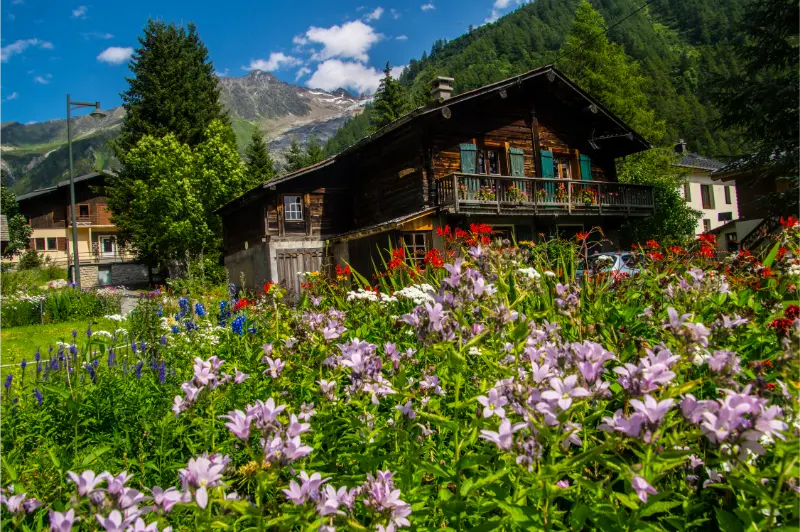
    Quick planning overview

    QuestionPractical answer
    Best for historyAvignon and Arles.
    Best for villagesLuberon and Alpilles.
    Best for natureCamargue and Gorges du Verdon.
    Best for artAix-en-Provence, Arles and Les Baux.

    1. Spend a full day in Avignon

    The Palais des Papes is the obvious anchor, but Avignon is much more convincing when you stay inside the walls long enough to walk the lanes, visit the Rocher des Doms area, cross or view the Rhône and eat without racing for a train. In 2026 the Palais introduced new interpretation and previously unseen rooms; check Avignon Tourisme for the latest visit information.

    2. Explore Roman Arles

    Arles gives Roman history unusual immediacy because the amphitheatre, theatre, cryptoporticoes and other sites sit inside an active town. The UNESCO story continues into Romanesque heritage at Saint-Trophime. Give the city a full day rather than treating the arena as a single stop, then use our Arles travel guide to connect the monuments logically.

    3. Follow Cézanne through Aix-en-Provence

    Aix is at its best when art and city life are combined. Walk the historic centre, notice the fountains and façades, visit Cézanne-related sites when open and keep Sainte-Victoire in the background of the day rather than forcing every stop into a museum schedule. The official tourism office maintains current information on the Cézanne sites and seasonal openings.

    Traditional Stone House with Brown Shutters Provence France

    4. See Gordes early or late

    Gordes is one of the most photographed villages in Provence, which is exactly why timing matters. Arrive early, walk the village before the busiest period and include the surrounding dry-stone heritage rather than stopping only at the famous approach viewpoint. Our Gordes guide explains how to turn the village into a half-day rather than a ten-minute photograph.

    5. Walk the ochre landscape at Roussillon

    Roussillon is visually different from the limestone villages around it. The paid Sentier des Ocres gives close access to the ochre formations, while the village itself carries the colours into walls and lanes. In 2026 the trail remains subject to weather and fire-risk closures, so check the official Roussillon trail page before driving over.

    6. Slow down in Saint-Rémy-de-Provence

    Saint-Rémy works as a market town, an art-history stop and a base for the Alpilles. Glanum adds a major archaeological site just south of town, while Van Gogh associations give another layer to the landscape. I would give the area most of a day and pair it with Les Baux only if you start early.

    7. Climb through Les Baux-de-Provence

    The village sits dramatically in the Alpilles, and the château ruins make the topography part of the visit. Nearby Carrières des Lumières provides a completely different immersive art experience in former limestone quarries. This is a good example of why the Alpilles deserve more than a quick detour between Arles and Avignon.

    8. Experience the Camargue as a wetland, not a theme park

    Flamingos, horses and bulls are emblematic, but the real attraction is the delta itself: lagoons, reedbeds, salt landscapes, rice-growing areas and huge skies. Use designated observation sites and marked routes, and follow guidance from the Parc naturel régional de Camargue rather than driving down private tracks in search of wildlife.

    9. Give the Verdon more than a viewpoint

    The Gorges du Verdon deserve a dedicated day or, ideally, several nights. Scenic roads reveal the canyon from above; Lac de Sainte-Croix gives a water-level perspective; walking adds a third. Our 3-day Verdon road trip is intentionally slower than the common one-day loop.

    10. Build one market morning into the trip

    A market is most useful when it shapes breakfast, lunch and a walk through town. Choose one that fits your route rather than chasing a different market every day. Arrive early, bring a bag and remember that food stalls, household goods and everyday shopping are as much part of the experience as photogenic produce.

    11. Drive the Luberon slowly

    Gordes and Roussillon are only the beginning. Ménerbes, Bonnieux, Lacoste, Lourmarin and smaller hamlets each change the rhythm. The point is not to visit all of them; it is to choose two or three with different characters. The 4-day Luberon route shows how to spread them across several days.

    12. Taste Provence through ordinary food

    Olive oil, tapenade, seasonal vegetables, goat cheeses, calissons and local wines make more sense when you encounter them where they are produced or eaten. A simple market picnic can tell you more about the season than an overcomplicated tasting menu. If alcohol is part of the trip, designate a driver or organise transport before the first tasting.

    13. Walk in the Alpilles

    The Alpilles are lower than the Alps but still require respect for heat, sun and seasonal fire restrictions. Shorter walks from established trailheads can be more rewarding than a long exposed hike in midsummer. Check local access rules the evening before in high fire-risk periods.

    14. See Provence outside summer

    Spring brings flowers and active landscapes; autumn softens the light and changes the markets; winter can be crisp, quiet and surprisingly rewarding in cities. Provence is not closed outside lavender season, and a shoulder-season trip often gives you better walking conditions and more spontaneous accommodation choices.

    Where to stay

    A good base keeps different experiences in the same geographical cluster. Arles is logical for Roman history and the Camargue; Avignon for the palace, Rhône and some western Vaucluse excursions; Aix for Cézanne-related sites and markets; the Luberon villages for a slower car-based stay. A single countryside property can work for a full week when you are willing to repeat drives, but two bases often make more sense if the Verdon is also a priority. Book for the places you will visit after breakfast and where you want to eat dinner, not for a romantic address that adds an hour to every return journey. Check parking and restaurant days before committing. To compare possible stays, use Compare places to stay on Booking.com.

    Narrow Street in a Stone Village Provence France

    Final planning advice

    A satisfying Provence itinerary balances eras and landscapes. One day might move from Roman stone to an evening square in Arles; another from Luberon market stalls to an ochre trail; a third might focus entirely on the Camargue or the Verdon. A slow lunch, a legal scenic stop and an hour in a quiet village are not filler between headline attractions. They are often where the place begins to feel distinctive. Use the twenty experiences as a menu rather than a compulsory route, and resist mixing distant districts in a single afternoon just because they look close on a regional map.

    15. Leave one afternoon unscheduled

    The most useful Provence activity may be the one you do not book. Leave one afternoon for a second market, a village you discovered at breakfast, a swim, a longer lunch or simply returning to a place in better light. This flexibility is especially valuable in summer, when heat and traffic can make a tightly packed plan unpleasant.

    16. Choose one landscape at sunset

    Rather than driving frantically between sunset viewpoints, choose one legal, safe place near your base and stay there. The evening change in colour is part of Provence’s appeal, and enjoying it without a schedule often becomes more memorable than another paid attraction.

    How this stop fits into a wider Provence trip

    A list of Provence experiences should change with the calendar instead of keeping the same ranking all year. In spring, Roman Arles, the Avignon palace quarter and the paths of the Alpilles suit walkers before the strongest heat. Late June and early July may bring lavender colour to the Valensole plateau, but flowering and harvesting vary, so check local updates. In July and August, markets start early, exposed villages become hot and fire risk can restrict mountain or forest access. Autumn is often excellent for calmer urban sightseeing, local produce and vineyards. In winter, choose places with substantial architecture and museums over a plan built entirely around seasonal boat trips or outdoor cafés. Even in one week, the best mix depends on weather.

    To make these experiences work with children, build each day around one main theme. A morning exploring Arles’ Roman sites can finish with a slow lunch; a Luberon village visit is better paired with a short nature stop than with three additional hill climbs. The Camargue needs an ethical wildlife perspective: birds and horses can be seen at a respectful distance, and wildlife sightings are never guaranteed. In the Verdon, distinguish scenic viewpoints from safe swimming access and check water conditions before setting out. A short market visit is more engaging when children choose fruit or bread for a picnic. The day should have a nearby place to rest before anyone becomes overtired.

    Many of Provence’s most recognisable experiences are also physically demanding. Les Baux-de-Provence has sloping stone routes; the ochre paths of Roussillon can be uneven; Verdon overlooks may involve exposed edges and steep approaches. If step-free access is essential, prioritise a small number of attractions with documented adapted routes and contact each site before buying tickets. Urban centres such as Aix and Avignon have more transport choices, but historic pavements and building entrances still vary. In summer, accessible transport is only part of the problem: shade, water and an indoor refuge should be planned as deliberately as the main sight. Do not assume that every spectacular viewpoint has a safe stopping or turning area for vehicles.

    17. Spend a night in a smaller town

    Day trips show you the famous façades; an overnight shows you the change in rhythm. In a Luberon or Alpilles town, early morning and evening are quieter, restaurant choices feel less rushed and you can start the next day before excursion traffic arrives. I would choose the overnight for logistics as much as atmosphere: it turns two long return drives into one short local day.

    18. Cycle one manageable route

    Cycling can reveal Provence at a scale that driving misses, but route choice matters. Canal paths, quieter rural lanes and signed cycle routes are better for most visitors than exposed main roads. Heat, mistral and climbing can change an easy-looking map into a demanding ride, so pick a distance below your theoretical maximum and start early.

    19. Visit a quieter heritage site

    After several famous monuments, choose one abbey, archaeological site or small museum that is not on every first-time list. Provence has Roman, medieval, industrial and artistic heritage well beyond the headline cities. One quieter site often gives you better context because you have time to read, ask questions and notice the landscape around it.

    20. End with a town rather than another viewpoint

    A final evening in Avignon, Arles or Aix is often more satisfying than squeezing in one last scenic drive. Return the car if possible, walk to dinner and let the trip finish at human pace. This also protects the final day from traffic delays before a train or flight and gives you a cleaner transition out of rural Provence.

    L Isle sur la Sorgue Canal Provence France

    Go beyond the headline sights: explore L’Isle-sur-la-Sorgue, the Sorgue source in Fontaine-de-Vaucluse, or Moustiers-Sainte-Marie by the Verdon.

    Current travel details and operating conditions

    When deciding which experiences require a booking, start with fixed-capacity admissions or guided activities rather than automatically reserving every stop. The Roman arenas and many old-town walks are easy to plan independently, while a specialised Camargue nature tour or a tasting can justify a guide who knows local conditions. For the Verdon, long winding roads should be considered part of the day, not empty transfer time between attractions. On high fire-risk days, consult official restrictions before entering a massif. For car-free travellers, favour a city base and select day tours only where buses cannot provide a practical substitute. This leaves time and budget for the places you are actually interested in.

    Before a trip in 2026, confirm the current opening and access conditions of the specific experiences selected, including seasonal gardens, Roman sites with temporary events and the Calanques or mountain paths subject to official restrictions. Local tourist offices provide market days and festival calendars that may not match older online summaries. If you intend to photograph lavender fields, stay on paths and never treat cultivated rows as public picnic ground. When evaluating boat trips or outdoor excursions, compare weather-cancellation policies and the exact departure point rather than relying on a promotional photograph. This kind of practical filtering is what turns a list of highlights into a workable holiday.

  • Corsica Road Trip: A Realistic 7-Day First Itinerary

    Corsica Road Trip: A Realistic 7-Day First Itinerary

    Corsica looks compact until mountain roads turn a short line on the map into a slow, concentrated drive. A first week should not circle the entire island. The most enjoyable plan chooses north or south, uses two bases and lets beaches, villages and mountains change with weather.

    This itinerary presents a southern route around Ajaccio and Bonifacio, plus a northern alternative through Bastia, Cap Corse and Balagne. Both are complete trips; combining them in seven days would sacrifice the very landscapes you travelled to see.

    Quick planning overview

    Length7 days
    Best structureTwo bases
    ChooseSouthern Corsica or northern Corsica
    CarUseful; select a compact vehicle
    Driving ruleEstimate by time and road character, not kilometres

    A southern Corsica week

    Days 1–2: Ajaccio area

    Settle into the island rhythm through the city, markets and a nearby coastal outing rather than collecting the car and immediately crossing mountains.

    My practical advice: Time the first drive around flight or ferry fatigue and never leave luggage visible.

    Day 3: west-coast landscapes

    Use a carefully chosen excursion toward the Gulf of Porto or another western landscape only if road time remains comfortable.

    My practical advice: Cliff roads demand concentration; the driver needs viewpoints and rest, not a packed arrival deadline.

    Days 4–5: Bonifacio

    Move south for limestone cliffs, harbour levels and boat or walking perspectives, understanding that stairs and wind shape the visit.

    My practical advice: Reserve parking or accommodation logistics and check sea conditions before boat-dependent plans.

    Day 6: beaches with judgement

    Choose a beach by wind, access, parking and swimming conditions rather than social-media ranking.

    My practical advice: Carry water and remove waste; do not create informal parking that damages vegetation.

    Day 7: mountain or village contrast

    Use the final full day for an inland village, short walk or archaeological site within a safe return radius.

    Orcino Beach Calcatoggio Corsica France

    My practical advice: Avoid a major cross-island drive immediately before a ferry or flight.

    Northern alternative

    Base in Bastia or Cap Corse, then move to Calvi or L’Île-Rousse for Balagne beaches, villages and rail-linked coastal sections.

    My practical advice: This north-only route is equally complete and often flows better for arrivals into Bastia.

    Corsica logistics that change the trip

    Ferry or flight

    Compare total door-to-door time, luggage, vehicle costs and arrival hour.

    Roads

    Average speeds can be low; add margins for animals, cyclists, viewpoints and summer traffic.

    Beaches

    Wind and sea state vary by coast, so keep alternatives on opposite exposures.

    Hiking

    The GR20 is a serious undertaking, not an improvised day-trip label; select marked walks appropriate to experience.

    Where to stay

    Ajaccio plus Bonifacio or Porto-Vecchio creates a southern framework; Bastia plus Balagne works in the north. A beach residence may be isolated from dinner, while town accommodation complicates parking. Confirm air-conditioning, access road width, check-in time and whether linens or cleaning are included.

    Compare accommodation in Corsica on Booking.com

    Getting around

    A compact rental car helps on narrow roads, but inspect it carefully and understand ferry permissions. Corsican rail is scenic and useful on selected axes, not a complete island solution. Fuel up before remote stages and keep phone navigation backed by an offline map.

    Food and everyday rhythm

    Corsican charcuterie, cheeses, chestnut products, seafood and wines reflect mountain and coastal production. Seek genuine local origin rather than assuming every souvenir label is island-made. Reserve dinners in small places and drink moderately when driving roads that demand full attention.

    Budget and booking strategy

    Summer cars and accommodation require early booking. Ferrying your own vehicle can be economical for a family but changes travel time. Beach days cost little until parking, boats and restaurants accumulate. Two bases reduce fuel and cleaning fees.

    How I would prepare before departure

    I would treat a seven-day Corsica trip as one side of the island, not a loop that tries to include every celebrated beach. This suggested southern route uses Ajaccio and Bonifacio as practical anchors, with one west-coast scenery day and an inland contrast. Mark roads by driving time rather than by straight-line distance: the mountain terrain and bends slow progress dramatically. If arrival or departure is through Bastia, the northern alternative can be more sensible than crossing the island just to follow a predetermined plan. The reward for fewer kilometres is the freedom to stop at a viewpoint or village without worrying about a distant check-in.

    Before making reservations, check the exact airport or ferry port, vehicle collection hours and the rental company’s conditions for mountain roads. A seven-day itinerary that starts late in the evening and ends with an early flight effectively has fewer sightseeing days. If arriving by ferry with a car, allow for embarkation procedures and possible sailing changes. If hiring, select a vehicle you are comfortable handling on narrow roads and understand insurance coverage. For Bonifacio, research parking before entering the historic upper town. Any boat excursion to cliffs or offshore islands should be booked with flexibility, because sea state determines what operators can safely offer.

    A windy or stormy day on Corsica needs a land-based alternative rather than a desperate search for a sheltered boat. Bonifacio’s sea excursions can be affected even when the sky looks clear, and exposed beaches may be uncomfortable in strong winds. Spend such a day exploring an inland village or a town museum, provided road and weather warnings permit the journey. In summer heat, choose the earliest realistic start for longer walks, carry more water than you expect and do not improvise a rugged hike in midday sun. In shoulder seasons, confirm restaurant and activity openings: the island’s year-round life is not identical to its summer tourism offer.

    Accessibility and responsible travel

    Accessibility in Corsica is best approached by choosing exact stops. Bonifacio’s historic citadel, dramatic staircases and cliff paths are visually striking but often steep. Some beaches are reached by long paths, soft sand or irregular parking areas, while an apparently nearby viewpoint may involve a challenging descent. Ask accommodation providers about steps and access from the vehicle rather than relying on a generic ‘ground floor’ description. Travellers with limited mobility can still enjoy ports, town centres and selected scenic roads, but should identify suitable promenades in advance. Families with strollers may prefer a shaded harbour outing to a scramble down to a famous cove.

    Corsica’s mountains and coast belong to a landscape with protected habitats, traditional villages and seasonal pressure on water resources. Use designated parking, do not drive onto dunes or informal tracks and avoid disturbing livestock on rural roads. Respect swimming warnings and do not assume a calm-looking cove has safe conditions. Take particular care with fire restrictions in dry weather, including prohibitions affecting trails and picnic activities. Staying locally for several nights and eating in village businesses helps visitors engage with the island beyond its best-known beaches. The places that look empty in advertising may still be working and ecologically sensitive spaces.

    Mistakes I would avoid

    • Trying to circle Corsica in seven days
    • Trusting kilometre estimates
    • Planning every day around one famous beach
    • Underestimating wind and mountain weather
    • Taking an unsuitable rental car onto rough access roads

    The most serious mistake is trusting a kilometre figure instead of Corsican travel time. A road may be scenic but slow, and piling two mountain drives around a fixed boat departure makes the day fragile. Another is planning only beaches and discovering too late that wind has made the planned shore unpleasant. Include one cultural or inland alternative, and choose between southern and northern Corsica rather than attempting both in seven days. Avoid a final overnight far from the departure port unless you have a substantial time buffer. The island’s character emerges when you stop fighting its terrain and give each small area room.

    Frequently asked questions

    Is one week enough for Corsica?

    Yes for a focused north or south itinerary. It is too short for a relaxed full-island circuit.

    Do I need a car?

    A car is strongly useful outside a limited town-and-rail trip.

    North or south for a first visit?

    Choose by arrival point and interests. The north combines Cap Corse and Balagne; the south combines cliffs, beaches and mountain access.

    When should I visit?

    Late spring and early autumn often balance warmth and pressure, while summer requires earlier booking and heat planning.

    Useful official resources

    Visit Corsica is the starting point for local tourism guidance, while the chosen ferry or airline is the authority on baggage, timings and changes. Check the Corsican Railways operator if considering a scenic rail day; the train network is useful on particular corridors but it will not recreate this entire road trip. For any marine excursion, the operator’s sailing notice matters more than a fixed booking in your itinerary spreadsheet. Local prefectural or municipal information may also affect wildfire-related access in dry periods. Keep emergency contacts and the actual address of each night’s lodging available offline before entering areas with weak mobile coverage.

    Continue planning your trip

    For the next step, read the French Riviera guide, four days in Marseille, the best time to visit France and the France destination guide. These guides are designed to connect into a slower, more realistic France itinerary.

    Corsica is memorable for the speed with which landscapes change, not for the number of famous beaches you can collect. Around Ajaccio, the gulf opens toward rugged western scenery; Bonifacio brings limestone cliffs and a dramatic historic settlement; inland villages introduce another pace and food tradition. Give the road trip an afternoon without appointments so a roadside market, short walk or long view can become the main experience. A simple meal with Corsican cheese, chestnut-based specialities or local produce can tell a distinct story of place. That slower rhythm feels more faithful to the island than a seven-day sprint around the shoreline.

    Propriano Corsica France

    A final decision checklist

    I would book the first and last nights around real transport commitments. If the flight lands in Ajaccio, an Ajaccio-area base reduces fatigue on arrival; near Bonifacio, a second base can serve the south without repetitive driving. Check whether a rural rental has a paved access road, clear directions and after-hours reception. Summer parking availability near beaches and the citadel deserves special attention. For travel with children, confirm shade, toilet facilities and a realistic walk from car park to beach rather than choosing the most famous name. Shorter outings often leave more time for a relaxed swim and an unhurried evening meal.

    Road confidence matters as much as lodging location. On twisting coastal and mountain routes, allow other vehicles to pass safely, avoid stopping on blind bends for photographs and keep fuel topped up before remote sections. If someone in the group is prone to motion sickness, choose fewer cross-island transfers and plan regular pauses. A ferry-based itinerary also needs a generous return allowance for port queues. The train can provide a welcome non-driving experience on a suitable corridor, but route choice and operating days should be checked directly. A sensible road-trip plan leaves you alert enough to enjoy the villages at the end of each drive.

    For the last check, divide the week into two Ajaccio days, a carefully selected west-coast journey, two Bonifacio days and two flexible days for beach or mountain contrast. Remove any stop that forces a long same-day detour back over a difficult road. Save ferry or flight instructions, accommodation coordinates and the boat operator’s contact details. Keep one excursion weather-dependent instead of prepaying everything. Seven days cannot cover all of Corsica, and the itinerary becomes stronger when it admits that limitation. Choose a region, drive cautiously and let the island surprise you at human speed.

  • Best Islands in Brittany: Belle-Île, Ouessant, Bréhat, Batz, Groix and More

    Best Islands in Brittany: Belle-Île, Ouessant, Bréhat, Batz, Groix and More

    Brittany’s islands are not interchangeable. Belle-Île is large enough for a multi-day trip, Ouessant is defined by Atlantic exposure and lighthouses, Bréhat is a compact car-light garden island, Batz works easily from Roscoff, and Groix, Houat, Hoëdic and the Glénan archipelago each reward a different travel style.

    The best island is therefore the one that fits your time, transport tolerance and preferred landscape. A one-day visitor should prioritise a short, reliable crossing and compact geography; a three-night island stay can justify longer transfers and more ambitious walking.

    Brittany Tourism encourages visitors to leave the car behind for many island experiences. That is not just an environmental message: on small islands, walking and cycling are often the best way to understand scale.

    Quick planning snapshot

    Best for a multi-day first islandBelle-Île-en-Mer
    Best for wild Atlantic characterOuessant
    Best easy car-light day tripÎle de Bréhat or Île de Batz
    Best for South Brittany cyclingGroix
    Best archipelago sceneryGlénan

    Belle-Île-en-Mer: choose it for variety

    Belle-Île is Brittany’s largest island and supports several days of travel: Le Palais, Sauzon, Pointe des Poulains, Port Coton, beaches and long GR340 sections all compete for time.

    Choose Belle-Île if you want an island to function as a destination in its own right rather than a day excursion. Two nights are a practical minimum for a relaxed first visit.

    Ouessant: choose it for lighthouses and exposure

    Ouessant feels more remote because of its Iroise setting, low vegetation and lighthouse network. Walking and cycling are excellent, but strong wind can change the difficulty of the day.

    One day works only with a focused plan. Stay overnight if you want both Stiff and the western coast without racing the ferry.

    House Brittany France

    Île de Bréhat: choose it for a compact walking day

    Bréhat is reached by a short crossing from Pointe de l’Arcouest and is largely car-free. The southern lanes, gardens, Vauban bridge and wilder northern coast fit naturally into a full day.

    It is one of the best choices for travellers who want the feeling of an island without committing several nights.

    Île de Batz: choose it from Roscoff

    Île de Batz is the obvious extension from Roscoff. Its scale makes walking or cycling realistic, and the island combines cultivated land, coast, gardens and lighthouse views.

    It works best when Roscoff is already in your itinerary; travelling across Brittany solely for a short Batz excursion is less efficient.

    Groix: choose it for cycling and South Brittany

    Groix lies off Lorient and fits naturally into a southern Brittany route. Cycling is popular, but the island still deserves time for beaches, village stops and changing coastal geology rather than a fast lap.

    If you are based in Lorient, compare a day trip with an overnight stay according to the season’s ferry schedule.

    Houat and Hoëdic: choose them for small-island simplicity

    Houat and Hoëdic are smaller and feel more stripped back than Belle-Île. They suit travellers who want beaches, walking and limited urban distraction.

    Because services and accommodation are more limited, confirm food, return crossings and overnight availability before treating them as spontaneous extensions.

    Glénan: choose it for an archipelago boat day

    The Glénan archipelago off South Finistère is known for pale sand and clear water. Most visitors experience it through a seasonal boat trip rather than as a conventional village stay.

    Sea conditions control the day. Book the crossing first, then keep the mainland itinerary flexible enough to absorb a cancellation.

    Day trip or overnight?

    Day trips work best for Bréhat, Batz and many Glénan excursions. Belle-Île and Ouessant become much more rewarding overnight because ferry pressure disappears and early/late light belongs to you.

    Groix sits between those models: a day can work, but a night gives more freedom for cycling and beaches.

    How to compare ferry logistics

    Do not compare ticket price alone. Look at mainland departure point, parking, rail/bus connection, luggage policy, bicycle rules, crossing time and the final island transfer.

    A slightly more expensive sailing can be the better choice if it arrives beside your accommodation or removes an additional taxi.

    Weather and cancellation strategy

    Island plans should be the most flexible part of a Brittany itinerary. When a crossing is essential, avoid placing an international flight or non-refundable long train immediately after the return.

    Keep one mainland day movable. If the sea is unsuitable, swap activities instead of forcing a crossing that may be uncomfortable or cancelled.

    Choose the island by its mainland departure point

    A Brittany island trip starts on the mainland, not on the beach. Belle-Île is normally approached from Quiberon; Groix from the Lorient area; Île de Batz from Roscoff; and Bréhat from the coast around Ploubazlanec and Paimpol. Ouessant requires planning around connections from the Iroise coast, with services that vary by season and port. These are different corners of Brittany, not a set of islands you can collect in a single day. Check both the outward and return sailing before reserving accommodation or a long-distance train. On a road trip, plan one island for a particular coastal region: Bréhat while visiting Paimpol, Batz while based in Roscoff, and Groix during a Lorient stay. Combining several only makes sense across multiple days. A car parking reservation, ferry ticket and on-island bicycle booking are three separate decisions; one does not guarantee either of the others.

    What Belle-Île gives you that a small island cannot

    Belle-Île rewards travelers who want contrasting landscapes and enough roads to justify more than one night. Le Palais is the practical arrival point; Sauzon is an appealing harbor stop; the Aiguilles de Port-Coton and the northwestern Pointe des Poulains present the island’s exposed maritime character. Inland lanes and village markets offer a quieter counterpoint to the spectacular coast. A single-day circuit is possible with realistic transport, but it tends to favor just one side of the island. Three days allow time for different sectors without turning the holiday into a sequence of bus departures. Coastal trails can be steep and are not automatically suitable for bicycles, which should stay on permitted routes. On windy days prioritize a sheltered settlement or short inland walk instead of forcing a cliff itinerary. Belle-Île is an actual destination, rather than merely a ferry excursion.

    Virgin Islands Creek Brittany France

    Ouessant and the difference between seeing and entering a lighthouse

    Ouessant has an identity shaped by exposed Atlantic seas and a remarkable concentration of lighthouse history. The Créac’h lighthouse and its maritime context tell a different story from an easy family beach outing. Build a day around the island’s roads, low stone buildings, grazing land and safe designated viewpoints, not an assumption that every lighthouse is open for climbing. Exterior views and museum exhibitions may be accessible even when the tower itself is not. Expect wind to alter how far walking or cycling feels comfortable. Staying overnight helps if you want time for the island’s quieter roads after day-trippers leave, but it also makes you dependent on a later sea crossing. Look carefully at the location of your accommodation relative to the landing point; a short distance on a map may be awkward with luggage and a strong headwind.

    Bréhat and Batz: two small islands with different rhythms

    Bréhat and Batz are both workable as day excursions, but choosing between them depends on where you already are. Bréhat is known for its sheltered gardens, granite shores and paths between small communities; visitors should plan on walking rather than assuming they can use a private car. The visitor experience depends on tides, available boat services and the distances between points of interest. Batz is a short crossing from Roscoff and pairs naturally with an overnight stay in that granite port. Its agricultural plots, low coastal roads and the Georges Delaselle exotic garden make it more than a beach stop. A bicycle is useful only if riders are comfortable sharing narrow routes and complying with local restrictions. Neither island requires an attraction-heavy schedule: choose one main walk, leave enough time for lunch, and keep the sailing back in mind.

    Groix, Houat, Hoëdic and the Glénan archipelago

    Groix is a particularly good option if Lorient is already on your itinerary. It offers villages, cycling routes, coastal geology and beaches, including the distinctive convex sand of Les Grands Sables. Do not confuse its relatively manageable size with an entirely flat route; headwinds and inclines can matter on a bicycle. Houat and Hoëdic have smaller-scale settlements and more limited services: travelers should confirm meal options and the last return before arriving. The Glénan islands offer a beautiful maritime excursion from parts of southern Finistère, but a boat outing is different from independent island transport. Depending on the excursion, stops, landing rights and time ashore may be constrained. Keep a waterproof layer even in sunshine and treat protected natural areas as habitats rather than unrestricted picnic lawns. In each case, matching the excursion to your preferred activity matters more than ranking one island as universally superior.

    Practical decisions: luggage, sea conditions and overnight stays

    A ferry timetable is not the same as a guaranteed sailing in all weather. Check the operating company again close to departure and leave flexibility before an international flight or a major rail connection. Travelers who are sensitive to motion may prefer a short crossing to Batz or Bréhat over a more exposed Atlantic route, although conditions can vary on every passage. Travelers using wheelchairs or strollers should ask the operator about boarding equipment, tide-dependent ramps and the actual island paths rather than relying on a generic accessible symbol. For food, do not expect every small island to have grocery hours comparable to the mainland; carry water and buy essentials before a late afternoon arrival. Book an overnight island stay when you want to explore early and late, not merely because the place looks tiny on a map. A thoughtful overnight visit is often more memorable than two rushed crossings.

    Getting there and getting around

    Before fixing a schedule for Brittany islands, solve the final connection as carefully as the main journey. In Brittany, the last bus, ferry, rural road or parking area often matters more than the long-distance train. Check current SNCF, BreizhGo, ferry or local transport information shortly before departure rather than relying on an old timetable.

    How long to stay

    For Brittany islands, I would allow enough time to combine the headline attraction with the landscape or local culture that explains it. A rushed stop may deliver a photograph, but it rarely gives you the reason the destination belongs in a Brittany itinerary.

    Pont Aven Vilage Brittany Dramatic France

    Food and local rhythm

    In small towns and islands, opening days vary outside summer. Do not assume every restaurant is open every night simply because accommodation is available.

    Families and accessibility

    Brittany islands can work well for families when the day alternates between one structured visit and open space. Historic paving, steep streets, cliff paths, ferry gangways and exposed terrain can create practical barriers, so check the accessible route for the exact attraction rather than assuming the main approach will suit everyone.

    Official information to check before you go

    For current opening hours, temporary restrictions, tickets and local safety information, use Brittany Tourism – Brittany’s islands. Variable information should always be rechecked close to travel, especially when the day depends on ferries, protected natural areas, guided visits or seasonal opening.

    How this fits into a Brittany itinerary

    Continue planning with Belle-Île guide, Ouessant guide and Île de Bréhat guide. For the regional structure, also use the Brittany Travel Guide and the 10-day Brittany road trip.

    Final advice

    The best visit to Brittany islands starts by identifying what makes it different, then giving that feature enough time. Leave room for changing light, weather, a market or an unexpected walk instead of programming every half-hour.

    That margin is not wasted time. In Brittany, flexibility is often what turns a difficult-weather day into a memorable one.

    Planning details worth checking the day before

    Official information for planning: Brittany Tourism — Belle-Île Brittany Tourism — Islands. Always reconfirm schedules, access and conditions directly with the operator before traveling.

  • Canoeing the Dordogne River: Best Routes, Villages and Practical Tips

    Canoeing the Dordogne River: Best Routes, Villages and Practical Tips

    Canoeing the Dordogne is one of the few activities in the region that combines landscape, heritage and a genuine sense of movement without putting you back behind the wheel. On the classic stretches of river near Vitrac, La Roque-Gageac, Castelnaud and Beynac, you paddle beneath limestone cliffs and see castles from the perspective that once mattered most: the river itself. It is not an extreme white-water experience in normal summer conditions; for many visitors, the appeal is the slow pace and the sequence of villages and castles.

    The key to enjoying the day is choosing the right distance. Rental companies offer different routes and shuttle arrangements, but a longer route is not automatically better. If you want to stop for a picnic, swim where permitted and actually look at the landscape, choose a distance that leaves spare time rather than the maximum kilometres your group could theoretically manage.

    Why canoe the Dordogne

    The river gives you a continuous view of the valley that roads cannot. From the water, the relationship between cliff-top fortifications, riverside settlements and crossings becomes obvious. La Roque-Gageac appears as a settlement pressed between rock and water; Castelnaud and Beynac become strategic high points rather than isolated monuments.

    The Dordogne tourism board notes that the department’s rivers include the Dordogne, Vézère, Isle, Dronne, Auvézère and Céou, with a long-established leisure-canoe network. The official river overview also highlights the UNESCO biosphere status of the Dordogne basin and the importance of responsible recreational use.

    The classic scenic section

    For a first-time visitor, the most memorable section is usually the central Dordogne Valley around Vitrac, La Roque-Gageac, Castelnaud and Beynac. Exact put-in and take-out combinations vary by operator. Some routes begin upstream of La Roque-Gageac and finish near Beynac or farther downriver, while shorter options focus on the heart of the valley.

    Medieval Castle Dordogne France

    Rather than choosing by a route name alone, ask the operator three questions: how many kilometres, how long most leisure paddlers actually take with stops, and where the return shuttle operates. The answers matter more than a marketing label such as “discovery” or “adventure”.

    How far should you paddle?

    Short outingBest for families, first-time paddlers or very hot days; leaves time for a village visit afterward.
    Half-day routeThe best balance for most visitors; enough scenery without turning lunch and swimming stops into a race.
    Long dayBetter for confident groups who genuinely want a day on the river and can manage sun exposure and sustained paddling.
    Multi-dayA separate style of trip requiring accommodation, equipment and detailed operator planning.

    Do not estimate duration from athletic speed. Rental-canoe days include orientation, loading, photos, drifting, lunch, swimming, queues at launch points and shuttle transfers. A group that could technically paddle the route in two hours may enjoy it much more over four.

    When to go

    Summer is the main canoe season because services are frequent and water temperatures are more inviting, but it is also when launch points and popular banks are busiest. Late spring and early autumn can be excellent when operators are running and conditions are suitable. River levels change with weather, so the operator’s decision on the day is more important than a generic seasonal rule.

    On very hot days, start earlier rather than trying to launch in the strongest afternoon sun. On cooler or unstable days, pack an extra dry layer in a waterproof bag. A scenic river does not eliminate basic weather exposure.

    Safety and swimming ability

    Follow the rental company’s safety briefing and age rules. The official Dordogne tourism information notes leisure canoeing options aimed at families, but individual operators can apply their own conditions based on age, swimming ability, water level and equipment. Life jackets are essential even on calm-looking water.

    Avoid tying bags or children into the canoe, keep valuables in a properly sealed container and never stand up casually in moving water. If you stop on a bank, choose a safe place that does not damage vegetation or block private access. Alcohol and paddling are a poor combination, especially in sun and heat.

    What to bring

    • Water: more than you think you need on a warm day.
    • Sun protection: hat, sunglasses with a retainer, sunscreen and light clothing.
    • Footwear: shoes or sandals that can get wet and stay secure on your feet.
    • Waterproof bag: for phone, wallet, car key and a dry layer.
    • Picnic: simple food that tolerates heat, plus a bag for all rubbish.
    • Towel and change of clothes: leave a dry set at the base or protect it carefully.

    Canoeing with children

    A shorter route is almost always the better family choice. Children enjoy the experience more when there is time to stop, snack and look at castles rather than being told to paddle continuously to make a shuttle. Ask the operator about minimum ages, current river conditions and the most sheltered route for the day. Put one confident adult in each boat if your group has several children.

    Autoire Villages Dordogne France

    Combine the canoe trip with only one major heritage stop. For example, paddle in the morning and visit Beynac or La Roque-Gageac later. Trying to add two castles after several hours on the water usually produces tired children and rushed adults.

    Where to book

    The Dordogne Périgord tourism board lists partner canoe operators across the department. Compare launch location, included shuttle, route length, cancellation policy and storage arrangements. Booking directly with an established local operator also makes it easier to ask about the exact water level and suitability for your group.

    La Roque-Gageac from the water

    The approach to La Roque-Gageac is one of the visual highlights of the classic valley route. From the canoe, the village’s narrow strip between cliff and river becomes completely clear. If you are also visiting on foot, do the river first: you will recognise the cliff, houses and landing areas when you return to the streets.

    Castelnaud and Beynac from the river

    The opposing castles are reminders that the river valley was a strategic corridor, not just a landscape for modern tourism. Their high positions make more sense from water level. If castles are a major interest, use our best castles in Dordogne guide to decide which one to visit inside rather than assuming you need both interiors on the same day.

    Canoe day or gabarre boat trip?

    A traditional-style gabarre excursion is better for travellers who do not want to paddle, families with children too young for the operator’s rules or anyone wanting commentary and a fixed duration. Canoeing is better if you want independence, physical activity and time to stop. The views overlap, but the experiences are not interchangeable.

    Where to stay for a canoe-focused day

    Sarlat provides the broadest accommodation and restaurant choice while staying close to several river bases. La Roque-Gageac, Beynac, Vitrac and nearby countryside properties put you closer to the water but offer fewer evening options. Compare accommodation around Sarlat and the Dordogne Valley and check the actual driving time to your selected canoe base.

    Build the day around the river

    A successful canoe day is not “canoeing plus everything nearby.” Make the river the main event. Start early, choose a realistic distance, keep the afternoon flexible and use one village or castle as a bonus. You will remember the reflections, cliff views and quiet stretches far more clearly than a checklist of four rushed attractions.

    Final advice

    Book a route that matches the least experienced person in your group, respect the operator’s safety advice and leave margin for weather. The Dordogne is most rewarding when you allow the current and landscape to set the pace. In a region where many days involve driving between monuments, a few hours moving slowly downriver can become the trip’s most refreshing change of perspective.

    Current, wind and river etiquette

    The Dordogne can look gentle from the bank, but conditions still vary with water level, wind and weather. Follow the operator’s briefing, keep a sensible distance from other boats and give anglers, swimmers and wildlife space. Do not tie up in places marked private or land on fragile banks simply because a beach looks inviting. If a section feels beyond your ability on the day, ask the outfitter for a shorter or easier route; changing the plan is better than turning a relaxed river outing into a stressful one.

    Castelnaud La Chapelle Castle Dordogne France

    Understand the shuttle before you launch

    Most one-way canoe trips depend on a shuttle system, and this is where first-time visitors can lose time. Confirm whether transport operates before or after the paddle, where you leave the car, the last return time and what happens if you finish much earlier or later than expected. Take a photograph of the meeting point and note the operator’s phone number before putting valuables into a waterproof container. A clear shuttle plan matters as much as choosing the prettiest stretch of river.

    Morning or afternoon?

    Morning departures usually offer cooler temperatures, calmer preparation and more flexibility if you stop for a picnic. Afternoon outings can have attractive light and fit well after a village visit, but you have less margin before the final shuttle or closing time. In midsummer, families with younger children often appreciate an earlier start because the exposed parts of the river can feel hot later in the day. Outside peak summer, air and water temperatures should influence the decision more than photography.

    What not to do on a Dordogne canoe day

    Do not pack a long list of castles and villages around the paddle. A route that is advertised by distance still takes longer once you include the safety briefing, shuttle, swimming stops and lunch. Avoid taking phones, passports and car keys loose in pockets, and do not rely on ordinary trainers staying dry. Most importantly, never treat a family canoe route as automatically safe in every condition. Local operator advice on water, storms and age restrictions should override a fixed itinerary.

  • Rouen Travel Guide: A Better 2-Day Itinerary for Normandy’s Historic Capital

    Rouen Travel Guide: A Better 2-Day Itinerary for Normandy’s Historic Capital

    Rouen is one of the easiest Normandy cities to underestimate. Many travellers arrive for the cathedral, take a photograph of Gros-Horloge and continue toward the coast. I think that is a mistake. Rouen works best as a compact two-day city break and as a logical gateway into a longer Normandy itinerary.

    Useful planning links: 7-day Normandy road trip · France by train guide · best time to visit France

    Why Rouen deserves two days

    Rouen is sometimes treated as a quick cathedral stop on the way to somewhere else, but that misses what makes the city work. The historic centre is dense enough to explore on foot, yet layered enough to reward a night: Gothic architecture, half-timbered streets, Joan of Arc history, museums, markets and the Seine all sit within a compact area. The city also makes sense as the eastern gateway to Normandy because trains from Paris Saint-Lazare are frequent enough to make a car-free arrival practical.

    The best approach is to separate “monument Rouen” from “everyday Rouen.” See the cathedral, Gros-Horloge and Place du Vieux-Marché, but also give yourself time for Rue Eau-de-Robec, the antiques quarter, a market lunch and the evening light on the old façades. Two days lets you do that without turning the visit into a checklist.

    Day 1 morning: cathedral, old streets and Gros-Horloge

    Start at Notre-Dame Cathedral before the old centre gets busy. Monet painted the façade repeatedly because its appearance changes with light, weather and hour; standing in the square early makes that obsession easier to understand. Go inside if services allow, then walk the short distance toward Rue du Gros-Horloge.

    The Gros-Horloge is both a landmark and a useful axis through the pedestrian centre. Instead of photographing the astronomical clock and moving on, slow down around the surrounding lanes. Rue du Gros-Horloge can be busy, but small parallel streets reveal timber-framed houses, courtyards and shopfronts that give Rouen its character.

    Rouen Townscape France

    If you enjoy architectural detail, look for the contrast between flamboyant Gothic stone and the much warmer texture of timber buildings. Rouen is one of those cities where a twenty-minute walk can cover several centuries of urban history.

    Day 1 afternoon: Joan of Arc and Place du Vieux-Marché

    Walk west to Place du Vieux-Marché, associated with the execution of Joan of Arc in 1431. The modern Church of Saint Joan of Arc deliberately breaks with the surrounding historic architecture. That contrast is worth seeing rather than judging from photographs.

    If Joan of Arc is a major reason for your visit, add the Historial Jeanne d’Arc in the archbishop’s palace area. If not, keep the afternoon looser: visit the Musée des Beaux-Arts, browse local shops, or sit down for a proper Norman lunch. Rouen is more enjoyable when one major indoor visit is balanced with time outside.

    Day 1 evening: the Seine and a slower old-town loop

    Late afternoon is a good moment to walk toward the Seine. The riverfront is not as theatrically beautiful as the medieval centre, but it explains Rouen as a working city and historic port. Return through the centre for dinner rather than staying only on the quays.

    In summer, Rouen often stages evening events and illumination programmes around major monuments. These change by year, so treat them as a bonus and check the current calendar instead of planning the whole trip around an old timetable.

    Day 2 morning: Saint-Ouen and Rue Eau-de-Robec

    Start the second day around the Abbey Church of Saint-Ouen and the gardens behind the Hôtel de Ville. The building is enormous and often quieter than the cathedral. From there, continue toward Rue Eau-de-Robec, where the narrow watercourse and historic façades create a different atmosphere from the main shopping streets.

    This eastern side of the centre is where I would deliberately stop navigating for a while. Walk, look into side streets, and allow a café break. The point is to feel the city rather than maximize a list of monuments.

    Day 2 afternoon: museum, market or panorama

    Choose one priority. Art lovers can devote more time to the Musée des Beaux-Arts. Food-focused travellers can build lunch around a market or cheese shop. If the weather is clear and you have a car or taxi, a higher viewpoint outside the immediate centre can give context to the Seine valley.

    Do not try to add Étretat, Honfleur or the D-Day beaches to this same day. Normandy looks small on a map, but moving between its coastal zones takes time. Rouen works best when it is allowed to be a destination rather than a lunch stop.

    How to get to Rouen from Paris

    Paris Saint-Lazare is the usual departure station for Rouen. Timetables vary by day, so check SNCF close to travel. For a car-free Normandy trip, Rouen is a strong first or final base, but cross-region train journeys toward Bayeux can be less intuitive than the Paris connections; sometimes the most efficient service involves Caen or limited direct regional trains.

    If you are renting a car for a wider road trip, consider picking it up after exploring Rouen rather than driving into the historic centre on arrival. That can save parking stress and makes the pedestrian core easier to enjoy.

    Where to eat and what to try

    Rouen is a good place to start tasting Normandy rather than waiting for rural cheese country. Look for menus using local cream, apples, cider, cheeses and seasonal seafood. Duck is associated with the city, but you do not need a formal restaurant to eat well.

    At lunch, a market, boulangerie and cheese shop can be more useful than a long tasting menu if you still want to sightsee. At dinner, slow down. Normandy’s richer cooking makes more sense when you are not rushing directly to the next attraction.

    Common mistakes to avoid

    • Visiting only the cathedral and saying you have “done” Rouen.
    • Driving into the pedestrian centre before checking hotel parking.
    • Trying to combine Rouen and the D-Day beaches as one comfortable day trip.
    • Assuming an old light-show schedule still applies in 2026.
    • Eating every meal on the busiest tourist street instead of exploring nearby lanes.
    • Ignoring rain planning: Rouen is still enjoyable in wet weather if you mix churches, museums and cafés.

    A realistic two-day schedule

    1. Day 1: cathedral, Gros-Horloge, old-town streets, Place du Vieux-Marché, one Joan of Arc or art visit, Seine walk and dinner.
    2. Day 2: Saint-Ouen, Rue Eau-de-Robec, market or museum, relaxed lunch, final neighbourhood walk and onward travel.

    This schedule is intentionally light. It gives you room for a closed church, a rainy hour, a market discovery or simply spending longer than expected in one street. That flexibility is what turns Rouen from a transit stop into a memorable first Normandy base.

    Planning Rouen in different weather

    On a dry day, prioritise the pedestrian lanes, riverfront and outdoor architectural views early. If rain settles in, Rouen is unusually forgiving because major churches, museums, covered cafés and short walking distances let you keep the day coherent. Carry a compact umbrella rather than abandoning the old centre.

    In winter, daylight is shorter and timber façades can feel darker, so put the cathedral and streets in the brightest part of the day. In summer, use the long evening for the Seine and old-town atmosphere, when day visitors thin out.

    Who will enjoy Rouen most

    Rouen is especially rewarding for travellers interested in architecture, medieval history, Joan of Arc, Impressionism and city photography. Families can manage it well because distances are short, though cathedral-heavy itineraries need breaks. Travellers whose main goal is beaches should still consider one night here rather than treating it as a detour.

    Practical planning checklist

    For Rouen, fix the arrival rail service from Paris Saint-Lazare, then plan a central walking loop rather than repeated taxis. The walk between Rouen Rive Droite station and the cathedral crosses useful parts of the city, but anyone with bulky luggage may prefer to leave bags at the hotel first. Check the exact opening day for the Gros-Horloge interior if you want to go beyond the street view. The Musée des Beaux-Arts and the Abbey Church of Saint-Ouen each make sense as half-day anchors, yet their schedules are independent. Rouen’s historic lanes are most enjoyable when one indoor visit is balanced with enough daylight for the timber-framed streets.

    In wet weather, start at the Musée des Beaux-Arts and move through covered or shorter streets toward the Gros-Horloge district when rain eases. A dry afternoon is ideal for the Rue du Gros-Horloge, the cathedral façade and the riverfront, while Saint-Ouen’s surroundings reward time even without a formal visit inside. Rouen has a different character from Normandy’s coastal towns: mist on the Seine is part of an urban landscape, not an invitation to add a beach excursion. If you are travelling in winter, remember that earlier darkness affects outdoor photography long before a museum closes.

    Rouen Gros Horloge Clock France

    Keep Rouen as a genuine overnight base rather than changing hotels between every Normandy stop. The city’s centre has enough dining and cultural choice to reward an evening, and the station is useful for onward rail travel. A visitor heading to Bayeux or Caen should check the current connection instead of assuming every Normandy town lies on a direct line. If you arrive by car, choose a hotel with confirmed parking outside restricted central streets and explore on foot. The best overnight arrangement lets you see the old town in morning light without navigating rush-hour traffic or hauling luggage along its busy pedestrian axis.

    Where to stay

    For Rouen’s two-day itinerary, look first around the cathedral, the Gros-Horloge corridor or within manageable walking distance of Rouen Rive Droite station. The old centre is convenient for restaurants after sunset, while station-side accommodation can work for an early train. A family with a stroller should ask about lifts, stairs and narrow access rather than relying only on a map showing a short walk. If driving, check garage height, opening hours and the exact route through one-way streets. Compare live accommodation options for your dates via compare current accommodation options and prices on Booking.com, then decide based on where your first morning begins rather than a small nightly price difference.

    Final thoughts

    Give Rouen at least one night if your schedule allows. The city has enough headline history for a first-time visitor, but its real strength is how easily those monuments connect to normal streets, cafés and neighbourhood life. It is the kind of place where slowing down by two hours improves the trip more than adding another attraction.

  • Batignolles Paris Guide: Village Streets, Markets and a Relaxed Local Walk

    Batignolles Paris Guide: Village Streets, Markets and a Relaxed Local Walk

    Batignolles is a useful Paris neighbourhood for travellers who want a calm, attractive area that still feels connected to everyday city life. It sits in the 17th arrondissement between the busier zones of Place de Clichy and the elegant western districts, with a village-like core around Place du Docteur Félix Lobligeois and a striking modern contrast in Parc Martin Luther King.

    It is not a place I would prioritise over the Louvre or Montmartre on a one-day visit. But on a four- or five-day trip, Batignolles can give you exactly the kind of slower half-day that prevents Paris from becoming an exhausting series of queues.

    Why visit Batignolles?

    Paris je t’aime describes Batignolles as a quiet district with a village spirit, centred on its market, church, square and local life. The area also has links with the Impressionists: artists including Manet, Degas, Cézanne, Monet and Renoir gathered in this part of Paris.

    Today, the attraction is the combination of older streets, food shops, café terraces, green spaces and the newer Clichy-Batignolles development. You can walk from traditional Paris to contemporary urban planning in less than half an hour.

    See our Paris neighbourhoods guide if you are deciding between Batignolles, Belleville, Canal Saint-Martin and other local districts.

    Where is Batignolles?

    The heart of the neighbourhood lies in the eastern 17th arrondissement. Metro stations Rome and Villiers on line 2 are useful from the south, while Brochant on line 13 serves the northern side. Place de Clichy is another practical gateway if you are arriving from Montmartre.

    The district is relatively walkable and flatter than Belleville or Montmartre, which makes it attractive for a gentler day.

    Start at Place du Docteur Félix Lobligeois

    This small square is the best place to understand the neighbourhood’s “village” reputation. There are terraces, trees and the church of Sainte-Marie des Batignolles nearby. It is a place to sit for ten minutes, not just photograph.

    Paris Townscape France

    Morning gives you local errands and café life. Around lunch, terraces become the focus. In the evening, the area remains lively without feeling like a large nightlife district.

    Sainte-Marie des Batignolles

    The church provides a visual anchor for the square and reinforces the sense that Batignolles once had a more separate identity from central Paris. If the doors are open and no service is taking place, a short respectful visit can fit naturally into the walk.

    As with all active churches, opening access can vary. Do not design the entire route around entering the interior.

    Square des Batignolles

    Square des Batignolles is one of the area’s most pleasant green pauses. Its landscaped style, mature vegetation and water features create a very different feeling from the formal geometry of the Tuileries.

    This is especially useful with children or on a warm day. Instead of scheduling a café every hour, use the square as a free break.

    The market side of the neighbourhood

    Batignolles has a strong food identity, with both market culture and good local shops. Exact opening days and vendors change, so verify current schedules if a specific market is the reason for your visit.

    The smarter approach is to treat food as part of the walk. Buy fruit, pastries or cheese for later, or choose lunch based on what is open rather than travelling across Paris for a famous address.

    Our Paris markets guide helps you compare covered and open-air options across the city.

    The Impressionist connection

    The Batignolles group is part of the neighbourhood’s cultural history. Édouard Manet and artists who would become central to Impressionism gathered in cafés and studios around the area in the 19th century.

    Do not expect a preserved “Impressionist street” where every building tells that story. The connection is more interesting as context: this was a developing district where artists and writers met, argued and built networks before their work became institutionalised in museums.

    If the history makes you want to see the paintings themselves, pair the neighbourhood with our Musée d’Orsay guide on another day.

    Walk toward Parc Martin Luther King

    The transition from the older village core to Parc Martin Luther King is one of the best reasons to visit. The park sits within the newer Clichy-Batignolles development and feels spacious, contemporary and deliberately urban.

    Walk slowly enough to notice how housing, paths, lawns and modern buildings interact. This is not “old Paris”, but it is useful if you are interested in how Paris is changing rather than only how it looked in the 19th century.

    Why the old-and-new contrast matters

    Many Paris itineraries accidentally freeze the city in an imagined past: Haussmann façades, cafés, churches and monuments. Batignolles makes it easy to see a living city where historic streets and major redevelopment sit side by side.

    That contrast is educational without requiring a formal architecture tour.

    A practical 2-hour walking route

    Use this sequence:

    Paris Les Invalides Aerial View France
    • Start at Rome or Villiers Metro.
    • Walk to Place du Docteur Félix Lobligeois.
    • See Sainte-Marie des Batignolles.
    • Relax in Square des Batignolles.
    • Explore one or two food streets and local shops.
    • Continue north toward Parc Martin Luther King.
    • Finish near Brochant or Porte de Clichy transport.

    This route is compact and avoids unnecessary backtracking.

    A half-day Batignolles plan

    With four hours, include a proper lunch and time in both parks. Add a market if one is operating on your visit day. If you enjoy photography, early morning is better for quieter streets; if café atmosphere matters more, late morning into lunch is ideal.

    Combining Batignolles with Montmartre

    This is one of the most logical combinations. Visit Batignolles first, then move east toward Place de Clichy and climb into Montmartre later in the day. The contrast is strong: Batignolles feels local and understated; Montmartre becomes more theatrical and crowded around Sacré-Cœur.

    Use our Montmartre walking guide to avoid spending the whole visit on the busiest streets.

    Combining it with Parc Monceau

    Parc Monceau lies to the southwest and creates another attractive half-day, especially for travellers who like gardens and elegant residential architecture. Walk only if you enjoy urban streets; otherwise use a short bus or Metro connection to preserve energy.

    Food and cafés

    Batignolles is a good district for a lunch you have not over-researched. Look for bakeries, produce shops and small restaurants around the core streets. Prices can still be Parisian, but the area generally feels less geared to one-time tourists than the streets immediately around major monuments.

    Our Paris food guide covers the practical signs of a good stop and the meal times that surprise first-time visitors.

    Is Batignolles good for families?

    Yes. The combination of parks, short walking distances and food stops makes it easier than a museum-heavy district. Parc Martin Luther King in particular gives children room to move after quiet sightseeing.

    Keep the day flexible. Children do not need a detailed history of Impressionism to enjoy the area. Our family guide to Paris has more pacing ideas.

    Is it romantic?

    Batignolles works well for couples who prefer understated neighbourhood romance to a formal “City of Love” itinerary. A market, a park, a long lunch and a walk toward Montmartre can feel more personal than stacking expensive experiences.

    For a full couples plan, use our new romantic Paris guide.

    Where to stay in Batignolles

    The neighbourhood can be an excellent base for repeat visitors, families and travellers who value calm evenings. The trade-off is that you are not walking out of the hotel directly onto the Seine or Île de la Cité.

    Transport matters more than arrondissement labels. A hotel five minutes from a useful Metro station can be more convenient than a supposedly “central” hotel with awkward connections. Compare areas in our Paris accommodation guide, or check current hotels in Batignolles.

    Best time to visit

    Spring and autumn are ideal. Summer is pleasant in the parks, though exposed modern areas can feel hot in the afternoon. Winter still works because cafés, markets and short distances make it easy to alternate indoor and outdoor time.

    Weekday mornings are quieter. Weekend brunch periods can be much busier, which is either appealing or annoying depending on what you want.

    Paris Louvre Museum Aerial View France

    Accessibility

    Batignolles is generally easier than hillier districts, but individual Metro stations may have stairs. The newer park and development provide broader paths than many historic areas. Check current station accessibility if step-free travel is essential.

    Common mistakes

    • Coming only to photograph one square and leaving.
    • Expecting a famous monument.
    • Ignoring the modern side around Parc Martin Luther King.
    • Walking to Montmartre and then climbing Sacré-Cœur without budgeting energy.
    • Choosing a market without checking its operating day.
    • Staying here on a one-night Paris trip when proximity to the historic core matters more.

    Is Batignolles worth visiting?

    Yes if you have enough time for Paris beyond the icons. It is not spectacular in the traditional sense, and that is a strength. Batignolles gives you parks, food, history, ordinary street life and a visible conversation between old and new Paris.

    For a well-balanced longer stay, that quiet variety is exactly what many itineraries are missing.

    Batignolles if you only have one hour

    If you are already near Place de Clichy or Parc Monceau and have only an hour, do not try to complete the full route. Walk to Place du Docteur Félix Lobligeois, cross the village core, spend a short break in Square des Batignolles and then continue toward your next destination. That compact version still gives you the district’s strongest contrast with central Paris.

    What Batignolles is not

    It is not a hidden version of Montmartre and it is not a secret neighbourhood with no visitors. It is simply a pleasant residential district whose appeal comes from scale, food, parks and everyday rhythm. Arriving with that expectation makes the visit much more satisfying than searching for a single “must-see” photo spot.

  • Where to Stay on the French Riviera: Nice, Cannes, Antibes, Menton or Smaller Bases?

    Where to Stay on the French Riviera: Nice, Cannes, Antibes, Menton or Smaller Bases?

    Choosing where to stay on the French Riviera changes the trip more than choosing one extra attraction. Nice is the strongest transport hub, Cannes works well for the western coast and islands, Antibes offers a compact old town between the two, Menton is ideal for the eastern end, and smaller bases trade convenience for atmosphere.

    The right answer therefore depends on what you want to do after breakfast. A beautiful hotel in the wrong part of the coast can create hours of repeated transfers, while a practical base can make the whole Riviera feel smaller.

    Quick planning snapshot

    Best all-round baseNice
    Best for Cannes + Lérins + western RivieraCannes
    Best smaller historic base with trainsAntibes
    Best for Menton, Monaco and Italian-border atmosphereMenton
    Best for quiet bay atmosphere near NiceVillefranche-sur-Mer

    Stay in Nice for the strongest transport network

    Nice is the default recommendation for a first car-free Riviera trip because airport tram access, the main railway corridor and extensive buses all meet in one city. It also has enough food, museums and neighbourhoods that returning each evening does not feel like returning to a transit hub.

    Choose Old Nice for atmosphere, Jean-Médecin for maximum transport convenience, the Port for restaurants and eastern day trips, or the seafront for beach access. Read the dedicated Nice guide before booking because neighbourhood choice matters almost as much as the city itself.

    Stay in Cannes for islands, beaches and western day trips

    Cannes is stronger than Nice when the Lérins Islands, Mougins, Grasse and the Estérel side of the coast dominate your plan. The station is central and Antibes is easy by train, while ferries make island days simple.

    The Croisette is expensive and event-driven. Le Suquet and areas near the station can offer a more practical balance. Check the events calendar because congresses and the film festival can transform prices and availability.

    Medieval Cagnes Sur Mer Riviera France

    Stay in Antibes for a smaller old-town base

    Antibes is one of the best compromises for travellers who want historic atmosphere without giving up the coastal railway. Nice and Cannes are both easy in opposite directions, while the Provençal market, Picasso Museum and beaches make days at “home” worthwhile.

    Old-town accommodation is atmospheric but can involve pedestrian access and noise. Staying closer to the station is less romantic but excellent for repeated rail trips. Juan-les-Pins is better when sand, beach life and evening resort energy matter more.

    Stay in Menton for the eastern Riviera

    Menton works beautifully for travellers focused on Monaco, Roquebrune-Cap-Martin, gardens and a slower old town near the Italian border. It is less central for Cannes and the western Riviera, so do not choose it merely because the hotels look calm.

    The town is attractive enough for several local days, particularly if you enjoy gardens and architecture. It also makes day trips across the border possible, though train disruptions or strikes can affect international sections like any other rail plan.

    Choose Villefranche-sur-Mer for atmosphere over scale

    Villefranche gives you a beautiful bay, a small old town and very quick rail access to Nice. It is one of the easiest places to feel you are staying in a small Riviera town without giving up the train entirely.

    The trade-off is fewer hotel and restaurant choices and steeper streets. It can be excellent for couples and slower travellers, less ideal for people who want nightlife or a different museum every day.

    Use Saint-Jean-Cap-Ferrat for a retreat, not a transport hub

    Cap-Ferrat is about coastal paths, villas and a residential peninsula atmosphere. It is wonderful when the accommodation itself is part of the experience and you are happy to use buses, taxis or walking to connect outward.

    For a first trip with many rail excursions, it is less efficient than Nice or Villefranche. For a luxury or restorative stay, that inefficiency may be exactly the point.

    Consider inland bases only for the right trip

    Vence, Saint-Paul-de-Vence, Mougins, Biot and Grasse can be excellent overnight bases for art, food and hill-village atmosphere. They are weaker if you plan daily swimming and east-west rail trips along the coast.

    A car becomes more useful inland, though not always essential. Choose these bases when the inland experience is the trip, not as a cheaper substitute for coastal accommodation without checking transport.

    Split the stay when the coast is too long for one base

    The Riviera is compact on a map but repeated travel adds up. A trip of a week or more can work better with two bases—for example Nice plus Cannes, or Nice plus Menton—especially if your wish list covers both the Estérel and the Italian border.

    Do not split merely to collect hotels. Each move costs packing and check-in time, so two bases make sense when they remove repeated long day trips. Three bases in six nights usually create more friction than benefit.

    Where to stay

    For a first trip, compare Nice hotels, Cannes hotels, Antibes hotels, Menton hotels and Villefranche-sur-Mer hotels on the same dates. Event pricing can make the “obvious” base unexpectedly expensive.

    Look beyond nightly price: add airport transfer, station distance, late-evening return options, parking if relevant and how many day trips start in the opposite direction. The cheapest room can create the most expensive itinerary.

    Families, accessibility and slower travel

    Families often benefit from Antibes, Cannes or quieter Nice neighbourhoods where food, beach and transport are all close. A separate bedroom or apartment may matter more than a sea view if naps and early nights shape the day.

    Travellers with reduced mobility should investigate gradients as carefully as hotel accessibility. Villefranche, Èze and hill villages can involve steep streets even when the property itself is step-free.

    Mistakes that make the visit harder than it needs to be

    • Choosing a base from hotel photos without mapping planned day trips.
    • Staying in Menton while planning multiple Cannes/Estérel days.
    • Paying Croisette prices when you mainly need the railway station.
    • Assuming a small hill village is convenient without a car.
    • Splitting a short trip across too many hotels.

    A base is not just where you sleep. On a linear coast with excellent rail but real travel time, it is an itinerary decision. Choose the base after the day trips, not before them.

    Sightseeing Tour Bus on the French Riviera Nice France

    How to combine it with nearby places

    Use the French Riviera travel guide for the region-wide transport logic, then compare the dedicated guides for Nice, Cannes, Antibes and Menton.

    For smaller bases, read Villefranche-sur-Mer, Saint-Jean-Cap-Ferrat, Vence and Mougins before deciding whether atmosphere outweighs transport convenience.

    Useful official information

    The official Nice Côte d’Azur accommodation portal illustrates the range of hotel, residence, rental, hostel and other options around Nice and surrounding towns. Other local tourism offices provide equivalent current listings.

    Always check current TER and local bus maps before choosing a peripheral base. A transport pattern that worked last summer may change with works, seasonal timetables or new routes.

    A Riviera base should solve a transport problem

    Choosing where to stay is easier when you begin with the places you genuinely intend to visit. Nice is a strong car-free base for museums, airport access and rail excursions east or west. Antibes suits travelers who want a smaller historic center and a mix of beaches and trains. Cannes offers festivals, island departures and resort accommodation, while Menton suits a quieter eastern Riviera stay. A hotel midway between famous cities is not automatically convenient if it is far from a railway platform or requires a steep climb after dinner. Compare actual travel days, not just nightly rates.

    Nice: best for first-timers and varied days

    Nice offers the old town, Promenade des Anglais, markets, hill viewpoints and a broad choice of accommodation. It also provides train connections toward Villefranche-sur-Mer, Antibes, Cannes, Monaco and Menton. For a short visit, the exact station or tram connection matters more than being a few hundred meters closer to the beach. A hotel in the old town may have nightlife noise and limited vehicle access; an address farther from the promenade might offer better value and simpler transit. Families should examine beach composition: Nice’s pebbles feel different from the sandy options in neighboring resort towns.

    Antibes and Juan-les-Pins: choose between two moods

    Old Antibes has narrow streets, cultural sights, Port Vauban and an evening atmosphere centered on the historic core. Juan-les-Pins is more oriented toward resort beaches and summer entertainment. These areas are related but not interchangeable walking experiences, and the Cap d’Antibes trails are a further location again. Stay near a convenient train station if you plan frequent day trips; choose a beach-focused property when swimming is your primary reason for visiting. Some attractive bays have limited parking and rocky access, so confirm the actual path between your room and the shore rather than relying on the phrase ‘steps from the beach.’

    Cannes or Mandelieu for a western Riviera itinerary

    Cannes works well for visitors interested in the city, Lérins island ferries and rail-connected excursions. During large events and festivals, prices and congestion can rise sharply. Mandelieu-la-Napoule and Théoule are alternatives for guests prioritizing quieter waterfront scenery, the red Estérel coast or a different hotel environment. They are not universally cheaper or more convenient, because getting between scattered coves may require a car. If you intend to catch early ferries from Cannes, a hotel close to your departure pier can be worth more than a distant panoramic room.

    Menton and Roquebrune for the eastern coast

    Menton’s gardens, old town and Italian-influenced setting make it appealing for several slower days. It also puts you near Roquebrune-Cap-Martin and rail routes toward Monaco and Nice. However, elevated villages such as Roquebrune’s medieval center are not directly at sea-level train platforms, so inspect the final climb or bus transfer. Visitors arriving through Nice airport should also calculate their transfer rather than choosing Menton only because of the hotel price. In summer, a room in a quieter eastern town can be more relaxing than a city-center Nice stay if nightlife and shopping are not priorities.

    When a rental car actually helps

    For a holiday focused on Nice, Cannes, Antibes, Monaco and Menton, regional trains often make a car unnecessary. Parking costs, congestion and restricted streets can outweigh the flexibility. A short rental becomes more helpful for places such as Gourdon, Grasse’s surrounding villages, parts of the Estérel or scattered inland viewpoints. Use the car for those days only if that is practical. A hotel with included parking is valuable for a driving itinerary, but not worth paying extra for if you never intend to collect a vehicle. Check whether a coastal bus can serve the one inland excursion you want.

    Fireworks over Cannes and the French Riviera France

    Budget, family needs and booking details

    Beachfront hotels may command a premium during summer, but saving money by moving far from the center can create daily taxi costs. Look for a useful supermarket, laundromat or family-friendly restaurant nearby, especially for longer stays. If someone needs step-free access, request detailed information about lifts, station routes and beach facilities; coastal geography includes steep slopes and historic buildings. Compare refundable rates around major festivals and school holidays. An apartment may support a family well, but only if its sleeping layout, climate control and local registration arrangements are clear. The right base reduces friction for the whole trip.

    Final planning advice

    For most first-time visitors without a car, Nice is the safest all-round choice. Cannes becomes compelling for the western coast and islands, Antibes for a smaller historic base, and Menton for the eastern end.

    The best base is the place that makes your ordinary mornings and evenings pleasant while shortening the trips you care about most. Use that principle and the French Riviera becomes much easier to plan.

    Practical notes that are easy to overlook

    Build some margin into a where to stay on the French Riviera itinerary. On the Côte d’Azur, a short distance can involve a steep climb, a bus connection, a queue or a weather-dependent coastal path. Leaving thirty to sixty minutes of unassigned time usually improves the day more than adding one more named attraction.

  • Loire Valley Markets Guide: Best Market Days from Orléans to Saumur

    Loire Valley Markets Guide: Best Market Days from Orléans to Saumur

    A market morning can be one of the easiest ways to understand the Loire Valley beyond its castles. Stalls reveal what is in season, which goat cheeses are made nearby, how seriously locals take bread and charcuterie, and how different the atmosphere feels between a tourist town and a smaller market centre. The difficulty is not finding a market; it is fitting the right one into a route without sacrificing half a day to parking, backtracking or arriving after the best stalls have packed up.

    This guide focuses on markets that work especially well for travellers moving between Orléans, Blois, Amboise, Tours, Loches and Saumur. Schedules can change for public holidays, construction work and seasonal events, so treat the regular days below as a planning framework and check the local tourism or municipal listing shortly before travelling.

    At a glance: useful market days for a Loire Valley itinerary

    PlaceUseful regular marketWhy it works for visitors
    AmboiseFriday and Sunday morningsEasy to combine with the château, Clos Lucé and a riverside picnic
    BloisSaturday morningLarge central choice before visiting the royal château or old town
    ToursLes Halles plus neighbourhood marketsBest all-round base for food shopping and regional products
    LochesRegular town-centre market daysStrong local atmosphere beside the medieval cité
    SaumurSaturdayExcellent western-Loire stop for food, produce and picnic supplies
    OrléansSeveral weekly marketsGood choice at the eastern gateway to the valley

    Amboise: Friday and Sunday mornings

    Amboise has one of the easiest markets to incorporate into a first Loire Valley trip. The town’s official 2026 information lists the market at Place du Marché on Friday and Sunday mornings, generally 08:00–13:00. Sunday is often livelier, while Friday can be more convenient if your weekend itinerary is already full.

    Chateau d Azay le Rideau Loire Valley France

    The practical advantage is geography. You can shop first, leave perishable items somewhere cool, then walk toward the Royal Château of Amboise or Clos Lucé. If the weather is pleasant, bread, cheese, fruit and something prepared by a local stall make a far better lunch than trying to squeeze a formal restaurant between two major visits.

    Blois: Saturday is the strongest market morning

    Blois is especially useful on a Saturday. Current local tourism information lists substantial Saturday morning markets around Place de la République and Place Louis XII, with the latter generally running into early afternoon. There are smaller markets on other days, including an organic market on Friday afternoon, but Saturday gives a short-stay visitor the broadest choice.

    Do the market before the Royal Château of Blois. That order matters: the château deserves unhurried time, and market stalls are much less forgiving about late arrival. Blois also works as a base for nearby Chambord, Cheverny and Beauregard, so a Saturday shop can supply a picnic for the wider château circuit.

    Tours: use Les Halles as the reliable food anchor

    Tours has many market possibilities, but travellers do not need to chase every weekly street market. Les Halles de Tours is the most dependable anchor: the regional tourism authority highlights dozens of food businesses there, making it useful for cheese, charcuterie, fish, meat, pastries, produce and prepared foods even when your dates do not align with a large open-air market.

    This is also one of the best places to look for rillettes de Tours, rillons and Sainte-Maure-de-Touraine. Read our Loire Valley food guide before shopping if you want to distinguish genuinely regional products from generic souvenirs. Staying in the city? Our Tours travel guide explains why the city is one of the easiest car-free bases in the region.

    Loches: pair the market with the medieval town

    The market at Loches is regularly described by the local tourism office as one of the most important in Touraine, with the number of traders varying substantially by season. This is exactly the kind of market where the setting matters as much as the shopping: stalls spill through a historic town that is already worth visiting for its royal city, keep and streets.

    Because market arrangements can be affected by events and local traffic plans, verify the exact weekday and location for your date rather than building a long drive around an old timetable. If it aligns, arrive early, shop, then continue with our Loches travel guide. Travellers with a car can later add Montrésor for a quieter afternoon rather than forcing another large château into the same day.

    Saumur: Saturday food shopping in the western Loire

    Saumur’s municipal information confirms a substantial Saturday market, with food trading concentrated in the morning and non-food stalls continuing later. Temporary relocations can occur during works, so check the current city page for the exact streets. For travellers, the important point is that Saturday morning fits naturally before the Château de Saumur or a wine-focused afternoon.

    Gien Castle Old Bridge Across Loire Loiret France

    Look for local mushrooms, goat cheese, charcuterie, produce and prepared foods, but resist buying wine simply because a stall looks picturesque. If wine is a priority, a dedicated producer visit gives more context. Our Saumur wine cellars guide explains how to plan tastings responsibly and how the area’s sparkling and still wines differ.

    Montsoreau and smaller western markets

    Small markets are worth using when they fall naturally on your route, not as destinations that force a major detour. Around Saumur, local tourism listings include Sunday morning trading at Montsoreau and different weekly days in neighbouring towns. A small riverside market followed by Montsoreau, Candes-Saint-Martin or Fontevraud can produce a much slower and more coherent day than driving back toward the central Loire.

    Orléans: several markets rather than one single must-do

    Orléans has a network of weekly markets rather than one visitor market that dominates the city. The regional tourism authority’s 2026 market information includes food and producer markets around the centre; listings can vary by square and season. This makes Orléans useful if you are starting or ending a road trip here, because you can choose the market that matches your weekday rather than rearranging the whole itinerary.

    Combine food shopping with the old centre and Loire riverfront using our Orléans travel guide. Vinegar and mustard are traditional products associated with the city, but read labels: a product sold in Orléans is not automatically made locally.
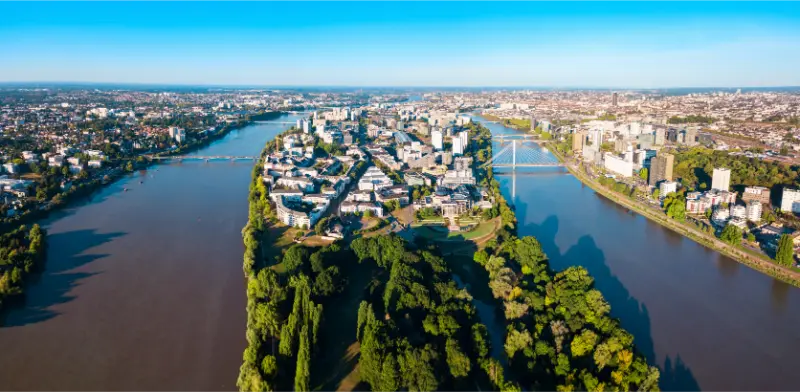
    What to buy for a Loire Valley picnic

    • Fresh bread: buy it the same morning and avoid sealing a still-warm loaf in plastic.
    • Goat cheese: Sainte-Maure-de-Touraine is a classic regional choice; ask how mature it is if you prefer mild or assertive flavours.
    • Rillettes or rillons: practical only if you can keep them properly chilled after purchase.
    • Seasonal fruit: strawberries, apples and other produce vary by season, which is part of the point of shopping at a market.
    • Prepared savoury food: useful when you do not have a knife, plates or a place to prepare lunch.
    • Pastries: choose regional specialties when available, but a good local bakery product is more useful than a mass-produced souvenir.

    Bring a small reusable bag, napkins and a compact cool bag if travelling by car. In summer, dairy, meat and prepared foods should not sit in a hot boot while you spend four hours inside a château.

    Compare accommodation in Tours on Booking.com

    Cash, cards and simple market etiquette

    Card acceptance has improved, but it is sensible to carry some euros in small denominations. Do not assume every small producer has a reliable terminal or signal. At fruit and vegetable stalls, watch how locals shop: some vendors prefer to select and bag produce themselves rather than having customers handle everything. If uncertain, point and ask.

    A few phrases help: Bonjour, Je voudrais… (I would like…), Combien? (how much?) and Merci, au revoir. The important etiquette is simpler than perfect French: greet the vendor, wait your turn, avoid blocking the stall while photographing it, and do not treat samples as a free breakfast.

    When should you arrive?

    For a morning market, 09:00–10:30 is usually the best compromise. You avoid the earliest local rush but still see good stock. Arriving near closing can occasionally produce discounts, but it is a poor strategy if you want a specific cheese, prepared dish or seasonal product. In hot weather, earlier is also more comfortable and safer for anything perishable.

    Chateau de la Roche beside the Loire River France

    How to use markets in a three-day Loire Valley itinerary

    Do not add a market as a separate attraction if it creates unnecessary mileage. Instead, let it replace breakfast shopping or supply lunch. On a Friday in Amboise, market first and visit the château afterward. On a Saturday in Blois, browse before the royal château. On a Saturday in Saumur, use the market before a western-Loire afternoon. Our three-day Loire Valley itinerary can be adjusted around whichever market aligns with your dates.

    Markets without a car

    Amboise, Blois, Tours, Saumur and Orléans are all realistic by rail, so market visits are actually easier than many château excursions for car-free travellers. The main limitation is carrying food. A backpack and small insulated pouch are more useful than buying too much. For the wider transport strategy, see our Loire Valley without a car guide.

    Check the live listing before you go

    Market days are stable until they are not. Public holidays, festivals, roadworks, exceptional weather and town-centre projects can alter a location or cancel a session. The safest habit is to check the municipal or tourism-office page during the week of your visit, especially if the market is the reason you are changing towns.

    The best Loire Valley market is therefore not necessarily the biggest. It is the one that fits your route, gives you an hour of local life without stealing time from the rest of the day, and helps you eat better while travelling.

  • Butte-aux-Cailles Paris Walking Guide: Street Art, Village Streets and a 2-Hour Route

    Butte-aux-Cailles Paris Walking Guide: Street Art, Village Streets and a 2-Hour Route

    Butte-aux-Cailles is one of the best places in Paris for travellers who like neighbourhoods more than monuments. The 13th-arrondissement hill feels surprisingly small-scale: narrow streets, low houses, street art, tiny squares and cafés appear only a short distance from the broad avenues around Place d’Italie.

    The district is often described as a “village”, but the useful question is not whether it looks like rural France. It does not. What makes it rewarding is the contrast between intimate streets and the modern city around them, plus the fact that you can explore it comfortably in two or three hours without building a complicated itinerary.

    Why visit Butte-aux-Cailles?

    Come here for atmosphere rather than a major sight. Paris je t’aime highlights the narrow cobbled streets, flower-filled houses, Villa Daviel, La Petite Alsace, the Art Deco swimming pool and street art associated with artists such as Miss.Tic.

    That mix makes the area particularly good for a slower morning, a lunch neighbourhood or the final hours of a day in southern Paris. If this is your first 48-hour trip and you have not yet seen Notre-Dame or the Seine, Butte-aux-Cailles should probably wait. If you have four or five days, it becomes much easier to justify.

    For other local districts, see our Paris neighbourhoods guide.

    Where exactly is Butte-aux-Cailles?

    The neighbourhood sits in the 13th arrondissement between Place d’Italie and Parc Montsouris. Corvisart on Metro line 6 is one of the most practical starting points, while Place d’Italie gives you more transport options.

    The terrain is gently hilly rather than brutally steep. Distances are small, but cobbles and a few inclines matter if mobility is limited.

    Start at Corvisart

    Starting at Corvisart lets the district reveal itself gradually. Walk away from the larger roads and aim toward Rue des Cinq Diamants and Rue de la Butte aux Cailles. Within minutes, traffic noise decreases and the scale of the buildings changes.

    Paris Townscape France

    Do not hurry. This is exactly the kind of Paris walk that becomes disappointing if you navigate only from pin to pin on your phone.

    Rue des Cinq Diamants

    Rue des Cinq Diamants is one of the lively spines of the neighbourhood. Small restaurants, bars and street art make it a good orientation point. It can feel very different at 10:00 and 21:00, so choose your timing according to whether you want quiet observation or evening atmosphere.

    Look up as much as you look at eye level. Older façades, small signs and painted walls are part of the appeal. Street art changes continuously, so treat named murals as temporary rather than guaranteed exhibits.

    The legacy of Miss.Tic and local street art

    Butte-aux-Cailles became strongly associated with stencil art, particularly the work of Miss.Tic. You may still encounter recognisable styles and pieces in the surrounding streets, but urban art is not static. Walls are repainted, shutters change and new artists arrive.

    This is a better district for discovering art while walking than for following a rigid “ten murals” checklist. Photograph respectfully and avoid blocking doorways or treating private houses as sets.

    Villa Daviel

    Villa Daviel is one of the little pockets that gives Butte-aux-Cailles its reputation for charm. The short lane and low houses feel removed from the scale of central Paris. It is a place to observe quietly rather than a destination that needs thirty minutes.

    Residential calm is part of the attraction, so keep voices down and do not assume gates or courtyards are public.

    La Petite Alsace

    La Petite Alsace is an early-20th-century workers’ housing ensemble known for its small half-timbered houses. Paris’s official tourism office notes that it opened in 1913 and contains around forty houses.

    The important practical point is that this is not a theme park. Access conditions can be limited because people live there. Appreciate what is visible from public space and never force access for a photograph.

    The Butte-aux-Cailles swimming pool

    Piscine de la Butte-aux-Cailles is one of the neighbourhood landmarks and is known for its Art Deco character. If you actually want to swim, check the City of Paris schedule, lane closures and admission rules for the specific day. Municipal pool timetables change with school periods, maintenance and events.

    Even if you do not swim, the building adds another layer to the walk and helps explain why the neighbourhood feels distinct from the newer parts of the 13th.

    A practical 2-hour walking route

    A compact route works like this:

    • Start at Corvisart.
    • Walk toward Rue des Cinq Diamants.
    • Explore Rue de la Butte aux Cailles and nearby side streets.
    • Detour to Villa Daviel.
    • View La Petite Alsace respectfully from public access points.
    • Pass the swimming pool.
    • Finish around Place Paul Verlaine or return toward Place d’Italie for lunch.

    This is enough to see the character of the district without turning every lane into a task.

    Paris Les Invalides Aerial View France

    A slower half-day route

    With three to four hours, add a café, lunch and a further walk toward the quieter residential streets. You can also extend toward the Asian Quarter around Avenue de Choisy and Avenue d’Ivry, but understand that it is a different urban experience rather than a seamless continuation of the “village” aesthetic.

    That contrast can be excellent if food is a priority. Our Paris food guide explains how to build meals into a day without crossing the city unnecessarily.

    Where to eat

    Butte-aux-Cailles has plenty of casual restaurants and bars, but I would avoid choosing solely by a “most Instagrammable” list. Look at current opening days and recent menus. Many small Paris restaurants close one or two days a week or serve lunch and dinner in distinct windows.

    If you are visiting in the evening, reservations are sensible for a specific small restaurant. If you are flexible, simply walk the core streets and choose a place that fits your mood.

    Butte-aux-Cailles at night

    The district becomes livelier in the evening, especially around bars on the main streets. It is a good option if you want nightlife that feels local and informal rather than a large club zone.

    For a romantic trip, the smaller streets can be charming before dinner. For families, late afternoon is usually easier than a Friday night. See our Paris at night guide for broader evening ideas.

    Is it good for couples?

    Yes, especially if your idea of romance is a quiet walk and a neighbourhood dinner rather than a formal Eiffel Tower experience. Butte-aux-Cailles is one of the places I would use to give a couples’ itinerary variety after Montmartre, the Seine and Saint-Germain.

    Our new romantic Paris for couples guide includes a full day structure that can incorporate this district.

    Is it good with children?

    It can work well because the walk is short and visually varied. Street art gives children something to look for, and the low-rise streets feel less overwhelming than a museum marathon.

    However, there is no single blockbuster attraction that will entertain every child for hours. Treat it as part of a mixed day. Our Paris with kids guide focuses on realistic pacing by age.

    Accessibility

    Cobbles, narrow pavements and slopes can make some sections less comfortable for wheelchairs and strollers. A short route based around the main public streets is easier than trying to enter every lane.

    Use Place d’Italie as a transport hub if you need more lift or bus options, and check station accessibility before travelling. The Paris Metro is not fully step-free.

    Combining Butte-aux-Cailles with the Latin Quarter

    It is possible, but do not underestimate the distance. A better plan is to use Metro or bus between the two rather than forcing an uninteresting connecting walk.

    Morning at the Panthéon and Luxembourg Gardens, followed by lunch and an afternoon in Butte-aux-Cailles, gives you two very different versions of the Left Bank.

    Combining it with street art in the 13th arrondissement

    The larger murals around the 13th are another reason to explore southern Paris, but they are spread across broader avenues. If street art is your main interest, combine the intimate stencils and walls of Butte-aux-Cailles with selected large-scale murals rather than wandering randomly for hours.

    Paris Louvre Museum Aerial View France

    Where to stay

    The 13th can offer better value than the most central arrondissements, with good Metro connections from several areas. It suits travellers who do not need to walk to every major monument from the hotel.

    For first-time visitors, compare travel time carefully in our where to stay in Paris guide. You can compare hotels around the 13th arrondissement for your dates.

    Best time to visit

    Late morning into lunch is excellent for a calm walk. Late afternoon into dinner is better if you want bar and restaurant atmosphere. Spring and autumn are easiest for walking; summer evenings are pleasant but busier, while winter gives the little streets a cosy quality if it is dry.

    Rain is manageable because the route is compact, though cobbles become slippery. If the weather turns genuinely bad, switch to our Paris rainy-day plan rather than stubbornly completing every lane.

    Common mistakes

    • Expecting a major monument or museum.
    • Following outdated street-art maps as if works never change.
    • Entering private housing areas without permission.
    • Spending more time on transport than in the neighbourhood.
    • Combining it with five distant attractions in one day.
    • Wearing poor shoes on wet cobbles.
    • Assuming every restaurant serves continuously through the afternoon.

    Is Butte-aux-Cailles worth the detour?

    For travellers who enjoy local districts, absolutely. It is compact, distinctive and easy to understand without a guide. The value lies in contrast: after the grand boulevards, museums and monumental Paris, these smaller streets remind you that the city also contains places where daily life happens at a gentler scale.

    Give it two or three hours, arrive without a rigid checklist and let the neighbourhood do what it does best: slow you down.

  • Le Marais Walking Guide: A Better Route Through Historic Paris

    Le Marais Walking Guide: A Better Route Through Historic Paris

    Le Marais is one of the easiest parts of Paris to underestimate. On a map it looks compact, and many first-time visitors reduce it to Place des Vosges, Rue des Rosiers and a little shopping. In practice, the neighbourhood rewards a slower route because its best moments are spread through courtyards, former private mansions, old Jewish streets, small museums, food shops and quieter lanes that sit only a block or two from the busiest pedestrian flows.

    This guide is designed as a realistic half-day walk rather than a checklist. It works especially well if you want to understand a neighbourhood rather than race between monuments. If you are building a first Paris trip, use it with our Paris neighbourhoods guide and 4 days in Paris itinerary so that Le Marais fits naturally into the rest of your days.

    Quick planning snapshot

    • Allow about 3 to 5 hours for a satisfying first walk, longer if you add a museum or a long lunch.
    • Start around Hôtel de Ville or Saint-Paul and finish near République, Temple or Arts et Métiers depending on your energy.
    • Place des Vosges, the historic mansions, the Jewish quarter and Marché des Enfants Rouges are the strongest first-time anchors.
    • Sunday can be lively because many shops in the Marais open when other parts of Paris are quieter, but the streets can also feel much busier.
    • Comfortable shoes matter more here than a complicated transport plan; most of the route is best done on foot.

    Why Le Marais is worth more than a quick stop

    The Marais sits across much of the 3rd and 4th arrondissements on the Right Bank. Its appeal comes from density rather than one dominant attraction. You move quickly from medieval traces to 17th-century hôtels particuliers, then into Jewish heritage streets, contemporary galleries, fashion boutiques and small squares. That mixture is exactly why the area feels different from the monumental axes around the Louvre or the Eiffel Tower.

    Paris’s official tourism office describes the Marais as a central district known for its historic architecture, cobbled streets, boutiques and village-like atmosphere. That description is useful because the neighbourhood is less about standing in front of a single landmark and more about noticing how the city changes from block to block.

    The main mistake is to walk only the most commercial streets. Rue des Francs-Bourgeois and Rue des Rosiers are worth seeing, but they are not the whole neighbourhood. Build a route that deliberately includes quieter side streets and one or two courtyards, and the Marais becomes much more memorable.

    Start near Hôtel de Ville, then move away from the river

    Hôtel de Ville is a practical southern starting point because it connects easily with the historic centre. If you have just visited Notre-Dame, cross the Seine and begin here rather than taking the Metro for a short hop.

    From the square, move north-east through the streets behind the city hall. This transition matters. The wide riverfront gives way quickly to tighter streets, older façades and a more intimate scale. Do not obsess over following one exact line on your phone. The Marais is one of the few central Paris districts where a small detour often improves the walk.

    If you are hungry, resist the temptation to stop at the first place beside a major sight. You will have much better opportunities later around Rue des Rosiers, Rue de Bretagne and the covered market.

    Village Saint-Paul: a quieter first taste of the neighbourhood

    Before reaching Place des Vosges, make a detour through the Village Saint-Paul area. It is easy to miss because there is no grand entrance announcing it as an attraction. Instead, passages and courtyards open between old buildings, with antique dealers, small shops and a calmer atmosphere than the busier streets nearby.

    This is a useful place to slow your walking pace. The value is not that every shop is essential; it is the feeling of moving through interconnected courtyards where the geometry of central Paris becomes less formal. If you are travelling with children, it can also provide a welcome break from traffic and long museum interiors.

    Do not worry if some businesses are closed. The architecture and sequence of spaces remain worthwhile, and opening patterns vary by day.

    Place des Vosges: spend time under the arcades

    Place des Vosges is the visual centrepiece of the route. The square is one of the most harmonious spaces in Paris, framed by red-brick façades, stone details and continuous arcades. It is tempting to photograph it from one corner and leave, but that misses the experience.

    Walk under at least one side of the arcades, then enter the central garden. If the grass is open and the weather is good, this can be an excellent pause. The square is also associated with Victor Hugo, whose former home is now a museum. Whether you enter depends on how museum-heavy the rest of your trip already is.

    If you have only one half-day in the Marais, do not automatically add every museum. The neighbourhood itself is the attraction. A museum makes sense if it matches a real interest, not simply because it is nearby.

    Hôtel de Sully and the hidden transition from Place des Vosges

    One of the nicest route details is the passage between Place des Vosges and the courtyard of the Hôtel de Sully. The building is a classic example of the aristocratic mansions that shaped the Marais. Even a short look at the courtyard gives context to the word hôtel particulier, which in Paris refers to a grand private urban residence rather than a hotel where travellers sleep.

    This architectural vocabulary repeats throughout the district. Once you recognise broad carriage entrances, courtyards and formal stone façades, you begin to see the Marais differently. That is more useful than memorising dozens of dates.

    Musée Carnavalet: the museum that best explains Paris itself

    If you choose one museum in the district, Musée Carnavalet is a logical candidate because it is dedicated to the history of Paris. Its collections occupy historic mansions and range across the city’s development, political upheavals, interiors and daily life.

    The strongest reason to visit is context. After seeing medieval streets, royal squares and revolutionary sites elsewhere in Paris, Carnavalet helps connect them into a story. The downside is time: a serious visit can easily absorb two hours or more. If this is your first trip and you already have the Louvre and Musée d’Orsay booked, consider saving Carnavalet for a return visit unless Paris history is a particular interest.

    Our Paris museum strategy explains how to avoid turning a short city break into a sequence of indoor visits.

    Rue des Rosiers and Jewish heritage

    Continue toward Rue des Rosiers and the historic Jewish quarter. This part of the Marais is often presented online mainly as a place to buy falafel, but the cultural history is much deeper. Jewish communities have shaped the area for generations, and traces remain in synagogues, bakeries, bookshops, memorials and institutions.

    Walk with some awareness rather than treating the street as a food theme park. Security measures around religious and community buildings may be visible, and access can change. Respect signs and avoid photographing people at close range without permission.

    For food, queues are not always a reliable quality ranking. A famous shop with a long social-media line can be enjoyable, but another bakery or deli nearby may give you a quieter and equally satisfying break. Our Paris food guide goes deeper into choosing bakeries, markets and bistros without relying only on viral addresses.

    Rue des Francs-Bourgeois: useful, but do not let shopping take over the walk

    Rue des Francs-Bourgeois is one of the area’s main shopping spines. It is convenient for fashion, beauty and design stores and links several important parts of the district. On busy weekends it can also feel like an outdoor shopping centre.

    Use it as a connector rather than the entire experience. Dip into side streets, notice doorways and courtyards, and cross toward smaller lanes. If shopping is a priority, schedule it deliberately near the end of the route; otherwise bags and fitting-room stops can consume the best walking hours.

    The Marais is especially good for travellers whose group has mixed interests. One person can browse shops while another focuses on architecture or cafés, and everyone can regroup within a few minutes’ walk.

    Marché des Enfants Rouges: a practical lunch stop

    Marché des Enfants Rouges, near Rue de Bretagne, is one of the most useful stops in the northern Marais. Founded in the early 17th century, it is widely described as the oldest covered food market in Paris. It combines produce stalls with prepared-food counters, making it more practical for a visitor than a market designed only for household shopping.

    Paris’s official tourism information currently lists the market at 39 Rue de Bretagne and notes that it operates from Tuesday to Saturday through much of the day and on Sunday until early afternoon, although individual stalls can keep different hours. Treat those hours as something to verify close to your visit, especially around holidays.

    Lunch here can be excellent, but do not build your whole day around one famous counter. At peak times, queues can erase the convenience of a market meal. Walk through first, compare what is open and choose based on what looks appealing rather than what has the most phones pointed at it.

    Square du Temple and the northern Marais

    After lunch, continue toward Square du Temple and the Carreau du Temple area. The northern Marais feels a little more spacious and less monument-driven than the streets around Place des Vosges. This is a good place to decide whether to keep walking toward République or loop back toward Arts et Métiers.

    The garden is useful if you are travelling with children or simply need to sit. A neighbourhood walk becomes much better when you include real pauses. Paris rewards stamina, but there is no prize for reaching 25,000 steps while remembering none of what you saw.

    If contemporary culture and design interest you, this part of the district also has galleries, concept stores and temporary events. Because those change frequently, check current listings rather than relying on a static list of “must-see” shops.

    A realistic route in order

    For most first-time visitors, this sequence works well: Hôtel de Ville, Village Saint-Paul, Place des Vosges, Hôtel de Sully, Musée Carnavalet area, Rue des Rosiers, Rue des Francs-Bourgeois, Rue de Bretagne, Marché des Enfants Rouges and Square du Temple. From there, finish at République, Temple or Arts et Métiers.

    Without a museum, the route can be comfortable in about three and a half hours with stops. Add lunch and shopping and it becomes a half-day. Add Carnavalet in depth and you can easily spend most of a day in the district.

    If you prefer to walk in the opposite direction, start at République in the morning and finish near the Seine around sunset. That direction works especially well if Notre-Dame or a Seine river cruise is part of your evening.

    Best time to visit Le Marais

    Weekday mornings are the best choice if you care about quieter streets and architecture. Some boutiques and food businesses may open later, but the walking experience is calmer. Late afternoon is livelier and better if cafés, shopping and people-watching matter more.

    Sunday is distinctive because the Marais is one of the central areas where many shops are active. That energy can be fun, but popular lanes become crowded. If Sunday is your only option, begin early with Place des Vosges and the historic streets before moving toward shopping later.

    Rain is not a reason to cancel. The arcades of Place des Vosges, museums, covered market and cafés provide natural breaks. In strong summer heat, begin early and use the museum or lunch for the hottest part of the day.

    Le Marais with children

    Families often do well here because the route is flexible. Place des Vosges offers open space, Square du Temple gives children a break, and food stops can be informal. What usually fails is trying to combine a long museum visit, shopping, a food queue and several kilometres of walking without downtime.

    Give children a simple mission: find courtyards, count unusual doors, choose a pastry, or identify the difference between the broad boulevards outside the district and the narrow streets inside it. That creates engagement without requiring a formal family attraction every hour.

    For a wider plan, use our Paris with kids guide, which explains how to adjust sightseeing by age and energy level.

    Where to eat without turning the day into restaurant research

    The best strategy is to decide the type of meal, not the exact restaurant, before you arrive. Choose between a market lunch, bakery picnic, falafel or deli stop, café break, or proper bistro reservation. Then keep two or three possibilities within the same part of the route.

    This avoids a common Paris problem: spending 40 minutes on your phone comparing ratings while standing in a neighbourhood full of food. For dinner, reservations matter more, particularly on Friday and Saturday. For lunch, flexibility usually works in your favour.

    If you want to stay nearby, the Marais is exceptionally central and atmospheric but often expensive, with many small rooms in historic buildings. Compare it with the Latin Quarter, Saint-Germain and more residential areas in our where to stay in Paris guide. You can also compare current accommodation around Le Marais before deciding whether the central location is worth the price.

    Common mistakes to avoid

    • Walking only Rue des Rosiers and Rue des Francs-Bourgeois, then assuming you have seen the Marais.
    • Arriving at Marché des Enfants Rouges late on Sunday and expecting every stall to be operating as on a weekday.
    • Booking several museums in the same half-day and leaving no time for the streets and courtyards.
    • Following viral food queues automatically instead of comparing nearby options.
    • Shopping first and carrying bags through the rest of a long walking day.
    • Treating every historic courtyard as public space; respect closed gates, residential entrances and private property.
    • Scheduling Le Marais immediately after an exhausting Louvre morning when everyone in your group is already tired.

    How Le Marais fits into a Paris itinerary

    Le Marais pairs naturally with the historic centre. A strong day might begin at Notre-Dame and Sainte-Chapelle, cross to Hôtel de Ville, spend the afternoon in the Marais and finish with dinner there. Another good option is a dedicated half-day followed by a Seine walk at sunset.

    What I would not do is combine the Marais with the Eiffel Tower, Montmartre and a major museum simply because the Metro makes those transfers technically possible. The neighbourhood’s value comes from walking slowly enough to notice it. Give it that time and it becomes one of the best places in Paris to understand how layers of history, daily life and modern culture can occupy the same few streets.

    More Paris planning: Paris shopping guide · Paris markets guide

    \n\n\n

    Nearby museum: Musée Picasso Paris fits naturally into a Marais half-day.

    \n
  • Burgundy Road Trip: 5 Days in Dijon, Beaune and the Wine Villages

    Burgundy Road Trip: 5 Days in Dijon, Beaune and the Wine Villages

    Burgundy rewards attention more than mileage. The vineyard names are famous, but the pleasure of travelling here comes from reading the landscape: stone walls, compact villages, small parcels and towns where food and wine history are visible well beyond a tasting room.

    This five-day route uses Dijon and Beaune as anchors, then explores a restrained section of the Route des Grands Crus. It works with a short car rental, a guided wine day or a mix of trains and cycling. The aim is cultural understanding and responsible tasting, not the maximum number of cellars.

    Quick planning overview

    Length5 days / 4 or 5 nights
    BasesDijon and Beaune
    CarUseful but not essential
    ReserveWinery visits and special restaurants
    Key principleOne vineyard area per day

    A five-day Burgundy route

    Day 1: historic Dijon

    Begin around the ducal palace, medieval streets and market area. Dijon introduces Burgundy through architecture, mustard traditions, museums and the political history behind the region’s prestige.

    My practical advice: Follow the historic centre on foot and resist making the first afternoon a rushed tasting trip. Dijon deserves an evening after day visitors leave.

    Day 2: Dijon food and the northern Côte

    Use the morning for Les Halles or a museum, then explore toward Marsannay, Fixin or Gevrey-Chambertin with a booked guide, bicycle or designated driver.

    My practical advice: Wine estates are workplaces and many require appointments. Confirm language, duration, accessibility and tasting fee directly.

    Day 3: Beaune

    Travel to Beaune for the Hôtel-Dieu, ramparts and wine interpretation. The town is compact, but its major sights and cellars can easily fill a day.

    My practical advice: Do not schedule a cellar tasting immediately before a long museum visit or drive. Build water, food and walking time into the plan.

    Day 4: the Côte de Beaune

    Choose a coherent route through places such as Pommard, Volnay, Meursault or Puligny-Montrachet rather than stopping at every celebrated label.

    My practical advice: A guided day removes the driving problem and adds context about the Climats. If self-driving, the driver should not drink.

    Day 5: beyond the headline villages

    Depending on departure direction, consider the Château du Clos de Vougeot, the Côte de Nuits, Chalon-sur-Saône or a slower cycle among vineyard roads.

    My practical advice: Check gradients, traffic and bicycle return arrangements. Agricultural tracks and private vineyard rows are not universal public shortcuts.

    A non-drinking Burgundy

    Museums, abbeys, markets, architecture, canals and vineyard walks create a full itinerary without alcohol. Tastings can be replaced by food workshops or landscape-focused guides.

    My practical advice: Tell hosts your preferences in advance; a serious visit should remain welcoming when one guest declines wine.

    How to choose your transport

    Train and towns

    Dijon and Beaune are straightforward by rail; use walking, local tours and a pre-booked transfer for the vineyards.

    Short car rental

    Collect after Dijon, keep it only for rural days and return before the final city night when possible.

    Guided wine day

    Compare group size, included appointments, lunch, tasting fees and the guide’s regional expertise rather than price alone.

    Cycling

    Use quiet signed routes and an operator that explains equipment, luggage and rescue support; e-bikes do not remove road-safety duties.

    Where to stay

    Dijon suits travellers arriving by train and offers broader evening choice. Beaune places you closer to the central wine route and feels intimate after dark, but prices rise during major events. A village stay creates atmosphere only if dinner and transport are solved. Split the trip two nights in Dijon and two or three in Beaune for the easiest first visit.

    Compare accommodation in Beaune on Booking.com

    Getting around

    High-speed and regional trains connect Dijon with Paris, Lyon and Beaune. The Route des Grands Crus follows a narrow corridor, yet individual estates, viewpoints and villages are dispersed. Never assume a tasting can be reached safely on foot from a station. For driving, confirm parking and local low-emission requirements, and separate tasting from the wheel.

    Food and everyday rhythm

    Burgundy’s table includes more than wine: gougères, eggs in red-wine sauce, beef dishes, freshwater fish, cheeses and blackcurrant products all tell regional stories. Lunch menus can offer good value, while famous restaurants require planning. Allergies and vegetarian needs should be discussed when booking traditional multi-course meals.

    Budget and booking strategy

    Prestige tastings and celebrated restaurants can make Burgundy expensive quickly. Balance them with free vineyard viewpoints, market browsing and municipal museums. Pay for one strong guided experience rather than several vague tastings. Compare a rural rental car with a group tour only after adding fuel, parking, insurance and a non-drinking driver.

    Palace of the Dukes of Burgundy Dijon France

    How I would prepare before departure

    I would begin Burgundy planning with three fixed anchors: Dijon’s old center, Beaune’s Hôtel-Dieu, and a single coherent stretch of the Route des Grands Crus. Dijon and Beaune work by train; between the villages, transport choices become much more personal. Five days do not justify touring both the entire Côte de Nuits and every Côte de Beaune appellation. Instead, reserve time for one northern village, one southern vineyard landscape and a meal that reflects the region. Map actual winery appointments before choosing your route; a famous village name on a label does not tell you whether a particular domaine welcomes visitors that afternoon.

    Winery logistics work differently from ordinary attractions. A domaine may require an appointment, limit group sizes or offer tastings only in French on certain dates. Contact producers directly, state whether anyone will not drink, and ask about cellar stairs, parking, tasting charges and bottle-shipping options. In Beaune, the Hôtel-Dieu has its own entry arrangements; book a museum window that does not collide with a lunchtime reservation. Les Halles in Dijon and neighborhood markets have specific operating days and many vendors finish early. If you are cycling, confirm the route conditions and the bicycle return point before agreeing to a tasting several villages from your hotel.

    Bad weather does not make Burgundy a wasted destination; it changes the balance. Dijon’s museums, covered market and historic interiors can occupy a rainy morning, while Beaune’s Hospices interpretation rewards an unhurried visit in any season. Avoid planning unsheltered vineyard cycling when rain makes roads slippery or visibility poor. A cellar visit may be useful in wet weather, but access can include steep stone steps and damp, cool rooms. For a stormy afternoon, select a town-based food experience rather than attempting to drive between multiple domaines just to fill the schedule. There is no need to force vineyard views through fog.

    Accessibility and responsible travel

    Accessibility varies even within one street. Dijon’s historic center contains many pedestrian surfaces suitable for a measured walk, but narrow cobbled lanes and older hotel buildings still need checking. Beaune’s main squares are compact, whereas some historic cellars involve stairways, low ceilings and uneven flooring. A vineyard lookout may be reached from roadside parking, but that does not guarantee a step-free path or restroom. Ask a guide to identify any accessible domaines in advance rather than arriving and hoping an alternative entrance exists. A cycling outing should consider traffic competence, not only physical fitness: wine-country roads are shared with working vehicles.

    The UNESCO-listed Climats of Burgundy are carefully defined vineyard parcels shaped over centuries; they are not an open-air theme park. Do not enter private vine rows or stone-wall enclosures merely because a trail appears on a navigation app. Respect harvest operations and machinery, keep to public paths and use designated viewpoints. A village such as Meursault or Puligny-Montrachet is also a residential place, with tractors and deliveries as well as visitors. Buy local produce, do not block narrow streets for photographs and choose designated driving after tastings. A responsible itinerary can include serious wine culture without turning every hour into alcohol consumption.

    Mistakes I would avoid

    • Arriving at wine estates without appointments
    • Driving after tastings
    • Collecting famous village names without context
    • Walking through private vineyard parcels
    • Spending no time in Dijon or Beaune themselves

    The common planning mistake is treating the distance from Dijon to Beaune as the only relevant number. You must also account for the time needed to find parking in each village, walk to a producer, attend a full tasting and eat lunch when restaurants are actually serving. Do not schedule four or five domaines by default; one thoughtful appointment may already take a large part of the day. Beware of confusing a broad Burgundy wine tour with an intensive Côte de Beaune itinerary; each covers different ground. When the day involves driving, the driver should remain completely sober, not merely taste less than the other passengers.

    Frequently asked questions

    Do I need a car in Burgundy?

    No for Dijon and Beaune. A car helps in the villages, but a guided day is often safer and more informative for wine tasting.

    How many wineries should I visit in a day?

    Two substantial visits are usually enough when travel, lunch and landscape time are included.

    Is Burgundy worthwhile for non-drinkers?

    Yes. Historic towns, museums, abbeys, food, canals and vineyard scenery provide a complete trip.

    Where should I stay?

    Split Dijon and Beaune for a first visit, or choose Beaune alone when vineyard access is the priority.

    Useful official resources

    Use Burgundy’s official tourism pages to confirm regional cycling networks and local events, and consult the UNESCO Climats listing to understand why neighboring parcels have distinct names. In Dijon, the tourism office can clarify museum access and market times; Beaune tourism is better for the Hôtel-Dieu, wine walks and town-specific visitor information. Domaine websites or direct correspondence are essential for appointment terms. A train timetable alone will not confirm a winery transfer: verify taxi availability in advance if your booking is outside walking range of Beaune or Dijon station. An excellent itinerary can fail because of an assumed final mile.

    Continue planning your trip

    For the next step, read three days in Lyon, France by train, the Champagne route and the regional French food guide. These guides are designed to connect into a slower, more realistic France itinerary.

    The best Burgundy memories may come from the contrast between a ducal palace in Dijon and a quiet stone wall above a small wine village. The landscape can be read without expensive tastings: look at how the slope changes, how named plots sit beside one another and how cellars connect farming with trade. Food becomes part of that interpretation too, from gougères to Epoisses-style cheeses and market vegetables. In five days, leaving room for one village lunch and an unhurried afternoon is not a compromise. It is an opportunity to observe the region as somewhere lived in, rather than a series of famous labels.

    A final decision checklist

    For a final booking decision, choose between two approaches. Train-based travelers should sleep close to Dijon’s and Beaune’s walkable centers and purchase a guided vineyard day if they want estate access. Drivers should collect the car only after exploring Dijon, then return it before a final urban night if possible. Both groups should decide which Côte de Nuits or Côte de Beaune villages matter most and not try to visit both areas deeply in a single afternoon. The château of Clos de Vougeot offers a different historical angle from a tasting cellar; it should be selected deliberately, not added merely because it sits along the route.

    A week before departure, confirm every domaine appointment in writing, including the meeting point. Verify the Hôtel-Dieu’s current exhibition and tour options, then check whether local festivals, harvest conditions or weekend traffic affect your intended driving day. Restaurant booking is especially important in small villages where the kitchen may not serve late lunch. If you plan to buy bottles, consider luggage weight, airline rules and exposure to heat in a parked car. Travelers without alcohol interests can replace the tasting day with cycling, the Canal de Bourgogne or architectural visits, while preserving the same two-base structure.

    Finally, look at Burgundy through the needs of the whole group. A child may enjoy walking the ramparts and market streets more than a cellar talk; a mobility-limited traveler may prefer Dijon’s large museums to multiple damp staircases. Someone unfamiliar with French wine labels needs a guide who explains villages and parcels without expecting prior expertise. Arrange lunch and water before a tasting, and choose a relaxed route back to the hotel. The point of a Burgundy road trip is to connect history, agriculture and food at a human pace, not to prove how many appellations can be crossed in one day.

    New Burgundy guides: Use our Burgundy Travel Guide, Dijon guide, Beaune guide and Route des Grands Crus guide.

    More detailed stops: The Burgundy road trip now has standalone guides for Clos de Vougeot, Pommard and Puligny-Montrachet.

    Last updated: 16 October 2026

  • Brittany Road Trip: A 10-Day Route Through Walled Towns and Wild Coasts

    Brittany Road Trip: A 10-Day Route Through Walled Towns and Wild Coasts

    Brittany is not a single coastline but a sequence of estuaries, cliffs, harbours, islands and inland towns shaped by weather and tides. A route that attempts every peninsula becomes mostly driving. A better trip chooses a northern arc, a western centre and a southern finish.

    This ten-day itinerary begins around Saint-Malo, follows the north coast toward Finistère and turns south through Quimper to Morbihan. It protects time for walks and poor-weather changes instead of treating viewpoints as roadside stamps.

    Quick planning overview

    Length10 days / 9–10 nights
    DirectionSaint-Malo to Gulf of Morbihan
    BasesFour bases rather than nightly moves
    CarUseful; park outside historic centres
    Critical checksTides, ferry times and coastal weather

    A ten-day Brittany route

    Days 1–2: Saint-Malo and Dinan

    Walk Saint-Malo’s walls at different tide stages, then visit Dinan for a contrasting inland river-and-medieval setting.

    My practical advice: Do not treat Mont-Saint-Michel as a casual add-on unless you allocate a separate long day.

    Days 3–4: Cap Fréhel and Pink Granite Coast

    Move west through headlands and coastal paths toward Ploumanac’h, choosing walks according to wind and visibility.

    My practical advice: Stay back from cliff edges and consult local closures; dramatic weather is not permission to ignore barriers.

    Days 5–6: Finistère

    Use a base near Roscoff, Brest or the Crozon Peninsula depending on interests, and accept that the far west rewards slower distances.

    My practical advice: Select one peninsula or island experience rather than forcing several ferry schedules together.

    Day 7: Quimper and Locronan

    Shift inland for Quimper’s historic centre and Breton culture, adding Locronan only if parking and timing preserve the experience.

    My practical advice: Arrive early in small heritage towns and spend beyond the most photographed square.

    Day 8: Carnac

    The megalithic landscape deserves interpretation and respect; access rules protect both archaeology and ground conditions.

    House Brittany France

    My practical advice: Use official visitor information and never cross barriers for a closer photograph.

    Days 9–10: Gulf of Morbihan

    Finish among sheltered waters, islands and ports around Vannes, choosing one boat or cycling day according to weather.

    My practical advice: Island timetables are commitments. Keep the final mainland night simple if departure follows early.

    Designing the route around the sea

    Read tide information

    Tides change beaches, harbour views and access; consult official local tables.

    Keep a weather day

    A museum, market or inland town can replace an exposed coastal walk.

    Limit ferry commitments

    One island day is more robust than a chain of separate sailings.

    Use fewer bases

    Two or three nights in each region reduce packing and reveal evening atmosphere.

    Where to stay

    Saint-Malo, a north-coast base, Quimper or Crozon, and Vannes form a workable sequence. Walled centres are atmospheric but parking and luggage can be awkward. Rural cottages provide space yet may leave few dinner options. Check heating outside summer and never assume sea view means easy beach access.

    Compare accommodation in Brittany on Booking.com

    Getting around

    A car offers the strongest route flexibility, though Rennes, Saint-Malo, Quimper and Vannes have rail links. Roads narrow near popular coastal sites and parking fills early. Bicycles work beautifully on selected greenways, but wind, distance and shared paths should shape daily goals.

    Food and everyday rhythm

    Crêpes and galettes vary by place and are only part of the table. Oysters, mussels, fish, butter-rich pastries, cider and regional cakes connect food to coast and agriculture. Respect harvest areas, buy seafood from legitimate sellers and check restaurant days outside summer.

    Budget and booking strategy

    Coastal walks and town exploration are inexpensive; ferries, seafood meals and fuel create variable costs. Four bases usually cost less than daily changes. Parking outside centres and using shuttles may save stress even when not the absolute cheapest option.

    How I would prepare before departure

    I would sketch Brittany as four overnight clusters rather than a string of coastal pins: Saint-Malo and Dinan, the Pink Granite Coast, western Finistère and the Gulf of Morbihan. Moving between them consumes real time because the most attractive roads often pass through towns rather than along a motorway. Reserve an entire daylight block for whichever exposed headland or island matters most, and place grocery stops before the smallest seaside villages. If you attempt every beach, lighthouse and medieval street along the way, ten days disappear into parking lots. The route becomes more rewarding when there is time to return to the same harbour after dinner.

    For the northern half, I would verify access at Cap Fréhel, parking around Ploumanac’h and any local path closures before committing to long coastal walks. The GR34 coastal trail is a network of stages, not a guarantee that each stretch is suitable for every visitor or weather condition. Near Saint-Malo, check the tide timetable before planning beach access or a crossing that depends on the sea; the tidal range can be striking. Near Carnac, consult the official megalithic-sites operator about seasonal access and guided interpretation. These sites are protected archaeology, not an obstacle course around fences. The practical details shape what you can do responsibly.

    Brittany’s changeable skies make indoor alternatives especially valuable. If exposed paths are too windy, visit Quimper’s historic streets and museums, explore sheltered lanes in Dinan or spend longer in a harbour town rather than drive to another blustery viewpoint. Heavy rain is not a reason to race from headland to headland; some coastal paths become slippery, and visibility may disappear. Keep a market town within reach of each overnight base and treat any ferry or island outing as flexible until the operator confirms sailings. On fair-weather mornings, move walks earlier so they are not sacrificed to a long lunch or an unplanned road delay.

    Virgin Islands Creek Brittany France

    Accessibility and responsible travel

    Accessibility on this road trip varies from place to place. Saint-Malo’s walls involve steps and uneven sections even though much of the town is walkable at street level. The historic ascent in Dinan is steep; Quimper has older pavements; the rocky Pink Granite Coast paths can require balance and suitable footwear. Rather than promise one accessible version of every stop, I would select parking, viewpoints and short promenades using each tourist office’s current information. Choose accommodation with confirmed lift or ground-floor access, especially in old buildings. Families with pushchairs may find a level harbour circuit much more pleasant than trying to complete every cliff section of a famous trail.

    This coast is a working landscape where tides, fishing, oyster farming and local life come before the visitor’s photograph. Keep off shellfish beds and private slipways, respect barriers around fragile dunes and stay on signed paths at headlands. In Carnac, the standing stones deserve the same restraint as an indoor museum object. A roadside crêperie or market stall can be a more meaningful stop than another quick viewpoint, and buying seafood locally connects the trip to its maritime heritage. Use designated parking in small villages; blocking an access lane for a lighthouse picture causes real problems for residents and emergency vehicles.

    Mistakes I would avoid

    • Trying to drive the whole coast in a week
    • Ignoring tides and ferry conditions
    • Changing accommodation every night
    • Walking cliffs in unsafe weather
    • Treating Breton culture as scenery only

    The most common planning error is underestimating western Brittany. A route that looks short from Roscoff to Crozon on a map may demand substantial driving once you add small roads and stops. Another mistake is fixing an island ferry for the same day as a long cross-region transfer; weather or traffic can break the sequence. Keep the last night near Vannes or your departure connection instead of insisting on one final distant beach. If the whole region feels too large, remove one peninsula rather than shortening every visit. Ten comfortable days can illuminate four areas; they cannot turn all of Brittany into a day-trip checklist.

    Frequently asked questions

    How many days does Brittany need?

    Ten days provides a strong north-west-south route. A week should focus on two areas.

    What is the best base?

    There is no single base for the whole region; use Saint-Malo, one western base and Vannes or nearby.

    Can I visit by train?

    Major towns work by rail, but remote headlands require buses, bicycles, tours or a selective car rental.

    When should I go?

    Late spring to early autumn offers longer days, though rain and wind remain possible in every season.

    Useful official resources

    For practical checks, Brittany Tourism is the broad reference, Saint-Malo Bay Tourism covers the eastern opening of the route, and the Gulf of Morbihan tourist office helps with southern ports and islands. Consult the operator directly for any sailing, and use the official Carnac megaliths site for protected-area access and interpretive visits. Tide information should come from a current recognised source for the exact harbour rather than a generic regional forecast. If you plan a stretch of the GR34, examine its difficulty and any temporary closure. The aim is not to research every kilometre, only to make the few weather- and access-sensitive decisions safely.

    Continue planning your trip

    For the next step, read the Normandy road trip, the best time to visit France, La Rochelle and Île de Ré and the best places to visit in France. These guides are designed to connect into a slower, more realistic France itinerary.

    What gives this ten-day journey its character is not a single blockbuster monument but a changing relationship with the sea. Saint-Malo’s fortified profile, the pink granite formations, the rougher western headlands and the sheltered Gulf of Morbihan are different coastal worlds. Add a little inland heritage—Dinan, Locronan or Quimper—and the itinerary becomes richer than a collection of beaches. A slow evening with cider and a savoury galette can tell you more about a town than an additional hour behind the wheel. Keep the sense of discovery by staying somewhere long enough to see it outside the peak visitor period.

    Pont Aven Vilage Brittany Dramatic France

    A final decision checklist

    Before paying for hotels, I would decide where the two-night stays belong. A Saint-Malo base supports the first days without repacking; a north-coast base places Ploumanac’h within easier reach; a western base supports one chosen Finistère experience; Vannes works as the final hub. Check whether historic-centre hotels offer any vehicle access or whether luggage must be carried from a public car park. If the itinerary includes an island, align that outing with the nights in the closest port area. A beautiful sea-view rental can be inconvenient when each day’s first road is a long detour back to the main route.

    The other decision is how much of the trip should be driven. A car offers access to headlands, but it is often better parked for a full day in Saint-Malo, Quimper or Vannes. The region’s rail-connected towns provide options for travellers who prefer a shorter route without remote coves. Check regional trains and buses carefully before promising a car-free visit to a cliff or lighthouse. Fuel, parking and overnight location all affect the real cost, not just the rental quote. A few concentrated walking days reduce fatigue and allow the landscape to register as more than a view through a windshield.

    For the final review, picture the route in four movements: fortifications and river town; rugged northern coast; western heritage and peninsula; southern megaliths and sheltered gulf. If one day’s drive contains three remote attractions, move or remove one. Keep ferry reservations, tide times, trail status and hotel parking instructions offline. Leave the final afternoon relatively open so a memorable earlier stop can run long. Brittany offers dramatic weather and strong regional identity; a flexible schedule respects both. That is how a ten-day road trip becomes a journey rather than a race along a coast.

  • Nice Travel Guide: Old Town, Promenade, Museums and a Better First Visit

    Nice Travel Guide: Old Town, Promenade, Museums and a Better First Visit

    Nice is the most useful all-round base on the eastern French Riviera, but it is easy to plan it badly. The city is large enough to reward several days, compact enough for a strong first day on foot and connected well enough by rail and bus that a rental car often becomes a burden rather than an advantage.

    This guide is different from the existing 3-day Nice itinerary. That article gives you a timed route; this one explains the city itself: which areas matter, what deserves more time, how to use Nice as a base and how to avoid treating the Promenade des Anglais as the whole destination.

    Quick planning snapshot

    Best forFirst-time Riviera trips, food, museums, beaches and car-free day trips
    Time to allow2–4 days; more if Nice is your regional base
    Car needed?No for the city and most classic Riviera excursions
    Best base areasOld Nice, Jean-Médecin, Port or the seafront depending on priorities

    Understand the city before building the day

    Nice works best when you think of it as several neighbouring experiences rather than one long waterfront. Vieux Nice provides narrow lanes, churches and food; the Promenade des Anglais gives open sea views; the Port has a different evening rhythm; Cimiez adds Roman remains and museums; the central shopping streets make transport and practical errands easy.

    A first visit should connect two or three of those areas rather than attempting all of them. Walking from the old town to Castle Hill and down toward the Port makes geographical sense. Crossing the entire city for a museum, then returning to the beach, then heading inland again wastes more time than the map suggests.

    Nice City View France

    Start with Vieux Nice and Cours Saleya

    The old town is most enjoyable early, before its busiest lanes fill. Cours Saleya is a useful anchor because the flower and food market connects sightseeing with everyday ingredients. The official tourism office notes that Monday is different: the flower market gives way to an antiques market, while summer evenings can bring an arts-and-crafts market.

    Do not stay only on the market street. Step into the lanes behind it, look for baroque church interiors, small food shops and quieter squares, then return toward the sea. The goal is to understand the old town as a living district rather than moving from one famous storefront to another.

    Climb Castle Hill for orientation, not for a checklist

    Castle Hill is the best place to understand why Nice developed where it did. From the viewpoints you can read the curve of the Baie des Anges on one side and the Port on the other. The summit is more park than castle today, so allow time for shade, views and a slower walk rather than expecting a single monument.

    If stairs are difficult, check the current lift access before your visit. Weather, maintenance or local works can affect the easiest route. Going up in the morning or late afternoon is more comfortable in warm months, and the light is usually better than at noon.

    Use the Promenade des Anglais without letting it consume the day

    The Promenade is excellent for an early walk, sunset or a simple route between central districts. The beach below is mostly pebbled, which changes what you should bring: water shoes and a thicker mat are more useful than the lightweight beach setup you might use on sand.

    Public beach sections make a swim straightforward without paying for a private beach club. Private concessions are worthwhile when you want a lounger, restaurant service and a defined half-day by the water, but they are not a requirement for enjoying the coast.

    Choose museums according to your interests

    Nice has enough museums that the wrong strategy is trying to collect them all. Art travellers often prioritise Matisse or Chagall, while visitors interested in archaeology can combine Cimiez with the surrounding Roman history. Contemporary art and smaller collections add alternatives for bad-weather hours or very hot afternoons.

    Check opening days before fixing the itinerary because museum closures do not always align. A good pattern is one major museum per day, paired with a neighbourhood that makes sense geographically. This keeps culture from becoming a sequence of cross-city transfers.

    Eat like the city is part of the trip

    Niçoise food has a strong identity, and simple dishes are often more revealing than formal tasting menus. Look for socca, pissaladière, petits farcis and a properly composed salade niçoise, while remembering that recipes and presentation vary. Markets are useful for understanding ingredients before you start ordering them.

    Nice Tram France

    Avoid restaurants that sell every famous French dish at once on the busiest tourist lanes. A smaller menu, visible local clientele and a location one or two streets away from the most obvious route are often better signs. For a broader regional context, the site’s Provence food content complements Nice without pretending the cuisines are identical.

    Getting there and getting around

    Nice Côte d’Azur Airport is close to the urban area, and the tram makes arrival without a taxi realistic for many travellers. Within the city, trams cover the most useful central corridors while buses extend into surrounding districts and villages. Validate the correct ticket and check current network rules rather than relying on old blog posts about fares.

    For regional days, the railway is the key advantage. Antibes, Cannes, Monaco, Menton and Villefranche-sur-Mer sit on the coastal line, while buses fill important gaps for hill villages. The French Riviera travel guide explains the broader car-free strategy.

    Best time to visit

    Late April through June and September through October usually provide the most balanced conditions for walking, outdoor meals and day trips. July and August work well for swimming but demand earlier sightseeing, more shade and advance accommodation planning.

    Winter is useful for museums, food and clear coastal light, though some seasonal beach services are reduced. Major events can change hotel prices and transport pressure even outside peak summer, so check the Nice calendar before assuming a quiet shoulder-season weekend.

    Where to stay

    Old Nice gives atmosphere and late-evening energy, but luggage and noise can be issues in narrow pedestrian streets. The Jean-Médecin area is less romantic but exceptionally practical for trams, the station and airport connections. Around the Port, evenings feel more local while Villefranche and Cap-Ferrat remain easy to reach.

    The seafront suits travellers who want the Mediterranean immediately outside the hotel and are comfortable paying more for the location. Before committing, compare current places to stay on Booking.com and compare the exact walking distance to a tram stop or station rather than choosing only by sea view.

    Families, accessibility and slower travel

    Nice is manageable with children when the day alternates between walking, parks, food and beach time. Castle Hill provides space to reset, while the tram reduces long cross-city walks. Pebble beaches are less comfortable for toddlers than sand, so footwear and a padded mat matter.

    Many central areas are relatively straightforward with a stroller, but the old town has uneven surfaces and Castle Hill involves gradients. Travellers with reduced mobility should check specific museum and viewpoint access rather than assuming every historic route is step-free.

    Mistakes that make the visit harder than it needs to be

    • Treating the Promenade des Anglais as the whole city.
    • Driving into central Nice for day-to-day sightseeing.
    • Planning several museums without checking their closure days.
    • Underestimating pebble-beach comfort and bringing no water shoes.
    • Using Nice only as a dormitory for day trips and never giving the city a full day.

    Nice is at its best when it functions as both destination and base. The common planning failure is spending every morning leaving town and every evening returning tired, which means missing the food, neighbourhoods and light that made the base attractive in the first place.

    Promenade des Anglais Seafront Nice France

    How to combine it with nearby places

    For a first coastal extension, Villefranche-sur-Mer is one of the easiest half- or full-day trips. Continue to Saint-Jean-Cap-Ferrat when you want a coastal walk and villa gardens rather than another urban stop.

    Eastbound, Èze, Monaco and Menton create distinct experiences. Westbound, Antibes and Cannes are simpler by train than by car.

    Useful official information

    For current events, public transport, market information and attraction updates, use the official Nice Côte d’Azur tourism website. Cours Saleya information for 2026 confirms daily activity with the Monday antiques-market pattern.

    Check Ligne d’Azur and TER information immediately before travel when a connection matters. Riviera transport is strong, but engineering works, events and seasonal services can change a theoretically easy transfer.

    Final planning advice

    If Nice is your first French Riviera stop, give it at least two nights before deciding how many day trips to add. One day should belong mainly to the city; the second can begin to explore the coast. With three or four nights, Nice becomes one of the strongest car-free bases in southern France.

    The city rewards balance: old town in the morning, one cultural anchor, sea air later and a neighbourhood dinner rather than an endless list of attractions. That rhythm is more memorable than trying to prove how much of the Côte d’Azur you can cover in a day.

    Easy planning from Nice: Use our best day trips from Nice and train guide to organise the coast without a car.

  • Mont-Saint-Michel Travel Guide: How to Visit the Abbey, Tides and Village Without Rushing

    Mont-Saint-Michel Travel Guide: How to Visit the Abbey, Tides and Village Without Rushing

    Mont-Saint-Michel is often sold as a single dramatic photograph, but the experience is really a sequence: the first distant view across the fields, the approach over the causeway, the compression of the medieval street, the climb through the abbey and finally the wide horizons of the bay. If you arrive only to collect the famous view, you miss the reason the site feels so unusual.

    The practical challenge is not difficulty so much as timing. Day tours tend to converge in the middle of the day, the village is steep, the abbey requires its own ticket, and the bay is governed by tides that should never be treated casually. My ideal first visit includes either an early arrival or an overnight nearby so that at least one part of the experience happens outside the busiest hours.

    Quick planning overview

    Time neededAt least 5–6 hours; overnight is better for atmosphere
    AbbeyTicket required; village itself is free to enter
    ParkingVisitor car parks are about 2.7 km from the Mount
    ShuttleLe Passeur runs free between the car-park area and the Mount
    Best pairingNormandy or Brittany road trip

    Understand the site before choosing your arrival time

    Mont-Saint-Michel is a functioning municipality as well as a major monument. The medieval village can be entered free of charge throughout the year, while the abbey at the top requires admission. That distinction matters when you are building a schedule: the village is not something you have to “finish” before a ticket slot, and it can be especially atmospheric early in the morning or later in the evening.

    The abbey deserves the best part of your attention. Its rooms unfold vertically around the rock, and the architectural story is easier to understand if you slow down for the cloister, church and terraces rather than using the building merely as a viewpoint. Check the official site close to departure because exceptional closures do occur; in 2026, for example, the tourism office published specific September and October closure notices.

    My preferred sequence for a first visit

    Approach on foot if the weather is reasonable

    From the visitor area, I like to walk at least one direction rather than automatically taking the shuttle both ways. The approach is part of the visit: the silhouette changes gradually, the scale of the bay becomes clearer, and you arrive with a sense of distance that disappears when you are delivered near the entrance. The free Le Passeur shuttle is still valuable for the return or for anyone conserving energy.

    Climb to the abbey before lingering in shops

    Inside the walls, the Grande Rue can become dense around midday. Instead of stopping at every storefront, continue upward while your legs and attention are fresh. The stairs are real and the surfaces can be uneven. At the top, the abbey gives context to everything below; the narrow village makes more sense after seeing how the monastic complex dominates the rock.

    Come back down slowly

    After the abbey, take time for side lanes, ramparts and viewpoints rather than retracing the shopping street as quickly as possible. Lunch is easier if you accept that the most convenient tables are not necessarily the most memorable meal of your Normandy trip. If food quality is a priority, eat before or after the busiest window or save your most ambitious meal for the mainland or a nearby town.

    Mont Saint Michel Abbey France

    Parking, shuttle and public transport in 2026

    The main visitor car parks are roughly 2.7 kilometres from Mont-Saint-Michel and operate around the clock. Parking includes use of the shuttle service. The tourism office lists the free Le Passeur shuttle as operating throughout the day, with long seasonal hours and an on-demand option outside the regular period. Because parking tariffs and seasonal shuttle times can change, use the official access page rather than an old blog screenshot.

    Without a car, Pontorson is the closest rail station and sits about 9 kilometres away. Regional buses connect Pontorson and the Mount, while direct coach options also operate from Rennes. This makes a car-free visit possible, but the timetable should shape your day. If you are trying to combine Mont-Saint-Michel with Bayeux or the D-Day beaches, a car normally gives a much more coherent route.

    The tides: what visitors should understand

    The bay has an exceptional tidal range, and the visual transformation is one of the site’s great attractions. But “seeing the tide” and “walking in the bay” are completely different activities. You can enjoy changing water levels safely from the Mount, causeway and designated viewpoints. Entering the bay on foot exposes you to rapidly changing water, channels and soft ground, so guided outings are the sensible choice.

    Do not build a self-guided adventure around a tide table alone. Weather, coefficients and local conditions matter. If a bay walk appeals to you, use a qualified local guide and follow current access instructions. This is also a better experience because the guide can explain the ecology and the history of the crossing rather than treating the landscape as an empty beach.

    Why an overnight changes the experience

    Staying on the Mount itself is atmospheric but comes with steep lanes, limited space and luggage complications. The official tourism office specifically recommends light luggage, and village hotel guests use dedicated parking arrangements before taking the shuttle. Staying in the nearby mainland hotel area is easier logistically while still allowing you to walk back toward the Mount after day visitors have left.

    The reward is not just a quieter street. Dawn, dusk and changing weather alter the relationship between the abbey and the bay. Even if you do not stay on the island, an early breakfast followed by a first shuttle or walk can transform a place that felt crowded at noon.

    Where to stay and how I would choose a base

    For pure atmosphere, a night inside the walls is hard to match, but rooms are limited and the logistics are not effortless. For easier parking and luggage handling, choose the mainland area near the shuttle departure. For better value and more normal town services, Pontorson can be a practical base.

    If Mont-Saint-Michel is one stop on a road trip, I usually prefer sleeping either the night before or the night after rather than forcing a long same-day drive from Paris. The broader seven-day Normandy road trip shows how to connect it logically with Bayeux, the D-Day coast and other Norman stops.

    Compare accommodation around Mont-Saint-Michel on Booking.com

    Best time to go

    Spring and early autumn can give you long enough days without the peak density of midsummer, but weather on the bay is changeable in every season. Wind and rain are not necessarily reasons to avoid the site; dramatic weather can be part of the atmosphere, provided you have waterproof layers and safe footwear.

    Winter can be beautifully stark and quieter, but daylight is shorter and some local services may reduce hours. Whatever the season, tides and opening times should be checked close to the visit rather than assumed months in advance.

    Mistakes that can weaken this trip

    • Driving toward the Mount expecting to park beside the medieval walls; normal visitor parking is set back on the mainland.
    • Arriving at noon on a summer day, spending all your time on the Grande Rue and concluding that the entire site is just crowds and souvenir shops.
    • Walking into the bay independently because the sand looks firm or other people appear to be far out.
    • Trying to combine Paris, Mont-Saint-Michel and another major Normandy sight in one rushed day.

    How this fits into a longer France itinerary

    Mont-Saint-Michel belongs naturally in a Normandy or Brittany itinerary. From the Normandy side, pair it with the Normandy road trip. From the west, it combines well with my Brittany road trip and the new Saint-Malo and Dinan itinerary below.

    For a first France trip, resist the temptation to add it as an isolated excursion if that creates six hours of transport. My ten-day France routes explain why geographic logic usually improves a holiday more than the number of famous names on the itinerary.

    Practical FAQ

    Can I visit Mont-Saint-Michel as a day trip from Paris?

    It is possible, especially on an organized excursion, but it is a very long day and gives you little control over crowd timing. If this is a priority destination, one night in Normandy usually creates a better experience.

    Is the village free to enter?

    Yes. The medieval village is accessible without an entrance fee, while the abbey requires a ticket. Parking and some transport or activities have their own charges.

    How much walking is involved?

    Expect a meaningful amount of walking plus steep streets and many steps if you visit the abbey. The shuttle reduces the approach distance but does not make the medieval village step-free.

    Is Mont-Saint-Michel suitable with children?

    Yes for many families, but strollers are awkward on steep steps and crowded lanes. A carrier can be easier for very young children, and a slower schedule with food and toilet breaks is important.

    Official planning links

    Mont-Saint-Michel is strongest when the approach, abbey and bay are allowed to form one experience. Give it enough time to move beyond the famous silhouette and you will understand why the site has held religious, strategic and imaginative power for centuries.

    Combine your stay: best towns and villages in Normandy and car-free Normandy planning help place Mont-Saint-Michel in a wider route.

  • Bordeaux Neighborhoods Guide: Where to Explore, Eat and Stay

    Bordeaux Neighborhoods Guide: Where to Explore, Eat and Stay

    Bordeaux is easier to understand when you stop thinking of it as one continuous historic centre. The city’s neighbourhoods have distinct rhythms: Saint-Pierre is built for first-time sightseeing, the Golden Triangle feels formal and polished, Chartrons reflects the old wine trade, Saint-Michel is energetic and multicultural, Bacalan is shaped by docks and contemporary attractions, and La Bastide gives you the right-bank perspective across the Garonne.

    Choosing where to spend time — and where to stay — should depend on your trip style rather than a generic “best area” label. This guide compares the districts most useful to visitors, explains what each does well, and points out where expectations can go wrong. Bordeaux has an excellent tram network, so you do not need to sleep beside every attraction; a quieter base on a direct line can be better than the busiest central street.

    At a glance

    Best for first visitSaint-Pierre / Hôtel de Ville
    Best for wine-trade atmosphereChartrons
    Best for nightlife and diversitySaint-Michel / Victoire
    Best for modern attractionsBacalan / Bassins à flot
    Best river viewsLa Bastide

    Saint-Pierre: the classic historic core

    Saint-Pierre is the Bordeaux most visitors imagine before arriving: narrow streets, café terraces, stone façades, Place du Parlement and easy access to Place de la Bourse. It is the best area for a short first stay because many landmarks are within a compact walking radius. The trade-off is obvious: restaurants and accommodation can be busy, and some streets are noisy late at night. If you value sleep, choose an address one or two blocks away from the most concentrated nightlife.

    The neighbourhood is also a useful orientation zone. From here you can walk to Porte Cailhau, Sainte-Catherine, Pey-Berland and the quays without immediately using public transport. That makes arrival day easier. I would not, however, spend all three days here. Saint-Pierre is the gateway, not the whole city; Chartrons, Saint-Michel and the northern docks add the contrast that makes Bordeaux more interesting.

    Bordeaux City View France

    The Golden Triangle and Grands Hommes

    The triangle around Grand Théâtre, Cours de l’Intendance and Allées de Tourny is formal, central and convenient. Luxury shops, elegant architecture and direct tram access make it comfortable for travellers who want a polished base. It is particularly good for a short cultural trip where restaurants, theatre, shopping and monuments matter more than neighbourhood rough edges. Prices tend to reflect that convenience.

    This is not the best area for travellers seeking a strong residential feel. Much of the experience is shaped by retail and grand public space. Still, its location is hard to beat: Saint-Pierre lies to the south-east, Jardin Public to the north-west and the river is an easy walk. If mobility is limited, the broad streets and transport connections can be more practical than staying in the steep or cobbled parts of older districts.

    Chartrons: wine history without the crowds of the core

    Chartrons grew around wine merchants and still feels tied to that history, even though galleries, cafés, antiques and residential life now define much of the district. Rue Notre-Dame is the obvious spine, but the best impression comes from moving between the street and the quays. On Sunday, the riverside market changes the area completely; on weekdays, the pace is calmer.

    For accommodation, Chartrons suits repeat visitors, couples and anyone who wants evenings quieter than Saint-Pierre while staying close to the centre. The tram makes central sights easy, and walking along the river is pleasant. The northern end is also strategically placed for Bacalan and the Cité du Vin. If your trip is strongly wine-themed, Chartrons gives historical context before you ever leave the city for an estate.

    Saint-Michel and Capucins: energetic, food-focused Bordeaux

    Saint-Michel is one of the best districts for travellers who prefer a lived-in atmosphere to polished monumental streets. The basilica and spire anchor the skyline, while Marché des Capucins nearby is one of the city’s essential food stops. The streets mix North African, Iberian and French influences more visibly than the Golden Triangle, and the area stays lively into the evening.

    The district is convenient for the station and central Bordeaux, but accommodation quality varies street by street. Read recent reviews carefully if noise matters. I like Saint-Michel most for eating and wandering rather than for a luxury stay. Visit in daylight first, learn the route back to your hotel, and use the tram late at night if you are staying elsewhere.

    Hôtel de Ville, Pey-Berland and Saint-Seurin

    The area around Hôtel de Ville and Cathédrale Saint-André is practical rather than narrowly themed. It places you near major tram intersections, museums, the cathedral and commercial streets. For first-time visitors who value logistics, this is one of the safest choices because you can reach both the river and the station without complicated transfers. It is also easier to start different walking routes from here.

    Bordeaux Fine Arts Gallery France

    West toward Saint-Seurin and Fondaudège, the atmosphere becomes more residential. The basilica, local shops and access to Jardin Public create a softer pace. These areas suit travellers who want to be central without sleeping in the densest nightlife zone. The walk back from Saint-Pierre is longer than it looks, but the tram and buses make the difference manageable.

    Bacalan and Bassins à flot: contemporary Bordeaux

    Bacalan is where Bordeaux’s port and industrial landscape meets large-scale regeneration. The Cité du Vin, Les Halles de Bacalan and Bassins des Lumières are the obvious visitor attractions, but the neighbourhood itself is part of the story. Huge dock basins, warehouses and new residential buildings create a completely different visual environment from the eighteenth-century centre.

    I would stay here only if the modern north is a major focus or if you find a particularly good-value hotel. For most first-time visitors, Bacalan is better as a half-day destination than as a base. Tram connections are straightforward, but spontaneous evening walks through the old centre require more travel. The advantage is space: rooms and newer buildings can feel less constrained than in the historic core.

    La Bastide: the right-bank viewpoint

    Cross the Garonne and Bordeaux immediately looks different. La Bastide gives broad views back toward the historic façade and offers parks, cultural spaces and a less tourist-saturated atmosphere. It is useful for travellers who enjoy cycling or morning walks, and it provides a visual reset after several days in the stone centre. The river shuttle can make the crossing part of the experience.

    As a base, La Bastide can be excellent if your hotel is near a tram stop or bridge crossing. It is less convenient if you expect to return to Saint-Pierre several times a day. Choose it for space, views and a local feel, not because it is “close enough” on a map. Bordeaux is very navigable, but the river is still a real geographic divider.

    Gare Saint-Jean and southern Bordeaux

    The station district is the right choice when transport dominates the trip: early trains, late arrivals or several day trips by rail. It is not the most immediately beautiful area, but regeneration around the station has improved services and tram links. If you are travelling to Saint-Émilion, Arcachon or onward through Nouvelle-Aquitaine, staying near Saint-Jean can remove repeated cross-city transfers with luggage.

    The compromise is atmosphere. Travellers with only one or two nights usually enjoy the historic centre more. If you choose the station, look for a hotel close to a tram stop and plan to spend evenings elsewhere. The journey back is simple enough that convenience can outweigh charm, especially on a rail-focused itinerary.

    How to choose your base

    Choose Saint-Pierre or Pey-Berland for a first short trip, Chartrons for a calmer repeat visit, Saint-Michel for food and energy, Bacalan for modern attractions and La Bastide for views and space. The Golden Triangle suits travellers who value polish and shopping. Station-area hotels make sense when you are building the trip around trains rather than neighbourhood life.

    Before booking, map the nearest tram stop as carefully as the nearest landmark. A hotel ten minutes farther from the centre but on a direct line can save more time than an expensive address in a pedestrian zone. Also check whether your room faces a nightlife street, interior courtyard or tram corridor. In Bordeaux, micro-location matters almost as much as the district name.

    Cite du Vin Wine Museum Bordeaux France

    A neighbourhood-based sightseeing strategy

    Instead of crossing the city repeatedly, assign half-days by district. Pair Saint-Pierre with Pey-Berland, Chartrons with Bacalan, and Saint-Michel with Capucins. Use La Bastide for a morning or evening loop when the light across the river is good. This structure reduces transport time and keeps each part of the city coherent in your memory.

    The same approach works for eating: have lunch where you are already sightseeing rather than returning to a favourite central square. Bordeaux is compact enough that you can always come back later, but the best city trips reduce unnecessary backtracking. Neighbourhood planning turns the tram network into a tool rather than a rescue system.

    Useful official resources

    For bordeaux neighborhoods, opening hours, tour schedules, transport timetables and access conditions can change. Check the official pages shortly before travel, especially for timed visits and seasonal services.

    Continue planning your trip

    Continue with our Bordeaux travel guide, the three-day Bordeaux itinerary and the best things to do in Bordeaux.

    Final thought: The same approach works for eating: have lunch where you are already sightseeing rather than returning to a favourite central square. A good visit is not about fitting in the maximum number of stops; it is about understanding the geography well enough to choose the right ones.

    Choosing a base? Our Where to Stay in Bordeaux guide compares the same neighbourhoods specifically for hotels, station access and vineyard day trips.

  • Where to Stay in Normandy: Best Bases for D-Day, Coast and Mont-Saint-Michel

    Where to Stay in Normandy: Best Bases for D-Day, Coast and Mont-Saint-Michel

    Where you stay in Normandy determines whether the trip feels easy or dominated by driving. The region is broad enough that one base is rarely ideal for a full first-time itinerary. Bayeux is excellent for D-Day history, Rouen for eastern Normandy, Honfleur for the Côte Fleurie, and the Mont-Saint-Michel area for the far west.

    Instead of asking for the “best town,” decide what you want to do after breakfast each day. A beautiful hotel can be poor value if it puts you 90 minutes from every priority. For most five-to-seven-day trips, two or three bases are the sweet spot.

    Quick planning summary

    • Best for D-Day sites: Bayeux.
    • Best city base in the east: Rouen.
    • Best seaside atmosphere: Honfleur or Deauville/Trouville.
    • Best for museums and central transport: Caen.
    • Best for the far west: Mont-Saint-Michel/Pontorson or Granville.
    • Best for wild coast: a Cotentin base such as Cherbourg or Barfleur area.

    The best-base strategy for a first trip

    Use geography. Eastern Normandy and western Normandy are different travel zones. Rouen, Étretat and Honfleur combine naturally; Bayeux, D-Day and Caen form another cluster; Mont-Saint-Michel sits farther west. Trying to visit all of them from one hotel creates repeated long drives.

    A seven-day trip might use Rouen for two nights, Bayeux for three and the Mont-Saint-Michel area for two. A history-focused trip can skip Rouen and spend longer in Bayeux. A coast-focused trip might replace Bayeux with Honfleur or the Cotentin.

    BaseBest forMain caution
    BayeuxD-Day, attractive old townPopular; book early around commemorations
    RouenEastern Normandy, city breakNot central for D-Day or Mont-Saint-Michel
    CaenMuseums, transport, central servicesLess intimate than Bayeux
    HonfleurHarbour, Côte FleurieBusy in peak periods
    Mont-Saint-Michel areaEarly/late access to the MontLimited value if the Mont is only a brief stop
    Cherbourg/CotentinWild coast, maritime travelFar from eastern Normandy

    Bayeux: the strongest D-Day base

    Bayeux combines a manageable historic centre with excellent access to the landing beaches. It has enough restaurants and services for several nights and gives historical travellers a calmer evening base than staying directly beside one beach.

    Benedictine Palace Museum Normandy France

    The town also has major heritage of its own. Do not use it only as a sleeping point. Build one half-day or evening around Bayeux so the trip does not become exclusively about driving to wartime sites.

    Rouen: best for eastern Normandy and a car-light start

    Rouen is a strong first or last base if you arrive from Paris. The cathedral, medieval streets, museums and food scene give it enough depth for two days, while the Seine valley and eastern coast can be connected from here by car or selected rail routes.

    If you plan to rent a car, consider collecting it after exploring the centre. Historic streets and hotel parking can be awkward, and the car adds little while you are walking around central Rouen.

    Caen: practical and underrated

    Caen is more functional than postcard-pretty Bayeux, but that can be an advantage. Transport, restaurants, shops and the Memorial make it useful, and it sits well for Sword/Juno sectors and broader Calvados exploration.

    Choose Caen if you want city services and do not mind a larger urban environment. Choose Bayeux if you value a more compact historic atmosphere and western D-Day access.

    Honfleur, Deauville and Trouville: for a coastal break

    Honfleur offers the strongest visual charm, while Deauville and Trouville provide a more classic resort experience with beaches and rail access. These are good bases when the trip is about the Côte Fleurie, food and relaxed coastal time rather than intensive D-Day touring.

    Parking and visitor numbers matter in Honfleur. A hotel with a clear parking solution or a location that lets you walk into the centre can improve the stay considerably.

    Where to stay for Mont-Saint-Michel

    If the Mont is one of the trip’s major priorities, staying nearby makes sense. You can approach early, enjoy evening light and avoid treating the site as a rushed transit stop. Pontorson is a practical alternative with transport connections, while properties closer to the bay offer atmosphere.

    If Mont-Saint-Michel is only one item on a longer route, one night may be enough. Two nights are useful if you also want Avranches, Granville or more of the bay area.

    For a second price check, the Expedia search below can be useful when you want to compare flight-and-stay options or simply see a different accommodation inventory while planning where to stay in Normandy.

    Cotentin: when to choose a wilder western base

    The Cotentin Peninsula deserves more than a quick detour. Cherbourg offers museums and services; Barfleur and Saint-Vaast provide a smaller maritime atmosphere; the western coast is about landscape and road-trip freedom.

    Choose this area if cliffs, ports and a less polished coast appeal to you. Do not add it casually to an itinerary already trying to cover Rouen, Étretat, D-Day and Mont-Saint-Michel in five days.

    Benedictine Palace Museum Normandy France

    How many bases for 3, 5 or 7 days?

    For three days, use one base and accept a narrow focus. For five days, two bases are usually ideal. For seven days, two or three bases work depending on how far west you travel. More than three hotel changes in a week is rarely necessary.

    Every move uses prime travel time. If two possible bases are only 45 minutes apart, it may be easier to stay put and drive once than to pack and check in again.

    What to check before booking

    Look at the exact map, parking, restaurant access, cancellation policy and driving route to your priorities. On the coast, sea-view accommodation may sit far from the town centre. In rural areas, dinner options can be limited without a car.

    For summer and major event dates, reserve early. Around D-Day commemorations or popular coastal weekends, the most convenient properties disappear first, leaving travellers with longer daily drives.

    Useful guides to read next

    If you are building a wider itinerary, these guides fit naturally with this article: Bayeux guide, Rouen guide, Honfleur guide, Cotentin road trip.

    A note on realistic daily distances

    Normandy is larger than many short-break itineraries imply. Motorway sections can be straightforward, but coastal roads, village centres and historical sites add time. Build the day around one geographic zone. A route that looks modest in kilometres can still be full once you include parking, museum visits, meals and the emotional pace of remembrance sites. For this guide, keep the main question — where to stay in Normandy — at the centre of those trade-offs.

    Reservations and flexibility

    Reserve accommodation and any priority guided tour, especially around major events, summer weekends and commemorative dates. Keep secondary stops flexible because weather on the Channel coast can change quickly. A museum, cathedral or market can replace an exposed coastal walk without making the day feel like a compromise. For this guide, keep the main question — where to stay in Normandy — at the centre of those trade-offs.

    Official planning resource

    For current practical information that may affect where to stay in Normandy, check Normandy Tourism before your trip. Opening arrangements, transport services and event calendars can change, especially outside the main season.

    Frequently asked questions

    Where is the best place to stay for D-Day beaches?

    Bayeux is the strongest all-round base because it combines historic atmosphere, services and access to several D-Day sectors.

    Can I stay in one hotel for all of Normandy?

    You can, but it is inefficient for a broad first trip. Two or three bases reduce repeated long drives.

    Should I stay at Mont-Saint-Michel?

    Staying on or near the Mont is worthwhile if early and late atmosphere matters. It is less necessary if you only plan a daytime visit.

    Is Rouen a good base for Normandy?

    Yes for eastern Normandy and a city-first trip. It is not the most practical base for D-Day beaches or the far west.

    War Memorial Caen Calvados Normandy France

    One final planning principle

    When refining this Normandy plan around where to stay in Normandy, compare the value of another attraction with the value of unstructured time. A coffee stop, a market, a viewpoint or an early return to your base can be the moment that gives the day shape. The practical goal is not to maximise entries on a list but to keep enough margin for traffic, weather, meals and the places that deserve longer than expected. That margin is especially important on a first visit, when every transfer and parking system is new.

    Building useful buffer into the day

    A practical itinerary should include buffer for parking, queues, weather changes and meals. When the central question is where to stay in Normandy, that buffer is not wasted time: it is what lets the plan survive real travel conditions. If a stop runs long because it is more interesting than expected, remove the least important item instead of rushing the rest of the day.

    How to make the plan feel less mechanical

    Use the structure in this guide as a decision tool, not as a timetable that must be completed. For where to stay in Normandy, choose one or two non-negotiable experiences and let secondary stops move around them. This creates room for a market, a viewpoint, an unexpectedly good lunch or simply an earlier evening when the day has already felt full.

    Final thoughts

    Where you sleep should make the route easier. Bayeux, Rouen and the Mont-Saint-Michel side form a strong three-base framework, but you should remove any base that does not serve your priorities. A simpler itinerary with better-located hotels usually feels richer.

    Tours & activities

  • Best Castles in Alsace: Haut-Koenigsbourg, Fleckenstein and the Most Rewarding Ruins

    Best Castles in Alsace: Haut-Koenigsbourg, Fleckenstein and the Most Rewarding Ruins

    The best castles in Alsace range from fully restored Haut-Koenigsbourg to forest ruins that require a real walk. Visit Alsace describes the region as a land of castles, with sites spread from the Northern Vosges to the hills above the Wine Route.

    A good castle itinerary mixes one major interpreted monument with one or two ruins. That gives you architecture and history without spending the whole trip inside ticketed sites.

    Quick planning summary

    • Best first castle: Haut-Koenigsbourg.
    • Best family adventure: Fleckenstein.
    • Best Wine Route ruin walk: the three castles above Ribeauvillé.
    • Best near Colmar: Hohlandsbourg.
    • Wear proper shoes for forest ruins; many paths are steep and uneven.

    Where to stay for an Alsace castle trip

    For several castle days, Colmar or Sélestat keeps the central sites within sensible driving distance; Strasbourg is more convenient if northern Alsace and Fleckenstein are a priority. A village stay can be atmospheric, but check evening restaurants and parking because the most scenic base is not always the most practical one after a long hiking day.

    Haut-Koenigsbourg

    Haut-Koenigsbourg is the most complete first visit because the restored interiors and defensive architecture make the medieval layout legible. The hilltop views explain the strategic position immediately.

    Allow enough time for the interior; do not treat it only as a viewpoint on the way between villages.

    Fleckenstein

    In the Northern Vosges, Fleckenstein rises dramatically from sandstone. Its location makes the journey part of the experience and suits families who enjoy interactive interpretation and outdoor exploration.

    Pair it with a quieter northern village rather than driving all the way back to central Wine Route sights the same afternoon.

    Hohlandsbourg

    Hohlandsbourg is a useful choice near Colmar, with broad views over the plain and a more accessible relationship to the central Wine Route.

    Castle Lichtenberg Vosges Mountains Bas Rhin Alsace France

    It works well as the substantial stop in a day that otherwise includes only one or two villages.

    Ribeauvillé castle walk

    The Saint-Ulrich, Girsberg and Haut-Ribeaupierre ruins create one of the best combinations of hiking and heritage above the vineyards.

    Treat this as a walk, not a quick attraction. Carry water and check trail conditions.

    Saverne and northern castles

    Haut-Barr and other sandstone ruins around Saverne show another side of Alsace. They are especially useful if you base in Strasbourg and want a castle day without driving to the central Wine Route.

    Forest conditions and daylight matter more in late autumn and winter.

    How to choose which castles to visit

    Choose one restored monument for interpretation, one ruin for atmosphere and one castle that fits naturally into your route. More than that can become repetitive.

    If mobility is limited, research the final approach carefully; many ruins require steep paths and have no adapted access.

    There are three different castle experiences in Alsace

    Do not compare every castle as if it offered the same thing. Haut-Koenigsbourg is a restored fortress with furnished interiors and a structured visitor route. Fleckenstein is a dramatic ruin integrated into the sandstone landscape of the Northern Vosges. The Ribeauvillé castles are reached on foot and reward the hike as much as the masonry. Decide whether you want interiors, archaeology, views or walking before choosing your day.

    This distinction is especially useful with children or limited mobility: the most famous castle is not automatically the one that best fits the group.

    Haut-Koenigsbourg: best for a first major castle

    Haut-Koenigsbourg is the easiest recommendation for a first visit because the restoration helps non-specialists understand how a fortified residence worked. It also sits naturally within a central Alsace itinerary from Colmar or the Wine Route. Allow enough time for the interior route, courtyards and views rather than treating the site as a quick photo stop.

    Peak periods can be busy, and advance booking is recommended by the site during high demand. Weather still matters: the castle is rewarding in mixed conditions, but the hilltop setting is far more impressive when visibility is good.

    Fleckenstein: best for atmosphere and landscape

    Fleckenstein rises from a sandstone outcrop in the Northern Vosges and feels completely different from the restored rooms of Haut-Koenigsbourg. The journey north is longer for travellers based in Colmar, so it makes more sense from Strasbourg or as part of a dedicated Northern Vosges day. Combine it with forest walking or another nearby ruin rather than trying to return to the central Wine Route for dinner reservations.

    Wear shoes with grip and treat wet weather seriously. Ruin sites involve uneven stone, steps and exposed surfaces that are more demanding than a museum-style castle visit.

    Ribeauvillé: best if the hike is the attraction

    The castle ruins above Ribeauvillé turn a Wine Route stop into an active half-day. The route climbs from the town toward the ruins, so the experience is not suitable for every visitor or every weather condition. For hikers, however, it is one of the best ways to connect medieval history with the vineyard landscape.

    Medieval Half Timbered Street in Alsace France

    Start with enough daylight, carry water and do not plan a large tasting immediately before the climb. After the walk, Ribeauvillé itself provides the natural place for food and a slower finish.

    Hohlandsbourg and Haut-Barr: strong second choices

    Hohlandsbourg, near Colmar, is convenient when you want fortifications and broad views without committing to the long drive north. Haut-Barr near Saverne is another rewarding option for travellers based closer to Strasbourg; its rock formations and outlook create a more ruin-like, landscape-driven visit. Either can be better than another famous stop if it fits the day’s geography.

    This is the principle to use throughout Alsace: choose the castle that forms a coherent route with your base, not the one with the largest name recognition.

    How to combine a castle with the Wine Route

    One substantial castle plus one or two nearby villages is enough for a day. From Colmar, Haut-Koenigsbourg pairs well with Ribeauvillé or Sélestat. Hohlandsbourg can be combined with a shorter central Wine Route loop. From Strasbourg, Haut-Barr suits Saverne, while Fleckenstein belongs with the Northern Vosges. Avoid zigzagging across the region simply to collect monuments.

    If you are wine tasting, designate a driver or put the tasting after you have parked for the day. Castle access roads and alcohol are a poor combination.

    Weather, footwear and seasonal checks

    Ruins and hilltop sites are much more weather-sensitive than city museums. Strong wind can make exposed viewpoints uncomfortable, heavy rain makes stone slippery, and winter ice can change access. Check the official site or local tourism information on the morning of the visit when conditions are doubtful. Good footwear and a light waterproof layer are more useful than trying to preserve an itinerary at any cost.

    Which castle is best for families, photographers and hikers?

    For families wanting a clear story and substantial interior, Haut-Koenigsbourg is usually the easiest choice. The restored rooms and defensive layout make the visit understandable even for people who are not castle enthusiasts, although steps and uneven surfaces still require attention. For photographers, the best site depends on weather: Haut-Koenigsbourg offers grand architecture, Fleckenstein offers dramatic sandstone and forest, and the Ribeauvillé ruins give the strongest combination of vineyard landscape and hiking.

    Hikers should choose the ruins where the approach is part of the reward. Ribeauvillé and several Northern Vosges sites are better treated as walks with history than as conventional attractions. Carry water, use footwear with grip and start early enough to finish in daylight. Travellers with limited mobility should check the official access information for the specific castle rather than assuming that a car park on the hill means a step-free visit.

    If the group includes mixed interests, pair one castle with a town or food stop. This keeps the day from becoming four hours of fortifications for someone who would rather be in a village or winery.

    Le Hohwald Vosges Mountains Alsace France

    How long to allow for a castle day

    A major castle visit can easily occupy half a day once you include the drive, parking, walking, the interior route and viewpoints. For Haut-Koenigsbourg, allow enough margin that a queue or slower visit does not force you to abandon lunch. For ruins reached on foot, count the approach and descent as part of the attraction rather than as dead time between sights.

    This is why two castles in one day are rarely necessary for a first trip. One good fortress plus a village, museum or meal creates a more varied memory and gives you space to stop when the landscape is at its best.

    If you only visit one

    Choose Haut-Koenigsbourg for the clearest all-round castle experience, Fleckenstein if atmosphere and forest matter more than interiors, and the Ribeauvillé ruins if you want the hike to be part of the day. Making this decision by experience type is more useful than choosing by fame alone.

    Match your castle visit to your itinerary

    Choosing castles is mainly a question of access and how much walking you want. The Alsace travel guide helps place the sites within the region; the seven-day itinerary can make room for one major castle visit. If you are not driving, check the car-free guide before choosing a hilltop ruin. For a convenient overnight base, compare the options in where to stay in Alsace.

    Official information

    Use the official Alsace tourism site to locate current castle information, then verify opening arrangements with each castle before travelling. Restored fortresses, signed ruins and hilltop walks do not have the same visiting conditions or accessibility.

    Final thoughts

    Haut-Koenigsbourg is suited to visitors who want a substantial restored fortress, whereas forest ruins such as those in the Northern Vosges offer a different, more outdoors-focused visit. Check the climb, transport options and site access before setting out. Two castles with different settings are usually more memorable than a rapid string of similar ruins.

    Tours & activities

    Last updated: 21 October 2026

  • Loire Valley Troglodyte Sites Guide: Rochemenier, Brézé, Caves and Villages

    Loire Valley Troglodyte Sites Guide: Rochemenier, Brézé, Caves and Villages

    The Loire Valley’s troglodyte heritage is one of the best ways to understand the region beyond châteaux. Tuffeau limestone was quarried for buildings across the valley, and the spaces left behind were adapted into farms, homes, chapels, cellars, workshops and storage. Around Saumur and Doué-la-Fontaine, this underground landscape is especially visible. A dedicated day can be more varied than another sequence of palaces.

    Best forGeology, social history, families and unusual heritage
    Key areaSaumur, Doué-en-Anjou, Rochemenier, Turquant and Brézé
    AllowOne full day for two major sites plus a village or cellar
    Practical noteUnderground spaces can be cool, damp, uneven or unsuitable for claustrophobia

    Why there are so many troglodytes in the Loire

    Tuffeau is a soft limestone that was extensively extracted as a building material. Quarrying created cavities that could later serve practical purposes because underground temperatures are relatively stable. Over generations, people adapted them for domestic life, agriculture, wine storage and crafts.

    Seeing the underground world changes how you read the châteaux above ground. The same regional stone that creates pale façades also explains the carved landscape beneath villages and vineyards.

    Rochemenier: the best social-history introduction

    The Rochemenier Troglodyte Village museum preserves two former underground farms with dwellings, outbuildings, tools, furniture and an underground chapel. It is especially useful because the focus is everyday rural life rather than aristocratic architecture.

    Saumur Loire Valley Tourism lists the museum as one of the most complete troglodyte sites in the valley. In 2026 it also highlights a reconstructed ‘1900 vegetable garden’ above the underground spaces. Check the official tourism listing for Rochemenier for current hours and rates.

    Brézé: the underground fortress

    Château de Brézé shows another use of the underground world: a noble estate with extensive rock-cut defensive and service spaces. It is the strongest choice if your group wants tunnels and fortress logic but also a conventional château above ground.

    Chateau d Azay le Rideau Loire Valley France

    The underground temperature is around 12°C year-round, according to the château’s visitor guidance. Bring a layer even during a heatwave and think carefully about claustrophobia or mobility limitations before entering the full circuit.

    Turquant and the craft-village side

    Turquant demonstrates how troglodyte spaces can continue to support modern activity. The village’s rock-cut setting and craft identity make it a good low-pressure stop between major attractions. Rather than expecting a single ticketed monument, treat the visit as a landscape walk with workshops, viewpoints and the surrounding Loire context.

    Opening patterns for individual workshops can vary, so do not build a precise schedule around every door being open. The village works best as flexible time between booked sites.

    Wine cellars and caves

    Many Loire wine producers use limestone cellars because underground conditions support storage and ageing. In Saumur and Vouvray, a cellar visit can therefore connect geology directly with wine. Choose a producer that offers a real explanation of the cellar rather than visiting only for a tasting counter.

    If alcohol is involved, arrange a sober driver or other transport. Underground heritage and wine are natural companions, but safe logistics must come first.

    How to build a one-day troglodyte route

    A balanced day starts with Rochemenier in the morning, when you have energy for detailed interpretation. Have lunch above ground and outside the museum environment. In the afternoon, choose either Brézé for a dramatic fortress contrast or Turquant plus a booked wine cellar for a slower route.

    Do not attempt Rochemenier, Brézé, several caves, Saumur château and Fontevraud in one day. The distances are manageable; the cognitive load is not.

    Base yourself in Saumur

    Saumur is the easiest hub because it sits near the densest concentration of troglodyte attractions and also gives you restaurants, rail access and a broader cultural programme. Compare Saumur accommodation on Booking.com if you want to stay two or three nights.

    A car is useful for Rochemenier, Brézé and smaller villages. Compare DiscoverCars if you need one, but separate driving from wine tasting.

    Families: why underground heritage can work so well

    Children who become tired of decorated rooms often respond strongly to tunnels, farm tools, hidden spaces and temperature changes. Rochemenier provides a concrete story about how families lived; Brézé provides drama and defence. Use those differences instead of presenting everything as ‘another cave’.

    Very young children, stroller users or anyone anxious in enclosed spaces need a more careful plan. Some sites are more accessible than others, and historic rock-cut passages can be irregular.

    What to wear

    Carry a light layer year-round, wear shoes with reliable grip and avoid assuming summer heat continues underground. If rain has been heavy, outdoor approaches can also be slippery. A small backpack is more practical than bulky luggage in confined spaces.

    Gien Castle Old Bridge Across Loire Loiret France

    Photography and respect

    Underground spaces can be difficult to photograph, and flash rules vary. Follow site instructions and do not block narrow passages while composing shots. At working wine cellars or craft spaces, remember that you are visiting active businesses, not only heritage displays.

    Connect the troglodyte cluster

    Continue with the Château de Brézé guide, Saumur, Fontevraud Abbey, the Loire wine guide and the Loire with kids guide.

    Common mistakes

    • Wearing only summer clothing for cool underground spaces.
    • Planning several cave visits back-to-back until they blur together.
    • Ignoring claustrophobia or mobility constraints.
    • Treating troglodyte heritage as only a wine-cellar story.
    • Trying to drive after a cellar tasting.

    A troglodyte day is one of the clearest ways to see the Loire as a geological and human landscape. The underground farms, fortifications, cellars and workshops explain how local stone shaped ordinary life as much as it shaped famous châteaux.

    Troglodytes are not all the same

    The word can suggest one uniform attraction, but the uses vary widely. A former farm tells you about rural households and animals; a château’s underground system tells you about defence and estate management; a wine cave explains storage and ageing; a craft village shows modern reuse. The best itinerary deliberately compares two or three functions rather than visiting several similar caves.

    Geology before architecture

    Start the day by understanding tuffeau. Once you know that limestone extraction created both building stone and empty underground volume, the entire region reads differently. Pale churches, château façades and troglodyte cavities become part of one material system. This insight is one reason an underground day can improve later visits to famous monuments.

    Rochemenier versus Brézé

    Choose Rochemenier if everyday life, farming and social history are your priority. Choose Brézé if you want dramatic passages, defence and a château above. Visit both if you have a full day and enjoy underground environments. The contrast is meaningful because it compares ordinary rural use with aristocratic estate use rather than repeating the same story.

    A note on temperature and moisture

    Stable underground temperatures are an advantage for storage but a surprise for summer visitors. Carry a layer, especially for children. Stone floors and steps may also feel damp even when the weather outside is dry. Shoes with grip are a better choice than sandals. People with respiratory sensitivities should check site conditions if cool, humid air causes problems.

    Cycling and troglodyte country

    The western Loire can be explored by bicycle, but underground visits require thought about luggage and temperature. A cyclist dressed for heat may become cold in a cave. Secure bike parking and storage for bags should be checked in advance. Alcohol from a cellar tasting also affects cycling safety, so do not treat the bicycle as a substitute for a sober transport plan.

    Two days for deeper exploration

    Day one can focus on Rochemenier and Doué-en-Anjou, with one additional troglodyte attraction if energy remains. Day two can cover Brézé, Saumur and a booked cellar visit. This slower format avoids cave fatigue and leaves time above ground. It also creates room for restaurants and villages that turn the geology into a lived regional experience.

    Chateau de la Roche beside the Loire River France

    Do not confuse cave tourism with natural caves

    Most troglodyte sites in this part of the Loire are human-made or heavily human-adapted spaces connected with quarrying and habitation. That is different from visiting a natural cavern formed primarily by geological processes. Understanding the distinction helps explain why walls, rooms, doors, ovens and storage areas appear in places that at first seem like caves.

    Why Saumur is the right base

    Saumur sits close to several different expressions of troglodyte heritage, so you can compare them without long drives. It also provides above-ground contrast through its château, market, restaurants and riverfront. Staying two nights prevents the underground theme from dominating every hour and makes it easier to schedule a wine cellar responsibly.

    A family learning game

    Ask children to classify each underground space as home, work, defence, storage, religion or wine. The same categories can be reused at different sites, turning the day into a comparison rather than a string of dark rooms. This works especially well at Rochemenier and Brézé because their functions are so different.

    When to choose this theme over another château

    Choose a troglodyte day when your itinerary already includes two or three major châteaux, when children need a more physical form of history, or when you want to understand how ordinary people used the Loire landscape. It is less suitable if anyone in the group strongly dislikes enclosed spaces. The strength of the theme is variety, not prestige.

    Related western Loire guides

    Start with Château de Brézé for the strongest château-and-underground combination, then use Montsoreau or Brissac to bring the itinerary back above ground.

  • Bordeaux Food and Markets Guide: Capucins, Chartrons and Local Specialties

    Bordeaux Food and Markets Guide: Capucins, Chartrons and Local Specialties

    Bordeaux is often introduced through wine, but the city makes more sense when you also understand its markets, bakeries, oysters, canelés, meat dishes and the food traditions that connect the Atlantic coast with inland southwest France. This guide focuses on how to build a visit that feels coherent rather than turning Bordeaux food and markets into a checklist. The practical choices—where to base yourself, how to move around and what to group together—matter as much as the headline sights.

    Marché des Capucins is historically known as the “belly of Bordeaux”; the covered market traces its market role back to the eighteenth century and remains one of the best places to see the city eating in real time. That detail is a useful clue to the destination’s personality. A strong trip leaves room for atmosphere, food and unplanned pauses instead of assigning every hour to a ticketed attraction.

    Bordeaux food and markets: quick planning table

    Best forTravellers who want a focused Gironde experience with an easy-to-follow plan
    Main highlightsMarché des Capucins, the Sunday market on the Chartrons quays, Halles de Bacalan, neighbourhood producer markets, canelés, Arcachon oysters, entrecôte and seasonal southwest produce
    Suggested timeOne full day minimum; two or three days if using it as a base
    TransportMost central food stops are walkable or tram-accessible. Do not rent a car just to chase restaurants; the strongest food day stays within a few connected neighbourhoods.
    Best seasonMarkets are year-round experiences, but product mix changes. Summer highlights tomatoes, fruit and outdoor eating; autumn brings mushrooms and harvest-season menus; winter suits richer southwest cooking.

    What to prioritise

    The core experiences are Marché des Capucins, the Sunday market on the Chartrons quays, Halles de Bacalan, neighbourhood producer markets, canelés, Arcachon oysters, entrecôte and seasonal southwest produce. Do not try to give every item equal weight. Choose two anchors for the day and let smaller stops connect them. This is especially important when weather, tides, children or transport timings can change the pace.

    Bordeaux City View France

    For first-time visitors, the easiest mistake is overplanning. Begin early at Capucins for breakfast or a market snack, walk toward Saint-Michel and the old centre, then save Chartrons or Bacalan for another meal rather than trying to eat continuously all day. A second morning can focus on bakeries and coffee before a wine-focused lunch. This structure reduces backtracking and lets the destination reveal its character between the obvious sights.

    A realistic itinerary

    Begin early at Capucins for breakfast or a market snack, walk toward Saint-Michel and the old centre, then save Chartrons or Bacalan for another meal rather than trying to eat continuously all day. A second morning can focus on bakeries and coffee before a wine-focused lunch. Build a lunch break into the middle rather than treating food as something to fit between attractions. A good Gironde itinerary should still work if one museum visit, beach stop or market takes 45 minutes longer than expected.

    If you have only half a day, choose the single feature that best explains Bordeaux food and markets and add one nearby secondary stop. Short visits are more satisfying when they are geographically compact; crossing the area repeatedly to collect highlights usually costs more time than it adds value.

    Getting around

    Most central food stops are walkable or tram-accessible. Do not rent a car just to chase restaurants; the strongest food day stays within a few connected neighbourhoods. Check current timetables close to travel because regional and seasonal services change. In the city, public transport often beats driving; on the coast or in vineyard areas, a bike, transfer or carefully chosen tour may solve the final kilometres better than a rental car.

    Around Bordeaux food and markets, if you do drive, choose parking before departure and avoid building the day around “we will find somewhere when we arrive”. Popular Gironde destinations can become congested in summer. A slightly longer walk from reliable parking is usually preferable to circling the centre or beach access roads.

    Food and where to pause

    The goal is not to order every regional specialty in one day. Choose one market meal, one pastry stop and one proper lunch or dinner, leaving room to notice quality rather than quantity. Plan one meal that reflects the place instead of stacking several “must-eat” stops. Markets and simple local counters are often better at preserving the rhythm of a day than a long detour to a famous address.

    During a Bordeaux food and markets stay, focus reservations on evenings or days when local demand is highest. At lunch, flexibility is useful because sightseeing rarely follows an exact clock. If you have dietary requirements, verify options in advance rather than assuming every traditional menu will be adaptable.

    Bordeaux Fine Arts Gallery France

    Best time to visit

    Markets are year-round experiences, but product mix changes. Summer highlights tomatoes, fruit and outdoor eating; autumn brings mushrooms and harvest-season menus; winter suits richer southwest cooking. Weather is only one part of the decision: crowd levels, tides, event calendars and transport frequency can matter just as much. Shoulder season is often the sweet spot for travellers who value space and still want services open.

    On hot summer days, move the most exposed outdoor activity to morning or late afternoon. In cooler months, reverse the logic and use the brightest middle hours outside. This simple adjustment makes Bordeaux food and markets feel much more comfortable without removing anything important from the itinerary.

    Who will enjoy this destination most?

    Bordeaux food and markets works best for travellers whose priorities match its natural rhythm. Couples can slow the day down around meals and scenery; families benefit from open-air breaks; active travellers can add walking or cycling; repeat visitors to Bordeaux gain a broader sense of Gironde beyond the city and famous vineyards.

    If your interests are very specialised, use Bordeaux food and markets as one part of a wider trip rather than asking it to provide everything. The Gironde cluster is strongest when city, vineyard, estuary and Atlantic experiences are combined across several days.

    Common mistakes to avoid

    • Trying to cover too many geographically separate stops in one day.
    • Checking transport once when planning but not again shortly before travel.
    • Ignoring heat, tide or weather when those conditions shape the experience.
    • Choosing accommodation only by price without checking the exact transport connection.
    • Scheduling a fixed dinner or train departure immediately after an activity with variable timing.

    Where to stay

    For a one-day excursion, Bordeaux can remain your base. If Bordeaux food and markets is central to the trip, staying in or near Bordeaux, France gives you quieter mornings, easier evenings and more flexibility when weather or transport changes. Compare exact map locations rather than relying only on the destination name in a hotel listing.

    Useful practical details

    For Bordeaux food and markets, carry water, a light layer and a small amount of flexibility. Gironde combines Atlantic weather, river environments and warm inland afternoons, so conditions can change faster than a city-only forecast suggests. Comfortable shoes matter even on “easy” days because old paving, sand, long quays and vineyard paths all add distance.

    Continue planning your Gironde trip

    Connect this guide with Bordeaux travel guide; Bordeaux neighborhoods guide; Bordeaux wine tours guide. Keeping the next stop geographically logical will save time and makes the wider Bordeaux + Gironde cluster feel like one journey rather than a set of unrelated day trips.

    Final thought: The best way to experience Bordeaux food and markets is to protect the part of the day that gives it identity. Build around that, then add food, scenery and one secondary activity. The result is usually more memorable than trying to prove how many places you managed to fit into a single itinerary.

    Cite du Vin Wine Museum Bordeaux France

    How to fit this into a longer Bordeaux and Gironde trip

    If Bordeaux food and markets is one element of a week in Gironde, avoid alternating long east-west drives on consecutive days. Group Right Bank wine areas together, keep Médoc and Atlantic coast days on the western side, and reserve Bordeaux city days for arrival, departure or poor-weather flexibility. This regional grouping reduces time in traffic and makes each landscape easier to understand.

    A practical sequence is often Bordeaux first, then one or two focused day trips, followed by a change of base only when it meaningfully improves access. For Bordeaux food and markets, ask whether sleeping nearby saves an early start or allows an evening experience you would otherwise miss. If not, keeping one base may be simpler and cheaper.

    Photography and pace

    Photographing Bordeaux food and markets works best when you build in pauses rather than stopping suddenly on roads or at working entrances. Use public viewpoints, quays, village streets and designated parking. In vineyards, remember that rows and tracks are agricultural spaces; at the coast or estuary, tide and light can transform the same composition within an hour.

    The best images usually come from the same approach that produces the best travel day: fewer stops, better timing and time to observe. If the light is poor or a viewpoint is crowded, move on rather than forcing the photograph. Bordeaux food and markets has enough texture that a small set of varied images will tell the story better than dozens of near-identical frames.

  • 10 Days in Provence: A Relaxed Road Trip Itinerary for First-Time Visitors

    10 Days in Provence: A Relaxed Road Trip Itinerary for First-Time Visitors

    Ten days is long enough to see several sides of Provence without spending the entire holiday in the car. The key is to resist the temptation to add every famous village. A strong 10-day Provence itinerary should combine cities, rural landscapes, markets, one major nature area and enough unscheduled time to enjoy meals and evenings.

    This route uses a small number of bases and moves broadly from western Provence toward the Luberon, Aix and the Verdon. It can be reversed. If you are arriving by TGV, Avignon or Aix are logical entry points. If your dates fall in the hottest part of summer, shorten midday sightseeing and use the extra time in the morning and evening.

    Quick planning summary

    • Ideal length: 10 days / 9 nights.
    • Suggested bases: Avignon or Saint-Rémy, Luberon, Aix-en-Provence and Verdon.
    • Best for: first-time visitors with a rental car who want variety without constant hotel changes.
    • Skip the Verdon if you prefer museums, wine and towns; add an extra night in Aix or the Alpilles instead.
    • Do not plan more than two major stops on transfer days.

    Route overview and why it works

    The route is designed to reduce backtracking. Western Provence comes first: Avignon, the Alpilles and Arles. Then you move into the Luberon, continue to Aix and finish with the Verdon. This creates a clear change of landscape every few days without asking you to pack every morning.

    If you are flying from Marseille, you can finish in Aix and move the Verdon earlier. If you are continuing to the French Riviera, ending near the Verdon can make geographic sense. Treat this as a framework, not a command: the best road trip is the one that matches your arrival point and interests.

    Traditional Stone House with Brown Shutters Provence France
    DaysBaseFocus
    1–3Avignon or Saint-RémyAvignon, Alpilles, Arles
    4–6LuberonGordes, Roussillon, markets, slow villages
    7–8Aix-en-ProvenceCity life, Sainte-Victoire, flexible day
    9–10Verdon / MoustiersCanyon, lake, nature

    Day 1: arrive and keep the first day simple

    Collecting a car, checking into accommodation and learning local parking takes more energy than it appears on a spreadsheet. Use the first day for one compact area. In Avignon, walk the historic centre and save a major monument for the following morning if arrival is late. In Saint-Rémy, explore the town, shop for breakfast and settle into the slower pace.

    Avoid driving to a second destination just because there is daylight. The road trip becomes better when you arrive at each base with enough time to use it, rather than treating accommodation as a sleeping point between attractions.

    Day 2: Avignon and the Rhône side of Provence

    Give Avignon a real day. The Palais des Papes, old streets, river views and market atmosphere easily justify several hours. If wine is important, a late-afternoon visit toward Châteauneuf-du-Pape can work, but only if you have a designated driver or a planned tasting arrangement.

    Travellers often underestimate how much time a major monument plus lunch consumes. Keep the day coherent. A city morning and wine-country afternoon is a better combination than Avignon, Orange, a winery and another village squeezed into one loop.

    Day 3: Alpilles and Arles

    Start with Saint-Rémy or Les Baux depending on where you sleep, then continue toward Arles. If Roman history matters, Arles deserves most of the afternoon and evening. If landscapes matter more, use extra time for the Alpilles and arrive in Arles later.

    This is a good example of choosing depth. Les Baux, Glanum and Arles are all worthwhile, but trying to complete every ticketed site in one day turns the route into a race. Pick the one or two experiences that best fit your interests.

    Days 4–5: move into the Luberon and slow down

    On Day 4, transfer to the Luberon with one planned stop. L’Isle-sur-la-Sorgue works on the right market day; Gordes or Roussillon can be the major destination. Check into the rural base early enough to enjoy it. A pool, terrace or village dinner is part of the value of staying here.

    Day 5 should be a Luberon loop with no more than three villages. Gordes, Roussillon, Bonnieux, Ménerbes and Lourmarin each have a different feel, but after four hill villages the details begin to blur. Choose a market, a walk and a long lunch rather than collecting names.

    Day 6: choose lavender, Ventoux or a quiet Luberon day

    This is the flexible day. In lavender season, choose Valensole only if the geography makes sense from your base; Sault may fit better from northern Vaucluse. Outside lavender season, consider Mont Ventoux, Sénanque Abbey, a wine-focused day or simply more time in the Luberon.

    The flexible day protects the itinerary from weather and fatigue. If you already feel behind, do not use it to catch up on a checklist. Use it to recover the slow rhythm that made Provence attractive in the first place.

    Narrow Street in a Stone Village Provence France

    For a second price check, the Expedia search below can be useful when you want to compare flight-and-stay options or simply see a different accommodation inventory while planning 10 days in Provence itinerary.

    Days 7–8: Aix-en-Provence and a lighter urban pause

    Move to Aix with one stop at most. Once parked, spend the rest of Day 7 on foot: markets, fountains, old streets and a relaxed dinner. Day 8 can include Sainte-Victoire, a museum or a side trip toward Marseille depending on your interests.

    Aix is deliberately placed after several driving days. The road trip needs moments when the car is not the main tool. Leaving it parked for most of a day is a form of rest even if you are still sightseeing.

    Days 9–10: Verdon and Lac de Sainte-Croix

    Travel toward Moustiers-Sainte-Marie or the lake and make the journey part of the day. On arrival, choose either a viewpoint circuit or time by the water rather than both at maximum intensity. The canyon deserves a slower approach, particularly in summer.

    On the final day, use the morning for a water activity, easy walk or Moustiers, then leave enough time for the onward journey. Do not schedule a remote canyon activity immediately before a flight. Road delays and parking can make the end of a trip unnecessarily stressful.

    What to cut if you want a calmer trip

    Cut destinations before cutting time at every destination. The Verdon is the easiest large section to remove if outdoor scenery is not your priority. Alternatively, skip Aix if you prefer villages and rural stays. Do not keep all four bases but reduce each to one night; that creates more movement and less experience.

    If you have ten days but dislike packing, use three bases: Avignon/Saint-Rémy, Luberon and Aix, with a long day trip toward the Verdon only if you are comfortable with the drive. There is no prize for following the route exactly.

    Useful guides to read next

    If you are building a wider itinerary, these guides fit naturally with this article: Provence Travel Guide, Luberon road trip, Aix-en-Provence guide, Gorges du Verdon road trip.

    A note on realistic daily distances

    Road distances in Provence are deceptive because village parking, market traffic and scenic roads slow the day. When planning, add time for finding a space, walking uphill and stopping for lunch. The best days usually contain one anchor experience and one secondary stop. If you consistently schedule three or four major places, you will spend more time watching the clock than noticing the landscape. For this guide, keep the main question — 10 days in Provence itinerary — at the centre of those trade-offs.

    L Isle sur la Sorgue Canal Provence France

    Reservations and flexibility

    Book the elements that can genuinely sell out or shape the day, then leave the rest flexible. Accommodation, a special restaurant, a guided experience or a timed attraction may justify advance planning. A village walk, picnic or scenic drive often benefits from spontaneity. That mix protects the trip from weather, heat and simple changes in energy. For this guide, keep the main question — 10 days in Provence itinerary — at the centre of those trade-offs.

    Official planning resource

    For current practical information that may affect 10 days in Provence itinerary, check Provence-Alpes-Côte d’Azur Tourism before your trip. Opening arrangements, transport services and event calendars can change, especially outside the main season.

    Frequently asked questions

    Is 10 days enough for Provence?

    Yes. Ten days is a strong length for a first road trip if you use three or four bases and avoid adding the entire Côte d’Azur.

    How much driving is involved?

    Most days can stay moderate if you move logically west to east. Parking and rural roads make travel time more important than raw kilometres.

    Can I do this itinerary without a car?

    Not in exactly this form. A car-free trip should focus more on Avignon, Aix, Arles and organised day trips.

    Should I include Marseille?

    Include it if urban culture, food and the coast are priorities. If your focus is villages and landscapes, Marseille can be a separate stay.

    Final thoughts

    Ten days gives you enough time to make Provence feel like a journey rather than a checklist. The best version of this route has fewer hotel changes, one flexible day and permission to skip places. Leave space for markets, long lunches and the kind of unplanned stop that turns a road trip into a memory.

    Tours & activities

  • 5 Days in Paris: A Balanced Itinerary for Sights, Neighbourhoods and One Day Trip

    5 Days in Paris: A Balanced Itinerary for Sights, Neighbourhoods and One Day Trip

    Five days in Paris gives you enough time to see the major first-time sights without treating every hour as a race. It also gives you something a 2-day or 3-day itinerary cannot: the option to spend real time in neighbourhoods and still choose one day trip. The key is not filling the extra days with more monuments. It is using them to create a better rhythm.

    This itinerary groups Paris geographically, limits major museums to sensible doses and gives you choices based on weather, interests and energy. It assumes five full sightseeing days. If arrival and departure consume large parts of Day 1 or Day 5, use the adjustment section later in the guide.

    The 5-day plan at a glance

    • Day 1: Notre-Dame, Île de la Cité, Latin Quarter and Saint-Germain-des-Prés.
    • Day 2: Eiffel Tower, Arc de Triomphe, western Paris and a Seine evening.
    • Day 3: Louvre, Tuileries and Montmartre.
    • Day 4: Musée d’Orsay, Le Marais and a slower food or neighbourhood evening.
    • Day 5: choose one day trip—Versailles, Giverny or Fontainebleau—or remain in Paris for museums, shopping and neighbourhoods you skipped.

    This sequence is flexible. Weather may justify swapping a museum day with an outdoor day, and fixed ticket availability can force a different order. Preserve the geographic groups even if you change the dates.

    Before the trip: book only the hard constraints

    The attractions most likely to shape your schedule are the Eiffel Tower, Louvre, Sainte-Chapelle if you want a precise time, and whichever major day trip or guided experience matters most. Book those first.

    Do not reserve every meal and every hour. A five-day trip benefits from having two or three periods where you can react to weather or fatigue. If you wake to heavy rain, moving Musée d’Orsay forward is smarter than following a spreadsheet because Tuesday was labelled “outdoors”.

    Paris Townscape France

    Keep a shared list of optional places near each day’s route. That gives you choices without requiring cross-city detours.

    Day 1 morning: begin with the historic centre

    Start at Notre-Dame. The cathedral itself is free to enter, while the towers operate as a separate ticketed attraction. On a five-day trip, the tower climb becomes more realistic than on a weekend because you have time for multiple viewpoints without sacrificing an entire neighbourhood.

    Still, choose it intentionally. If you already plan the Eiffel Tower and Arc de Triomphe and do not care strongly about Gothic architecture, the cathedral interior and exterior may be enough.

    After Notre-Dame, walk west across Île de la Cité. Add Sainte-Chapelle for stained glass. The Conciergerie is worthwhile for visitors interested in medieval and Revolutionary history, but you do not need to add it just because a combined ticket exists.

    Day 1 afternoon: Latin Quarter without rushing

    Cross to the Left Bank and follow our Latin Quarter walking guide. Instead of seeing only Saint-Michel, move toward the Sorbonne, Panthéon, Place de la Contrescarpe and Rue Mouffetard.

    Choose one deeper interior at most. If you visited Sainte-Chapelle in the morning, you may prefer to see the Panthéon exterior and spend more time outside. If medieval history is a priority, Musée de Cluny can replace part of the walking route.

    Late afternoon is a good time for Luxembourg Gardens. Sit rather than treating the garden as another attraction to cross in twelve minutes.

    Day 1 evening: Saint-Germain-des-Prés

    Continue into Saint-Germain-des-Prés for the evening. See the church, wander Rue de Buci and the gallery streets, then have dinner on the Left Bank.

    You do not need to complete the entire Saint-Germain route after a full first day. The goal is to experience the change from academic Latin Quarter to elegant, literary Left Bank. Save specific galleries or shopping for Day 4 if you want more.

    This first day is intentionally walk-heavy but geographically compact. If jet lag hits, stop after Luxembourg Gardens and go to bed early.

    Day 2 morning: Eiffel Tower and the western monuments

    Book the Eiffel Tower for the morning if possible. Early access reduces the chance that the entire day becomes anchored to a late ticket time.

    After the tower, choose Trocadéro or Champ de Mars for exterior views, then take a break. Do not rush straight into another queue.

    Continue toward the Champs-Élysées later in the morning or after lunch. Walking the entire avenue is optional; many visitors find the section closest to Place de la Concorde more attractive than the busiest retail stretch.

    Day 2 afternoon: Arc de Triomphe and a western-Paris choice

    The Arc de Triomphe gives one of the clearest views of Paris’s urban geometry. From the rooftop, the avenues radiating from Place Charles de Gaulle make the city’s scale easier to understand.

    If you climbed to the Eiffel summit and everyone is tired of stairs and views, skip the Arc rooftop and see the monument from below. Use the saved time for Parc Monceau, shopping, a café or a slower walk toward the Seine.

    This is where a five-day trip becomes better than a checklist. You can choose according to how the day feels instead of forcing every ticketed possibility.

    Day 2 evening: Seine cruise or river walk

    Use the second evening for the Seine. Our Seine river cruise guide compares timing and strategy. Sunset and early evening are particularly effective because daylight transitions into illuminated monuments.

    If you dislike cruises, simply walk the riverbanks and bridges. Start near the Eiffel Tower or central Paris depending on where dinner is planned. The river is not filler between attractions; it is one of the defining spatial experiences of the city.

    Day 3 morning and early afternoon: Louvre with enough time, but not the whole day

    Reserve the Louvre for the morning. Three to four focused hours work well for most first-time visitors. Art specialists can spend longer, but everyone else should decide priorities before entering.

    Do not build the route solely around the Mona Lisa. Include one ancient collection, one major painting section and time to appreciate the palace itself. Museum fatigue is real, especially by the third day of a city trip.

    Afterward, eat lunch and walk through the Tuileries. Sitting in the garden for twenty minutes will improve the rest of the day more than adding another nearby museum.

    Paris Les Invalides Aerial View France

    Day 3 late afternoon and evening: Montmartre

    Take the Metro north and use our Montmartre walking guide. Begin far enough from Sacré-Cœur that the neighbourhood builds gradually rather than appearing only as a crowded staircase and basilica.

    See Sacré-Cœur, Place du Tertre if it interests you, and quieter streets beyond the densest visitor zone. Montmartre’s slopes are tiring after the Louvre, so use the funicular if necessary and reduce the route if your feet are finished.

    Stay for dinner if you find a good option away from the most aggressive tourist menus. This keeps the evening geographically simple.

    Day 4 morning: Musée d’Orsay

    By Day 4, Impressionism may feel more accessible than another encyclopaedic museum. The Musée d’Orsay is smaller than the Louvre but still deserves two to three hours.

    Its converted railway-station architecture is part of the experience, and the collection gives useful chronological continuity after the Louvre. If you are not particularly interested in 19th-century art, replace Orsay with Musée de l’Orangerie, a smaller specialist museum, or skip the museum entirely and spend more time in neighbourhoods.

    Do not visit Orsay merely because an itinerary says you should. Five days gives you permission to personalise.

    Day 4 afternoon: walk Le Marais

    Cross toward central Paris and spend the afternoon using our Le Marais walking guide. Place des Vosges, historic mansions, Jewish heritage streets and Marché des Enfants Rouges create a completely different texture from the monumental western city.

    This is also a good shopping window because you are no longer carrying purchases through several more full sightseeing days. If you want Musée Carnavalet, add it only if the morning museum did not already exhaust you.

    A food tour can work well here because Day 4 is intentionally less ticket-heavy than the first three days.

    Day 4 evening: make food part of the itinerary, not another transfer

    Our Paris food guide explains markets, bakeries, bistros and practical dining habits. Use this evening for the meal you care about most, whether that means a classic bistro, modern restaurant, food tour or simple neighbourhood dinner.

    Book ahead if a specific place matters. Otherwise, keep two or three choices around the Marais or your hotel. Travelling across Paris after a long day simply because one restaurant is famous often creates a worse evening than eating well nearby.

    Day 5 option A: Versailles for royal scale

    Choose Versailles if palace architecture, French royal history and formal gardens are high priorities. It is the most obvious first day trip because it is famous and relatively accessible from Paris, but it also attracts large crowds and requires more energy than its distance suggests.

    Treat it as a substantial day. Book a sensible entry time, understand current transport disruptions before leaving and decide whether the gardens and estate beyond the main palace matter to you.

    Do not return to Paris with a major evening attraction booked tightly after the trip. Delays and fatigue can make that stressful.

    Day 5 option B: Giverny for Monet and gardens

    Choose Giverny if Monet, gardens and a smaller-town atmosphere matter more than royal history. It works best in the season when the house and gardens are open and is strongly affected by flowers, weather and visitor volume.

    The trip usually involves a train toward Vernon-Giverny plus local transport, a taxi, cycling or an organised tour for the final leg. That makes logistics more involved than simply boarding one Metro line, but the change of pace can be valuable after four dense Paris days.

    If you are not interested in Monet, do not choose Giverny because it appears on a generic “best day trips” list.

    Day 5 option C: Fontainebleau for a palace with a different rhythm

    Our Fontainebleau day trip guide covers the palace, gardens and forest. Fontainebleau is a strong alternative for travellers who want royal history but prefer a different atmosphere from Versailles.

    The town and forest also create opportunities beyond palace interiors. That makes the destination appealing for repeat France visitors or travellers who want a fuller day outside central Paris.

    As with every day trip, check current opening days and transport engineering works close to your date.

    Day 5 option D: stay in Paris

    There is no rule that a five-day Paris trip requires leaving Paris. Staying in the city is often the better choice for first-time visitors who love museums, shopping, neighbourhoods or slow travel.

    Paris Louvre Museum Aerial View France

    Use the day for places you skipped: Canal Saint-Martin, Père Lachaise, Parc des Buttes-Chaumont, more of the Marais, a longer Saint-Germain walk, Palais Garnier, a smaller museum or simply café time and shopping.

    This option also acts as a weather and fatigue buffer. If one earlier day went badly because of rain, a strike, closure or illness, Day 5 lets you recover without feeling that the whole itinerary failed.

    Transport strategy for five days in 2026

    Île-de-France transport fares changed for 2026. The standard Metro-Train-RER ticket is listed at €2.55 and works across the region except airport journeys; Bus-Tram uses a separate €2.05 ticket. Travel to Orly via Metro 14 or to Charles de Gaulle via RER B uses the €14 Paris Region-Airports ticket unless covered by an eligible pass.

    A five-day stay is long enough that a pass may become attractive, but the answer depends on your calendar days, airport use and day trips. Navigo products do not all operate as simple “five consecutive tourist days”, so compare the exact rules with your arrival day.

    Our Paris public transport guide explains the system in detail. The itinerary above also reduces unnecessary rides by grouping nearby areas.

    Where to stay for five days

    On a five-night trip, you have more freedom than on a weekend. You can stay slightly outside the most expensive central core if the Metro connection is excellent. The 5th and 6th maximise Left Bank atmosphere; the Marais is extremely central; the 9th balances transport, food and access; parts of the 11th can offer better value and a more local evening scene.

    Think about your final train or airport transfer as well as sightseeing. A beautiful hotel that requires multiple changes with luggage may not be ideal on departure morning.

    Use our where to stay in Paris guide for neighbourhood trade-offs. You can also compare current Paris accommodation by your exact five-night dates.

    If it rains for a full day

    Do not panic and do not move every museum to the same rainy day. Choose one major indoor attraction, add a long lunch or covered shopping passage, and keep a small amount of outdoor walking between showers.

    Louvre and Orsay are obvious options, but covered passages around the 2nd and 9th arrondissements, churches, galleries and cafés can create a more varied wet-weather day. The Marais also works reasonably well because museums, the covered market and cafés are close together.

    Save Eiffel Tower viewpoints for clearer weather if your ticket allows adjustment, but remember that Paris weather can change quickly. Waiting for a perfect forecast can be as risky as ignoring it.

    A five-day plan with children

    Families should reduce the number of long interiors. On Day 1, choose Sainte-Chapelle or the Panthéon, not both. On Day 3, make the Louvre shorter and give Montmartre a flexible ending. On Day 4, consider replacing Orsay with a family-focused attraction or more park time.

    For Day 5, Disneyland Paris may replace Versailles or another trip if it is genuinely a family priority. Our Disneyland Paris from Paris guide explains when a day trip works and when an overnight stay is more sensible.

    See our Paris with kids guide for pacing by age. The best family itinerary is not an adult plan with more snack stops; it changes the number and type of attractions.

    If you arrive late on Day 1 or leave early on Day 5

    If Day 1 begins after 14:00, keep only Notre-Dame, a Seine walk and Saint-Germain or the Latin Quarter. Move Sainte-Chapelle to another morning if it matters. Do not rush into the Louvre immediately after an airport transfer.

    If Day 5 ends with a midday departure, it is not a day-trip day. Use it for breakfast, a neighbourhood walk and a straightforward airport transfer. Our Paris airports to city centre guide helps estimate the correct route.

    A trip with three full days plus two partial days should be planned as roughly four sightseeing days, not five. That small change in expectations makes the itinerary far more realistic.

    How to choose the day trip

    Choose Versailles for royal history and monumental scale. Choose Giverny for Monet and gardens. Choose Fontainebleau for a palace-and-town experience with the option of nature. Choose Disneyland for theme parks and family entertainment. Stay in Paris if none of those is more attractive than the city itself.

    Paris Skyline with Eiffel Tower Panorama

    Do not choose based on which destination appears first in search results. Day 5 should reflect your interests, because you have already covered the essential Paris framework during Days 1 to 4.

    Common mistakes on a 5-day Paris trip

    • Booking a major museum every morning and arriving at Day 4 with museum fatigue.
    • Adding two day trips and reducing Paris itself to a three-day sprint.
    • Crossing the city repeatedly instead of grouping sights by neighbourhood.
    • Scheduling Eiffel Tower, Arc de Triomphe and Notre-Dame towers without asking whether you really want three climbs.
    • Leaving all restaurant decisions until everyone is exhausted and hungry.
    • Treating the itinerary as fixed when weather or closures clearly favour swapping days.
    • Using arrival and departure days as if airport transfers consume no time.
    • Assuming five days means you have to see everything. Paris will still have hundreds of worthwhile places left.

    Why this itinerary works

    The first four days build a clear picture of Paris: the medieval islands and Left Bank, the monumental west, the Louvre and Montmartre, then Impressionism and the Marais. Day 5 becomes a choice rather than another obligation.

    That balance matters. Five days is long enough to stop collecting landmarks and start noticing neighbourhoods, meal rhythms, bridges, parks and the way different parts of the city connect. Keep the geographic structure, personalise the museum and day-trip choices, and you will see a great deal of Paris without making the trip feel like a competition.

    More Paris planning: 3 days in Paris · 7 days in Paris

  • Best Villages in Dordogne: 15 Beautiful Périgord Villages and How to Visit Them

    Best Villages in Dordogne: 15 Beautiful Périgord Villages and How to Visit Them

    Dordogne has so many attractive villages that a first-time visitor can make the mistake of treating them like a checklist. That approach produces a lot of parking, steep walking and similar photographs without much understanding of why the places differ. A better plan is to choose villages from different landscapes: river settlements, bastides, Vézère Valley communities and quieter northern villages.

    This guide focuses on fifteen villages and small historic settlements worth considering, then explains how to group them into realistic driving days. Several already have dedicated guides on My France Experience, while others are ideal candidates for later, more detailed articles as the Dordogne cluster expands.

    1. Beynac-et-Cazenac

    Beynac-et-Cazenac delivers the classic Périgord Noir image: a stone village climbing steeply from the Dordogne River to a medieval fortress. The climb is demanding but important because the relationship between river, houses and castle explains the settlement. Arrive early, wear proper shoes and allow at least half a day if you intend to visit the château rather than just photograph it.

    Beynac pairs naturally with Marqueyssac or a short river activity. Avoid putting it after another steep hill village if mobility or summer heat is a concern.

    2. La Roque-Gageac

    La Roque-Gageac sits compressed between a limestone cliff and the Dordogne. The linear riverside shape makes it visually different from hilltop bastides, while boat trips and the cliffside setting add variety. The village itself is compact, so use it for a slow river walk, a gabarre outing or lunch rather than expecting a full day of monuments.

    Because parking fills quickly, early morning and late afternoon are much more pleasant than peak midday in summer.

    3. Domme

    Domme is a fortified bastide above the Dordogne with one of the strongest panoramic viewpoints in the region. Unlike Monpazier, whose appeal lies in the purity of its planned medieval grid, Domme combines bastide structure with a dramatic hilltop setting and a cave beneath the town.

    Medieval Castle Dordogne France

    Use Domme when you want a viewpoint and a broader range of visitor services. Evening can be especially attractive after day-trip traffic declines.

    4. Castelnaud-la-Chapelle

    Castelnaud-la-Chapelle is dominated by its medieval fortress and views toward Beynac. The château’s warfare collection makes it one of the strongest family heritage visits in Dordogne, while the village below provides steep lanes and river scenery.

    It works particularly well with nearby Marqueyssac because the two experiences contrast rather than repeat each other.

    5. Limeuil

    Limeuil stands above the confluence of the Dordogne and Vézère. Its geography makes it one of the most meaningful villages in the region: you can literally see the two river systems that structure so much of a Dordogne itinerary. The Panoramic Gardens add a hilltop viewpoint and family activities.

    Choose Limeuil when moving between Les Eyzies/Le Bugue and the main Dordogne Valley rather than making it a separate long detour.

    6. Saint-Léon-sur-Vézère

    Saint-Léon-sur-Vézère is a calmer riverside village inside a bend of the Vézère. Its Romanesque church, stone lanes and Donjon/Manoir de la Salle provide enough heritage for a few hours, but the real value is the ability to slow down between major prehistoric attractions.

    Pair it with La Roque Saint-Christophe or one cave, then leave the rest of the day flexible.

    7. Monpazier

    Monpazier is one of the best places in France to understand a medieval bastide. Its grid, arcaded Place des Cornières and surviving urban structure make the planning concept easy to read on foot. Thursday market adds another layer when your dates align.

    Monpazier is worth a dedicated half-day because rushing it together with several other bastides makes their differences difficult to appreciate.

    8. Belvès

    Belvès occupies a hilltop position in southern Périgord and rewards travellers who want a historic small town with fewer international tour groups than the Sarlat corridor. Covered market structures, stone streets and views over the surrounding countryside give it a different rhythm from the river villages.

    It combines well with Monpazier or Cadouin, especially if you are staying in the south-western part of Périgord Noir. Check local market and heritage-opening schedules because the strongest experience depends more on timing than in the open-air river villages.

    9. Saint-Amand-de-Coly

    Saint-Amand-de-Coly, now part of the commune of Coly-Saint-Amand, is known for its imposing fortified abbey church. The scale of the religious architecture is striking relative to the small settlement around it, making the stop feel very different from Dordogne’s castle villages.

    Use it on a Montignac/Lascaux day rather than driving there from the far western department. The village itself is small, so a focused architectural stop is usually enough unless an event or guided visit is scheduled.

    10. Saint-Jean-de-Côle

    Saint-Jean-de-Côle lies in northern Dordogne and is useful precisely because it takes you away from the main Sarlat route. Stone houses, a distinctive church, bridge and château create a compact historic ensemble. The village pairs naturally with Brantôme and the Périgord Vert landscape.

    If your itinerary already includes Brantôme, adding Saint-Jean-de-Côle gives the northern part of the department more depth without requiring another full accommodation move.

    11. Issigeac

    Issigeac is the market-and-lanes choice in Périgord Pourpre. Its irregular medieval street pattern contrasts sharply with nearby bastides, and Sunday morning transforms the village into one of the busiest market destinations around Bergerac.

    Visit Sunday for atmosphere and food; visit another day for architecture. Combine it with Château de Monbazillac rather than with the Sarlat river villages.

    12. Biron

    Biron is a tiny settlement dominated by a large château complex near the southern edge of Dordogne. The castle evolved over several architectural periods, so the visit is stronger for travellers interested in château history than for those seeking a busy village centre.

    Biron pairs naturally with Monpazier. Together they create a coherent day of bastide planning, countryside and castle architecture without long cross-department driving.

    Autoire Villages Dordogne France

    13. Cadouin

    Cadouin developed around its abbey and cloister, giving the village a monastic character rather than a defensive or river-based one. The abbey forms part of the Routes of Santiago de Compostela in France UNESCO listing, adding a different heritage theme to a Dordogne trip dominated by prehistory and castles.

    Combine Cadouin with Belvès or the southern Dordogne countryside. The village is especially attractive for travellers who appreciate religious architecture and quieter stops.

    14. Fanlac

    Fanlac is a much smaller, quieter village in the Vézère area, with stone houses and rural atmosphere rather than a major ticketed attraction. It is useful as a reminder that not every worthwhile Dordogne stop needs a château, cave or formal “must-see” label.

    Choose Fanlac if your itinerary has become too dense. A short walk and coffee stop between larger attractions can reveal more about everyday Périgord architecture than another rushed museum.

    15. Saint-Geniès

    Saint-Geniès sits between Sarlat and Montignac and is known for its stone-roofed ensemble, church and château setting. Its position makes it a practical pause on a day linking Périgord Noir bases with the Vézère Valley.

    Because it lies close to popular routes, visit early or around meal times when you can appreciate the centre without treating it merely as a road stop.

    How to choose the right villages for your trip

    For a first visit, choose four to six rather than fifteen. A strong mix might be Beynac for fortress-and-river drama, La Roque-Gageac for cliffside scenery, Domme for the panoramic bastide, Monpazier for planned medieval urbanism, Saint-Léon for the Vézère and Issigeac for a market village. That selection shows genuine differences.

    If you have already visited the headline places, move outward: Saint-Jean-de-Côle and Brantôme in the north, Cadouin and Belvès in the south-west, or Saint-Amand-de-Coly and Fanlac around the Vézère.

    Three realistic village routes

    A Dordogne River day can combine Beynac, La Roque-Gageac and one of Castelnaud or Domme—but even that is full if you enter a castle. A Vézère day can combine Saint-Léon-sur-Vézère with one prehistoric attraction and perhaps Saint-Geniès. A Bergerac/bastide day can combine Issigeac, Monbazillac and either Monpazier or Biron depending on how much driving you want.

    The rule is simple: two villages plus one major attraction is usually enough. Three villages without a ticketed site can work when distances are short and you are comfortable walking.

    Dordogne RiverBeynac + La Roque-Gageac + one castle/garden
    Vézère ValleySaint-Léon + one prehistoric site + Saint-Geniès/Fanlac
    Périgord PourpreIssigeac + Monbazillac + Bergerac
    Bastide countryMonpazier + Biron + countryside lunch
    Périgord VertBrantôme + Saint-Jean-de-Côle

    Parking and walking reality

    Many of Dordogne’s most beautiful villages are steep, pedestrianised or constrained by medieval streets. Parking outside the centre is normal. Build ten to twenty minutes into arrival rather than assuming the navigation endpoint is the monument entrance. Comfortable shoes are more important than trying to minimise every walking step.

    In July and August, early arrival changes the experience dramatically. The same village can feel intimate at 08:30 and overwhelmed at 12:00. If you are staying nearby, use that advantage.

    Where to base yourself for village-hopping

    Sarlat is the obvious base for Beynac, La Roque-Gageac, Domme and Castelnaud. Bergerac is better for Issigeac and Monbazillac. Les Eyzies or Montignac work for Saint-Léon, Fanlac and Saint-Amand-de-Coly. Trying to reach every village from one hotel wastes hours over a week.

    Compare accommodation in Sarlat-la-Canéda on Booking.com

    Use our where to stay in Dordogne guide to split a longer itinerary. Two bases for seven nights often produce a slower, better trip than one supposedly central property.

    Best time for village travel

    May, June and September are excellent because restaurants and attractions are active without peak summer intensity. July and August bring the fullest event calendars but require early starts. October can be beautiful for landscapes and food, though opening days become less predictable in the smallest villages.

    Winter rewards travellers who value quiet streets, but some cafés, shops and attractions close. In that season, larger bases such as Sarlat, Bergerac or Périgueux make logistics easier.

    Final advice

    Do not measure a Dordogne trip by the number of villages visited. Choose places that represent different landscapes and histories, give each enough time for a real walk, and let markets, meals and river pauses count as part of the experience. The villages become more memorable when they stop competing with one another for a place on a checklist.

    Castelnaud La Chapelle Castle Dordogne France

    How many villages can you reasonably see in one week?

    For most travellers, six to eight villages across a seven-day Dordogne trip is already generous when caves, castles, markets and outdoor activities are included. Some villages take only two hours, but the hidden time comes from parking, walking uphill, lunch and driving on small roads. Seeing fifteen would require sacrificing the experiences that make the region interesting.

    If villages are your main passion, build two dedicated slow days and group them geographically. Spend another day on one major castle and its surrounding village, and let market days determine one morning. This creates a trip with rhythm rather than an endless sequence of old-stone centres.

    Which villages are best without a car?

    Dordogne is challenging without a car because many of the most attractive villages lack frequent public transport. Sarlat, Bergerac, Périgueux and Les Eyzies are easier bases because they have rail access, but reaching smaller villages often requires tours, taxis, cycling or seasonal solutions. Do not book a rural village hotel first and solve transport later.

    If you are car-free, prioritise fewer places and research exact bus or tour days. A focused trip with Sarlat plus one organised Dordogne Valley excursion and Les Eyzies by train can be far more enjoyable than an itinerary built around connections that exist only on certain days.

    More Dordogne villages: Add Belvès, Cadouin, Biron, Saint-Amand-de-Coly and Saint-Jean-de-Côle to the village shortlist.

    Last updated: 16 October 2026

  • Where to Stay in Alsace: Strasbourg, Colmar, Wine Villages or the Vosges?

    Where to Stay in Alsace: Strasbourg, Colmar, Wine Villages or the Vosges?

    Where you stay in Alsace changes the trip more than the small distances suggest. Strasbourg is strongest for culture and trains; Colmar is the most flexible base for the central Wine Route; a wine village gives evening atmosphere; Sélestat improves castle logistics; the Vosges work when hiking matters more than museums.

    For most first-time trips, I would use two bases rather than one: Strasbourg plus Colmar is the easiest car-free combination, while Strasbourg plus a Wine Route village works well with a car.

    The right answer therefore depends on evenings, transport and the experiences you care about, not on finding the geographic centre of the region.

    Quick planning snapshot

    Best first-time car-free splitStrasbourg + Colmar
    Best wine atmosphereKaysersberg / Ribeauvillé / Riquewihr area
    Best castle logisticsSélestat
    Best near Mont Sainte-OdileObernai
    Best for industrial museumsMulhouse

    Strasbourg: best for culture and rail connections

    Strasbourg gives you the cathedral, Petite France, Neustadt, European institutions, restaurants and a dense tram network. It is the easiest arrival base by long-distance rail and an excellent place to recover from a travel day without needing a car.

    Stay on or near Grande Île for atmosphere, near the station for simple luggage logistics, or in Neustadt/Krutenau for a more local feel. Compare Strasbourg accommodation.

    Colmar: best all-round Wine Route base

    Colmar balances a real historic city with quick access to Eguisheim, Turckheim, Kaysersberg and the central wine villages. It is also on the main regional rail line.

    Stay inside or just outside the old centre if evening walking matters. If you have a car, confirm private parking or public garage arrangements before booking. Compare Colmar accommodation.

    Sélestat: best practical value and castle access

    Sélestat is less romantic at first glance but extremely efficient. The Humanist Library gives the town cultural weight, while regional trains and castle shuttle connections can simplify Haut-Koenigsbourg.

    Castle Lichtenberg Vosges Mountains Bas Rhin Alsace France

    It can be a smart choice when Colmar is expensive during events or Christmas. Compare Sélestat accommodation.

    Ribeauvillé and Riquewihr: best for wine-country evenings

    Ribeauvillé offers more services and a larger town centre; Riquewihr is smaller and more concentrated. Both let you experience the Wine Route after day visitors leave.

    Ribeauvillé is usually the more practical multi-night base, while Riquewihr suits travellers prioritising atmosphere. Compare Ribeauvillé accommodation.

    Kaysersberg and Turckheim: strong alternatives near Colmar

    Kaysersberg combines river, castle and wine identity, while Turckheim is especially attractive if the Night Watchman tradition interests you.

    Both are good choices with a car or a transport plan already checked. Do not assume late-evening public transport matches city frequency.

    Obernai: best between Strasbourg and Mont Sainte-Odile

    Obernai offers enough restaurants and heritage for evenings while giving easier road access to Mont Sainte-Odile and northern Wine Route destinations.

    It is a strong two-night base if your trip mixes vineyards with a Vosges hike. Compare Obernai accommodation.

    Mulhouse: best for museums and southern Alsace

    Mulhouse makes sense for Cité de l’Automobile, Cité du Train, street art and onward travel toward Basel or southern Alsace. It is not the best choice if every day centres on Riquewihr and Kaysersberg.

    Choose it intentionally for its museums and transport rather than as a cheaper substitute for Colmar. Compare Mulhouse accommodation.

    The Vosges: best for hiking and mountain mornings

    If your priority is the Route des Crêtes, Hohneck or multi-day walking, sleep in or near the mountains. This gives you earlier trail access and the ability to react to clear-weather windows.

    Mountain accommodation can be seasonal, so confirm restaurant opening, road access and cancellation terms.

    Best base without a car

    Strasbourg and Colmar are the two strongest choices. Add Sélestat if Haut-Koenigsbourg matters, then use regional buses, a guided Wine Route day or cycling for villages.

    A car-free trip becomes much easier when you stop trying to sleep in a different village every night.

    Best structure for a 5–7 day first trip

    Spend two or three nights in Strasbourg, then three or four around Colmar or a central Wine Route base. Add one mountain day only if the forecast supports it.

    This structure covers city, villages, wine and landscape without repeated packing.

    Choose your base by the day you will actually spend there

    A useful accommodation choice begins with an itinerary, not a hotel photograph. If your priority is Strasbourg’s cathedral, Neustadt, museums and an evening meal without a car, stay in Strasbourg for at least two nights. If the trip centres on Colmar’s old town, the wine villages and short rail journeys toward Mulhouse, Colmar is more efficient. Travellers focused on high Vosges hikes may gain hours by sleeping closer to a trailhead, but will exchange restaurant and rail options for that convenience. None of these options is universally best; the right base depends on where you need to be early in the morning.

    For a five-day first visit with no car, split your nights between Strasbourg and Colmar and plan around train departures. With a car, consider a small Wine Route town for atmospheric evenings, but check the parking access and actual driving time to your chosen excursions. A rural guesthouse can be excellent value while being impractical for a day that starts with an early train.

    Strasbourg neighbourhoods: station, Grande Île, Krutenau or Neustadt?

    The area around Strasbourg station reduces friction for travellers arriving late, leaving early or carrying heavy luggage. Grande Île puts cathedral and central markets within walking distance; some old buildings have stairs, small rooms or no convenient vehicle access. Krutenau is a good compromise for cafés and local evening life, while Neustadt offers broader boulevards and tram access. Compare the nearest tram stop and realistic walking route rather than relying on a hotel’s marketing label.

    Medieval Half Timbered Street in Alsace France

    During Christmas markets, central access controls and crowds become part of the lodging decision. Check whether taxi drop-off is possible, especially with children or mobility needs. A cheaper property outside the centre can be ideal if a direct tram runs nearby; one requiring a bus change every evening can quickly lose its apparent advantage.

    Colmar’s hotel geography is not the same as its postcard map

    Central Colmar appeals to travellers who want to wander the streets in the early morning and after dark, when day-trip groups thin out. Properties near the station are easier for luggage and train-based excursions; those farther out may require an extra walk or local bus. When reading accommodation listings, distinguish ‘Colmar area’ from a hotel actually in the historic core. A village address can be lovely but poor for evening meals if you have no car.

    A family planning market visits or a substantial museum session may appreciate an apartment with a kitchen, while a couple staying two nights can prioritise a walkable restaurant district. Historic half-timbered lodgings have character but can involve narrow stairs and older sound insulation. Ask about lifts, air conditioning and parking if any of those are essential rather than assuming that a renovated façade guarantees modern accessibility.

    Sélestat, Obernai and Ribeauvillé: three different bargains

    Sélestat deserves consideration because its railway station links the Strasbourg–Colmar corridor and its Humanist Library and old town offer a genuine destination. It can suit travellers who want a rail base between the two larger cities, although services to certain castles and villages require separate shuttles or road transfers. Obernai works well for exploring the northern Wine Route and Mont Sainte-Odile, especially with a car; rail may help with access, but connections and final walks should be planned carefully.

    Ribeauvillé trades urban transport convenience for vineyard atmosphere and a stronger sense of small-town evenings. It has shops and services that can support a multi-night stay, but it is not interchangeable with a mainline railway town. Riquewihr is smaller and even more concentrated: charming for a quiet night, yet more vulnerable to parking restrictions and crowd peaks. Compare practical services and the number of planned outings before deciding that a famous village name is worth a higher room rate.

    Rooms, cars and overlooked extra costs

    For a driving holiday, check the complete booking cost: on-site parking or garage charges, access to the historic centre, EV charging availability and the need to unload bags on a narrow street. If travelling during Christmas or harvest, confirm the cancellation terms rather than choosing an inflexible booking months ahead. Travellers without a car should price in taxis or limited rural buses before calling a secluded hotel inexpensive. The last transfer can cost more than the difference between two central hotels.

    On the Wine Route, request a quiet room away from busy restaurant terraces if sleep matters. In mountain accommodation, check whether breakfast is served early enough for your hike and whether dinner is available on the day you arrive. A property that is brilliant for a weekend drive may be inconvenient for a seven-day rail itinerary.

    Sample base combinations for three, five and seven nights

    For three nights without a car, spend two in Strasbourg and one in Colmar, or make Colmar a day trip and stay in Strasbourg if changing hotels is burdensome. For five nights, use two in Strasbourg and three in Colmar; devote one Colmar day to the town itself and another to a preplanned village connection. For a seven-night driving holiday, choose two in Strasbourg, three around Colmar or the central Wine Route, and two in a Vosges mountain village if hiking is a major goal.

    A sensible booking strategy is to reserve the first and final nights close to reliable transport, then choose the most distinctive rural accommodation for the middle of the trip. This reduces the risk of missing a departure because a country-road transfer took longer than expected. Recheck seasonal events, school holidays and the local Christmas calendar before locking in a non-refundable schedule.

    Source for additional planning: Visit Alsace: Wine Route shuttle information. Confirm operational details with the venue or transport provider before travelling.

    Le Hohwald Vosges Mountains Alsace France

    Getting there and getting around

    For Alsace, solve transport before adding extra sights. Alsace is unusually easy to combine by regional train along the Strasbourg–Sélestat–Colmar–Mulhouse corridor, but villages and mountain sites may require local buses, bicycles, a car or a carefully chosen taxi.

    How long to stay

    I would give Alsace enough time for one major cultural or landscape experience plus a slower walk, meal or neighbourhood. That usually means at least a substantial half-day and often a full day.

    Families and accessibility

    Alsace can work well for families if the day mixes one structured visit with open space. Historic paving, steep castle paths and old buildings can create barriers, so check the specific accessible route rather than assuming the main entrance suits everyone.

    Official information to check before you go

    For current opening hours, transport changes, temporary closures and local events, use Visit Alsace – official regional tourism. I treat official tourism and attraction websites as the final authority for details that can change between planning and travel.

    How this fits into an Alsace itinerary

    Continue planning with Strasbourg guide, Colmar guide and Alsace wine guide. For the regional overview, use the Alsace Travel Guide and the 4-day Alsace Wine Route itinerary.

    Final advice

    The best way to experience Alsace is to decide what makes it distinctive and protect time for that feature. Avoid turning the visit into another stop on a checklist.

    Alsace rewards slower travel: one good museum, one meaningful walk and one relaxed meal often create a better day than a long list of half-seen attractions.

  • Best Time to Visit Normandy: Weather, Crowds and the Right Season for Your Trip

    Best Time to Visit Normandy: Weather, Crowds and the Right Season for Your Trip

    The best time to visit Normandy is not automatically summer. Long days and mild weather make June, July and August attractive, but the region’s most famous places can become busy. Spring and early autumn often give first-time visitors a better balance of daylight, open attractions and room to enjoy Mont-Saint-Michel, Honfleur or Étretat at a calmer pace.

    Normandy’s maritime climate is generally mild, but weather changes quickly enough that a rigid sun-dependent itinerary is a mistake. The official tourism board presents the region as a year-round destination and specifically encourages off-season travel for famous sites. The right season therefore depends on whether your priorities are gardens, coast, historical commemorations, family holidays, food or low crowds.

    Quick planning summary

    • Best all-round balance: May–June and September.
    • Best for longest days and family holidays: July–August, with more visitors.
    • Best for quieter famous sites: late autumn and winter, if you accept shorter days.
    • Best for green countryside and gardens: spring.
    • Always bring layers and rain protection; coast and inland conditions can feel different on the same day.

    The practical answer by travel style

    If this is your first trip and you want a mix of D-Day history, towns, coast and Mont-Saint-Michel, late spring or September is usually the easiest answer. If you travel with school-age children, summer may be unavoidable and still works well; just use early mornings for the most famous sights. If photography and quiet streets matter most, October through early spring can be rewarding.

    There is no need to chase perfect weather. Normandy’s atmosphere is partly created by changing skies and Atlantic light. The useful question is whether the day is safe and comfortable for the activity you planned, not whether the forecast shows uninterrupted sun.

    Benedictine Palace Museum Normandy France
    SeasonStrengthTrade-off
    SpringGreen landscapes, gardens, moderate crowdsChangeable weather
    SummerLong days, events, full servicesBusy famous sites
    AutumnFood, colour, quieter travelShorter days
    WinterVery quiet, atmospheric townsReduced hours and limited daylight

    Spring: one of the best times for a first visit

    April and May bring longer days and a landscape that feels intensely green. This is a strong season for Rouen, the Pays d’Auge, abbeys, gardens and city-plus-coast itineraries. Coastal wind can still be cool, so do not pack based on a Paris forecast alone.

    May has the advantage of a fuller tourism season, but holiday weekends can be busy. Book major accommodation early around popular dates. D-Day sites can also see significant visitor interest around commemorative periods, so historical travellers should check event calendars before assuming early June will be quiet.

    June: long days and major historical significance

    June offers excellent daylight and generally comfortable touring conditions, but the anniversary of 6 June gives the D-Day coast a special rhythm. Ceremonies and events can affect accommodation and traffic around key sites. For visitors coming specifically for remembrance, that is part of the experience; for others, it requires planning.

    Elsewhere in Normandy, June is often superb. You can spend long days on the coast and still have relaxed evenings. It is also easier to combine several regions of Normandy because daylight gives more flexibility, though you should still resist overloading the route.

    July and August: good weather, more people, smarter timing

    Summer is a perfectly valid time to visit, especially for families and coastal holidays. The important change is timing. Arrive early at Mont-Saint-Michel or enjoy it later in the day. Walk Étretat when paths are less crowded and conditions are safe. Use smaller villages or countryside during the busiest central hours.

    Accommodation near beaches and iconic sights should be booked well ahead. If prices are high, consider staying in a practical town a short drive away rather than paying for the most famous postcode. In summer, parking convenience can be more valuable than a sea view you barely use.

    September: the strongest all-round alternative to summer

    September keeps much of the usability of summer while reducing pressure after the main holiday period. The sea may still be attractive for some travellers, markets continue, and outdoor sightseeing remains comfortable on many days. This is an excellent month for a road trip.

    The official Normandy tourism site notes that prices for holiday rentals can fall significantly after mid-August and into September. That makes September especially appealing for travellers who can avoid school-holiday dates.

    Autumn: apples, countryside and quieter heritage

    October and November change the mood. The Pays d’Auge, forests and rural roads gain autumn colour, and food becomes a stronger reason to travel. This is a good season for travellers who care more about atmosphere than beach time.

    Shorter daylight means you should reduce the number of daily stops. A cathedral, a market and a countryside drive may be enough. Check opening hours carefully for smaller attractions, particularly later in autumn.

    Benedictine Palace Museum Normandy France

    For a second price check, the Expedia search below can be useful when you want to compare flight-and-stay options or simply see a different accommodation inventory while planning best time to visit Normandy.

    Winter: when quiet becomes the main attraction

    Winter can be excellent for Rouen, Bayeux, Caen and other towns where museums, cafés and architecture create indoor alternatives. Mont-Saint-Michel can feel dramatically different with fewer day visitors, though weather and daylight need respect.

    Do not build a winter trip around coastal walking every day. Keep flexible indoor choices and verify restaurants in small seaside towns. A winter itinerary succeeds by embracing the season, not by trying to recreate July.

    Weather and what to pack

    Layers are more useful than one heavy item because conditions can shift between sun, wind and showers. A waterproof outer layer and shoes that cope with wet streets or paths are sensible year-round. Coastal wind can make mild temperatures feel colder, while sheltered inland areas may feel warmer.

    If hiking cliffs or exposed coastal paths, use local conditions and safety advice rather than a generic forecast. Strong wind and wet ground can change the risk of a route. There is always another town, museum or market to visit instead.

    Crowd strategy for Mont-Saint-Michel, Honfleur and Étretat

    Crowd avoidance is partly seasonal and partly hourly. Weekdays, early mornings and later afternoons can transform famous sites even in high season. Staying overnight near a major sight gives you access to the hours most day-trippers miss.

    Do not expect total solitude at icons, and do not let that ruin the trip. Use famous places at quieter times, then add lesser-known stops where the rhythm is naturally slower. Normandy has enough variety to balance both.

    Useful guides to read next

    If you are building a wider itinerary, these guides fit naturally with this article: Normandy in winter, Normandy road trip, Best beaches, Mont-Saint-Michel guide.

    A note on realistic daily distances

    Normandy is larger than many short-break itineraries imply. Motorway sections can be straightforward, but coastal roads, village centres and historical sites add time. Build the day around one geographic zone. A route that looks modest in kilometres can still be full once you include parking, museum visits, meals and the emotional pace of remembrance sites. For this guide, keep the main question — best time to visit Normandy — at the centre of those trade-offs.

    Reservations and flexibility

    Reserve accommodation and any priority guided tour, especially around major events, summer weekends and commemorative dates. Keep secondary stops flexible because weather on the Channel coast can change quickly. A museum, cathedral or market can replace an exposed coastal walk without making the day feel like a compromise. For this guide, keep the main question — best time to visit Normandy — at the centre of those trade-offs.

    Official planning resource

    For current practical information that may affect best time to visit Normandy, check Normandy Tourism before your trip. Opening arrangements, transport services and event calendars can change, especially outside the main season.

    War Memorial Caen Calvados Normandy France

    Frequently asked questions

    What is the best month for Normandy?

    May, June and September are excellent all-round choices. The best month still depends on whether you prioritise long days, low crowds, gardens or historical events.

    Is Normandy rainy all the time?

    No. The climate is changeable rather than permanently wet. Pack for showers and wind, and keep a flexible plan.

    Is June 6 a good time to visit the D-Day beaches?

    It is historically significant and can be moving, but commemorative events also affect visitor numbers, traffic and accommodation. Book early and check the programme.

    Is Normandy worth visiting in winter?

    Yes for towns, food, museums and quieter iconic sites. Expect shorter days and reduced hours at some smaller attractions.

    One final planning principle

    When refining this Normandy plan around best time to visit Normandy, compare the value of another attraction with the value of unstructured time. A coffee stop, a market, a viewpoint or an early return to your base can be the moment that gives the day shape. The practical goal is not to maximise entries on a list but to keep enough margin for traffic, weather, meals and the places that deserve longer than expected. That margin is especially important on a first visit, when every transfer and parking system is new.

    Final thoughts

    For most first-time visitors, late spring and September provide the easiest balance. But Normandy is one of those regions where the season can become part of the experience. Choose dates that support your interests, pack for changeable weather and use time of day as carefully as time of year.

    Tours & activities

  • Loire Valley with Kids: Best Castles, Family Bases and a 7-Day Plan

    Loire Valley with Kids: Best Castles, Family Bases and a 7-Day Plan

    A successful Loire Valley family trip is not the one in which children endure the greatest number of châteaux. It alternates stories, machines, towers, gardens, bicycles, picnics and ordinary town time. Clos Lucé makes Leonardo’s ideas physical; Chambord offers scale and rooftop discovery; Cheverny has furnished rooms and seasonal activities; Ussé stages Sleeping Beauty; Chinon and Langeais bring fortifications; Villandry turns planting into patterns. The right mix depends on age, mobility and attention, not a universal top-ten list. This guide creates a realistic seven-day structure, compares bases and explains how to handle strollers, heat, meals and rainy days.

    Quick planning snapshot

    Best agesWorks across ages when visits are chosen by interest and stamina
    Daily ruleOne major paid monument per half-day at most
    Strong basesAmboise or Tours, then Saumur for a two-base week
    BalanceAlternate interiors with gardens, cycling, parks and river time

    Choosing castles by child, not fame

    For hands-on curiosity choose Clos Lucé; for fairy tales choose Ussé; for medieval defences choose Chinon or Langeais; for enormous architecture choose Chambord; for garden patterns choose Villandry. Chenonceau is beautiful but narrow interior circulation can challenge restless children. Ask each child to select one priority and let adults choose another. Shared ownership of the plan reduces the feeling of being dragged through repeated rooms.

    A realistic seven-day outline

    Day 1 settles into Amboise. Day 2 covers the Royal Château or Clos Lucé, not both at full depth. Day 3 visits Chenonceau. Day 4 moves through Tours with a market and park. Day 5 uses Villandry plus cycling or a picnic. Day 6 changes base toward Saumur, and Day 7 chooses Fontevraud, troglodytes or an equestrian activity according to age. Add Chambord only by replacing, not stacking, another major day.

    Chateau d Azay le Rideau Loire Valley France

    Toddlers and preschool children

    Stairs, gravel and no-touch interiors make a carrier useful even when a stroller travels with the family. Check changing facilities, food rules and shaded rest areas. One adult may follow a tower route while another remains outside; agree before reaching the staircase. Toddlers need predictable meals and free movement more than perfect historical coverage. Gardens with water hazards still require close supervision.

    School-age children and teenagers

    Treasure hunts, HistoPads, demonstrations and cycling can turn interpretation into participation. Teenagers may prefer photography, food markets, contemporary art at Chaumont or a planned e-bike day to another royal bedroom. Do not oversell every castle as magical. Explain why sites differ and give permission to skip a room. A short shared debrief over lunch strengthens memory more than completing an entire audio guide.

    Family cycling safely

    Choose protected or low-traffic sections and assess road confidence separately from physical stamina. Child seats, trailers and tow systems require compatible rentals reserved in advance. Helmets, water, sun protection and visible clothing matter. E-bikes help adults carry loads but are heavy and fast; test braking before departure. A train return is only a backup when the selected service accepts the family’s bicycle configuration.

    Rain, heat and château fatigue

    On rainy days use museums, furnished interiors, caves or a shorter Clos Lucé circuit, but do not queue for the same indoor site as everyone else without timed entry. During heat, start early, reserve shaded afternoons and reduce rooftop or formal-garden exposure. Château fatigue is real: respond with a pool, playground, market or free river walk. The missed ticket is cheaper than turning the entire week into conflict.

    Choosing accommodation for family reality

    Prioritise separate sleeping space, breakfast or kitchen access, laundry for longer stays, safe parking or station proximity and a place to decompress outdoors. A rural château hotel may be beautiful but inconvenient for early meals. Pools require supervision and may be seasonal. Two bases across a week reduce driving without forcing nightly packing. Confirm cot, bed and room-occupancy rules directly.

    Meals, snacks and markets

    Carry water and familiar snacks, then use markets for fruit, bread and picnic food. Children do not need a formal restaurant after every monument. Reserve early dinner where possible because French service times may conflict with younger routines. Store cheese and meat safely in heat, use authorised picnic areas and keep allergy information written in French. A calm lunch often determines the afternoon’s success.

    What to skip

    Skip a second major château when the first already consumed attention, a long cellar tasting without a parallel child activity, and any cycling stage built around adult speed. Skip prepaid attractions during illness or extreme heat. Loire travel becomes memorable through choice, not completion. The family should leave wanting one more castle, not swearing never to enter another historic room.

    Best time to visit

    Spring and early autumn are pleasant for Loire family trips because gardens and riverside cycling can be enjoyed without the busiest summer crowds. The school holiday calendar matters more than a vague promise of quiet weather: weekends, special château events and Easter breaks can draw families even outside August. During July and August, visit expansive grounds earlier in the day and plan a slower lunch in the shade, particularly for children sensitive to heat. Winter favors a shorter itinerary based in a town with indoor attractions and predictable meal options. Whatever the season, check the actual opening times of the château you intend to visit, then choose one major activity per day around which the family can relax.

    Travelling with children

    Different ages respond to different Loire experiences. Preschool children often enjoy animals, gardens, drawbridges and broad lawns more than long descriptions of royal dynasties. School-age visitors can be invited to compare a fortified keep with a refined Renaissance residence; teenagers may appreciate the intrigue behind court life and the political role of the Loire. At each château, select the two or three rooms most likely to interest the children instead of insisting on every corridor. Pack water and a snack for the garden, but respect rules about eating in protected areas. An hour of independent exploration after a focused visit is usually a better reward than promising another ticketed attraction across the valley.

    Gien Castle Old Bridge Across Loire Loiret France

    Accessibility and practical comfort

    Stroller access differs more from château to château than family marketing sometimes suggests. At Chambord, the monumental spaces and surrounding estate offer different practical challenges from Chenonceau’s narrower riverside galleries or a medieval keep with spiral stairs. Decide whether you need access to the main rooms, gardens, toilets and a place to rest before choosing tickets. A baby carrier can be easier than a large stroller inside older interiors, but not every family can use one; ask the monument about accessible routes rather than relying on a general label. If a child has sensory needs, check for quiet spaces, audio volume and how long an organized activity lasts. One visit with a flexible exit plan usually works better than a fixed schedule of multiple castles.

    Where to stay

    Amboise makes an appealing first family base because the town center, restaurants and a royal château are close together, and the station provides a link to larger Loire towns. Families travelling primarily by car may prefer an apartment or rural lodging with parking and kitchen facilities, especially for longer stays or children who eat early. Tours has a wider transport network, but can add commuting time if every day is devoted to castles near Amboise and Chenonceau. Compare places to stay in Amboise by bedding layout, kitchen equipment, stairs, parking and whether the quoted rate includes family-relevant fees, not only by the nightly price.

    Tours, tickets and rental cars

    A guided château activity is worthwhile when children participate rather than simply listen for ninety minutes. Look for a treasure hunt, a short hands-on interpretation or a themed family tour at the particular monument and in the language the children understand. A conventional adult history tour may be excellent for parents but difficult for a six-year-old after a long car ride. If booking a multi-stop excursion, confirm child seats, walking distance and time for snacks, and avoid routes that combine three large interiors without outdoor breaks. Much of the Loire’s family appeal is independent: lawns, riverfront paths, village markets and cycling on suitable traffic-separated stretches can be as engaging as a paid visit.

    Common mistakes to avoid

    • Planning two large châteaux every day
    • Selecting sites only by adult fame
    • Assuming every stroller route is step-free
    • Using a train as an unverified bicycle rescue plan
    • Refusing to change prepaid plans when children are exhausted

    Continue through the Loire Valley cluster

    The Loire has more family attractions than a single week can comfortably accommodate. From Amboise, Chenonceau offers an unforgettable riverside setting, but the family should leave room for its gardens as well as the building. A different day can focus on Cheverny, which has a quite different furnished-house atmosphere. Longer trips can move west toward Fontevraud, though this is not a casual extension after an already full morning. Organize the week around two bases at most, group nearby sites and let each child choose a favorite activity. That creates a trip with variety rather than a daily test of museum endurance.

    Check before you travel

    Before purchasing family admissions, consult each château’s official age bands, booking rules and any timed-entry conditions. School-holiday programs may be available only on selected days and often require separate reservations. If the plan includes cycling, confirm the children’s bicycle sizes and available child seats or trailers before arrival; a route labeled Loire à Vélo still needs to be checked for length, surfaces and road crossings. During hot spells, move the largest outdoor garden to the morning and save a shaded or indoor visit for later. Carry water and simple snacks, but check where eating is permitted on protected grounds. A flexible return to your family base is more useful than a rigid hour-by-hour checklist.

    For families, the Loire should be measured in experiences rather than the number of admission tickets. A memorable week might include the scale of Chambord, the riverside elegance of Chenonceau, a cycle ride on a safe section of Loire à Vélo and a village market where everybody chooses lunch. With young children, long driving days and late dinners can undermine even excellent plans. Base yourself near the attractions you most want to see and leave at least one afternoon open for rest or spontaneous play. The value of the region is precisely that great monuments sit within everyday countryside, where a walk, picnic or small bakery can become a highlight without another entrance fee.

    Chateau de la Roche beside the Loire River France

    Budgeting a family Loire trip

    Count child admission bands, parking, bicycle equipment, car seats, apartment cleaning fees, breakfast and timed activities before comparing headline accommodation prices. Many monuments offer family rates or free entry below certain ages, but definitions vary and proof of age may be useful. Do not buy a multi-site pass until every included attraction fits the actual family pace. One unused admission can erase the advertised saving. Spend instead on a central base, air conditioning during heat, or a guided activity that gives children genuine participation. A flexible budget line for rest days is not waste; it protects the value of the trip already purchased.

    Connect this guide with the first Loire cluster

    For a seven-day family stay, treat the eastern and western Loire as alternatives or successive bases, not as one giant daily excursion zone. Amboise works for Chenonceau and nearby royal sites; Tours makes sense if rail connections and more urban services matter; farther west, Saumur offers different scenery and opportunities for shorter outdoor outings. The Amboise guide can help plan an easy arrival day, while the Chambord guide gives context for a substantial park-and-castle outing. Avoid putting both big monuments and a late-evening drive on the same day when travelling with young children. Leave a free afternoon for the riverside, a market or simply resting at the accommodation.

  • Belleville Paris Walking Guide: Street Art, Parc de Belleville and a Local Route

    Belleville Paris Walking Guide: Street Art, Parc de Belleville and a Local Route

    Belleville is one of the most useful places to visit when you want Paris to feel like a lived-in city rather than a sequence of monuments. It is steep, multicultural, creative and sometimes visually untidy in the best possible way: street art changes from week to week, food reflects several communities, and the view from the top of Parc de Belleville reminds you how far eastern Paris sits from the polished postcard centre.

    This guide is built around a practical walking route rather than a list of isolated addresses. Belleville is most rewarding when you move slowly, accept the hills and allow the neighbourhood to change character from one street to the next.

    Why Belleville is worth adding to a Paris itinerary

    Belleville is not a replacement for Montmartre, Le Marais or the Latin Quarter. It offers something different. The district grew through successive waves of immigration and still feels more mixed and residential than many central areas. Paris je t’aime describes it as cosmopolitan and highlights its bars, artists’ studios, park and panoramic hilltop view.

    For a first trip, I would visit Belleville after you have already seen the historic centre. On a second or third trip, it can easily become one of the most memorable half-days because it shows a side of Paris that is difficult to understand from the Louvre–Eiffel Tower axis alone.

    Read our guide to Paris neighbourhoods beyond the main sights if you are deciding which local districts deserve space in your itinerary.

    A simple orientation before you start

    Belleville spreads across parts of several arrondissements, so do not think of it as a neat square on the map. The Metro station Belleville, served by lines 2 and 11, is a useful starting point. From there, the most satisfying route climbs gradually toward Parc de Belleville and the higher streets, then bends toward Jourdain or the Buttes-Chaumont side.

    Paris Townscape France

    The important thing is to avoid zig-zagging repeatedly uphill. Paris looks flat on many tourist maps; Belleville does not feel flat when you are walking it.

    Start around Belleville Metro

    The streets around the station immediately establish the neighbourhood’s personality. You will find inexpensive restaurants, Asian businesses, North African influences, everyday shops and bars rather than a carefully staged tourist district.

    Do not rush through this first section because it looks less picturesque than a Haussmann boulevard. The contrast is part of the reason to come. Look at shopfronts, small food businesses and side streets, but keep moving toward the hill rather than trying to photograph every mural near the station.

    Street art: treat it as something temporary

    Belleville is strongly associated with street art, but murals and painted shutters change. That means a guide promising a specific work in a specific doorway can become outdated quickly. Rue Denoyez has long been linked with the local street-art scene, but redevelopment and changing walls mean you should approach the neighbourhood as an open-air visual landscape, not as a museum with fixed exhibits.

    The best attitude is to notice what is there now. Look at legal walls, shop shutters, alleys and building ends. Do not enter private courtyards just because a photograph on social media appears to show access.

    If urban art is a priority, leave enough daylight. Details disappear surprisingly quickly in the shaded lower streets late in the afternoon.

    Climb to Parc de Belleville

    Parc de Belleville is the natural anchor for the walk. The park rises on the hill and creates one of the most satisfying free panoramas in eastern Paris. The official tourism office also notes a small vineyard with around 140 vines, an unexpected detail in a dense urban district.

    Approach from below if your knees are comfortable with stairs and slopes. The climb makes the final view more dramatic. If steep gradients are difficult, reverse the route: take transport higher up, then walk downhill through the park and neighbourhood.

    At the upper terrace, stop rather than treating the viewpoint as a two-minute photo stop. On a clear day, the city unfolds in layers. You can use our best views in Paris guide to compare Belleville with Montmartre, Arc de Triomphe and other viewpoints.

    What the Belleville panorama is actually good for

    This is not the classic symmetrical Eiffel Tower photograph you get from Trocadéro. The pleasure is wider: rooftops, towers, distance and the sense of the city’s scale. It is especially good for travellers who have already seen the famous viewpoint shots and want somewhere that feels more connected to a neighbourhood.

    Sunset can be attractive, but do not build your entire day around perfect light. Cloudy weather often gives Belleville an atmospheric quality that suits the area.

    Continue through the upper streets

    After the park, explore the quieter streets around the hill rather than dropping immediately back to the Metro. The upper sections give you more of the village-like feeling people often expect from Montmartre, but with fewer souvenir shops.

    A good walk is less about ticking famous addresses and more about observing the small changes: older low-rise houses beside newer apartment blocks, planted corners, stairways, cafés and sudden views down steep streets.

    Should you continue to Jourdain?

    Jourdain is a good extension if you have another hour and enjoy residential Paris. The atmosphere becomes calmer, with local food shops and a more neighbourhood-driven rhythm. It is not a major sightseeing zone, which is exactly the point.

    For most visitors, Belleville plus Jourdain works better as a three-hour walk than trying to combine it with three other districts in the same afternoon.

    Food in Belleville: use the diversity

    Belleville is one of the areas where chasing a single viral restaurant makes the least sense. The neighbourhood’s value is choice: Chinese and other Asian cuisines, North African food, casual French bars, bakeries and newer creative addresses coexist within a relatively compact area.

    Paris Les Invalides Aerial View France

    Choose according to what is busy locally and what fits your route. At lunchtime, walk one or two blocks away from the busiest junction if the first options feel rushed. In the evening, reserve if you have chosen a small popular restaurant.

    Our Paris food guide explains how to recognise useful bakeries, markets and bistros without building a trip around social-media queues.

    Belleville market

    The open-air market along Boulevard de Belleville is part of the neighbourhood’s everyday life. Market days can be lively, crowded and sensory, with fruit, vegetables, spices and inexpensive goods. If your dates line up, it can add energy to the walk; if not, Belleville is still worth visiting.

    Markets in Paris operate on specific days and hours, and schedules can change around holidays, so verify the current timetable before travelling across the city solely for one market. See our Paris markets guide for broader planning.

    A realistic 2-hour Belleville route

    If time is limited, use this sequence:

    • Belleville Metro and the surrounding streets.
    • A short street-art detour.
    • Climb toward Parc de Belleville.
    • Spend at least 20 minutes at the upper viewpoint.
    • Walk through the upper residential streets.
    • Finish near Pyrénées or Jourdain for a café.

    Two hours is enough to understand the district. Three to four hours is better if you want lunch, photography or a slow café stop.

    A half-day Belleville and Canal Saint-Martin plan

    Belleville combines naturally with the Canal Saint-Martin because the geography is logical and the contrast is interesting. Start around the canal in the morning, move east toward Belleville for lunch, then climb to the park in the afternoon.

    Use our Canal Saint-Martin walking guide for the first part. Do not add Montmartre to the same route unless you enjoy a long day of urban walking.

    Belleville and Buttes-Chaumont

    Another good combination is Belleville with Parc des Buttes-Chaumont. The two areas sit close enough to make a coherent eastern-Paris day. In 2026, however, the central zone of Buttes-Chaumont, including the island and Temple de la Sibylle, is closed for long-term renovation and ground-stability work. Plan around the accessible sectors rather than old photographs of the central temple.

    Our new Buttes-Chaumont guide explains the current situation.

    Is Belleville good with children?

    It can be, especially with children who enjoy parks, murals and a less formal day. The main issue is the hill. A stroller route needs more care than a walking route because some attractive shortcuts involve steps.

    Keep the visit simple: one park, one snack, one street-art section. Children rarely benefit from a two-hour lecture on neighbourhood history. Our Paris with kids guide has broader pacing advice.

    Accessibility and hills

    Belleville is not the easiest district for travellers with limited mobility. The gradient is real, and not every scenic passage is step-free. If slopes are a concern, start high and descend. Public transport can remove the hardest section of the climb.

    Never assume a route shown in a walking app is accessible just because the distance is short. Paris walking apps often optimise distance, not gradient or stairs.

    Safety and evening atmosphere

    Belleville is a busy urban neighbourhood rather than an open-air museum. Normal city precautions are appropriate: keep phones and wallets secure in crowded places, pay attention around Metro entrances and avoid leaving bags unattended while photographing.

    The evening can be lively around bars. If you prefer quiet streets, visit in the morning or afternoon. If nightlife is part of the appeal, have a clear transport route back to your hotel and use our Paris at night guide for practical planning.

    Where to stay if you like this side of Paris

    Belleville can suit repeat visitors who value local food and nightlife over doorstep access to major monuments. First-time visitors with only two or three days may prefer a more central base because they will spend more time travelling to the Louvre, Eiffel Tower and historic core.

    Compare the trade-offs in our where to stay in Paris guide. You can also compare accommodation around Belleville for your exact dates.

    Paris Louvre Museum Aerial View France

    Best time to visit Belleville

    Spring and early autumn are ideal for walking, but Belleville works year-round. Summer gives you long evenings and busy terraces. Winter can make the park windy, so pair the walk with a warm food stop. Rain does not ruin the district, but steep wet pavement requires sensible shoes.

    Morning is best for a quieter neighbourhood walk. Late afternoon is best if you want the park view followed by dinner. Market timing may influence your choice if that is a priority.

    Mistakes to avoid

    • Treating Belleville as a ten-minute photo stop.
    • Expecting every famous mural from an old blog to still exist.
    • Walking the steepest route uphill with a stroller when a downhill alternative exists.
    • Crossing the city only for one restaurant without a reservation.
    • Entering private residential passages for photographs.
    • Combining Belleville, Montmartre, the Marais and the Eiffel Tower in one day.
    • Assuming Buttes-Chaumont’s central island and temple are currently accessible.

    Is Belleville worth it on a first trip?

    If you have three or more full days and enjoy neighbourhoods, yes. If you have only one day in Paris, focus on the historic centre and one iconic area. Belleville becomes more valuable as soon as your itinerary has room for a place that is interesting because of how people live there, not because of one monument.

    That is the best reason to come: Belleville adds texture to Paris. It gives you a steep walk, an excellent free panorama, food diversity, changing street art and a neighbourhood that does not need to pretend it is a postcard.

  • Where to Stay in Auvergne: Best Bases for Volcanoes, Towns and Road Trips

    Where to Stay in Auvergne: Best Bases for Volcanoes, Towns and Road Trips

    Choosing where to stay in Auvergne matters more than choosing the “best hotel” because the region is large and travel times between mountain areas can be deceptive. Clermont-Ferrand is excellent for a short first visit and train arrivals, but it is not the right base for every Cantal or Haute-Loire day trip. Mont-Dore or Besse works better for the Sancy, while Vichy suits spa culture and Allier exploration.

    The simplest rule is to minimise repeated backtracking. If you have a week, use two or three bases rather than one central hotel. If you have only a long weekend, choose one base that matches your priority and accept that other corners of Auvergne belong to another trip.

    Quick planning summary

    • Best first base: Clermont-Ferrand for volcanoes, transport and city evenings.
    • Best for hiking: Le Mont-Dore or Besse/Super-Besse.
    • Best for Cantal scenery: Salers, Murat or Saint-Flour, depending on your route.
    • Best spa/city base: Vichy.
    • Best for Haute-Loire: Le Puy-en-Velay.

    Clermont-Ferrand: best all-round base

    Clermont-Ferrand is the easiest choice for a first stay because it combines rail access, restaurants and proximity to the Chaîne des Puys. It suits travellers who want Puy de Dôme, Vulcania, Volvic and Gergovie without changing hotels every night.

    Choose accommodation near the centre if evenings on foot matter to you; choose the western side of the urban area if quick mountain departures and parking are more important.

    Royat and Chamalières: quieter alternatives beside Clermont

    Royat and Chamalières offer a calmer base while keeping Clermont-Ferrand close. Royat is particularly attractive if you like spa facilities or want easier access toward the volcanic chain.

    They are less convenient if your priority is late-night city life or a completely car-free stay, but they can be a good compromise for couples and road trippers.

    Ruins Domeyrat Castle Auvergne France

    Mont-Dore: best for classic Sancy mountain days

    Mont-Dore is the most practical base if hiking, waterfalls and the northern side of the Sancy are central to your trip. The town has enough services to support several nights and is far better positioned than Clermont-Ferrand for early starts on mountain days.

    Parking and seasonal demand matter in summer and winter. Staying within walking distance of the centre reduces the need to use the car for every meal.

    Besse and Super-Besse: family-friendly mountain base

    Besse offers historic character, while Super-Besse puts you closer to resort facilities and activities. Families often appreciate the concentration of services, and the area also works for travellers combining the Sancy with Lac Pavin.

    If atmosphere matters more than slopes, stay in Besse. If activity access and convenience matter more, Super-Besse can be easier.

    Vichy: best for a spa-focused break

    Vichy works as a destination rather than merely a base. Parks, architecture, thermal heritage and restaurants make it suitable for travellers who want a less mountain-heavy trip. It is also useful for the northern side of the region and for rail travellers.

    Do not choose Vichy for repeated day trips to the Sancy or Cantal. The map makes some connections look simpler than they feel in practice.

    Le Puy-en-Velay: best for Haute-Loire

    Le Puy-en-Velay is the obvious base for the volcanic landmarks and pilgrimage heritage of Haute-Loire. It also places you well for Polignac, Pradelles, Lavaudieu and other southern/eastern excursions.

    The centre is walkable but hilly. If you have heavy luggage or mobility concerns, check the gradient and parking situation of your accommodation rather than choosing by map distance alone.

    For a second comparison, the Expedia search below can be useful for checking a different mix of stays and flight options around your travel dates.

    Salers, Murat or Saint-Flour: choosing a Cantal base

    Salers is the most atmospheric choice for western Cantal and Puy Mary; Murat is practical for central mountain access; Saint-Flour works well for eastern Cantal and routes toward Garabit. There is no single best base because the department is broad and slow roads shape the day.

    For two or three nights, pick the town that sits on your onward route instead of crossing the same mountains repeatedly.

    One base or several?

    A three-night trip can stay in one base. A seven-night trip is usually better with two bases, and a ten-night road trip can comfortably use three. Frequent hotel changes are not automatically efficient: check whether moving actually shortens the following days.

    The best split for many first trips is Clermont-Ferrand plus Sancy, or Clermont-Ferrand plus Cantal. Add Le Puy-en-Velay only when Haute-Loire is a real priority.

    Useful guides to read next

    Continue planning with Best things to do in Auvergne, Best time to visit Auvergne.

    Check access from your chosen base

    When choosing an Auvergne base, use the official Auvergne Destination information to check the places you will visit from that accommodation. A hotel in Clermont-Ferrand serves a different trip from a rural stay near the volcanic trails or a spa-town break in Vichy. Verify road and attraction access for your chosen dates before paying for a non-refundable room.

    Frequently asked questions

    What is the best base for a first visit?

    Clermont-Ferrand is the most versatile base, especially for a short trip or train arrival.

    Where should hikers stay?

    Mont-Dore or Besse/Super-Besse for the Sancy; Salers or Murat for the Cantal.

    Can I stay in one place for a week?

    You can, but you will spend more time driving. Two bases usually produce a better week.

    Is Vichy a good base for the volcanoes?

    It can work for a day, but it is not the most efficient base for repeated Sancy or Chaîne des Puys outings.

    How much to schedule in one day

    For where to stay in Auvergne, avoid building days around the maximum number of stops that can fit on a map. Auvergne rewards time spent walking, waiting for cloud to lift, sitting down for lunch and taking slower roads. One major objective plus one optional secondary stop is a useful default. When everything goes smoothly you can add more; when parking, weather or a long meal changes the timing, the day still works without feeling like a failure.

    Why mornings and evenings often work better

    Popular viewpoints, family attractions and compact historic centres usually feel easier early or later in the day. When planning where to stay in Auvergne, use the middle of the day for lunch, transfers, a shaded village, a museum or a spa stop whenever summer heat and visitor pressure build. This rhythm is particularly helpful in the Sancy and Chaîne des Puys, where morning visibility can be better and afternoon storms sometimes change mountain plans.

    Parking, rural roads and realistic transfer times

    Auvergne looks compact on a national map, but the experience of driving changes quickly away from the main roads. For where to stay in Auvergne, add margin for winding sections, livestock, cyclists, village streets and parking searches. Scenic roads through the Cantal or Sancy are not wasted transfer time, yet they should not be estimated like motorway kilometres. A twenty-minute buffer can protect a restaurant booking or timed attraction without forcing you to rush the previous stop.

    Build a weather backup before you need it

    Mountain weather is one of the few things that can completely change where to stay in Auvergne on the day. Decide in advance which lower-level or indoor alternative you would enjoy if summits disappear into cloud or thunderstorms develop. Clermont-Ferrand, Vichy, Le Puy-en-Velay, abbeys, castles and food-focused stops all work as useful backups. Changing plan early is usually better than waiting in a car park hoping poor visibility will suddenly clear.

    Food, opening hours and the rural-day problem

    Small towns and villages can have limited restaurant days, especially outside summer. While organising where to stay in Auvergne, check where you expect to eat instead of assuming you will find continuous service between attractions. A market picnic or bakery lunch can be a practical solution on hiking days. In the evening, staying within walking distance of a few restaurants is often worth more than choosing an isolated property purely for the view.

    Domeyrat Castle Auvergne France

    Accessibility and energy matter as much as distance

    A short route can still be demanding when it includes steep medieval streets, volcanic paths, stairs or prolonged standing. For where to stay in Auvergne, match the day to the slowest member of the group and look for railways, shuttle access or easier viewpoints when needed. This does not reduce the quality of the trip. Auvergne has enough layered landscapes and compact towns that a lower-effort day can still feel substantial and distinctive.

    Where advance booking genuinely helps

    Not every stop needs a reservation, but the parts of where to stay in Auvergne that shape the entire day deserve priority. Accommodation in small mountain bases, a specific guided visit, a family attraction on a holiday weekend or a spa treatment can justify booking ahead. Leave ordinary village walks, scenic stops and secondary museums flexible. This combination gives the trip structure without making every hour dependent on a fixed appointment.

    Budget for convenience, not only the cheapest price

    The lowest room rate or parking fee is not always the best value when it creates extra driving. For where to stay in Auvergne, compare the cost of a convenient base with the fuel, time and restaurant limitations created by staying far away. The same applies to mountain transport: paying for a railway or shuttle can be worthwhile if it makes a difficult day accessible to the whole group and frees time for another experience.

    Final thoughts

    Choose accommodation by what you want to do at 9:00 the next morning, not by which town looks most central on a regional map. That single rule reduces driving and usually creates a much better Auvergne trip.

    Tours & activities

    Last updated: 21 October 2026

  • Loire Valley Wine Guide: Appellations, Grapes and Responsible Tasting Routes

    Loire Valley Wine Guide: Appellations, Grapes and Responsible Tasting Routes

    The Loire is not one wine region with one signature bottle. It is a long river system containing Atlantic-influenced Muscadet, Anjou and Saumur, Touraine, and vineyards continuing east toward Sancerre and Pouilly. Chenin Blanc can become dry, sparkling or sweet; Cabernet Franc changes across soils and sites; Sauvignon Blanc dominates important eastern appellations; Melon B and other grapes create further identities. For travellers, the challenge is selecting a coherent route and tasting responsibly, not memorising every appellation. This guide explains the map through practical bases, styles and questions to ask in a cellar, then shows how to buy wine without sacrificing an entire holiday to appointments.

    Quick planning snapshot

    Best forUnderstanding regional diversity rather than chasing famous labels
    Core grapesChenin Blanc, Cabernet Franc, Sauvignon Blanc, Melon B and others
    Useful basesNantes, Angers, Saumur, Tours and eastern Loire towns
    Essential ruleReserve small producers and arrange sober transport

    Nantes and Muscadet

    Near the Atlantic, Melon B produces Muscadet styles often associated with freshness, lees ageing and seafood. Do not confuse the appellation name with Muscat grapes. Nantes works as the urban base, while vineyard visits require a car with designated driver, tour or arranged transport. Ask what sur lie means for the specific wine and how site or vintage affects texture. A bottle beside local seafood can teach more than a rapid technical flight.

    Anjou and sweet-wine landscapes

    Around Angers, Chenin Blanc and Cabernet Franc support dry, sweet, sparkling, red and rosé wines. Savennières demonstrates structured dry Chenin, while Coteaux du Layon and related areas show botrytised or late-harvest sweetness. Taste sweetness with acidity in mind rather than judging by sugar alone. Appellation geography becomes complex, so choose one subregion per day and let a producer explain site, harvest decisions and ageing.

    Chateau d Azay le Rideau Loire Valley France

    Saumur and the tuffeau cellars

    Saumur links sparkling production, Cabernet Franc reds such as Saumur-Champigny and extensive galleries cut into tuffeau. Large houses offer scheduled tours; small estates provide closer vineyard discussion by appointment. Cellars remain cold, even during heatwaves. Compare traditional-method sparkling stages, but do not assume every underground attraction represents current production. Pair one tasting with abbey, cycling or town time so the day retains variety.

    Touraine: Vouvray, Chinon and beyond

    Tours is the practical hub for Vouvray and Montlouis-sur-Loire Chenin, Chinon and Bourgueil Cabernet Franc, and broader Touraine styles including Sauvignon, Gamay and Côt. These names are not interchangeable. Build separate east and west tasting days instead of crossing the city repeatedly. Ask about residual sugar because Vouvray labels may not communicate sweetness intuitively to every visitor. In Chinon, compare gravel and limestone-influenced expressions without pretending soil is the only factor.

    The eastern Loire

    Sancerre and Pouilly-Fumé are the internationally familiar eastern names, strongly associated with Sauvignon Blanc, but Menetou-Salon, Quincy, Reuilly and Coteaux du Giennois widen the picture. This zone lies far from Saumur and Tours; it belongs in a separate base or onward itinerary, not a casual afternoon drive. Orléans and the Loiret also have smaller appellations worth exploring when travelling between central France and the river’s eastern vineyards.

    Cellar etiquette and buying

    Reserve, arrive on time and say what you hope to learn. Tasting does not require swallowing; spitting is normal and responsible. Ask before photographing people or production areas. Buy only what you genuinely want and can transport legally and safely. Heat damages wine, airline baggage adds risk, and international allowances vary. A tasting fee is fair compensation even when you do not purchase. Never drive or cycle impaired.

    Food pairing without rigid rules

    High acidity makes many Loire wines adaptable, but local pairings are starting points rather than laws. Muscadet with shellfish, goat cheese with Sauvignon, Chenin with fish or richer sauces, and Cabernet Franc with charcuterie can reveal structure. Ask why a pairing works—salt, fat, sweetness, acidity or texture. Personal preference remains legitimate, and alcohol-free diners should receive thoughtful alternatives.

    Harvest season and winery access

    During harvest, small producers may have little time for tourism precisely when vineyards look most active. Never enter rows, cellars or work areas without permission. Confirm appointments and expect changes driven by weather and fruit. Spring and early summer often provide calmer conversations; winter can work for barrel tasting by appointment. Vineyard beauty does not override agricultural work.

    Building a three-day tasting route

    Base in Tours for Day 1 Vouvray or Montlouis, move west for Day 2 Chinon or Bourgueil, then stay in Saumur for sparkling and tuffeau cellars on Day 3. Limit formal tastings to two per day and add meals, walking or heritage. A hired guide can solve driving and introductions. This focused route is more educational than touching five regions superficially.

    Best time to visit

    Spring vines and autumn harvest bring very different experiences to the Loire. In May and June, the vineyards offer green landscapes and conditions that are generally pleasant for walking between villages, but some producers accept visitors only by appointment. September can be fascinating during harvest, although working estates may be too busy to conduct regular tastings. Summer offers longer days for a mixed château-and-vineyard trip; in winter, cellar visits can still be rewarding when a producer is open, even though the vineyard itself is dormant. Choose the area first—Muscadet, Anjou, Saumur or Touraine—then ask estates for current visiting hours. Harvest dates vary by grape, weather and appellation rather than following one regional calendar.

    Travelling with children

    A Loire wine itinerary with children works only if their day includes something beyond watching adults taste. In Saumur, the town, river and cave landscapes offer subjects that do not require alcohol; around Chinon, the fortress can be the principal attraction, with a short cellar stop for interested adults. Some estates welcome families on educational visits, but others have working premises or cellar stairs that are unsuitable for young visitors. Ask in advance about access, minimum ages and whether a tasting can be replaced by a vineyard walk or production explanation. A picnic, castle garden or riverside cycling stretch should be the backbone of a family day rather than an afterthought.

    Gien Castle Old Bridge Across Loire Loiret France

    Accessibility and practical comfort

    Wine tourism in the Loire ranges from modern tasting rooms in towns to working cellars cut into tuffeau limestone. Access needs are therefore specific to each estate, not to the appellation as a whole. Some cellars have narrow steps, damp passages and uneven flooring, while others offer ground-level tasting areas; ask about the route before reserving, particularly if anyone uses a wheelchair or has limited balance. Drivers should also establish where to park and whether the tasting room is reached by a rural lane. For travellers who do not drink alcohol, request a production-focused visit or a short walk among the vines instead of assuming every experience requires a tasting flight. Always arrange a sober driver for the journey.

    Where to stay

    Tours is a useful base for Vouvray and much of Touraine, while Saumur suits sparkling-wine cellars and the western vineyards. Chinon can be an atmospheric choice for Cabernet Franc estates, and Nantes is the logical gateway to Muscadet country. Do not choose one hotel solely because it sits at the midpoint of the Loire map: the distances between Muscadet, Anjou and the Centre-Loire are too substantial for casual daily excursions. For a three-day itinerary, settle on one or two adjacent areas and enjoy fewer estates more thoroughly. Compare accommodation in Tours only if Touraine is genuinely your principal tasting area; check parking or late rail arrivals separately.

    Tours, tickets and rental cars

    An organized wine outing can make sense when it removes the problem of drinking and driving or arranges access to producers that prefer advance reservations. Ask which appellations are included, how many estates you will actually visit and whether the guide explains the contrast between Chenin Blanc, Cabernet Franc and Sauvignon Blanc rather than simply serving several anonymous pours. From Tours, a Vouvray-focused half-day is a more coherent choice than a hurried trip across the entire Loire. Around Saumur, a guide may connect tuffeau cellars and sparkling-wine production with the town’s limestone landscape. Never plan to drive after tasting alcohol; booking a designated driver or a nearby overnight base is a core part of responsible wine travel.

    Common mistakes to avoid

    • Treating the Loire as one uniform wine style
    • Confusing Muscadet with Muscat
    • Booking distant appellations on the same day
    • Driving or cycling after swallowing tastings
    • Buying bottles without checking heat, baggage and customs rules

    Continue through the Loire Valley cluster

    The strongest companion trips make the geography of the wine region clearer. For a Touraine itinerary, combine a Vouvray producer with a slow visit to Amboise or a river crossing rather than four cellars in one afternoon. Around Saumur, a longer stay can include the town’s château and nearby limestone villages. The Loire château road-trip route helps link heritage days with tasting days without turning every drive into a detour. Families or non-drinkers might also enjoy Fontevraud Abbey when exploring the western valley. Keep wine appointments to manageable numbers so meals and scenery remain part of the experience.

    Check before you travel

    Many estates are working agricultural businesses, not walk-in bars; harvesting, bottling and private appointments can affect access even in peak visitor months. Confirm tastings directly with each producer and ask about language, price, duration and whether the visit is suitable for children or non-drinkers. For appellation and grape information, use the official Vins de Loire regional site, which explains how Muscadet, Touraine and Anjou-Saumur differ. During harvest, a vineyard may be fascinating to see but unable to host visitors at short notice. Build your driving route around confirmed appointment times and allow for slower rural roads, meals and changing weather rather than reserving tastings too close together.

    Chateau de la Roche beside the Loire River France

    Understanding the Loire’s wines becomes easier when the tasting sequence follows geography and grape varieties. Compare the ocean-influenced freshness of Muscadet near Nantes with a Chenin Blanc from Vouvray, then look at Cabernet Franc from Chinon or Saumur-Champigny. Such a route cannot be completed sensibly in one afternoon because the vineyards stretch across a large region. Spend at least one night in a chosen subregion and try fewer wines carefully, with time for food and producer conversation. A clear distinction between dry and sweet Chenin is often more revealing than an expensive lineup of unrelated labels. Whether visiting by train or car, arrange a sober way home after any tasting.

    Alcohol-free travellers and inclusive wine tourism

    Wine regions should not exclude non-drinkers, children or travellers avoiding alcohol. Ask estates whether tours can be booked without tasting and whether thoughtful grape juice or non-alcoholic options exist. A cellar visit can still explain geology, farming, fermentation and trade. Designated drivers deserve the same interpretation without pressure to sample. Families should choose producers that explicitly welcome children and keep machinery or chemical areas controlled. Mixing vineyard walks, villages and food markets with one adult tasting makes the day more inclusive. Never present refusal as impolite: responsible hospitality respects a clear no.

    Connect this guide with the first Loire cluster

    Extend a wine-focused itinerary by contrast rather than repetition. After a day on Chenin Blanc around Vouvray, Amboise offers a change of subject with its royal château and the Clos Lucé; after Cabernet Franc near Chinon, the medieval fortress provides a historical link to the landscape. For an eastern extension, Chenonceau can occupy a full half-day without any cellar visit. Nantes and Muscadet require a western base and should not be squeezed into a quick round trip from Tours. Travellers who prefer wine without driving can choose a compact area and book local transport, leaving the rest of the holiday for riverside cycling, markets or a train-connected town.

  • Giverny Day Trip from Paris: Monet’s Garden by Train or Tour

    Giverny Day Trip from Paris: Monet’s Garden by Train or Tour

    Giverny is one of the easiest day trips from Paris to underestimate. The distance looks short, Monet’s house and gardens look compact, and many people imagine a quick train ride followed by an hour among flowers. The real trip includes a mainline train, a transfer from Vernon-Giverny station, timed entry, narrow garden paths and a village that is worth seeing after the most famous pond.

    The reward is that Giverny adds a very different scale to a Paris holiday. After several days of stone façades and museums, the garden makes Impressionism physical: light on water, repeated colours, irregular planting and the Japanese bridge that became part of Monet’s visual vocabulary. It also connects naturally with our Paris museum strategy if you have already seen Monet in the Orangerie or Musée d’Orsay.

    When Giverny is open

    For the 2026 season, Claude Monet’s house and gardens are open from 1 April to 1 November, daily including public holidays, from 10:00 to 18:00 with last admission at 17:30. The site closes through winter. Confirm the season on the Fondation Claude Monet website before making a non-refundable transport plan.

    The seasonal closure matters more than it does for most Paris day trips. A January visitor cannot simply arrive and see the garden. If you are travelling in winter, keep Monet inside Paris through the Orangerie and Marmottan rather than planning Giverny as an exterior stop.

    The easiest independent route from Paris

    Trains leave Paris Saint-Lazare for Vernon-Giverny on the Normandy line. The rail journey is roughly around three quarters of an hour on many services, but always check the current timetable. From Vernon-Giverny station you still need to cover the final distance to the village by seasonal shuttle, taxi, bicycle or another local option.

    Paris Townscape France

    This last leg is why “Giverny by train” is not the same as a direct train to the garden gate. Check the return connection before you leave Paris, especially outside peak season. Missing one train can create a much longer wait than missing a Paris metro.

    Train or organised tour?

    Go independently if you value flexible time in the gardens and village and you are comfortable coordinating train plus local transfer. Choose an organised tour if you want door-to-door simplicity, are travelling with someone who finds transfers stressful, or want to combine Giverny with another major stop such as Versailles.

    The trade-off is time control. Tours often keep the day efficient but may limit how long you can stay in the garden. Independent travel gives you freedom but makes you responsible for every connection. Neither is automatically better; choose based on whether you dislike fixed schedules or logistical uncertainty more.

    Morning or afternoon?

    The opening period around 10:00 is attractive because the site is fresh and the house may feel calmer before multiple groups arrive. However, garden light changes through the day and late afternoon can be beautiful. If photography is important, weather and light may matter more than absolute crowd avoidance.

    Avoid arriving just before last admission. The house, Clos Normand and water garden deserve more than a final half-hour. I would allow at least 90 minutes to two hours inside the property, then additional time for the village and transport.

    What you actually visit

    The visit is divided mentally into three parts: Monet’s house, the flower garden known as the Clos Normand, and the water garden across the road. The house gives you colour, domestic scale and a sense of the artist’s daily environment. The Clos Normand is dense and seasonal. The water garden is the space most visitors recognise from the Water Lilies paintings.

    Do not rush directly to the bridge and ignore the rest. The interest of Giverny is repetition and variation. Paths that look similar on first glance reveal different planting combinations, sightlines and reflections as you move.

    The best season is not one single month

    Spring brings fresh growth, tulips and wisteria periods; summer produces abundance and the water garden becomes especially recognisable; autumn shifts the palette and usually feels less floral but more atmospheric. The exact bloom is weather-dependent, so a “perfect week” promised online can be wrong in any given year.

    If water lilies are your specific goal, summer is the more logical period, but Giverny is not only about lilies. Garden design, colour relationships and the house remain worthwhile across the open season.

    Giverny after seeing Monet in Paris

    The day trip becomes much richer if you have already looked closely at Monet’s work. At the Orangerie, the monumental Water Lilies rooms show the endpoint of years spent observing the garden. At Giverny, you see the physical environment that fed those paintings. The two experiences explain each other.

    Paris Les Invalides Aerial View France

    If museum time is limited, our Louvre guide can help you keep the Louvre focused so you still have energy for a dedicated Impressionist stop elsewhere in the trip.

    Lunch and the village

    Do not leave the moment you exit the Fondation. Giverny is small, but the village atmosphere, lanes and additional art-related sites help separate the trip from a simple attraction visit. Lunch options can become busy around tour arrival times, so a late lunch or reservation can make sense in peak season.

    If you want a very relaxed day, return on a later train rather than treating the garden as a race back to Paris. The contrast with the capital is part of the reason to come.

    Giverny with children

    The gardens are visual and easier for many children than a long art museum, but narrow paths and crowding require patience. Explain that the water garden is not a playground and keep younger children close around the pond. The transport day can feel longer than the visit, so bring snacks and avoid adding another major attraction after returning to Paris.

    Tours and combined excursions

    Half-day tours can be efficient for travellers with limited time, while full-day combinations often pair Giverny with Versailles. That combination is ambitious: both places deserve attention and the day includes significant road time. It can work if you value seeing both over depth.

    Should you stay overnight?

    Most first-time visitors do not need to stay in Giverny, but an overnight can appeal to photographers, garden enthusiasts and travellers continuing into Normandy. Sleeping nearby lets you experience the village outside the main day-trip window and removes the pressure of returning to Paris the same afternoon.

    Compare accommodation around Giverny on Booking.com

    How Giverny fits the larger Paris day-trip cluster

    Choose Giverny for art, gardens and a small-village atmosphere. Choose Versailles for palace scale and formal gardens. Choose Chartres for cathedral architecture and a compact historic town. Choose Fontainebleau for a royal palace plus forest.

    Our best day trips from Paris by train article compares these destinations at a higher level if you only have room for one excursion.

    A realistic independent schedule

    • Leave Paris Saint-Lazare early enough to reach Giverny near opening.
    • Transfer from Vernon-Giverny station to the village using the current seasonal option.
    • Spend 90–120 minutes in Monet’s house and gardens.
    • Walk the village and have lunch without rushing.
    • Return to Vernon-Giverny with buffer before the train.
    • Keep the Paris evening light: dinner, river walk or neighbourhood time rather than another booked attraction.

    The reason to make the trip

    Giverny is most satisfying when you see it as a conversation between painting and place, not as a famous bridge. The garden is designed, cultivated and seasonal. It will not look exactly like the photograph you saw, and that variability is the point. Monet kept looking because the same water, plants and light never stayed identical.

    Paris Louvre Museum Aerial View France

    Buying the train ticket and protecting the return

    Giverny trains are not simply another metro journey. Check the exact train category and buy the appropriate SNCF or regional ticket for Vernon-Giverny. If your return time is fixed, save the departure information before entering the gardens because mobile reception and battery life are never things you should depend on for the final connection.

    The local transfer between Vernon-Giverny and the village is seasonal and should be checked against the rail timetable. A perfectly timed outbound connection does not guarantee the same convenience on the return. Build a margin rather than planning to leave Monet’s house at the last possible minute.

    What to do in Vernon if you have extra time

    Vernon is not only a transfer point. If train times create a gap, the town offers a riverside setting and historic streets that can make the wait part of the day rather than dead time. Keep the plan modest, because the priority is still making the return train without stress.

    Photography in the gardens

    Giverny is one of those places where people can spend the entire visit composing photographs and stop seeing the garden. Take your pictures, then put the phone away for one circuit. The water garden is especially sensitive to congestion because paths are narrow. Do not stop a whole line of visitors for repeated staged shots on a bridge or path.

    Rain is not automatically a bad day

    Light rain can deepen colour and reduce harsh contrast in the garden. The disadvantage is obvious — wet paths and less comfortable waiting — but the visual atmosphere can be excellent. Heavy rain is different. If the forecast is poor and your ticket allows flexibility, compare the cost of changing plans with the value of forcing an outdoor-focused excursion.

  • 3 Days in the Loire Valley: A Balanced First-Time Itinerary

    3 Days in the Loire Valley: A Balanced First-Time Itinerary

    Three days in the Loire Valley is enough for a satisfying first trip if you resist the urge to turn every day into a castle race. The route below uses three different experiences: royal scale around Blois and Chambord, Renaissance and Leonardo history in Amboise, then central Touraine’s gardens and old-town life. It can be driven, but each day also includes a car-light alternative.

    Day 1Blois + Chambord
    Day 2Amboise + Chenonceau
    Day 3Tours + Villandry or Azay-le-Rideau
    Best basesBlois/Amboise for night 1, then Tours; or one central base in Tours
    PaceTwo major visits per day maximum

    Before you book: one base or two?

    With only three days, hotel changes consume more time than travellers expect. A single base in Tours gives excellent rail access and the widest restaurant choice, but it puts you west of Chambord. Blois is more efficient for the eastern day; Amboise is atmospheric and central for Chenonceau; Tours is the best transport hub. The most elegant compromise is two nights in Amboise or Tours with an early day trip to Blois/Chambord, or one night Blois followed by two nights Tours if you do not mind moving once.

    Compare the trade-offs in our Loire Valley accommodation guide. If you are driving, parking matters almost as much as room style. If you are on rail, measure the real walk to the station with luggage.

    Day 1 morning: start in Blois

    Begin with Blois rather than driving straight to Chambord. The city introduces the Loire as a lived place, not a theme park of palaces. The Royal Château of Blois is especially useful on a first trip because its courtyard shows several architectural periods side by side. It helps you recognise how French royal architecture changed before you encounter the more visually unified statements at Chambord or Chenonceau.

    Chateau d Azay le Rideau Loire Valley France

    Allow around two to three hours if you enjoy interiors and interpretation. If architecture is secondary to you, shorten the visit and spend more time in the old centre. Have an early lunch in Blois; eating before the transfer avoids arriving at Chambord hungry at the same time as the busiest midday wave.

    Day 1 afternoon: give Chambord the time it deserves

    Drive or take Rémi line 2 from Blois-Chambord station to Château de Chambord. Do not measure the visit only by the rooms. The double-spiral staircase, terraces, roofscape and estate scale are central to why Chambord feels different from other Loire châteaux. A first visit can easily occupy three hours, longer if you explore more of the grounds.

    If you are tired after the château, stop. A third ticketed attraction would add quantity rather than understanding. Return to Blois, Amboise or Tours for dinner. One of the pleasures of a three-day route is having enough energy left to walk after dark rather than collapsing after a five-castle checklist.

    Day 1 without a car

    Blois is reachable by rail from Paris, Orléans and Tours. Rémi’s 2026 information confirms line 2 between Blois-Chambord station and Chambord, with the bus ride taking roughly 35 minutes. Build the day from the bus timetable backward. If the connection is poor on your chosen date, reverse the order or make Chambord the only ticketed visit.

    Day 2 morning: Amboise, royal history and the Loire

    Spend the morning in Amboise. The town is compact enough that the river, old streets and major sights reinforce one another. Start with the Royal Château for the broader royal story and views over the Loire. Then walk rather than drive to your next stop.

    If Leonardo da Vinci is a major interest, continue to Clos Lucé. If you know you want Chenonceau in the afternoon and prefer a relaxed pace, save Clos Lucé for another trip. Three days still require choices.

    Day 2 afternoon: Chenonceau

    Château de Chenonceau is one of the Loire’s strongest first-visit contrasts with Chambord. Chambord impresses through scale and royal ambition; Chenonceau is defined by its relationship with the Cher, its gallery across the water, gardens and the layered stories of women who shaped the estate. Give yourself enough time to walk outside after the rooms.

    By car, Amboise and Chenonceau are an easy pairing. Without a car, rail can work because Chenonceaux has a station very close to the château, but services are not so frequent that you should improvise. Check the exact timetable the evening before and decide whether lunch belongs in Amboise or near Chenonceaux.

    Alternative Day 2 for families

    Families with younger children may prefer Royal Château + Clos Lucé and skip Chenonceau that day. Clos Lucé’s models, outdoor installations and park create more movement than another formal interior. This is a better example of tailoring the itinerary to energy than forcing a famous-name list. Our Loire Valley with kids article has a full family rhythm.

    Gien Castle Old Bridge Across Loire Loiret France

    Day 3 morning: Tours before another château

    Use the final morning for Tours. Walk the old centre, see Place Plumereau before it becomes busy and visit Les Halles if food matters to you. After two castle-heavy days, a market, café and ordinary city streets are not a compromise; they complete the picture of the region.

    If your third day falls on a market morning, slow down. Buy cheese, fruit, bread or picnic supplies rather than treating the market as another photo stop. Tours is also where a rail-based traveller has the widest choice of onward connections.

    Day 3 afternoon option A: Villandry for gardens

    Choose Villandry if gardens are a priority. The decorative vegetable garden, water garden and formal terraces make it a fundamentally different experience from the first two days. The gardens reward slow observation, so this is not the day to add Azay-le-Rideau just because the map makes them look close.

    Villandry is easiest by car or organised excursion. Seasonal transport options can exist, but they require more planning than the rail-friendly stops. If you are car-free and connections are awkward, keep the afternoon in Tours or choose Azay-le-Rideau by regional train instead.

    Day 3 afternoon option B: Azay-le-Rideau for a compact final château

    Azay-le-Rideau is a strong final stop because the scale is manageable and the château’s relationship with water creates a very different mood from Chambord. It can also be more practical for rail travellers. Allow time for the park and reflections rather than rushing through rooms to catch a photograph.

    Do not try to do Villandry and Azay on the same afternoon unless you have a specific reason and are comfortable with a faster pace. Our separate Villandry and Azay-le-Rideau day-trip guide explains how to combine them when a full day is available.

    The best three-day route with a car

    • Night before Day 1: Blois or Amboise.
    • Day 1: Blois in the morning, Chambord after lunch; sleep Amboise or Tours.
    • Day 2: Amboise in the morning, Chenonceau in the afternoon; sleep Tours.
    • Day 3: Tours morning, Villandry or Azay-le-Rideau afternoon.

    This route limits backtracking and gives each day a different emphasis. If you need a rental car, compare rental conditions on DiscoverCars and check hotel parking before booking. A smaller car is often easier in old towns and village streets.

    The best three-day route without a car

    • Base: Tours for all three nights if you want maximum simplicity.
    • Day 1: train to Blois; connect to Chambord by Rémi line 2; return to Tours.
    • Day 2: train to Amboise; choose Royal Château + Clos Lucé, or continue by rail to Chenonceaux if the timetable works.
    • Day 3: Tours + Azay-le-Rideau by train, or a relaxed Tours day with a guided half-day excursion.

    The car-free version is intentionally less ambitious. Transfers that look short on a regional map can involve waiting. The reward is not worrying about parking, wine limits or driving after a long day. For a deeper version, see our four-day Loire Valley without a car itinerary.

    Chateau de la Roche beside the Loire River France

    What I would not add

    I would not add Saumur, Angers or Chinon to this first three-day route. They are excellent — our Chinon, Saumur and Angers guides explain why — but they belong to a western Loire extension. Adding them here turns a compact first trip into motorway time.

    Food and wine in only three days

    Do not schedule a formal tasting every day. Choose one deliberate wine experience, ideally when you are not driving afterward. Vouvray is convenient from Tours and Amboise; Chinon and Bourgueil fit better on a western extension. At meals, look for rillettes or rillons de Tours, goat cheeses such as Sainte-Maure-de-Touraine, river fish when offered by a reputable kitchen, and local seasonal produce. Our dedicated food guide goes into far more detail.

    Booking strategy

    Book accommodation first, then the attraction that has the most restrictive entry system or the greatest personal importance. Leave towns, river walks and markets flexible. Check official opening hours again 48 hours before travel. In summer, reserve important dinners; in spring and autumn, confirm that rural restaurants are open on the night you need them.

    Why this itinerary works

    The route is successful because it alternates scale and subject. Blois teaches you to read architecture; Chambord gives monumental ambition; Amboise brings royal and Leonardo history into a walkable town; Chenonceau changes the landscape relationship; Tours adds ordinary urban life; Villandry or Azay finishes with either gardens or intimacy. In three days you will not “complete” the Loire Valley, but you will understand why it deserves a return trip.

    Choose the right focus for your three days: use the château comparison, UNESCO landscape guide or balloon planning guide to shape one day around your interests.

  • 7 Days on the French Riviera: A Car-Free Itinerary from Nice to Cannes and Menton

    7 Days on the French Riviera: A Car-Free Itinerary from Nice to Cannes and Menton

    Seven days is enough to see the French Riviera well without renting a car if you accept one important principle: you cannot treat the coast as a collection of towns to tick off. The railway is excellent along much of the Mediterranean corridor, but every transfer still costs time. The best itinerary gives each day a clear geographic focus.

    This plan uses Nice as the main base because it has airport access, frequent coastal trains, trams, restaurants and enough culture for bad-weather days. It then groups the eastern Riviera, western Riviera and inland excursions logically. You can adapt the same structure from Cannes or Antibes using our where to stay on the French Riviera guide.

    The itinerary is deliberately car-free. That means it favours places that work well by TER, tram, bus and walking. Gourdon or deep inland Provence can wait for another trip; the goal here is to show how much variety you can experience without parking stress.

    Quick planning snapshot

    Recommended baseNice for all 7 nights, or split 4 nights Nice + 3 nights Cannes/Antibes
    TransportTER coastal trains, local buses, Nice trams and ferries for islands
    Best paceOne main destination cluster per day
    Ideal seasonsApril–June and September–October; summer works with earlier starts

    Day 1: Nice without a checklist

    Spend the first day entirely in Nice. Walk Vieux Nice and Cours Saleya, climb or use available access toward Castle Hill, follow part of the Promenade des Anglais and choose one museum or neighbourhood rather than trying to cover every headline sight.

    The Nice travel guide gives the city in depth. Your first day should also include practical orientation: find the nearest tram stop, check Nice-Ville station access and learn where you want breakfast. A smooth base makes the six day trips that follow much easier.

    Medieval Cagnes Sur Mer Riviera France

    Day 2: Èze and Monaco

    Take bus transport toward medieval Èze early so you reach the village before the busiest part of the day. Explore the lanes and, if open and suitable for your group, the Jardin Exotique. Then continue toward Monaco for the old town, palace area or Oceanographic Museum.

    Use our Èze guide and Monaco day trip guide to decide what to prioritise. Do not add Menton to the same day unless you are willing to reduce Monaco to a brief walk.

    Day 3: Menton and the eastern end

    Use the TER to Menton and give the town a full day. The old centre, Sablettes waterfront and gardens create a different atmosphere from Nice. You are close to Italy, but crossing the border just to say you did it usually adds less value than spending more time in Menton.

    Our Menton guide explains how to balance the old town and gardens. Return by train in the evening, or stop briefly in Roquebrune-Cap-Martin only if your interests strongly favour modern architecture.

    Day 4: Antibes and Juan-les-Pins

    Take the train west to Antibes. Spend the morning in the old town and market area, add the Picasso Museum if it matters to you, then move toward Juan-les-Pins for a beach-focused afternoon. This is one of the itinerary’s easiest culture-plus-swim days.

    Use Antibes and Juan-les-Pins as a paired plan. If you prefer hiking, substitute Cap d’Antibes for some of the beach time.

    Day 5: Cannes and one Lérins Island

    Cannes deserves more than a photograph at the Palais des Festivals. Explore Le Suquet and Marché Forville, walk part of the Croisette, then use the afternoon for either Sainte-Marguerite or Saint-Honorat. Choosing one island is better than rushing both.

    The Cannes guide and Lérins Islands guide explain the trade-offs. Ferry times, weather and last returns should shape the island day, so check them before sitting down to a long lunch.

    Day 6: Villefranche, Beaulieu and Cap-Ferrat

    This is the deliberately slower day. Take the train to Villefranche-sur-Mer, walk the old streets and bay, then continue toward Beaulieu-sur-Mer. Visit Villa Kérylos if architecture interests you or use the time for Baie des Fourmis.

    If energy remains, connect to Saint-Jean-Cap-Ferrat for a coastal walk or Villa Ephrussi. Use Villefranche, Beaulieu and Cap-Ferrat to scale the day. You do not need to complete all three fully.

    Day 7: choose art inland or a beach day

    The final day should respond to weather and what you enjoyed most. For art and perfume, choose Saint-Paul-de-Vence plus Vence or Grasse. For crafts, choose Biot or Vallauris. For rest, choose the beach you liked least rushed during the week.

    Leaving this day flexible is not poor planning. It is insurance against rain, fatigue, transport disruption or discovering that you want another swim instead of another village.

    Why Nice works as one base

    Nice reduces hotel moves and gives you strong east-west rail connections. It also provides food and evening options after day trips. The weakness is that Cannes and the far western Riviera are longer journeys, which is why some travellers prefer a split stay.

    Sightseeing Tour Bus on the French Riviera Nice France

    If you split, move only once: four nights in Nice and three in Cannes or Antibes. More hotel changes in a seven-day trip usually create more lost time than they save.

    Tickets, trains and buses

    Use current SNCF and local transport information rather than relying on a static weekly timetable. TER trains are frequent on much of the coastal corridor, but engineering works and events can change patterns. Buses are essential for some hill villages and Cap-Ferrat connections.

    Buy the ticket product that matches your actual journeys rather than assuming a pass is automatically cheaper. Save the last practical return for each day, especially when dinner is away from your base.

    How much to reserve

    Reserve the attraction that would ruin the day if unavailable: a specific villa time, major museum, ferry in a busy period or event ticket. Do not reserve every lunch and transfer unless you enjoy travelling to a timetable.

    The Riviera rewards flexibility because sea conditions, heat and crowds change. Keep one indoor alternative and one easy beach alternative for each half of the week.

    Budget strategy

    Rail-based travel controls parking and fuel costs, but accommodation and restaurant prices vary sharply by town and event dates. Compare Nice hotels and Antibes accommodation before fixing the base.

    Use markets, bakeries and picnics for some lunches so you can spend selectively on dinners with a view or distinctive local cooking. Ferry tickets and paid beaches should be treated as optional experience costs, not automatic daily expenses.

    Final planning advice

    A seven-day Riviera trip succeeds when days feel different: city, hill village, border-town atmosphere, art, island, beach and quiet bay. The train network makes that possible without a car, but only if you stop trying to cross the whole region every day.

    Plan the geography first, then attractions. If one day becomes too full, remove a stop instead of shortening all of them. The French Riviera is compact enough to revisit and too interesting to consume as a race.

    How to adapt the week for weather

    Rain does not require abandoning the trip. Move Nice museums, perfume in Grasse, Picasso collections or Vallauris ceramics into poor-weather windows and save islands or coastal walks for clearer days. A flexible itinerary is one of the main advantages of using a single base.

    Wind matters as much as rain because it affects ferries, exposed beaches and swimming comfort. Check sea conditions before the Lérins day and keep Cannes itself as the fallback if crossings are unpleasant or cancelled.

    During extreme heat, shorten midday outdoor time and use early trains. The coastal network makes it easy to return to the hotel for a break, which is often more enjoyable than forcing a continuous twelve-hour sightseeing day.

    Alternative versions of the 7-day route

    Travellers who care more about art than beaches can replace the flexible seventh day with Saint-Paul-de-Vence, Vence and one museum-focused stop, while those who want more swimming can drop Monaco or an inland village. The framework matters more than the exact list: keep eastern, western and central-coast days grouped geographically.

    For families, shorten transfer-heavy days and consider using Antibes or Juan-les-Pins for two nights instead of returning to Nice after every western excursion. Teenagers may enjoy Monaco, island ferries and evening promenades more than repeated hill villages, so adapt the route to interests rather than age labels.

    Fireworks over Cannes and the French Riviera France

    If your arrival or departure day is only a half day, do not count it as one of the seven full sightseeing days. Use it for Nice orientation, a beach walk or dinner. A realistic week with five and a half active days can still feel more complete than a nominal seven-day itinerary built around late flights.

    Finally, keep one evening entirely local to your base. Repeatedly returning at 22:00 after day trips prevents you from experiencing the neighbourhood where you are actually staying. A slower dinner and a short waterfront walk are part of the Riviera, not wasted itinerary space.

    Final checks before you go

    Before setting out for French Riviera 7 day itinerary, confirm the details that can change fastest: the final transport home, any timed entry, weather or sea conditions, and seasonal access notices. Save the relevant page or screenshot rather than assuming mobile data will be perfect at the exact moment you need it. Build at least thirty minutes of margin around a connection that would be expensive or stressful to miss, and keep one simpler alternative nearby. This kind of preparation does not make a Riviera day rigid; it does the opposite. Once the essential logistics are protected, you can spend more time on the beach, in a market, at lunch or following an unexpected street without constantly worrying about the next step.

    Transport detail: The French Riviera by train guide explains stations, easy stops and the places where a final bus or hike is still required.

  • Saint-Émilion Day Trip from Bordeaux: Train, Tours and a Realistic Itinerary

    Saint-Émilion Day Trip from Bordeaux: Train, Tours and a Realistic Itinerary

    Saint-Émilion is the most straightforward major wine-country day trip from Bordeaux, but the logistics are more nuanced than “take the train and walk into town.” The village station sits downhill from the historic centre, the walk is roughly 1.5 km and includes sections without continuous pavement, and winery visits are rarely something you should improvise after arrival. With those details understood, the trip is easy and rewarding.

    Bordeaux Tourism describes Saint-Émilion as about 40 minutes from the city and points travellers to TER line 33. The local tourism office also notes that the station-to-village walk normally takes around 20–30 minutes, with seasonal transfer options. Guided excursions from Bordeaux remove those access issues and often bundle a winery with the underground monuments. This guide compares both approaches and builds a day that leaves enough time for the medieval village itself.

    At a glance

    Train lineTER Nouvelle-Aquitaine line 33
    Station to villageAbout 1.5 km uphill
    Walking timeRoughly 20–30 minutes
    Best independent planVillage + pre-booked tour/estate
    Best easy planOrganised half/full-day excursion

    Train or guided tour?

    Take the train if you value independence and want several hours in the village. You control your arrival and departure, can book the underground monuments directly and can choose a local winery experience that fits your interests. The main drawback is the final uphill transfer and the fact that vineyards spread beyond easy walking distance. A train-only plan works best when the heritage village is the priority and wine is secondary.

    Choose an organised tour from Bordeaux if wine is the priority or mobility is a concern. Bordeaux Tourism currently advertises half-day Saint-Émilion excursions that combine transport, the village’s underground heritage and a château visit. Small-group full-day tours often include more vineyard time. Compare how much free village time remains; some wine tours treat Saint-Émilion mainly as a photo stop.

    Bordeaux Townscape France

    Getting from Bordeaux to Saint-Émilion by train

    Trains leave from Bordeaux Saint-Jean on the regional line toward Libourne, Bergerac and Sarlat. Always check the live timetable because frequency changes by day and season. Buy a ticket that matches your actual train rather than assuming a metro-style turn-up-and-go service. The journey itself is simple and avoids parking in the village.

    At Saint-Émilion station, you are below the historic centre. The tourism office states that the walk is roughly 1.5 km and can take 20–30 minutes, with some road sections lacking pavements. Travel light, wear proper shoes and do not underestimate summer heat. Seasonal tuk-tuk or transfer services may operate; confirm current arrangements before relying on them.

    A realistic morning in the medieval village

    Once in the centre, orient yourself around the upper town before descending the steep lanes. The collegiate church and cloister, viewpoints over tiled roofs, Place du Marché and the lanes around the monolithic church create a compact circuit. Do not rush downhill immediately: climbing back repeatedly wastes energy and makes the village feel harder than it needs to.

    If you have booked the underground monuments, build the morning around that fixed time. Access to the monolithic church interior is normally part of a guided heritage visit rather than unrestricted entry. Arrive early enough to find the meeting point, especially on weekends. The underground sequence adds context to the limestone that shaped both the village and its wine cellars.

    Lunch without losing the whole afternoon

    Saint-Émilion has many restaurants, but the most obvious terraces fill quickly. If your afternoon includes a winery reservation, choose a lunch format with a predictable duration. A long tasting menu can be wonderful on an overnight stay but creates unnecessary stress on a day trip. Reserve ahead in high season or use a simpler bistro, bakery or picnic strategy when timing matters.

    This is also the moment to manage alcohol. If a winery tasting follows lunch, drink water and eat properly. There is no benefit in arriving at a cellar hungry. The purpose of the afternoon is to understand the vineyard and wines, not to maximise the number of pours.

    How to add a winery visit without a car

    The vineyards begin immediately around the village, but individual estates vary greatly in walking practicality. Some are close enough for a deliberate walk; others require a taxi, e-bike or local tour. Never assume that a famous château shown on a map is a comfortable pedestrian destination, because roads may be narrow and visitor entrances can be far from the direct line.

    The easiest solution is to book a local small-group vineyard excursion starting in Saint-Émilion, or choose a Bordeaux departure that includes transport to the estate. The tourism office sells vineyard visits and themed experiences, including family and cycling options. If you book an estate directly, ask exactly how they recommend arriving without a car.

    Saint Emilion Townscape France

    Independent day-trip itinerary

    A good independent schedule is: morning train from Bordeaux; walk or transfer into the village; heritage circuit and underground monuments; lunch; one pre-booked winery or local vineyard tour; late-afternoon village walk; return to the station with at least thirty minutes of margin. This is enough. Adding two distant estates usually turns a pleasant day into a transport exercise.

    If you do not drink, replace the winery with a longer heritage visit, landscape walk or food-focused experience. Saint-Émilion is historically important beyond wine, and the UNESCO cultural landscape is visible in the relationship between settlement, limestone slopes and vineyards. The day should still make sense if every tasting glass disappears from the plan.

    Guided excursion itinerary

    On an organised excursion, your main job is choosing the right product. Half-day tours are efficient but can feel compressed; full-day tours give more vineyard time and often visit more than one estate. Read the itinerary carefully to see whether “Saint-Émilion” means actual village time, a guided heritage visit or simply a nearby wine estate.

    Group size matters. A small van can enter rural properties more easily and creates more opportunities for questions. Large coaches may use estates set up for higher visitor volumes. Neither is automatically bad, but they create different experiences. If personal interaction with a winemaker matters, ask the operator what type of properties they normally visit.

    What to wear and expect on foot

    Saint-Émilion is steep, cobbled and polished by centuries of use. Shoes with grip matter far more than formal wine-country clothing. In summer, the exposed climb from the station can be hot; in rain, stone lanes become slippery. Carry water and keep luggage to a minimum. This is not a destination where a rolling suitcase makes sense for a day visitor.

    The village is also not fully accessible in the way a flat urban centre is. Visitors with limited mobility should consider a guided transfer, taxi or tour from Bordeaux and ask about the accessibility of specific monuments. The beauty of the hillside setting is inseparable from the practical challenge.

    When an overnight stay is better

    Stay overnight if you want dinner in the village, two winery visits, sunrise or early-morning streets without day-trippers, or a slower food-focused experience. The evening atmosphere is significantly calmer after tour groups leave. An overnight also makes it easier to use taxis or estate transfers without worrying about the final train.

    A day trip is enough for travellers whose main goal is to see the village, understand the wine landscape and visit one estate. Do not add a night merely because Saint-Émilion is famous. On a short France itinerary, keeping Bordeaux as a single base can save packing time and make the whole trip easier.

    Bordeaux City View France

    Mistakes to avoid

    Do not arrive without checking the return train, do not assume the station is in the village centre, and do not walk to a winery just because a mapping app shows a short distance. Avoid booking the underground monuments, lunch and an estate with no buffer between them. Saint-Émilion rewards a slow walking pace, and every steep transfer takes longer than a flat-city estimate.

    Finally, avoid treating wine tasting as transport-compatible. If you rent a car, designate a driver who does not drink. Train and guided-tour options exist precisely because the region can be enjoyed without that risk.

    Day trip with children

    Families can make the day work by reducing fixed appointments. The village itself offers visual interest, viewpoints and short discoveries, while the tourism office promotes child-friendly vineyard experiences. A long adult tasting followed by another long underground tour may be too much for younger visitors. Choose one structured activity, leave time for food and allow children to move between stops.

    A stroller is awkward on steep cobbles and steps, so a carrier can be easier for toddlers. The uphill route from the station is another reason to arrange a transfer when travelling with small children.

    Useful official resources

    For saint-émilion day trip from bordeaux, opening hours, tour schedules, transport timetables and access conditions can change. Check the official pages shortly before travel, especially for timed visits and seasonal services.

    Continue planning your trip

    Continue with our Saint-Émilion travel guide, the Monolithic Church guide and the Bordeaux wine tours guide.

    Final thought: Finally, avoid treating wine tasting as transport-compatible. A good visit is not about fitting in the maximum number of stops; it is about understanding the geography well enough to choose the right ones.

  • Paris Museum Strategy: Louvre, Orsay, Orangerie and Smaller Museums Without Burnout

    Paris Museum Strategy: Louvre, Orsay, Orangerie and Smaller Museums Without Burnout

    Paris has enough museums to ruin a perfectly good trip. That sounds absurd until you schedule the Louvre in the morning, Musée d’Orsay after lunch, the Orangerie before closing and then wonder why every painting has become a rectangle on a wall. Museum fatigue is real, and Paris rewards selectivity more than endurance.

    The solution is to decide what each museum is for. The Louvre gives you the scale of a former royal palace and collections spanning ancient civilisations to European art. Orsay concentrates much of its identity around 19th-century art in a former railway station. The Orangerie is smaller and intensely focused around Monet’s Water Lilies plus a compact modern collection. Smaller museums can provide the personal context that giant collections cannot.

    The rule that improves almost every museum day

    Plan one major museum and one small cultural stop per day. Treat the second as optional. If the Louvre is your main morning, make the afternoon a neighbourhood walk, garden or river route. If Orsay is your major visit, the Orangerie can work later only if your energy remains high.

    This strategy fits naturally into our four-day Paris itinerary. It also leaves time for the neighbourhoods in our Paris neighbourhood guide.

    The Louvre: choose a route before you enter

    The Louvre is too large for a meaningful “see everything” visit. Choose a theme or a handful of departments before arrival. First-time visitors may prioritise the Denon wing highlights, but ancient Egyptian collections, decorative arts, sculpture and quieter galleries can be equally rewarding.

    Timed admission does not mean you will encounter no queues. Security and internal crowding still exist. Arrive with your ticket accessible and a clear first destination. If you spend the first twenty minutes under the pyramid deciding where to go, you have already used the easiest part of your attention span.

    Paris Musee d Orsay France

    Do not make the Mona Lisa your only objective. If seeing it matters to you, do it deliberately, then move into galleries where you can actually look at art without a wall of raised phones. A satisfying Louvre visit can last three hours; it does not need to consume the entire day.

    Musée d’Orsay: smaller does not mean short

    Orsay is physically more manageable, but the concentration of famous works can create its own fatigue. Impressionism draws many visitors, yet the museum’s broader 19th-century collections make more sense when you see how styles connect.

    The museum is generally open Tuesday to Sunday, with a late opening on Thursday; always confirm current hours on the official site. Late opening can be useful if you want a slower morning elsewhere. The building itself, a former railway station, deserves attention — especially the great clock and central nave.

    Musée de l’Orangerie: use its scale intelligently

    The Orangerie is one of the best museums to pair with outdoor time because it sits in the Tuileries and can be visited in a more focused block. Monet’s Water Lilies rooms are designed as an immersive ensemble, not as a collection of isolated canvases. Give them time rather than walking the oval rooms once and leaving.

    Timed access may be required or strongly recommended, and temporary exhibitions can create extra queues. Because the museum is small, crowd density matters. Early or quieter slots can transform the experience.

    Smaller museums can become the highlight

    Paris is rich in museums built around an artist, collector, house or highly specific theme. Musée Rodin combines sculpture with a garden. Musée de la Vie Romantique offers a much more intimate scale. Musée Carnavalet tells the story of Paris. Musée Marmottan Monet can deepen an Impressionism-focused trip without the Orsay crowds.

    Choose a smaller museum that answers an interest you already have. Do not add it merely because a pass includes admission. “Free with the pass” still costs time and attention.

    Is the Paris Museum Pass worth it?

    The Paris Museum Pass includes more than 50 museums and monuments in Paris and the surrounding region, with 2-, 4- and 6-day formats. It covers permanent collections at many major sites, but temporary exhibitions and some special visits are excluded. Reservation requirements can still apply, including at heavily visited attractions.

    Calculate value using the places you genuinely plan to visit, not the number you could theoretically enter. A pass saves money only if the included sites align with your itinerary. It can also create bad behaviour: travellers add one more museum at 17:00 “because it is included” when they would enjoy dinner and a walk much more.

    Build geographic museum days

    The Louvre, Tuileries and Orangerie form one obvious central cluster. Orsay sits across the Seine and can be paired with Saint-Germain-des-Prés or the Rodin Museum. Carnavalet fits naturally with the Marais. Marmottan belongs with Passy and the western neighbourhoods.

    Geographic grouping reduces transport and gives your brain a change of activity between collections. Museum, lunch, walk, small museum is much easier than museum, metro, museum, metro, museum.

    Where to stay for museum-heavy trips

    You do not need to stay beside the Louvre. Central neighbourhoods cost more, and Paris transport makes several areas practical. Use our Paris accommodation-area guide to compare convenience with price.

    To check current options, compare accommodation in Paris on Booking.com. For early museum reservations, a direct metro route is often more useful than being geographically central but requiring two changes.

    Museum days with children

    Do not expect children to experience museums as smaller adults. Choose one story, one room or one object before entering. In the Louvre, that may mean Egyptian animals, a specific sculpture or the medieval foundations. In Orsay, it may mean trains, clocks and a few Impressionist paintings.

    Keep visits shorter and add outdoor time immediately afterward. The Tuileries, Seine quays and gardens around museum districts are not wasted time; they are what makes the cultural day sustainable. Our France with kids guide gives more pacing ideas.

    Free admission and reduced rates

    French and EU museum pricing can include free or reduced admission for certain age groups, residents, disability-card holders and specific categories. Rules differ by institution. Check the museum’s official eligibility page rather than relying on a general Paris blog.

    Free-admission days can attract large crowds. Saving an entry fee is not always worth spending extra time in line, particularly on a short trip. If you qualify for free entry, you may still need a timed reservation.

    What to do when tickets are sold out

    Do not buy from suspicious resellers. First check official same-day availability, late openings and alternative dates. Then switch museums. Paris has enough collections that a sold-out Louvre slot does not ruin a cultural trip.

    If Versailles is part of your plan, treat it as a separate full-day experience rather than another museum. Our Versailles day-trip guide explains why the estate needs different pacing.

    The best museum itinerary is not the fullest one

    Two or three carefully chosen museums over four days can leave a stronger impression than eight rushed entries. Write down the works or rooms you most want to see, then let the rest be discovery. Stop before exhaustion.

    Paris’s collections will still be there on another trip. The city outside the museum doors is part of the reason you came.

    Official planning links

    Keep notes instead of taking hundreds of photos

    Museum memory improves when you stop trying to document every room. Photograph labels only when permitted and genuinely useful, then write down the artist or object name in your phone. A three-line note about why something caught your attention is more valuable later than 120 nearly identical gallery photos.

    This habit also slows the social-media reflex that can dominate famous rooms. In heavily photographed spaces, step to the side, look first, then decide whether you need an image. You came to see art in person; your camera roll does not need to prove that you stood in front of every masterpiece.

    Musee d Orsay Paris from the Seine

    Use temporary exhibitions selectively

    Temporary exhibitions can be excellent, but they can also make a museum day much more crowded and expensive. Before buying an additional ticket, ask whether the exhibition genuinely matches your interests. If your main goal is the permanent collection, a blockbuster show may add queues without improving the visit. Conversely, a focused exhibition about an artist you love can justify reducing the rest of the museum to a shorter route.

    Read the museum’s own description and room list rather than relying only on promotional headlines. Exhibition dates, reservation rules and included areas change, so treat them as a separate planning decision from general admission.

    Build a personal “must-see” list of five works

    For a large collection, choose five works, rooms or themes before you arrive. They create a skeleton for the visit without turning it into a scavenger hunt. Once you have seen those priorities, wander for a while and allow unfamiliar art to surprise you. This is far more satisfying than trying to cover every gallery in numerical order.

    If one famous work is overwhelmed by a crowd, move on and return later if practical. A museum contains thousands of alternatives. The value of being in the Louvre, Orsay or Orangerie is not measured by how many iconic images you reproduce on your phone; it is the opportunity to spend real time with art that is physically in front of you.

    \n\n\n

    More Paris planning: Louvre guide · Giverny day trip

    \n

    More Paris planning: Musée d’Orsay guide

    More Paris planning: Musée de l’Orangerie guide · Musée Rodin guide

    More Paris planning: Paris Museum Pass guide · Les Invalides guide · Panthéon guide

    \n\n\n

    Another focused museum: Musée Picasso Paris guide for a smaller art visit that combines naturally with the Marais.

    \n
  • Provence Lavender Routes Guide: Valensole, Sault, Luberon and When to Go

    Provence Lavender Routes Guide: Valensole, Sault, Luberon and When to Go

    There is no single “lavender route” in Provence. The famous purple landscapes are spread across areas with different altitudes, climates and harvest dates, so the best plan depends on when you travel and what else you want to see. Valensole, the Pays de Sault and parts of the Luberon are the three most useful zones for a first lavender-focused trip.

    This guide is a planning layer over the broader Provence travel guide. Lavender should not become a race from field to field: combine it with villages, farms, food and one good scenic route so the day still works if a particular field has already been harvested.

    When does lavender bloom?

    Bloom timing changes every year and by altitude. Lower, warmer areas generally develop earlier; higher plateaus such as Sault tend to come later. Weather, variety and farm decisions also affect harvest. This is why any article promising one guaranteed “perfect week” for all of Provence is oversimplifying.
    As a broad planning rule, late June into July is the main period for many classic landscapes, while higher areas can remain attractive later. The official Sault tourism information describes the plateau beginning to colour from early July. Always check local updates close to travel dates.

    Valensole Plateau

    Valensole is the most internationally recognisable lavender zone because broad fields stretch across an open plateau with mountains on the horizon. It pairs naturally with the Verdon and Moustiers-Sainte-Marie, making it useful when your trip already includes southeastern Provence.
    The challenge is traffic and roadside behaviour. Popular fields can attract cars stopping suddenly, people standing in the road and visitors entering crops. Use safe pull-offs, never block agricultural access and remember that the fields are private working land, not public photo studios.
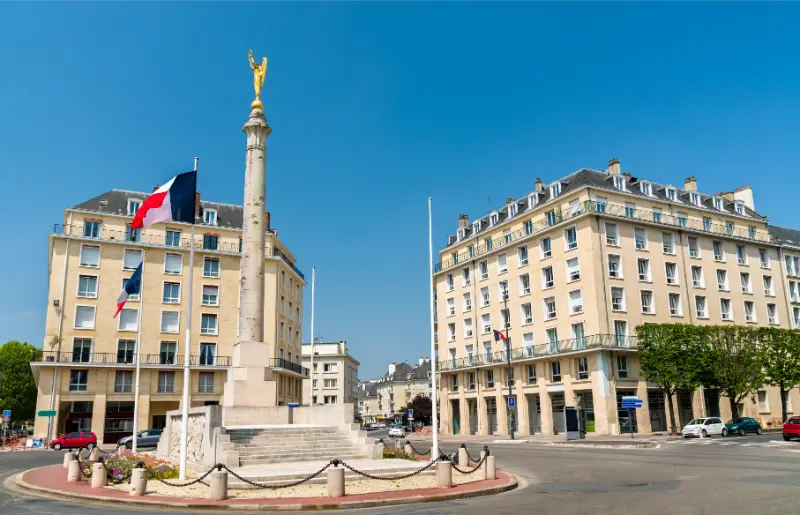
    Aix en Provence City View France

    Sault and the higher lavender country

    The Pays de Sault provides a different landscape: higher elevation, patchwork agriculture and views toward Mont Ventoux. The regional tourism site describes the Sault lavender routes as a mosaic of lavender, lavandin and einkorn fields.

    Sault is often the better choice for travellers arriving later in the season, but do not assume every field remains uncut. Harvest timing belongs to farmers. Build the day around the landscape and village rather than a single exact field seen on social media.

    Luberon lavender landscapes

    The Luberon offers less of the endless-plateau effect and more combinations of lavender with stone villages, abbeys and mixed farmland. The setting around Sénanque is famous, but access and photography need respect because the abbey is an active religious site and the surrounding fields are managed land.

    Use the Gordes guide, Roussillon guide and new village guides such as Bonnieux to turn lavender into part of a broader Luberon day rather than the only objective.

    Visit a farm or distillery

    A farm visit makes the landscape more meaningful. For example, a lavender farm and conservation garden near Sault lists 2026 visits and explains cultivation in a working setting. See the regional tourism listing for current details.

    A distillery visit also helps explain the difference between true lavender and lavandin, harvest methods and essential-oil production. This is more useful than collecting photographs without understanding what is being grown.

    Photography etiquette

    Stay on field edges or marked paths unless the owner explicitly allows entry. Do not pick flowers, move props into rows, fly drones without checking rules or park on narrow roads. Lavender is a crop, and damaged plants or compacted rows are a real cost to farmers.

    The best light is early or late anyway, which also reduces heat and traffic. A single carefully chosen field photographed respectfully is better than stopping dangerously at every purple patch.

    Driving strategy

    Choose one zone per day. Valensole plus Verdon is coherent; Sault plus Mont Ventoux is coherent; Luberon villages plus local lavender is coherent. Trying to drive Valensole, Sault and Gordes on the same day wastes hours and turns the experience into a motorway transfer.

    Fuel up before rural loops, carry water and download maps in case mobile coverage weakens. Summer fire-risk restrictions can also affect access to natural areas, so check local official information each day.

    A Valensole and Verdon day

    Start early on the plateau, stop only where parking is safe, then continue toward Moustiers-Sainte-Marie and Lac de Sainte-Croix. If the Gorges du Verdon is your main priority, use the Verdon road-trip guide and give the area more than one rushed day.

    This route works because the lavender and limestone landscapes feel connected geographically. It also gives you a strong backup if a field has been harvested: Moustiers and the lake still justify the journey.

    A Sault and Ventoux day

    Combine Sault with the Mont Ventoux area. The contrast between agricultural plateau and high mountain makes the day more varied than a field-only itinerary. If cycling, do not mix a serious summit ride with an ambitious sightseeing schedule; the mountain deserves its own time.

    The Sault market and local producers can add a food component, especially when you want to understand how lavender sits beside other crops rather than existing as a tourist monoculture.

    Where to stay for lavender season

    For Valensole and Verdon, Moustiers or a base around the plateau is practical. For Sault, staying locally reduces early-morning driving. For the Luberon, choose a village or L’Isle-sur-la-Sorgue depending on whether atmosphere or transport flexibility matters more. Compare Provence accommodation on Booking.com.

    Lavender Field in Bloom France

    Book early for peak bloom weekends because photography trips and summer holidays overlap. Flexible cancellation is useful if your main goal depends heavily on seasonal timing.

    Final planning advice

    Treat lavender as agriculture first and scenery second. Check local bloom reports, choose one geographic zone, respect fields and give yourself another reason to enjoy the day. The best lavender trip still works even if weather, harvest or access means the exact photograph you imagined is not available.

    Matching the flowering season to the right altitude

    Provence’s lavender is not one synchronized carpet. The Plateau de Valensole, the higher fields around Sault and smaller sites in the Luberon sit at different elevations and are farmed on different schedules. Valensole often reaches its photogenic purple period from roughly mid-June to mid-July, while fields at higher altitude can remain attractive later, but neither is a promise. Rainfall, temperature, the crop variety and each farmer’s harvest decision can all shift the picture. Fine lavender and lavandin also differ, so a photograph posted from one district cannot be used as a reliable report for the entire region.

    If the trip is primarily about flowers, build a flexible window rather than booking a particular field on a precise date. Ask local tourist offices and farms about current conditions a few days before travel. After the harvest, a distillery can still give the day purpose by explaining the transformation of the crop into essential oil. In autumn, the agricultural landscape can be rewarding without purple flowers, but it would be misleading to advertise it as peak lavender season. Families with children may enjoy a short interpretive walk or demonstration more than several hours in a car chasing distant social-media locations.

    Valensole and the Verdon: one sensible driving circuit

    The Valensole plateau is productive farmland first and a scenic destination second. The road between Valensole, Puimoisson and the approaches toward Riez offers changing views, while Moustiers-Sainte-Marie can supply a cultural stop before Lake Sainte-Croix. Rather than crossing back and forth for a particular photograph, choose a direction and build the day around two or three public stopping points. Park only where doing so is legal and safe. Farm tracks can be working access routes for machinery, and a vehicle left in the wrong place can obstruct a harvest operation.

    The best light is often early or late, but drivers must still consider how much time they need to reach their base in daylight, especially on unfamiliar narrow roads. Carry water and plan a meal rather than assuming that every roadside stand or distillery has food service. If the weather becomes stormy, abandon the field photography and spend time in Moustiers or another village; exposed agricultural land is not a place to wait out lightning. Respect signs and do not walk between rows merely because many online photographs show people posing there. Even a short detour into a field can damage plants and soil.

    Sault, farms and the meaning of a lavender route

    For the Sault area, consider the Chemin des Lavandes interpretive circuit promoted by Destination Ventoux rather than only seeking wide roadside views. The marked loop links field scenery with explanations of cultivation, offering a clearer sense of the work behind the flowers. Check the exact trail details and weather before setting out; open ground can be hot, and walking suitability depends on the party and conditions. The route is more satisfying when you leave time to read the panels and visit a local producer. The landscape around Sault also sits close to the wider Ventoux country, which can make a two-night base more attractive than a hurried out-and-back day.

    Traditional Stone House with Brown Shutters Provence France

    Choosing a farm visit should involve more than asking whether you can photograph rows of plants. Look for places that explain distillation or the distinction between plant varieties, and confirm whether a tour needs to be booked. Buying directly from a producer can support the local economy, but check product ingredients and labelling rather than assuming that every lavender-scented product is made entirely from local essential oil. Do not count on an August festival being an indicator of flowers still standing in nearby fields; celebrations can occur after the harvest. A good lavender trip is an agricultural and cultural visit, with photographs as one part of it.

    Buying lavender products beyond the flowering weeks

    Harvest time is not the only moment when Provence’s lavender economy is visible. A distillery visit after flowering can explain what farmers do with the crop, while a specialist shop can help distinguish an essential oil from a scented cosmetic or a sachet filled with dried flowers. Read the ingredients and country-of-origin information; packaging featuring a purple landscape does not guarantee that the contents were grown in the nearby field. Farm shops may be seasonal, so check whether a demonstration is running when you visit. A journey outside the peak purple weeks can still be worthwhile if it is organized around agricultural knowledge, producer meetings and the wider Verdon or Ventoux landscape rather than the expectation of fresh flowers.