

Dordogne has so many attractive villages that a first-time visitor can make the mistake of treating them like a checklist. That approach produces a lot of parking, steep walking and similar photographs without much understanding of why the places differ. A better plan is to choose villages from different landscapes: river settlements, bastides, Vézère Valley communities and quieter northern villages.
This guide focuses on fifteen villages and small historic settlements worth considering, then explains how to group them into realistic driving days. Several already have dedicated guides on My France Experience, while others are ideal candidates for later, more detailed articles as the Dordogne cluster expands.
1. Beynac-et-Cazenac
Beynac-et-Cazenac delivers the classic Périgord Noir image: a stone village climbing steeply from the Dordogne River to a medieval fortress. The climb is demanding but important because the relationship between river, houses and castle explains the settlement. Arrive early, wear proper shoes and allow at least half a day if you intend to visit the château rather than just photograph it.
Beynac pairs naturally with Marqueyssac or a short river activity. Avoid putting it after another steep hill village if mobility or summer heat is a concern.
2. La Roque-Gageac
La Roque-Gageac sits compressed between a limestone cliff and the Dordogne. The linear riverside shape makes it visually different from hilltop bastides, while boat trips and the cliffside setting add variety. The village itself is compact, so use it for a slow river walk, a gabarre outing or lunch rather than expecting a full day of monuments.
Because parking fills quickly, early morning and late afternoon are much more pleasant than peak midday in summer.
3. Domme
Domme is a fortified bastide above the Dordogne with one of the strongest panoramic viewpoints in the region. Unlike Monpazier, whose appeal lies in the purity of its planned medieval grid, Domme combines bastide structure with a dramatic hilltop setting and a cave beneath the town.

Use Domme when you want a viewpoint and a broader range of visitor services. Evening can be especially attractive after day-trip traffic declines.
4. Castelnaud-la-Chapelle
Castelnaud-la-Chapelle is dominated by its medieval fortress and views toward Beynac. The château’s warfare collection makes it one of the strongest family heritage visits in Dordogne, while the village below provides steep lanes and river scenery.
It works particularly well with nearby Marqueyssac because the two experiences contrast rather than repeat each other.
5. Limeuil
Limeuil stands above the confluence of the Dordogne and Vézère. Its geography makes it one of the most meaningful villages in the region: you can literally see the two river systems that structure so much of a Dordogne itinerary. The Panoramic Gardens add a hilltop viewpoint and family activities.
Choose Limeuil when moving between Les Eyzies/Le Bugue and the main Dordogne Valley rather than making it a separate long detour.
6. Saint-Léon-sur-Vézère
Saint-Léon-sur-Vézère is a calmer riverside village inside a bend of the Vézère. Its Romanesque church, stone lanes and Donjon/Manoir de la Salle provide enough heritage for a few hours, but the real value is the ability to slow down between major prehistoric attractions.
Pair it with La Roque Saint-Christophe or one cave, then leave the rest of the day flexible.
7. Monpazier
Monpazier is one of the best places in France to understand a medieval bastide. Its grid, arcaded Place des Cornières and surviving urban structure make the planning concept easy to read on foot. Thursday market adds another layer when your dates align.
Monpazier is worth a dedicated half-day because rushing it together with several other bastides makes their differences difficult to appreciate.
8. Belvès
Belvès occupies a hilltop position in southern Périgord and rewards travellers who want a historic small town with fewer international tour groups than the Sarlat corridor. Covered market structures, stone streets and views over the surrounding countryside give it a different rhythm from the river villages.
It combines well with Monpazier or Cadouin, especially if you are staying in the south-western part of Périgord Noir. Check local market and heritage-opening schedules because the strongest experience depends more on timing than in the open-air river villages.
9. Saint-Amand-de-Coly
Saint-Amand-de-Coly, now part of the commune of Coly-Saint-Amand, is known for its imposing fortified abbey church. The scale of the religious architecture is striking relative to the small settlement around it, making the stop feel very different from Dordogne’s castle villages.
Use it on a Montignac/Lascaux day rather than driving there from the far western department. The village itself is small, so a focused architectural stop is usually enough unless an event or guided visit is scheduled.
10. Saint-Jean-de-Côle
Saint-Jean-de-Côle lies in northern Dordogne and is useful precisely because it takes you away from the main Sarlat route. Stone houses, a distinctive church, bridge and château create a compact historic ensemble. The village pairs naturally with Brantôme and the Périgord Vert landscape.
If your itinerary already includes Brantôme, adding Saint-Jean-de-Côle gives the northern part of the department more depth without requiring another full accommodation move.
11. Issigeac
Issigeac is the market-and-lanes choice in Périgord Pourpre. Its irregular medieval street pattern contrasts sharply with nearby bastides, and Sunday morning transforms the village into one of the busiest market destinations around Bergerac.
Visit Sunday for atmosphere and food; visit another day for architecture. Combine it with Château de Monbazillac rather than with the Sarlat river villages.
12. Biron
Biron is a tiny settlement dominated by a large château complex near the southern edge of Dordogne. The castle evolved over several architectural periods, so the visit is stronger for travellers interested in château history than for those seeking a busy village centre.
Biron pairs naturally with Monpazier. Together they create a coherent day of bastide planning, countryside and castle architecture without long cross-department driving.
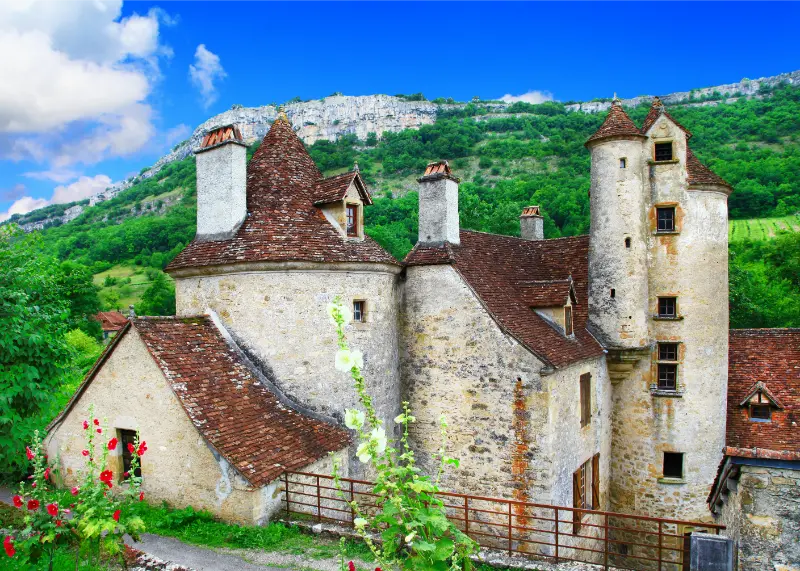
13. Cadouin
Cadouin developed around its abbey and cloister, giving the village a monastic character rather than a defensive or river-based one. The abbey forms part of the Routes of Santiago de Compostela in France UNESCO listing, adding a different heritage theme to a Dordogne trip dominated by prehistory and castles.
Combine Cadouin with Belvès or the southern Dordogne countryside. The village is especially attractive for travellers who appreciate religious architecture and quieter stops.
14. Fanlac
Fanlac is a much smaller, quieter village in the Vézère area, with stone houses and rural atmosphere rather than a major ticketed attraction. It is useful as a reminder that not every worthwhile Dordogne stop needs a château, cave or formal “must-see” label.
Choose Fanlac if your itinerary has become too dense. A short walk and coffee stop between larger attractions can reveal more about everyday Périgord architecture than another rushed museum.
15. Saint-Geniès
Saint-Geniès sits between Sarlat and Montignac and is known for its stone-roofed ensemble, church and château setting. Its position makes it a practical pause on a day linking Périgord Noir bases with the Vézère Valley.
Because it lies close to popular routes, visit early or around meal times when you can appreciate the centre without treating it merely as a road stop.
How to choose the right villages for your trip
For a first visit, choose four to six rather than fifteen. A strong mix might be Beynac for fortress-and-river drama, La Roque-Gageac for cliffside scenery, Domme for the panoramic bastide, Monpazier for planned medieval urbanism, Saint-Léon for the Vézère and Issigeac for a market village. That selection shows genuine differences.
If you have already visited the headline places, move outward: Saint-Jean-de-Côle and Brantôme in the north, Cadouin and Belvès in the south-west, or Saint-Amand-de-Coly and Fanlac around the Vézère.
Three realistic village routes
A Dordogne River day can combine Beynac, La Roque-Gageac and one of Castelnaud or Domme—but even that is full if you enter a castle. A Vézère day can combine Saint-Léon-sur-Vézère with one prehistoric attraction and perhaps Saint-Geniès. A Bergerac/bastide day can combine Issigeac, Monbazillac and either Monpazier or Biron depending on how much driving you want.
The rule is simple: two villages plus one major attraction is usually enough. Three villages without a ticketed site can work when distances are short and you are comfortable walking.
| Dordogne River | Beynac + La Roque-Gageac + one castle/garden |
| Vézère Valley | Saint-Léon + one prehistoric site + Saint-Geniès/Fanlac |
| Périgord Pourpre | Issigeac + Monbazillac + Bergerac |
| Bastide country | Monpazier + Biron + countryside lunch |
| Périgord Vert | Brantôme + Saint-Jean-de-Côle |
Parking and walking reality
Many of Dordogne’s most beautiful villages are steep, pedestrianised or constrained by medieval streets. Parking outside the centre is normal. Build ten to twenty minutes into arrival rather than assuming the navigation endpoint is the monument entrance. Comfortable shoes are more important than trying to minimise every walking step.
In July and August, early arrival changes the experience dramatically. The same village can feel intimate at 08:30 and overwhelmed at 12:00. If you are staying nearby, use that advantage.
Where to base yourself for village-hopping
Sarlat is the obvious base for Beynac, La Roque-Gageac, Domme and Castelnaud. Bergerac is better for Issigeac and Monbazillac. Les Eyzies or Montignac work for Saint-Léon, Fanlac and Saint-Amand-de-Coly. Trying to reach every village from one hotel wastes hours over a week.
Compare accommodation in Sarlat-la-Canéda on Booking.com
Use our where to stay in Dordogne guide to split a longer itinerary. Two bases for seven nights often produce a slower, better trip than one supposedly central property.
Best time for village travel
May, June and September are excellent because restaurants and attractions are active without peak summer intensity. July and August bring the fullest event calendars but require early starts. October can be beautiful for landscapes and food, though opening days become less predictable in the smallest villages.
Winter rewards travellers who value quiet streets, but some cafés, shops and attractions close. In that season, larger bases such as Sarlat, Bergerac or Périgueux make logistics easier.
Final advice
Do not measure a Dordogne trip by the number of villages visited. Choose places that represent different landscapes and histories, give each enough time for a real walk, and let markets, meals and river pauses count as part of the experience. The villages become more memorable when they stop competing with one another for a place on a checklist.

How many villages can you reasonably see in one week?
For most travellers, six to eight villages across a seven-day Dordogne trip is already generous when caves, castles, markets and outdoor activities are included. Some villages take only two hours, but the hidden time comes from parking, walking uphill, lunch and driving on small roads. Seeing fifteen would require sacrificing the experiences that make the region interesting.
If villages are your main passion, build two dedicated slow days and group them geographically. Spend another day on one major castle and its surrounding village, and let market days determine one morning. This creates a trip with rhythm rather than an endless sequence of old-stone centres.
Which villages are best without a car?
Dordogne is challenging without a car because many of the most attractive villages lack frequent public transport. Sarlat, Bergerac, Périgueux and Les Eyzies are easier bases because they have rail access, but reaching smaller villages often requires tours, taxis, cycling or seasonal solutions. Do not book a rural village hotel first and solve transport later.
If you are car-free, prioritise fewer places and research exact bus or tour days. A focused trip with Sarlat plus one organised Dordogne Valley excursion and Les Eyzies by train can be far more enjoyable than an itinerary built around connections that exist only on certain days.
More Dordogne villages: Add Belvès, Cadouin, Biron, Saint-Amand-de-Coly and Saint-Jean-de-Côle to the village shortlist.
Last updated: 16 October 2026