
France works well for family travel when adults stop trying to reproduce an adult itinerary with shorter legs. Children change the useful unit of planning: a playground can be as important as a museum, a bakery stop can reset the whole morning and a room with a closing door may matter more than a grand address.
This guide focuses on the logistics that make family trips feel manageable—bases, trains, meal timing, accommodation and age-appropriate variety. It also suggests destinations that offer something for adults and children without requiring every day to revolve around a theme park.
Quick planning overview
| Ideal pace | One main activity per half-day |
| Best transport | Train between bases; local transit and walking |
| Room priority | Verified bed layout, lift, air-conditioning and laundry |
| Easy wins | Parks, boats, markets, beaches and castles |
| Key strategy | Alternate adult priorities with child-led time |
Family destinations that combine well
Paris with children
Paris offers boats, towers, parks, carousels, science museums and bakeries alongside formal culture. Choose a central playground and one short museum mission rather than expecting children to enjoy a full adult art itinerary.
My practical advice: The Jardin du Luxembourg, Seine boats and neighbourhood food stops create breathing room. Reserve only one tightly timed attraction per day.
The Loire Valley
Castles provide stories, towers, gardens and open space, but interiors can feel repetitive. Select estates with family interpretation or outdoor activities and limit the number of formal visits.
My practical advice: A cottage or apartment base gives families more space. Add cycling only on routes appropriate to the youngest rider’s confidence.
Normandy
Beaches, medieval towns, farms and Mont-Saint-Michel create strong variety. Wartime sites can be meaningful for older children when explained carefully and balanced with lighter experiences.
My practical advice: Avoid an emotionally dense day with several cemeteries and museums. Choose one clear story and leave time for questions.

The Atlantic or Mediterranean coast
Beach days help reset a cultural itinerary, but coastlines differ in waves, tides, pebbles and facilities. Match the beach to swimming ability rather than choosing only by photographs.
My practical advice: Use supervised areas, understand local flags and protect midday rest in hot weather.
Alsace and eastern France
Compact centres, boat trips, castles and seasonal traditions make Strasbourg and Colmar accessible family stops. Village days need movement breaks and should not become long sequences of similar streets.
My practical advice: Regional trains reduce driving, while one organised village day can handle logistics.
Theme parks as part of the trip
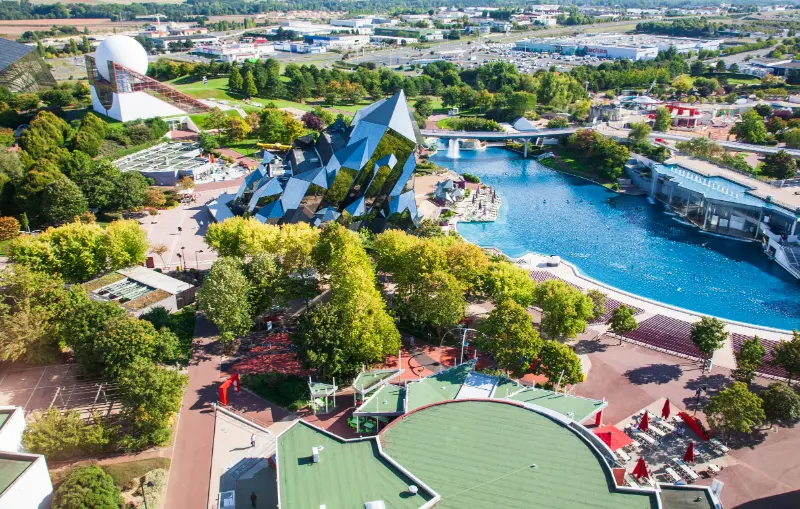
Disneyland Paris, Parc Astérix, Futuroscope, Puy du Fou and smaller educational parks can anchor a family itinerary. They are most enjoyable when chosen for the children’s interests and height eligibility.
My practical advice: Check current opening calendars, ride restrictions and transport only on official sites before booking non-refundable accommodation.
Three family itinerary models
One week
Stay in Paris for four nights and the Loire Valley for three. This combines urban icons, parks, castles and outdoor space with only one major move.
Ten days
Use Paris, Normandy and one countryside base. Rent a car after leaving Paris and return it before the final city night if flights require it.
Two weeks
Combine Paris, the Loire and the Riviera by train, with apartments or family rooms in each base. Include at least two low-plan days.
With preschool children
Choose two bases maximum, prioritise kitchens and laundry, schedule naps or quiet time and avoid late restaurant dependence.
Where to stay
French room categories do not guarantee the layout a family imagines. Ask whether beds are fixed or sofa beds, whether cots reduce floor space, whether adjoining rooms truly connect and whether upper floors have a lift. Apartments add kitchens and laundry but may have limited reception. In older buildings, stairs, balconies and street noise deserve specific questions.
Compare accommodation in France on Booking.com
Getting around
Trains remove long driving days, but boarding with a stroller and multiple bags can be stressful. Pack so one adult can manage luggage while the other manages children. Reserve seats together, arrive before platform announcements and keep snacks accessible. In cities, a compact foldable stroller handles steps better; in rural areas, a car seat must meet current legal and rental requirements.
Food and everyday rhythm
Children usually find familiar entry points in bread, crêpes, fruit, cheese, roast chicken, pasta and pastries. Restaurant schedules may run later than a young child’s hunger, so use substantial lunches and keep picnic supplies. Greet staff, explain needs simply and do not assume every establishment has high chairs, children’s menus or space for an open stroller.
Budget and booking strategy
Family rooms can be scarce, making early booking more important than chasing last-minute deals. Apartments may save breakfast and laundry costs. Check official age rules for trains and attractions because family products and free-entry thresholds vary. One paid highlight plus free parks, beaches and walks creates a sustainable daily rhythm.
How I would prepare before departure
For a family trip, I would ask each child what kind of day they remember enjoying: a boat, a castle story, an animal encounter or a playground. That answer is more useful than a list of adult landmarks marked ‘family friendly’. In Paris, combine the Luxembourg Gardens with one nearby cultural visit instead of marching from the Louvre to the Eiffel Tower and Montmartre in a single day. Cité des Sciences at La Villette can be a genuine indoor activity when weather is poor, but check age-specific spaces, tickets and opening hours. On a Loire stay, choose a château with gardens or interactive activities before deciding how many more estates to book. One good family experience per day is enough.
Accommodation matters more to family travel than a small difference in attraction count. Confirm the room’s actual beds, whether a sofa bed must be unfolded each evening, and whether the lift can accommodate a stroller. A kitchenette is useful for breakfast and early dinners, but only if the layout and grocery access make it practical. On a Normandy road trip, two consecutive nights around Bayeux or Caen reduce packing and create a base for history and beaches. For Paris, choose a neighbourhood with a park and dependable transport connection rather than automatically paying for the street nearest a famous monument. Ask about air conditioning in summer and heating in shoulder season before treating a low price as a bargain.
Have a weather contingency that the child would actually enjoy. If the Louvre day becomes too crowded or tiring, a shorter museum visit followed by a play area may be a better experience than another two hours indoors. In Normandy, a coastal walk can become a compact local museum and a crêpe stop on a windy day. In the Loire, shift from exposed gardens to an accessible château interior where family activities are available. On the Riviera, a heatwave means earlier beach hours, shade and fewer steep village walks, not an obligation to finish the planned schedule. Build a quiet afternoon into every second or third day; even enthusiastic children can become overloaded by repeated transfers.
Accessibility and responsible travel
Travelling with a stroller or child with accessibility needs changes the best route. Some Paris Metro connections require stairs, medieval villages have cobbles and several châteaux have historic rooms beyond step-free access. Use official transport accessibility guidance and ask each attraction which family routes are possible rather than assuming that a child-oriented museum is fully accessible throughout. On long trains, reserve seats together when offered and follow the booked operator’s luggage and stroller conditions. Bring a compact day bag with snacks, water, spare clothes and any essential medication. A five-minute opportunity for a restroom before boarding can matter more than saving ten minutes in the ticket queue.
Families also shape the places they visit. On beaches, follow bathing flags and check whether supervision is available; Atlantic tides and waves are different from sheltered Mediterranean coves. Do not allow children to climb on protected dunes, cemetery monuments or old stone walls for photographs. In Alsatian villages, keep to public lanes rather than opening private courtyard gates; in the Loire, vineyards are working farms. A market picnic with local fruit, bread and cheese can be memorable when leftovers and packaging are handled responsibly. Children learn about travel through the small habits adults model, including patience with residents and respectful behaviour at war memorials.
Mistakes I would avoid
- Planning the same number of sights as an adults-only trip
- Booking a room without confirming the bed layout
- Carrying more luggage than two adults can control
- Assuming every attraction suits every age or height
- Waiting until everyone is hungry to search for food
For one week, Paris plus the Loire is a manageable first combination: several nights with easy parks and museums, followed by castles and countryside. For ten days, consider Paris and Normandy plus a slower rural base, but do not overload the trip with both beach history and several distant theme parks. A fourteen-day route could include Paris, the Loire and Nice by train, with time to do laundry and two genuine rest afternoons. Theme parks such as Disneyland Paris, Parc Astérix, Futuroscope and Puy du Fou should be chosen as separate major commitments, not assumed to fit into any passing afternoon. Check each park’s season and height restrictions for the children travelling.
Frequently asked questions
Is France child-friendly?
Yes, especially when the itinerary respects local schedules and children’s need for movement. Facilities vary, so verify practical details instead of relying on broad labels.
Is train travel easy with children?
It can be excellent between major bases. Compact luggage, reserved seats and extra boarding time make the biggest difference.
Which region is best for a first family trip?
Paris plus the Loire offers a simple mix of landmarks, parks, castles and countryside. Normandy or the Riviera works well depending on interests and season.
Do restaurants welcome children?
Many do, but space, hours and equipment vary. Earlier service, clear manners and a backup snack help; book when a particular restaurant matters.

Useful official resources
- Explore France official tourism
- SNCF Connect
- Disneyland Paris official site
- Parc Astérix official site
Use individual venue websites for current child pricing and family workshops rather than relying on a generic claim that everything is free under eighteen. Paris’s official visitor information lists family museums, gardens and outings; some national institutions have age-related concessions that depend on residency or other criteria. Check current conditions for the selected museum, train operator and theme park. If a child needs a car seat in a rental vehicle, reserve the correct type and confirm the handover procedure. A family itinerary should also contain the nearest useful pharmacy and a simple plan for contacting accommodation if the train runs late.
Continue planning your trip
For the next step, read the four-day Paris itinerary, the Loire Valley château route, a seven-day Normandy road trip and the year-round French Alps guide. These guides are designed to connect into a slower, more realistic France itinerary.
I would judge a family holiday by the conversations at dinner, not by how many tickets we scanned. A child who remembers steering a toy boat in the Luxembourg Gardens, looking across a Loire château moat or finding sea creatures at low tide has understood something about France. Leave time for bread from the same bakery on two mornings and for a familiar playground after a difficult museum. Those small repetitions help children settle into a trip. Adults usually enjoy the destination more as well when the itinerary assumes that family travel is a different rhythm, not a shorter version of a couples’ sightseeing marathon.
Planning the region as a family? Our Normandy with kids guide covers age-aware routes, beaches, castles, D-Day sites and rainy-day options.