
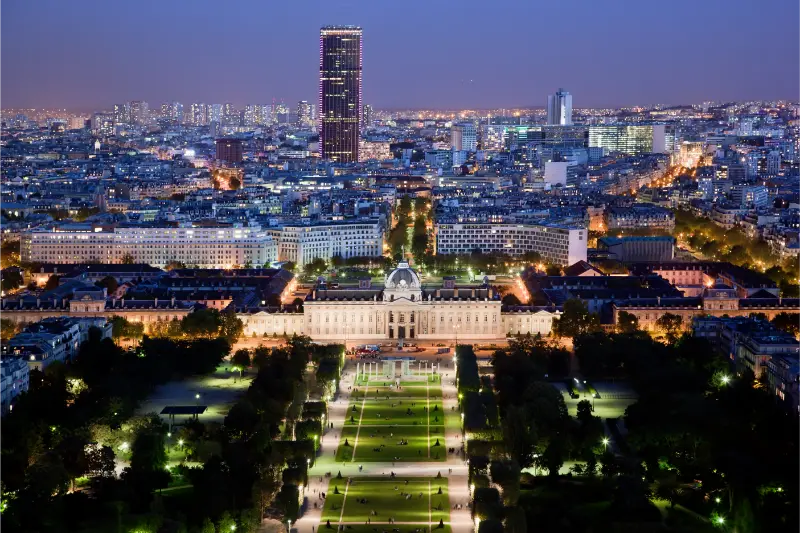
Paris is easiest to enjoy when each day has one anchor and plenty of space around it. On early visits I tried to cross the city repeatedly for every famous sight; the days looked efficient on paper and felt fragmented in practice. A better itinerary groups places by neighbourhood, protects time for cafés and river walks, and accepts that Paris will always leave something for next time.
This four-day plan includes the Eiffel Tower, the historic centre, Montmartre and a major museum, but it does not pretend that every room of the Louvre or every charming street can be absorbed at speed. Use it as a framework and replace any attraction that does not fit your interests.
Quick planning overview
| Recommended stay | 4 nights, ideally 5 if arrival is late |
| Daily pace | One timed attraction plus one neighbourhood |
| Getting around | Metro for distance, walking within each area |
| Reserve first | Eiffel Tower, Louvre and any special exhibition |
| Best extra | An evening walk beside the Seine |
The four-day Paris plan
Day 1: Île de la Cité and the Latin Quarter
Begin where Paris grew around the Seine. See Notre-Dame from the parvis, walk through the quieter streets of Île Saint-Louis, then cross toward the Latin Quarter and the Panthéon area.
My practical advice: Keep the first day flexible because flights and trains run late. End beside the river or in the Luxembourg Gardens rather than committing to an expensive timed evening.
Day 2: Louvre, Tuileries and the grand western axis
Book the earliest comfortable Louvre slot and decide in advance which collections matter. After the museum, step into the Tuileries and continue toward Place de la Concorde; the physical line of monuments makes the city’s scale understandable.

My practical advice: Two or three focused hours in the Louvre is often more rewarding than staying until exhaustion. Eat after leaving the museum rather than sacrificing visit time to a crowded interior café.
Day 3: Eiffel Tower and the Left Bank
Approach the tower from Trocadéro or the river, then use a reserved ticket if you want to ascend. Continue through the Champ de Mars toward Rue Cler, Les Invalides or the Rodin Museum, depending on energy.
My practical advice: Return to the Seine near sunset. Seeing the tower from different distances can be more memorable than spending the whole day in its immediate surroundings.
Day 4: Montmartre and your personal Paris
Arrive in Montmartre early, climb toward Sacré-Cœur and wander away from Place du Tertre into side streets before tour groups thicken. Spend the afternoon on the interest that defines Paris for you: fashion, cemeteries, food shops, modern art or covered passages.
My practical advice: Montmartre is steep and cobbled. Use the funicular or bus if stairs are a problem, and watch belongings in the busiest approaches.
Optional swap: Le Marais
Le Marais fits well after the historic centre or as a replacement for part of day four. Its mansions, Jewish quarter, small museums and shops reward slow wandering.
My practical advice: Visit Place des Vosges early or late, then choose one museum instead of trying to enter every cultural space in the district.
Optional swap: a half-day beyond the centre
Versailles needs more than a quick detour, while Saint-Germain-en-Laye, Vincennes or the Canal de l’Ourcq can offer a lighter change of scene. Choose according to weather and your appetite for another major attraction.
My practical advice: If Versailles is essential, give it most of a day and move one central Paris block to another morning.
How to adapt the itinerary
For art lovers
Add the Musée d’Orsay or Musée de l’Orangerie and reduce shopping time. Never schedule the Louvre and Orsay back-to-back unless museums are the main purpose of the trip.
For food-focused travellers
Reserve a market tour or cooking class, browse Rue Montorgueil or Marché d’Aligre and make lunch the main meal of the day.
For families
Shorten museum visits, use playground stops and add a Seine cruise. Children often remember the city’s boats, carousels and bakeries more clearly than a sequence of formal interiors.
For rainy days
Keep covered passages, department-store architecture and smaller museums in reserve. Buy tickets on official sites and check current closures before crossing town.
Where to stay
Stay where two useful Metro lines intersect or where you can walk to one day’s itinerary. The 1st and 6th arrondissements are central but expensive; the 9th, 11th, 12th and 14th can offer better value while remaining convenient. Around major stations, examine the exact street rather than judging the whole district by its name. Light sleepers should request a courtyard room, and summer visitors should confirm air-conditioning explicitly.
Compare accommodation in Paris on Booking.com
Getting around
Walking reveals Paris, but trying to walk every transfer can drain the energy needed for museums and evening exploration. Use the official Île-de-France Mobilités tools to compare current ticket products because fares and visitor passes change. Keep your phone and wallet controlled near doors and in dense crowds. Airports are outside central Paris, so choose the official rail, bus or taxi option that suits luggage and arrival time rather than following unsolicited offers.
Food and everyday rhythm
A Paris itinerary improves when meals follow geography. Book only the restaurants you truly care about and keep a map of alternatives near each day’s route. Bakeries make an easy breakfast, but eating on a bench is more pleasant than walking with food through crowds. At traditional restaurants, lunch formulas can provide excellent value; at cafés, the terrace is often about atmosphere as much as coffee.
Budget and booking strategy
Paris becomes expensive through accumulation: multiple ticketed viewpoints, taxis, drinks in landmark locations and last-minute admission. Choose one paid panorama, one major museum day and a few free walks. A central room may cost more but can save transport time. Avoid unofficial ticket sellers, verify cancellation conditions and compare city passes against the attractions you will realistically enter.
How I would prepare before departure
The first day is best treated as a riverside introduction, not a contest to enter four monuments before lunch. Start on Île de la Cité at Notre-Dame, whose interior reopened in December 2024; admission to the cathedral is free, although official free time-slot reservations may help at busy periods. Walk across to Île Saint-Louis and continue along the Left Bank toward Shakespeare and Company or the quieter lanes behind Saint-Julien-le-Pauvre. If arrival delays make this impossible, keep only the cathedral exterior and the river walk. Sainte-Chapelle is wonderful for stained glass but is a separate ticketed visit with security checks. Reserve it on a day when you can arrive comfortably, not at the end of an unpredictable airport transfer.

For the Louvre day, identify two wings or collections rather than aiming to cover the entire museum. The museum’s sheer scale becomes tiring quickly, and the most famous galleries attract the heaviest pressure. Enter with a reserved slot, take a proper break, then step outside toward the Palais-Royal gardens instead of adding another museum across town. If your interests lean toward Impressionism, make Musée d’Orsay the main attraction on a different day rather than forcing it in after the Louvre. Check weekly closing days for your travel dates. A good Paris itinerary places one demanding indoor visit beside a small neighbourhood walk, because the contrast is part of what makes the city enjoyable.
On a rainy third day, keep the Eiffel Tower ticket only if the operator’s conditions and visibility make it worthwhile. Trocadéro can be windy, and long open-air waits are unpleasant with children. A useful alternative is the Musée de l’Homme near the square, followed by cafés or the nearby transport lines back toward the centre. If the weather later clears, view the tower from the riverbank without repeating the whole journey to its summit. Another wet-weather option is a passage walk on the Right Bank, linking Passage Jouffroy with neighbouring arcades. Neither plan requires pretending that heavy rain will enhance a long picnic on the Champ de Mars. Avoid double-booking timed tickets as a hedge.
Accessibility and responsible travel
Physical access should shape the four days in advance. The steps around Montmartre, the climb to Sacré-Cœur and long corridors within some Metro interchanges can be exhausting for travellers with limited mobility or a stroller. The Montmartre funicular can help with the principal hill but does not flatten the historic streets at the top. Look for an official step-free transport route where necessary, and consider a bus or taxi for a single difficult segment rather than designing the whole day around inaccessible Metro transfers. At Versailles, if you add it as a substitute for another day, evaluate the gardens and estate distances as carefully as the palace rooms. Accessibility equipment and routes should be confirmed directly with each venue.
Paris is easier to enjoy respectfully if the street around an attraction is treated as a neighbourhood rather than a photo set. On Île Saint-Louis, keep building doorways clear; in Montmartre, do not enter private stairways in search of a secret view. Buy a pastry from a local bakery rather than eating all meals beside monuments, and follow posted opening hours in public gardens. A Seine cruise can be a lovely break but choose the operator and boarding point that fit the itinerary rather than taking an unnecessary journey across town. Combining walking, bus and Metro on sensible routes also reduces wasted transfers and gives a better sense of the city’s scale.
Mistakes I would avoid
- Crossing the city several times in one day
- Entering the Louvre without choosing priority collections
- Eating beside every major monument for convenience
- Ignoring weekly museum closure days
- Planning every evening before knowing your energy level
My preferred four-day rhythm is one island-and-Left-Bank day, one Louvre-and-Palais-Royal day, one Eiffel-Tower-and-river day, and one Montmartre-and-Marais day. That pairing keeps most travel directional instead of crossing Paris repeatedly. If your fourth day ends at an airport, take Montmartre in the morning only if luggage storage and the onward connection are genuinely practical; otherwise make the final morning local to your hotel. Families might swap a dense Marais museum stop for the Luxembourg Gardens or an afternoon at Cité des Sciences. Couples who prefer cafés can replace a second viewpoint ticket with dinner near Canal Saint-Martin. The order may change, but the four different moods remain.
Frequently asked questions
Is four days enough for Paris?
Yes for a rewarding first visit, provided you group sights geographically. Five days is even better if one day includes Versailles or another substantial excursion.
Where should a first-time visitor stay?
Choose a safe-feeling street near a Metro station with direct links to your priorities. Centrality helps, but transport convenience is more important than a fashionable arrondissement label.
Do I need a Paris travel pass?
It depends on arrival day, zones and number of journeys. Check the current official fare structure and compare it with pay-as-you-go travel.
When should I visit the Eiffel Tower?
Reserve a clear slot that does not compete with another timed attraction. Late afternoon can combine daylight, sunset and evening views, but availability and weather should guide the choice.

Useful official resources
- Paris je t’aime official tourism site
- Île-de-France Mobilités
- Louvre official website
- Eiffel Tower official website
Check the Louvre’s own booking page for your exact gallery day, the Eiffel Tower’s official ticket service for ascent options, and Île-de-France Mobilités for fare products and station works. Notre-Dame cathedral entry and its tower tickets are administered separately, so a free cathedral visit does not grant tower access. For a Seine cruise, check the pier location on the confirmation; vessels can board on different banks even when the promotional photograph looks similar. Do not rely on old instructions about single-use Metro paper tickets or the nearest station name without checking current network information. In summer or during major events, verify any restrictions around central riverbanks shortly before the visit.
Continue planning your trip
For the next step, read the first-time France travel guide, travelling through France by train, Paris and France with children and the Champagne route from Reims. These guides are designed to connect into a slower, more realistic France itinerary.
If I had to remove one thing from a first four-day Paris itinerary, it would be the expectation of seeing everything. The Louvre alone can justify a return, and Montmartre feels completely different early on a weekday from late on a crowded weekend. The moments that make the trip personal are often the bridge you cross after dinner, a quiet café behind a major boulevard or a short view across the Seine before catching the Metro. Keep one evening without a restaurant booking and one daytime segment without a timed entrance. Four days are enough to experience Paris meaningfully if the plan leaves space for the city to surprise you.
\n\n\nMore Paris planning: Eiffel Tower guide · Louvre guide · Montmartre walking guide · Paris with kids · Paris transport guide · Seine cruise guide
\n