
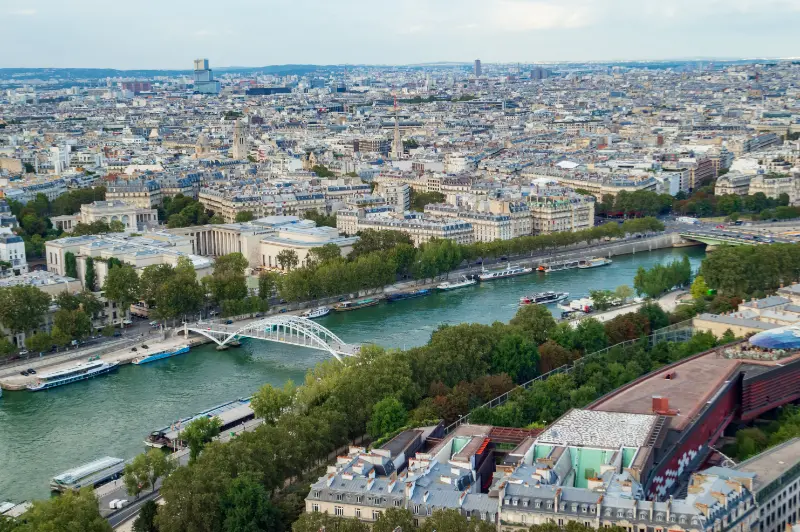
A Seine cruise is one of the most touristy things you can do in Paris and one of the few touristy things I would still protect space for on a first trip. The reason is simple: the river gives you a coherent view of the city. Landmarks that feel disconnected on the metro suddenly make geographical sense when you see the bridges, quays and monuments in sequence.
The trick is choosing the right cruise rather than simply buying the first ticket you see. A basic sightseeing boat, a sunset departure and a long dinner cruise are three different experiences. This guide helps you decide which one fits your itinerary, and it connects naturally with our four-day Paris itinerary and Eiffel Tower guide.
What a typical sightseeing cruise actually shows you
Most central sightseeing cruises follow the Seine past a sequence of major landmarks and historic riverbanks. Depending on the operator and water conditions, you can expect views toward the Eiffel Tower, Invalides, Musée d’Orsay, Louvre, Île de la Cité, Notre-Dame, Conciergerie and a long series of bridges. The exact route can change because the river is a working waterway, not a theme-park track.
Paris je t’aime, the official tourism office, highlights several established operators including Bateaux-Mouches, Vedettes de Paris and Bateaux Parisiens. What matters more than the brand name is the departure point, timetable, boat layout and whether you want live commentary, an audio guide or simply an open deck.
Sightseeing cruise or dinner cruise?
A standard sightseeing cruise is usually the better choice if your priority is the city. You can focus on the view, the duration is manageable and it fits around other plans. A dinner cruise is a longer evening experience where the meal, table position and atmosphere matter as much as the monuments.

Do not choose a dinner cruise only because you think it is the “romantic upgrade”. If you care deeply about food, compare the menu and seating rather than assuming every boat offers the same quality. If you care primarily about photography and landmarks, a flexible sightseeing cruise followed by dinner on land may give you more control.
The best time of day
Morning cruises are underrated. The light can be cleaner, boats can feel calmer and the cruise works as orientation before a walking day. Midday is easy to schedule but can bring harder light and more tour groups. Late afternoon offers softer light and a convenient rest after hours on foot.
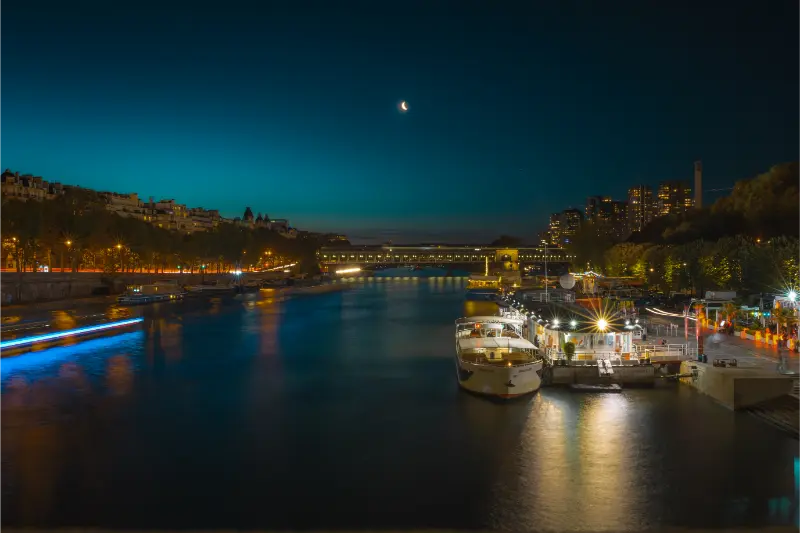
Sunset and early evening are the most atmospheric times because the city changes during the cruise. The exact timing matters: sunset in Paris can be before 17:00 in winter and after 21:30 around early summer. Check your date rather than booking a generic “evening” slot and expecting golden light.
Where to sit on the boat
Open upper decks give the clearest views but expose you to wind, rain and cold. Enclosed lower decks are more comfortable in poor weather but can create reflections in photographs. If photography matters, arrive early enough to choose a useful position and remember that the best landmark can appear on either side as the boat turns.
Do not spend the whole cruise moving from rail to rail. Pick a position, watch the sequence and accept that you will miss a few perfect angles. The point of the river is the relationship between places, not collecting a close-up of every façade.
Cruise after the Eiffel Tower
One of the easiest combinations is Eiffel Tower plus river cruise because several operators depart close to the tower. Use our Eiffel Tower guide to choose your tower slot, then leave enough buffer for security and lift delays before the boat. If your cruise ticket is flexible, the combination becomes much easier.
I prefer tower first and cruise second when the day has involved a lot of walking. The boat then functions as a seated transition into the evening. In summer, a later cruise can also avoid the hottest part of the day.
Cruise after the Louvre or Musée d’Orsay
A river cruise is also an effective antidote to museum fatigue. After a focused visit using our Louvre guide, walk through the Tuileries or along the quays before boarding later. You continue seeing Paris without immediately entering another building.
The same logic works after Orsay. Our museum strategy is built around changing the type of experience during the day rather than stacking galleries.
Seine cruises with children
For families, a sightseeing cruise is often more useful than adults expect. Children can sit, eat a small snack where permitted, watch bridges pass overhead and recognise landmarks without another queue. Keep the duration simple; a long formal dinner cruise may be less successful with younger children unless the meal itself appeals to them.
In a family itinerary, I would use the cruise after a walking-heavy morning or as the calm part of an Eiffel Tower day. See our Paris with kids guide for the wider pacing strategy.
Weather changes the experience more than the season
A clear winter afternoon can be more beautiful than a grey summer evening. Wind on the river is stronger than it feels on sheltered streets, so bring an extra layer outside warm months. In rain, covered boats still operate in many conditions, but visibility and deck access can be less enjoyable.
High water, navigation restrictions and major events can affect routes or schedules. Treat the operator’s same-day information as more authoritative than a route diagram saved months earlier.
What a cruise does not replace
The boat does not replace walking the islands, entering Notre-Dame, visiting the Louvre or exploring neighbourhoods. From water level, Paris looks monumental and coherent; on foot it becomes detailed and local. Use the cruise to understand the city’s shape, then return to the places that interested you.
For that second layer, our Paris neighborhoods guide gives you areas where the city feels less like a sequence of monuments.
Choosing a ticket
Check four details before paying: departure point, whether the ticket is tied to a time, commentary language, and boat type. A cheap cruise from the wrong quay can cost you more in wasted travel time than a slightly more expensive departure beside your other plans.
For dinner cruises, add table category and whether drinks are included. For sightseeing boats, prioritise timetable frequency and deck layout. If you are travelling in peak summer or around a major event, reserve earlier than you would in a quiet winter week.
Where to stay if you want evening river walks
You do not need a hotel on the river. Areas in the 5th, 6th, 7th, Marais and central arrondissements can put you within an easy walk of the quays, while many outer neighbourhoods have direct metro access. River views from hotel rooms are a premium feature, so verify the exact room category before paying extra.
Compare places to stay in Paris on Booking.com
A simple cruise decision guide
- Choose a morning sightseeing cruise for orientation and calmer light.
- Choose late afternoon if you want a seated break between sightseeing and dinner.
- Choose sunset or night for atmosphere and illuminated monuments.
- Choose a dinner cruise because you want the meal-and-city experience, not merely because it sounds more luxurious.
- Choose a departure point that fits the rest of your day; geography matters more than brand loyalty.
The best role for a Seine cruise
Treat it as a change of pace, not another box to tick. Paris trips become tiring when every attraction requires standing, queuing and navigating. A boat gives you an hour in which the city moves while you remain still. That is why the cruise often feels better on day two or three than immediately after arriving.
If you time it well, the Seine becomes the bridge between two different versions of Paris: the daytime city you walked and the evening city lighting up around the water.
The bridges are part of the experience
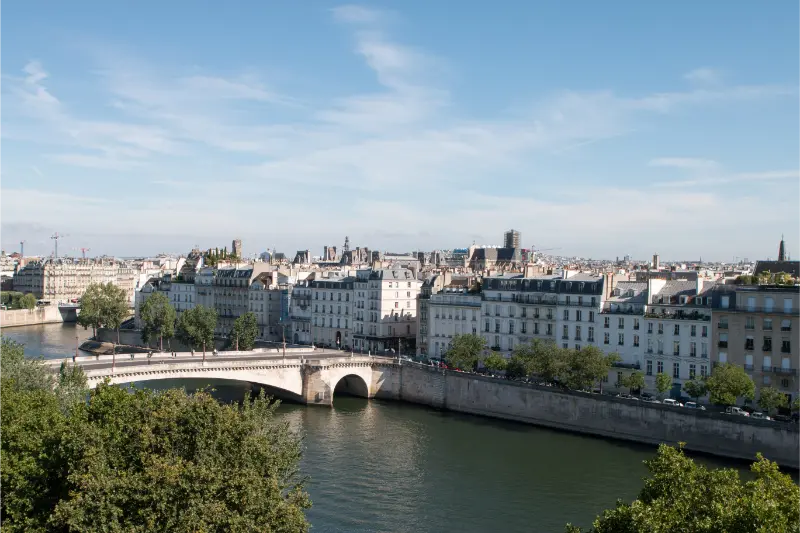
Many visitors focus only on monuments, but the changing bridges are what make the cruise feel distinctly Parisian. Pont Alexandre III is theatrical, Pont Neuf is historically important despite its name meaning “new bridge”, and smaller crossings frame the islands in very different ways. Look forward as the boat approaches each arch; the perspective changes faster than it does from the riverbank.
Commentary or silence?
Recorded commentary can help on a first visit because it gives names to what you are seeing, but it can also become background noise if the boat is crowded or several languages play in sequence. If you already know the landmarks, consider treating the cruise as a visual pause instead. The river is one of the few sightseeing experiences where doing less can make you notice more.
Accessibility and boarding
Accessibility varies by operator, vessel and departure quay. Some boats have step-free boarding in certain conditions; others involve ramps, stairs or narrow access. Travellers with reduced mobility should confirm the exact departure rather than relying on a general “accessible cruise” label. The same applies to strollers and large mobility devices.
A cruise on a repeat visit
The Seine still works after your first Paris trip if you change the purpose. Take a night cruise instead of a daytime orientation, choose a smaller vessel, try a dinner format, or explore canal cruises on the Saint-Martin or Bassin de la Villette networks. The river does not need to be a once-only attraction; it can be a different layer of the city each time.