Author: admin

  • Bordeaux and Wine Country: A 4-Day City and Vineyard Itinerary

    Bordeaux and Wine Country: A 4-Day City and Vineyard Itinerary

    Bordeaux is too often reduced to a departure point for vineyard tours. The city deserves its own time: eighteenth-century façades face a working river, trams make neighbourhood exploration simple, and contemporary spaces explain wine without requiring previous expertise.

    This four-day plan gives two days to Bordeaux, one to Saint-Émilion and one flexible day for another wine area, the coast or deeper city exploration. It is designed around responsible tasting and does not assume that renting a car is necessary.

    Quick planning overview

    Stay4 nights in Bordeaux
    City transportTram, walking, bicycle and river shuttle
    Vineyard dayTrain plus booked visits, or a guided excursion
    ReserveChâteau visits and Cité du Vin time slot
    Best balanceTwo city days and two excursions

    A four-day Bordeaux plan

    Day 1: historic Bordeaux

    Walk from the riverfront through Place de la Bourse, the old gates and the cathedral area, watching how the city opens away from the quays.

    My practical advice: Do not spend the whole day chasing mirror-like conditions at the Miroir d’Eau; its operation and appearance vary.

    Day 2: Chartrons and wine context

    Explore the Chartrons district and devote focused time to La Cité du Vin or another cultural institution before an evening in the centre.

    My practical advice: Choose the museum experience that matches your interest and confirm current exhibitions on the official site.

    Day 3: Saint-Émilion

    The medieval village and surrounding vineyards can be reached by train, but estates generally require appointments and are not all beside the station.

    My practical advice: Plan the connection between station, village and château before arrival; a tasting reservation is not a transport plan.

    Day 4 option: Médoc

    The Médoc’s famous estates lie across a broad landscape where a guided excursion or car with a non-drinking driver is usually most practical.
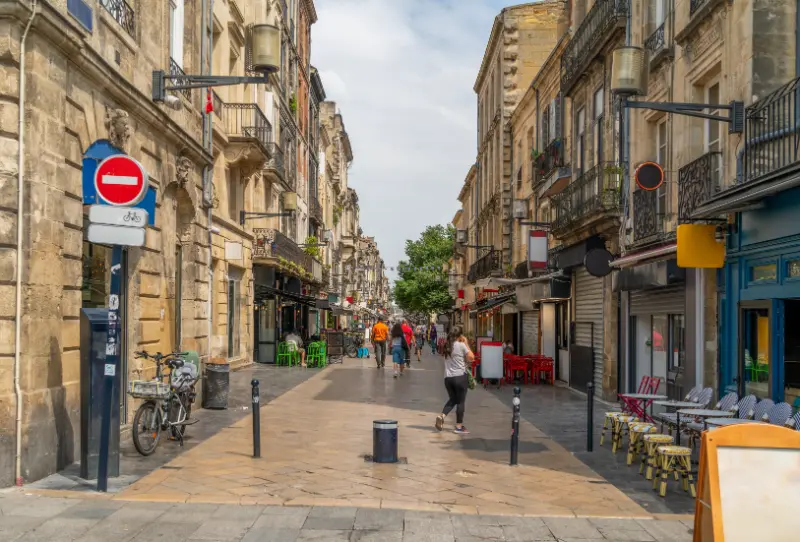
    Bordeaux City View France

    My practical advice: Two meaningful appointments are preferable to a day spent hurrying between gates.

    Day 4 option: Arcachon Basin

    For contrast, travel toward the Atlantic for sea air, oysters and the basin landscape, allowing a full day for connections and tides.

    My practical advice: Treat Dune du Pilat access, heat and sand as real logistics, not a short photo detour.

    A city-only alternative

    Bordeaux can fill all four days through markets, museums, river walks, parks and neighbourhood food without a single château visit.

    My practical advice: This option suits non-drinkers and mixed-interest groups; wine heritage remains understandable through architecture and museums.

    Planning tastings responsibly

    Book directly

    Confirm language, duration, price, accessibility and whether the visit includes vineyards, cellars or only a tasting.

    Use a guide

    A small-group excursion can solve transport and add regional context; examine the actual schedule and group size.

    Take the train

    Saint-Émilion is rail-accessible, but prearrange the final kilometres when visiting estates.

    Designate a driver

    Tasting pours still contain alcohol. Spitting is normal, and no prestige justifies unsafe driving.

    Where to stay

    The historic centre and Golden Triangle are convenient but priced accordingly. Chartrons offers character near the river; Saint-Michel and Victoire feel lively but require a street-level noise check. Staying near Saint-Jean station helps early departures, although the exact surroundings matter. Tram access is often more useful than a postcard address.

    Compare accommodation in Bordeaux on Booking.com

    Getting around

    High-speed trains connect Paris and Bordeaux Saint-Jean, and trams serve much of the city. Vineyard geography is fragmented: Saint-Émilion differs from Médoc, Graves and Sauternes. Select one area per day. Never assume a château accepts unannounced visitors, and check regional train times for the return.

    Food and everyday rhythm

    Bordeaux food extends beyond canelés and steak. Markets, seafood from the Atlantic, lamprey traditions, seasonal produce and contemporary bistros all matter. Wine bars allow comparison by the glass, but ask about serving sizes and drink water. A non-alcoholic pairing can be equally useful for understanding food.

    Budget and booking strategy

    City walking and riverfront time offset the cost of museums and organised vineyard visits. Compare a private transfer, small-group tour and train-based day honestly after adding taxis. City passes only save money when their included transport and admissions match your plan.

    How I would prepare before departure

    I would create two separate maps for this four-day visit: one for Bordeaux’s tram-connected urban neighbourhoods and another for the vineyards. The city map would group the quays, Place de la Bourse, Chartrons and the cathedral so the first two days flow naturally on foot and by tram. On the vineyard map, mark Saint-Émilion’s railway station, the uphill historic village and any estate you have actually reserved; these are not interchangeable points. If you choose the Médoc instead, account for the larger distances between properties. This simple distinction prevents a central-city schedule from being stretched into an unrealistic rural tour.

    Before finalising bookings, I would check La Cité du Vin’s current exhibition and ticket conditions, the timetable to Saint-Émilion and the actual meeting place for each tasting. A château may accept guests only by appointment, may offer different languages or may require advance payment. The train’s arrival at Saint-Émilion does not place you inside a vineyard cellar or at the medieval village’s principal sights. For a self-guided day, verify the local transfer or walking route and build in a return margin. If several travellers do not drink, choose a property with a meaningful heritage or landscape visit instead of centring the day entirely on tasting pours.

    A wet Bordeaux day is an opportunity to explore the city’s trading history indoors rather than chase a vineyard panorama. The Cité du Vin gives context to wine beyond a tasting; another museum or the covered spaces around the centre can keep the day close to tram stops. For a very hot afternoon, reverse the sequence and walk the quays early, leaving interior visits for the strongest sun. The Arcachon Basin is not an all-weather backup: wind, trains, sand and the Dune du Pilat’s exposed slope can make it less comfortable. Decide on the coast only after checking transport and conditions, not simply because a fourth day appears empty.
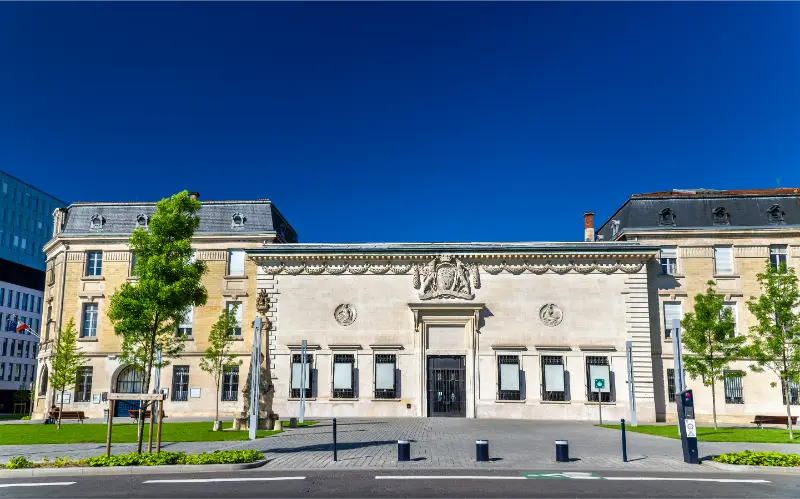
    Bordeaux Fine Arts Gallery France

    Accessibility and responsible travel

    Bordeaux itself is manageable without a car thanks to the tram system, but accessibility in Saint-Émilion is a separate question. The village’s steep, irregular lanes can challenge wheelchairs, walkers and pushchairs, especially when wet. Check whether a proposed cellar tour includes steps underground, narrow corridors or an accessible alternative; the term ‘guided visit’ does not answer that. The Dune du Pilat requires a realistic assessment of sand and climbing, not just driving time. In the city, a hotel near a tram stop may be more valuable than a picturesque room reached through several tight streets with luggage.

    Wine-country travel demands a slower, more deliberate approach than an ordinary sightseeing circuit. Tasting multiple wines never makes it safe to drive, so choose a designated non-drinking driver or transport that removes the problem. On vineyard roads, respect agricultural traffic and private property; a photogenic row of vines is not necessarily a public footpath. The classified architecture of central Bordeaux and the working landscapes outside it deserve equal care. Buy from producers when it suits your budget, be clear about shipping restrictions if travelling overseas, and leave time to ask how soil, grape varieties and ageing shape the wines you actually taste.

    Mistakes I would avoid

    • Treating Bordeaux only as a wine shuttle
    • Arriving at châteaux without appointments
    • Driving after tastings
    • Combining distant appellations in one day
    • Ignoring the city’s neighbourhoods

    One common mistake is using the label ‘wine country’ as though it describes one compact neighbourhood. Saint-Émilion lies east of Bordeaux, while the Médoc runs north-west toward the estuary; swapping between them in a single tasting day wastes time. Another is assuming a château takes walk-in visitors. Reserve, confirm language and check the address, then schedule no more than two substantial visits in one day. If you prefer architecture and markets to alcohol, spend the fourth day in Bordeaux and on its riverfront with no apology. A good itinerary should reflect the travellers, not a famous wine map.

    Frequently asked questions

    Can I visit Bordeaux vineyards without a car?

    Yes, especially Saint-Émilion with planning, or through guided excursions from Bordeaux.

    How many vineyard visits fit in a day?

    Usually two substantial visits, leaving time for travel, lunch and the landscape.

    Is Bordeaux worthwhile for non-drinkers?

    Absolutely. Architecture, museums, markets, riverfront spaces and Atlantic excursions make a complete trip.

    Where should I base myself?

    Central Bordeaux is best for a first visit; use one dedicated wine-country overnight only if rural atmosphere matters strongly.

    Useful official resources

    The most useful official pages here are Bordeaux Tourism for city neighbourhoods, TBM for trams and buses, La Cité du Vin for exhibitions and Saint-Émilion Tourism for visiting the village. For any specific vineyard, its own reservation confirmation is the authority on arrival time, address, parking and permitted age groups. A regional rail timetable is essential if travelling independently; a listing that says ‘accessible by train’ does not guarantee a practical last kilometre. Recheck the Dune du Pilat’s access information if the Atlantic day remains an option, particularly after storms or in high season.

    Continue planning your trip

    For the next step, read France by train, the best time to visit France, the Dordogne road trip and the French Basque itinerary. These guides are designed to connect into a slower, more realistic France itinerary.

    Bordeaux is at its best when the urban and rural stories reinforce each other. The riverfront warehouses and Chartrons trading legacy provide a framework for understanding why the wine region developed as it did; the vineyards then give names and landscapes to that history. A four-day visit can move from stone façades to market stalls to a village hillside without requiring a tasting at every stop. Save one meal for contemporary Southwestern cooking and one for whatever is in season at a market. The result feels less like a shopping itinerary for famous labels and more like a short journey through the Gironde.

    Cite du Vin Wine Museum Bordeaux France

    A final decision checklist

    Before paying for a winery tour, clarify whether its transport begins in central Bordeaux, near the station or at an out-of-town pickup. Compare total duration rather than the advertised length inside the cellars. For Saint-Émilion, check the village walk and any underground monument reservation separately from winery appointments. If your group includes children, seek out non-tasting activities and verify admission rules in advance. On the city days, prioritise the riverfront and one major museum or neighbourhood rather than packing every listed landmark into an afternoon. This leaves room for the unplanned lunch that often becomes the trip’s highlight.

    I would choose accommodation based on the four-day shape. A central tram-connected hotel is most useful if you arrive by rail and return to Bordeaux after day trips; it saves the repeated hassle of rural luggage transfers. A countryside night makes sense only when the stay itself is the experience and departure logistics are secure. Check the distance from Bordeaux Saint-Jean station, late arrivals and street noise in nightlife areas before booking. If using a rental car on one day, look closely at parking rules and whether the rental agency’s opening hours make pickup and return realistic. Bordeaux’s walkable beauty is best enjoyed without treating the centre as a driving district.

    The final decision is between a wine-focused fourth day and an Atlantic or city-focused alternative. Do not attempt all three. On a clear, settled day, the Arcachon Basin provides a memorable contrast; with a guided driver, the Médoc gives depth to the vineyard story; for museums and food, Bordeaux itself can fill the time. Save confirmed tasting addresses, the final return train and museum booking references offline. The itinerary succeeds when its city days are genuinely relaxed and its excursion day is geographically sensible, leaving visitors with a richer sense of Bordeaux than a set of tasting receipts.

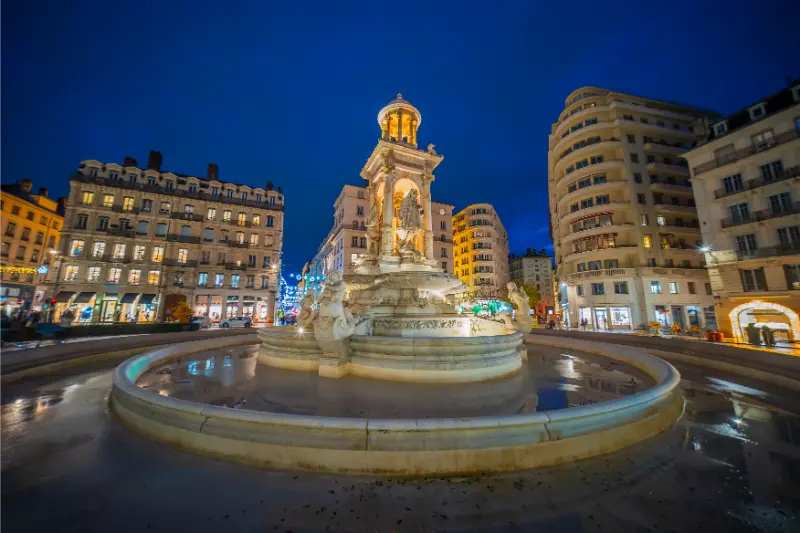
  • 3 Days in Lyon: A Food, History and Neighbourhood Itinerary

    3 Days in Lyon: A Food, History and Neighbourhood Itinerary

    Lyon is sometimes treated as a convenient stop between Paris and Provence, which undersells one of France’s most layered cities. Two rivers divide districts with distinct personalities; Roman theatres sit above Renaissance streets; silk-working passages climb Croix-Rousse; and a serious food culture exists beyond famous restaurant names.

    Three days gives Lyon enough space to become a destination rather than a station break. This route groups sights by terrain, protects time for meals and explains why the city’s traboules, hills and riverbanks need a little more planning than a flat map suggests.
    Quick planning overview

    Stay3 nights
    Best basePresqu’île for balance; Vieux Lyon for atmosphere
    TransportWalking, metro and funicular
    ReserveA trusted food experience and any special exhibition
    Key ruleTreat private traboules respectfully

    A three-day Lyon plan

    Day 1: Vieux Lyon and Fourvière

    Begin among the Renaissance streets of Vieux Lyon, then use the funicular or climb to Fourvière for the basilica, panorama and nearby Roman theatres.
    My practical advice: Descend on foot only if steps suit you. Courtyards and traboules may be residential; enter quietly only where public access is indicated.
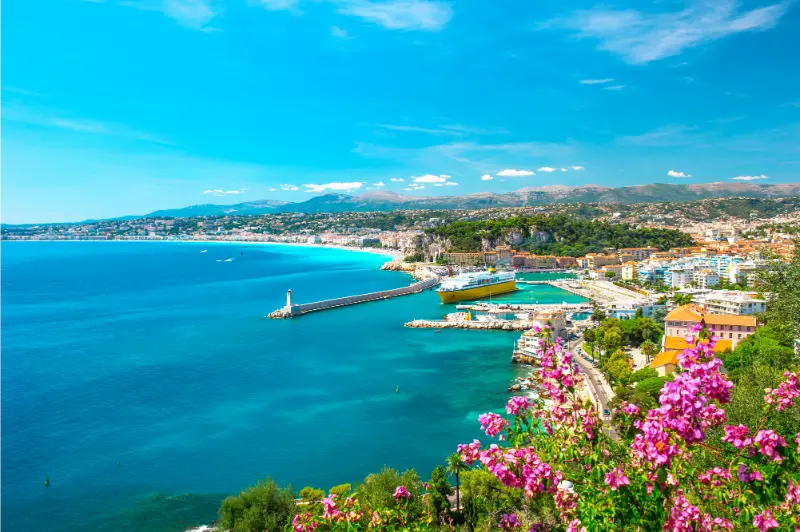
    Day 1 evening: the Saône and Presqu’île

    Cross the Saône to understand Lyon’s urban shape, then follow streets around Bellecour, Cordeliers and Hôtel de Ville without trying to shop every block.

    My practical advice: See the river after dark and keep dinner near your final stop rather than crossing the city again.

    Day 2: Croix-Rousse

    The former silk-working hill reveals a different Lyon through slopes, workshops, murals and long internal passages designed around the canuts’ trade.

    My practical advice: Join a responsible guided walk for context. Ordinary apartment buildings are not attractions unless access is explicitly authorised.

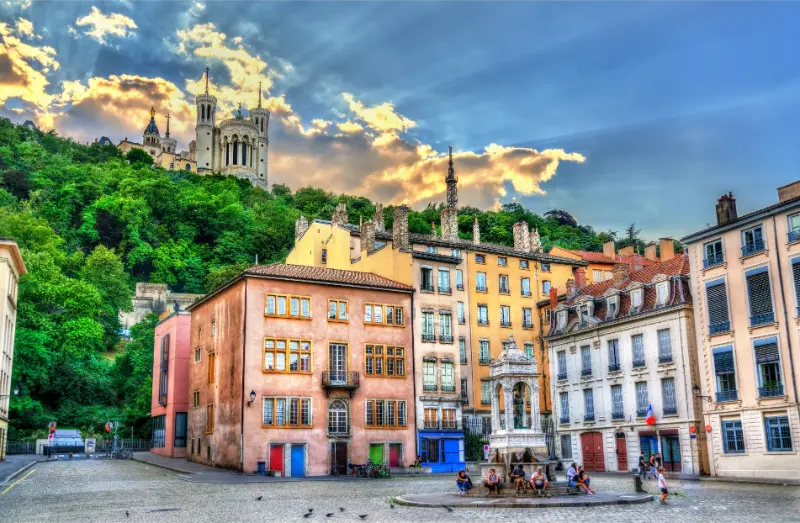
    Lyon Townscape France

    Day 2 afternoon: markets and modern culture

    Choose Les Halles de Lyon Paul Bocuse, a neighbourhood market or a museum according to appetite. Food halls are most useful when you taste selectively rather than collect famous labels.

    My practical advice: Check weekly closures and arrive outside the busiest lunch crush if you want time to ask questions.

    Day 3: Confluence and riverbanks

    Travel south to see how docks and industry have been reworked around contemporary architecture, then walk or cycle a manageable section of the Rhône banks.

    My practical advice: The Musée des Confluences can take several hours; pair it with open-air time rather than another large museum.

    Alternative: Parc de la Tête d’Or

    When weather is kind, the park offers a restorative counterpoint to stone streets and steep hills. It works especially well for families or repeat visitors.

    My practical advice: Do not squeeze it between distant sights. Give the park a proper block and use public transport for the return.
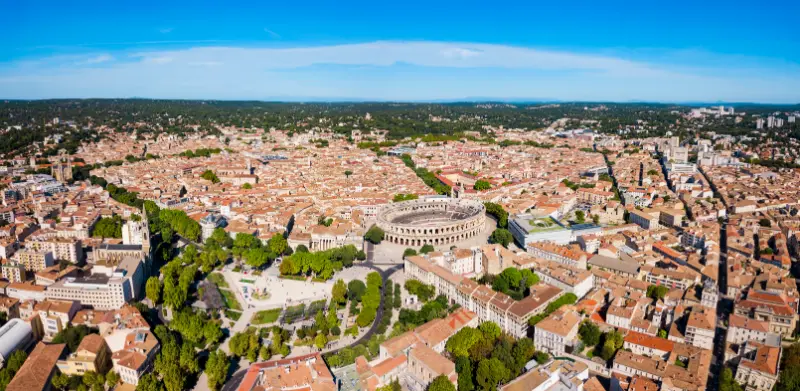
    How to shape the visit

    For food travellers

    Book one guided or special meal, then use markets, bakeries and modest bouchons to understand different levels of the city’s cuisine.

    For history

    Connect Roman Lugdunum, Renaissance Vieux Lyon and the silk era instead of treating each as an isolated attraction.

    For families

    Use funiculars, parks, murals and river paths to break up interiors and hills.

    On a Monday

    Check museum, market and restaurant closures carefully and shift the outdoor neighbourhood walks accordingly.

    Where to stay

    Presqu’île provides central access to both rivers and several metro lines. Vieux Lyon is atmospheric but can be noisy and uneven underfoot; Part-Dieu is practical for rail travellers but feels less intimate. Croix-Rousse suits repeat visitors who accept slopes. Check lift access and air-conditioning in older buildings.

    Compare accommodation in Lyon on Booking.com

    Getting around

    Lyon Part-Dieu handles most high-speed services, while Perrache serves additional routes. Metro, tram, bus and funicular systems reduce hill climbing. A car is unnecessary for a central visit and becomes a burden around parking and restricted streets. Keep a valid ticket until the journey is complete.

    Food and everyday rhythm

    A bouchon is a local tradition, not simply any restaurant serving heavy food. Look for credible local labelling, understand that menus can be rich and reserve popular small rooms. Quenelles, charcuterie, cheeses and praline sweets are starting points; markets and newer kitchens show a broader contemporary city.

    Budget and booking strategy

    Many neighbourhood walks and Roman-site exteriors cost nothing. Compare the Lyon City Card only against museums and transport you will truly use. Lunch menus can offer better value than elaborate dinners, while a central hotel may save repeated cross-city journeys.

    How I would prepare before departure

    I would save a Lyon map as three walkable clusters rather than draw one route across the entire city. On the first day, pin the Saint-Jean quarter, the funicular stop, Fourvière and the Gallo-Roman theatres together. The second cluster climbs from the lower slopes toward Croix-Rousse and returns through the Presqu’île. For the final day, treat the Confluence district as its own outing. Lyon’s rivers are useful orientation lines, but bridges and hills determine real travel effort. Reserving one long restaurant meal, rather than filling every lunch and dinner, leaves room to discover everyday neighbourhood life.

    A few days before departure, I would check the operating times of the Fourvière funicular, Lugdunum’s museum and theatre spaces, and any temporary changes to TCL lines near my hotel. The Roman theatres are compelling even without a scheduled performance, while festival dates can alter access and crowds. For Croix-Rousse, I would choose one interpretation-led silk or traboule visit rather than expect every courtyard to be open. A dinner reservation should be close to the evening’s final stop: walking uphill after a heavy bouchon meal is less charming than it sounds. Keep a screenshot of your hotel route from the nearest metro station.

    When rain settles over Lyon, the day can still tell a coherent story. Lugdunum’s indoor interpretation adds meaning to the outdoor Roman ruins, while the Musée des Confluences makes a strong modern counterpoint to the Old Town. Les Halles Paul Bocuse works best as a tasting stop, not a full-day refuge, and its individual traders may keep different hours. On a hot afternoon, choose the tree cover of Parc de la Tête d’Or instead of forcing a south-facing hillside walk. Whichever replacement you choose, keep the riverfront stroll for a clear evening: reflections and illuminated bridges are part of the experience, not an obligation on a wet schedule.

    Lyon Notre Dame de Fourviere Basilica Aerial View France

    Accessibility and responsible travel

    Accessibility varies sharply between Lyon’s neighbourhoods. Presqu’île has broad streets and transport links, whereas Vieux Lyon includes cobbles and constrained passages, and Croix-Rousse adds sustained gradients. The funicular avoids the steepest approach to Fourvière, although a particular site or viewpoint may still have steps. For a mobility-limited visitor, I would base the first afternoon along the relatively level Saône and choose museums after checking their individual access information, lift status and accessible entrances. Visitors travelling with a stroller should make the same checks: a journey that looks short on a map may involve staircases or awkward hillside connections.

    The traboules are not a theme-park network. Many passages cross residential courtyards, and open gates do not automatically mean public visiting rights. Use an authorised route or a local guide, respect notices and keep voices down. The Croix-Rousse silk story also reaches beyond its most photographed stairways: workshops, murals and the district’s working streets deserve attention without obstructing entrances. On the riverbanks, separate cycling lanes from pedestrian paths and avoid treating quays as uninterrupted flat promenades; some stretches use ramps or steps. Small choices like these make the historic centre enjoyable both for visitors and for residents who still live there.

    Mistakes I would avoid

    • Treating Lyon as a one-night stop
    • Entering residential traboules noisily
    • Booking every meal around famous names
    • Underestimating hills and cobbles
    • Driving in the centre without need

    The mistake I would avoid is arranging Lyon as a sequence of famous views without accounting for elevation. Fourvière and Croix-Rousse are different hills, and Confluence is south of the central sightseeing circuit. Put the big uphill effort early in a day, then descend or use transit; otherwise apparently modest distances consume restaurant and museum time. Another error is assuming a bouchon will serve whenever you arrive. Small dining rooms can be booked out, close between services or have limited days. The trip is more satisfying when a few reservations anchor the day and unplanned stretches are left for a square, bookshop or bakery.

    Frequently asked questions

    Is three days enough for Lyon?

    Yes. Three days covers the historic hills, Presqu’île and one modern or outdoor district without rushing meals.

    Is Lyon walkable?

    Central districts are walkable, but hills, stairs and river crossings matter. Metro and funiculars make the route more comfortable.

    Where should first-time visitors stay?

    Presqu’île offers the easiest overall balance; choose Vieux Lyon for atmosphere or Part-Dieu for an early train.

    Do I need to reserve bouchons?

    Reserve well-regarded small restaurants, particularly on weekends, and verify opening days directly.

    Useful official resources

    For current details, start with ONLYLYON for neighbourhood walks and major visitor attractions, TCL for metro and funicular service, and Lugdunum for the Roman museum and theatre area. Read opening notices individually rather than trusting an old search snippet, especially for Mondays, public holidays and temporary works. The UNESCO listing helps explain why the historic districts belong together, but it does not supply a practical route or entrance hours. If a silk-workshop visit matters to you, contact the operator and check whether the tour enters working premises or concentrates on the neighbourhood’s history. These distinctions protect a three-day itinerary from disappointing assumptions.

    Continue planning your trip

    For the next step, read France by train, the first-time France guide, the two-week France itinerary and the Burgundy road trip. These guides are designed to connect into a slower, more realistic France itinerary.

    Lyon rewards a visit that alternates grandeur and ordinary life. A morning among Roman stones, a quiet passage through a Renaissance lane and a coffee in Croix-Rousse reveal successive layers of the city without trying to tick every landmark. The most useful memory may be the change in atmosphere across a bridge rather than a single panorama. If only one museum fits, select it for your curiosity—ancient history at Lugdunum or broader themes at Confluences—and give the surrounding neighbourhood the time it deserves. That is the difference between using Lyon as a convenient rail stop and experiencing it as a destination.

    Lyon Notre Dame de Fourviere Basilica France

    A final decision checklist

    Before booking, I would decide which of three experiences matters most: a particular bouchon, a guided silk-history walk or a longer museum visit. Each has different opening patterns and creates different pressure on the schedule. A family with younger children may prefer the park over a second hill; architecture fans may spend longer in Vieux Lyon; dedicated food travellers can plan lunch around market opening times. The three days are not fixed prescriptions. If a clear sky appears on a rainy forecast, shift Fourvière’s panorama to that window rather than following the numbered days rigidly.

    I would also make the railway decision early. Lyon Part-Dieu and Perrache are different stations; choose a hotel and airport transfer based on the actual arrival point, not simply the word ‘Lyon’ on the ticket. For early departures, confirm first-morning transit instead of assuming the funicular and every metro line operate on the same schedule. The city’s official transport network is the reference for current disruptions. Keep return routes on your phone after dinner, because not every charming historic street is well signed after dark. A little transport planning allows far more room for improvisation once the day begins.

    The final practical test is whether each day has an understandable shape. Can you explain Day 1 as old town to hill to river, Day 2 as silk district to food and central streets, and Day 3 as contemporary city or park? If yes, remove any extra attraction that pulls you to the opposite side of town for a rushed half-hour. Keep the restaurant location, museum entrance and last return connection together in your offline notes. Lyon is compact enough to explore deeply, but only when the itinerary respects its two rivers, its different hills and the pleasure of a deliberate meal.

  • Best Time to Visit France: A Month-by-Month Guide for Different Trips

    Best Time to Visit France: A Month-by-Month Guide for Different Trips

    There is no single best month for all of France. Paris museums, Alpine trails, Atlantic beaches, Mediterranean swimming and Alsatian Christmas markets follow different calendars. The useful question is not ‘When is France perfect?’ but ‘Which conditions matter most for this particular trip?’

    I use this guide to compare daylight, heat, crowd levels, transport demand and seasonal closures. Weather is never guaranteed, and climate patterns are becoming less predictable, so a good itinerary includes alternatives rather than depending on one exact bloom, snowfall or beach day.

    Quick planning overview

    Best general balanceMay, June, September and early October
    Lowest crowd potentialNovember and January–March outside resorts/events
    Beach focusJune–September, varying by coast
    Mountain hikingUsually summer to early autumn, route dependent
    Festive city tripLate November–December

    France through the year

    January and February

    Cities are quieter outside fashion, trade and major event dates, while the Alps and Pyrenees focus on winter sports. Short daylight and grey weather suit museum-rich trips better than rural touring.

    My practical advice: Check seasonal hotel and restaurant closures in countryside destinations. Ski weeks and school holidays can be expensive even when cities feel calm.

    March and April

    Spring begins unevenly, with changeable rain, cool evenings and blossoms that shift by latitude and altitude. Easter holidays can increase demand around family destinations.

    My practical advice: Pack layers and build a mix of indoor and outdoor plans. Gardens may be beautiful without being at peak bloom.

    May and June

    Longer days, active gardens and generally comfortable temperatures make late spring one of the easiest periods for multi-region travel. Public holidays and major events can still create local peaks.

    My practical advice: Reserve important trains and rooms; shoulder season no longer means empty. The Mediterranean may feel summery before northern water does.

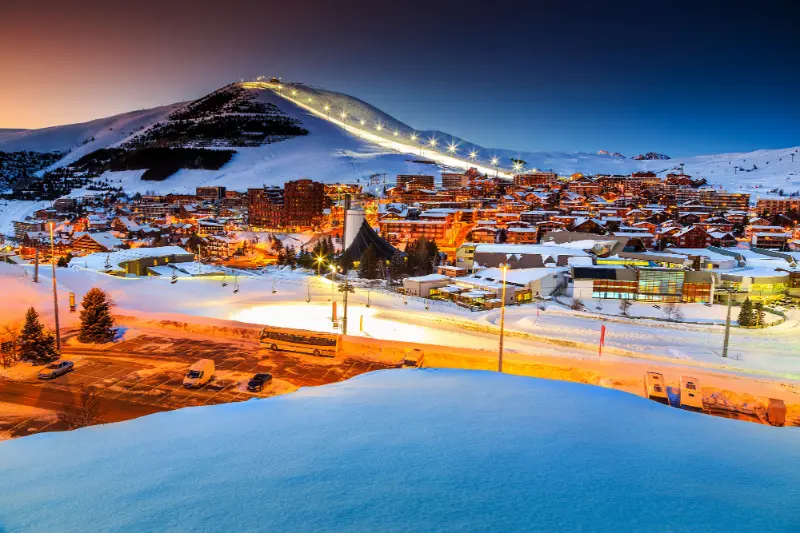
    Snowy Alpine Ski Resort in France

    July and August

    This is peak holiday season, with festivals, long light and reliable access to high mountain and coastal activities. Heat, crowds and accommodation prices demand a slower itinerary.

    My practical advice: Schedule exposed sights early, confirm air-conditioning and avoid assuming small businesses follow normal hours during holiday periods.

    September and October

    Early autumn often combines warm days with harvest landscapes and reduced family-holiday crowds. Later October brings shorter days, cooler conditions and more changeable weather.

    My practical advice: Wine regions are working environments during harvest. Book tastings and respect producer schedules instead of expecting spontaneous access everywhere.

    November and December

    November is quiet in many leisure destinations, while late November and December bring lights, markets and festive demand. Alsace and Paris can be crowded despite winter weather.

    My practical advice: Verify Christmas market dates and museum holiday closures. Book popular weekends early and dress for prolonged outdoor time.

    Match the season to the trip

    Paris and major cities

    Work year-round because indoor culture balances weather. Spring and autumn improve walking comfort; winter offers atmosphere and potentially lower rates outside events.

    Provence and the Riviera

    Late spring and early autumn reduce heat and pressure. Summer suits swimming but requires early starts, reservations and awareness of fire restrictions.

    Normandy, Brittany and the Atlantic

    Late spring through early autumn brings longer light, yet wind and rain remain possible. Tides and sea conditions matter more than a simple sunshine forecast.

    Mountains

    Winter sports and summer hiking are separate seasons with transitional closures. Always consult local lift, trail, avalanche and weather information.

    Where to stay

    Season affects not only price but also which accommodation features matter. Air-conditioning and shutters become essential during heat; reliable heating and central location matter in winter. Rural pools may open only in a stated period. During festivals, school holidays and Christmas markets, a flexible cancellation policy can be more valuable than the lowest rate.

    Compare accommodation in France on Booking.com

    Getting around

    Holiday weekends, strikes, engineering works and weather can affect transport in any season. Book high-speed trains early for summer and festive periods, and leave margin around flights. Winter drivers need to investigate mountain equipment rules and road conditions. Summer road trips should account for congestion and high-temperature breaks.

    Food and everyday rhythm

    Season changes the experience of markets and menus. Spring vegetables, summer fruit, autumn mushrooms and harvest products, and winter dishes each give a different reason to travel. Avoid planning an entire trip around one crop at one location: flowering and harvest dates respond to weather, while producers remain working farms rather than displays.

    Budget and booking strategy

    The cheapest month is not necessarily the best value if the experiences you want are closed. Compare total cost: accommodation, transport, seasonal equipment and the number of usable daylight hours. Travelling just outside peak dates often preserves weather advantages while reducing pressure, but major events can override regional seasonality.

    How I would prepare before departure

    The simplest way to choose a month is to match a region with the experience you most want. For Paris museums and long city walks, March through May and September through November can work well, subject to rain, public holidays and event crowds. For Provence villages, late spring and early autumn often feel more comfortable for walking than the hottest part of summer. Atlantic beaches are shaped by wind and tides as well as sunshine; the Riviera can be warm enough for coastal days outside the busiest weeks, though sea temperature is a separate consideration. In the Alps, winter ski operations and summer hiking access are different seasons with transition periods. France has no single nationwide optimum date.

    For a practical calendar, compare what you want to do rather than the average temperature alone. January and February can be excellent for urban art, restaurants and Alpine skiing but quiet in smaller tourist villages. April brings gardens and changeable weather, while May and June provide long days that suit mixed city-and-country trips. July and August support high-elevation hiking and seaside holidays but also higher accommodation demand and possible heat stress inland. September can suit vineyard travel, yet harvest makes wineries busy working environments. Late October and November bring shorter daylight and some rural closures; December suits city lights and Christmas markets, with weekends that can be crowded and expensive.

    Weather reserves should correspond to the month and activity. In March, carry rain layers for Normandy and leave a museum alternative near your hotel; in July, move an exposed Roman or Provençal site to morning and choose shade at midday. A summer visit to the Calanques needs fire-risk checks because access can be restricted even on beautiful sunny days. For autumn Atlantic travel, build around tide tables and avoid exposed coastal trails in strong wind. In mountain regions, snow and storm conditions can affect road access well outside the core ski weeks. Booking a ‘scenic route’ without a sensible backup is a bigger risk than having one cool or rainy day on an otherwise lovely holiday.

    Accessibility and responsible travel

    Seasonal accessibility goes beyond footwear. Summer heat can make steep old towns exhausting for visitors with reduced stamina, and snow or ice can turn an otherwise manageable village route into a difficult one. Many historic sites and stations have access barriers throughout the year, so confirm official accessible routes before purchasing nonrefundable tickets. In winter, ask rural accommodation about heating and late-night arrival access; in summer, verify whether air conditioning is in the actual guestroom. For families, a July city itinerary needs more shade and playground breaks than a mild September version. A hotel chosen only for a sea view may be unsuitable if reaching the beach means a long flight of steps.

    Timing also affects responsible access to nature. Spring gardens may be at their best while trails remain muddy; summer coastal vegetation can be vulnerable to trampling; autumn vineyards are actively harvested. Remain on signed routes and never enter fields solely for a blossom or lavender photograph. In the Pyrenees and Alps, follow local warnings on wildlife, grazing animals and protected habitats. Driving a mountain pass merely because it appears open on a summer blog can be unsafe in a shoulder-season storm. If you can be flexible, change the order of two days around the weather rather than insisting on an exposed hike that has become inappropriate.

    Mistakes I would avoid

    • Treating France as one climate zone
    • Assuming shoulder season means no crowds
    • Booking rural stays without checking seasonal closures
    • Depending on exact lavender, blossom or autumn-colour dates
    • Ignoring heat, fire, tide or mountain safety information

    A month-by-month comparison becomes clearer with three example holidays. A Paris-plus-Loire trip is often appealing in May or September for gardens and walking, though opening calendars and major events still matter. A Nice-and-Menton coastal break can be pleasant in June or early autumn if the group values beach time without the busiest August crowds, but check sea conditions. A Strasbourg-and-villages visit changes significantly between vineyard-focused September and Christmas-market December; one offers working wine culture, the other festive atmosphere and shorter days. Instead of chasing a universal cheapest month, price these specific combinations with the attractions you want actually operating.

    Frequently asked questions

    What is the best month for a first trip to France?

    May, June, September and early October offer a useful balance for many itineraries, but destination and activities should decide.

    When is France cheapest?

    Parts of November and January through March can be less expensive outside ski resorts and events. Some rural services also close, so price is only one factor.

    Is August a bad time to visit?

    No, but it is busy and can be hot. Coastal and mountain destinations are fully active, while some city businesses close for holidays.

    When should I visit Provence lavender fields?

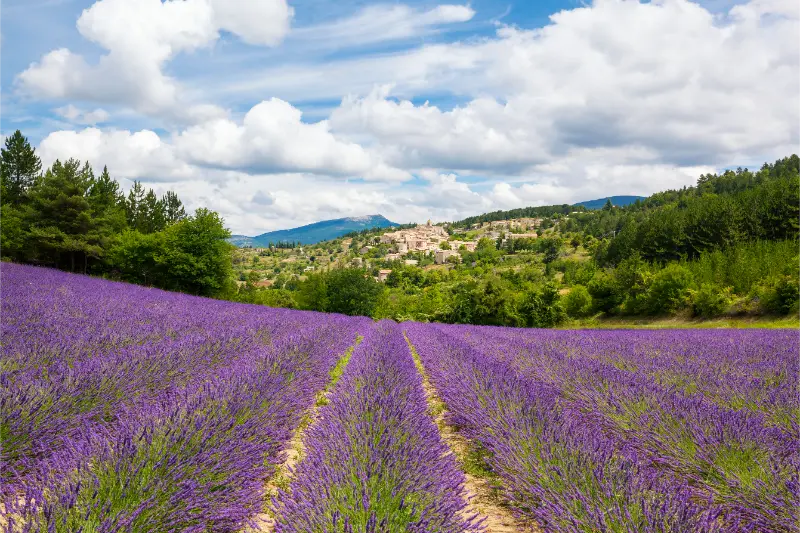
    Timing varies by area, altitude and weather. Check local official updates close to the trip and treat working fields respectfully.

    New Year Fireworks at the Eiffel Tower Paris France

    Useful official resources

    Use Météo-France for short-range forecasts and official alerts, not a long-range guarantee based on historical monthly averages. France’s official tourism climate guidance distinguishes oceanic conditions in the west, continental influences in the east, Mediterranean patterns in the southeast and mountain climates at altitude. Confirm local market and attraction seasons with their operators, and check school-holiday and event calendars before assuming a shoulder-season weekend will be inexpensive. For skiing, consult the resort’s lift and snow-status information; for beaches, review bathing conditions and flags; for protected outdoor areas, check fire-risk access notices. Prices and seasonal opening dates are not interchangeable across regions.

    Continue planning your trip

    For the next step, read the first-time France guide, the Provence road trip, the French Riviera travel guide and the Corsica road trip. These guides are designed to connect into a slower, more realistic France itinerary.

    My preferred travel month would change with the purpose of the trip. For long Paris walks and museums, I might choose a cool shoulder-season week; for long Alpine hikes, a suitable summer window after route conditions are confirmed; for a food-focused Alsace journey, an autumn date that respects producers’ harvest commitments. The best time is not an average on a weather chart but the week when a destination’s essential experiences are possible and the group can enjoy them comfortably. Give yourself one flexible day for weather, one alternative for closures and enough daylight for unhurried meals. That planning usually matters more than winning the debate between May and September.

    Considering the off-season? See our Normandy in winter guide for winter weather, Christmas markets and a realistic five-day plan.

  • France with Kids: A Realistic Family Travel Guide

    France with Kids: A Realistic Family Travel Guide

    France works well for family travel when adults stop trying to reproduce an adult itinerary with shorter legs. Children change the useful unit of planning: a playground can be as important as a museum, a bakery stop can reset the whole morning and a room with a closing door may matter more than a grand address.

    This guide focuses on the logistics that make family trips feel manageable—bases, trains, meal timing, accommodation and age-appropriate variety. It also suggests destinations that offer something for adults and children without requiring every day to revolve around a theme park.

    Quick planning overview

    Ideal paceOne main activity per half-day
    Best transportTrain between bases; local transit and walking
    Room priorityVerified bed layout, lift, air-conditioning and laundry
    Easy winsParks, boats, markets, beaches and castles
    Key strategyAlternate adult priorities with child-led time

    Family destinations that combine well

    Paris with children

    Paris offers boats, towers, parks, carousels, science museums and bakeries alongside formal culture. Choose a central playground and one short museum mission rather than expecting children to enjoy a full adult art itinerary.

    My practical advice: The Jardin du Luxembourg, Seine boats and neighbourhood food stops create breathing room. Reserve only one tightly timed attraction per day.

    The Loire Valley

    Castles provide stories, towers, gardens and open space, but interiors can feel repetitive. Select estates with family interpretation or outdoor activities and limit the number of formal visits.

    My practical advice: A cottage or apartment base gives families more space. Add cycling only on routes appropriate to the youngest rider’s confidence.

    Normandy

    Beaches, medieval towns, farms and Mont-Saint-Michel create strong variety. Wartime sites can be meaningful for older children when explained carefully and balanced with lighter experiences.

    My practical advice: Avoid an emotionally dense day with several cemeteries and museums. Choose one clear story and leave time for questions.

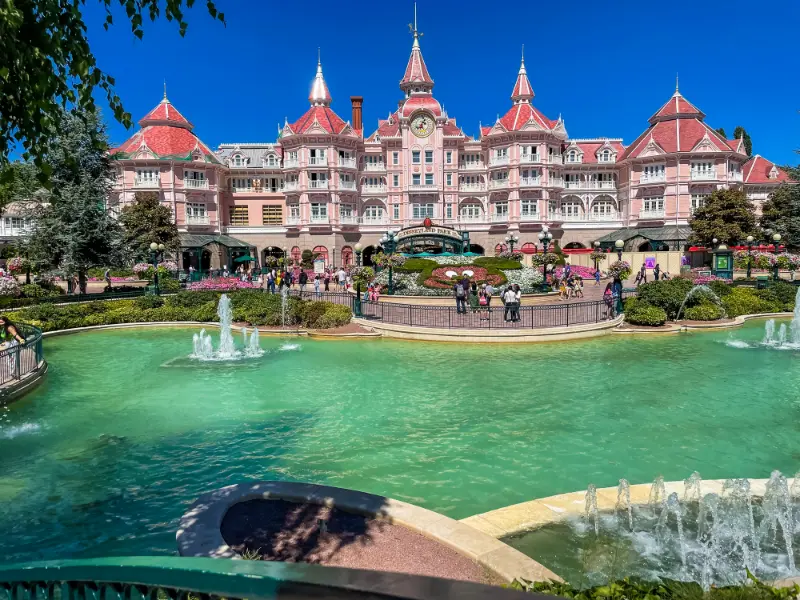
    Disneyland Paris France

    The Atlantic or Mediterranean coast

    Beach days help reset a cultural itinerary, but coastlines differ in waves, tides, pebbles and facilities. Match the beach to swimming ability rather than choosing only by photographs.

    My practical advice: Use supervised areas, understand local flags and protect midday rest in hot weather.

    Alsace and eastern France

    Compact centres, boat trips, castles and seasonal traditions make Strasbourg and Colmar accessible family stops. Village days need movement breaks and should not become long sequences of similar streets.

    My practical advice: Regional trains reduce driving, while one organised village day can handle logistics.

    Theme parks as part of the trip

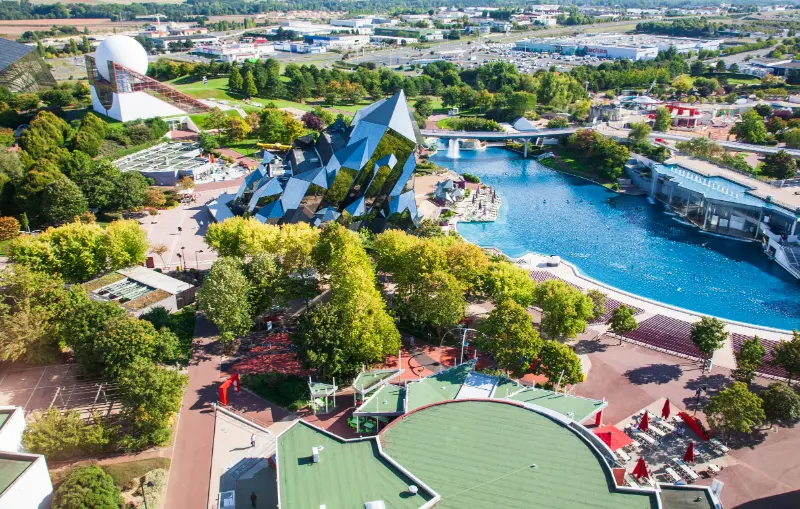
    Disneyland Paris, Parc Astérix, Futuroscope, Puy du Fou and smaller educational parks can anchor a family itinerary. They are most enjoyable when chosen for the children’s interests and height eligibility.

    My practical advice: Check current opening calendars, ride restrictions and transport only on official sites before booking non-refundable accommodation.

    Three family itinerary models

    One week

    Stay in Paris for four nights and the Loire Valley for three. This combines urban icons, parks, castles and outdoor space with only one major move.

    Ten days

    Use Paris, Normandy and one countryside base. Rent a car after leaving Paris and return it before the final city night if flights require it.

    Two weeks

    Combine Paris, the Loire and the Riviera by train, with apartments or family rooms in each base. Include at least two low-plan days.

    With preschool children

    Choose two bases maximum, prioritise kitchens and laundry, schedule naps or quiet time and avoid late restaurant dependence.

    Where to stay

    French room categories do not guarantee the layout a family imagines. Ask whether beds are fixed or sofa beds, whether cots reduce floor space, whether adjoining rooms truly connect and whether upper floors have a lift. Apartments add kitchens and laundry but may have limited reception. In older buildings, stairs, balconies and street noise deserve specific questions.

    Compare accommodation in France on Booking.com

    Getting around

    Trains remove long driving days, but boarding with a stroller and multiple bags can be stressful. Pack so one adult can manage luggage while the other manages children. Reserve seats together, arrive before platform announcements and keep snacks accessible. In cities, a compact foldable stroller handles steps better; in rural areas, a car seat must meet current legal and rental requirements.

    Food and everyday rhythm

    Children usually find familiar entry points in bread, crêpes, fruit, cheese, roast chicken, pasta and pastries. Restaurant schedules may run later than a young child’s hunger, so use substantial lunches and keep picnic supplies. Greet staff, explain needs simply and do not assume every establishment has high chairs, children’s menus or space for an open stroller.

    Budget and booking strategy

    Family rooms can be scarce, making early booking more important than chasing last-minute deals. Apartments may save breakfast and laundry costs. Check official age rules for trains and attractions because family products and free-entry thresholds vary. One paid highlight plus free parks, beaches and walks creates a sustainable daily rhythm.

    How I would prepare before departure

    For a family trip, I would ask each child what kind of day they remember enjoying: a boat, a castle story, an animal encounter or a playground. That answer is more useful than a list of adult landmarks marked ‘family friendly’. In Paris, combine the Luxembourg Gardens with one nearby cultural visit instead of marching from the Louvre to the Eiffel Tower and Montmartre in a single day. Cité des Sciences at La Villette can be a genuine indoor activity when weather is poor, but check age-specific spaces, tickets and opening hours. On a Loire stay, choose a château with gardens or interactive activities before deciding how many more estates to book. One good family experience per day is enough.

    Accommodation matters more to family travel than a small difference in attraction count. Confirm the room’s actual beds, whether a sofa bed must be unfolded each evening, and whether the lift can accommodate a stroller. A kitchenette is useful for breakfast and early dinners, but only if the layout and grocery access make it practical. On a Normandy road trip, two consecutive nights around Bayeux or Caen reduce packing and create a base for history and beaches. For Paris, choose a neighbourhood with a park and dependable transport connection rather than automatically paying for the street nearest a famous monument. Ask about air conditioning in summer and heating in shoulder season before treating a low price as a bargain.

    Have a weather contingency that the child would actually enjoy. If the Louvre day becomes too crowded or tiring, a shorter museum visit followed by a play area may be a better experience than another two hours indoors. In Normandy, a coastal walk can become a compact local museum and a crêpe stop on a windy day. In the Loire, shift from exposed gardens to an accessible château interior where family activities are available. On the Riviera, a heatwave means earlier beach hours, shade and fewer steep village walks, not an obligation to finish the planned schedule. Build a quiet afternoon into every second or third day; even enthusiastic children can become overloaded by repeated transfers.

    Accessibility and responsible travel

    Travelling with a stroller or child with accessibility needs changes the best route. Some Paris Metro connections require stairs, medieval villages have cobbles and several châteaux have historic rooms beyond step-free access. Use official transport accessibility guidance and ask each attraction which family routes are possible rather than assuming that a child-oriented museum is fully accessible throughout. On long trains, reserve seats together when offered and follow the booked operator’s luggage and stroller conditions. Bring a compact day bag with snacks, water, spare clothes and any essential medication. A five-minute opportunity for a restroom before boarding can matter more than saving ten minutes in the ticket queue.

    Families also shape the places they visit. On beaches, follow bathing flags and check whether supervision is available; Atlantic tides and waves are different from sheltered Mediterranean coves. Do not allow children to climb on protected dunes, cemetery monuments or old stone walls for photographs. In Alsatian villages, keep to public lanes rather than opening private courtyard gates; in the Loire, vineyards are working farms. A market picnic with local fruit, bread and cheese can be memorable when leftovers and packaging are handled responsibly. Children learn about travel through the small habits adults model, including patience with residents and respectful behaviour at war memorials.

    Mistakes I would avoid

    • Planning the same number of sights as an adults-only trip
    • Booking a room without confirming the bed layout
    • Carrying more luggage than two adults can control
    • Assuming every attraction suits every age or height
    • Waiting until everyone is hungry to search for food

    For one week, Paris plus the Loire is a manageable first combination: several nights with easy parks and museums, followed by castles and countryside. For ten days, consider Paris and Normandy plus a slower rural base, but do not overload the trip with both beach history and several distant theme parks. A fourteen-day route could include Paris, the Loire and Nice by train, with time to do laundry and two genuine rest afternoons. Theme parks such as Disneyland Paris, Parc Astérix, Futuroscope and Puy du Fou should be chosen as separate major commitments, not assumed to fit into any passing afternoon. Check each park’s season and height restrictions for the children travelling.

    Frequently asked questions

    Is France child-friendly?

    Yes, especially when the itinerary respects local schedules and children’s need for movement. Facilities vary, so verify practical details instead of relying on broad labels.

    Is train travel easy with children?

    It can be excellent between major bases. Compact luggage, reserved seats and extra boarding time make the biggest difference.

    Which region is best for a first family trip?

    Paris plus the Loire offers a simple mix of landmarks, parks, castles and countryside. Normandy or the Riviera works well depending on interests and season.

    Do restaurants welcome children?

    Many do, but space, hours and equipment vary. Earlier service, clear manners and a backup snack help; book when a particular restaurant matters.

    Disneyland Hotel at Disneyland Paris France

    Useful official resources

    Use individual venue websites for current child pricing and family workshops rather than relying on a generic claim that everything is free under eighteen. Paris’s official visitor information lists family museums, gardens and outings; some national institutions have age-related concessions that depend on residency or other criteria. Check current conditions for the selected museum, train operator and theme park. If a child needs a car seat in a rental vehicle, reserve the correct type and confirm the handover procedure. A family itinerary should also contain the nearest useful pharmacy and a simple plan for contacting accommodation if the train runs late.

    Continue planning your trip

    For the next step, read the four-day Paris itinerary, the Loire Valley château route, a seven-day Normandy road trip and the year-round French Alps guide. These guides are designed to connect into a slower, more realistic France itinerary.

    I would judge a family holiday by the conversations at dinner, not by how many tickets we scanned. A child who remembers steering a toy boat in the Luxembourg Gardens, looking across a Loire château moat or finding sea creatures at low tide has understood something about France. Leave time for bread from the same bakery on two mornings and for a familiar playground after a difficult museum. Those small repetitions help children settle into a trip. Adults usually enjoy the destination more as well when the itinerary assumes that family travel is a different rhythm, not a shorter version of a couples’ sightseeing marathon.

    Planning the region as a family? Our Normandy with kids guide covers age-aware routes, beaches, castles, D-Day sites and rainy-day options.

  • France by Train: How to Build a Smooth Rail Itinerary

    France by Train: How to Build a Smooth Rail Itinerary

    France is one of Europe’s most rewarding countries to explore by rail, but the network is not a simple grid. Fast lines radiate from Paris, regional trains fill local gaps and a journey between neighbouring regions can still require a connection through a major hub. Once you plan around this structure, trains become part of the holiday rather than a source of uncertainty.

    This guide explains the practical differences between TGV, OUIGO, Intercités and TER services, how I compare fares and why station names matter. It also offers route ideas that avoid spending every second day in transit.

    Quick planning overview

    TGV INOUIHigh-speed, reserved, usually best booked ahead
    OUIGOLow-cost high-speed with stricter conditions
    IntercitésLong-distance conventional trains on selected routes
    TERRegional services with rules set partly by each region
    Core toolSNCF Connect for planning and official booking

    Understanding the French rail system

    TGV INOUI

    TGV services connect Paris with major cities and also provide some cross-country journeys. Tickets include a reserved seat and are normally valid only for the booked departure.

    My practical advice: Book popular dates early and compare nearby times. A small schedule change can create a large fare difference.

    OUIGO

    OUIGO offers lower fares on selected high-speed and conventional routes, often with tighter luggage, check-in or change conditions than standard services.

    My practical advice: Read the exact fare rules before paying. A cheap ticket is poor value if your luggage or flexibility needs trigger extra costs.

    TER regional trains

    TER trains connect cities, towns and rural gateways within a region. Reservations may not be offered, but ticket validity and peak restrictions can differ.

    My practical advice: Check the regional operator page, especially for bicycles, discounted fares, engineering work and whether a ticket is tied to a specific train.

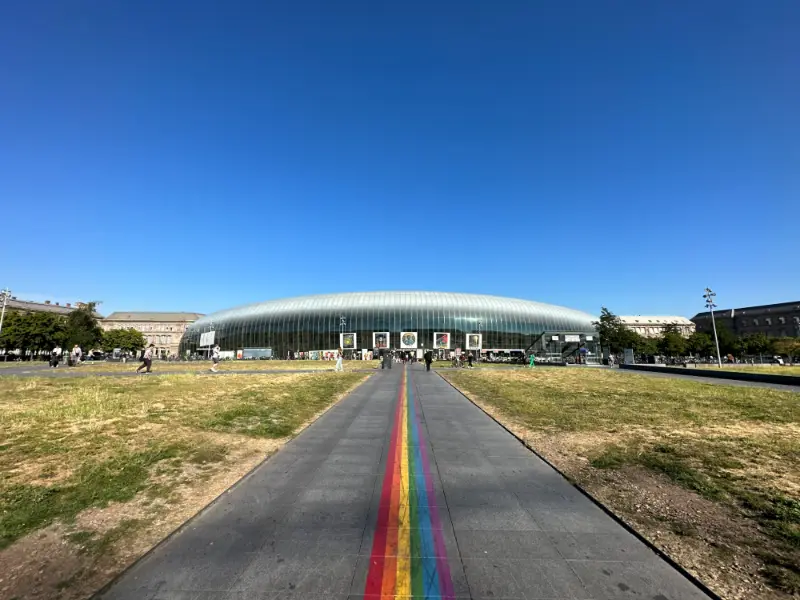
    Strasbourg Train Railway Station France

    Intercités and night trains

    Intercités cover routes not fully served by high-speed lines, while a limited night-train network can save a hotel night and connect distant regions.

    My practical advice: Choose comfort level carefully and protect the next morning from an overambitious schedule in case sleep is limited.

    Paris station changes

    Paris has several terminal stations. A connection can require a Metro or RER journey across the city, with luggage, stairs and buffer time.

    My practical advice: Never read ‘Paris’ as one station. Note Gare du Nord, Est, Lyon, Montparnasse, Saint-Lazare, Austerlitz or Bercy specifically.

    Tickets, apps and validation

    Digital tickets simplify travel, but battery life, identification and app access still matter. Paper and regional products may have separate activation or validation rules.

    My practical advice: Save the ticket offline, carry the matching passenger ID when required and arrive early enough to find the platform calmly.

    Three rail itineraries that flow

    Classic 10 days

    Paris for four nights, Tours or Amboise for three, then Bordeaux for three. The route combines high-speed and regional segments without excessive backtracking.

    Southbound 12 days

    Paris, Lyon, Avignon and Nice create a logical progression. Use local trains for Riviera excursions and avoid collecting a car in dense city centres.

    Eastern 8 days

    Paris, Strasbourg and Colmar work beautifully by rail. Add a guided village day or short car rental only for the wine route.

    Car-free Normandy

    Link Paris, Rouen, Caen and Bayeux by train, then take a specialist landing-beach tour. Mont-Saint-Michel requires more planning and seasonal connections.

    Where to stay

    Rail travel becomes easier when accommodation lies within a manageable walk of the station, but inspect the immediate street and noise reviews. In Paris, the station used for the next leg may matter more than proximity to the arrival station. Avoid a one-night stay unless it unlocks a meaningful route; every check-out, luggage store and platform wait consumes time.

    Compare accommodation in France on Booking.com

    Getting around

    Build the route in the official planner before booking hotels, then test alternative departure times and stations. Leave generous margins between separate tickets and even more for cross-Paris transfers. Luggage space is shared and can fill quickly, so pack compactly and label bags. Accessibility varies by station and train; request official assistance in advance when needed.

    Food and everyday rhythm

    Bring water and a modest picnic for regional trains or late journeys, but respect rules and other passengers. Station food can be expensive and closing times are not designed around every final departure. A bakery near the station often provides a better meal; allow enough time that buying it does not become a platform sprint.

    Budget and booking strategy

    Compare advance point-to-point fares, regional offers and passes using the journeys you will actually take. A pass is not automatically cheaper and some high-speed trains still require paid reservations. Low-cost fares reward certainty but punish changes. The most effective saving is often a route with fewer long transfers and longer stays.

    How I would prepare before departure

    A France rail itinerary should begin with the station diagram, not simply with a list of city names. Paris has different terminals for different directions: trains toward Lyon commonly use Gare de Lyon, many western services use Montparnasse and Normandy services often leave Saint-Lazare. A proposed ‘change in Paris’ may therefore mean a cross-city Metro or RER transfer rather than a same-platform connection. When you price Paris, Strasbourg, Lyon, Bordeaux and Nice, compare actual train dates and transfer time, not only the shortest headline journey. Three bases with direct legs can be more efficient than four bases joined by awkward detours. If a flight arrives at the same airport city, leave a realistic arrival buffer before booking an inflexible ticket.

    There is no single booking rule for every French train. TGV INOUI, OUIGO, INTERCITÉS and regional TER services can differ in ticket conditions, luggage allowances, sales opening and seat reservations. SNCF Connect’s official help describes normal advance sales windows, but seasonal release dates and operator-specific rules must be checked. A bargain OUIGO fare may be convenient when you accept its baggage options and departure point; it may not be best for a family carrying extra luggage. For regional day trips from Strasbourg, Tours or Nice, a flexible TER service can remove the need for another hotel night. Compare the full trip, including cancellation terms and transfer time, rather than relying on the cheapest advertised price.

    A disrupted rail day calls for a different contingency than a rainy sightseeing afternoon. Keep the connection reference and the operator’s notifications accessible offline, and know whether your ticket covers one through journey or two separately purchased legs. If a long-distance service is cancelled, consult the operator before buying an unrelated replacement at a much higher price; your rights and options depend on the ticket contract and journey. When weather forces a city plan indoors, stay near the station and choose a museum or covered market rather than committing to a remote excursion. Paris, Lyon and Bordeaux all offer worthwhile central walks and indoor sights within manageable urban connections, which is one advantage of travelling by rail.

    Accessibility and responsible travel

    Luggage and accessibility deserve their own planning line. On TGV INOUI and INTERCITÉS, the current published luggage rules set conditions on the number and dimensions of bags; passengers must be able to manage them during boarding. Operators and trains differ, so check your booked service rather than assuming airport-style rules. A large case is especially awkward at stations with stairs, between Paris terminals or along cobbled streets to a historic hotel. For step-free journeys, use station accessibility information and book assistance according to the official process and deadline. If travelling with children, one compact bag per adult often matters more than packing a theoretical outfit for every weather condition.

    Rail travel is most useful when it encourages longer stays and makes regional exploration possible. From Strasbourg, a local train can open a day around Colmar; from Tours, some Loire towns are reachable by rail; from Nice, coastal trips can avoid congested parking. Those are not interchangeable with access to every castle, vineyard or hilltop village. Check the last-mile connection and whether a regional bus operates on Sundays. Stay on marked platforms and respect local cyclists and pedestrians around station entrances, where luggage groups can block narrow paths. Before travelling, identify an afternoon activity near the hotel in case a delayed train eliminates a planned day trip.

    Mistakes I would avoid

    • Assuming all Paris stations are interchangeable
    • Buying the cheapest fare without reading luggage and change rules
    • Creating unprotected tight connections
    • Packing more than you can lift onto a train
    • Using a rail pass without pricing the exact itinerary

    For a first rail holiday, I would compare Paris–Lyon–Avignon–Nice with Paris–Strasbourg–Colmar, but not try to combine both in the same short visit. The first follows a southward arc; the second gives an eastern city-and-village experience. Lyon and Avignon are worth two or three nights each if they are chosen as more than transfer stops. Carry the dates of hotel check-in alongside the ticket calendar: a train arriving after reception closes is not a successful connection. If you are travelling during a school holiday or a major event, book the long-distance backbone first, then add locally flexible days around it.

    Frequently asked questions

    How early should I book French trains?

    Book when your dates are firm and sales are open, especially for holidays, weekends and high-speed routes. Regional trains often need less advance planning.

    Do French trains require seat reservations?

    TGV and many long-distance services do; many TER services do not. Your ticket details state the train and seat conditions.

    Is first class worth it?

    It can offer more space and quieter seating, and sometimes costs only slightly more. It does not usually transform onboard service, so compare the actual fare difference.

    Can I take luggage?

    Yes, within the operator’s stated rules. You remain responsible for handling and identifying it, so smaller luggage makes transfers much easier.

    Lyon Train Railway Station Airport France

    Useful official resources

    Consult SNCF Connect for the booked train’s terms, but also use the relevant regional transport service for local frequencies and service alerts. In Paris, verify which terminal your onward train uses and check Île-de-France Mobilités for the cross-city connection; do not assume all station transfers are covered by a platform change. At the departure station, train composition and platform information can be announced shortly before boarding. Save the ticket as a file or in the relevant app and bring identification where required by the fare. Travel regulations and luggage limits can change; recheck them before departure rather than relying on an old screenshot.

    Continue planning your trip

    For the next step, read the first-time France guide, four days in Paris, the Alsace Wine Route and three days in Lyon. These guides are designed to connect into a slower, more realistic France itinerary.

    The best rail itinerary leaves its strongest memories outside the stations. A direct train from Paris to Lyon can create time for a riverside dinner; a regional service to Colmar can open an afternoon among Alsatian streets; a coastal train from Nice can make an easy day in Antibes possible. Use those connections to reduce unnecessary driving, but avoid treating transport speed as an invitation to change hotels daily. The useful measure is time spent enjoying each place after the doors of the train close behind you. A carefully connected route with three nights in each base can offer more of France than a country-wide itinerary that never gets beyond the departure board.

    Regional rail planning: Normandy without a car shows which bases work best by train and where buses or guided tours fill the gaps.

  • Alsace Wine Route: A 4-Day Itinerary Through Strasbourg, Colmar and the Villages

    Alsace Wine Route: A 4-Day Itinerary Through Strasbourg, Colmar and the Villages

    Alsace feels immediately distinct: steep roofs, timbered façades, vineyards pressed against the Vosges foothills and a cuisine shaped by border history. The official wine route stretches for roughly 170 kilometres, but trying to drive every section misses the point. Its pleasure comes from short walks, conversations, landscapes and noticing how one village differs from the next.

    This four-day plan gives Strasbourg and Colmar meaningful time, then uses one or two days for the wine villages. You can travel mostly by train and excursion, or rent a car for a controlled village loop. Responsible tasting and realistic parking are central to the plan.

    Quick planning overview

    Route lengthThe official wine route is about 170 km
    Trip length4 days / 4 nights
    City basesStrasbourg and Colmar
    Village dayThree villages are usually enough
    Best seasonsLate spring, early autumn and Christmas-market period

    A four-day Alsace plan

    Day 1: Strasbourg

    Explore the cathedral quarter, canals and Neustadt rather than limiting the city to Petite France. Strasbourg’s European institutions and layers of urban history make it more than a picturesque gateway.

    My practical advice: Use trams and walking, and see the cathedral exterior at different times of day. Reserve boat trips or special visits only if they fit your arrival schedule.

    Day 2: Colmar

    Colmar is compact, colourful and extremely popular. Begin early around the old centre, then visit a museum or walk into quieter streets after tour groups concentrate around the canals.

    My practical advice: Stay overnight to experience the centre before and after peak day-trip hours. Do not mistake Little Venice for the whole city.

    Day 3: Northern village loop

    Choose villages such as Kaysersberg, Riquewihr and Ribeauvillé, adjusting for transport and events. Similar architectural elements appear throughout, but topography and surrounding vineyards change the mood.

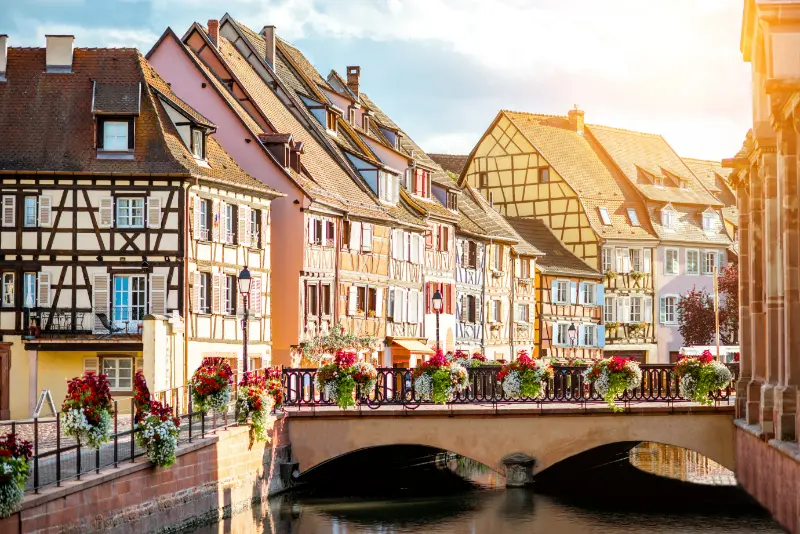
    Colmar Townscape France

    My practical advice: Limit the loop to three substantial stops. Park outside walls, walk between vineyard edges where permitted and avoid blocking residents’ access.

    Day 4: Southern route or castle landscape

    Explore Eguisheim and another southern village, or trade village time for the heights around Haut-Koenigsbourg. This creates contrast after a day of timbered streets.

    My practical advice: Castle access and buses may be seasonal. Check current arrangements before building the entire day around one connection.

    Wine tasting with context

    Alsace is known for aromatic grape varieties and clearly named wines. A tasting becomes more memorable when you learn about soils, slopes and food pairings rather than counting glasses.

    My practical advice: Book small producers when requested, never assume English availability and use a driver, taxi, bicycle plan or organised excursion.

    Christmas-market version

    Advent changes atmosphere, transport demand and accommodation prices. Lights and stalls are beautiful, but cold, crowds and security arrangements require more patience.

    My practical advice: Stay several nights, travel by public transport and visit popular centres early. Confirm dates on official tourism sites because each market follows its own calendar.

    Car, train or guided excursion?

    Train

    Excellent between Strasbourg, Colmar, Sélestat and larger towns. It removes driving concerns but does not reach every village directly.

    Car

    Best for flexible village combinations and rural accommodation. Keep tastings limited, choose a designated driver and use signed parking outside historic centres.

    Bicycle

    Rewarding for active travellers who understand gradients, weather and road conditions. Use marked routes and never combine serious tasting with riding.

    Guided day

    A useful compromise for several villages and winery context. Check group size, tasting approach and actual time spent outside the vehicle.

    Where to stay

    Strasbourg has the strongest transport connections and enough culture for several nights. Colmar places you closer to the central wine route and is atmospheric in the evening. Village accommodation provides quiet and vineyard views, but restaurant choices and late transport can be limited. During Christmas markets and harvest events, book early and read cancellation conditions carefully.

    Compare accommodation in Colmar on Booking.com

    Getting around

    The regional rail network makes a two-city itinerary straightforward. For villages, combine buses, seasonal shuttles, cycling, a tour or short car rental. Road distances are small, but parking queues and slow village streets expand journey times. If crossing into Germany or Switzerland, verify ticket coverage and rental conditions rather than assuming regional passes apply everywhere.

    Food and everyday rhythm

    Alsatian food reflects French and Germanic influences, with dishes such as tarte flambée, choucroute, baeckeoffe and kougelhopf. Portions can be generous, so mix traditional meals with market food and lighter lunches. Reserve dinner in small places, especially on Sundays or outside peak season, and treat wine as part of the meal rather than a driving-day challenge.

    Budget and booking strategy

    Strasbourg and Colmar accommodation rises sharply during famous events. Visiting on weekdays, staying near a rail station outside the most photographed core and using trains can help. Tastings may be free, paid or linked to purchases; ask politely and never treat a family producer as an unlimited bar. Village walks and vineyard views add value without admissions.

    How I would prepare before departure

    The Alsace Wine Route is a long regional itinerary, not a single village street. Its historic route runs roughly 170 kilometres between the north of the vineyards and the southern reaches, so a four-day visit needs clear priorities. I would sleep in Strasbourg or the Obernai area for the opening night, then shift to Colmar or a nearby village for the remainder. One day can combine Obernai and Barr, another the cluster of Ribeauvillé, Riquewihr and Hunawihr, while a third can explore Kaysersberg and Eguisheim. That leaves a final morning for Colmar itself or a southern vineyard stop. This grouping reduces backtracking and allows the character of each place to emerge beyond its half-timbered façade.

    Wine tasting should be arranged according to travel logistics, not inserted casually between driving stops. Choose one or two estates per day whose wines or methods genuinely interest you, contact producers about opening periods and discuss whether a tasting requires a reservation. Riesling, Gewurztraminer and Pinot Gris offer different styles, and Crémant d’Alsace broadens the experience beyond still whites. In villages, look for a short vineyard interpretation trail and use it to understand slope, soil and exposure. Not every tasting room operates like a walk-in bar, especially during harvest. If several adults plan to taste, hire a driver or structure a rail-and-bus day instead of expecting someone to remain unaffected by small pours.

    Bad-weather plans in Alsace should be genuinely local. A rainy day around Strasbourg could focus on the cathedral, museums and the Petite France district in shorter intervals, whereas Colmar offers indoor collections such as the Unterlinden Museum. A chilly harvest day can be ideal for visiting one producer and exploring a village between showers, but wet vineyard paths become slippery and muddy. In summer, the open slopes can feel hotter than the shaded lanes below; save exposed walking for morning. Winter Christmas markets bring a different experience entirely, with evening crowds and shorter daylight, so a four-day wine-route plan written for summer should not be copied unchanged into December.

    Accessibility and responsible travel

    The prettiest Alsatian villages can be demanding for visitors using wheelchairs or strollers. Historic lanes in Riquewihr and Eguisheim include cobbles, thresholds and narrow routes; reaching a hilltop castle such as Haut-Koenigsbourg adds gradients and access considerations. Check the attraction’s own accessible areas and parking instructions rather than assuming a village is step-free because it appears compact. With children, two villages and a short interpretive walk may be plenty in one day; add a museum or castle only when energy and weather allow. Rail services are good between cities, but the final connection to smaller wine villages can require a bus and walking, especially on weekends.

    The vineyards are working landscapes. Do not walk between rows or take shortcuts across a terrace without permission, and keep cars away from agricultural entrances. During harvest, tractors and winery vehicles may need the narrow road you hoped to use for a photograph. The region’s marked walking and cycling routes provide safer alternatives, including vineyard cycling itineraries linked to villages and larger rail hubs. Choose a producer whose work you want to learn about and buy wine thoughtfully rather than collecting anonymous tastings. If travelling with children, local bakeries and markets make a pleasant village stop without requiring every family member to participate in wine activities.

    Mistakes I would avoid

    • Driving the entire 170 km route just to say you did
    • Scheduling too many look-alike village stops
    • Combining driving with unrestricted tastings
    • Visiting Colmar only at peak midday
    • Assuming all restaurants open every evening

    For four days without a car, I would rewrite the itinerary around Strasbourg, Sélestat and Colmar rather than copying the driving route. These stations support regional services, and local buses or planned tours can cover some villages; the official Fluo route planner is useful for checking actual connections. A driver can explore more small villages but may spend disproportionate time finding parking during peak weekends. The car-free traveller should resist the temptation to promise Eguisheim, Riquewihr and Kaysersberg on one spontaneous bus loop, as frequencies and transfers vary. Selecting one reachable village for an afternoon, followed by a relaxed return to Colmar, often produces the better experience.

    Frequently asked questions

    How long is the Alsace Wine Route?

    The official route is approximately 170 kilometres and passes numerous wine towns and villages. A rewarding visit can focus on one central section.

    Do I need a car?

    No for Strasbourg and Colmar, and guided excursions reach villages. A car is valuable for flexibility if tasting is managed responsibly.

    Which villages should I choose?

    Kaysersberg, Riquewihr, Ribeauvillé and Eguisheim are popular for good reason, but choose two or three based on route, events and crowd tolerance.

    Is Alsace only for wine travellers?

    No. Architecture, food, hiking, museums, castles and Christmas traditions make the region rewarding even without alcohol.

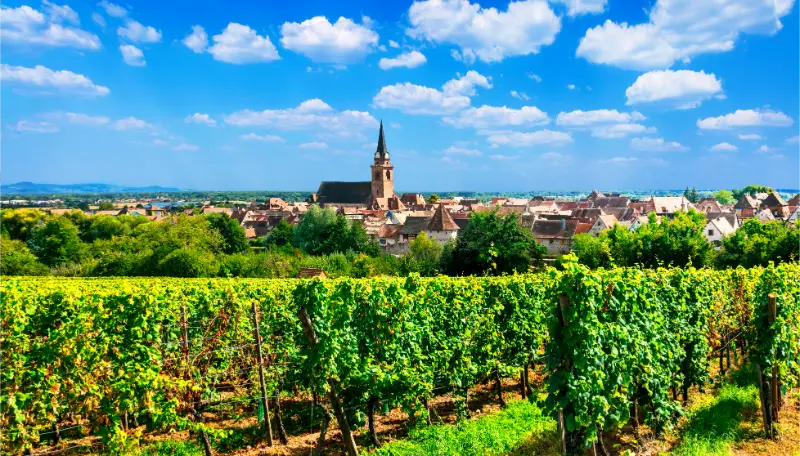
    Strasbourg City View France

    Useful official resources

    Check Visit Alsace for current route information and local tourist-office updates for winery events, market dates and village traffic restrictions. The tourist authority describes a 170-kilometre Wine Route and maintains cycling and transport resources; use these for orientation but consult the local bus or train operator for exact travel times. For Haut-Koenigsbourg or other ticketed monuments, confirm the day’s opening, capacity and accessibility directly with the site. During harvest season, an estate visit may be unavailable at short notice despite a general listing that says the business is open. If walking among vines, carry water, footwear suited to dirt paths and enough time to return before dark.

    Continue planning your trip

    For the next step, read travelling through France by train, seasonal France planning, the first-time France guide and the Champagne route. These guides are designed to connect into a slower, more realistic France itinerary.

    What makes the Alsace Wine Route more than a postcard is the relationship between the villages and their vineyards. From the walls of Riquewihr, the architecture feels compact; a short walk outside can reveal why the surrounding slopes matter to the wine. Colmar brings larger-scale museums and urban life; a smaller village shows the pace of a producer’s working day. Four days are enough to discover these contrasts, but not enough to tick off every wine village between Marlenheim and Thann. Choose two clusters, a couple of carefully planned tastings and one unscheduled café afternoon. The route will feel distinctly Alsatian without becoming a race between car parks.

    New Alsace guides: Use our Alsace Travel Guide, Alsace wine guide and detailed village guides for Eguisheim, Riquewihr and Kaysersberg.

    Travel without driving: The Wine Route can also be explored using trains, buses and tourist shuttles; see our Alsace without a car guide.

  • Normandy Road Trip: 7 Days from Monet’s Garden to Mont-Saint-Michel

    Normandy Road Trip: 7 Days from Monet’s Garden to Mont-Saint-Michel

    Normandy is often compressed into one heroic day from Paris, yet its landscapes and history resist speed. The light that drew painters, the medieval streets, the invasion coast and the tidal bay belong to different chapters. A week allows those chapters to remain distinct and gives serious sites the reflection they deserve.

    This route travels west from Giverny and Rouen through Honfleur and Bayeux to Mont-Saint-Michel. It is designed for a car, but several sections can be adapted with trains and tours. Distances are moderate; the real value lies in arriving before or after day-trip crowds and allowing weather to shape the coast.

    Quick planning overview

    Trip length7 days / 6–7 nights
    RouteGiverny–Rouen–Honfleur–Bayeux–Mont-Saint-Michel
    Best base for D-Day sitesBayeux
    CarStrongly recommended for a complete route
    WeatherLayers and waterproof clothing in every season

    A seven-day Normandy route

    Day 1: Giverny

    Monet’s house and gardens provide a natural transition from Paris into rural Normandy. The experience depends on season and light, but understanding the garden as a working artistic subject makes it worthwhile beyond peak flowers.

    My practical advice: Reserve through the official site and arrive at opening or later in the day. Do not expect empty paths in high season.

    Day 2: Rouen

    Rouen’s cathedral façade, medieval core and Joan of Arc associations deserve a full day. Look beyond the main square to half-timbered streets and the relationship between changing light and architecture.

    My practical advice: Leave the car parked and explore on foot. Check cathedral and museum hours independently, especially around religious services.

    Day 3: Honfleur and the Côte Fleurie

    Honfleur’s old harbour is beautiful, but the town becomes more rewarding in side streets and after buses depart. Continue along the coast only as far as your preferred pace allows.

    Benedictine Palace Museum Normandy France

    My practical advice: Spend the night if possible. An early harbour walk reveals working details hidden by midday crowds.

    Day 4: Bayeux

    Bayeux survived with a historic centre that feels coherent, and its tapestry provides essential medieval context. The cathedral and riverside streets make the town more than a launch point for battlefield tours.

    My practical advice: Book the tapestry and D-Day tour on different parts of the trip so dense history does not become overwhelming.

    Day 5: D-Day landing coast

    Choose a guided tour or a focused self-drive route covering a limited sector, cemetery and museum. The geography becomes clearer when you understand why particular cliffs, exits and villages mattered.

    My practical advice: Treat cemeteries and memorials with quiet respect. Avoid racing between every named beach, and leave time to process what you have seen.

    Days 6–7: Mont-Saint-Michel

    Drive toward the bay, stopping in a smaller town or countryside landscape if time allows. Stay nearby so you can walk the causeway in evening light and return early for the abbey.

    My practical advice: Never enter the tidal bay without a qualified guide. Official advice stresses the exceptional tides and the danger of independent crossings.

    Ways to adapt the route

    For art

    Add Le Havre’s modern architecture or more time in Giverny and Rouen, then reduce the western drive.

    For wartime history

    Use two nights or more in Bayeux and book a specialist guide. One carefully explained sector is better than a superficial sweep of the entire coast.

    For families

    Balance museums with beaches, farms and short walks. Explain memorial days in advance and avoid stacking emotionally demanding visits.

    Without a car

    Use trains for Rouen, Caen and Bayeux, then take guided excursions for the landing sites and seasonal connections toward Mont-Saint-Michel.

    Where to stay

    Rouen, Honfleur and Bayeux each merit an overnight stop, but moving every day can become tiring. A practical compromise is one night in Rouen, one near Honfleur, three in Bayeux and one or two near Mont-Saint-Michel. Historic buildings may lack lifts or large rooms, so inspect access details. Parking outside old centres is often easier and safer than navigating narrow streets.

    Compare accommodation in Normandy on Booking.com

    Getting around

    Motorways handle the longer stages, while coastal and rural roads slow the pace. Keep fuel above a comfortable margin on Sundays and do not leave bags visible during stops. Mont-Saint-Michel parking sits away from the mount, with a free shuttle and a walkable causeway. Check tides, shuttle arrangements and current access on official sites before travel.

    Food and everyday rhythm

    Normandy’s table is shaped by apples, cider, cream, butter, seafood and cheeses. Try regional products in context rather than ordering every rich speciality in one meal. Coastal seafood depends on season and supply; ask what is local. If driving, remember that cider and Calvados still require the same restraint as wine.

    Budget and booking strategy

    Guided battlefield tours are a worthwhile major expense because interpretation transforms the landscape. Balance them with free coastal walks, cathedral visits and town exploration. Staying just outside Mont-Saint-Michel can cost less than sleeping within the walls, but the ability to experience late evening may justify a premium for some travellers.

    How I would prepare before departure

    Normandy deserves a route that acknowledges how far apart its principal themes are. Begin around Giverny or Rouen if travelling from Paris, then move west toward Bayeux and the D-Day coastline before finishing around Mont-Saint-Michel. In seven days, I would give Rouen time for its medieval centre and cathedral, Bayeux at least two nights for the coast, and one well-positioned night or extended stop near the Mont. Do not assume the Alabaster Coast, Honfleur, the landing beaches and the abbey are short detours from a single hotel. Normandy is rural between its cities, and repeated cross-region drives can turn a history trip into a motorway tour.

    Benedictine Palace Museum Normandy France

    The D-Day sites should be planned around one or two carefully chosen narratives. Omaha Beach, the Normandy American Cemetery and the Musée Mémorial d’Omaha, for example, call for a different pace from a leisurely harbour afternoon. Other sectors include the British and Canadian landing areas with their own memorials and museums. Check the location and focus of each site, allow time for reflection, and avoid treating cemeteries as scenic photo stops. Families with younger children may benefit from visiting one age-appropriate museum and one outdoor landmark rather than several emotionally demanding sites. Bayeux is useful as a base because it has heritage of its own as well as access to the coast.

    Normandy’s weather is often part of the experience, but certain choices should change in strong wind or rain. The cliffs of Étretat demand particular caution around edges and unstable sections; follow marked open routes and never approach fenced-off ground for a better camera angle. In Bayeux or Caen, use a museum as the indoor focus on wet days. At Mont-Saint-Michel, rain matters less than wind, tides and the conditions of the approach, so consult official notices before the visit. The abbey interior has steep historic stairs, while the surrounding bay is not a place for independent shortcuts across the sand. A guided bay crossing is a separate experience requiring specialist local knowledge.

    Accessibility and responsible travel

    For mobility planning, check the exact street and venue rather than trusting a general statement that a Normandy town is walkable. Rouen’s old quarter has cobbles; Honfleur’s scenic harbour edge can be crowded; the approach to Mont-Saint-Michel includes a shuttle or a significant walk before the medieval ascent begins. Some beach memorials occupy uneven grass or exposed slopes. Ask the abbey and chosen museums about their designated accessible routes and realistic limitations, and choose accommodation that does not require carrying luggage up a narrow historic staircase. For a family, a hotel near Bayeux or Caen that allows two consecutive nights is often easier than changing rooms at each coastal stop.

    Historical memory deserves care in Normandy. Read cemetery and memorial visitor guidance before visiting, keep voices low where appropriate and avoid posing on graves, wartime remains or protected dunes. The same respect applies to the towns: narrow harbour streets are residential and should not be blocked by vehicles or photography groups. Wherever possible, choose an organised historical visit led by a knowledgeable guide whose interpretation helps distinguish the various landing sectors and their consequences. Use signed coastal paths and respect tide warnings. Along the bay, the landscape itself is vulnerable, and a marked path is safer and more considerate than walking across sensitive salt-marsh habitat.

    Mistakes I would avoid

    • Attempting Normandy as one rushed day trip
    • Visiting memorials as photo stops
    • Walking into the tidal bay alone
    • Leaving luggage visible in a parked car
    • Assuming summer means stable dry weather

    A balanced week could allocate one night in Rouen, a stop in Honfleur, three nights around Bayeux or Caen, one night near the Mont and a final flexible departure day. That arrangement is a model, not a prescription: travellers with a strong interest in Impressionism may instead include Giverny and more time around Rouen, while those focused on the D-Day story should extend the coast stay and cut a distant detour. The key is to avoid scheduling a morning at Étretat followed by a serious museum visit in Bayeux and then sunset at Mont-Saint-Michel as though all three were nearby. Long drives should be explicit on the itinerary.

    Frequently asked questions

    How many days do I need in Normandy?

    Four days covers Bayeux, part of the landing coast and Mont-Saint-Michel. Seven days allows Rouen, Honfleur and Giverny without sacrificing depth.

    Should I take a guided D-Day tour?

    A good guide adds geography, testimony and logistical clarity. It is especially valuable on a first visit or when family history connects to a particular unit.

    Is Mont-Saint-Michel free?

    Access to the village is generally free, while parking and the abbey are separate. Verify current conditions and ticket eligibility on official websites.

    Can I do this route by train?

    The cities are rail-accessible, but a complete coastal route requires tours, buses or selective car rental. Build around Bayeux and reduce isolated stops.

    War Memorial Caen Calvados Normandy France

    Useful official resources

    For changing details, rely on the Normandy tourist authority, the official Mont-Saint-Michel information services and the individual museum or cemetery operators. Tide conditions and bay crossing guidance must be checked for the visit date, not inferred from a picturesque photograph. Confirm current opening periods for small museums outside summer and reserve any guided tour you specifically want; not all historic venues open every day. Rail services can connect Paris with Rouen, Caen and Bayeux, but a transport-free trip to the scattered coastal sites requires careful onward planning. If you rent a car, check parking arrangements in advance near the Mont rather than expecting to drive into the historic village.

    Continue planning your trip

    For the next step, read planning your first France trip, choosing when to visit France, family travel in France and the Brittany road trip. These guides are designed to connect into a slower, more realistic France itinerary.

    The most memorable Normandy week is the one that gives each story room to be understood. Spend an early evening in Bayeux after a difficult historical day, watch the water around a small harbour, and let the tidal setting of Mont-Saint-Michel develop as the light changes. A cream-rich meal, an apple producer visit or a quiet walk through Rouen’s lanes provides a necessary human counterpoint to the wartime history. I would remove an extra monument before shortening the time spent at a memorial or forcing a dangerous coastal path in bad weather. Normandy is not a single theme park of attractions; it is a region of living towns, complex history and powerful natural settings.

    Build the Normandy cluster: Rouen · Bayeux · Caen · best Normandy towns and villages.

  • Loire Valley Château Road Trip: A 5-Day Route That Is Not Just a Castle Checklist

    Loire Valley Château Road Trip: A 5-Day Route That Is Not Just a Castle Checklist

    The Loire Valley can become a test of endurance if every turret on the map turns into a mandatory stop. After two elaborate interiors, details begin to merge. The route becomes richer when each day combines one major château with a town, garden, river walk or tasting that reveals how the region lives beyond its grand façades.

    This five-day itinerary centres on Blois, Amboise and Tours. It works best by car, although a train-based version is possible with guided excursions, bicycles and careful selection. The goal is not to identify a universal ‘best’ château, but to compare architecture, landscape and stories without museum fatigue.

    Quick planning overview

    Trip length5 days / 4–5 nights
    Good basesBlois, Amboise or Tours
    Daily rhythmOne major château, one secondary experience
    TransportCar for flexibility; train plus tours for key sites
    Best seasonsSpring gardens and early autumn light

    A five-day Loire Valley route

    Day 1: Blois and its royal château

    Begin in a town where urban streets and royal history sit together. The Château Royal de Blois introduces several architectural periods without requiring a rural detour.

    My practical advice: Walk the town after the château and stay for evening rather than driving immediately to the next icon.

    Day 2: Chambord and a quieter counterpoint

    Chambord’s scale and silhouette justify an early start. Explore the surrounding estate as well as the building, then pair it with a smaller château or the village atmosphere around Cheverny.

    My practical advice: Reserve enough time for the roof terraces and grounds. The approach and exterior are part of the experience, not merely a path to the rooms.

    Day 3: Amboise and Leonardo’s final chapter

    Amboise provides a lively base, a royal château above the Loire and Clos Lucé, associated with Leonardo da Vinci’s final years. The town is compact enough to slow down between visits.

    Chateau d Azay le Rideau Loire Valley France

    My practical advice: Choose two substantial admissions at most. A riverside view of the château at sunset can be as memorable as another interior.

    Day 4: Chenonceau and river landscape

    Chenonceau’s gallery across the Cher creates one of France’s most recognisable château views. Its wartime history, gardens and relation to the river deserve more than a quick photograph.

    My practical advice: Book a timed entry when offered and arrive early. Consider seeing the estate from the water or nearby paths if conditions and operators allow.

    Day 5: Villandry, Tours and gardens

    Finish with Villandry’s formal gardens, then return to Tours for old streets, a market or a relaxed meal. This final day shifts emphasis from grand interiors to design and city life.

    My practical advice: Garden conditions change with the season; appreciate structure and perspective rather than expecting peak blooms on a fixed date.

    Alternative: Azay-le-Rideau and Chinon

    Travellers who prefer smaller scale can replace a headline site with Azay-le-Rideau, then continue to Chinon for fortress views and wine-country atmosphere.

    My practical advice: This western extension suits a second base near Tours and should not be squeezed between Chambord and Chenonceau on the same day.

    How to avoid château fatigue

    Vary the experience

    Alternate furnished interiors, gardens, architecture and towns. Read the broad story before arrival, then focus on details that genuinely interest you.

    Leave space for the Loire

    The river and its tributaries explain the geography of the estates. Walk or cycle a section instead of seeing the valley only through a windscreen.

    Choose bases by evening life

    Amboise is atmospheric and compact; Tours has more restaurants and transport; Blois suits eastern châteaux. Two bases are enough for five days.

    Book selectively

    Reserve your most important château and any guided experience. Keep a lesser-known estate flexible for weather and energy.

    Where to stay

    Amboise is appealing for a first visit because you can walk to restaurants and two major sights. Tours offers the best rail links and a broader dining scene. Blois places you close to Chambord and Cheverny. Rural château hotels and guesthouses add atmosphere but can require driving after dinner. Confirm parking, restaurant closing days and late check-in procedures.

    Compare accommodation in Tours on Booking.com

    Getting around

    A car makes the classic circuit simple, but use peripheral parking in historic towns and never underestimate summer queues. Without a car, base in Tours or Amboise, combine regional trains with bicycles and book reputable day tours to sites not served directly. The Loire à Vélo network creates excellent short rides, but distances and road sections should match your confidence.

    Food and everyday rhythm

    The valley’s pleasures include goat cheeses, river fish, rillettes, seasonal produce and wines from distinct appellations. Tastings are more meaningful when they include conversation and context, so book smaller producers where required and designate a driver. A market picnic can reset the palate after formal dining and adds time beside the river.

    Budget and booking strategy

    Individual château admissions accumulate quickly. Select the estates that differ most, check official combination offers and do not buy a broad pass until you confirm realistic opening times. Gardens, town walks and cycling create lower-cost days. Staying in one base reduces fuel and repeated check-in time, even if a few drives are longer.

    How I would prepare before departure

    The Loire Valley works best as a sequence of distinct places rather than a count of château tickets. I would use Tours or Amboise as a base and assign the first day to one major estate plus its surrounding town. Chenonceau tells a river-and-courtly-history story, Chambord reveals royal ambition on an enormous estate, and Villandry is especially appealing for its structured gardens. Those are different experiences, so there is no need to visit all three before lunch. A five-day road trip could begin with Amboise and nearby Clos Lucé, devote another day to Chenonceau, then explore Villandry and Azay-le-Rideau before a final Chambord-focused day. Check travel times with the chosen hotel location rather than assuming every château is adjacent.

    Gien Castle Old Bridge Across Loire Loiret France

    Before buying an attraction bundle, decide whether the group is more interested in Renaissance architecture, formal gardens or the river landscapes between estates. At Chenonceau, allow time for the gallery spanning the Cher and for the grounds, not only the best-known photograph. At Villandry, garden layout is a central part of the visit, so shoulder-season planting and weather may influence its appeal. The Château Royal d’Amboise and Clos Lucé can complement each other if you want to understand Leonardo da Vinci’s final years in France. Mix a large monument with a small town café or riverside walk; repeated palace interiors can blur together even when each building is historically important.

    Rain does not automatically ruin the Loire, but it shifts the balance toward interiors. Chenonceau or the Château Royal d’Amboise can offer meaningful time under cover, while a day selected solely for Villandry’s gardens deserves a weather alternative. At Chambord, the scale of the estate means that the walk from parking and movement between different areas can still involve exposure. Strong river conditions should discourage improvised cycling near flooded paths; choose signed, open portions of the Loire à Vélo network. If it is hot, visit exposed gardens early, allow a shaded lunch, and do not plan an afternoon bicycle loop without adequate water. The valley’s changing weather is part of the landscape, not a failure of planning.

    Accessibility and responsible travel

    Access is an important reason to select the estate, not merely the nearest car park. Many châteaux contain historic staircases, narrow thresholds and surfaces that cannot be altered easily; the accessible route may cover a different set of rooms or gardens. Ask each operator about lifts, loaned wheelchairs and the path between visitor entrance and key spaces. With small children, limit each morning to one substantial interior and leave afternoon space for the gardens or a river walk. A family-friendly visit at a smaller estate can be more successful than an exhausting queue at a celebrated one. Cyclists should confirm whether a route is suitable for trailers and whether secure bike parking exists.

    The Loire landscape is also agricultural and inhabited. Vineyards near Vouvray or Montlouis-sur-Loire, river islands and historic stone villages are not interchangeable tourist backdrops. Use signed paths, avoid picking crops and respect seasonal work on vineyard roads. Keep to marked sections of Loire à Vélo rather than taking a shortcut across a private field. At a tasting, arrange a designated driver or choose a wine village accessible by a safe alternative means of transport. Supporting a local bakery, guide or small museum can make the trip more meaningful than buying another rushed monument ticket. This is a region to linger in, especially outside the obvious château forecourts.

    Mistakes I would avoid

    • Visiting three or four major châteaux every day
    • Ignoring towns and river landscapes
    • Arriving without checking timed-entry rules
    • Wine tasting without a safe transport plan
    • Choosing a rural stay with no evening food nearby

    A practical five-day plan would use day one for Amboise and Clos Lucé, day two for Chenonceau, day three for Villandry and Tours, day four for Azay-le-Rideau with time on country roads, and day five for Chambord if the departure route makes that realistic. Travellers without a car should simplify further; certain towns have rail access, but not every estate entrance is an easy walk from a station. Check local buses, cycling options and organised excursions before treating the five-day driving order as a public-transport itinerary. Three well-explored estates can give a stronger account of Loire history than five rushed transfers with bags and no time for the towns.

    Frequently asked questions

    Which Loire château should I visit first?

    Chambord for scale, Chenonceau for its river setting, Blois for architectural layers and Villandry for gardens. Choose according to interest, not rankings.

    Can I visit without a car?

    Yes with a base in Tours or Amboise, but you must be selective. Trains, bicycles and organised excursions can reach a strong group of highlights.

    How many châteaux per day?

    One major château plus one lighter stop is a comfortable rhythm. Two interiors can work if they are close and meaningfully different.

    Where should I stay?

    Tours for transport and restaurants, Amboise for compact atmosphere, or Blois for the eastern group. Split bases only if your route extends west toward Chinon.

    Chateau de la Roche beside the Loire River France

    Useful official resources

    Consult the individual château operators for current admission, free-entry criteria and garden access before booking. Chambord has used differentiated ticket conditions in 2026, so do not repeat an old single-price figure as a guarantee for everyone. Rail timetables should be checked for the actual date and nearby station, particularly when a train option depends on a short local connection. For the Loire à Vélo network, use official mapped stages and any notices about riverside flooding or repair work. Save the parking location and final admission time; a place that closes at the end of the afternoon may stop letting visitors enter substantially earlier.

    Continue planning your trip

    For the next step, read the first-time France guide, planning France by train, visiting France with children and the Dordogne road trip. These guides are designed to connect into a slower, more realistic France itinerary.

    The Loire stays with visitors when its stories connect across several days. Begin with the river crossing at Chenonceau, compare the grand scale of Chambord with a more intimate château, and notice how Tours or Amboise carries history into ordinary streets and markets. I would gladly sacrifice a sixth palace visit for an afternoon cycle ride, a quiet garden or a tasting arranged without a driving conflict. The best five-day route balances royal splendour with human-scale towns and the river that links them. It should feel like travelling through a valley, not working through an inventory of castles.

    Go deeper than the château circuit: understand the UNESCO cultural landscape, compare the best Loire châteaux by travel style and see the best gardens in the Loire Valley.

  • French Riviera Travel Guide: Nice, Coastal Towns and Hilltop Villages Without a Car

    French Riviera Travel Guide: Nice, Coastal Towns and Hilltop Villages Without a Car

    The French Riviera is often presented as a driving route lined with luxury hotels, yet some of its most attractive places are easier by train and bus. From a base in Nice, I can reach beaches, art museums, old towns and borderland gardens without searching for parking or watching the road instead of the sea.

    This guide focuses on a five- to seven-day, car-free stay. The coastline is compact, but the aim is not to collect town names. Choose two or three day trips, keep full days for Nice and allow the weather to decide when the beach, a museum or a hill village makes most sense.

    Quick planning overview

    Best baseNice for transport, food and evening atmosphere
    Recommended stay5–7 nights
    TransportTER trains along the coast; buses for some villages
    Beach styleMostly pebbles around Nice; water shoes help
    Sweet spotMay, June, September and early October

    The Riviera stops worth combining

    Nice: more than a transport base

    Give Nice at least two full days for Vieux Nice, the Cours Saleya area, Castle Hill, seafront walks and museums. The city has enough ordinary life to remain enjoyable after day-trippers leave.

    My practical advice: Walk the Promenade des Anglais early, then return after dark for a different atmosphere. Explore beyond the most crowded old-town lanes.

    Villefranche-sur-Mer: an easy half-day

    The bay, colourful waterfront and steep old streets sit only a short rail ride from Nice. It works well as a relaxed beach morning or an evening meal beside the water.

    My practical advice: The station is above the shoreline and steps are unavoidable. Combine the town with Cap Ferrat only if you enjoy a substantial walk.

    Èze: dramatic views with careful timing

    Èze village occupies a high rocky position and feels very different from Èze-sur-Mer below. Its lanes and exotic garden draw crowds because the setting is genuinely spectacular.

    Medieval Cagnes Sur Mer Riviera France

    My practical advice: Do not confuse the coastal train station with the hill village. Use the appropriate bus or plan a demanding hike, and arrive early.

    Antibes: old walls, market and art

    Antibes balances a historic centre with a working port and accessible coastal scenery. It feels more intimate than Cannes and can absorb a full day when paired with Cap d’Antibes.

    My practical advice: Check museum opening times and allow for a long lunch. The coastal path may close in poor weather, so keep an inland alternative.

    Menton: gardens and an Italian edge

    Near the border, Menton has warm colours, citrus associations and a gentler pace. The old town climbs sharply above the seafront, while gardens reveal the area’s unusual microclimate.

    My practical advice: Menton is far enough from Nice to deserve most of a day. Sit on the correct side of the train for changing coastal views.

    Monaco: a different country for the day

    Monaco is not France, but it fits naturally into a Riviera rail itinerary. The old town, harbour and steep urban landscape are more interesting when treated as a functioning principality rather than only a casino stop.

    My practical advice: Expect hills, lifts and tunnels. Check mobile roaming arrangements and carry identification appropriate to your journey.

    A relaxed six-day plan

    Days 1–2

    Explore Nice by neighbourhood, reserving one museum or food experience and leaving time for the beach or Castle Hill.

    Day 3

    Take a short trip to Villefranche-sur-Mer and continue to Saint-Jean-Cap-Ferrat if energy and weather suit.

    Day 4

    Choose Antibes for art and old-town atmosphere, adding a coastal walk if conditions allow.

    Days 5–6

    Use one full day for Menton or Monaco and keep the final day flexible for Èze, a favourite return visit or uninterrupted beach time.

    Where to stay

    Nice offers the widest range of accommodation and the best evening flexibility. Staying near Nice-Ville station helps with day trips, while the old town and port provide atmosphere but can be noisy. The Carré d’Or area balances beach access and transport. Confirm air-conditioning, lift access and room orientation in summer; a balcony may be less useful than reliable soundproofing.

    Compare accommodation in Nice on Booking.com

    Getting around

    Regional TER trains serve the coastal corridor, but platforms become busy and services can be disrupted. Buy the correct ticket, validate or activate it as required and avoid assuming that a screenshot replaces the official ticket. Buses reach hill towns but schedules can change by season. Keep a flexible day and check the official planner before leaving each morning.

    Food and everyday rhythm

    Look for Niçoise dishes such as socca, petits farcis, pan bagnat and pissaladière while respecting that authentic versions vary by establishment and season. Markets are enjoyable, but prices near the most photographed stalls may reflect location. I mix one waterfront meal with neighbourhood bakeries and casual addresses a few streets inland.

    Budget and booking strategy

    The Riviera does not have to be a luxury-only destination. Public beaches, coastal paths and old towns are free, while trains remove parking and fuel costs. Budget for beach equipment, museum tickets and occasional reservations. In high season, accommodation is the decisive expense, so compare Nice with Antibes or Menton while accounting for evening transport.

    How I would prepare before departure

    The French Riviera is unusually suitable for a train-based trip, but it helps to separate rail-friendly coastal stops from steep hilltop villages. Nice makes a practical main base for outings to Antibes, Cannes, Monaco and Menton on the regional network. Its old town, Castle Hill viewpoint and Promenade des Anglais also justify days without leaving the city. I would spend the first day around Vieux Nice and the seafront, then use the second for Antibes and the Cap d’Antibes area, checking any walking route before setting off. Later days can be divided between Menton and Monaco, with an optional guided excursion inland. A single well-chosen base usually works better than changing hotels every night between neighbouring resorts.

    Sightseeing Tour Bus on the French Riviera Nice France

    Morning and evening are the most comfortable times for the old centres. In Antibes, explore the lanes behind the ramparts and choose whether to visit the Picasso Museum rather than trying to pair every coastal museum with a beach stop. In Menton, the historic terraces and gardens need time and can be steep. Monaco works best when you select one cluster such as Monaco-Ville and the harbour instead of racing between every attraction. Èze village is not equivalent to the coastal railway station called Èze-sur-Mer: the route uphill involves a significant ascent or a connecting bus. This distinction should be visible in a car-free guide, because a station name alone can make a day look much easier than it really is.

    A rainy Riviera day can still be interesting, but replace the right activity. Nice offers the Marc Chagall Museum and other galleries, while Antibes or Monaco have indoor cultural options with their own opening schedules. Strong wind or heavy rain is a reason to avoid cliffside coastal paths and sea excursions, not merely to bring an umbrella. In hot weather, move museum visits into the middle of the day and explore old-town streets earlier. Beach expectations also deserve precision: the public beaches along Nice’s Promenade are predominantly pebbly, so water shoes may be more useful than a picnic blanket. Compare supervised beaches and current flag conditions rather than assuming that every sheltered cove is safe for swimming.

    Accessibility and responsible travel

    The Riviera’s vertical geography can surprise travellers with limited mobility. Vieux Nice is compact but can be busy and uneven; Menton’s elevated old town and Èze village involve gradients and steps. The coastal train is useful, but station access and platform arrangements vary, and a small suitcase is easier than a heavy backpack plus beach gear. For a family with a stroller, a relaxed beach-and-market day in Nice or Antibes may provide more enjoyment than an ambitious ascent to a medieval village. Confirm lift operation and the actual route from station to attraction on the relevant official sites before promising a fully accessible visit.

    Travel lightly in an area where both public space and coastal habitat are under pressure. Coastal footpaths may cross sensitive vegetation, be closed after storms or require detours for erosion; follow notices even if an older map shows the shortcut open. Do not walk across private terraces to reach the water. For restaurants, step a few streets away from the busiest harbourfront tables, where quieter neighbourhood businesses often offer a different atmosphere. Local trains reduce parking pressure in places with limited space, but crowded platforms in peak season demand patience and attention to belongings. The most rewarding Riviera day frequently includes less movement than visitors expect.

    Mistakes I would avoid

    • Renting a car for a purely coastal itinerary
    • Confusing Èze village with Èze-sur-Mer
    • Assuming every beach is sandy
    • Planning a coastal hike without checking conditions
    • Turning every town into a two-hour photo stop

    For five days, I would allocate two full days to Nice itself, one to Antibes, one to Menton with a carefully chosen Monaco stop, and one flexible day for a beach, garden or interior village. That leaves room for a morning market at Cours Saleya, an evening on the Promenade, and an unhurried view from Castle Hill without rushing immediately to the next train. Travellers especially interested in art might substitute Saint-Paul-de-Vence, acknowledging that it requires a bus or other onward transport. If the trip is only three days, cut the extra excursion first; Nice plus two well-planned coastal outings is enough to understand the region’s different sides.

    Frequently asked questions

    Can I explore the French Riviera without a car?

    Yes. Nice, Villefranche-sur-Mer, Monaco, Menton, Antibes and Cannes lie on the coastal rail line, with buses reaching additional villages.

    How many days do I need?

    Five nights provides two Nice days and two or three excursions. Seven nights allows weather flexibility and a slower beach-and-culture rhythm.

    Is Nice or Cannes a better base?

    Nice generally offers stronger transport connections, more neighbourhood variety and easier access east and west. Cannes may suit travellers focused on its beaches and western coast.

    Are Riviera beaches free?

    Public sections exist, alongside private beach clubs. Facilities, surfaces and access vary, so consult local information and never leave valuables unattended.

    Fireworks over Cannes and the French Riviera France

    Useful official resources

    Use the regional train operator’s current timetable for connections and service disruptions rather than treating a generic ‘every few minutes’ estimate as a guarantee. Check each museum’s own admission and closing days, and follow public weather and bathing advisories during a heatwave or storm. Monaco is a separate country with its own local transport and attraction information, although geographically part of this itinerary. For Èze, verify which transport actually reaches the village above the coast. If you plan an international train leg toward Italy, confirm the correct station and whether the service is regional rather than assuming a single high-speed booking will cover the journey.

    Continue planning your trip

    For the next step, read a seven-day Provence road trip, France by train, the best season for France and the Corsica road trip. These guides are designed to connect into a slower, more realistic France itinerary.

    I would end a Riviera visit with a slow evening in Nice rather than squeezing in one last famous viewpoint across the border. Watch the old town shift from afternoon shopping to dinner, take a modest walk beside the sea and choose one local dish such as socca or salade niçoise from a place that prepares it well. The Riviera’s appeal lies in the contrast between public seafront life, densely built historic streets and mountain-backed villages. A train-based route makes that contrast easy to appreciate, as long as the timetable serves your day instead of dictating every moment of it.

    More Riviera planning: Compare our Nice destination guide and where to stay on the French Riviera before choosing a base.

    Build a deeper Riviera trip: Our new 7-day car-free French Riviera itinerary, beach comparison and family guide turn the regional overview into practical trip plans.

  • Provence Road Trip: A Slow 7-Day Route Through Markets, Villages and Wild Landscapes

    Provence Road Trip: A Slow 7-Day Route Through Markets, Villages and Wild Landscapes

    Provence invites overplanning. A map reveals dozens of villages, Roman sites, markets, vineyards and viewpoints within tempting reach, and it is easy to turn a holiday into a daily race. The Provence I remember most clearly is slower: shutters opening in a quiet street, the scent around a market stall, the colour of stone late in the day and the relief of returning to the same room for several nights.

    This seven-day route uses Avignon or the western Luberon for the first base and Aix-en-Provence or Arles for the second. It balances famous villages with landscapes and leaves enough slack for heat, traffic, market mornings and spontaneous stops.

    Quick planning overview

    Trip length7 days / 6 or 7 nights
    Suggested basesAvignon or Luberon, then Aix or Arles
    CarUseful for villages; avoid driving into historic centres
    Best balanceTwo major stops per day
    Best monthsMay–June and September–early October

    A seven-day Provence route

    Day 1: Avignon

    Begin inside the walls with the Palais des Papes, the squares around Rue des Teinturiers and a first view of the Rhône. Avignon is compact enough for an arrival day and connected enough to work without a car at first.

    My practical advice: Collect a rental car after the city visit if possible. Historic parking is awkward, while edge-of-centre car parks simplify arrival.

    Day 2: Pont du Gard and Saint-Rémy

    Visit the Pont du Gard before the hottest part of the day, then continue toward Saint-Rémy-de-Provence. The Roman structure, river landscape and small-town evening create a varied day without excessive mileage.

    My practical advice: Carry water and allow time beyond the monument itself; riverside paths and museum context make the stop more meaningful.

    Traditional Stone House with Brown Shutters Provence France

    Day 3: Luberon villages

    Choose a compact group such as Gordes, Roussillon and Goult rather than every famous hill town. Each has a different visual character, but the roads and parking make village-hopping slower than distances suggest.

    My practical advice: Start at the place that matters most, eat lunch away from the busiest square and save an overlooked village for late afternoon.

    Day 4: Aix-en-Provence

    Change base via Aix and spend the day walking rather than driving. Markets, fountains, shaded streets and Cézanne associations give the city an elegant but lived-in quality.

    My practical advice: Park once outside the tight centre. Check market days, but remember that Aix remains enjoyable after stalls close.

    Day 5: Calanques or Sainte-Victoire

    Choose coast or mountain according to weather and access restrictions. The Calanques offer limestone and sea; Sainte-Victoire offers inland trails and the landscape connected with Cézanne.

    My practical advice: Summer fire-risk closures can affect natural areas. Consult official access information on the morning of the visit and never improvise around a closure.

    Days 6–7: Arles and the Camargue

    Use Arles for Roman heritage and human scale, then devote the final day to the Camargue’s wetlands, horses, birdlife and broad horizons. Saintes-Maries-de-la-Mer can provide a coastal finish.

    My practical advice: Distances look short, but wildlife viewing and minor roads reward patience. Avoid disturbing animals and use designated tracks and observation areas.

    How to make the route feel personal

    Follow one market

    Choose a market because it aligns naturally with your route, not because a list declares it the best. Arrive early, buy a picnic and notice what local shoppers choose.

    Protect the middle of the day

    In warm months, place strenuous walks and exposed monuments in the morning. Use early afternoon for lunch, a drive, a museum or rest.

    Keep one unscheduled half-day

    Weather, a village festival or a recommendation from your host may change the plan. Empty time is useful travel infrastructure.

    Return the car strategically

    If finishing in Marseille, Aix or Avignon, compare city-centre and station returns. Photograph the car and fuel reading, and allow time for the final inspection.

    Where to stay

    A farmhouse stay sounds quintessential, but location affects every meal and drive. If you want to walk to dinner, choose a town or village with several year-round restaurants. Avignon and Arles offer rail access and evening life; the Luberon offers atmosphere and scenery; Aix provides a polished city base. Check parking, pool opening dates, air-conditioning and minimum stays before booking.

    Compare accommodation in Avignon on Booking.com

    Getting around

    High-speed trains reach Avignon TGV and Aix-en-Provence TGV, both outside their historic centres. Regional trains connect Avignon, Arles, Nîmes and Marseille, making a partial car-free itinerary possible. For villages, rent the smallest practical car and download offline maps. Never leave luggage visible, respect low-emission zones and allow extra time for narrow roads and market-day parking.

    Food and everyday rhythm

    Provence is best tasted through repetition rather than a single grand meal: tomatoes in season, olive oil, goat cheese, fruit, bread, tapenade and local wines. Markets are most rewarding when you buy something useful instead of only photographing displays. Reserve dinner in small villages, where kitchens may close on fixed weekdays and choices narrow outside summer.

    Budget and booking strategy

    A two-base route controls fuel, parking and cleaning fees while preserving flexibility. Compare farmhouse prices with town hotels after adding the cost of driving to every dinner. Natural landscapes and village walks can balance paid monuments and tastings. If travelling during lavender season or major festivals, book early and expect accommodation prices to reflect demand.

    How I would prepare before departure

    For seven days in Provence, I would make the first base Avignon and plan the next two nights around Arles or Aix-en-Provence, depending on whether Roman monuments or markets matter more. Day one belongs to the city walls, the Palais des Papes and an easy evening near Rue des Teinturiers. On day two, take a loop into the Luberon rather than zigzagging across the whole region: Gordes, Roussillon and a short village walk already fill a rewarding day when parking and lunch are included. Day three can focus on Saint-Rémy-de-Provence and Les Baux-de-Provence, with time for their different histories and landscapes. This is a road trip, but each day needs a walk long enough to justify getting out of the car.

    Narrow Street in a Stone Village Provence France

    Make the market calendar the starting point, not a late addition. Provençal markets differ by town and weekday, and some smaller stalls operate seasonally. If your chosen morning market falls on the wrong day, swap the Luberon day with Saint-Rémy instead of driving far to find an identical market. In Arles, allow time for Roman heritage and the Rhône-side streets before the next rural outing. If Aix is the second base, concentrate on the old centre, the Cours Mirabeau area and one specific Cézanne-related visit, checking its opening status in advance. A journey that follows one coherent area per day avoids the unproductive pattern of spending every afternoon on narrow roads with no time left for a village.

    Summer heat changes the itinerary more than a small difference in driving distance. The ochre paths near Roussillon and exposed stone at Les Baux can be uncomfortable at midday, so reserve those for early slots when permitted and spend the hottest hours indoors or under shade. If thunderstorms arrive, choose the Palais des Papes, a local museum or a long lunch instead of walking a slippery ochre path. The Camargue also requires weather judgment: wind, insects and seasonal water conditions shape outdoor visits. Keep the boat excursion or nature reserve that suits the day’s forecast rather than promising a wildlife encounter. Never treat a picturesque photograph as proof that a natural site is open.

    Accessibility and responsible travel

    Village streets are rarely as accessible as their postcard images imply. Gordes rises steeply above parking areas, some paths in Roussillon have loose surfaces, and the ruins at Les Baux include steps and uneven stone. Families with a stroller may be happier using a carrier for short historic-centre walks; travellers with mobility limitations should review the designated parking and accessible entrances with each site. The Pont du Gard, if included as an extra outing, has its own visitor facilities and walking routes, which should be matched to the group’s ability. Renting a car also brings responsibility for child seats, automatic-transmission availability and insurance terms; check these before collection, not at the rental desk.

    Respect for Provence begins at the edge of the road. Lavender fields, vineyards and olive groves are working land, and flowering dates depend on location, variety and weather rather than an exact social-media calendar. Avoid entering fields without permission, blocking farm access or climbing delicate dry-stone walls for photographs. In the Camargue, remain on marked paths and keep distance from birds and grazing animals. Parking in village centres is limited for good reasons; use public lots and approach on foot when practical. These small choices make a rural road trip compatible with the people who live and work along the route.

    Mistakes I would avoid

    • Trying to visit six villages in a day
    • Assuming lavender blooms on fixed calendar dates
    • Ignoring fire-risk restrictions
    • Driving into medieval centres without checking parking
    • Choosing remote accommodation without dinner plans

    I would not spend seven days repeatedly commuting from Avignon to both the Luberon and Cassis. After two or three Avignon nights, shift the base to Arles for the Alpilles and Camargue, or to Aix for the city and Mediterranean side. Cassis and the Calanques need a separate plan: summer access to natural areas can be restricted during high fire risk, and some popular paths operate reservation schemes. A boat trip, a coastal stroll within the open areas and a shaded lunch may be better than insisting on a hike that is officially closed. Keep one half-day free for whichever town proves most rewarding on the ground.

    Frequently asked questions

    Do I need a car in Provence?

    A car is extremely useful for the Luberon, Camargue and smaller villages. A satisfying city-based trip through Avignon, Arles, Aix, Marseille and Nîmes is possible by train.

    When is lavender season?

    Bloom varies by altitude, location and weather. It generally moves from lower areas toward higher plateaus as summer progresses, so verify local conditions shortly before travelling.

    Is seven days enough?

    Yes for two compact areas. It is not enough for every major village, Marseille, the Verdon, the Riviera and the entire western region.

    Where should I base myself?

    Choose Avignon or the Luberon for western sights and Aix or Arles for the second half. The best base depends on whether evening walkability or rural atmosphere matters more.

    L Isle sur la Sorgue Canal Provence France

    Useful official resources

    Before setting off each morning, check the destination’s official tourism site, parking rules and local weather. For the Calanques, consult the national park’s fire-risk access announcements rather than a static guide written months earlier. For major monuments such as the Palais des Papes, look for exhibition and admission details from the operator. Market information should come from the relevant local tourist office because days and hours can change outside summer. Download an offline map: some village roads and unpaved tracks lead a GPS into unsuitable shortcuts. In peak season, reach popular public parking early and never leave luggage visible in the vehicle.

    Continue planning your trip

    For the next step, read the French Riviera travel guide, when to visit France, planning a first trip to France and the Marseille travel guide. These guides are designed to connect into a slower, more realistic France itinerary.

    The best final memory from this trip should not be seven checkmarks against seven village names. It might be a long market lunch, the changing light on Avignon’s stone buildings, a shaded street in Saint-Rémy, or the first view of the Camargue’s broad horizon. Give each day a signature landscape and one alternative if heat or wind changes the plan. Three nights in the west and three farther east, with an arrival or departure day adapted to the airport, create a more believable seven-day route than an itinerary that demands a different hotel after every dinner. Provence rewards deliberate stops, not speed.

    Planning the region in more depth? Start with the Provence travel guide, compare the best things to do in Provence, and use the dedicated Gordes and Roussillon guides for the village days.

  • 4 Days in Paris: A First-Time Itinerary with Room to Breathe

    4 Days in Paris: A First-Time Itinerary with Room to Breathe

    Paris is easiest to enjoy when each day has one anchor and plenty of space around it. On early visits I tried to cross the city repeatedly for every famous sight; the days looked efficient on paper and felt fragmented in practice. A better itinerary groups places by neighbourhood, protects time for cafés and river walks, and accepts that Paris will always leave something for next time.

    This four-day plan includes the Eiffel Tower, the historic centre, Montmartre and a major museum, but it does not pretend that every room of the Louvre or every charming street can be absorbed at speed. Use it as a framework and replace any attraction that does not fit your interests.

    Quick planning overview

    Recommended stay4 nights, ideally 5 if arrival is late
    Daily paceOne timed attraction plus one neighbourhood
    Getting aroundMetro for distance, walking within each area
    Reserve firstEiffel Tower, Louvre and any special exhibition
    Best extraAn evening walk beside the Seine

    The four-day Paris plan

    Day 1: Île de la Cité and the Latin Quarter

    Begin where Paris grew around the Seine. See Notre-Dame from the parvis, walk through the quieter streets of Île Saint-Louis, then cross toward the Latin Quarter and the Panthéon area.

    My practical advice: Keep the first day flexible because flights and trains run late. End beside the river or in the Luxembourg Gardens rather than committing to an expensive timed evening.

    Day 2: Louvre, Tuileries and the grand western axis

    Book the earliest comfortable Louvre slot and decide in advance which collections matter. After the museum, step into the Tuileries and continue toward Place de la Concorde; the physical line of monuments makes the city’s scale understandable.

    Paris Townscape France

    My practical advice: Two or three focused hours in the Louvre is often more rewarding than staying until exhaustion. Eat after leaving the museum rather than sacrificing visit time to a crowded interior café.

    Day 3: Eiffel Tower and the Left Bank

    Approach the tower from Trocadéro or the river, then use a reserved ticket if you want to ascend. Continue through the Champ de Mars toward Rue Cler, Les Invalides or the Rodin Museum, depending on energy.

    My practical advice: Return to the Seine near sunset. Seeing the tower from different distances can be more memorable than spending the whole day in its immediate surroundings.

    Day 4: Montmartre and your personal Paris

    Arrive in Montmartre early, climb toward Sacré-Cœur and wander away from Place du Tertre into side streets before tour groups thicken. Spend the afternoon on the interest that defines Paris for you: fashion, cemeteries, food shops, modern art or covered passages.

    My practical advice: Montmartre is steep and cobbled. Use the funicular or bus if stairs are a problem, and watch belongings in the busiest approaches.

    Optional swap: Le Marais

    Le Marais fits well after the historic centre or as a replacement for part of day four. Its mansions, Jewish quarter, small museums and shops reward slow wandering.

    My practical advice: Visit Place des Vosges early or late, then choose one museum instead of trying to enter every cultural space in the district.

    Optional swap: a half-day beyond the centre

    Versailles needs more than a quick detour, while Saint-Germain-en-Laye, Vincennes or the Canal de l’Ourcq can offer a lighter change of scene. Choose according to weather and your appetite for another major attraction.

    My practical advice: If Versailles is essential, give it most of a day and move one central Paris block to another morning.

    How to adapt the itinerary

    For art lovers

    Add the Musée d’Orsay or Musée de l’Orangerie and reduce shopping time. Never schedule the Louvre and Orsay back-to-back unless museums are the main purpose of the trip.

    For food-focused travellers

    Reserve a market tour or cooking class, browse Rue Montorgueil or Marché d’Aligre and make lunch the main meal of the day.

    For families

    Shorten museum visits, use playground stops and add a Seine cruise. Children often remember the city’s boats, carousels and bakeries more clearly than a sequence of formal interiors.

    For rainy days

    Keep covered passages, department-store architecture and smaller museums in reserve. Buy tickets on official sites and check current closures before crossing town.

    Where to stay

    Stay where two useful Metro lines intersect or where you can walk to one day’s itinerary. The 1st and 6th arrondissements are central but expensive; the 9th, 11th, 12th and 14th can offer better value while remaining convenient. Around major stations, examine the exact street rather than judging the whole district by its name. Light sleepers should request a courtyard room, and summer visitors should confirm air-conditioning explicitly.

    Compare accommodation in Paris on Booking.com

    Getting around

    Walking reveals Paris, but trying to walk every transfer can drain the energy needed for museums and evening exploration. Use the official Île-de-France Mobilités tools to compare current ticket products because fares and visitor passes change. Keep your phone and wallet controlled near doors and in dense crowds. Airports are outside central Paris, so choose the official rail, bus or taxi option that suits luggage and arrival time rather than following unsolicited offers.

    Food and everyday rhythm

    A Paris itinerary improves when meals follow geography. Book only the restaurants you truly care about and keep a map of alternatives near each day’s route. Bakeries make an easy breakfast, but eating on a bench is more pleasant than walking with food through crowds. At traditional restaurants, lunch formulas can provide excellent value; at cafés, the terrace is often about atmosphere as much as coffee.

    Budget and booking strategy

    Paris becomes expensive through accumulation: multiple ticketed viewpoints, taxis, drinks in landmark locations and last-minute admission. Choose one paid panorama, one major museum day and a few free walks. A central room may cost more but can save transport time. Avoid unofficial ticket sellers, verify cancellation conditions and compare city passes against the attractions you will realistically enter.

    How I would prepare before departure

    The first day is best treated as a riverside introduction, not a contest to enter four monuments before lunch. Start on Île de la Cité at Notre-Dame, whose interior reopened in December 2024; admission to the cathedral is free, although official free time-slot reservations may help at busy periods. Walk across to Île Saint-Louis and continue along the Left Bank toward Shakespeare and Company or the quieter lanes behind Saint-Julien-le-Pauvre. If arrival delays make this impossible, keep only the cathedral exterior and the river walk. Sainte-Chapelle is wonderful for stained glass but is a separate ticketed visit with security checks. Reserve it on a day when you can arrive comfortably, not at the end of an unpredictable airport transfer.

    Paris Les Invalides Aerial View France

    For the Louvre day, identify two wings or collections rather than aiming to cover the entire museum. The museum’s sheer scale becomes tiring quickly, and the most famous galleries attract the heaviest pressure. Enter with a reserved slot, take a proper break, then step outside toward the Palais-Royal gardens instead of adding another museum across town. If your interests lean toward Impressionism, make Musée d’Orsay the main attraction on a different day rather than forcing it in after the Louvre. Check weekly closing days for your travel dates. A good Paris itinerary places one demanding indoor visit beside a small neighbourhood walk, because the contrast is part of what makes the city enjoyable.

    On a rainy third day, keep the Eiffel Tower ticket only if the operator’s conditions and visibility make it worthwhile. Trocadéro can be windy, and long open-air waits are unpleasant with children. A useful alternative is the Musée de l’Homme near the square, followed by cafés or the nearby transport lines back toward the centre. If the weather later clears, view the tower from the riverbank without repeating the whole journey to its summit. Another wet-weather option is a passage walk on the Right Bank, linking Passage Jouffroy with neighbouring arcades. Neither plan requires pretending that heavy rain will enhance a long picnic on the Champ de Mars. Avoid double-booking timed tickets as a hedge.

    Accessibility and responsible travel

    Physical access should shape the four days in advance. The steps around Montmartre, the climb to Sacré-Cœur and long corridors within some Metro interchanges can be exhausting for travellers with limited mobility or a stroller. The Montmartre funicular can help with the principal hill but does not flatten the historic streets at the top. Look for an official step-free transport route where necessary, and consider a bus or taxi for a single difficult segment rather than designing the whole day around inaccessible Metro transfers. At Versailles, if you add it as a substitute for another day, evaluate the gardens and estate distances as carefully as the palace rooms. Accessibility equipment and routes should be confirmed directly with each venue.

    Paris is easier to enjoy respectfully if the street around an attraction is treated as a neighbourhood rather than a photo set. On Île Saint-Louis, keep building doorways clear; in Montmartre, do not enter private stairways in search of a secret view. Buy a pastry from a local bakery rather than eating all meals beside monuments, and follow posted opening hours in public gardens. A Seine cruise can be a lovely break but choose the operator and boarding point that fit the itinerary rather than taking an unnecessary journey across town. Combining walking, bus and Metro on sensible routes also reduces wasted transfers and gives a better sense of the city’s scale.

    Mistakes I would avoid

    • Crossing the city several times in one day
    • Entering the Louvre without choosing priority collections
    • Eating beside every major monument for convenience
    • Ignoring weekly museum closure days
    • Planning every evening before knowing your energy level

    My preferred four-day rhythm is one island-and-Left-Bank day, one Louvre-and-Palais-Royal day, one Eiffel-Tower-and-river day, and one Montmartre-and-Marais day. That pairing keeps most travel directional instead of crossing Paris repeatedly. If your fourth day ends at an airport, take Montmartre in the morning only if luggage storage and the onward connection are genuinely practical; otherwise make the final morning local to your hotel. Families might swap a dense Marais museum stop for the Luxembourg Gardens or an afternoon at Cité des Sciences. Couples who prefer cafés can replace a second viewpoint ticket with dinner near Canal Saint-Martin. The order may change, but the four different moods remain.

    Frequently asked questions

    Is four days enough for Paris?

    Yes for a rewarding first visit, provided you group sights geographically. Five days is even better if one day includes Versailles or another substantial excursion.

    Where should a first-time visitor stay?

    Choose a safe-feeling street near a Metro station with direct links to your priorities. Centrality helps, but transport convenience is more important than a fashionable arrondissement label.

    Do I need a Paris travel pass?

    It depends on arrival day, zones and number of journeys. Check the current official fare structure and compare it with pay-as-you-go travel.

    When should I visit the Eiffel Tower?

    Reserve a clear slot that does not compete with another timed attraction. Late afternoon can combine daylight, sunset and evening views, but availability and weather should guide the choice.

    Paris Louvre Museum Aerial View France

    Useful official resources

    Check the Louvre’s own booking page for your exact gallery day, the Eiffel Tower’s official ticket service for ascent options, and Île-de-France Mobilités for fare products and station works. Notre-Dame cathedral entry and its tower tickets are administered separately, so a free cathedral visit does not grant tower access. For a Seine cruise, check the pier location on the confirmation; vessels can board on different banks even when the promotional photograph looks similar. Do not rely on old instructions about single-use Metro paper tickets or the nearest station name without checking current network information. In summer or during major events, verify any restrictions around central riverbanks shortly before the visit.

    Continue planning your trip

    For the next step, read the first-time France travel guide, travelling through France by train, Paris and France with children and the Champagne route from Reims. These guides are designed to connect into a slower, more realistic France itinerary.

    If I had to remove one thing from a first four-day Paris itinerary, it would be the expectation of seeing everything. The Louvre alone can justify a return, and Montmartre feels completely different early on a weekday from late on a crowded weekend. The moments that make the trip personal are often the bridge you cross after dinner, a quiet café behind a major boulevard or a short view across the Seine before catching the Metro. Keep one evening without a restaurant booking and one daytime segment without a timed entrance. Four days are enough to experience Paris meaningfully if the plan leaves space for the city to surprise you.

    \n\n\n

    More Paris planning: Eiffel Tower guide · Louvre guide · Montmartre walking guide · Paris with kids · Paris transport guide · Seine cruise guide

    \n
  • France Travel Guide for First-Time Visitors: How to Plan a Trip That Feels Like Your Own

    France Travel Guide for First-Time Visitors: How to Plan a Trip That Feels Like Your Own

    France can look deceptively simple on a map. Paris is the obvious beginning, high-speed trains connect many major cities, and familiar names such as Provence, Normandy and the Riviera create the impression that everything can be combined in one holiday. My most enjoyable journeys in France have followed the opposite logic: choose fewer bases, allow time for ordinary streets and meals, and treat the journey between regions as part of the experience.

    This guide is for a first visit, but it is not a checklist of every famous sight. It explains how I would build a trip around your available days, preferred pace and transport style. The aim is to leave France with clear memories rather than a blur of stations, hotel changes and rushed photographs.

    Quick planning overview

    Ideal first trip7–14 days with two or three bases
    Best transportTrains between cities; a car only for rural areas
    Good gatewayParis, Lyon, Nice, Marseille or Bordeaux
    Best seasonsLate spring and early autumn for balance
    Planning ruleReserve major trains and headline attractions early

    Choose the France that matches your travel style

    Paris for art, neighbourhoods and an easy arrival

    Paris rewards travellers who alternate major monuments with small-scale exploration. I would pair the Louvre or Musée d’Orsay with a neighbourhood walk, a market and an unhurried evening rather than stack several museums into one day.

    My practical advice: Stay near a Metro line rather than paying only for a famous postcode. Four nights gives a first-time visitor enough room to recover from the journey and see more than the postcard landmarks.

    Provence for markets, villages and changing light

    Provence works best when the schedule follows local rhythms. Morning markets, a shaded lunch and a late-afternoon village walk often feel more satisfying than driving to five hill towns in a day.

    Chateau de Chambord France

    My practical advice: A car creates freedom in the Luberon and around smaller villages, but Avignon, Arles, Aix-en-Provence and Marseille can form a train-based trip.

    The Riviera for a car-free Mediterranean break

    Nice is one of the easiest bases in southern France because local trains connect Antibes, Cannes, Monaco and Menton. The coast can feel glamorous, but public beaches, old-town markets and coastal walks keep the experience grounded.

    My practical advice: Visit in May, June, September or early October if swimming weather matters but peak crowds do not.

    Normandy for history and dramatic coast

    Normandy combines medieval architecture, wartime history, dairy-rich food and wide beaches. The D-Day sites deserve time and context; Mont-Saint-Michel deserves an early morning or evening rather than a rushed midday stop.

    My practical advice: A car is useful beyond the main rail cities. Base yourself in Bayeux for the landing beaches and spend a separate night near Mont-Saint-Michel.

    The Loire Valley for châteaux and gentle cycling

    The Loire is not about collecting castles. Chambord, Chenonceau and smaller estates each tell a different story, while gardens, riverside towns and wine villages provide the pauses that make the route enjoyable.

    My practical advice: Tours or Amboise are convenient bases. A car offers flexibility, but organised excursions and sections of the Loire à Vélo make a car-free visit possible.

    Alsace for storybook villages and regional character

    Alsace feels distinct in architecture, food and language. Strasbourg and Colmar provide excellent rail bases, while the wine route links villages set between vineyards and the Vosges foothills.

    My practical advice: Two city nights plus two nights in or near the villages creates a better rhythm than treating the region as one long day trip.

    Three realistic first-trip itineraries

    7 days: Paris and one contrast

    Spend four nights in Paris, then choose three nights in either the Loire Valley, Normandy or Lyon. This keeps the trip legible and limits your longest travel day.

    10 days: Paris, countryside and a regional city

    Combine four nights in Paris, three in the Loire or Normandy, and three in Lyon, Bordeaux or Strasbourg. Choose a route with direct or simple rail connections.

    14 days: a north-to-south journey

    Use Paris for four nights, the Loire Valley or Burgundy for three, Provence for four and Nice for three. Travel south by train and rent a car only for the rural middle section if needed.

    What I would not do

    I would not combine Paris, Normandy, the Loire, Provence, the Riviera and Alsace in ten days. France is larger and more varied than it first appears, and every hotel change consumes useful hours.

    Where to stay

    For a first journey, I prefer central accommodation within a ten-minute walk of a station or reliable urban transport. In cities, this usually matters more than having a famous view. In the countryside, a village guesthouse or small hotel with parking can become part of the trip, but check evening restaurant options before committing. French hotel rooms can be compact; families should verify bed configuration, lift access and air-conditioning rather than relying on category labels alone.

    Compare accommodation in France on Booking.com

    Getting around

    Book long-distance journeys through SNCF Connect and compare departure stations carefully, because Paris has several major terminals. TGV services are often cheaper when booked early and reservations are tied to a specific train. Regional TER trains are more flexible, although frequencies can thin out on Sundays and holidays. Rent a car for countryside freedom, not for central Paris, Nice or Lyon. If you drive, learn about toll roads, parking rules and Crit’Air low-emission requirements before arrival.

    Food and everyday rhythm

    Let meals shape the day without letting restaurant research dominate it. Bakeries solve breakfast and picnic lunches; covered markets reveal regional produce; a fixed-price lunch menu can be better value than dinner. I keep one special reservation and leave the remaining meals flexible. Saying bonjour before making a request, waiting to be seated and asking for l’addition when ready make everyday interactions smoother.

    Budget and booking strategy

    The largest variables are accommodation and intercity transport. Reduce both by staying longer in fewer places, travelling outside major event dates and booking high-speed trains in advance. Museums and monuments deserve a separate daily allowance, but some of France’s best experiences—markets, public gardens, coastal walks, village streets and cathedral interiors—cost little or nothing. Keep contingency money for taxis after late arrivals, luggage storage and the occasional change of plan.

    How I would prepare before departure

    When building a first visit, I would start with the arrival airport and the final departure city rather than filling a map with pins. Paris makes an excellent beginning, but three nights do not allow both major museums, neighbourhood walks, Versailles and several day trips. After four nights there, choose a region whose character genuinely contrasts with the capital. For a history-focused week, Bayeux and the Normandy coast work; for gardens and châteaux, consider Tours or Amboise; for food and Roman heritage, choose Lyon. Each choice changes the transport problem. A direct train from Paris is very different from a three-transfer day that ends after the last village bus. Put actual station names beside each overnight stay before buying tickets.

    Mont Saint Michel Abbey France

    I would prepare the crucial bookings in three stages. First, reserve accommodation with practical arrival arrangements and confirm whether the selected Paris station is Gare de Lyon, Montparnasse, Saint-Lazare or another terminal. Next, buy long-distance trains once the suitable services are on sale and compare conditions before choosing the cheapest fare. Finally, reserve attractions where entry times control the day: the Louvre, Château de Versailles or a specific guided heritage visit. A first-time visitor should not mistake a ticket screenshot for the whole plan: check airport transfers, last-mile access and where luggage will go before hotel check-in. Save the confirmation addresses offline and give every important day one attraction that can move if the weather or rail timetable changes.

    Bad weather will affect each region differently, so the useful replacement is regional rather than a generic museum. In Paris, a rainy afternoon can mean the Musée d’Orsay followed by a covered passage, but choose a ticketed museum only when a suitable entry is available. In Lyon, substitute a museum of city or silk history for an exposed riverside walk, then sample a neighbourhood bouchon. Around Amboise, visit one château interior rather than driving between several wet formal gardens; in Normandy, choose a museum in Caen or Bayeux rather than a wind-lashed cliff viewpoint. If conditions improve, recover one small outdoor stop. A first visit succeeds when the alternatives deepen the destination instead of mimicking the abandoned itinerary.

    Accessibility and responsible travel

    First-time visitors often underestimate the physical differences between French city centres. Older Paris Metro stations can require stairs, and a lift at one entrance does not guarantee step-free access at the next transfer. Mont-Saint-Michel involves long approaches and steep medieval lanes; the hill towns of Provence have uneven paving and a parking area below the core. On the Riviera, local trains connect accessible coastal towns but the historic quarters of Èze and parts of Menton add significant gradients. Before booking accommodation, ask the property about the exact entrance and lift, not simply whether it is ‘central’. For mobility needs, consult official accessible-route planners and reserve any specialist assistance through the train operator in the required timeframe.

    Choosing fewer overnight bases also makes it easier to travel with care. Rather than racing through the Luberon with two photographs in each village, use one base near Avignon and explore places whose parking and access rules you understand. In the Loire, formal gardens and inhabited towns deserve the same respect as château interiors; follow marked paths and avoid treating orchards or vineyards as shortcuts. On the coast, keep away from unstable cliff edges, protected dunes and closed footpaths even if an image online shows people crossing them. Trains suit most city-to-city movements, but a car may still make sense for scattered rural sites. The practical calculation is transport efficiency and local impact, not a claim that one mode is always correct.

    Mistakes I would avoid

    • Changing hotels every night or two
    • Assuming every rural attraction is easy by public transport
    • Ignoring lunch closures and limited Sunday services
    • Booking headline attractions only after arriving
    • Treating French etiquette as formality instead of simple courtesy

    To make ten days feel like a holiday rather than an endurance test, compare two plans side by side. One is Paris for four nights, Lyon for three and Avignon for three, using rail between bases. The other is Paris for four, a Loire base for three and Normandy for three, with an organised excursion or a short rental period only where needed. The second plan is more history-heavy; the first combines urban culture and a southern landscape. Do not add Nice at the end simply because a fast train exists. Count door-to-door travel, check-in restrictions and recovery time. A single two-hour local walk can be more memorable than a hurried landmark reached after four hours of transfers.

    Frequently asked questions

    How many days are enough for a first trip to France?

    Seven days works for Paris plus one nearby region. Ten to fourteen days allows two or three contrasting bases without turning the holiday into a transfer schedule.

    Do I need a car?

    Not for Paris or a city-focused itinerary. A car becomes valuable for the Luberon, rural Normandy, smaller Loire châteaux and the Alsace wine villages.

    Can I visit France without speaking French?

    Yes, particularly in established visitor destinations. A few greetings, numbers and polite phrases improve interactions and help in rural areas.

    Should I buy a rail pass?

    Compare the pass price with point-to-point fares for your exact route. Advance tickets can be cheaper, while a pass offers flexibility only where reservations and supplements do not erase that advantage.

    Nice Coastline France

    Useful official resources

    Information should be checked at the level of the operator, not through a generic travel search result. SNCF Connect explains fare rules and ticket-release windows, whereas the regional TER provider gives local train and bus details. For monuments, use the Louvre, Chambord, Versailles and other venues’ own pages for exhibitions and reservations. Notre-Dame de Paris reopened to visitors in December 2024; visiting the cathedral is different from reserving the separately managed tower route, so check those arrangements independently. In summer, consult local weather warnings before rural hikes or mountain drives. Save contact numbers and copies of reservations in a place you can reach without mobile data, especially when moving between bases.

    Continue planning your trip

    For the next step, read France by train, the best time to visit France, travelling around France with children and the two-week France itinerary. These guides are designed to connect into a slower, more realistic France itinerary.

    My final advice for a first visit is to make room for recognisable French routines rather than chase a perfect cross-country checklist. Leave a morning in Paris for a market street and a café after a major museum; in Lyon, walk both banks of the rivers before dinner; in the Loire, notice how a small town continues around its famous château. The route is ready when you know where you will sleep, how you reach that base, and what you can pleasantly do within walking distance if plans change. An itinerary with three excellent bases, some quiet lunches and one unscheduled half-day is a stronger introduction than six regions seen mostly from a train window.

  • Paris in the Rain: A Practical Rainy-Day Itinerary That Still Feels Like Paris

    Paris in the Rain: A Practical Rainy-Day Itinerary That Still Feels Like Paris

    Rain changes Paris, but it does not have to ruin a day. The mistake is trying to follow a sunny-weather itinerary unchanged: long garden walks become uncomfortable, panoramic viewpoints lose their purpose and queues feel worse when everyone is wet. A better rainy-day plan uses compact neighbourhood clusters, indoor attractions and short covered or café breaks.

    Paris je t’aime maintains an updated rainy-day guide, but the best strategy is to build two or three flexible options before the trip rather than searching for ideas only after the rain starts.

    First question: drizzle or all-day rain?

    Light rain can improve photography, reduce heat and make the Seine atmospheric. Wear a waterproof layer and continue with neighbourhood walking.

    Heavy, persistent rain requires a different plan. Move major indoor attractions to that day and save parks or viewpoints for later. This is why I recommend not booking every museum on fixed days months in advance.

    Louvre: the obvious rainy-day anchor

    The Louvre can absorb three hours or an entire day, but rain does not make it magically quiet. In fact, more visitors may choose museums in bad weather.

    Reserve appropriately and use a focused route. Our Louvre 3-hour guide helps you avoid museum fatigue.

    Musée d’Orsay: easier to combine with the Left Bank

    Orsay is a strong rainy-day choice because its collection is substantial without being as overwhelming as the Louvre. Afterward you can use a short taxi, bus or Metro ride if the rain is heavy rather than forcing a long river walk.

    See our Musée d’Orsay guide for a practical route.

    Orangerie: excellent for a shorter weather window

    Musée de l’Orangerie works well when rain is forecast for only part of the day. You can spend 60 to 90 minutes with Monet’s Water Lilies and the lower galleries, then reassess the weather from the Tuileries area.

    Paris Townscape France

    Our Orangerie guide explains how to avoid turning a compact museum into an exhausting stop.

    Covered passages: walk without giving up the city

    Paris’s covered passages are ideal in intermittent rain because you are still moving through urban space rather than spending six continuous hours inside museums.

    Galerie Vivienne, Passage des Panoramas, Jouffroy and Verdeau can form a coherent route. Use our covered passages guide.

    Palais Garnier

    The opera house gives you a visually dramatic interior and sits close to department stores and passages. Self-guided access can be affected by rehearsals and performances, especially auditorium access.

    Check current conditions and read our Palais Garnier guide before relying on it as the centre of the day.

    Department stores

    Galeries Lafayette and Printemps can provide shopping, food, architecture and shelter in one area. A rooftop may close in poor weather, but the stores still work as a practical dry stop.

    Our Paris shopping guide helps you avoid spending the whole rainy day in generic chain stores.

    Panthéon and the Latin Quarter

    The Panthéon is a useful 60- to 90-minute indoor visit near cafés, churches and other Left Bank attractions. In light rain, you can still walk Rue Mouffetard or the university streets between showers.

    Use our Panthéon guide and Latin Quarter guide together.

    Les Invalides

    Invalides is one of the strongest all-day-rain options because the Army Museum has enough content for several hours and you can choose sections according to interest.

    Our Invalides guide explains how to see Napoleon’s tomb and selected galleries without trying to complete everything.

    Sainte-Chapelle on a grey day

    The stained glass can still be beautiful under cloud, though bright sunlight changes the effect dramatically. Because Sainte-Chapelle is a relatively short visit, combine it with the Conciergerie and an indoor lunch.

    Our Sainte-Chapelle and Conciergerie guide explains the sequence.

    Churches as weather breaks

    Historic churches can provide short dry pauses while also adding real cultural value. Notre-Dame is the obvious example, but Saint-Sulpice, Saint-Germain-des-Prés and Saint-Étienne-du-Mont can fit naturally into neighbourhood routes when open.

    Remember that churches are places of worship. Avoid treating them purely as emergency shelters and respect services.

    Café strategy

    A rainy day is one of the few times when a longer café stop can improve the itinerary. Choose a neighbourhood where you want to be rather than travelling across Paris for a famous hot chocolate.

    One relaxed hour can let the worst shower pass and prevent you from entering a museum wet, tired and annoyed.

    Food markets and covered markets

    Covered markets such as Marché des Enfants Rouges can work in rain, though the journey between them still matters. Do not cross the city purely because an online list labelled a market “indoor”.

    Our Paris markets guide explains which markets fit different neighbourhood days.

    Paris Les Invalides Aerial View France

    Paris with children in the rain

    Families need fewer transitions. Pick one substantial museum, one meal and one flexible indoor activity. Avoid dragging children through three museums simply because the parks are wet.

    Our Paris with kids guide includes pacing ideas. A river cruise may still operate in rain and can give tired legs a break, but visibility varies.

    Should you take a Seine cruise in rain?

    A fully enclosed sightseeing boat can still be worthwhile in light or moderate rain, but windows can reduce photography and very poor visibility weakens the experience.

    Check our Seine cruise guide and choose a flexible ticket if the weather forecast is uncertain.

    What not to do in heavy rain

    Do not pay for a panoramic viewpoint under low cloud. Do not plan a long cemetery visit. Do not force a picnic. Do not spend thirty minutes walking to a “hidden gem” that is mainly attractive outdoors.

    Save those experiences. Paris has enough indoor depth that changing the order of your itinerary is not a failure.

    Shoes and clothing

    Waterproof shoes matter more than a stylish umbrella. Paris pavements can become slick, and wet socks will make a long museum visit miserable. A light waterproof outer layer is easier in crowded Metro cars than a huge umbrella dripping everywhere.

    Carry a compact bag for wet items and protect electronics.

    Using the Metro intelligently

    In heavy rain, use the Metro for larger jumps, but avoid unnecessary transfers between stations when a direct bus or taxi saves complexity. Entrances can become crowded as everyone seeks shelter.

    Our Paris transport guide covers the current ticket system.

    A rainy Right Bank day

    Morning: Louvre or Palais Garnier. Lunch around the Opéra/Grands Boulevards area. Afternoon: covered passages and a department store. Evening: museum late opening, dinner or a short Seine walk if conditions improve.

    This route minimises long exposed crossings.

    A rainy Left Bank day

    Morning: Orsay or Invalides. Lunch in Saint-Germain. Afternoon: Panthéon, church interiors or a café. If the rain lightens, add Luxembourg Gardens briefly rather than planning the garden as the anchor.

    What if the forecast changes every hour?

    That is normal. Keep one major timed reservation and make the rest of the day modular. For example, book Orsay at 10:00, then decide at noon whether to walk Saint-Germain or add an indoor stop.

    Do not schedule four non-refundable tickets because a ten-day forecast showed rain.

    Common rainy-day mistakes

    • Buying an observation-deck ticket just because it was in the original plan.
    • Wearing water-resistant fashion shoes instead of genuinely practical footwear.
    • Crossing Paris repeatedly between indoor attractions.
    • Choosing three giant museums and becoming exhausted.
    • Assuming covered passages are open at every hour.
    • Letting rain turn every break into expensive café spending.
    • Forgetting that light rain can still be excellent walking weather.

    Where to stay for weather flexibility

    Central accommodation becomes more valuable in bad weather because you can return to change clothes or rest without losing an hour. The 1st, 5th, 6th, 9th and central Marais areas are particularly convenient, though prices reflect that.

    Paris Louvre Museum Aerial View France

    Read our where to stay guide or compare Paris hotels.

    Rain is a scheduling problem, not a ruined trip

    Paris has enough museums, passages, churches, markets and cafés to absorb bad weather. The successful approach is to move outdoor priorities to the clearest windows and build each rainy day around one geographic cluster.

    You may even remember the wet pavements, reflections and slower café stops as part of the city rather than as the weather that spoiled it.

    What to reserve in advance and what to keep flexible

    Reserve one major attraction that you would visit regardless of weather, such as the Louvre or Orsay. Keep secondary choices flexible: covered passages, department stores, churches, cafés and many smaller museums can be moved between days more easily. This balance prevents the forecast from controlling the entire trip.

    If heavy rain is likely for only one day, move your longest museum there and transfer the garden or viewpoint to a clearer day. On a three-day trip this may require swapping whole mornings, but that is still better than forcing an outdoor plan in a downpour.

    Drying out between stops

    Wet coats and umbrellas make long museum visits uncomfortable. Use cloakrooms where permitted, carry a compact umbrella bag and choose one proper café or lunch stop instead of repeatedly ducking into shops. A twenty-minute reset can save the second half of the day, especially with children.

    \n\n\n

    Seasonal planning: Paris in winter explains how to combine rain, cold, museums and shorter daylight.

    \n
  • GR34 Brittany Hiking Guide: Best Sections, Planning and Coastal Safety

    GR34 Brittany Hiking Guide: Best Sections, Planning and Coastal Safety

    The GR34, often called the customs officers’ path, is the thread that connects many of Brittany’s best landscapes. Brittany Tourism describes it as a coastal route of more than 2,000 kilometres running from Mont-Saint-Michel to the Saint-Nazaire bridge, marked in the familiar red and white of France’s long-distance trails.

    You do not need to walk the entire route to understand why it matters. Carefully chosen day sections around Cap Fréhel, the Pink Granite Coast, Crozon, Cap Sizun, Quiberon or the Gulf of Morbihan can become the strongest experiences in an ordinary road or rail trip.

    The key is to choose a section for scenery and logistics together. A spectacular one-way walk is not a good plan if there is no practical return transport.

    Quick planning snapshot

    Best forcoastal walking at every trip length
    Total routeover 2,000 km
    Broad spanMont-Saint-Michel to Saint-Nazaire bridge
    Markingred and white GR waymarks
    Best strategyday sections first; multi-day only with transfer planning

    Choose a GR34 section by landscape

    Emerald Coast sections give headlands, beaches and historic towns; the Pink Granite Coast combines unusual rock forms with relatively accessible resort bases; western Finistère is wilder and more exposed; southern Brittany alternates islands, bays and longer beach landscapes.

    Pick the landscape you actually want instead of selecting a section only because it is famous. The trail is long enough that there is no single definitive stage.

    Emerald Coast and Mont-Saint-Michel Bay

    Brittany Tourism publishes a multi-day route from Cap Fréhel toward Mont-Saint-Michel Bay, passing Saint-Cast, Dinard and Cancale. This is a strong first choice because historic towns can be used as accommodation and transport points.

    Even here, check tide and ferry details where the itinerary uses water crossings or shore-level alternatives.

    House Brittany France

    Pink Granite Coast

    The section from Tréguier toward Lannion includes estuary scenery and the famous granite formations around Ploumanac’h. It works well for day hikers because Perros-Guirec provides accommodation and services.

    Start early around the most popular rock formations, then continue beyond the busiest loops to recover the long-distance character of the trail.

    Western Finistère: Brest, Crozon and Cap Sizun

    Western sections are more exposed to Atlantic weather and can involve sharper climbs than the map suggests. The reward is a stronger sense of open sea, cliffs and lighthouse country.

    On Crozon and Cap Sizun, shorten the stage if wind is severe. There is no achievement in forcing a planned distance when cliff conditions are uncomfortable.

    South Brittany: Morbihan and Quiberon

    Southern sections can feel gentler but still require tide awareness and transport planning. Brittany Tourism publishes itineraries from Vannes toward Quiberon and Belle-Île, sometimes using small ferries to simplify estuary crossings.

    Verify seasonal crossings before assuming a mapped route works on your travel date.

    Day hike or multi-day trek?

    For most travellers, day hikes are the best introduction: no heavy pack, no fixed accommodation chain and easy adaptation to weather. Multi-day walkers gain continuity but must solve luggage, food, laundry and transport between trailheads.

    If your first day is a test, choose a route with an easy exit to bus, taxi or town rather than committing immediately to a remote linear stage.

    Luggage transfer and car-free logistics

    Official Brittany itineraries reference luggage-transfer providers and tools such as Itirando for route and transport planning. These services can turn a difficult one-way stage into a realistic multi-day walk.

    Rail hubs such as Saint-Malo, Morlaix, Brest, Quimper, Lorient and Vannes make strong gateways, but the last coastal connection may be sparse. Solve the return before you start.

    Tides, weather and coastal safety

    The GR34 usually stays on land, but side trips, beaches and low shore alternatives can be tide-sensitive. Never use a beach shortcut without knowing whether it remains passable.

    Wind is often the limiting factor on cliffs. Keep distance from edges, avoid unofficial paths and remember that wet granite and mud can make short descents surprisingly slippery.

    What to carry

    For a day section: waterproof shell, water, snack, charged phone, offline map and footwear with grip. In summer add sun protection; in shoulder seasons add a warm layer even if the town forecast looks mild.

    For multi-day walking, pack lighter than you think. Repeated coastal ascent makes unnecessary weight obvious very quickly.

    How to build the GR34 into a normal Brittany holiday

    Use one trail day every two or three days rather than walking continuously if your trip also includes towns and museums. This gives legs time to recover and makes bad-weather substitutions easy.

    Examples: combine Saint-Malo with a Dinard or Cancale section, Perros-Guirec with Ploumanac’h, Crozon with Pen-Hir, and Vannes/Carnac with the Quiberon coast.

    Virgin Islands Creek Brittany France

    Getting there and getting around

    Plan the final connection before you book the day. In Brittany, a rail journey can be simple while the last bus, ferry or rural transfer is the part that decides whether the itinerary works. For GR34 in Brittany, check the current SNCF/BreizhGo or local operator timetable shortly before travel rather than assuming that a summer service runs year-round.

    If you drive, choose parking before arrival and accept that the most attractive historic centres, ports and headlands often require a final walk. That is usually faster and more pleasant than circulating repeatedly in search of the closest possible space.

    How long to stay

    For a first visit to GR34 in Brittany, I would protect at least one substantial half-day and usually a full day. The destination becomes more rewarding when the headline sight is combined with the landscape, harbour, museum or walk that explains why the place matters.

    If weather is central to the experience, add flexibility rather than more attractions. A spare morning is often worth more than a tightly packed extra stop on an Atlantic itinerary.

    When to go

    Late spring, June and September are especially balanced for Brittany: long daylight, functioning visitor services and generally lighter pressure than the busiest school-holiday weeks. July and August offer the broadest activity schedules but also the strongest demand for parking, ferries and accommodation.

    Autumn and winter can be atmospheric, particularly in towns and forests, but daylight is shorter and some visitor sites reduce hours. On exposed coasts, wind and sea state matter as much as temperature. Always separate the general weather forecast from tide, surf and local access warnings.

    Where to stay

    If GR34 in Brittany is a major part of the trip, staying locally gives you quieter mornings and evenings and removes the pressure to complete everything between two long drives. Use compare accommodation to compare current options, then verify the exact map location, parking, breakfast and cancellation terms.

    For a road trip, two- or three-night bases are usually more efficient than changing hotel every day. They also make it much easier to rearrange a coastal walk around wind or rain.

    Food and local rhythm

    Build meals around the day rather than turning food into another checklist. Markets, crêperies, bakeries, seafood and simple picnic supplies are particularly useful when daylight or tide determines the sightseeing schedule.

    Protect one meal that matters and keep another flexible. In small ports and inland villages, restaurant opening days can change outside peak summer, so reserve only where the choice is genuinely limited.

    Families and accessibility

    GR34 in Brittany can work well for families when the day alternates between one structured visit and open space. Steep lanes, cliff paths, harbour steps and historic paving can create practical barriers, so check the accessible route for the exact attraction rather than assuming the main entrance or viewpoint will work for everyone.

    For young children, shorten exposed walks and build in a beach, garden, harbour or interactive museum. For reduced mobility, larger towns and formal visitor centres generally provide clearer facilities than remote headlands.

    Pont Aven Vilage Brittany Dramatic France

    Common mistakes to avoid

    Do not judge distance only by kilometres. Breton roads curve around estuaries and peninsulas, and coastal parking can add time. The second common mistake is ignoring tide or wind until arrival. These conditions can alter beaches, boat trips and the comfort of cliff walks within a few hours.

    Finally, avoid turning every destination into a photo stop. The best Brittany days usually have one major objective, one meaningful walk or museum and enough spare time for a market, harbour or viewpoint discovered on the way.

    Official information to check before you go

    For current opening times, temporary closures, safety notices and local events, use Brittany Tourism – GR34. I treat official pages as the final authority for details that can change, especially when the day depends on protected natural areas, ferries, guided visits or seasonal access.

    How this fits into a Brittany itinerary

    Continue planning with Pink Granite Coast guide, Crozon Peninsula guide and Quiberon Peninsula guide. For the regional structure, also use the Brittany Travel Guide and the 10-day Brittany road trip.

    Keep nearby places together instead of crossing the region repeatedly. Brittany is much easier to enjoy when north coast, western Finistère, South Finistère and Morbihan are treated as separate travel zones.

    Final advice

    The strongest way to experience GR34 in Brittany is to decide what makes it distinctive and build the day around that feature. Leave room for changing light, weather and local rhythm rather than filling every hour.

    That flexibility is not wasted time: in Brittany it is often what allows the most memorable coastline, harbour or forest moment to happen.

    GR34 highlight: Use our detailed Cap Fréhel–Fort La Latte guide for one of the classic north-coast sections.

  • Where to Stay in Champagne: Reims, Épernay, Vineyards or Côte des Bar?

    Where to Stay in Champagne: Reims, Épernay, Vineyards or Côte des Bar?

    Where you stay changes a Champagne trip more than most visitors expect. Reims and Épernay are only part of the story; a vineyard guesthouse or southern Côte des Bar base creates a completely different rhythm.

    The right choice depends on whether you prioritise rail, major houses, grower visits, nightlife, hiking or quiet vineyard evenings.

    For a first three-night trip, Reims or a Reims/Épernay split is the simplest. For five nights, add a village or southern Champagne base.

    Quick planning snapshot

    Best first baseReims
    Best wine-centred baseÉpernay
    Best village atmosphereAÿ/Hautvillers or Côte des Blancs
    Best southern baseTroyes or Bar-sur-Aube
    Best without a carReims + Épernay

    Stay in Reims for monuments and transport

    Reims has the strongest combination of direct rail, restaurants, cathedral heritage and major Champagne houses.

    It is the safest choice for a first visit or a short weekend.

    Stay in Épernay for Avenue de Champagne

    Épernay places you at the centre of the Marne Valley and close to Hautvillers, Aÿ and Côte des Blancs.

    It is better than Reims when your priority is grower-country access rather than large-city sightseeing.

    Stay in Aÿ or Hautvillers for vineyard atmosphere

    These villages give you evening quiet and immediate access to UNESCO vineyard landscapes.

    Check dinner options and taxi availability before booking several nights.

    Stay on Montagne de Reims

    Village accommodation works well for travellers with a car, bike or pre-arranged driver who want Pinot Noir villages and forest walking.

    Without transport, a rural stay can become restrictive.

    Stay in Côte des Blancs

    Avize, Cramant and surrounding villages suit travellers focused on Chardonnay and growers.

    This is a specialist choice rather than the easiest first base.

    Stay in Troyes

    Troyes is the best urban base for southern Champagne and gives you a strong historic centre even when you are not tasting.

    Use it if Côte des Bar is a major part of the trip.

    Stay in Bar-sur-Aube

    Bar-sur-Aube is one of the most practical small-town bases in Côte des Bar because it has rail access, restaurants and vineyard routes nearby.

    It works especially well for a slow two-night southern extension.

    Split-stay examples

    For four nights: two Reims + two Épernay. For six nights: two Reims + two Épernay + two Troyes/Bar-sur-Aube. For a grower-heavy trip: one Reims + three Épernay/village + two Côte des Bar.

    Keep hotel changes limited; Champagne is better with day trips than constant packing.

    Reims: easiest for first-time visitors without a car

    Choose Reims when the cathedral, Saint-Remi sites, varied restaurants and rail convenience matter more than falling asleep among vines. The station and center are walkable in parts, although each hotel's actual distance to the relevant station should be checked on a map. Reims works particularly well for short stays, travelers arriving from Paris and visitors who want one scheduled cellar tour plus substantial non-wine sightseeing. On the downside, reaching a small rural producer can take more coordination than the hotel listing suggests. A property described as being in 'Champagne' is not necessarily near the grower you booked: match addresses, not marketing language.

    Épernay versus a rural guesthouse

    Épernay is an efficient base when Avenue de Champagne and the central Marne-side vineyards are the main goals. It offers a compact town center and an understandable arrival point, while rural properties near Aÿ, Hautvillers or Côte des Blancs can provide quiet mornings and vineyard views. Those village stays are less convenient for restaurant choice, late arrivals and travelers who do not want to drive. Ask a rural host whether dinner can be reached on foot, whether taxis can be arranged, and if parking is actually on the premises. Peaceful countryside accommodation can become unexpectedly stressful when the last tasting ends after transport services have stopped.

    Côte des Bar is a different accommodation decision

    Do not book in Troyes expecting to reach Reims or Épernay's attractions as if they were neighboring districts. Troyes offers medieval streets, stained glass and the best urban infrastructure for exploring the southern Aube. For a Côte des Bar-focused trip, a carefully chosen village property or a base near Bar-sur-Aube may save substantial driving, although restaurant and transport choices become narrower. Consider where the earliest timed appointment will be, not only which hotel has the most atmospheric photograph. A multi-night trip can sensibly use Reims or Épernay for the northern vineyards and then change hotels once for Troyes and the Aube.

    Compare accommodations using the right questions

    Price per night alone is a poor comparison. Add local transport, potential parking fees, breakfast arrangements, cancellation conditions and the time needed to return after dinner. If a hotel promotes a spa or vineyard-facing room, check whether that particular room type is included. Families should ask about connecting rooms, cribs and late-night food options; guests with limited mobility should confirm step-free access, elevators and whether cellar visits elsewhere are feasible. For a two-night first visit, remain in one town; for four or five nights with contrasting wine areas, a split stay is often worthwhile. The correct choice depends on actual appointments and transport, not a universal ranking of 'best' villages.

    A decision matrix for different travelers

    For a car-free first trip, Reims is generally the most forgiving base because the city itself has worthwhile sightseeing and extensive eating options. For an Avenue de Champagne-centered itinerary with a handful of nearby tastings, Épernay is often more logical. For a quiet, romantic landscape stay, select a rural guesthouse only after confirming dinner and return transport. For southern Champagne architecture and Côte des Bar, Troyes is the better geographic anchor. A traveler with limited mobility should judge the specific hotel and activities, not just the town: elevator access, room layout, cellar stairs and station transfers vary widely. Family travelers may prioritize dining flexibility over vineyard views.

    Why one well-chosen base often beats hotel hopping

    Moving luggage every night consumes time that could be spent seeing the region. If you have two nights, pick Reims or Épernay and take a day trip that matches your main interest. With four to six nights, splitting the stay between northern Champagne and Troyes can reveal genuinely different landscapes and histories. When booking, list your fixed appointments on a map before choosing the hotels. Distances can look deceptively small while transfer logistics remain awkward, especially when tasting means someone cannot drive. The least expensive room is not the best value if two extra taxi trips and a late restaurant closure are the price of reaching it.

    Read hotel descriptions critically

    'Vineyard view' may refer to a distant slope visible from one room category, and 'in Champagne' can describe a location far from the winery you intend to visit. Verify the actual address, parking availability, booking policy and meal options. For a village apartment, check whether the host provides independent access and whether a car is necessary for groceries. If you are arriving by train, calculate the full door-to-door journey rather than only the Paris–Reims or Paris–Épernay rail leg. A hotel with less photographic drama but a reliable evening walk to dinner may provide a significantly better trip.

    Getting there and getting around

    For Champagne, solve the return journey before adding another tasting or viewpoint. Reims and Épernay have useful rail connections, but many villages still need a bike, taxi, booked transfer or car. Check current SNCF, Fluo Grand Est and local tourism information close to travel.

    For a stay centred on Reims and Épernay, the safest plan is to choose accommodation with restaurants within walking distance and book a chauffeured excursion for vineyard tastings. A guesthouse in Hautvillers may look close to both towns, yet getting back after dinner can involve a taxi arranged well in advance. Price that journey into the hotel comparison.

    How long to stay

    Champagne works best when you give it enough time for one substantial experience rather than treating it as another name on a wine route. Champagne becomes more interesting when village, landscape and one good visit are connected.

    Do not reserve an elaborate cellar tour on the same morning as a hotel change. In Reims, a cathedral visit fits well before check-in; in Épernay, a late-afternoon walk along Avenue de Champagne is easier once bags are safely stored. Consider one timed visit per half-day when you are travelling with luggage.

    When to go

    For a spring or early-autumn stay, compare the atmosphere you want after the day’s outing, not just vineyard colors. Reims has city life in most weather, while a small Côte des Blancs village can feel wonderfully peaceful but offers fewer spontaneous meals. During harvest, confirm that your chosen guesthouse is receiving visitors and not fully occupied by production teams.

    Winter favors an urban base. Reims gives you museums, the cathedral and a broader choice of open restaurants when cold rain or short daylight disrupts outdoor plans. Épernay also works for pre-booked house visits. A remote rental may be comfortable, but only if you have confirmed heating, food options and a workable route back after dark.

    Where to stay

    Treat the map as part of the booking rather than an afterthought. compare accommodation can help you compare rooms, but inspect how far each property sits from a railway station, restaurant and your first appointment. A vineyard address outside Épernay is not the same as a walkable town-center hotel, even when the postal description sounds similar.

    The best base depends on which experience carries the trip. Reims suits architecture and car-free weekends; Épernay makes it easier to build days around the central vineyard villages; Troyes rewards travelers focused on medieval streets and Côte des Bar. For rural lodging, shortlist two or three specific producers or trails first and choose nearby rather than relying on regional labels.

    Food, tasting and responsible travel

    When choosing a guesthouse that offers tasting, ask whether dinner is available on the property or in the village. Drinking at your accommodation may be relaxed, but it does not solve the evening meal. A simple breakfast and a picnic provision can be surprisingly valuable in a rural setting where the nearest open restaurant requires a drive.

    Accommodation planning should also serve travelers who are not interested in alcohol. A Reims hotel allows easy access to the Palace of Tau area, Saint-Remi and the cathedral precinct, while Troyes offers streets, museums and a riverside setting for a full cultural day. That flexibility is particularly valuable for groups with mixed interests.

    Families and accessibility

    Champagne can work with children when the day includes open-air time and not only cellars. Museums with sensory or interactive interpretation are particularly useful in Champagne.

    A beautiful staircase or a converted wine cellar does not guarantee accessible accommodation. Ask for the route from arrival point to room, bathroom, breakfast area and any promised tasting room. On vineyard slopes, even a ground-floor room may still involve gravel or steps between buildings. Written confirmation is more useful than an ambiguous accessibility icon.

    Common mistakes to avoid

    Many disappointing stays begin with unrealistic proximity claims. A property described as ‘near Champagne houses’ may be near vineyards but far from the particular producer you booked. Check the actual address of each tour and parking restrictions, then avoid building a day that requires two long returns to the hotel merely to change clothes.

    North and south Champagne should not be treated as a single hotel neighborhood. A night in Bar-sur-Aube belongs to a Côte des Bar itinerary, whereas Verzenay works naturally with Montagne de Reims villages. Anyone splitting the stay should move accommodation on the day they change regions rather than repeatedly driving back across the vineyard landscape.

    Official information to check before you go

    For current opening times, tickets, closures and local transport, use Comité Champagne – Visit Champagne. Recheck anything variable shortly before travel, especially guided tours, family activities and event dates.

    How this fits into a Champagne itinerary

    Continue planning with Reims guide, Épernay guide and Côte des Bar guide. For the regional overview, use the Champagne Travel Guide and the 3-day Champagne Route from Reims.

    For a practical three-night itinerary, sleep in Reims and visit the city first, then reserve a day for Épernay and Hautvillers using confirmed rail and local transport. With five or six nights, add Troyes or Bar-sur-Aube for the southern section. Choose the split for genuine travel savings, not because three different beds sound more adventurous.

    Final advice

    The best visit to Champagne is the one where you understand the place behind the bottle: river, chalk, slope, village history or local craft.

    Leave at least one evening free in the town where you sleep. A quiet walk past Reims Cathedral after dinner feels quite different from a day visit, just as the avenue in Épernay settles after tours finish. These moments make accommodation a meaningful part of the experience rather than merely a place to drop your suitcase.

    Planning details that make Champagne easier

    Before departure, save the hotel’s exact entrance, parking instructions and after-hours check-in details. Village accommodation sometimes uses key boxes or hosts who need an arrival window, while urban hotels may have restricted vehicle access around the center. Having these details offline prevents an avoidable delay at the end of a long rail journey.

    Packing depends on your base. For an urban Reims weekend, comfortable city shoes and one extra layer are usually more useful than dedicated hiking gear. A vineyard cottage invites muddy tracks and exposed slopes, so add weather-resistant shoes and a light waterproof. Ask about laundry facilities before committing to a longer rural stay with children.

    A morning in the vineyards need not be followed by another tasting. Travelers based in Reims can spend an afternoon with Gothic and Gallo-Roman heritage, while those in Troyes can explore half-timbered lanes and museum collections. Build this contrast into the accommodation choice so the group has alternatives when a booked visit is cancelled or someone wants a break.

    If you intend to take bottles home, favor a property where luggage can be stored securely and transport to the station is straightforward. Overnight parking in full sun and leaving purchases unattended in a hot car are avoidable risks. Ask the retailer about protective packaging or shipping before carrying more than your route can comfortably handle.

    Choosing the right Champagne base for your trip

    A first-time, car-free couple may find the apparent savings of a rural room disappear once transfers are added. Calculate the entire day: transport from Paris or another city, station-to-hotel connection, the route to dinner and the journey to a reserved house tour. Reims offers the broadest margin for change, particularly if an arrival train is delayed. An appealing village address can still be the right choice when you actively want solitude and have booked the necessary transport.

    For travelers who prefer the central vineyard atmosphere, Épernay offers a different balance. Stay close enough to the center that evening meals do not require a taxi, and visit Avenue de Champagne on foot. The following morning can begin with one confirmed appointment in Aÿ or Hautvillers. If you book a guesthouse among the vines instead, verify the operator’s precise arrival instructions and do not assume every estate opens a cellar for guests.

    Côte des Bar deserves its own overnight strategy. Troyes is attractive for restaurants and urban heritage, while Bar-sur-Aube puts you closer to several southern villages and offers rail access. Bar-sur-Seine may suit a car-based trip toward Les Riceys or Essoyes. Moving straight from a Reims hotel to a Côte des Bar tasting is possible in some itineraries, but it is seldom a relaxed approach to an unhurried visit.

    Families should compare room layout and evening options just as carefully as the location. A flat with a kitchen can be more valuable than a fashionable tasting package, especially when some travelers are children or prefer nonalcoholic activities. A city base can give everyone a choice between museums, restaurants and short walks. In rural areas, make sure there is somewhere to buy breakfast or simple supplies when restaurants are closed.

    For a weekend with a single important tasting, choose the hotel around that appointment and then let the rest of the day develop locally. If the priority is cathedral architecture, sleep in Reims; if the priority is a Côte des Blancs producer, consider Épernay or a nearby village with transport arranged. Accommodation should reduce friction, not force you to spend half the trip moving through railway stations and car parks.

    A vineyard room can be worth a premium for a terrace overlooking the slopes, but photographs are not enough to judge the stay. Check whether the view belongs to the room category offered, whether the restaurant is seasonal, and whether public transport reaches the property. The same applies to country hotels advertised as a ‘short drive’ from Reims: that description is meaningful only to someone with a car.

    The final booking check is simple: find the property on a street map, list your two must-do visits, and estimate the return journey after each. Read recent reviews for noise, parking and accessibility rather than relying only on an overall score. The right Champagne base is not automatically the most picturesque; it is the one that makes the days you actually want to spend there easy to enjoy.

    Last updated: 18 October 2026

  • Alsace in Winter: Christmas Markets, Quiet Villages and a January–February Trip

    Alsace in Winter: Christmas Markets, Quiet Villages and a January–February Trip

    Alsace in winter has two distinct seasons: the famous Christmas period, when Strasbourg, Colmar and Wine Route villages become some of France’s busiest festive destinations, and the quieter January–February period, when the same towns return to a slower rhythm.

    Visit Alsace describes winter as a season of illuminated towns, Christmas markets, bredele, gingerbread and warm winstubs. After the markets close, the region is calmer but requires more careful planning around opening days and mountain weather.

    Quick planning summary

    • For Christmas: book early and expect crowds.
    • For quiet travel: January–February can be rewarding in Strasbourg and Colmar.
    • Use cities as reliable bases outside the festive period.
    • Treat the Vosges as a winter mountain environment, not a normal summer driving route.
    • Build the trip around food, museums, architecture and short walks.

    Christmas markets without overload

    Choose one major market city and one or two village markets rather than collecting them. Strasbourg and Colmar each justify a full day, and the evening atmosphere is part of the experience.

    Public transport can be easier than driving when village centres restrict traffic.

    Strasbourg in winter

    The cathedral, museums, Petite France and Neustadt give Strasbourg enough depth for poor weather. After Christmas, the city still works as a city even when rural attractions reduce hours.

    Use clear daylight for walking and keep museums for late afternoon.

    Colmar and the Wine Route

    Colmar remains beautiful after decorations come down, but some smaller villages are much quieter. This is attractive if you want photography and architecture without summer crowds.

    Check restaurant days carefully; winter closures can concentrate choices.

    Where to stay in winter

    Strasbourg is the safest all-round winter base for transport, restaurants and bad-weather alternatives, while Colmar gives quicker access to the Wine Route villages. In December, location matters more than usual: being able to walk or use public transport can save time when central streets are busy and parking is restricted.

    Castle Lichtenberg Vosges Mountains Bas Rhin Alsace France

    Food as part of the winter trip

    Winstubs, choucroute, baeckeoffe, tarte flambée and pastries suit cold days and give the itinerary structure. Reserve special dinners in advance during December.

    In January and February, confirm opening before travelling to a small village specifically for one restaurant.

    Vosges and snow

    The mountains can add snow, cross-country skiing and winter walks, but conditions vary. Mountain roads and trail plans require current information.

    If you are not equipped for winter driving, keep the trip on the plain and use towns, museums and vineyards instead.

    A 4-day winter itinerary

    Spend two days in Strasbourg, move to Colmar for two days, and use the clearest day for a village or castle excursion. During Christmas season, substitute an evening market circuit; later in winter, focus more on museums and food.

    This keeps the plan resilient if weather closes a mountain option.

    Treat December and January as two different trips

    December is the famous Alsace of lights, markets, mulled wine and busy historic centres. January and February are quieter, colder and more local, with far fewer visitors but also reduced opening at some seasonal businesses. Decide which version you want before booking. A traveller expecting empty streets in mid-December will be disappointed; a traveller expecting Christmas-market intensity in late January will be equally surprised.

    The advantage of the quieter period is space: Strasbourg museums, Colmar’s streets and traditional restaurants can be enjoyed at a slower pace, provided you check opening days.

    How to plan Christmas markets without market fatigue

    Choose one major city market experience and one or two village experiences rather than chasing every famous name. Strasbourg delivers scale and evening atmosphere; Colmar concentrates decorations across a walkable centre; smaller Wine Route villages can feel more intimate but are operationally harder at peak times. Travel and parking systems may change during the festive period, so follow official local instructions rather than relying on a summer route plan.

    Visit a village earlier in the day, then return to Strasbourg or Colmar for evening lights. This gives you two different moods without spending the whole day in crowds.

    Book the right things early

    For late November and December, central accommodation is the priority. Once the hotel is fixed, reserve any special restaurant or event that matters to you. Ordinary sightseeing can remain flexible. This order prevents a common mistake: buying several timed activities and then discovering that affordable accommodation is only available far from the evening atmosphere you came to experience.

    If driving, confirm parking with the property before arrival. Historic-centre access can be restricted during major festive periods, and “parking nearby” may not mean the same thing in December as in spring.

    Medieval Half Timbered Street in Alsace France

    What winter weather means for the Wine Route

    Cold, fog and occasional snow can make the vineyard landscape beautiful, but they also shorten the useful outdoor day. Plan villages in compact clusters and avoid a long mountain drive after dark. Footwear matters because cobbles and slopes can become slippery. If the forecast is poor, keep the day around Colmar and nearby villages rather than committing to the Vosges.

    Snow at low elevation is never something to assume. If a snowy mountain day is important, check conditions close to travel and be ready to substitute a castle, museum or food-focused route.

    Strasbourg and Colmar work well even after Christmas

    Strasbourg has the strongest year-round urban offer: cathedral, museums, riverfront neighbourhoods, restaurants and easy transport. Colmar is smaller but rewarding for a slow winter day, especially when the historic centre is no longer at Christmas capacity. A two-city winter break can therefore work perfectly well in January or February without any market programme.

    Use the clearest day for a Wine Route excursion and the wettest day for the city with the museum you most want to see. Winter itineraries improve dramatically when the order remains flexible.

    Food becomes part of the attraction

    Winter is an excellent season for Alsatian comfort food, but pace the meals. Tarte flambée, choucroute, baeckeoffe, munster and pastries can make a day feel heavier than expected. Alternate a substantial traditional meal with lighter bakery or market lunches, especially if you are walking through several villages.

    If you plan wine tastings, do not stack them onto icy-road or mountain days. Stay in one village longer, use a designated driver or choose a guided option. The winter setting is part of the experience; there is no advantage in rushing from cellar to cellar.

    A four-day winter structure that works

    Day one: Strasbourg and an evening in the historic centre. Day two: Colmar, with a slow lunch and museum or market depending on season. Day three: one Wine Route cluster—Eguisheim and Turckheim, or Kaysersberg and Riquewihr—chosen according to transport and weather. Day four: keep flexible for Haut-Koenigsbourg, another village, a Vosges outing if conditions are good, or extra city time. In December, add market evenings; in January and February, replace them with restaurants, museums and quieter walks.

    Packing and transport decisions that matter in winter

    Wear shoes with good grip and pack layers that work both outdoors and inside heated restaurants or museums. A waterproof outer layer is more useful than carrying an umbrella through crowded Christmas streets, and gloves make evening markets far more pleasant. If you are driving, check winter equipment requirements and local road conditions for the route you intend to use, especially before heading into the Vosges. Do not assume a dry road in Colmar means the mountain route is equally simple.

    Train travel between Strasbourg and Colmar is particularly attractive in winter because it removes parking and weather stress from the two main cities. Use a car only for the day when villages, castles or mountain landscapes justify it. Around Christmas, official shuttles and temporary traffic plans may be more useful than driving directly into famous villages, so review the current local arrangements shortly before travel.

    Le Hohwald Vosges Mountains Alsace France

    Keep one afternoon deliberately unbooked. Short daylight, weather and festive crowds can slow the trip, and that free block prevents a delayed lunch or snowy road from knocking over the rest of the itinerary.

    When to abandon the original plan

    If freezing rain, heavy snow or poor visibility affects the Vosges, change the day rather than treating the itinerary as a commitment. Strasbourg and Colmar have enough indoor options to absorb a weather day, and the mountains will still be there if conditions improve. The same rule applies to Christmas congestion: if a village car park is saturated, move to a different stop instead of spending an hour in traffic for the sake of a famous name.

    Winter travel is at its best when the plan has priorities rather than obligations. Protect the experiences that matter most, then let weather and crowd levels decide the order.

    Plan around winter access

    A winter trip needs a different pace from a summer wine-route itinerary. The Alsace overview is a useful starting point, while where to stay in Alsace helps compare access to evening markets and rail stations. Adapt the seven-day route to shorter daylight hours, or use the car-free guide to keep transfers straightforward.

    Official information

    Check the official regional tourism website for the Christmas-market calendar rather than assuming every market runs through January. For a January or February trip, verify the opening hours of museums, gardens and village attractions separately.

    Final thoughts

    For Christmas-market weeks, stay near a useful station or within walking distance of the evening streets you most want to see. January and February are quieter but require a different plan: short walks, museums and flexible indoor stops matter more than market-hopping. Allow for cold mornings, early dusk and seasonal closures rather than copying a summer itinerary.

    Tours & activities

    Last updated: 21 October 2026

  • Brittany Travel Guide: Best Places, When to Go and How to Plan a First Trip

    Brittany Travel Guide: Best Places, When to Go and How to Plan a First Trip

    Brittany feels different from almost every other French region because the sea is never merely a backdrop. Tides shape harbours, granite defines villages, weather changes quickly, and Breton language, music and food remain visible parts of everyday identity. A good first trip therefore needs more than a list of famous stops: it needs a route that respects geography.

    For planning purposes, I divide Brittany into four broad travel zones: the Emerald Coast around Saint-Malo and Dinan; the Pink Granite Coast and north Finistère; western Finistère around Brest, Crozon and Quimper; and southern Brittany around Carnac, Vannes and the Gulf of Morbihan. Trying to combine all four in a short break creates more driving than experience.

    This guide is the regional starting point for the more detailed Brittany articles on MyFranceExperience. Use it to choose a coast and travel style first, then open the destination guides that match your route.

    Brittany at a glance

    Best first-time basesSaint-Malo/Dinan in the north; Quimper for Cornouaille; Vannes for the Gulf of Morbihan
    Ideal first trip7–10 days for one broad circuit; 3–4 days for one sub-region
    Best without a carRennes, Saint-Malo, Dinan, Quimper and Vannes linked with selective buses
    Best for coast walkingGR34 sections on the Emerald Coast, Pink Granite Coast, Crozon and Morbihan
    Food to trygalettes, crêpes, oysters, seafood, kouign-amann, salted butter and cider

    Choose the right part of Brittany

    Northern Brittany is the easiest introduction if you are coming from Paris. Rennes gives fast rail access, Saint-Malo provides a dramatic walled port and Dinan adds a medieval inland contrast. Cancale and Cap Fréhel then turn the trip toward cliffs, oysters and long coastal views.

    The Pink Granite Coast is more landscape-led. Perros-Guirec and Ploumanac’h work best for walking, beaches and extraordinary rock formations. Western Finistère is wilder again, while Quimper provides an urban base with cathedral, museums and strong Breton cultural identity.

    House Brittany France

    Southern Brittany feels gentler and more maritime. Vannes opens the Gulf of Morbihan, Carnac adds prehistoric alignments and islands become a realistic part of the itinerary. Pick one of these arcs before choosing hotels; otherwise the route will pull you in several directions at once.

    How many days do you need?

    Three days is enough for a focused Saint-Malo–Dinan break or a Vannes–Morbihan stay. Five days allows one coast plus a second base. Seven to ten days is the sweet spot for a first regional road trip because you can move every two or three nights rather than every morning.

    For ten days, I would not attempt every peninsula. A balanced first route could use Saint-Malo for two nights, the Pink Granite Coast for two, Quimper for two and Vannes for three, with the final night positioned around the departure train or airport. That already contains major cultural and landscape changes.

    Getting to Brittany

    Rennes is the main rail gateway and is about 1 hour 25 minutes from Paris by high-speed train according to Destination Rennes. Direct or connecting trains continue to Saint-Malo, Brest, Quimper, Lorient and Vannes. For travellers without a car, the smartest plan is to choose bases on those rail axes and add local buses only for specific coastal days.

    A rental car becomes much more valuable when you want Cap Fréhel, remote lighthouses, small fishing ports or a chain of beaches. Pick the car up after the city portion if possible; there is little benefit in paying for parking while exploring Rennes or the historic core of Saint-Malo on foot.

    The coast, tides and the GR34

    Brittany’s coast path, the GR34, is one of the region’s defining experiences. You do not need to be a long-distance hiker: many memorable sections fit into two or three hours. Around Ploumanac’h, Cancale and the Gulf of Morbihan, a short section can explain the landscape better than a viewpoint reached by car.

    Tides deserve the same attention as weather. At Cancale the oyster beds become dramatically visible at low tide; at Saint-Malo forts and islands may be approachable only during safe tidal windows. Never improvise a tidal crossing because other people are walking it—use local guidance and give yourself a safety margin.

    Breton culture is not decoration

    Brittany has its own historic language and cultural traditions, and travellers will notice Breton names on signs, music at festivals and regional identities that vary from one pays to another. Treat those differences as part of the trip rather than reducing the region to striped shirts and crêpes.

    Quimper is particularly useful for understanding cultural continuity through its cathedral, museums, faience tradition and Cornouaille setting. Rennes offers a more contemporary Breton perspective: student life, food culture, festivals and institutions sit alongside half-timbered streets.

    What to eat

    The regional food map follows the coast and farmland. Cancale is a major oyster stop; fishing ports make seafood a natural choice; inland markets bring vegetables, cheeses and charcuterie. Galettes and crêpes are everyday anchors rather than tourist novelties, and salted butter appears everywhere from breakfast pastries to caramel.

    Virgin Islands Creek Brittany France

    Do not chase one “best crêperie” across a city. Look for a focused menu, buckwheat galettes made to order and a room full of local customers at lunchtime. Cider is the classic pairing, while Breton beer and apple-based drinks are increasingly common alternatives.

    When to visit Brittany

    May, June and September are my favourite months for walking and road trips. Days are long enough to use the coast properly, temperatures are usually comfortable and the biggest holiday crowds are absent. July and August give the broadest ferry, activity and festival programme but require earlier accommodation booking.

    October through March can be rewarding for towns, food and stormy seascapes, but build shorter outdoor days and expect more variable ferry and attraction schedules. The Atlantic climate changes quickly in every season, so pack for wind and showers rather than waiting for a perfect forecast.

    A realistic first-time route

    If you have a week, choose either north plus west or west plus south. North plus west could link Rennes, Saint-Malo/Dinan, Pink Granite Coast and Quimper. West plus south could connect Quimper, Concarneau or Pont-Aven, Carnac and Vannes. The ten-day road trip already on the site shows how to connect these areas without moving every night.

    If you have only four days, stay focused. Saint-Malo with Dinan and Cancale makes one excellent trip; Vannes with the Gulf of Morbihan makes another. A concentrated trip will reveal far more of Brittany than a motorway loop with one hour in each famous town.

    Useful official resources

    Start with Brittany Tourism for regional orientation, then switch to local tourism offices for current events, transport and access. Rail schedules should always be checked directly with SNCF or the regional operator close to travel.

    For coastal activities, official local pages and tide information matter more than an old blog post. Cliffs, ferries and tidal paths are precisely the parts of a Brittany trip where conditions can change.

    Where to stay

    For a first circuit, I prefer two- or three-night bases rather than nightly moves. Saint-Malo, Quimper and Vannes each support evening walks and day trips without needing to repack every morning. You can compare accommodation across the region, but compare the property against the exact railway station, old town or coast you plan to use.

    Rural chambres d’hôtes are ideal once you have a car, especially between small ports and headlands. Without a car, stay central even if the room costs slightly more—the saving in taxis and lost time can easily offset the difference.

    Start with these Brittany guides

    For the north, continue with Saint-Malo, Dinan, Rennes and Cancale. For the north coast, use the Côte de Granit Rose guide and Perros-Guirec and Ploumanac’h guide.

    Farther west and south, begin with Quimper and Vannes and the Gulf of Morbihan. The existing 10-day Brittany road trip ties the region together.

    Final advice

    Brittany is too varied to reward a checklist mentality. Pick one coherent coast, let tides and weather influence the order of the day, and stay long enough to see a place after the excursion traffic has gone. The region becomes much more memorable when a harbour, market or coastal path is allowed to be the day rather than a pause between long drives.

    Pont Aven Vilage Brittany Dramatic France

    Photography and weather strategy

    A camera is useful on a Brittany trip, but the best places to stop are not always the most photographed. On the Pink Granite Coast, a short walk around Ploumanac’h brings the rocks into view from several angles; near Saint-Malo, the ramparts make more sense when you can also see the tidal flats below them. Plan the route first and take pictures along the way, rather than driving between isolated photo stops.

    Cloudy weather can make a harbour town easier to appreciate. Look at the granite houses in Dinan, the working quays around Concarneau or the small details on Quimper’s streets before deciding the day is unsuitable for sightseeing. When visibility closes in on a headland, move to a nearby town or museum instead of waiting outdoors for a perfect photograph.

    A slower alternative for repeat visitors

    For a return trip, choose one stretch of the region rather than another race from Saint-Malo to Quimper. A few nights around the Gulf of Morbihan can give you time for Vannes, coastal paths and an island excursion; a western itinerary can concentrate on Crozon, Brest and the villages of Finistère. Either approach creates less driving and more time to understand the places between headline sights.

    Staying two nights in the same coastal town also changes when you experience it. You can visit the main viewpoint in the morning, return after the day-trippers leave and eat locally without watching the clock for a long drive. That is especially worthwhile in compact places such as Saint-Malo and along the Pink Granite Coast, where a quiet evening can feel quite different from midday.

    More Brittany planning: Continue with our Carnac guide, Crozon Peninsula guide, Belle-Île guide and where to stay in Brittany.

    More Brittany planning: Continue with Pointe du Raz and Cap Sizun, Brocéliande Forest and the GR34 hiking guide.

    More Brittany planning: Continue with our Monts d’Arrée guide, Josselin guide and Brittany food guide.

    Last updated: 21 October 2026

  • Seine River Cruise in Paris: Best Times, Routes and What to Expect

    Seine River Cruise in Paris: Best Times, Routes and What to Expect

    A Seine cruise is one of the most touristy things you can do in Paris and one of the few touristy things I would still protect space for on a first trip. The reason is simple: the river gives you a coherent view of the city. Landmarks that feel disconnected on the metro suddenly make geographical sense when you see the bridges, quays and monuments in sequence.

    The trick is choosing the right cruise rather than simply buying the first ticket you see. A basic sightseeing boat, a sunset departure and a long dinner cruise are three different experiences. This guide helps you decide which one fits your itinerary, and it connects naturally with our four-day Paris itinerary and Eiffel Tower guide.

    What a typical sightseeing cruise actually shows you

    Most central sightseeing cruises follow the Seine past a sequence of major landmarks and historic riverbanks. Depending on the operator and water conditions, you can expect views toward the Eiffel Tower, Invalides, Musée d’Orsay, Louvre, Île de la Cité, Notre-Dame, Conciergerie and a long series of bridges. The exact route can change because the river is a working waterway, not a theme-park track.

    Paris je t’aime, the official tourism office, highlights several established operators including Bateaux-Mouches, Vedettes de Paris and Bateaux Parisiens. What matters more than the brand name is the departure point, timetable, boat layout and whether you want live commentary, an audio guide or simply an open deck.

    Sightseeing cruise or dinner cruise?

    A standard sightseeing cruise is usually the better choice if your priority is the city. You can focus on the view, the duration is manageable and it fits around other plans. A dinner cruise is a longer evening experience where the meal, table position and atmosphere matter as much as the monuments.

    Paris Seine River Aerial City Panorama

    Do not choose a dinner cruise only because you think it is the “romantic upgrade”. If you care deeply about food, compare the menu and seating rather than assuming every boat offers the same quality. If you care primarily about photography and landmarks, a flexible sightseeing cruise followed by dinner on land may give you more control.

    The best time of day

    Morning cruises are underrated. The light can be cleaner, boats can feel calmer and the cruise works as orientation before a walking day. Midday is easy to schedule but can bring harder light and more tour groups. Late afternoon offers softer light and a convenient rest after hours on foot.

    Sunset and early evening are the most atmospheric times because the city changes during the cruise. The exact timing matters: sunset in Paris can be before 17:00 in winter and after 21:30 around early summer. Check your date rather than booking a generic “evening” slot and expecting golden light.

    Where to sit on the boat

    Open upper decks give the clearest views but expose you to wind, rain and cold. Enclosed lower decks are more comfortable in poor weather but can create reflections in photographs. If photography matters, arrive early enough to choose a useful position and remember that the best landmark can appear on either side as the boat turns.

    Do not spend the whole cruise moving from rail to rail. Pick a position, watch the sequence and accept that you will miss a few perfect angles. The point of the river is the relationship between places, not collecting a close-up of every façade.

    Cruise after the Eiffel Tower

    One of the easiest combinations is Eiffel Tower plus river cruise because several operators depart close to the tower. Use our Eiffel Tower guide to choose your tower slot, then leave enough buffer for security and lift delays before the boat. If your cruise ticket is flexible, the combination becomes much easier.

    I prefer tower first and cruise second when the day has involved a lot of walking. The boat then functions as a seated transition into the evening. In summer, a later cruise can also avoid the hottest part of the day.

    Cruise after the Louvre or Musée d’Orsay

    A river cruise is also an effective antidote to museum fatigue. After a focused visit using our Louvre guide, walk through the Tuileries or along the quays before boarding later. You continue seeing Paris without immediately entering another building.

    The same logic works after Orsay. Our museum strategy is built around changing the type of experience during the day rather than stacking galleries.

    Seine cruises with children

    For families, a sightseeing cruise is often more useful than adults expect. Children can sit, eat a small snack where permitted, watch bridges pass overhead and recognise landmarks without another queue. Keep the duration simple; a long formal dinner cruise may be less successful with younger children unless the meal itself appeals to them.

    Paris Eiffel Tower View from the River Seine

    In a family itinerary, I would use the cruise after a walking-heavy morning or as the calm part of an Eiffel Tower day. See our Paris with kids guide for the wider pacing strategy.

    Weather changes the experience more than the season

    A clear winter afternoon can be more beautiful than a grey summer evening. Wind on the river is stronger than it feels on sheltered streets, so bring an extra layer outside warm months. In rain, covered boats still operate in many conditions, but visibility and deck access can be less enjoyable.

    High water, navigation restrictions and major events can affect routes or schedules. Treat the operator’s same-day information as more authoritative than a route diagram saved months earlier.

    What a cruise does not replace

    The boat does not replace walking the islands, entering Notre-Dame, visiting the Louvre or exploring neighbourhoods. From water level, Paris looks monumental and coherent; on foot it becomes detailed and local. Use the cruise to understand the city’s shape, then return to the places that interested you.

    For that second layer, our Paris neighborhoods guide gives you areas where the city feels less like a sequence of monuments.

    Choosing a ticket

    Check four details before paying: departure point, whether the ticket is tied to a time, commentary language, and boat type. A cheap cruise from the wrong quay can cost you more in wasted travel time than a slightly more expensive departure beside your other plans.

    For dinner cruises, add table category and whether drinks are included. For sightseeing boats, prioritise timetable frequency and deck layout. If you are travelling in peak summer or around a major event, reserve earlier than you would in a quiet winter week.

    Where to stay if you want evening river walks

    You do not need a hotel on the river. Areas in the 5th, 6th, 7th, Marais and central arrondissements can put you within an easy walk of the quays, while many outer neighbourhoods have direct metro access. River views from hotel rooms are a premium feature, so verify the exact room category before paying extra.

    Compare places to stay in Paris on Booking.com

    A simple cruise decision guide

    • Choose a morning sightseeing cruise for orientation and calmer light.
    • Choose late afternoon if you want a seated break between sightseeing and dinner.
    • Choose sunset or night for atmosphere and illuminated monuments.
    • Choose a dinner cruise because you want the meal-and-city experience, not merely because it sounds more luxurious.
    • Choose a departure point that fits the rest of your day; geography matters more than brand loyalty.

    The best role for a Seine cruise

    Treat it as a change of pace, not another box to tick. Paris trips become tiring when every attraction requires standing, queuing and navigating. A boat gives you an hour in which the city moves while you remain still. That is why the cruise often feels better on day two or three than immediately after arriving.

    If you time it well, the Seine becomes the bridge between two different versions of Paris: the daytime city you walked and the evening city lighting up around the water.

    Paris Seine River and Historic Buildings

    The bridges are part of the experience

    Many visitors focus only on monuments, but the changing bridges are what make the cruise feel distinctly Parisian. Pont Alexandre III is theatrical, Pont Neuf is historically important despite its name meaning “new bridge”, and smaller crossings frame the islands in very different ways. Look forward as the boat approaches each arch; the perspective changes faster than it does from the riverbank.

    Commentary or silence?

    Recorded commentary can help on a first visit because it gives names to what you are seeing, but it can also become background noise if the boat is crowded or several languages play in sequence. If you already know the landmarks, consider treating the cruise as a visual pause instead. The river is one of the few sightseeing experiences where doing less can make you notice more.

    Accessibility and boarding

    Accessibility varies by operator, vessel and departure quay. Some boats have step-free boarding in certain conditions; others involve ramps, stairs or narrow access. Travellers with reduced mobility should confirm the exact departure rather than relying on a general “accessible cruise” label. The same applies to strollers and large mobility devices.

    A cruise on a repeat visit

    The Seine still works after your first Paris trip if you change the purpose. Take a night cruise instead of a daytime orientation, choose a smaller vessel, try a dinner format, or explore canal cruises on the Saint-Martin or Bassin de la Villette networks. The river does not need to be a once-only attraction; it can be a different layer of the city each time.

  • Paris in Summer: Heat, Paris Plages, Festivals and a Smarter Daily Rhythm

    Paris in Summer: Heat, Paris Plages, Festivals and a Smarter Daily Rhythm

    Paris in summer gives you the city’s longest days, fullest terraces and most active outdoor calendar, but it also brings heat, crowds and a different daily rhythm. The best summer trips start early, slow down in the hottest afternoon hours and use the evening for walks, riverbanks and neighbourhoods.

    In 2026, Paris Plages ran from 4 July to 30 August, with free leisure areas and supervised swimming sites on the Seine as part of a broader Paris en Seine summer programme. Those exact dates will change in future years, so this guide uses 2026 as current context while showing you how to plan any summer visit.

    Why visit Paris in summer?

    Long daylight is the biggest advantage. You can spend the morning in a museum, rest after lunch and still have hours of light for Montmartre, the Seine or a park.

    The outdoor cultural calendar is also strong: Fête de la Musique, open-air cinema, festivals, Paris Plages and neighbourhood events create experiences that do not exist in winter.

    The main challenge: heat

    Paris can become uncomfortable during heatwaves because stone streets, top-floor rooms and crowded Metro platforms hold heat. Air conditioning is not universal in older hotels, restaurants or apartments.

    When booking accommodation, check whether air conditioning is explicitly listed rather than assuming it. A central hotel with reliable cooling can be worth more than a slightly cheaper room during a hot spell.

    Use our where to stay in Paris guide and compare current summer hotels with air-conditioning filters.

    Start sightseeing early

    Summer mornings are valuable. Book the Louvre, Eiffel Tower or other high-demand attraction near opening when possible. You avoid some heat and create a natural break by lunchtime.

    Do not save every outdoor attraction for late afternoon; some areas remain hot until evening. Mix one early outdoor block with one indoor block.

    Paris Townscape France

    Paris Plages in 2026

    The 2026 edition ran from 4 July to 30 August. Paris je t’aime described free leisure areas along the Seine and Bassin de la Villette, with deckchairs, activities and swimming.

    Treat Paris Plages as a seasonal bonus rather than a permanent attraction. Check the official programme for the current year because locations, themes, swimming access and dates change.

    Swimming in the Seine

    In 2026, supervised swimming returned at designated sites including Bercy, Bras Marie/Louis-Philippe area and Grenelle-related zones under the summer programme. Access depends on water quality, weather and operational rules.

    Never enter the Seine outside authorised swimming areas. Check same-day status because swimming can close temporarily after rain or for water-quality reasons.

    Bassin de la Villette

    The basin is one of the most useful summer areas for families and travellers who want water-side atmosphere away from the central monuments. Seasonal swimming and activities may operate there under current programmes.

    Combine it with Canal Saint-Martin rather than crossing back to the Eiffel Tower immediately. Our Canal Saint-Martin walking guide creates a coherent eastern-Paris day.

    The Seine in the evening

    Summer evenings are when Paris becomes easiest. Riverbanks fill with walkers, groups and picnics. Blue hour arrives late, so dinner can move later too.

    A Seine cruise near sunset is popular for good reason. Use our Seine river cruise guide to choose between daylight, sunset and night departures.

    Fête de la Musique

    21 June is one of the signature summer nights, with music across Paris. The atmosphere can be extraordinary but also crowded and noisy. Transport routes, road closures and performance locations vary each year.

    If you love live music, build the evening around it. If you need an early flight or have small children, staying in a quiet hotel street may be more important than proximity to the biggest stages.

    14 July: Bastille Day

    France’s national day brings ceremonies, events and a major evening atmosphere, traditionally including fireworks around the Eiffel Tower area. Security zones and transport closures can be extensive.

    Do not plan 14 July like an ordinary sightseeing day. Check official information for access, prohibited items, Metro station closures and viewing areas.

    Outdoor cinema and festivals

    La Villette and other cultural venues often run summer programmes, including open-air cinema and concerts. Dates change annually, so use official calendars once your travel week is known.

    These events are one of the best reasons to leave space in a summer itinerary. A spontaneous outdoor film can be more memorable than adding a fourth museum.

    Parks in summer

    Luxembourg Gardens, Parc Monceau, Bois de Vincennes and Parc de Belleville all offer different types of summer breaks.

    For serious heat, larger wooded areas such as Bois de Vincennes can feel more restorative than formal gardens with exposed gravel paths. Our Bois de Vincennes guide explains lake and family routes.

    Buttes-Chaumont in 2026

    The park remains attractive, but the central island, Temple de la Sibylle and waterfall zones are currently closed for major renovation and ground-stability work. Do not rely on old summer guides that send you across the suspension bridge.

    Paris Les Invalides Aerial View France

    See our current Buttes-Chaumont guide before visiting.

    Museums as heat strategy

    Museums are not just rainy-day attractions. During a heatwave, a morning or afternoon museum can protect the middle of the day, but not every historic building is equally cool.

    Book one significant indoor attraction and keep the rest flexible. Our Paris museum strategy helps avoid overbooking.

    Summer with children

    Children tire quickly in heat. Start early, carry water, schedule playground or park time and return to the hotel if the afternoon temperature becomes unpleasant.

    Water activities and Paris Plages can be excellent, but supervised swimming areas have rules and capacity. Have a backup plan. Our Paris with kids guide provides realistic family pacing.

    August in Paris

    The old cliché that Paris “closes in August” is exaggerated. Major attractions remain busy, and the city hosts summer activities. Some independent restaurants and small shops do close for holidays, however.

    If a specific restaurant is important, check its August schedule before travelling across the city. The benefit is that some residential streets feel quieter while tourist areas remain active.

    What to wear

    Choose breathable clothing, comfortable shoes, sun protection and a light layer for cooler evenings or air-conditioned interiors. Carry a refillable water bottle.

    Paris style does not require suffering through a heatwave in inappropriate clothes. Comfort is part of good itinerary design.

    Water and fountains

    Use public drinking-water points where available and refill regularly. During extreme heat, the City of Paris may publish maps of cooling locations and heatwave measures.

    Do not wait until you are thirsty after two hours on exposed stone streets.

    A good summer day itinerary

    Try:

    • 8:30–9:00 outdoor landmark or neighbourhood;
    • 10:30 major museum or interior;
    • 13:00 lunch;
    • 14:30 hotel rest, shaded park or indoor activity;
    • 18:00 neighbourhood walk;
    • 20:00 dinner;
    • 21:30 Seine or viewpoint at blue hour.

    This rhythm uses the long day instead of fighting the hottest hours.

    A summer evening itinerary

    Start around Saint-Germain or the Marais for dinner, walk toward the Seine, continue along the riverbanks and end at an illuminated monument or cruise. Public transport runs late enough for normal evenings, but always check the last practical connection to your hotel.

    Our Paris at night guide gives specific evening routes.

    Summer day trips

    Long daylight makes Giverny, Versailles and Fontainebleau attractive, but peak-season crowds require early booking. Choose one day trip rather than removing half the week from Paris.

    Use our Giverny guide, Versailles guide and Fontainebleau guide to compare options.

    Transport during hot weather

    Metro cars and stations can feel very warm. Use buses for shorter scenic journeys when traffic is reasonable, walk in shaded streets and avoid unnecessary transfers.

    Airport travel also becomes more tiring in heat with luggage. Our Paris airport transfer guide explains the main options.

    Summer rain

    Thunderstorms and rain still happen. Keep a compact umbrella and one indoor backup. If a storm ruins a park afternoon, switch to covered passages, a small museum or shopping rather than forcing a wet picnic.

    Paris Louvre Museum Aerial View France

    Our Paris rainy-day guide is deliberately modular.

    Common summer mistakes

    • Sightseeing outdoors continuously from 10:00 to 18:00 during a heatwave.
    • Booking a hotel without checking air conditioning.
    • Assuming Paris Plages dates are identical every year.
    • Swimming outside authorised Seine areas.
    • Forgetting that 14 July changes transport and access.
    • Eating lunch too late because every morning activity ran over.
    • Booking every sunset in advance and then getting poor weather.
    • Thinking August means everything is closed.

    Is summer a good time to visit Paris?

    Yes if you value long evenings, festivals, outdoor life and river atmosphere. It can be challenging if you dislike heat and crowds, especially in July.

    The key is to stop using a spring itinerary in summer conditions. Start earlier, rest more, stay out later and let the seasonal city—riverbanks, outdoor events and neighbourhood evenings—be part of the reason you came.

    Late sunsets change dinner timing

    In June and July, the city can remain bright well into the evening. If you want sunset photographs or a river walk at blue hour, do not reserve dinner too early and then rush through it. Either eat before the best light and return outside, or choose a later table after the viewpoint. This small timing decision makes summer evenings feel much less compressed.

    When summer crowds are hardest

    Crowds are not equally intense everywhere. The Eiffel Tower, Louvre approaches, Montmartre and major river-cruise piers can stay busy most of the day, while residential districts may feel surprisingly calm. Use popular sights early and spend peak afternoon time in museums, parks or neighbourhoods such as Batignolles, Belleville or Canal Saint-Martin.

  • Where to Stay in Dordogne: Best Bases for Sarlat, Vézère, Bergerac and Périgueux

    Where to Stay in Dordogne: Best Bases for Sarlat, Vézère, Bergerac and Périgueux

    Choosing where to stay in Dordogne has more impact on your trip than choosing one extra castle or village. The department is large, roads are often slower than their distances suggest and the attractions are spread across several distinct areas. A hotel that looks “central in Dordogne” on a map may still leave you driving well over an hour each way for the places you actually want to see.

    For most first-time visitors, the solution is either to base yourself around Sarlat for the whole trip and accept some longer day drives, or to split a week between two areas. The right choice depends on whether your priorities are medieval villages and castles, prehistory, wine, cities or northern Périgord. This guide compares the main bases by travel style rather than by hotel ranking.

    Sarlat-la-Canéda: best all-round base for a first trip

    Sarlat is the easiest recommendation for first-time visitors focused on Périgord Noir. It has the largest concentration of restaurants, evening atmosphere and visitor services near the classic Dordogne Valley sights. Beynac, La Roque-Gageac, Domme, Castelnaud and Milandes are all within a practical day-trip radius.

    The trade-off is popularity. Summer traffic and parking can be frustrating, accommodation prices rise in peak periods and a hotel in the medieval centre may involve stairs or limited vehicle access. Stay central if evening walks and restaurant choice matter; stay on the outskirts or countryside if parking, a pool and quiet matter more.

    Compare places to stay in Sarlat-la-Canéda and check whether “Sarlat” means true walking distance or a rural property several kilometres away.

    Dordogne Valley villages: best for scenery and quiet evenings

    Beynac, La Roque-Gageac, Vitrac, Carsac and nearby countryside properties put you directly in the river landscape. This is ideal if canoeing, castles and morning photography are priorities. Waking near the river can be more memorable than commuting from town every day.

    Medieval Castle Dordogne France

    The disadvantage is evening logistics. Restaurant choice is smaller, some villages become extremely quiet after day visitors leave and driving after dinner on narrow rural roads is less appealing. Read accommodation descriptions carefully for parking and actual access, especially in steep historic villages.

    Les Eyzies: best for a prehistory-focused stay

    Les Eyzies is the strongest specialist base for original prehistoric sites and the National Museum of Prehistory. If Font-de-Gaume, Les Combarelles, Cap-Blanc and archaeological shelters are central to your trip, sleeping here reduces the risk of being late for timed visits.

    The village has fewer restaurants and evening options than Sarlat, so it suits travellers who value proximity to sites over nightlife. A two-night stay can be excellent when paired with three or four nights farther south.

    Montignac-Lascaux: best for Lascaux and the upper Vézère

    Montignac is the practical base when Lascaux is a major priority and you want access to the eastern and upper Vézère area. It provides more everyday services than a tiny village while keeping the Lascaux complex close. Château de Losse, Saint-Léon-sur-Vézère and several prehistoric sites fit naturally from here.

    Montignac can also be a good compromise for families who want a quieter base than Sarlat but do not want to stay in an isolated rural property. If your itinerary is mostly Dordogne River castles, however, you will spend more time driving south.

    Bergerac: best for wine, bastides and transport connections

    Bergerac is the logical base for Périgord Pourpre. Stay here for Monbazillac, Bergerac-Duras wine, Monpazier, Issigeac and the bastide country. The town has rail and air connections, restaurants and a walkable historic centre, making it easier for travellers who do not want every evening to depend on a car.

    Bergerac is not the best base for daily trips to Beynac or Lascaux. You can drive there, but doing so repeatedly wastes time. If you want both western wine country and Périgord Noir, split the trip.

    Périgueux: best for Roman history, city services and the northern half

    Périgueux works well for travellers who want a real city rather than a tourist village. Saint-Front Cathedral, Roman Vesunna, markets and rail connections make it a destination in its own right. It also positions you better for Brantôme, Bourdeilles and parts of northern Dordogne.

    The drawback is distance from the most famous Sarlat-and-castles corridor. Use Périgueux as a second base or for a city-focused stay, not because it appears centrally located on a department map.

    Brantôme: best for Périgord Vert and a slower river-town stay

    Brantôme-en-Périgord is attractive for one or two nights if you want the abbey, Dronne River, Bourdeilles and Villars Cave. Evening atmosphere beside the river is one of the reasons to sleep here rather than visit on a day trip.

    Autoire Villages Dordogne France

    It is too far north to be an efficient base for Sarlat and the main Dordogne Valley. Think of Brantôme as part of a northern extension, ideally combined with Périgueux or a road trip continuing toward the Périgord-Limousin area.

    Monpazier and the bastide country: best for rural slow travel

    The Monpazier area suits travellers who want quiet roads, markets, medieval planned towns and countryside accommodation. It is especially appealing in a gîte or chambre d’hôtes where you can spend evenings locally and use markets for self-catering.

    Services are limited compared with Bergerac, so confirm restaurant opening days before choosing a remote property. This is one of the best areas for travellers who are comfortable driving and want to avoid the busiest Périgord Noir circuit.

    Rural gîte or town hotel?

    Town hotelBetter for restaurants, evening walks, shorter stays and travellers who dislike night driving.
    Village B&BGood balance of character, local advice and manageable scale.
    Rural gîteBest for families, kitchens, longer stays, pools and market shopping; requires a car.
    CampingStrong for families and outdoor travellers, especially near the rivers in summer.
    Resort/residenceUseful when you want self-catering facilities with shared amenities and predictable services.

    One base or two?

    For four nights or fewer, choose one base and accept that you cannot see the whole department. For a week, two bases are often better: for example Sarlat plus Bergerac, or Sarlat plus Périgueux. For ten days, a three-part trip can work if you move logically rather than changing hotels every night.

    A practical seven-night split might be four nights around Sarlat and three around Bergerac if castles, villages and wine are the priorities. For prehistory, use four nights Sarlat plus three in Les Eyzies or Montignac. For a broader cultural route, combine Sarlat with Périgueux and visit Brantôme from the second base.

    Where to stay without a car

    Dordogne is much easier with a car, but a car-free trip is not impossible. Périgueux and Bergerac have the strongest urban transport logic, and Les Eyzies has a rail station that can support a focused prehistoric stay. Sarlat also has rail access, though many surrounding villages and castles remain difficult without tours, taxis or seasonal transport.

    If travelling without a car, choose accommodation close to the station or historic centre and research each day trip before booking the hotel. “Near a railway line” is not enough if the service frequency does not match attraction opening times.

    Where to stay with children

    Families often benefit from a pool, kitchen and outdoor space more than from a medieval-centre address. A rural property around Sarlat, Vitrac or the Dordogne Valley gives access to canoeing, castles and family attractions while allowing simple dinners at home. In peak summer, air-conditioning or effective cooling deserves attention in old stone buildings.

    Castelnaud La Chapelle Castle Dordogne France

    Where to stay for couples

    For atmosphere, central Sarlat, a riverside village or a countryside chambre d’hôtes can all work. The deciding factor is evening style: do you want to walk to several restaurants, sit beside the river after dinner or stay at a property where dinner is part of the experience? Choose that first, then compare room categories.

    Parking, stairs and air-conditioning

    Historic accommodation often comes with practical compromises. A beautiful old-town room may have no lift, remote parking or limited air-conditioning. A countryside property may have perfect parking but require a dark rural drive after dinner. Read recent practical reviews for these details rather than focusing only on décor.

    Best booking strategy

    In July and August, book the base first once your route is clear, then reserve limited-capacity attractions such as original prehistoric caves. In shoulder season you have more flexibility, but small hotels and restaurants can close on specific days. Always check cancellation conditions if your itinerary depends on weather-sensitive canoeing or outdoor activities.

    My preferred first-trip split

    For a first seven-night Dordogne trip, I would usually choose four nights around Sarlat and three nights in either Bergerac or Les Eyzies depending on interests. Sarlat covers the river villages and castles; Bergerac adds wine and bastides; Les Eyzies deepens the prehistoric side. That is more coherent than staying seven nights in a supposedly central rural property and driving in every direction.

    Final advice

    Choose accommodation by your first activity each morning and your last activity each evening. If both require long drives, the base is wrong. Dordogne rewards slow travel, and the best hotel is the one that lets you spend more time in villages, caves, markets and rivers than on the road between them.

  • Loches Travel Guide: Royal City, Medieval Keep and a 2-Day Itinerary

    Loches Travel Guide: Royal City, Medieval Keep and a 2-Day Itinerary

    Loches offers a version of the Loire Valley that is more fortified, compact and lived-in than the famous river châteaux. Its Cité Royale occupies a rocky spur above the Indre and combines two distinct monuments: a massive medieval keep and a royal residence associated with Charles VII, Agnès Sorel and later royal prisoners. Below the walls, the town has gates, streets, a market and enough local life to justify staying overnight. This two-day guide prevents a common mistake—rushing through both monuments as if they were one small castle—and explains seasonal hours, steep surfaces, family interpretation and transport from Tours.

    Quick planning snapshot

    Best forFortifications, royal history and a quieter Touraine base
    AllowA full day for the Royal City; two days with town
    OpeningRoyal residence and keep generally open year-round
    AccessRegional train or coach patterns must be checked by date

    The keep and defensive complex

    Start at the donjon while energy is high. Its height, towers, prison graffiti and exposed circulation require more physical effort than a furnished château. Use views and wall thickness to understand defence and confinement. Ludovico Sforza is among the famous prisoners associated with Loches, but avoid reducing the site to celebrity cells. Stairs, uneven ground and weather exposure make the official accessible route essential for travellers with mobility needs.

    The royal residence

    The Logis Royal offers a different scale and story. Charles VII, Agnès Sorel and Joan of Arc connect Loches to the politics of the fifteenth century, while later alterations show changing royal use. Interpretation tools can restore lost decoration and context. Visit after a break so the residence does not blur into the keep. Windows over the Indre valley reveal why comfort and defence shared the same elevated site.

    Royal Town and Historic Castle of Loches France

    Walking the fortified town

    Pass through the Porte Royale and explore lanes, collegiate church and surviving walls before descending. The upper city becomes quiet outside visitor peaks, but remember that people live there. Keep voices down, do not block doors and use designated viewpoints. Below, the commercial town provides cafés and services. Walking downhill at the end is easier, yet plan how tired travellers will return to parking or accommodation.

    Market and local food

    Loches market can animate the centre with produce, cheese and prepared food on scheduled days. Confirm the weekday locally and arrive before stalls wind down. Build a picnic only for permitted areas and store dairy or meat safely. Restaurants may follow weekly closing patterns outside summer; one reservation prevents a historic-town stay from becoming an evening drive. Local goat cheese and Touraine wines are better explored with questions than a generic regional platter.

    2026 practical timing

    The Cité Royale publishes seasonal hours, with longer spring and early-autumn days and year-round operation subject to specific closures or events. Tickets generally cover the keep and royal residence, but workshops or guided languages may require booking. Allow at least four hours for both complexes and more with family activities. Extreme-heat alerts can alter conditions, so check the official page on the day.

    A second day around Loches

    Use Day 2 for one coherent direction: Montrésor for a smaller village-and-château atmosphere, Chenonceau for a headline monument, or local cycling and countryside for a slower day. Do not attempt Beauval, Chenonceau and Loches together. Travellers continuing south can use Loches as a transition, while those returning to Tours should protect the final regional connection.

    Prison graffiti and ethical viewing

    Names and marks cut into prison surfaces are human traces, not props. Do not touch, retrace or add anything. Interpretation should distinguish documented prisoners from stories repeated for atmosphere. Children may need context about confinement before entering darker spaces. The preservation of graffiti makes Loches unusually direct, but that immediacy demands slower, respectful looking.

    Where to stay in Loches

    A room below the Royal City simplifies restaurants and arrival; an upper-town property may deliver atmosphere but involve steep access and limited parking. Rural gîtes suit drivers staying several nights, not a late rail arrival. Check air conditioning in summer and breakfast timing before an early monument entry. Staying one night lets evening calm justify the move from Tours.

    Why Loches belongs in the cluster

    Loches prevents a Loire itinerary from equating heritage only with Renaissance pleasure palaces. Its keep, prisons, royal residence and living town show defence, confinement and politics across a longer period. Pairing Loches with Chenonceau on separate days creates productive contrast. That contrast is the reason to travel south of the river, not merely to collect another ticket.

    Best time to visit

    Loches is particularly satisfying when the weather allows a walk around the fortified upper town as well as time inside the royal residence and keep. Spring and early autumn usually make the climb and exposed stone spaces more comfortable, while summer can bring strong heat around masonry and narrow streets. On a rainy day, give greater weight to exhibitions and the residence rather than attempting every exterior viewpoint. If an event or historical programme is central to the visit, check the royal city’s annual calendar instead of assuming the same activities run every weekend. In winter, daylight and admission times may be the limiting factors for a two-day itinerary, so see the highest points earlier rather than leaving them for dusk.

    Travelling with children

    The medieval keep gives Loches a strong storytelling advantage with children, but also introduces stairs, height and confined areas that need supervision. Explain the difference between the defensive tower and the later royal residence before beginning the visit; looking for those contrasts keeps the history understandable. Outside the citadel, the market and small streets offer breaks from interpretation-heavy rooms. Younger children may be happier with one main ticketed monument and time in the town than a combined programme that includes every historic space. Check family discovery activities with the site and carry water when exploring the upper town, as returning to a café or restroom may take longer than expected from the fortress circuit.

    Accessibility and practical comfort

    Loches should be planned with its topography in mind. The royal city sits above the modern town and its stone approaches, medieval staircases and cobbled routes create barriers that a general claim of town-centre accessibility cannot resolve. Ask the monument about alternative entrance arrangements and which parts of the keep and residence are accessible on your visit date. If a member of the group has limited mobility, it may be better to choose the royal residence and lower-town streets rather than spend the day trying to complete a steep circuit. Parking nearest the fortress can reduce the climb, but verify current arrangements and any restrictions in the historic streets. Avoid relying solely on a map’s straight-line distance.

    Where to stay

    An overnight within easy walking distance of Loches’ lower centre lets you enjoy the market, restaurants and town after tour groups have departed. A room close to the fortified gate offers atmosphere but may require climbing steep streets with luggage; read recent access descriptions and confirm parking before booking. Loches can be a worthwhile base for southern Touraine, although visitors relying exclusively on public transport should check connections to Montrésor and rural attractions rather than assume they operate daily. Tours remains a more versatile hub for numerous château visits, but the trade-off is a longer journey to explore Loches in the evening. If you stay two nights, give the second day to countryside destinations. To compare possible stays, use Compare current places to stay in Loches on Booking.com.

    Tours, tickets and rental cars

    For a focused Loches visit, start with the keep while concentration and daylight are good, then compare its defensive spaces with the rooms and stories of the royal residence. A guided interpretation can be valuable for the site’s medieval political history and unusual graffiti, but it is worth confirming the tour’s language and which buildings it enters. If adding Montrésor, treat it as a separate excursion rather than a quick stop squeezed between two Loches tickets. Driving helps in southern Touraine where rural services can be limited; travellers by train should verify the precise current rail or coach service and allow time to walk from their arrival point to the citadel. For transport comparisons, see compare rental-car conditions and prices.

    Common mistakes to avoid

    • Treating keep and royal residence as one quick monument
    • Underestimating stairs and uneven surfaces
    • Arriving after the market is already closing
    • Planning several distant attractions on Day 2
    • Assuming late regional transport without checking

    Continue through the Loire Valley cluster

    For southern Touraine, Montrésor makes a natural second outing; the broader Chenonceau, Amboise and Blois guides show the different landscape and time demands of the classic Loire cluster. Use them to decide whether Loches belongs on a separate overnight leg rather than a single rushed detour. Related routes and destination guides: Château de Cheverny Guide; Chaumont-sur-Loire Guide; Château d’Ussé Guide; Fontevraud Abbey Guide; our five-day Loire Valley château road trip; our Loire Valley without a car itinerary.

    Check before you travel

    Use the official Cité Royale de Loches visitor website for current access, exhibitions, family activities and exceptional closures. A château road-trip map does not show how long the walk from the modern town to the fortified area will take; allow extra time for the climb and for the different buildings within the complex. On market days, the lower town may be livelier and parking patterns may change. Anyone visiting with limited mobility should ask directly which rooms and routes are available rather than buying on the assumption that the full historic site is step-free. Additional source: the official visitor or destination website.

    Loches makes sense in a Loire itinerary precisely because it is not a polished succession of Renaissance pleasure-palace rooms. Here the keep, prison stories, royal residence and modern market town occupy distinct layers of one fortified landscape. Walking from lower streets toward the royal citadel is part of the historical experience, though visitors should pace that ascent. Make room for lunch in town and for a second look at the skyline from outside the walls. If you have time to compare another nearby village, Montrésor offers an evocative follow-on; if not, two substantial visits inside Loches itself can fill a rewarding day.

    Castles Loire Valley Royal Residence Loches Park France

    Photography, viewpoints and heat

    The donjon’s exposed stone and elevated viewpoints can become hot, windy or slippery depending on season. Photograph from secure marked areas and never climb barriers for an uninterrupted frame. Interior prison spaces may restrict flash or equipment to protect surfaces and visitor flow. During summer heat, start with the keep, rest through the hottest period and visit the royal residence afterward. Carry water but respect rules inside collections. In winter, short daylight changes the value of valley views. The best image is often obtained from the town after leaving the monument, when the entire fortified ridge becomes legible rather than fragmented into towers.

    Connect this guide with the first Loire cluster

    Loches makes a thoughtful southern Touraine detour rather than an automatic stop between Chambord and Amboise. When you compare it with Chenonceau, look for the change from defensive medieval stonework to a more decorative Renaissance residence; when you compare it with Blois, consider the different relationship between a royal site and the surrounding town. If your route already includes the eastern châteaux, reserve a proper day for Loches and neighbouring villages instead of adding a hurried return drive. The linked monument and town guides can help make that choice. Also see Château de Chenonceau guide; Château de Chambord guide; Amboise travel guide; Blois travel guide.

    Quiet southern Touraine addition: combine Loches with our Montrésor travel guide.

  • Annecy Travel Guide: 3 Days Between the Old Town, Lake and Mountains

    Annecy Travel Guide: 3 Days Between the Old Town, Lake and Mountains

    Annecy is often reduced to two images: pastel buildings beside canals and impossibly clear water backed by mountains. Both are real, but they can make the destination look like a place you only need to photograph for an afternoon. I think Annecy works better as a three-day base because the old town, lake and surrounding slopes each ask for a different pace.

    The best trip is not a frantic lap of the lake. It is a combination of early old-town walks, time on or beside the water, and one day that gets you slightly above the urban shoreline. Annecy is also one of the French Alpine destinations where a car is optional for a short stay, especially in summer when public transport and lake services expand.

    Quick planning overview

    Ideal stay3 days
    Best baseCentral Annecy for a first visit
    Car needed?No for the city and many lake activities
    Good forCouples, families, cyclists, easy outdoor trips
    Key trade-offSummer energy versus crowds and accommodation prices

    Day 1: understand Annecy on foot

    Begin in the historic centre before the lanes become busy. Follow the Thiou rather than walking only between the most photographed facades. The waterways explain how the old town developed, while arcades, small squares and the castle above the centre give the city more depth than the “Venice of the Alps” nickname suggests.

    After lunch, move toward the lakefront and the Jardins de l’Europe. The useful thing about Annecy is how quickly the atmosphere changes: medieval lanes give way to lawns, promenades and open mountain views within minutes. I would keep the first afternoon deliberately unstructured—walk, sit, take a short boat outing if the weather is good, and avoid scheduling a major excursion before you have seen the lake conditions for yourself.

    Annecy Lake Aerial View France

    Day 2: choose your lake day rather than trying to do everything

    You can experience Lake Annecy by bike, boat, swimming beach or a combination, but doing all four in one day tends to turn the lake into a logistics exercise. If cycling is your priority, start early. The wider Grand Annecy area has an extensive network of cycle facilities and the tourist office promotes the lake greenway as a key way to explore. The full circuit is more demanding than the flat, protected sections suggest, so match the route to your comfort rather than assuming the whole lap is a casual family ride.

    If you prefer a slower day, use public transport or seasonal lake shuttles to reach another shoreline village and return later. Talloires has a beautiful setting beneath the mountains, while other stops give different perspectives across the water. Summer mobility services are specifically expanded around the lake, so current schedules can make a car unnecessary for this part of the trip.

    Day 3: add altitude or a second lakeside experience

    The third day is where Annecy becomes more than a pretty city break. In stable weather, choose a viewpoint, an easy mountain walk or a nearby village rather than simply repeating the waterfront. The exact hike should depend on season, fitness and current trail conditions; the surrounding Bauges and Aravis landscapes offer very different levels of effort.

    If mountains are not the goal, use the day for a market, museum, château or another stretch of shoreline. Annecy is one of those destinations where a “free” day is rarely empty. A rainy morning can belong to the old town and museums, while a clear afternoon can still be used on the lake.

    Getting around Annecy without a car

    Annecy station sits close enough to the centre that arriving by train is genuinely convenient. Within the city, walking is usually the simplest transport. Around the lake, buses, cycling infrastructure and seasonal boat services create options, and the Grand Annecy network adds extra summer lines under the Mobil’été programme.

    A car becomes more useful when your priority shifts from Lake Annecy itself to remote trailheads, high passes or a wider Alpine road trip. If that is the plan, read my driving in France guide before collecting a rental car, especially for parking, low-emission rules and mountain-road expectations.

    Food and the danger of eating only in the prettiest lane

    The most photogenic old-town streets naturally collect tourist menus. I prefer to treat the centre as one dining zone rather than the only one. Savoyard dishes are part of the experience, but they are better when chosen because the weather and appetite suit them, not because every Alpine meal must involve melted cheese.

    Markets are useful for picnic supplies, local fruit, bread and cheese, especially if you are planning a lakeside day. Just remember that popular swimming areas have rules about waste, fires and fragile shorelines. The lake looks pristine because environmental protection is taken seriously; travel as if that clarity is something you are responsible for helping preserve.

    Where to stay and how I would choose a base

    For a first three-day visit without a car, central Annecy is the easiest choice because the station, old town and lake are all reachable on foot. If your priority is swimming and a quieter evening, a shoreline village can be wonderful, but it changes the transport equation and makes spontaneous city dinners less convenient.

    Families may value an apartment with kitchen and laundry more than a tiny old-town room, while cyclists should check secure bike storage before booking. In peak summer, accommodation choice affects the trip enough that I would reserve earlier than I would for a normal French city break.

    Compare accommodation in Annecy on Booking.com

    Best time to go

    Late spring and September are excellent for combining the city with outdoor time, though mountain weather remains changeable. July and August offer the widest range of lake activities and seasonal transport but also the highest visitor pressure.

    Winter creates a completely different city: the lake remains beautiful, but the trip is more about atmosphere and access to the wider Alps than swimming or long cycling days. If snow sports are the priority, compare Annecy with a true mountain base using my French Alps guide.

    Mistakes that can weaken this trip

    • Booking outside Annecy for a small saving without checking evening transport back from the old town.
    • Assuming the full lake cycle loop is uniformly flat, separated from traffic and suitable for every rider.
    • Planning a mountain hike from an old itinerary without checking current weather, trail and lift conditions.
    • Trying to combine Annecy, Chamonix and Geneva in one day because they look close on the map.

    How this fits into a longer France itinerary

    Annecy pairs naturally with Lyon by train, creating a strong city-plus-Alps itinerary. My three-day Lyon itinerary gives the urban contrast before or after the lake. For a longer mountain trip, continue to Chamonix with enough time to account for weather.

    In a two-week first visit to France, Annecy can replace a more car-dependent rural region if you value scenery but want to travel mainly by rail. See the two-week France itinerary for route logic before adding extra stops.

    Practical FAQ

    Can I visit Annecy as a day trip?

    Yes, especially from nearby cities, but one day mostly gives you the old town and a taste of the lake. Two or three nights allow weather flexibility and make cycling, swimming or a mountain excursion realistic.

    Do I need a car in Annecy?

    Not for a short city-and-lake visit. Walking, buses, bikes and seasonal lake services can cover a lot. A car is more useful for remote trailheads and a multi-stop Alpine road trip.

    Is Annecy good with children?

    Very much so if you keep the plan simple: lakefront parks, easy cycling sections, boat rides and swimming can balance the old town. Avoid turning the day into a long museum or restaurant schedule.

    Can I swim in Lake Annecy?

    There are designated beaches and swimming areas, with conditions and facilities varying by location and season. Use official local information for current water access, supervision and rules.

    A more detailed planning strategy

    Annecy is especially enjoyable when the lake can shape the day rather than merely appear behind the old town. Late spring gives longer walking and cycling hours; summer supports boat trips and supervised swimming at designated beaches, though traffic and lakeside demand rise considerably. Early autumn can be calmer, but days shorten and some services become less frequent. Alpine weather changes quickly even when the town is warm. For 2026, an unusually important detail is the closure affecting the RD 909 A near Talloires-Montmin and the Lake Annecy Greenway between September 14 and December 18, subject to weather and work progress. Do not plan a full cycling loop on the assumption that a previously published map reflects current access.

    A family day around Annecy works best when the activities are concentrated on one side of the lake. Start with the old town and its canals, use the Jardin de l’Europe or lakefront lawns for movement, then choose a short boat trip or a beach with appropriate supervision. Cycling toward Sévrier can be enjoyable, but younger riders should use suitable bike infrastructure and a distance they can manage comfortably. The complete lake circuit is around forty kilometres and is not a casual family promenade, especially when roadwork forces detours. On a wet day, a small museum stop followed by cafés and sheltered old-town lanes is a more convincing backup than driving uphill in poor visibility. Check access and swimming conditions locally.

    Budgeting time, not only money

    For a short stay without a car, accommodation between the railway station and the edge of the old town simplifies arrival, dinners and lakeside walks. Staying immediately beside the busiest canals can be charming but may expose you to restaurant noise and luggage challenges in pedestrian streets. A lakeside village is preferable when swimming or quiet scenery matters more than daily access to city museums, but compare the real bus or bike journey to town and the last evening service. Families should check air conditioning in summer and secure storage if renting bikes. A hotel advertised as close to the lake may still be far from the particular beach or boat departure you intend to use.

    The classic three-day schedule needs at least one weather-flexible choice. Day one belongs to the historic centre and canals; day two can focus on the water with a boat, beach or short bike ride; day three can reach a mountain viewpoint if conditions are safe or become a second lakeside day. Avoid buying a package that assumes the mountain excursion will operate regardless of visibility. If renting bikes, ask specifically how the 2026 lake-route works affect the itinerary and whether a partial out-and-back ride is more sensible. Independent bus and boat timetables change seasonally, so reserve only the services that are necessary for the plan and verify the return as well as the departure.

    What I would pack for this stop

    The centre of Annecy is relatively compact, but it mixes pedestrian streets, canals, bridges and older surfaces. The lakefront is often simpler than some historic lanes, while viewpoints and mountain excursion routes can require significant climbing. Travellers with limited mobility should distinguish a low-level lake day from a summit excursion and check any lift, bus or cable transport individually. The well-known circuit of Lake Annecy includes road sections, gradient and temporary works; it should not be labelled step-free or uniformly protected for all types of bike. In 2026, the official tourist office reports a closure on the eastern side of the lake between mid-September and mid-December. Verify alternative routes before leaving your hotel.

    Annecy Palais de l Ile France

    Three days in Annecy are enough to experience more than the postcard old town if the itinerary has a clear rhythm: architectural streets, time beside the water and an outdoor experience at the scale your group can manage. The lake is not a single attraction with one access point; choose a shore, beach or transport connection that suits the day’s weather and your accommodation. A short ride along a permitted section can be more memorable than forcing a closed or congested complete circuit. Leave time for an evening walk back through the canals after the day’s activities, when the town feels different from the busy daytime scene.

    Official planning links

    Annecy is at its best when the lake is not treated as scenery behind the old town. Give one day to the city, one to the water and one to the surrounding landscape, and the destination becomes a compact introduction to the French Alps rather than a postcard stop.

    Current travel details and operating conditions

    The Lake Annecy tourist office’s cycle-loop page describes an approximately 40-kilometre route with around 300 metres of climbing and reports the RD 909 A / greenway closure from September 14 to December 18, 2026, subject to conditions. Before planning a full loop, look for the latest work notices and do not assume the route can be completed safely by using an unmarked road detour. For swimming, follow designated beach information and local water-quality notices. For high-altitude trips, check the operator’s weather and operating status on the morning of departure.

  • Champagne Route from Reims: A 3-Day Itinerary Beyond the Cellars

    Champagne Route from Reims: A 3-Day Itinerary Beyond the Cellars

    Champagne is both a protected wine and a living region of cities, villages, chalk cellars and working vineyards. A day trip can provide a first taste, but three days reveal why Reims, Épernay and growers offer different perspectives.

    This route starts in Reims, uses Épernay as the second urban anchor and adds one countryside day. It assumes tastings are appointments, alcohol is managed responsibly and harvest work takes priority over visitor expectations.

    Quick planning overview

    Length3 days / 2–3 nights
    Rail basesReims and Épernay
    ReserveCellar tours and grower visits
    DrivingUse a designated driver or guided transport
    Add contextCathedral, museums and vineyard landscape

    A three-day Champagne plan

    Day 1: Reims

    Begin with the cathedral and the city’s history before a single carefully chosen house visit in the chalk-cellar landscape.

    My practical advice: Large houses have distinct tour formats; book for content and language, not only brand recognition.

    Day 2: Épernay

    Travel by train and walk Avenue de Champagne, then compare a larger producer with the surrounding town or a prearranged smaller visit.

    My practical advice: Distances to village estates require transport; the avenue itself is not the entire wine region.

    Day 3: vineyard villages

    Choose Montagne de Reims, Vallée de la Marne or Côte des Blancs rather than attempting all three sectors.

    My practical advice: Use a guide, taxi plan or non-drinking driver, and confirm appointments directly.

    Understanding labels

    Producer codes, grape blends, village origin and dosage reveal more than price or prestige.

    My practical advice: Ask concise questions and take notes; spitting is normal and helps maintain judgement.

    Harvest season

    Vendange is an intense working period with changing access and traffic, not a staged festival for every visitor.

    My practical advice: Book far ahead, respect machinery and never enter vineyards without permission.

    Beyond alcohol

    Architecture, wartime history, cathedral art and vineyard walks make the region worthwhile for non-drinkers.

    My practical advice: Request non-alcoholic options and choose tours strong in production history.

    Day trip or overnight stay?

    Paris day trip

    Possible by fast train to Reims, but choose one cellar and city context.

    Two nights

    Allows Reims, Épernay and one village sector without a late return.

    Guided excursion

    Solves rural transport and designated-driving concerns; compare group size and visits.

    Independent driving

    Only with a committed non-drinking driver and confirmed estate parking.

    Where to stay

    Reims offers more monuments, restaurants and direct rail links; Épernay places visitors closer to Avenue de Champagne and central vineyard areas. Village guesthouses provide quiet but limited evening transport. During harvest and major events, book early and confirm dinner.

    Compare accommodation in Reims on Booking.com

    Getting around

    High-speed trains make Reims accessible from Paris, and regional trains link Reims and Épernay. Rural estates remain dispersed. Taxis should be prebooked, not assumed. If driving, tasting discipline and legal limits are minimum requirements, not targets.

    Food and everyday rhythm

    Champagne works with far more than celebratory appetisers. Regional menus, cheeses, pink biscuits and produce can structure pairings. Eat before and during tasting days, drink water and treat cellar visits as agriculture and craft rather than unlimited consumption.

    Budget and booking strategy

    House tours vary widely in price and included wines. Two contrasting visits can teach more than four rushed premium tastings. Rail saves parking and allows safer city visits; guided rural days cost more but bundle transport and context.

    How I would prepare before departure

    I would plot this Champagne journey as one urban day and two different vineyard landscapes. Reims deserves time for its cathedral and the city’s role in coronations; Épernay introduces Avenue de Champagne and the region’s cellar heritage; the third day can focus on one rural circuit rather than a scattered list of prestigious producers. Épernay Tourism describes separate routes through the Marne Valley, Montagne de Reims and Côte des Blancs, each with a distinct landscape. Choose one according to your interests and available transport. A three-day stay should distinguish the region’s towns, vines and production culture, not compress them into repeated tasting appointments.

    Reims City View France

    I would confirm every cellar visit directly, including language, group size, what part of the production process is shown and whether there are extensive stairs underground. A reservation in central Reims or Épernay is not a reservation at a vineyard in an outlying village. If travelling by train from Paris, compare arrival stations and the last local transfer before settling on a tour. Producers range from famous houses to small growers and may have very different visiting policies. A small grower often requires more notice than a large visitor centre. Leave enough time between appointments to walk through the village and eat, rather than making a hurried second purchase.

    Rain does not have to ruin Champagne, but it changes the value of a viewpoint day. A confirmed indoor cellar visit or a Reims cultural stop is more practical in poor visibility than driving several rural ridges for misty landscapes. In midsummer heat, use the coolest part of the day for a village walk and reserve an interior visit for the afternoon. The underground temperature may be far cooler than outside, so bring an extra layer even in warm weather. Around harvest, road activity and producer schedules can change. Ask the estate what visitors can actually observe at that time rather than assuming harvest machinery will be part of a standard tour.

    Accessibility and responsible travel

    Accessibility is not uniform across Champagne wine tourism. Reims’ central streets and modern facilities are one thing; a historic cellar with steep steps, damp passages and restricted lift access is another. Ask whether a visit has an accessible route or a seated tasting option before paying. Vineyard viewpoints may have gravel or muddy tracks and no formal pedestrian access, while small village streets can be uneven. Visitors with children should verify minimum ages and whether a non-tasting interpretive visit is available. Do not treat winery tourism as exclusionary to non-drinkers: the cathedral, production history, landscapes and architecture provide substantial interest without a glass of wine.

    The Champagne hillsides are a working agricultural landscape as well as UNESCO-recognised cultural heritage. Stay out of vineyard rows unless an owner or guide has invited visitors in, and be particularly careful when tractors and harvest vehicles are active. Where tastings are included, use transport that does not put a drinker behind the wheel; spitting is normal, but it is not a substitute for a safe driving plan. Respect village residents when stopping for pictures and purchase from producers when the visit has genuinely interested you. Taking time to understand how houses, growers and cooperatives work adds value beyond the most recognisable label.

    Mistakes I would avoid

    • Booking back-to-back tastings
    • Assuming rural estates accept walk-ins
    • Driving after drinking
    • Visiting only famous brands
    • Entering working vineyards without permission

    The error I would avoid is booking three wineries because they each advertise an hour-long tasting, then ignoring the time needed to travel, enter cellars and eat. Two substantial visits on a vineyard day are usually a better starting point. Another mistake is assuming the village of Hautvillers, Épernay and the Côte des Blancs are identical ‘Champagne stops’. Each offers different context and driving requirements. If you travel by rail, concentrate on Reims and Épernay and use one selected guided transfer for remote vineyards. This three-day plan works when visitors can absorb what they learn rather than repeating the same introduction at every cellar.

    Frequently asked questions

    Can Champagne be a day trip from Paris?

    Yes, especially Reims, but limit the plan to city context and one well-chosen cellar.

    Reims or Épernay?

    Reims offers broader heritage and transport; Épernay provides direct wine-industry atmosphere. Three days can include both.

    Do I need a car?

    Not for the two cities. Rural growers require a tour, taxi or responsible driver.

    When should I book?

    As soon as travel dates are firm, particularly for weekends, harvest season and English-language tours.

    Useful official resources

    Use Champagne.fr for the regional appellation’s broader information, Reims Tourism for city sights and Épernay Tourism for vineyard circuits and local visits. The UNESCO listing clarifies why the hillsides, houses and cellars are part of a single heritage story. Individual producers, however, are the authority on tour tickets, accessible entrances and cellar conditions. Check regional rail schedules shortly before the journey if arriving from Paris or moving between Reims and Épernay. A downloadable map of the chosen rural circuit is useful, but a vineyard road shown on it is not necessarily a public pedestrian path.

    Continue planning your trip

    For the next step, read four days in Paris, the Alsace Wine Route, France by train and the best Paris day trips by train. These guides are designed to connect into a slower, more realistic France itinerary.

    Champagne is richer when the bottle is only one element of the trip. The sculpted space of Reims Cathedral, the long institutional history of Champagne houses and the smaller-scale life of the vineyard villages create very different impressions over three days. A stop for regional food and a quiet look across the vine-covered hills may be as memorable as a tasting in a famous cellar. Ask a producer about harvest conditions, blending or ageing if the opportunity arises. Good wine tourism is often more about the questions you learn to ask than the number of glasses you are served.

    A final decision checklist

    Before confirming accommodation, decide whether Reims or Épernay should be the principal base. Reims suits travellers who want a fuller urban evening and rail connections; Épernay feels closer to the vineyard routes and Avenue de Champagne. Moving hotels for just one night may not be worth the luggage effort, especially if one rural day is a booked excursion. Check the distance from the actual station and whether tasting tours depart at a set point outside the centre. If using a car, clarify parking and who will drive after visits. The lowest room rate may be a poor value if it complicates every morning’s departure.

    I would make one major rural choice rather than promise the whole region. A Côte des Blancs day highlights the chalk-influenced vineyard setting and villages, while Montagne de Reims and the Marne Valley offer other topographies and producer traditions. The route that suits a wine specialist may not suit a mixed-interest couple or a family. Review walking distance, lunch options and the role of a guide before booking. For a Paris day trip, shorten expectations sharply: Reims alone or one focussed excursion is more realistic than all three days compressed into a return journey. A two-night stay gives space for evening atmosphere.

    The final check is whether the three days have distinct purposes: understand Reims, experience Épernay and explore one carefully selected vineyard landscape. Keep tour times, producer addresses, cellar-access notes and return connections together in the itinerary. Check seasonal opening patterns, particularly outside peak visitor months. Do not add a prestigious house merely because its name is familiar if it makes your rural day geographically impossible. Champagne is most rewarding when you can appreciate both the grandeur of its heritage and the detailed work behind each vineyard and cellar visit.

  • Provence Travel Guide: Best Places, When to Go and How to Plan a First Trip

    Provence Travel Guide: Best Places, When to Go and How to Plan a First Trip

    Provence is not one compact attraction but a collection of landscapes and ways of travelling: papal Avignon, elegant Aix-en-Provence, Roman Arles, limestone Alpilles, ochre Luberon villages, Camargue wetlands and the dramatic Verdon farther east. That variety is exactly why a first trip can become overcomplicated. My rule is to choose two bases and let each one unlock a different side of the region.

    If you already have a route in mind, start with our 7-day Provence road trip. This guide answers a different question: how to choose the right places, season and transport before you build the day-by-day itinerary. France’s official tourism portal also presents Provence as a year-round destination of cities, villages, food and major natural landscapes; its overview is useful for checking broad destination information: France.fr Provence destination page.

    Quick planning overview

    QuestionPractical answer
    How long?7–10 days is a strong first trip; 4–5 days works if you choose one sub-region.
    Best basesAvignon, Aix-en-Provence, Arles or a Luberon village depending on priorities.
    Car needed?Not for Avignon, Aix or Arles; very useful for the Luberon, Alpilles and Verdon.
    Best seasonsApril–June and September–October for balance; July–August for events and lavender but also heat and crowds.

    Understand the geography before booking

    The word Provence is used loosely, but for trip planning it helps to think in clusters. Avignon sits on the Rhône and works beautifully for the western Vaucluse. Aix-en-Provence is farther south-east and gives you a polished city base with access to Sainte-Victoire. Arles opens the door to Roman heritage, the Alpilles and the Camargue. The Luberon sits between Avignon and Aix and is best experienced by road, while the Verdon is far enough east that it deserves its own overnight plan rather than a rushed detour.

    Traditional Stone House with Brown Shutters Provence France

    This is why I would not book one hotel for a week and assume every destination is a short day trip. Distances can look modest, yet summer traffic, village parking and mountain roads slow everything down. Two bases reduce backtracking and make spontaneous stops possible.

    Choose the right base

    Choose Avignon if you want the strongest rail connections and a car-light start. The historic centre is walkable and the Avignon travel guide covers the city in depth. Choose Aix if cafés, markets, Cézanne and an urban evening atmosphere matter most. Arles is smaller and more textured, with Roman sites inside the city and the Camargue immediately south.

    For village-focused travel, staying in or near the Luberon changes the rhythm completely. You can reach Gordes or Roussillon early, return after day visitors leave and devote a morning to a market without treating it as a photo stop. The trade-off is dependency on a car and the need to think about parking every day.

    When to visit Provence

    April, May, June, September and early October are the months I find easiest to recommend. Days are usually suitable for walking, attractions are active and you avoid some of the peak heat. July and August have long evenings, festivals and the classic summer atmosphere, but they also bring the most intense sun, higher prices and heavier road pressure around famous villages.

    Lavender is not a single fixed-date spectacle. Blooming depends on altitude, location and the year, and harvesting can begin while other fields are still purple. If lavender is the main reason for travelling, treat it as one part of the itinerary rather than promising yourself a precise field on a precise date months in advance. Spring wildflowers, autumn vines and winter light offer different versions of Provence that are often quieter.

    How to get around

    High-speed trains make Avignon and Aix straightforward gateways, while regional rail connects several cities. A car becomes valuable as soon as your priorities include multiple Luberon villages, remote viewpoints or a flexible Camargue day. I prefer delaying the rental until the day I leave the city: it avoids urban parking costs and lets the road-trip portion begin where a car is genuinely useful.

    For driving, build fewer kilometres into each day than the map suggests. Narrow streets, market closures and scenic detours are part of the experience. In summer, also check official fire-risk information before planning hikes or forest access because authorities can restrict entry to vulnerable areas.

    The places I would prioritise on a first trip

    For history, combine Avignon and Arles: the first tells the story of medieval papal power, the second layers Roman and Romanesque heritage into a living town. For urban Provence, add Aix. For villages, start with Gordes and Roussillon but give at least one less famous place space in the itinerary. Our Luberon villages road trip is designed around that slower approach.

    For nature, choose one major landscape rather than trying to collect them all. The Camargue is flat, watery and wildlife-focused; the Verdon is a canyon-and-lake environment with mountain-road logistics. The Alpilles sit between the two in scale and combine olive landscapes, limestone ridges and towns such as Saint-Rémy-de-Provence and Les Baux.

    Food, markets and everyday Provence

    Markets are useful when they are part of a morning, not when they become a daily race from town to town. Buy fruit, bread, cheese or picnic ingredients, watch how local produce changes through the season and leave time for a proper lunch. Tapenade, olive oil, calissons around Aix, rice and bull-meat traditions in the Camargue, and Mediterranean vegetables all belong to different local contexts rather than one generic Provençal menu.

    Reservations matter more in small villages at peak times than they do in large cities. I also keep water in the car, carry a reusable bag for market shopping and avoid scheduling a major museum, a long lunch and two villages in the same afternoon.

    A realistic first-time structure

    With seven days, spend two nights in Avignon or Arles, three nights in the Luberon or Alpilles and two nights in Aix, adjusting the order to your transport. With ten days, add the Camargue or Verdon as a distinct block. The important point is not the exact sequence; it is keeping city days, village days and nature days different enough that Provence does not blur into one continuous drive.

    If you have only four days, pick one anchor: Avignon plus western Provence, Aix plus nearby landscapes, or Arles plus Camargue and Alpilles. A short trip becomes better when you accept what you are leaving for next time.

    Narrow Street in a Stone Village Provence France

    Common planning mistakes

    The first mistake is booking too many one-night stays. The second is assuming famous villages are at their best at noon in July. The third is using a rental car in a historic centre when you do not need it. Another is treating the Camargue as guaranteed wildlife on demand: it is an inhabited, protected delta where respectful observation and seasonal conditions matter.

    Finally, do not build an itinerary around exact sunset drives or tightly timed restaurant bookings after long rural days. Leave margin for traffic, parking and the fact that the most memorable stop may be the one you did not know existed when you planned the trip.

    Where to stay

    The best Provence base depends on the kind of holiday you want. Avignon links to Luberon and Rhône-side history, Arles suits the Alpilles and Camargue, while Aix offers an appealing city stay and access to Sainte-Victoire. Marseille is the better starting point for a coastal and Calanques-focused itinerary, subject to outdoor access rules. On a short trip, I would pick two bases at most rather than driving across the region every evening. If travelling by rail, prioritise towns with reliable onward connections and avoid an isolated village rental simply because its photographs look beautiful. If renting a car, confirm the accommodation’s parking before entering pedestrianized old streets with luggage. To compare possible stays, use Compare places to stay on Booking.com.

    A western Provence itinerary without unnecessary driving

    Begin with Avignon as a rail-friendly gateway and use the first morning for the Palais des Papes area, the streets inside the walls and the riverside. On another day, the Pont du Gard can pair naturally with a stop in the Uzège if a car is available; trying to add Gordes and the Camargue on the same day would make the distances work against you. Arles deserves time on foot for its Roman theatre and amphitheatre, the lanes around Place du Forum and its different relationship with the Rhône. It is a place to explore rather than simply a stop between Avignon and the sea.

    For a second base, choose the Alpilles if you want compact drives between Saint-Rémy, Les Baux and olive-growing countryside, or the Luberon if you care more about perched villages and ochre landscapes. Gordes and Roussillon are popular for good reasons, but a market morning in Apt or an unhurried walk in Bonnieux gives the journey another dimension. Choose a single cluster for each day and reserve enough time for a quiet lunch. Even when driving distances are short, village access, parking and a steep final walk can consume more time than expected.

    Decide whether the Camargue or Verdon deserves extra nights

    The Camargue is not a substitute for a day at a turquoise lake. It is a delta of wetlands, lagoons, salt landscapes and villages where birds and horses are part of a living environment. Base yourself near Arles if you want to explore it, and decide in advance whether your priority is a nature reserve, Saintes-Maries-de-la-Mer or a longer drive toward the salt pans. Binoculars and patience are more helpful than a rigid list of wildlife to spot. Mosquitoes, wind and changing water conditions can affect an outing; ask locally which paths are currently suitable.

    The Verdon, by contrast, demands a separate driving plan. The roads above the gorge are beautiful but twisting, and the two sides are not interchangeable short hops. If the lake matters most, stay near Sainte-Croix or Moustiers-Sainte-Marie and plan a gentle day around the water. If you prefer viewpoints and hiking, research trail access, parking and heat exposure before setting out. A Verdon extension makes much more sense on an eight- to ten-day journey than on a long day trip from Avignon. The gain is not another photograph but time to enjoy a completely different part of Provence.

    Budget, access and small decisions that improve the trip

    Do not compare Provence hotels by room price alone. An apparently inexpensive village property may require a rental car for every dinner, while a city hotel near a station can remove several days of vehicle costs. Historic buildings often have stairs and limited lifts, and a listing described as central may still be uphill from the car park. Ask about the practical arrival procedure, especially where old-town streets are pedestrianized. In the countryside, check whether there is a bakery or restaurant within walking distance rather than assuming every hamlet provides evening options.

    L Isle sur la Sorgue Canal Provence France

    Museum tickets, guided activities and restaurant costs vary widely, so set a daily allowance for paid attractions and leave space for free time: streets, viewpoints, local markets and riverside walks can be highlights. During summer heat, visit outdoor sights early, spend midday in shade or an interior, and keep sufficient drinking water for every traveller. For walks in massifs and the Calanques, consult official fire-risk restrictions on the day. That safety check matters more than preserving the original itinerary, and it can also prevent a long drive to a closed trailhead.

    Final planning advice

    Provence becomes more legible when you organise it around landscapes rather than a list of famous names: the Rhône and Roman towns, the cultivated hills of the Luberon, the wetland Camargue, the Alpilles and the Verdon each deserve a different pace. A week allows a western base and one further area, but it does not require every corner of the region. Spend one day in a town, one among villages and food producers, and one outdoors when conditions allow. The goal is not to prove how much Provence fits into a week; it is to avoid spending most of the week moving between places instead of experiencing them.

    Practical details that make Provence easier

    Provence combines accessible modern transport corridors with historic centres built on slopes and irregular paving. The steep streets of Les Baux, parts of Gordes and paths above the Verdon are different propositions from central Avignon or Aix. When choosing accommodation, verify parking, step-free access and the actual distance from the nearest station; a property that is only five minutes away by car may be difficult without one. Summer planning also has an environmental constraint: during high wildfire risk, authorities may limit access to certain massifs and footpaths. Check the department’s official daily notices when a nature walk is planned. In the cities, use an early start and a long indoor or shaded midday break when temperatures are high.

    A road trip is worthwhile when the itinerary includes several Luberon villages, markets or a Verdon circuit, but do not treat all scenic roads as fast transfers. On market mornings, parking and village access can slow a visit; on windy or high-risk summer days, some natural areas may close. Guided excursions can make sense for a wine day or a first introduction to the Camargue without driving, though their value depends on actual time at each stop. For public transport, combine urban train legs with the occasional organised excursion rather than trying to recreate a car route on infrequent rural buses. One substantial area each day produces a better Provence experience than five disconnected photo stops.

    How this stop fits into a wider Provence trip

    A Provence holiday becomes easier to design when you distinguish three seasonal experiences. In April and May, towns such as Arles and Avignon are comfortable for lengthy walks, while the Luberon hills remain green and the busiest lavender views have not yet appeared. In late June and early July, parts of Valensole can be in bloom, but agricultural cutting depends on the field and weather, so a journey should not rest on the promise of one photograph. July and August bring heat, crowds and possible access restrictions in fire-sensitive natural areas. September is good for markets, village evenings and regional food, though daylight shortens. Winter can reward city-focused visitors around Roman monuments and museums, but small rural businesses may reduce their hours.

    For a first Provence trip with children, choose one manageable base rather than a sequence of hilltop hotel changes. Arles makes sense for Roman history and the Camargue; Avignon works for western Vaucluse and train travellers; Aix-en-Provence offers markets and access to nearby landscapes. Alternate a short indoor sight with an outdoor stop in shade, and avoid long midday walks through treeless stone villages in peak heat. The Camargue is a wetland with mosquitoes and fragile wildlife habitats, not a guaranteed wildlife performance. A lake or beach afternoon may be more successful than a third heritage site. Confirm swimming rules, water conditions and supervised areas independently before promising a swim to young travellers.

    If you are deciding between bases, compare actual evening needs as well as daytime attractions. A larger town offers more restaurant choice and simpler transport; a village offers quieter mornings and evenings but usually asks more of a car. Neither is automatically more authentic. The better choice is the one that makes your specific itinerary calmer.

    Grignan Hilltop Village and Lavender Fields Provence France

    New regional guides: explore Roman Orange, Roman-and-medieval Vaison-la-Romaine, or build meals around the Provence food guide.

    New Provence planning guides: compare the best market days, plan the lavender routes, or add a mountain day with the Mont Ventoux guide.

    New practical Provence guides: plan a car-free week by train and bus, explore the regional wine landscape, or add the Abbey of Le Thoronet on an eastern route.

    Current travel details and operating conditions

    For a market-centred day in the Luberon, choose the village and market day first, then plan the road around it. A morning in Apt is different from a quick stop at a scenic viewpoint: allow time to browse stalls, buy picnic ingredients and move through the town at a natural pace. On a day focused on Sainte-Victoire or the Alpilles, check trail access and summer heat before setting out. In either case, one well-planned morning usually leaves a more enjoyable afternoon than a route crowded with stops.

    Before setting out, use official town tourism pages and departmental access notices for the activities that depend on a date. Check the day’s market before leaving your accommodation; a village’s traditional market may operate on a single weekday. For a Calanques or forest walk, consult the current fire-risk access information and respect restrictions even if online route photographs show walkers. For a lavender trip, use local tourism updates and remember that a grower’s harvest schedule is not an attraction’s fixed opening calendar. A realistic plan leaves at least one flexible afternoon so that strong wind, extreme heat or a local festival does not force you into avoidable driving.

    Last updated: October 17, 2026

  • 7 Days in Auvergne: A First-Time Road Trip Through Volcanoes, Villages and Spa Towns

    7 Days in Auvergne: A First-Time Road Trip Through Volcanoes, Villages and Spa Towns

    A 7-day Auvergne road trip is long enough to understand the region without turning every day into a transfer. The route below combines Clermont-Ferrand and the Chaîne des Puys, the Sancy, a taste of the Cantal and Le Puy-en-Velay. It deliberately leaves out some excellent places because a useful itinerary must protect time for walking, meals and weather changes.

    The route works best with a car and three bases. It can be adapted in several directions: more hiking in the Sancy, more heritage in Haute-Loire, or a slower Cantal section. The important part is the structure — move in one broad loop, avoid returning to Clermont every night, and keep at least one afternoon flexible.

    Quick planning summary

    • Suggested bases: Clermont-Ferrand (2 nights), Sancy (2), Cantal or Le Puy area (2).
    • Best for first visits from late spring to early autumn.
    • Driving is moderate if you move in one direction rather than day-tripping from one hotel.
    • Keep mountain plans flexible around visibility and storms.
    • Do not add Vichy, Moulins and every major village unless you have extra days.

    Day 1: arrive in Clermont-Ferrand

    Use the first day to settle into the region rather than rushing directly to the mountains. Walk the historic centre, see the cathedral and Place de Jaude, and use the evening to understand the scale of the following days.

    If you arrive by car from Paris or Lyon, do not schedule a timed mountain attraction immediately. Traffic and meal stops can turn a theoretical arrival time into a stressful deadline.

    Day 2: Puy de Dôme and the Chaîne des Puys

    Make Puy de Dôme the anchor. Use the rack railway or hike when appropriate, then add one secondary stop such as Volvic, Gergovie or an easy walk in the volcanic chain.

    Ruins Domeyrat Castle Auvergne France

    Avoid trying to fit Puy de Dôme, Vulcania and Lemptégy into one day. Choose the experience that matters most and leave room for weather and views.

    Day 3: move to the Sancy

    Drive south toward the Sancy and use the transfer day for a stop around Orcival, Lac d’Aydat or Murol depending on your interests. Settle in Mont-Dore, Besse or Super-Besse before dinner.

    This is deliberately a lighter day. The mountain area deserves an early start tomorrow, so there is little value in arriving late after a marathon of roadside attractions.

    Day 4: Sancy mountain day

    Choose one main mountain objective based on conditions: a summit route, a valley walk, waterfalls or a scenic day using available mountain transport. Build a second plan for poor visibility.

    The Sancy is where rigid itineraries fail. A low cloud ceiling can remove the value of a summit while leaving forest and valley routes perfectly enjoyable.

    Day 5: toward the Cantal

    Leave the Sancy and cross into the Cantal. If conditions are good, structure the day around Puy Mary and a slower stop in Salers or Murat. This is a scenic driving day, so distance alone does not describe the effort.

    Do not hurry through viewpoints just to reach another town before dark. The roads and broad volcanic valleys are part of why this transfer belongs in the itinerary.

    Day 6: Cantal to Le Puy-en-Velay

    Continue east or southeast, stopping at Saint-Flour or the Garabit area if it fits your route, then reach Le Puy-en-Velay with enough time for an evening walk.

    This is the longest relocation in the itinerary. Start early, choose one meaningful stop and avoid adding multiple detours.

    For a second comparison, the Expedia search below can be useful for checking a different mix of stays and flight options around your travel dates.

    Day 7: Le Puy-en-Velay

    Spend the final day exploring Le Puy-en-Velay at walking pace. The cathedral area, historic streets and elevated volcanic sites create a strong finale because they bring together geology, history and pilgrimage culture.

    If you need to drive home or return to a major station the same evening, reduce the climbing and leave a generous departure buffer.

    How to adapt the week

    For more hiking, remove Le Puy-en-Velay and add a third Sancy/Cantal mountain day. For more towns and food, remove one high-level hike and add Vichy before or after Clermont-Ferrand. Families may prefer Vulcania plus shorter walks rather than consecutive mountain days.

    The itinerary is a framework, not a set of mandatory stops. What matters is preserving two full outdoor days and keeping transfers geographically logical.

    Useful guides to read next

    Continue planning with Best things to do in Auvergne, Where to stay in Auvergne, Best time to visit Auvergne.

    Verify the week’s mountain stops

    Before locking in a week-long loop, consult Auvergne Destination for current visitor information at the volcano viewpoints, walking areas and spa towns on your route. Mountain weather may force you to swap a walking day with a town visit, so choose overnight stops that leave room for that change rather than committing to long detours every morning.

    Frequently asked questions

    Is seven days enough?

    Yes for a strong first overview, provided you choose a route rather than trying to cover all four departments equally.

    How many hotel bases should I use?

    Three works well. Two is possible if you drop either the Cantal or Le Puy-en-Velay.

    Can I add Vichy?

    Yes, but it is better as an extra night or as a replacement for part of the southern loop.

    Is this suitable for children?

    Yes with shorter hikes and a family attraction such as Vulcania. Keep transfer days lighter.

    How much to schedule in one day

    For 7 days in Auvergne road trip, avoid building days around the maximum number of stops that can fit on a map. Auvergne rewards time spent walking, waiting for cloud to lift, sitting down for lunch and taking slower roads. One major objective plus one optional secondary stop is a useful default. When everything goes smoothly you can add more; when parking, weather or a long meal changes the timing, the day still works without feeling like a failure.

    Why mornings and evenings often work better

    Popular viewpoints, family attractions and compact historic centres usually feel easier early or later in the day. When planning 7 days in Auvergne road trip, use the middle of the day for lunch, transfers, a shaded village, a museum or a spa stop whenever summer heat and visitor pressure build. This rhythm is particularly helpful in the Sancy and Chaîne des Puys, where morning visibility can be better and afternoon storms sometimes change mountain plans.

    Parking, rural roads and realistic transfer times

    Auvergne looks compact on a national map, but the experience of driving changes quickly away from the main roads. For 7 days in Auvergne road trip, add margin for winding sections, livestock, cyclists, village streets and parking searches. Scenic roads through the Cantal or Sancy are not wasted transfer time, yet they should not be estimated like motorway kilometres. A twenty-minute buffer can protect a restaurant booking or timed attraction without forcing you to rush the previous stop.

    Build a weather backup before you need it

    Mountain weather is one of the few things that can completely change 7 days in Auvergne road trip on the day. Decide in advance which lower-level or indoor alternative you would enjoy if summits disappear into cloud or thunderstorms develop. Clermont-Ferrand, Vichy, Le Puy-en-Velay, abbeys, castles and food-focused stops all work as useful backups. Changing plan early is usually better than waiting in a car park hoping poor visibility will suddenly clear.

    Food, opening hours and the rural-day problem

    Small towns and villages can have limited restaurant days, especially outside summer. While organising 7 days in Auvergne road trip, check where you expect to eat instead of assuming you will find continuous service between attractions. A market picnic or bakery lunch can be a practical solution on hiking days. In the evening, staying within walking distance of a few restaurants is often worth more than choosing an isolated property purely for the view.

    Domeyrat Castle Auvergne France

    Accessibility and energy matter as much as distance

    A short route can still be demanding when it includes steep medieval streets, volcanic paths, stairs or prolonged standing. For 7 days in Auvergne road trip, match the day to the slowest member of the group and look for railways, shuttle access or easier viewpoints when needed. This does not reduce the quality of the trip. Auvergne has enough layered landscapes and compact towns that a lower-effort day can still feel substantial and distinctive.

    Where advance booking genuinely helps

    Not every stop needs a reservation, but the parts of 7 days in Auvergne road trip that shape the entire day deserve priority. Accommodation in small mountain bases, a specific guided visit, a family attraction on a holiday weekend or a spa treatment can justify booking ahead. Leave ordinary village walks, scenic stops and secondary museums flexible. This combination gives the trip structure without making every hour dependent on a fixed appointment.

    Budget for convenience, not only the cheapest price

    The lowest room rate or parking fee is not always the best value when it creates extra driving. For 7 days in Auvergne road trip, compare the cost of a convenient base with the fuel, time and restaurant limitations created by staying far away. The same applies to mountain transport: paying for a railway or shuttle can be worthwhile if it makes a difficult day accessible to the whole group and frees time for another experience.

    Final thoughts

    A good week in Auvergne should feel like a progression from volcanoes to mountains to older towns, not seven separate day trips. Protect that rhythm and you will return with a much clearer sense of the region.

    Tours & activities

    Last updated: 21 October 2026

  • Brittany Lighthouses Guide: Iroise Giants, Best Views and a 3-Day Route

    Brittany Lighthouses Guide: Iroise Giants, Best Views and a 3-Day Route

    Few themes connect Brittany’s geography and maritime history as clearly as its lighthouses. Brittany Tourism describes the coast as having an exceptional concentration of lights, with Finistère and the Iroise Sea at the centre of the story. These structures were built not for romance but because reefs, currents, fog and Atlantic weather made navigation genuinely dangerous.

    A useful lighthouse trip mixes three experiences: climbing a land-based tower, viewing offshore ‘hells’ from the coast or boat, and visiting a museum or historic site that explains keepers, lenses and signalling. Collecting photographs of ten towers in one day misses the point.

    A three-day route around Brest, Pays d’Iroise and Ouessant is enough for a strong introduction; a week lets you continue north toward Île Vierge and east toward the Pink Granite Coast.

    Quick planning snapshot

    Best formaritime history, photography and coastal road trips
    Core areaIroise Sea and western Finistère
    Famous climbsÎle Vierge, Saint-Mathieu and Trézien
    Island focusStiff and Créac’h on Ouessant
    Ideal trip length3–6 days

    Île Vierge: the 365-step granite giant

    Brittany Tourism describes Île Vierge as the tallest freestone lighthouse in the world, reached by a spiral climb of 365 steps. The interior with blue opaline surfaces makes it as interesting architecturally as the view from above.

    Boat and visit arrangements are seasonal and weather-dependent. Confirm the crossing and tower access together; reaching the island without a viable visit slot defeats the purpose.

    Pointe Saint-Mathieu: lighthouse, abbey and headland

    Saint-Mathieu is one of the most complete lighthouse landscapes because the tower rises beside the ruins of a former abbey. Brittany Tourism notes 163 steps to the parapet walk and wide views toward Crozon, Molène and Ouessant in clear weather.

    Give the headland time beyond the climb. A short GR34 walk and the abbey ruins explain why this is more than a vertical viewpoint.

    House Brittany France

    Trézien and the Four waterway

    Trézien is unusual because it stands inland, guiding vessels through the Four waterway. The official tourism route notes 182 steps to its walkway and a position about 500 metres from the shore.

    Pair it with Pointe du Corsen and the Abers rather than driving there only for a staircase.

    Petit Minou and Kermorvan

    Petit Minou marks the approaches toward Brest and is one of the most photogenic lighthouse settings in the area, while Kermorvan stands at the edge of Le Conquet and can be appreciated on a coastal walk.

    These are excellent sunset or late-day stops because they do not depend on a long museum visit, but never block access roads or private property for a photograph.

    Stiff and Créac’h on Ouessant

    Stiff has served since 1700 and is Brittany’s oldest working lighthouse. Créac’h, striped black and white, is one of the world’s most powerful. Together they show two very different stages in lighthouse design.

    The Lighthouse and Beacon Museum at Créac’h has been closed for renovation, with reopening planned for 2026 according to Brittany Tourism. Check the current status rather than assuming the project is complete on your date.

    Offshore lighthouses: admire without pretending they are easy visits

    Names such as La Jument, Kéréon, Le Four and Pierres-Noires belong to the mythology of the Iroise. Many are offshore structures built in extreme conditions and are not normal walk-in tourist attractions.

    Boat excursions can approach some lights in suitable weather. Treat these trips as sea experiences first and lighthouse sightseeing second; conditions determine what can be safely seen.

    A realistic 3-day lighthouse route

    Day one: Brest to Pointe Saint-Mathieu, Le Conquet and Kermorvan. Day two: a planned sea excursion or the Abers, Trézien and Île Vierge sector. Day three: Ouessant for Stiff, Créac’h and the western coast.

    This structure is deliberately flexible. If the Ouessant crossing is weather-sensitive, swap day order rather than forcing the sea day.

    Photography without compromising safety

    Use longer focal lengths and established viewpoints instead of stepping onto wet rocks for a cleaner foreground. Salt spray, wind and rapidly changing light are part of the photographic challenge.

    Night lighthouse photography can be beautiful, but scout the path in daylight first and avoid exposed cliff edges in darkness.

    Build a lighthouse route around the Iroise coast

    The western tip of Finistère is the logical heart of a Brittany lighthouse journey. Pointe Saint-Mathieu near Plougonvelin is particularly atmospheric because its lighthouse stands beside the remains of a medieval abbey. Near the entrance to Brest’s maritime approaches, the Petit Minou lighthouse offers another striking landscape, reached by a route that should be checked for current access and parking conditions. Farther west, the viewpoints around Le Conquet and the Iroise islands change the story from architecture to navigation through dangerous waters. These stops work best on a coherent day trip from Brest or the Iroise coast. Avoid zigzagging all the way across Brittany for a single photograph. Read the weather first: in heavy rain or sea mist, the lighthouse may be visible while distant offshore landmarks disappear. A cloudy day, however, can be ideal for appreciating the functional seriousness of a navigation beacon.

    Ouessant and offshore towers are a different category

    The Créac’h lighthouse on Ouessant is associated with one of the most important passages on the Atlantic approaches to the Channel. Its setting is fundamentally different from a roadside tower. Reaching Ouessant requires a sea journey, and on-island walking or cycling adds further time. Nearby offshore names such as La Jument and Kéréon are famous partly because they occupy hostile maritime sites, not because they are casual public visitor attractions. Do not assume the towers are open to visitors or that a sightseeing boat can land. You can learn a great deal from observation points, interpretation centers and maritime museums without trying to get closer than permitted. Consider an overnight stay if island weather and your interests justify it. The extra time makes the experience more about coastal life and less about ticking off beacon names.

    Virgin Islands Creek Brittany France

    Northern and southern Finistère add very different stories

    The lighthouse at Île Vierge in the Aber Wrac’h area illustrates the scale of offshore coastal engineering, while the Île de Batz lighthouse belongs to a smaller island landscape reached from Roscoff. In southern Finistère, Eckmühl at Penmarc’h is another celebrated structure that can anchor a route through fishing ports and the Bigouden coast. These sites are too spread out to treat as convenient stops on one rushed circuit. A northern trip can combine Roscoff, its island and the Abers; a southern one can link Penmarc’h with the coast around Le Guilvinec and Pont-l’Abbé. Before planning a tower ascent, check the site’s official page for visits, closures and stair requirements. Being able to see a lighthouse from public ground does not mean its lantern or gallery is open. Let geography, not a ranking of the tallest towers, shape the trip.

    Why tower height is not the whole story

    Lighthouse design reflects the navigational problem each location had to solve. A tall masonry tower on a relatively low shore serves a different purpose from a more modest light perched on a high cliff, and offshore constructions face entirely different waves and maintenance challenges. Watch for characteristic stripes, lantern shapes, the relationship to harbor entrances and the line of sight along dangerous reefs. At Saint-Mathieu, the juxtaposition with abbey ruins gives the site unusual cultural depth; at Petit Minou, the approach and sea passage dominate the picture. A lighthouse museum is especially useful when visiting with children, because it turns a photogenic building into a story about crews, weather, optics and rescue. Never rely on old online lists that promise every beacon can be climbed: many still function as navigation infrastructure, and public access changes.

    Photograph lighthouses without taking unnecessary risks

    The most dramatic images often show huge waves breaking near a beacon, but storms also make coastal viewpoints dangerous. Keep a safe distance from exposed breakwaters and avoid areas with overtopping spray. Storm photography is not an invitation to climb barriers, step onto wet rocks or approach an offshore installation. Sunset planning requires knowing the orientation of the shoreline; many of Brittany’s beacons face in different directions. For quieter pictures, a morning with scattered cloud can bring more interesting light than harsh midday sunshine. A longer lens is useful for offshore towers because distance is part of their character. From a conservation perspective, stay on existing paths across heather and dune vegetation, and never launch an aircraft or drone without checking protected-airspace and nature-site rules. The best lighthouse photograph should not come at the expense of your safety.

    Three realistic days for lighthouse enthusiasts

    Day one can be devoted to the Brest-Iroise side: Petit Minou, Pointe Saint-Mathieu and coastal villages, with time for maritime history rather than only viewpoints. Day two can be an island excursion to Ouessant if a suitable sailing is available, replacing the route with a mainland museum or another coastal walk if conditions prevent departure. Day three belongs to a separate area, such as Penmarc’h in southern Finistère, only if you are willing to change base or spend meaningful time driving. Travelers arriving at Roscoff may prefer Île de Batz and the northern coast instead. Do not book a fragile schedule that depends on a ferry and a long onward journey on the same evening. Check weather, tide and operator notices shortly before travel. These choices produce a stronger trip than claiming to visit every famous lighthouse in one afternoon.

    Getting there and getting around

    Before fixing a schedule for Brittany lighthouse route, solve the final connection as carefully as the main journey. In Brittany, the last bus, ferry, rural road or parking area often matters more than the long-distance train. Check current SNCF, BreizhGo, ferry or local transport information shortly before departure rather than relying on an old timetable.

    How long to stay

    For Brittany lighthouse route, I would allow enough time to combine the headline attraction with the landscape or local culture that explains it. A rushed stop may deliver a photograph, but it rarely gives you the reason the destination belongs in a Brittany itinerary.

    Pont Aven Vilage Brittany Dramatic France

    Food and local rhythm

    In small towns and islands, opening days vary outside summer. Do not assume every restaurant is open every night simply because accommodation is available.

    Families and accessibility

    Brittany lighthouse route can work well for families when the day alternates between one structured visit and open space. Historic paving, steep streets, cliff paths, ferry gangways and exposed terrain can create practical barriers, so check the accessible route for the exact attraction rather than assuming the main approach will suit everyone.

    Official information to check before you go

    For current opening hours, temporary restrictions, tickets and local safety information, use Brittany Tourism – Lighthouse Route. Variable information should always be rechecked close to travel, especially when the day depends on ferries, protected natural areas, guided visits or seasonal opening.

    How this fits into a Brittany itinerary

    Continue planning with Ouessant guide, Pointe du Raz guide and Brest guide. For the regional structure, also use the Brittany Travel Guide and the 10-day Brittany road trip.

    Final advice

    The best visit to Brittany lighthouse route starts by identifying what makes it different, then giving that feature enough time. Leave room for changing light, weather, a market or an unexpected walk instead of programming every half-hour.

    That margin is not wasted time. In Brittany, flexibility is often what turns a difficult-weather day into a memorable one.

    Planning details worth checking the day before

    Official information for planning: Explore France — Brittany Lighthouses. Always reconfirm schedules, access and conditions directly with the operator before traveling.

  • Where to Stay in Paris: The Best Areas for Your First or Next Visit

    Where to Stay in Paris: The Best Areas for Your First or Next Visit

    The best place to stay in Paris is not automatically the arrondissement closest to the Louvre. A central postcode can reduce some journeys, yet a well-connected neighbourhood with bakeries, evening restaurants and a comfortable walk from the Metro may create a better daily experience for less money.

    This guide compares areas by travel style rather than declaring one universal winner. Paris districts change street by street, so the final check should include the exact block, station exit, night route, room orientation and current transport works. The aim is to find a base that supports the itinerary instead of becoming another attraction to commute from.

    Compare accommodation in Paris on Booking.com

    Quick planning overview

    First visitCentral Left Bank, Marais edge or 9th arrondissement
    Families5th, 6th, 12th, 14th or 15th according to route
    Food and nightlife9th, 10th, 11th or northern Marais
    Quiet valueSelected streets in the 12th, 14th and 15th
    Booking ruleChoose the exact street and transport lines, not the arrondissement alone

    Paris areas compared by travel style

    1st and 2nd: maximum centrality

    These arrondissements place the Louvre, Palais Royal, Seine and covered-passage areas within easy reach. They suit short first visits and travellers who value walking over room size.

    My practical advice: Check late-night street noise and construction. A tiny room with a landmark postcode may not be the best value for a longer stay.

    5th and 6th: classic Left Bank

    The Latin Quarter and Saint-Germain combine historic streets, gardens, cafés and convenient river access. Prices can be high, while steep or lively pockets differ from quiet residential ones.

    My practical advice: Look beyond famous boulevard addresses and confirm lift access in older buildings. Families may value proximity to Luxembourg Gardens.

    Paris Townscape France

    3rd and 4th: Marais and historic centre

    The Marais provides museums, architecture, food and evening life close to the Seine. Popularity brings crowds, weekend activity and variable room prices.

    My practical advice: Choose a courtyard-facing room if sleep matters and respect the district’s residential and cultural communities rather than treating it as a theme park.

    9th, 10th and 11th: connected local energy

    The 9th balances theatres, shopping and strong transport; the 10th offers canals and stations; the 11th has restaurants and nightlife. Exact streets matter greatly in all three.

    My practical advice: Map the evening walk from the station and read noise reviews. Do not judge a whole arrondissement from one square or station frontage.

    12th, 14th and 15th: practical residential bases

    These larger districts can offer calmer nights, parks, markets and better room value while remaining connected. They suit families, repeat visitors and stays of five days or more.

    My practical advice: Stay near a direct Metro line to your priorities. Saving on the room loses value if every morning begins with multiple changes.

    Montmartre and the 18th

    Montmartre provides hillside atmosphere, views and neighbourhood identity, but steps, crowds and distance from some Left Bank sights affect daily logistics.

    My practical advice: Choose the precise slope and station exit. Travellers with luggage or reduced mobility should verify hills, lifts and bus alternatives.

    How to choose the final hotel or apartment

    Map your first two days

    Find the direct lines and walking clusters; a base near those routes matters more than a fashionable label.

    Inspect the exact block

    Use current maps, recent reviews and street-level context for lighting, noise, hills and station access.

    Check room facts

    Ask about air-conditioning, lift, bed width, bathroom layout, luggage storage and courtyard versus street exposure.

    Price the total stay

    Include city tax, breakfast, cleaning fees, deposit and airport transfer before comparing properties.

    Where to stay

    Hotels offer reception, luggage and simpler short stays; apartments can provide space, laundry and kitchens but require careful legal and fee checks. Aparthotels sit between the two. Families should obtain the exact bed layout in writing. Accessibility cannot be inferred from a modern lobby, because entrances, lifts and bathroom dimensions may still create barriers.

    Getting around

    A useful Paris base lies near one or two lines that serve the planned neighbourhoods, not necessarily beside the largest interchange. Major stations are convenient for onward travel but their immediate streets vary. Airport access should be part of the choice only on the arrival and departure days; do not compromise an entire week solely to avoid one transfer.

    Food and everyday rhythm

    Staying near an everyday bakery, supermarket, market street and several unfamous restaurants makes meals easier. Tourist centres provide convenience but can narrow value and spontaneity. Check whether the neighbourhood remains active on Sunday or Monday, and avoid assuming a famous food street guarantees every establishment is good.

    Budget and booking strategy

    Move a few Metro stops rather than far into an inconvenient suburb. Compare a smaller central room with a larger outer room based on group needs and commuting time. Prices react strongly to fashion weeks, sporting events, exhibitions and holidays. Flexible booking made early allows later comparison without accepting an unsuitable non-refundable room.

    How I would prepare before departure

    Choose a Paris base by the journeys you will repeat, not by an arrondissement number alone. For a first visit centered on the Louvre, Île de la Cité and river walks, the 1st through 6th arrondissements offer strong pedestrian links, but two hotels in the same district can have very different street noise and Metro convenience. For a museum-heavy visit involving the Orsay, Invalides and Saint-Germain, the Left Bank may reduce daily crossings. Plot three actual journeys from the hotel’s entrance, including the trip back after dinner, before accepting a listing’s claim to be in the heart of Paris.

    A cheaper room in the 10th or 11th can work beautifully when it is near the right Metro line and the surrounding block suits the guest. Around Gare du Nord and Gare de l’Est, station convenience is valuable for early rail travel, but the precise street environment matters more than the broad district label. In the Marais, expect charming older buildings and smaller rooms; in the 15th, quieter residential streets may mean more space for families. Montmartre’s appeal is its village-like atmosphere, but hill access and evening crowds make a street-level location check particularly important.

    For a wet-weather Paris stay, location still matters. A room near a direct route to the Louvre, Musée d’Orsay or a covered arcade gives options when an outdoor Seine walk becomes unpleasant. In hot weather, air conditioning can be more important than a romantic attic view; many historic Paris buildings retain heat. When a station disruption occurs, a hotel close to several lines or a bus corridor provides resilience. There is no need to book a hotel beside every attraction: the best base often gives two pleasant local evenings while keeping the longest planned trip simple.

    Paris Les Invalides Aerial View France

    Accessibility and responsible travel

    Accessibility in Paris cannot be reduced to a hotel’s claim that the neighbourhood is walkable. A fourth-floor room without a lift is a real barrier, and even some hotels with an elevator have entrance steps, narrow doors or split-level bathrooms. Metro stations differ greatly in step-free provision, so compare official accessible itineraries and the relevant RER, tram or bus alternative. If your itinerary includes luggage, strollers or limited stamina, ask for measurements, photographs of the entrance and clarity about elevator stops. A less central accessible room with a direct connection can outperform a supposedly ideal address on an awkward side street.

    Staying respectfully in a neighbourhood means remembering that courtyards, stairwells and apartment corridors are residential places. The Marais, Montmartre and the Latin Quarter have active communities as well as postcard scenery. If booking a short-term rental, check registration and any applicable local restrictions rather than assuming that every attractive listing is compliant. Keep late-night noise down in shared buildings, follow waste-sorting instructions and use local businesses without treating their doors as photo props. A hotel or professionally managed apartment with clear reception procedures can be the better choice when arriving late.

    Mistakes I would avoid

    • Choosing only by arrondissement number
    • Ignoring the exact station exit and night route
    • Assuming all apartments are cheaper than hotels
    • Booking without checking lift and air-conditioning
    • Staying far away to save a small amount

    The most common Paris accommodation error is to buy a low nightly rate without calculating the final journey. A distant hotel may require two changes each morning and a separate airport transfer, while a station-adjacent property can be noisier than the map suggests. Another trap is using district reputations as if they were uniform: parts of the 9th are lively and convenient, but quietness varies street by street; the 18th includes very different settings beyond Sacré-Cœur. Read recent reviews for sleep quality and renovation work, and check whether the room faces a boulevard or courtyard, rather than relying on generic statements that an area is safe or unsafe.

    Frequently asked questions

    Which area is best for a first visit?

    The central Left Bank, Marais edge, 1st or 9th can work well, depending on budget and nightlife tolerance.

    Is it safe near Paris train stations?

    Conditions vary by street and time. Use recent local information and assess the exact walking route rather than a blanket district label.

    Should families stay near Disneyland transport?

    Only if the parks dominate the trip. For central Paris, choose a neighbourhood that supports ordinary sightseeing and make Disneyland one planned journey.

    Is the Metro always accessible?

    No. Step-free access varies substantially, so travellers with mobility needs should verify the exact line, station and alternative bus route.

    Useful official resources

    For the last accommodation check, use Paris’s official tourism information for district character and Île-de-France Mobilités for the transport network, but confirm the actual guestroom details with the property. Look up the street entrance in relation to the nearest useful line, not simply the closest Metro symbol. Compare total prices including city tax, breakfast, cleaning and any deposit. If travelling during a major event or trade fair, treat price spikes and minimum-night restrictions as separate reasons to change dates or districts. Transport timetables and airport routes can change, so verify your arrival journey again just before departure.

    Continue planning your trip

    For the next step, read the four-day Paris itinerary, Paris day trips by train and the France budget guide. These guides are designed to connect into a slower, more realistic France itinerary.

    For a four-day first visit, I would favour a hotel that supports two different kinds of evening: one within walking distance of a lively restaurant street and another with easy access back from the river after sunset. A property near Saint-Sulpice gives a different rhythm from a room near République or Bastille, even if both are convenient. Parents may prefer somewhere near a park and a supermarket, while museum lovers may pay more to avoid repeatedly crossing the city. The useful distinction is not ‘tourist versus local’ but how the address supports the days you actually intend to spend.

    A final decision checklist

    A simple decision test compares three real properties. Put the total room cost next to the time from each to the Louvre, your likely train arrival point and an evening restaurant district. Add a line for stairs, air conditioning, family bedding and cancellation terms. If a hotel in the 14th saves a meaningful amount while providing a direct Metro route, it may be the better choice. If the savings require a long transfer after every dinner, a smaller room nearer the centre can be worth the difference. Do not pay a premium for an Eiffel Tower view if you will rarely be in the room.

    Paris Louvre Museum Aerial View France

    Before confirming, check the exact check-in window, whether reception is staffed overnight, and how a delayed train or flight is handled. Keep the address in French and the property’s contact information offline. For a rental, make sure the key handover is realistic after your arrival and that the total occupancy is permitted; for hotels, confirm whether luggage can be stored after checkout. In summer, ask whether the air conditioning serves the room itself rather than only common areas. In winter, check heating and street-light noise rather than assuming an older building will automatically be cosy and quiet.

    The right Paris base is the place you can comfortably return to, not merely sleep in. Imagine coming back at 9 p.m. with tired feet: is there food nearby, a clear station exit and a straightforward route to the door? Imagine rain on your museum day: can you reach an indoor visit without a complicated transfer? Finally, imagine a slow morning: can you find breakfast, a pleasant café and a neighbourhood walk without travelling across town? If the address answers those questions, it is probably more suitable than a better-known postcode chosen for prestige alone.

    \n\n\n

    More Paris planning: Paris with kids · Paris airport transfers

    \n

    More Paris planning: 3 days in Paris · 7 days in Paris

  • Paris Airports to City Center: CDG, Orly and Beauvais Compared

    Paris Airports to City Center: CDG, Orly and Beauvais Compared

    Paris has three airports that matter to most international visitors, but they do not create the same arrival. Charles de Gaulle (CDG) and Orly (ORY) are integrated into the Paris-region transport network. Beauvais (BVA) is much farther away and should be treated as a separate transfer journey rather than a “third Paris airport” in the same practical sense.

    When comparing flights, add the transfer to the ticket price before deciding. A €30 cheaper fare can disappear quickly if it lands at an airport that adds an expensive shuttle, a long road journey or a hotel arrival after public transport has become inconvenient.

    The quick comparison

    AirportMain public transportTypical use case
    Charles de Gaulle (CDG)RER BLarge international hub; direct rail link into central Paris.
    Orly (ORY)Metro line 14Often the simplest airport for a fast central Paris transfer.
    Beauvais (BVA)Dedicated coach/Aerobus connectionsLow-cost flights; much longer ground transfer.

    Charles de Gaulle: RER B is the default rail option

    CDG is large, with multiple terminals and internal transfers. The RER B connects airport rail stations with central Paris. For many visitors it is the best balance of price, predictability and journey time, especially when the hotel is near a useful RER B or metro interchange.

    In 2026, the dedicated Paris Region ↔ Airports fare is €14 full price for CDG journeys by RER B. It is separate from the normal €2.55 Metro-Train-RER ticket. Check current airport-ticket rules before travel because fare products can change.

    CDG with luggage: direct can beat theoretically fast

    The best route is not always the app’s shortest route. If your hotel requires two metro changes after the RER, consider getting off at a central interchange and taking a taxi for the final section, or compare a direct taxi from the airport. Stairs, long corridors and crowded platforms magnify the effort of every change.

    Paris Townscape France

    Allow time just to leave the airport. Immigration, baggage delivery and walking between terminal facilities can add far more variability than the train itself. Do not book a dinner reservation based on scheduled landing time plus a perfect transfer.

    Orly: Metro line 14 changed the calculation

    The extension of metro line 14 to Orly made the airport dramatically easier to reach from central Paris. For many addresses, it now provides a direct or one-change route through important interchanges. It is generally the first option I would check before considering older Orly transfer advice.

    Orly by line 14 also uses the €14 airport fare in 2026. If an old article recommends a complex tram-plus-metro combination solely because “the metro does not reach Orly”, it is outdated. The airport transport landscape changed significantly when line 14 opened.

    Beauvais: calculate the whole journey

    Beauvais is located well outside the immediate Paris transport network. Dedicated coach services connect the airport with Paris-area terminals, and routes can change over time. Check the airport’s official transport page for the departure point that applies to your flight date rather than assuming every coach still terminates at the same Paris stop.

    The road journey is vulnerable to traffic, and the coach departure may be timed around flights. For an early return flight, the real issue is not only travel time but when you must leave your hotel. This can turn a cheap flight into a 3 a.m. start.

    Taxi or private transfer: when the premium is rational

    Public transport is usually the budget choice for one or two adults with manageable luggage. A taxi becomes more competitive when four people travel together, when you have several suitcases, when children are exhausted, or when the hotel is awkward from the nearest rail station.

    For CDG and Orly, official taxi arrangements and regulated flat-fare structures may apply to Paris addresses. Use the official taxi rank rather than accepting unsolicited rides inside the terminal. For private transfers, book through a reputable operator and confirm the meeting point.

    Arriving with children

    Families should prioritise the number of changes. A direct line 14 ride from Orly can be easier than a nominally faster route that combines shuttle, RER and metro stairs. Our Paris with kids guide explains why the first day should remain light after a travel morning.

    If a stroller, child seat or multiple bags are involved, check the accessibility of the destination station in advance. The last kilometre often determines whether the transfer feels easy or miserable.

    Arriving late at night

    Late arrivals require a different plan. Rail services reduce frequency and eventually stop; night buses may exist but can add complexity after a flight. Before departure, note the last practical public-transport option and have a taxi fallback. Do not wait until baggage claim to discover that your planned connection no longer runs.

    Paris Les Invalides Aerial View France

    Leaving Paris: reverse the logic and add buffer

    Airport departure is not the moment to optimise down to the minute. Check terminal information, airline check-in guidance and current transport disruptions. Add time for the walk from rail station to terminal check-in, especially at CDG where “the airport station” is not one single door to every airline.

    For Beauvais, respect the recommended coach timing because the airport is much farther from central Paris. Missing a metro is inconvenient; missing the only practical coach for your flight is a different problem.

    Which airport is best for a Paris trip?

    If flight price and schedule are similar, Orly can be extremely convenient for central Paris because of line 14. CDG offers the greatest range of long-haul connections and has reliable RER access. Beauvais makes sense when the airfare saving remains meaningful after you add coach cost, time and schedule friction.

    The correct answer depends on your exact hotel. A direct RER B hotel connection can make CDG easier than Orly, while a line 14 hotel can reverse that. Put the hotel address into the transport planner before booking the flight rather than comparing airports abstractly.

    Connect the arrival to your Paris itinerary

    After checking in, keep the first outing local. Use the Paris neighborhoods guide to find an easy walk near your base. If your trip is only four days, our first-time itinerary shows where to place the major sights without sacrificing the arrival evening.

    Booking accommodation around transport

    A hotel directly beside a famous monument is not necessarily more convenient than one beside a useful metro or RER interchange. For airport-heavy short trips, direct transport can save more time than being 500 metres closer to a sight you visit once.

    Compare Paris accommodation on Booking.com

    Airport transfer checklist

    • Confirm the airport code before booking: CDG, ORY and BVA create different transfers.
    • Check the exact terminal and rail/coach stop.
    • Use 2026 fare information, not old t+ ticket advice.
    • Count luggage, children and stairs when comparing public transport with a taxi.
    • Keep the first and last day less ambitious than the middle of the trip.
    • Check disruptions again on the travel day.

    Once you are in the city, the Paris public transport guide covers everyday tickets, Metro, RER and buses in more detail.

    Match the airport to your Paris station

    Your hotel’s nearest useful station can completely change the best airport. A stay near Saint-Michel or Gare du Nord makes RER B from CDG straightforward. A stay near Châtelet, Gare de Lyon, Madeleine or another line 14 connection can make Orly extremely easy. A hotel far from the arrival line may add a transfer that looks minor on a map but feels substantial with luggage.

    Paris Louvre Museum Aerial View France

    Before booking flights, search the door-to-door route at the approximate arrival time. Do it for both the outbound and return. A route that is excellent at midday may be awkward for a 05:30 airport departure.

    Connecting directly to Disneyland Paris

    Travellers who are going straight to Disneyland Paris should compare airport-to-resort options instead of entering central Paris first. Disneyland Paris publishes airport shuttle information for CDG and Orly, and high-speed rail can sometimes connect CDG with Marne-la-Vallée/Chessy depending on schedules. The best option depends on flight time, party size and hotel location.

    What to do if the flight is delayed

    Keep airport transfer plans flexible enough to survive a delay. Do not prepay a rigid train or activity in central Paris too soon after landing. If you book a private transfer, check the operator’s flight-monitoring and waiting-time policy. If you plan public transport, know the late-night fallback in case the last convenient connection is missed.

    The return flight is a different calculation

    Going to the airport usually deserves more buffer than leaving it. You know when you must be at the terminal, and the cost of failure is a missed flight. Use the airline’s check-in recommendation, then add the city-to-terminal journey and a transport contingency. For CDG in particular, remember that the RER arrival still leaves internal airport walking or transfers before you reach the correct check-in area.

    Keep the airport code in every booking note

    Write CDG, ORY or BVA beside the flight in your itinerary, not just “Paris”. This tiny habit prevents transfer mistakes when different travellers in the same group assume different airports and makes it easier to check the correct route the night before departure.

  • Bordeaux with Kids: Best Family Activities and a 3-Day Itinerary

    Bordeaux with Kids: Best Family Activities and a 3-Day Itinerary

    Bordeaux works surprisingly well for families because the historic centre is compact, trams reduce long walks and several headline attractions are genuinely engaging for children rather than merely tolerable for them. This guide focuses on how to build a visit that feels coherent rather than turning Bordeaux with kids into a checklist. The practical choices—where to base yourself, how to move around and what to group together—matter as much as the headline sights.

    The official tourism office promotes a Junior CityPass for ages 6–17 that includes public transport and several major attractions, which can simplify budgeting if your itinerary matches the included sites. That detail is a useful clue to the destination’s personality. A strong trip leaves room for atmosphere, food and unplanned pauses instead of assigning every hour to a ticketed attraction.

    Bordeaux with kids: quick planning table

    Best forTravellers who want a focused Gironde experience with an easy-to-follow plan
    Main highlightsMiroir d’Eau, Jardin Public, Cap Sciences, the Natural History Museum, river boats, Cité du Vin for older children, Bassins des Lumières and the wide quays for scooters or bikes
    Suggested timeOne full day minimum; two or three days if using it as a base
    TransportTrams are the backbone of a family stay, and the river shuttle can double as transport and a low-effort activity. A stroller is practical on most central routes, although cobbles and older building entrances can still slow you down.
    Best seasonSpring and early autumn are easiest for long outdoor days. Summer can be hot, so use museums or shaded parks around midday and keep the Miroir d’Eau or riverfront for cooler periods.

    What to prioritise

    The core experiences are Miroir d’Eau, Jardin Public, Cap Sciences, the Natural History Museum, river boats, Cité du Vin for older children, Bassins des Lumières and the wide quays for scooters or bikes. Do not try to give every item equal weight. Choose two anchors for the day and let smaller stops connect them. This is especially important when weather, tides, children or transport timings can change the pace.

    Bordeaux City View France

    For first-time visitors, the easiest mistake is overplanning. Day one should stay central around the river and old town; day two can combine a family-friendly museum with Chartrons or Bacalan; day three is best used for a simple excursion such as Arcachon, a château activity designed for families or another green-space day depending on weather. This structure reduces backtracking and lets the destination reveal its character between the obvious sights.

    A realistic itinerary

    Day one should stay central around the river and old town; day two can combine a family-friendly museum with Chartrons or Bacalan; day three is best used for a simple excursion such as Arcachon, a château activity designed for families or another green-space day depending on weather. Build a lunch break into the middle rather than treating food as something to fit between attractions. A good Gironde itinerary should still work if one museum visit, beach stop or market takes 45 minutes longer than expected.

    If you have only half a day, choose the single feature that best explains Bordeaux with kids and add one nearby secondary stop. Short visits are more satisfying when they are geographically compact; crossing the area repeatedly to collect highlights usually costs more time than it adds value.

    Getting around

    Trams are the backbone of a family stay, and the river shuttle can double as transport and a low-effort activity. A stroller is practical on most central routes, although cobbles and older building entrances can still slow you down. Check current timetables close to travel because regional and seasonal services change. In the city, public transport often beats driving; on the coast or in vineyard areas, a bike, transfer or carefully chosen tour may solve the final kilometres better than a rental car.

    Around Bordeaux with kids, if you do drive, choose parking before departure and avoid building the day around “we will find somewhere when we arrive”. Popular Gironde destinations can become congested in summer. A slightly longer walk from reliable parking is usually preferable to circling the centre or beach access roads.

    Food and where to pause

    Markets, bakeries and casual terraces make meal planning flexible. The Marché des Capucins is lively but can be crowded, so families with very young children may prefer an earlier visit. Plan one meal that reflects the place instead of stacking several “must-eat” stops. Markets and simple local counters are often better at preserving the rhythm of a day than a long detour to a famous address.

    During a Bordeaux with kids stay, focus reservations on evenings or days when local demand is highest. At lunch, flexibility is useful because sightseeing rarely follows an exact clock. If you have dietary requirements, verify options in advance rather than assuming every traditional menu will be adaptable.

    Bordeaux Fine Arts Gallery France

    Best time to visit

    Spring and early autumn are easiest for long outdoor days. Summer can be hot, so use museums or shaded parks around midday and keep the Miroir d’Eau or riverfront for cooler periods. Weather is only one part of the decision: crowd levels, tides, event calendars and transport frequency can matter just as much. Shoulder season is often the sweet spot for travellers who value space and still want services open.

    On hot summer days, move the most exposed outdoor activity to morning or late afternoon. In cooler months, reverse the logic and use the brightest middle hours outside. This simple adjustment makes Bordeaux with kids feel much more comfortable without removing anything important from the itinerary.

    Who will enjoy this destination most?

    Bordeaux with kids works best for travellers whose priorities match its natural rhythm. Couples can slow the day down around meals and scenery; families benefit from open-air breaks; active travellers can add walking or cycling; repeat visitors to Bordeaux gain a broader sense of Gironde beyond the city and famous vineyards.

    If your interests are very specialised, use Bordeaux with kids as one part of a wider trip rather than asking it to provide everything. The Gironde cluster is strongest when city, vineyard, estuary and Atlantic experiences are combined across several days.

    Common mistakes to avoid

    • Trying to cover too many geographically separate stops in one day.
    • Checking transport once when planning but not again shortly before travel.
    • Ignoring heat, tide or weather when those conditions shape the experience.
    • Choosing accommodation only by price without checking the exact transport connection.
    • Scheduling a fixed dinner or train departure immediately after an activity with variable timing.

    Where to stay

    For a one-day excursion, Bordeaux can remain your base. If Bordeaux with kids is central to the trip, staying in or near Bordeaux, France gives you quieter mornings, easier evenings and more flexibility when weather or transport changes. Compare exact map locations rather than relying only on the destination name in a hotel listing.

    Useful practical details

    For Bordeaux with kids, carry water, a light layer and a small amount of flexibility. Gironde combines Atlantic weather, river environments and warm inland afternoons, so conditions can change faster than a city-only forecast suggests. Comfortable shoes matter even on “easy” days because old paving, sand, long quays and vineyard paths all add distance.

    Continue planning your Gironde trip

    Connect this guide with Bordeaux travel guide; best things to do in Bordeaux; Arcachon travel guide. Keeping the next stop geographically logical will save time and makes the wider Bordeaux + Gironde cluster feel like one journey rather than a set of unrelated day trips.

    Final thought: The best way to experience Bordeaux with kids is to protect the part of the day that gives it identity. Build around that, then add food, scenery and one secondary activity. The result is usually more memorable than trying to prove how many places you managed to fit into a single itinerary.

    Cite du Vin Wine Museum Bordeaux France

    How to fit this into a longer Bordeaux and Gironde trip

    If Bordeaux with kids is one element of a week in Gironde, avoid alternating long east-west drives on consecutive days. Group Right Bank wine areas together, keep Médoc and Atlantic coast days on the western side, and reserve Bordeaux city days for arrival, departure or poor-weather flexibility. This regional grouping reduces time in traffic and makes each landscape easier to understand.

    A practical sequence is often Bordeaux first, then one or two focused day trips, followed by a change of base only when it meaningfully improves access. For Bordeaux with kids, ask whether sleeping nearby saves an early start or allows an evening experience you would otherwise miss. If not, keeping one base may be simpler and cheaper.

    Photography and pace

    Photographing Bordeaux with kids works best when you build in pauses rather than stopping suddenly on roads or at working entrances. Use public viewpoints, quays, village streets and designated parking. In vineyards, remember that rows and tracks are agricultural spaces; at the coast or estuary, tide and light can transform the same composition within an hour.

    The best images usually come from the same approach that produces the best travel day: fewer stops, better timing and time to observe. If the light is poor or a viewpoint is crowded, move on rather than forcing the photograph. Bordeaux with kids has enough texture that a small set of varied images will tell the story better than dozens of near-identical frames.

  • Villandry and Azay-le-Rideau: A One-Day Loire Valley Itinerary

    Villandry and Azay-le-Rideau: A One-Day Loire Valley Itinerary

    Villandry and Azay-le-Rideau make one of the Loire Valley’s most coherent two-château days because they offer different strengths within a manageable area. Villandry is principally a landscape-design experience: ornamental kitchen garden, water garden, terraces and seasonal planting. Azay-le-Rideau is an architectural jewel set on an island, with interiors, a mirror-like water setting and an English-style park. The pairing works only if you protect enough time for the gardens and resist adding a third admission. This itinerary explains the order, lunch strategy and transport choices from Tours.

    Quick planning snapshot

    Best forGarden design plus an intimate Renaissance château
    AllowA full day, not two abbreviated photo stops
    Best orderVillandry morning in hot weather; Azay after lunch
    BaseTours for transport choice, or Azay for a slower stay

    Morning at Villandry

    Arrive near opening and begin from the upper terraces, where the geometry is easiest to understand. The ornamental garden, kitchen garden, water garden and sun garden serve different purposes; walking only at ground level hides the design. Seasonal planting means the experience changes through the year, and a winter visit should not be judged against midsummer photographs. Include the château interior if architecture and the estate’s restoration story interest you, but prioritise gardens when time is limited.

    Lunch without losing the day

    Eat near Villandry or carry a picnic to an authorised area, then travel directly to Azay-le-Rideau. A long formal lunch can erase the time saved by pairing nearby sites. Check restaurant opening days, especially outside summer. Never picnic in formal gardens unless explicitly allowed, and take all waste away. If cycling, a proper meal and water refill matter because afternoon distance feels different after hours on foot.

    Azay Le Rideau Castle Indre Et Loire France

    Afternoon at Azay-le-Rideau

    At Azay, first walk far enough into the park to see the château reflected in the water. Then enter and follow the chronological interpretation rather than photographing each room without context. The building’s island position, staircase and sculptural façades explain its reputation as a compact Renaissance masterpiece. Allow time after the interior for the park and town. The village has shops and cafés that make the stop feel less isolated than a rural estate.

    Driving and parking

    By car, the pairing is straightforward, but parking still consumes time and historic centres may use signed public lots rather than château-door access. Do not leave visible luggage in the vehicle. Enter both destinations in navigation before departure and check for works or event traffic. The short geographic distance is precisely why a third château becomes tempting; reject that temptation unless one of the main visits is intentionally gardens-only.

    Cycling or public transport

    Strong leisure cyclists can connect Tours, Villandry and Azay using marked and local routes, but distance, surface and the return leg need honest assessment. One-way rental or train carriage may simplify the plan only when confirmed in advance. Public transport is less seamless than the map suggests. If buses do not align, a small-group excursion or targeted taxi can cost less than a day of missed connections, particularly for two or more travellers.

    Who should separate the visits

    Garden enthusiasts may want most of a day at Villandry. Travellers with limited mobility should investigate terrace access, distances and lifts at both sites rather than treating them as identical. Families may prefer one château plus a bike ride or picnic. Photographers seeking morning and evening light should sleep locally and divide the sites across two days. Combining them is an efficiency option, not a requirement.

    How the two design languages differ

    Villandry asks you to read a landscape from terraces: colour, clipped forms, vegetables, water and axes are organised as compositions. Azay-le-Rideau asks you to move around a building whose façades, staircase and water setting change with angle. Visit in that order and the day progresses from broad plan to architectural detail. The contrast also helps children: they can decode shapes outdoors in the morning and search for carved details or reflections in the afternoon rather than enduring two similar interiors.

    Seasonal garden expectations

    Spring bulbs, early foliage, summer abundance and autumn structure create different Villandry experiences. Vegetable plots are working ornamental spaces, so planting, harvesting and maintenance are part of what you see. Drought, frost or extreme heat can alter the photographic ideal. At Azay, river level, wind and light affect the celebrated reflection. Treat current conditions as the real garden rather than a failed version of a promotional image. Seasonal honesty makes repeat visits meaningful.

    If you stay overnight in Azay

    An overnight allows the town after day visitors leave and creates room for the Musée Maurice Dufresne, Château de l’Islette or a slower cycling route on another day. Select accommodation by parking and walking access, because a rural address labelled Azay-le-Rideau may not be in the walkable centre. Dinner reservations matter in quieter periods when fewer kitchens open. The next morning can lead toward Chinon, keeping the journey linear rather than returning to Tours merely because it was the original base. This overnight also gives you a weather buffer: gardens can move to the clearer morning while château interiors absorb a wet afternoon.

    Best time to visit

    The character of this two-château day depends on Villandry’s gardens. In early spring you see the geometry of beds before the main summer growth; late spring brings fuller planting, and summer can produce the most colourful ornamental kitchen-garden displays. Autumn is not an inferior season: vegetables and foliage give the terraces a different composition, although daylight becomes shorter. Azay-le-Rideau offers a more reliable architectural focus outside peak gardening months, so consider beginning there when the forecast threatens rain. In warmer weather make Villandry the first stop, before the terraces and unshaded paths become tiring. Check both estates’ official opening and closing times on the actual date, as the last admission may precede the gate’s closing time.

    Chateau de Villandry France

    Travelling with children

    Villandry is often the easier of the two visits to turn into an outdoor discovery game. From the terraces, ask children to identify patterns in the ornamental kitchen garden, then let them choose a favourite area rather than attempting a horticultural lecture. At Azay-le-Rideau, focus on the building reflected in the water, the staircase and the park; small children may have less appetite for a long room-by-room tour. A picnic stop between visits works only where local rules permit it, so check the approved areas rather than eating inside formal garden spaces. With a stroller, assess gravel, garden gradients and access to the château interiors separately. A family that prefers unhurried visits may enjoy the sites on two mornings instead.

    Accessibility and practical comfort

    Neither estate should be described simply as flat or accessible. Villandry’s viewing terraces and planted compartments involve changes of level, and a visitor who can enjoy the broad outdoor perspectives may still encounter steps on a chosen path. Azay’s park is a different experience from moving through a sixteenth-century château. Before purchasing tickets, consult both official accessibility pages for step-free options, adapted restrooms and any available assistance; contact staff about the rooms you particularly want to see. Drivers should check parking location and walking distance rather than rely on a generic château address. If mobility is limited, prioritising a good experience at one estate is preferable to a rushed second visit with unexpected barriers.

    Where to stay

    Tours is the most flexible base for travellers arriving by train, whereas sleeping in Azay-le-Rideau changes the tone of this itinerary: you can walk the village in the evening and visit the château before a long drive elsewhere. A rural guesthouse near Villandry may be lovely, but without a car it can limit your restaurant and evening options. If you intend to cycle, choose accommodation that explicitly provides secure bike storage. Check restaurant opening days, especially outside summer, and do not assume every château village offers dinner every night. A second day in the area can connect Château de l’Islette or the literary heritage of Saché without overfilling the original two-castle route. To compare possible stays, use Compare current places to stay in Tours on Booking.com.

    Tours, tickets and rental cars

    The car makes the Villandry–Azay pairing relatively uncomplicated, but remember that the distance between château gates is not the whole journey: parking, ticket queues and the walk back through the grounds all take time. Public transport can be much less convenient, and an itinerary that is possible on a map may rely on an infrequent service. A bicycle route is more rewarding for confident riders who understand the road sections and allow time for both gardens and château interiors. Guided day tours from Tours can work well when transport is included, provided they allow enough free time in Villandry’s gardens. Review pickup details and what admissions are included before booking. For transport comparisons, see compare rental-car conditions and prices.

    Common mistakes to avoid

    • Starting Villandry at ground level and missing the overview
    • Adding Ussé or Langeais simply because it looks close
    • Depending on unverified bus connections
    • Leaving luggage visible in a parked car
    • Assuming the gardens look identical in every season

    Continue through the Loire Valley cluster

    The most logical extra stop from Azay is Château de l’Islette, whose lived-in scale contrasts with a major national monument. Another day could focus on Balzac’s connections at Saché. Use the wider Tours and Amboise material only when extending the trip beyond this compact two-property itinerary. Related routes and destination guides: Château de Chenonceau Guide; Château de Chambord Guide; Amboise Travel Guide; Blois Travel Guide; our five-day Loire Valley château road trip; our Loire Valley without a car itinerary.

    Villandry Castle France

    Check before you travel

    Use the official Azay-le-Rideau visitor information to check the day’s final admission time, seasonal opening and any restrictions affecting the interiors. Consult Villandry’s own website for its garden calendar and current access conditions. A split-day ticket plan should be made around the site that closes earlier, not around lunchtime alone. If rain or exceptional heat is forecast, it may be more enjoyable to switch the order or remove one stop. Do not commit to a restaurant reservation that cuts short the afternoon in Azay’s grounds. Additional source: the official visitor or destination website.

    This pairing makes sense because the two sites ask you to look in different ways. Villandry is a planned landscape best understood from above as well as from within; Azay-le-Rideau combines Renaissance architecture with a setting shaped by water and parkland. Give Villandry the longer outdoor window and leave time at Azay to see the building from across the water, rather than viewing only the interior. If you have a full week in Touraine, the two deserve a day; if you have just one château afternoon, choose the one that matches your interest in formal gardens or architecture.

    Separate in-depth guides: Château d’Azay-le-Rideau; Château de Villandry.

    Near Azay-le-Rideau: add the inhabited Château de l’Islette for Camille Claudel and Rodin, or continue to Château de Saché and the Balzac Museum.

  • 3 Days in Avignon: Popes, Markets and Provence Without a Car

    3 Days in Avignon: Popes, Markets and Provence Without a Car

    Avignon is often used as a railway gateway and then abandoned for a rental car. That is a missed opportunity. Within the walls you have one of Europe’s most distinctive medieval power centres, a strong food market, walkable streets and enough cultural layers to fill two days before you even start thinking about Provence beyond the city.

    For a three-day stay, I would spend the first two days almost entirely on foot and use the third for one carefully chosen excursion. This makes Avignon especially useful for travellers who want a South of France experience without immediately dealing with parking, narrow village streets and summer traffic.

    Quick planning overview

    Ideal stay3 days
    Main sightsPalais des Papes, Pont Saint-Bénézet, old city
    Car needed?No for the city; optional for rural Provence
    Best baseInside or just outside the walls near a gate
    Good pairingArles, Nîmes, Aix or a Provence road trip

    Day 1: papal Avignon before the streets get busy

    Start with the Palais des Papes while your attention is fresh. The building is powerful because it is not a conventional palace full of furniture; scale, stone, courtyards and surviving decorative fragments do much of the work. In 2026, Avignon Tourism sells a combined ticket for the palace, papal gardens and Pont Saint-Bénézet, which is a sensible way to structure a first day if both monuments are priorities.

    After the palace, walk through the Rocher des Doms and descend toward the Rhône. The Pont Saint-Bénézet is shorter than first-time visitors expect, and that is part of its story. Use the visit to understand the river and the city’s historical position rather than simply collecting the “Pont d’Avignon” photo. By late afternoon, leave the headline monuments and walk residential streets inside the walls.

    Avignon Aerial View France

    Day 2: markets, museums and the city people actually use

    Begin around Les Halles when the market is active. This is where the trip shifts from monumental Avignon to everyday Provence. Buy lunch ingredients or stop for something simple instead of reserving every meal. Then choose one or two smaller museums or churches based on your interests. Avignon rewards selective curiosity; trying to enter every cultural site usually leaves too little time for the streets that connect them.

    In the evening, look for squares slightly away from the densest tourist route. The city’s theatre identity remains visible even outside the July festival, and posters, venues and bookshops give Avignon a cultural personality that is easy to miss if your itinerary is limited to the palace and bridge.

    Day 3: choose one Provence excursion

    Without a car, the best third day is not “see the Luberon.” It is one destination with transport you can verify. Arles and Nîmes are logical rail options, each strong enough to deserve a full day. Orange can work for Roman heritage, while organized tours can reach villages or vineyards that are awkward by public transport.

    With a car, you gain flexibility for the Luberon, but do not underestimate summer parking and road time. If you are continuing into a longer rural trip, collect the car on the morning you leave Avignon rather than paying to keep it unused for two city days. My seven-day Provence road trip is designed around that slower logic.

    Festival season changes the city dramatically

    July in Avignon is not simply a hotter version of May. The Festival d’Avignon and the huge ecosystem of performances around it transform streets, accommodation demand and evening life. Travellers who love theatre may consider this the perfect moment; travellers who want quiet medieval atmosphere may prefer another month.

    If you visit during festival season, book accommodation early and treat restaurant reservations more seriously. Outside the festival, Avignon can feel unexpectedly calm at night once daytime groups depart.

    Avignon as a car-free South of France base

    The rail position is one of Avignon’s greatest strengths. The TGV station handles long-distance services while Avignon Centre sits by the historic city. Always check which station your ticket uses; they are not interchangeable for a last-minute dash. Local rail links make Nîmes and Arles straightforward compared with rural villages.

    This is why I often recommend Avignon to travellers who are nervous about driving abroad. You can build a meaningful southern itinerary using France by train, then rent a car only if and when the route genuinely becomes rural.

    Where to stay and how I would choose a base

    Inside the walls gives you the easiest evening experience, particularly if you enjoy walking back from dinner. Rooms near Place de l’Horloge are central but can be noisy during events. Edges of the historic centre near a gate can offer a better balance between access and sleep.

    If you are arriving by train and leaving by car, check both station access and parking before booking. A romantic address deep in a pedestrian lane may be perfect for two nights and frustrating on rental-car morning.

    Compare accommodation in Avignon on Booking.com

    Best time to go

    April to June and September to October are excellent for city walking and regional excursions. July is culturally exceptional but busier, hotter and more expensive because of the festival.

    Winter is quieter and can be rewarding for monuments, though rural Provence has fewer tourist services and shorter days. The city itself remains a practical base because it is not dependent on seasonal beach or mountain infrastructure.

    Mistakes that can weaken this trip

    • Booking a TGV to Avignon and assuming the train arrives beside the city walls.
    • Renting a car on arrival and paying for it while spending two days entirely inside the walkable centre.
    • Visiting only the Palais des Papes and bridge, then leaving without seeing Les Halles or the quieter streets.
    • Planning multiple Luberon villages by public transport in one day without checking current seasonal timetables.

    How this fits into a longer France itinerary

    Avignon deepens the route already outlined in my South of France 14-day itinerary. It links naturally with Arles, Nîmes, Aix-en-Provence and Marseille, but each deserves enough time rather than being reduced to a train-platform checklist.

    Fort Saint Andre Medieval Fortress Villeneuve les Avignon France

    For Roman history, pair Avignon with Nîmes and Pont du Gard. For a slower rural section, transition into the Provence road trip after your city days.

    Practical FAQ

    How many days do I need in Avignon?

    Two days cover the historic centre comfortably. Three days are better if you want one excursion or a slower food-and-museum day.

    Can I visit Avignon without a car?

    Yes. The old city is walkable and rail connections are useful for several nearby destinations. A car mainly helps with rural villages, vineyards and landscapes away from the rail network.

    Is the Avignon City Pass worth it?

    It depends on how many included museums and monuments you will actually visit. Compare the current pass price with your intended admissions rather than buying automatically; the official tourism site publishes current inclusions.

    Is Avignon a good base for families?

    Yes if you keep monument time balanced with parks, market stops and short train outings. The Palais des Papes is large, so younger children may enjoy a shorter focused visit more than a complete room-by-room route.

    Visiting the monuments and choosing an excursion in Avignon

    Book the Palais des Papes for a morning when you can devote real attention to its halls, courtyards and interpretation, rather than squeezing it between two trains. On a three-day visit, the old papal quarter and the Pont Saint-Bénézet belong together on the first day, with time between them for the Rocher des Doms gardens. Check the monument’s current entry conditions before setting the order: special exhibitions and events can affect routes. The second day can stay entirely inside the walls, leaving the third for a rail excursion to Arles or Nîmes. This sequence limits transfers and protects the city’s best evening atmosphere.

    July calls for a different Avignon timetable. During the Festival d’Avignon and the Off festival, performances spill into the streets and central accommodation can book up early. Anyone coming primarily for theatre should reserve the performances they most want, then leave gaps between venues rather than booking consecutive shows across the old town. If the purpose is architecture, a June or September visit may make the Palais and nearby lanes easier to enjoy. Outside festival season, do not assume that a theatre or venue has a regular visitor entrance; check the actual programme and opening rules rather than following a poster from a previous year.

    Costs, stations and accommodation in Avignon

    For a car-free stay, distinguish Avignon Centre station from Avignon TGV. Avignon Centre is convenient for the historic walls, while the TGV station is farther from the old city and requires an onward local rail, bus or taxi connection. Compare the full door-to-door journey when choosing a train, particularly with luggage or an early departure. Staying near the western or southern gates can make a station-focused visit easier; accommodation deep inside the old town is better for atmospheric evenings but can mean cobbles and pedestrian streets on arrival. If you rent a vehicle only for the Luberon, collect it on the day you leave the city rather than paying for central parking.

    An Avignon attraction pass makes sense only if the Palais des Papes, bridge and participating museums match the same-day visits you actually want. Calculate the combination with opening hours and time between venues, especially when an exhibition uses timed entry. A full day at the palace and its surroundings may be more rewarding than rushing through multiple sites to justify a pass. For a lower-cost second day, use the city’s public spaces and market as anchors, choosing one paid museum that adds a different dimension to the papal story. Recheck pass terms at the official tourist office because inclusions and reservation rules can change.

    Palace of the Popes and Avignon Cathedral at Dusk France

    What to carry around Avignon

    In Avignon, sun exposure is easy to underestimate around the open riverbank and on stone squares. Carry water and sun protection for the Pont Saint-Bénézet and the gardens, but also a thin layer for evening gusts when the mistral picks up. Shoes with a reliable sole help on polished stone and old paving near the city gates. If a day trip is part of the plan, have the outbound and return rail details stored offline: phones may be inconvenient to manage while moving through busy station concourses. A compact bag works better than wheeled luggage if your lodging is reached through pedestrian lanes.

    Avignon’s most useful contrast is between the monumental silence of the papal complex and the present-day city around Les Halles, the theatres and the Rhône. Keep an evening for that contrast instead of treating the town as only a place to sleep before Provence. A simple route from Place de l’Horloge through quieter side streets to the river can give more context than an extra rushed excursion. On the last day, choose Arles for Roman heritage or Nîmes for a compact set of monuments; both work more naturally by rail than an improvised circuit through remote hill villages.

    Official planning links

    Avignon works because it can be both destination and gateway. Spend enough time inside the walls to understand the papal city, then use its rail position to open the rest of Provence rather than rushing through it on the way to somewhere else.

  • 3 Days in Paris: The Best First-Time Itinerary Without Overplanning

    3 Days in Paris: The Best First-Time Itinerary Without Overplanning

    Three days in Paris is the point where a first trip starts to feel balanced. You can see the major landmarks, spend real time in one or two museums and explore at least one neighbourhood without turning every hour into a race. The challenge is not finding enough to do; it is deciding what to leave out.

    This itinerary groups sights geographically and assumes three full sightseeing days. If your first and third days include flights or long train journeys, use the shorter version later in the guide rather than pretending you have seventy-two usable hours.

    The 3-day plan at a glance

    • Day 1: Notre-Dame, Île de la Cité, Louvre, Tuileries and a Seine evening.
    • Day 2: Eiffel Tower, Arc de Triomphe or Musée Rodin, then Montmartre.
    • Day 3: Musée d’Orsay or Orangerie, Saint-Germain/Latin Quarter, then Le Marais or Canal Saint-Martin depending on your interests.

    The structure gives you major first-time sights while leaving enough flexibility for meals, weather and fatigue.

    Before you book: choose four priorities

    Pick four experiences that matter most. For many visitors those will be the Eiffel Tower, Louvre, Notre-Dame and Montmartre. Art lovers may replace the Arc de Triomphe with Orsay. Families may prefer a park or river cruise over a second museum.

    Book the attractions with limited timed inventory first, then build everything else around them. Do not create a chain of six reservations. Paris is too unpredictable for that to remain enjoyable.

    Day 1 morning: Notre-Dame and Île de la Cité

    Begin in the historic centre. Walk around Notre-Dame before entering so you appreciate the river setting and exterior restoration. Cathedral entry is free, while tower access is separate.

    Our Notre-Dame guide explains the current system. If Gothic interiors are a priority, add Sainte-Chapelle. If not, save the time for the Louvre and a slower lunch.

    Paris Townscape France

    Cross the Seine on foot. The distances are short enough that the walk itself becomes sightseeing.

    Day 1 lunch: keep it simple

    Eat before the Louvre if your ticket is early afternoon. A bakery lunch, café or simple bistro is more practical than crossing the city for a famous restaurant.

    Use our Paris food guide to understand meal timing, bakeries and reservations without turning food into another scheduling problem.

    Day 1 afternoon: Louvre for about three hours

    A three-day trip does not require a full day in the Louvre unless art is your main purpose. Use a focused route and accept that you will not see everything.

    Our Louvre 3-hour guide helps you choose priorities. Wear comfortable shoes and take at least one real pause inside.

    Afterward, walk through the Tuileries rather than immediately boarding the Metro.

    Day 1 evening: Seine cruise or riverside walk

    A Seine cruise works particularly well on the first evening because it gives you a visual map of central Paris while your legs recover from the Louvre.

    If you prefer not to cruise, walk the river around sunset and have dinner near your accommodation. Avoid adding another major interior attraction after a museum-heavy afternoon.

    Day 2 morning: Eiffel Tower

    Book the Eiffel Tower early enough that the rest of the day remains flexible. Allow time for security and for seeing the tower from the ground.

    If summit tickets are unavailable, decide whether the second floor satisfies you rather than paying an extreme reseller premium. Trocadéro can be added before or after depending on your arrival direction.

    Day 2 late morning: choose Arc de Triomphe or Musée Rodin

    Choose the Arc de Triomphe if you want a panoramic view and the geometry of western Paris. Choose Musée Rodin if sculpture, gardens and a calmer cultural stop appeal more.

    Do not automatically do both. Three days gives you more room than two, but overloading Day 2 will make Montmartre feel like an obligation.

    Day 2 afternoon and evening: Montmartre

    Reach Montmartre with enough daylight to explore beyond Sacré-Cœur. Our Montmartre walking guide avoids reducing the neighbourhood to Place du Tertre.

    Use the funicular if needed, then spend time on quieter streets. Stay for dinner if you find somewhere appealing away from the busiest tourist concentration.

    This is a good evening to avoid fixed reservations. Montmartre is more enjoyable when you can adjust to weather, crowds and your energy.

    Day 3 morning: Musée d’Orsay or Orangerie

    Choose Musée d’Orsay if you want a broader nineteenth-century collection and can give it two or three hours. Choose Musée de l’Orangerie if you want Monet and a shorter, more concentrated visit.

    Art lovers can technically visit both, but most travellers will enjoy one more if Day 1 already included the Louvre.

    Day 3 midday: Saint-Germain or the Latin Quarter

    Cross to the Left Bank and choose a neighbourhood route. Saint-Germain-des-Prés suits cafés, galleries, churches and elegant streets. The Latin Quarter suits the Panthéon, Roman history, student streets and Rue Mouffetard.

    Paris Les Invalides Aerial View France

    Do not try to complete both full walks. Choose one and give it two or three relaxed hours.

    Day 3 late afternoon: Le Marais or Canal Saint-Martin

    If you still want historic architecture and central Paris, finish with Le Marais. Place des Vosges and the smaller streets make a strong final afternoon.

    If you want a more residential and contemporary atmosphere, choose Canal Saint-Martin. Walk the quays, stop at a café and let the final evening feel less scheduled.

    Where to stay for three days

    Location matters because you have limited time. Central arrondissements are convenient, but the 9th can be excellent for transport and dining while the 5th or 6th keep you close to the historic centre.

    Use our where to stay in Paris guide. You can also compare Paris hotels for your dates.

    Transport strategy

    Walk between nearby sights and use the Metro for larger jumps. Our Paris transport guide covers the 2026 ticket system and airport fares.

    A three-day itinerary does not benefit from taking the Metro for every kilometre. Some of the best city moments happen on the bridges and streets between attractions.

    If you arrive through CDG, Orly or Beauvais

    Airport transfer time can remove a large part of Day 1. Read our Paris airports to city centre guide and plan from hotel arrival, not flight landing.

    If you arrive after lunch, make Day 1 Notre-Dame, Seine and an evening cruise. Move the Louvre to Day 3 morning and drop the second museum.

    A family version

    With children, reduce interiors. Day 1 can be Notre-Dame, a short Louvre route and the Seine. Day 2 can be Eiffel Tower, a park break and Montmartre using the funicular. Day 3 can be one manageable museum, a neighbourhood and a long outdoor stop.

    Our Paris family guide explains pacing by age.

    A romantic version

    Keep the same geography but protect evening time. Choose a sunset Seine cruise, Saint-Germain café stop and slower Montmartre walk. Skip one museum if it gives you space for a long dinner.

    Romance in Paris works better when you are not constantly checking the next ticket time.

    What not to add

    Versailles, Disneyland Paris, Giverny and Fontainebleau each consume a significant part of a day. On a three-day first trip, add one only if it is a personal priority and accept what you are removing from central Paris.

    The same applies to the Catacombs. They are excellent, but they fit more naturally in a four- or five-day visit.

    Common mistakes

    • Scheduling three major museums in three days.
    • Adding a day trip because a generic list calls it essential.
    • Booking timed attractions too close together.
    • Staying far outside Paris to save a modest amount and losing hours in transport.
    • Eating only near major monuments.
    • Using the Metro for every short central connection.
    • Trying to explore Montmartre after an exhausting day with no break.

    The right expectation for three days

    Three days can give you a strong first understanding of Paris, not mastery of the city. You will see the historic centre, major western monuments, one great hill neighbourhood, the Seine and at least one Left Bank or eastern district.

    Paris Louvre Museum Aerial View France

    Leave something obvious for next time. A good Paris itinerary is not a test of endurance. If you return home remembering the character of each day rather than a blur of queues, you planned it correctly.

    If you have three nights but only two and a half days

    Use arrival afternoon for a neighbourhood and the Seine rather than a timed museum. Walk Notre-Dame, cross the islands and take an evening cruise. Make the first full day Eiffel Tower plus Montmartre, and the second full day Louvre plus either Saint-Germain or Le Marais. On departure morning, choose a bakery breakfast and one nearby walk instead of creating a stressful final booking.

    This version deliberately removes a second major museum. The goal is to preserve the character of each day when travel has already consumed part of the schedule.

    Where the Palais Garnier fits

    If architecture matters more than a second art museum, add Palais Garnier late on Day 1 or Day 3, depending on ticket availability. It is easier to combine with shopping and central walking than the Catacombs, and the visit is compact enough to fit without restructuring the whole trip.

    What to book before you leave home

    Reserve only the most capacity-sensitive attractions: Eiffel Tower, Louvre and any special museum or show that matters deeply to you. Everything else can remain flexible until the weather forecast is clearer. This approach gives you structure without making a three-day trip feel like a sequence of appointments.

    More Paris planning: First-time Paris mistakes · Paris in the rain

  • Hautes-Pyrénées Beyond Lourdes: A Slow Seven-Day Mountain Road Trip

    Hautes-Pyrénées Beyond Lourdes: A Slow Seven-Day Mountain Road Trip

    Beyond the celebrated pilgrimage town and summit cable cars, this department reveals a quieter rhythm of market towns, working valleys and carefully protected mountain lakes. Plan the journey around altitude, not just mileage: a short line on a map may involve a high pass, a narrow lane or an unexpectedly long stop for the view.

    Plan your visit at a glance

    DestinationHautes-Pyrénées, Hautes-Pyrénées, Occitanie
    Best approachPlan one principal outing and an optional local stop
    When to goLate spring to early autumn suits most low and mid-altitude walks; snow and ice can persist on high trails after nearby towns feel warm.
    Ideal visitHalf-day to multi-day depending on the itinerary
    Before leavingNever assume a mountain road is open in winter or that a high-altitude lake permits swimming.

    On this page

    Read the valleys before choosing a route

    The landscape opens in several distinct directions. The Gave de Pau valley leads toward Argelès-Gazost, Luz and the glacial cirques; Campan and Gripp connect Bagnères-de-Bigorre to the Tourmalet; Aure and Louron lead to villages, high lakes and the Spanish frontier. Choosing two bases rather than changing accommodation each night removes unnecessary driving. An itinerary that looks compact on a national map may be slow on a mountain road, especially when cyclists, livestock or seasonal traffic share the lane.

    Lourdes Townscape France

    Start with towns, not summits

    Spend your first day in a town such as Tarbes or Bagnères-de-Bigorre. A market, a café and a walk through historic streets create useful context for the mountains that follow. In Argelès-Gazost, the thermal-town atmosphere and small centre make a pleasant transition to steeper valleys. Markets are part of local life, not guaranteed tourist performances; arrive early, buy from a small producer when possible and check the day before planning the rest of the route.

    A measured sequence for seven days

    A sensible progression might begin with Tarbes and Bagnères, turn toward Payolle and the Tourmalet when the road is open, spend two nights around Luz for short village walks and the Gavarnie side valleys, return through Argelès-Gazost, and finish in Louron or Aure. This is a framework, not a race. If the cloud base drops, exchange a mountain excursion for a museum or spa; if the forecast is stable, leave room for a longer lake walk rather than a second distant sight.

    What protected areas change

    The national park and the Néouvielle reserve are living habitats, not extensions of a resort. Dogs are excluded from the protected reserve; swimming and other water activities are prohibited in its lakes. Marked trails, sensitive shores and species-rich wetlands call for a slower approach than a typical picnic stop. Rules vary between the core park, reserves and ordinary valley land. Verify the precise boundary and restrictions before deciding where to walk, picnic or travel with a dog.

    Where the mountain day actually begins

    Every high-altitude outing needs an early check of weather, access roads and daylight. A paved approach does not imply that the last walk is smooth or suitable for sandals. Bring a warm layer even in midsummer, refill water before leaving a village, and plan a turn-around time rather than aiming for a distant summit at any cost. Families should distinguish lakeside promenades in a valley from rocky paths in high terrain. The latter can become slippery after short showers.

    A slower alternative for non-drivers

    Train journeys can bring you to towns such as Tarbes and Lourdes, but remote mountain attractions rarely sit beside a convenient station. Book local transfers or a planned day excursion where available, and check seasonal bus information instead of assuming a daily connection. A car-free visit is easier if you stay longer in one base and concentrate on its reachable walks, markets and indoor attractions, rather than trying to reproduce a driving itinerary with several transfers in one day.

    Make the trip responsible and distinctive

    Taste local cheeses and mountain produce in villages, and pay attention to the difference between a working pasture and a recreational lawn. Give grazing herds space and do not approach guardian dogs. In the evenings, choose a walk near your accommodation rather than another long drive. The best memories may be a quiet square after the day visitors have gone, changing light above an old bridge, or a conversation in a family-run restaurant rather than a new attraction crossed off a list.

    How to arrive and get oriented

    Before travelling to Hautes-Pyrénées, decide whether this outing is mainly an independent destination or one stop within a longer Pyrenees itinerary. Pick bases by valley, reserve one weather-flexible day and check high passes before departure. Journey times increase sharply during summer roadworks or sporting events. The most reliable approach is to check the local operator or tourist office shortly before departure, particularly when a mountain pass, timed ticket or seasonal service is involved.

    A realistic half-day or full-day plan

    Try this sequence as a flexible starting point: Tarbes → Bagnères-de-Bigorre → Payolle or Tourmalet → Luz → Argelès-Gazost → Loudenvielle, adjusting for actual pass openings. Treat it as an order of activities rather than a promise about travel time; the day will feel more satisfying if a delayed start does not force you to skip a meal or rush a viewpoint.

    The right season and the right hour

    Late spring to early autumn suits most low and mid-altitude walks; snow and ice can persist on high trails after nearby towns feel warm. Many popular Pyrenees locations have a very different atmosphere on an early weekday and a peak-holiday afternoon. Aim for good light and manageable temperatures rather than automatically following the busiest arrival time.

    Walking, terrain and conservation

    The department includes forest, meadows, high granite lakes and limestone cirques; each environment offers different conditions and conservation priorities. Think carefully about the actual surface underfoot: a lakeside path, an old town lane and an alpine trail impose different demands. Suitable footwear and a layered clothing system matter even if the outing is described as short.

    Lourdes City View France

    Visiting with children or limited mobility

    Combine easy valley promenades with a single carefully selected wildlife or heritage visit instead of forcing children through several long journeys. Explain the main character of the outing to younger visitors in advance, especially if it involves a reservation, long walk, cold interior or an enforced conservation rule.

    Where to stay and how long

    Two or three nights around Bagnères or Argelès-Gazost, and another two or three in a second valley, are usually more restful than daily relocations. For most travellers, the accommodation's position relative to an evening meal and the next morning's route matters more than finding a nominally central point on a regional map.

    What to pack and what to verify

    The most useful kit is often simple: water, suitable shoes, weather layers, sun protection, a charged phone and offline directions. Around Hautes-Pyrénées, assess whether a booking confirmation, change of shoes or warmer jacket belongs on the list too. Never assume a mountain road is open in winter or that a high-altitude lake permits swimming.

    How this guide connects to the wider region

    A trip to Hautes-Pyrénées becomes more interesting when you understand it as part of the wider Hautes-Pyrénées landscape, rather than an isolated attraction. Look for connections in architecture, food, local language and the way people move between villages and mountains. Not every neighbouring place needs to be visited immediately; some make a natural reason to return.

    More ways to experience Hautes-Pyrénées

    A seven-day outline that leaves room for change

    Days one and two can focus on Tarbes and Bagnères before a quiet outing toward Payolle. On the third day, cross toward Luz only if the Tourmalet is legally open and the forecast is appropriate; otherwise travel by a lower route. Reserve day four for a single glacial cirque rather than three. Day five belongs to the Argelès-Gazost area, day six to the Aure or Louron valley, and day seven to a short local activity before departing. This sequencing reduces backtracking, although actual drives still need confirmation on a current map.

    When a landmark is already in another guide

    If you already have our published guides to Lourdes, Gavarnie or Pic du Midi, use them for the specifics of those attractions. This regional itinerary serves a different question: how can they fit together without consuming all your holiday in transit? The answer depends on separating busy sightseeing days from restorative ones. For example, pair a church or market visit with a gentle afternoon rather than with a full high-altitude hike. A night near a valley you want to explore is often worth more than a marginal saving on hotel costs.

    An alternative when the high mountains are in cloud

    Mountain forecasts are frequently more restrictive than forecasts for towns. If the upper valleys are foggy, use the day for village food, craft shops, thermal heritage or a short lower-level walk. Do not drive toward a reserve hoping that conditions must improve after the next bend. Some attractions require bookings, but leave at least one genuinely flexible day in the plan. This is also a good opportunity to learn about pastoral activity and the way local towns serve both visitors and year-round residents.

    Travel slowly enough to notice differences

    The language of travel advertising tends to group the Pyrenees into a single scenery category. Yet a limestone cirque, a granite lake basin, a wooded valley and an old market town feel surprisingly different. Look for changes in stone, vegetation, architecture and food rather than checking off the highest number of famous names. That approach makes a seven-day itinerary interesting even for travellers who do not hike far. It also helps decide which part of the department deserves a longer return visit.

    Related guides on MyFranceExperience

    If you are planning a longer journey, continue with our Tarbes travel guide, Bagnères-de-Bigorre, Lourdes travel guide and French Pyrenees year-round guide. These guides help you build an itinerary with distinct experiences rather than treating every valley as interchangeable.

    Where to stay and what to verify before the road trip

    For overnight options, compare accommodation around Hautes-Pyrénées on Booking.com. Compare cancellation terms, actual location and the journey to your first planned attraction; the nearest place on the map is not always the most convenient.

    Small Mountain Village in the French Pyrenees

    For this seven-day Hautes-Pyrénées journey, check the departmental tourism information for access to the specific valleys and mountain sites you plan to visit. A walk near Lourdes involves different conditions from a high-altitude lake or a road toward Gavarnie. Confirm restrictions, weather and seasonal access for each day before fixing your overnight route.

    Frequently asked questions

    Is Hautes-Pyrénées worth including in a first Pyrenees holiday?

    Yes, if the subject matches your interests. Hautes-Pyrénées can bring a different perspective to a wider itinerary, but it is better to spend adequate time here than to attach a rushed stop to an already full day.

    Can I visit without a car?

    Parts of the Hautes-Pyrénées can be explored from towns served by rail or local buses, but this itinerary links valleys and trailheads that are not always easy to combine without a car. If you plan to travel by public transport, choose fewer bases and verify the last return connection for every excursion. A taxi or organised transfer may be worth considering for one remote day, rather than assuming a regular bus will reach the trailhead.

    What season should I choose?

    Late spring to early autumn suits most low and mid-altitude walks; snow and ice can persist on high trails after nearby towns feel warm. Always verify the current local weather and operational calendar.

    Is this suitable for children?

    Combine easy valley promenades with a single carefully selected wildlife or heritage visit instead of forcing children through several long journeys. Review the exact route or operator requirements before committing.

    What is the most important thing to check before setting off?

    Never assume a mountain road is open in winter or that a high-altitude lake permits swimming. Consult current official information rather than using an old timetable or a general map.

    Last updated: 21 October 2026

  • Fontainebleau Day Trip from Paris: Palace, Gardens and Forest Without a Car

    Fontainebleau Day Trip from Paris: Palace, Gardens and Forest Without a Car

    Fontainebleau is the day trip I would choose when you want a royal palace without building the entire day around Versailles. The château is historically dense, the town is manageable, and the surrounding forest gives you an outdoor option that changes the character of the excursion. It is not “Versailles with fewer people”; it is a different royal landscape with its own history and scale.

    It also fits the growing Paris day-trip cluster on this site. Compare it with Versailles, Giverny and Chartres before deciding which experience matches your trip.

    Why Fontainebleau is historically different

    The palace was used and reshaped by generations of French rulers across centuries, creating an architectural and decorative mix rather than the more unified image many visitors associate with Versailles. Renaissance galleries, royal apartments and Napoleonic rooms coexist within the same complex.

    That layering is the reason to visit even if you have already seen Versailles. Fontainebleau tells a longer, less visually uniform story of monarchy and empire. It feels like a palace that kept adapting rather than one frozen around a single reign.

    Opening pattern and how long to allow

    The château is generally open every day except Tuesday, 1 January, 1 May and 25 December. Current published hours are typically 9:30–18:00 from April through September and 9:30–17:00 from October through March, with last admission before closing. Gardens and park follow different schedules. Confirm your date on the official Château de Fontainebleau website before travelling.

    Allow about two hours for the main palace route if you want to look rather than march through rooms. Add at least another hour for gardens and exterior views. If you include lunch and forest time, Fontainebleau becomes a full day rather than a half-day palace stop.

    Chateau de Fontainebleau Aerial View France

    Getting there without a car

    The standard independent route uses a train from Paris Gare de Lyon toward Fontainebleau-Avon, followed by local bus or taxi to the château. The exact train pattern and bus number can change, so check the current route planner on the morning of travel rather than copying an old “platform and bus line” instruction.

    The transfer is simple enough for most visitors but less seamless than stepping off a train directly beside an attraction. Build a small buffer for the bus connection, especially on Sundays or quieter periods when frequency may be lower.

    A logical palace route

    Start with the main circuit while your attention is fresh. Fontainebleau contains rooms where architectural detail, furniture and historical associations compete for attention. Rather than photographing every ceiling, choose a few spaces to study closely and let the rest establish continuity.

    The François I Gallery is an obvious highlight for Renaissance decoration. Napoleonic spaces add a completely different political layer. The grand staircase and courtyards help you understand the exterior composition before you move into the gardens.

    Do not skip the gardens

    The gardens are not an afterthought. They provide the scale that interior rooms cannot, and they make the palace easier to read as a landscape. Water, formal axes and less rigid spaces create several different moods around the château.

    Even if you are visiting in winter, walk outside unless weather makes it unreasonable. A palace visit without its setting can become a sequence of decorated rooms with no sense of how the residence functioned in space.

    Adding the forest

    Fontainebleau Forest is enormous compared with what a day tripper can cover. Do not plan to “see the forest”. Choose a short walk or viewpoint that fits your transport and daylight. The forest is especially valuable if you have spent several days in central Paris and want trees, rock formations and open paths rather than another urban attraction.

    Without a car, be conservative about distance. A trail that looks close to town may create a difficult return if buses are infrequent or daylight fades. For a first visit, palace plus gardens plus one accessible forest edge is enough.

    Fontainebleau or Versailles?

    Choose Versailles if you want the grandest formal palace experience, Hall of Mirrors, vast gardens and the full symbolic scale of Louis XIV’s court. Choose Fontainebleau if you prefer multiple historical periods, a less single-minded palace narrative and the option to combine culture with forest.

    Our Versailles guide goes deeper into the palace, gardens and Trianon logistics. If you have time for both across a longer trip, they complement each other rather than duplicate each other.

    Fontainebleau with children

    The palace can work for children if you shorten the interior route and give the exterior equal importance. Gardens, courtyards and the possibility of a forest walk create movement that Versailles also offers but on a somewhat different scale. Avoid turning every room into a history lesson.

    Paris Skyline Panorama by Night

    If the family has already done the Louvre, another long interior morning may be too much. In that case, keep Fontainebleau’s palace visit focused and spend more time outside.

    Food and the town

    Fontainebleau is a real town, so you do not need to rely only on palace cafés. A lunch in town can divide the day well: palace in the morning, meal, then gardens or forest. If you are visiting on a busy weekend, reservations can help for a specific restaurant, but a flexible café meal is easier if train times are uncertain.

    Guided visits and day tours

    A guide adds value if French royal history interests you because Fontainebleau spans so many reigns that rooms can blur without context. Day tours from Paris can simplify transport, while independent travel gives you more control over gardens and town time.

    Should you stay overnight?

    A day trip is enough for the palace and a taste of the forest. Stay overnight if hiking, climbing or a deeper forest experience is part of the plan. An evening in town also lets you separate the royal site from the natural landscape instead of fitting both into one timetable.

    Compare accommodation in Fontainebleau on Booking.com

    A realistic car-free schedule

    • Take a morning train from Gare de Lyon to Fontainebleau-Avon.
    • Use the current local bus or taxi connection to the château.
    • Visit the main palace circuit for about two hours.
    • Have lunch in town or near the château.
    • Walk the gardens and park after lunch.
    • Add a short forest walk only if daylight, weather and transport remain comfortable.
    • Return with buffer for the station connection rather than targeting the last possible train.

    Where Fontainebleau fits in the wider France trip

    If Paris is only the beginning of a longer itinerary, Fontainebleau is a good transition into France beyond the capital. Our France by train guide helps with the next stage, while the Paris day trips comparison helps if you are still deciding whether this day belongs inside the Paris portion at all.

    The reason to choose Fontainebleau

    Fontainebleau works when you want complexity rather than one famous room. The palace is layered, the gardens change the pace, the town makes lunch easy and the forest gives the day an escape route from interiors. That combination is what makes it more than an alternative to Versailles.

    Train tickets and the last connection to the château

    Fontainebleau-Avon is served by regional rail rather than the central metro. Check the current ticket product and departure board at Gare de Lyon, then keep enough time after arrival for the local bus or taxi. The palace is not directly beside the railway station, and that final connection is the part most likely to be omitted from overly simple day-trip instructions.

    Paris Townscape France

    Best seasons for palace and forest together

    Spring and autumn are especially attractive because the forest adds colour and walking temperatures are usually comfortable. Summer gives long daylight but can make palace interiors and outdoor walks tiring in heat. Winter shortens the forest portion of the day but can make the château itself feel calmer. There is no wrong season; the balance between interior and exterior simply changes.

    For art and architecture lovers

    Fontainebleau rewards visitors who look for transitions between periods. Renaissance decoration, classical additions and Napoleonic rooms do not form one neat visual story. Rather than asking which room is “the best”, notice how each generation tried to inhabit or overwrite what came before. That is the palace’s real strength compared with a site dominated by one single historical image.

    Forest planning without a car

    If the forest is a major goal, choose the walking route before leaving Paris and verify how you will return to the station or town. The forest covers a huge area and mobile navigation can encourage overly ambitious loops. A short, well-chosen walk with a clear transport exit is better than reaching an isolated trailhead late in the afternoon with no practical way back.

    A slower alternative: one night in Fontainebleau

    An overnight makes sense when you want both palace depth and meaningful forest time. Visit the château after arriving, sleep in town, then walk in the forest the following morning before continuing elsewhere in France. This turns the place from a Paris excursion into the first stop of a wider trip, which can be more satisfying for hikers and repeat visitors.

  • Where to Stay in Bordeaux: Best Neighborhoods for Sightseeing, Food and Wine Trips

    Where to Stay in Bordeaux: Best Neighborhoods for Sightseeing, Food and Wine Trips

    The best area to stay in Bordeaux depends less on distance to one landmark and more on how you plan to use the city. First-time visitors who want to walk everywhere usually prefer Saint-Pierre or the Golden Triangle. Food-focused travellers may enjoy Saint-Michel and the Capucins area. Chartrons offers a calmer neighbourhood atmosphere, Bacalan works well for Cité du Vin and Bassins des Lumières, and the Saint-Jean station area can be the smartest choice for an early train.

    Bordeaux’s tram network makes several districts practical, so there is no single “correct” neighbourhood. The important distinctions are evening atmosphere, noise, restaurant choice, station or airport access and whether you plan vineyard day trips. This guide compares those trade-offs rather than listing individual hotels that may change price or management from season to season.

    Bordeaux areas at a glance

    Saint-Pierre / Old TownBest for first-time sightseeing and evening atmosphere
    Golden Triangle / Grands HommesBest for elegant central stays and shopping
    ChartronsBest for neighbourhood feel, river walks and wine-trade history
    Saint-Michel / CapucinsBest for markets, food and lively local atmosphere
    Saint-Jean stationBest for early trains and rail day trips
    Bacalan / Bassins à flotBest for Cité du Vin and modern waterfront Bordeaux
    La BastideBest for a quieter right-bank stay and city views

    Saint-Pierre and the Old Town: best for a first visit

    Saint-Pierre places you behind the riverfront façades around Place de la Bourse and within easy walking distance of central squares, restaurants, cafés and medieval remnants. Bordeaux Tourism describes the Old Town as the historic heart behind the eighteenth-century quays, and that is exactly how it feels at street level: dense, walkable and rewarding after dark.

    Bordeaux City View France

    The advantage is convenience. You can return to your room between sightseeing stops, walk to dinner and reach multiple tram lines without planning every movement. The disadvantage is that central streets can be busy and noisy, especially on warm weekends. If sleep matters, check recent room reviews for street noise and ask whether the bedroom faces an internal courtyard.

    Golden Triangle and Grands Hommes: elegant and extremely central

    The Grands Hommes and Golden Triangle area around the Grand Théâtre, Cours de l’Intendance and Allées de Tourny suits travellers who want a polished central base. It is convenient for shopping, restaurants and major sights while feeling more formal than the lanes of Saint-Pierre. Bordeaux Tourism treats Grands Hommes as one of the city’s distinct central districts.

    Prices can be higher, and the atmosphere may feel less local than Chartrons or Saint-Michel, but the location is difficult to beat for a short upscale weekend. It also works well for travellers who expect to take organised wine tours, because many operators use central meeting points that are easier to reach from this part of town.

    Chartrons: best for a neighbourhood feel near the centre

    Chartrons grew around Bordeaux’s historic wine trade and still mixes bourgeois architecture with antiques, restaurants, boutiques and riverside walks. Rue Notre-Dame and the market area give it a recognisable neighbourhood centre, while the quays provide an easy pedestrian or cycling route back toward central Bordeaux.

    Choose Chartrons if you want evenings that feel calmer than Saint-Pierre without becoming isolated. It is especially good for a three- to five-night stay because you can develop local routines around bakeries, cafés and the market. Check the exact tram distance before booking at the northern edge of the district; “Chartrons” can cover a broader area than visitors expect.

    Saint-Michel and Capucins: best for food and lively street life

    Saint-Michel is one of Bordeaux’s most diverse and animated districts, with the basilica and recently reopened spire, flea-market traditions and easy access to Marché des Capucins. Bordeaux Tourism describes the broader Saint-Michel–Sainte-Croix–Saint-Jean zone as dynamic day and night, and that energy is the main reason to stay here.

    Food travellers often love the area because the market and surrounding restaurants make breakfast and casual meals easy. The trade-off is noise and a rougher-around-the-edges feel on some streets compared with the Golden Triangle. Read location-specific reviews rather than judging the whole neighbourhood from one reputation; conditions can change from block to block.

    Near Bordeaux Saint-Jean station: best for train-heavy itineraries

    The station area is practical if you arrive late, leave early or plan rail day trips toward Saint-Émilion, Arcachon, Libourne or other parts of Nouvelle-Aquitaine. Dragging luggage across the city at 6 a.m. is rarely worth the charm of a more central address when the trip depends on trains.

    You sacrifice some postcard atmosphere, although the tram connects the station with the historic centre. This is often the smartest base for a one-night stop before or after wine country, or for travellers continuing to Dordogne. Check whether the hotel has secure luggage storage so you can explore after checkout without returning for bags at an awkward time.

    Bacalan and Bassins à flot: best for Cité du Vin and modern Bordeaux

    Bacalan and the Bassins à flot district show a very different Bordeaux: former port infrastructure, new development, Cité du Vin and the Bassins des Lumières rather than eighteenth-century squares. Stay here if those attractions are central to your trip or if you prefer modern apartments and waterfront regeneration to an old-town atmosphere.

    The tram makes the centre accessible, but you will spend more time travelling back after dinner if most of your restaurant plans are around Saint-Pierre. The area works especially well for repeat visitors who have already stayed in the historic centre and want to experience another side of the city.

    Bordeaux Fine Arts Gallery France

    La Bastide: a quieter right-bank alternative

    La Bastide lies across the Garonne and has changed substantially from its industrial past. The botanical garden, riverbank spaces and views toward the classical façades of the left bank give the district a more open feeling. Bordeaux Tourism highlights its ongoing transformation and the contrast with the historic centre.

    Choose La Bastide if you value space, quieter evenings and a different perspective on the city. Tram and bridge connections keep central sights accessible, but check the exact route from your accommodation because the district extends away from the river. It is less convenient for spontaneous late-night wandering in the Old Town.

    Best area for Bordeaux wine tours

    For organised excursions, central Bordeaux is usually easiest because tour meeting points commonly cluster around the city centre or tourist-office zone. Saint-Pierre, the Golden Triangle and nearby central districts reduce the risk of missing an early departure. Always check the exact pickup point before choosing a hotel solely for a wine tour.

    If you are driving yourself to the vineyards, central parking becomes a more important question than walking distance to Place de la Bourse. Consider a hotel with confirmed parking or stay on the edge of the centre near a tram line. A rental car is unnecessary for sightseeing inside Bordeaux, so another good strategy is to collect the car only on the morning you leave for wine country.

    Best area for Saint-Émilion and Arcachon day trips

    Travellers relying on regional trains should look carefully at Saint-Jean station access. Direct or connecting rail services make Saint-Émilion, Libourne and Arcachon possible without a car, and staying near a direct tram line to the station can be almost as convenient as sleeping beside the platforms.

    If you have several early rail days, the station district is rational even if it is not the most romantic. If only one day trip is planned, stay where you most want to spend your Bordeaux evenings and take the tram to the station. One commute is not enough reason to sacrifice the neighbourhood experience for an entire stay.

    Where families may prefer to stay

    Families often benefit from Chartrons, quieter central streets or apartments with easy tram access rather than the busiest nightlife lanes. Proximity to a playground, supermarket and breakfast options can matter more than being 200 metres closer to a monument. Check lift access carefully in historic buildings, especially with a stroller.

    Bacalan can also work for families focused on Cité du Vin and immersive attractions, while La Bastide offers more open space. The best choice depends on children’s ages and bedtime: a beautiful square is less appealing if restaurant noise continues below the room long after everyone wants to sleep.

    Where budget travellers should look

    The most famous Old Town addresses are not always the best value. Search around Saint-Jean, parts of Saint-Michel, La Bastide and tram-connected districts just outside the core. A hotel that is ten minutes farther away by tram can cost significantly less while still making sightseeing easy.

    Compare the full cost, not only the room rate. Parking, breakfast, late-night taxi fares and luggage storage can erase an apparent saving. If you arrive by train and explore on foot, paying a little more for a central room may actually reduce transport costs over a three-night stay.

    How many nights in Bordeaux?

    Two nights are enough for a fast city introduction, but three nights are much more comfortable if you want museums, markets and neighbourhood walks. Four or five nights work well when one or two days are dedicated to Saint-Émilion, the Médoc, Graves or Arcachon Bay. Keeping the same hotel can be easier than moving into wine country for every day trip.

    Cite du Vin Wine Museum Bordeaux France

    Move hotels only when the next region genuinely benefits from an overnight stay—for example, multiple Médoc appointments, two Right Bank wine days from Libourne or an early morning in Sauternes. Otherwise Bordeaux’s transport, restaurant choice and evening atmosphere make it an efficient anchor.

    Booking and practical checks before you pay

    Confirm air conditioning if travelling in summer, especially in historic buildings; verify lift access if stairs are difficult; and look at the walking route from the nearest tram stop rather than the straight-line distance on a map. If you drive, ask whether parking is on site, reserved, height-limited or in a public garage.

    Also check cancellation terms around major events and weekends. Bordeaux has strong business, cultural and wine tourism demand, so prices can rise sharply on specific dates. Booking early is useful, but a flexible rate can be worth the difference if your vineyard appointments are not yet confirmed.

    Useful official resources

    Hotel inventories, prices, parking rules and neighbourhood services change constantly. Check the latest property details and recent guest reviews before booking, then verify tram or walking routes using your exact arrival time.

    Continue planning your trip

    Start with our Bordeaux travel guide, compare the Bordeaux neighborhoods guide, and use the Bordeaux wine tours guide if vineyard excursions will shape your hotel choice.

    Final thought: The best Bordeaux base is the one that supports your evenings and your departures. Saint-Pierre wins for first-time atmosphere, Chartrons for neighbourhood character, Saint-Jean for trains and Bacalan for modern wine attractions—but tram access makes several answers perfectly valid.

  • Best Châteaux in the Loire Valley: Which Castles Are Worth Your Time?

    Best Châteaux in the Loire Valley: Which Castles Are Worth Your Time?

    There is no single “best” château in the Loire Valley because the famous sites are good for different reasons. Chambord is the choice for scale and architecture; Chenonceau for the relationship between building, river and garden; Villandry for formal gardens; Amboise for royal history in a walkable town; Azay-le-Rideau for intimacy; and Cheverny for furnished interiors. The useful question is not which castle wins, but which two or three fit the trip you are actually taking.

    This comparison is designed for travellers who do not want château fatigue. I would rather see three contrasting sites properly than six residences that begin to blur together. The sections below compare the strongest choices by travel style, transport and the amount of time you have.

    Best first châteauChenonceau for a balanced mix of history, architecture and landscape
    Best for scaleChambord
    Best gardensVillandry
    Best walkable town combinationAmboise or Blois
    Best smaller/intimate visitAzay-le-Rideau or L’Islette
    Best with childrenRivau, Cheverny or selected family programmes

    If you only visit one château

    For most first-time visitors I would choose Chenonceau. The building crosses the Cher, the interiors carry strong stories connected with women who shaped the estate, the gardens are distinct enough to compare, and the visit feels visually different from a conventional palace. It is also reachable by train at Chenonceaux station, which makes it unusually practical for travellers without a car.

    The alternative is Chambord if architecture is your main interest. Its scale, roofscape and double-helix staircase produce the most immediate sense of royal ambition. Chambord requires more time and transport planning, however, and the estate can dominate a short day. That is why I see Chenonceau as the more balanced single choice and Chambord as the stronger architecture choice.

    Chateau d Azay le Rideau Loire Valley France

    Best for architecture: Chambord

    Chambord is less about furnished domestic life and more about an idea of royal power expressed through stone. The central keep, terraces, chimneys and staircase make sense when you move vertically through the building rather than rushing room by room. Allow time for the roof because many of the architectural relationships become clear only from above.

    Pair Chambord with Blois rather than with several other large estates. Blois gives you an urban evening and a royal château whose wings show different architectural periods. The contrast helps you remember both sites instead of treating them as two stops in the same category.

    Best for a complete first-time experience: Chenonceau

    Chenonceau combines architecture, interiors, river, gardens and a compact visit better than almost any other headline site. It is famous enough to attract heavy crowds, so timing matters. Early or later slots are usually more pleasant than the middle of a summer day. Do not underestimate the grounds: if you only cross the main gallery and leave, you miss much of what makes the estate distinct.

    For a two-château day, Chenonceau pairs more naturally with Amboise or Clos Lucé than with Chambord because the geography is tighter. Our Amboise guide and Clos Lucé guide show how to build that area without excessive driving.

    Best for gardens: Villandry

    Villandry is the obvious choice when the landscape design matters as much as the house. The ornamental kitchen garden, water garden and terraced viewpoints are not decorative extras; they are the main reason many people visit. Seasonal change is part of the experience, so a repeat visit in a different month can look genuinely different.

    If your trip is primarily about gardens rather than architecture, read our best gardens in the Loire Valley comparison before buying multiple château tickets. Chaumont-sur-Loire and Rivau provide very different garden experiences and can be more rewarding for contemporary design or families.

    Best for a walkable town day: Amboise

    Amboise works because the royal château is integrated into a town where you can eat, walk beside the Loire and continue uphill to Clos Lucé. The Royal Château of Amboise is historically important without demanding a full day, and the views from its terraces explain the town’s position on the river.

    This is one of my favourite choices for a traveller using trains. You can arrive, spend most of the day on foot and avoid the feeling that every attraction requires another car park. If you are planning a Paris day trip, Amboise is also easier to shape into a coherent day than a random three-castle circuit.

    Best for intimacy: Azay-le-Rideau and L’Islette

    Azay-le-Rideau is smaller than Chambord but visually concentrated: pale stone, water reflections and elegant Renaissance proportions. It works well when you want a château that can be understood in a couple of hours and combined with a pleasant town.

    Nearby L’Islette offers a very different atmosphere. It is still inhabited, has strong Camille Claudel and Rodin associations, and encourages picnicking and time by the Indre. Combining the two gives a better sense of the Indre Valley than visiting another giant royal residence.

    Gien Castle Old Bridge Across Loire Loiret France

    Best furnished interiors: Cheverny

    Cheverny is a good antidote to empty monumental rooms. Its furnished interiors make aristocratic domestic life easier to imagine, while the park and seasonal garden displays add enough outdoor variety for a half-day. Families often appreciate the more accessible scale and the Tintin connection, although that separate attraction should be treated as an addition rather than the core château visit.

    Cheverny pairs logically with Blois or Chambord because of geography. If you try to combine it with Chenonceau and Villandry on the same day, the driving begins to dictate the trip.

    Best for medieval atmosphere: Chinon or Langeais

    If Renaissance façades start to feel repetitive, switch period. The Royal Fortress of Chinon offers ramparts, towers and a dramatic position above the Vienne, while Langeais combines a fortified exterior with furnished interiors and the story of the marriage of Charles VIII and Anne of Brittany.

    Both are stronger when paired with their towns. Chinon in particular deserves time below the fortress for streets, food and wine. That makes it a better full-day destination than a quick photographic stop.

    Best with children

    Children do not automatically prefer the biggest château. Sites that break the visit into gardens, animals, costumes, games or outdoor exploration often work better. Rivau is particularly playful because the themed gardens and contemporary artworks create constant changes of scene. Cheverny can work well for similar reasons, and Beauval is a useful non-château day if everyone needs a reset.

    Use the Loire Valley with kids guide to alternate demanding heritage visits with outdoor time. A child who enjoys two castles is more likely to remember them than a child taken through five because the adults bought a pass.

    How many châteaux should you visit?

    For a three-day Loire Valley trip, two or three major château visits are enough for most people. Add a garden, town, wine tasting, bike ride or river activity instead of automatically booking another interior. On a week-long trip, five or six castles can work if they are spread across the itinerary and genuinely different.

    A useful pattern is one monumental site, one intimate residence, one garden-led estate and one medieval fortress. That mix might be Chambord, Azay-le-Rideau, Villandry and Chinon. Another traveller might prefer Chenonceau, Cheverny, Chaumont-sur-Loire and Langeais. The right combination depends on interests rather than fame.

    Common château-planning mistakes

    • Choosing sites only by fame and ending up with three similar experiences.
    • Ignoring travel time between estates and losing the middle of the day in the car.
    • Booking every morning and afternoon before checking garden size and last-entry times.
    • Skipping towns because they do not require a ticket.
    • Assuming a château ticket always includes every exhibition, garden area or seasonal event.

    Compare accommodation in Amboise on Booking.com

    Practical questions

    Which Loire Valley château is best without a car?

    Chenonceau is among the easiest headline options because the railway station is close to the estate. Amboise and Blois are also strong choices because their royal sites sit inside walkable towns.

    Is Chambord or Chenonceau better?

    They answer different interests. Choose Chambord for architecture and scale; choose Chenonceau for a more balanced combination of interiors, river setting and gardens.

    Chateau de la Roche beside the Loire River France

    Can I visit three castles in one day?

    It is possible on an organised tour or a tightly planned driving day, but I would normally prefer two contrasting sites. Three often reduces gardens, meals and town walks to rushed transitions.

    Which château is best in winter?

    Furnished interiors and Christmas programming become more important in winter. Check seasonal closures carefully; the Touraine Christmas programme gives several major sites an entirely different character from late November into early January.

    Final planning advice

    Start by choosing the experience you want—architecture, gardens, medieval history, furnished rooms, art or a walkable town—and only then choose the château. That simple reversal produces a much stronger Loire itinerary than copying a generic “top ten” list.

    Best château for art and experimental landscapes

    Chaumont-sur-Loire is the strongest choice if contemporary art and landscape design matter as much as historic rooms. The estate combines a château with installations and the International Garden Festival, so it feels closer to a cultural campus than a conventional palace visit. That makes it ideal after two traditional royal residences. Allow at least half a day and resist the temptation to combine it with another huge garden estate.

    Best château for wine-country context

    Chinon, Saumur and smaller western estates connect architecture more directly with wine landscapes than the central royal corridor. A fortress morning followed by a responsible tasting day can reveal why the Loire cannot be reduced to Renaissance architecture. If wine is a priority, use Chinon or Saumur as a base and let the château visit anchor the destination rather than treating it as a side trip from Tours.

  • Panthéon Paris Guide: Foucault’s Pendulum, Crypt, Tickets and Latin Quarter Plan

    Panthéon Paris Guide: Foucault’s Pendulum, Crypt, Tickets and Latin Quarter Plan

    The Panthéon is one of the most rewarding historic interiors in the Latin Quarter because it combines architecture, science, political memory and the stories of people France has chosen to honour. It is also easy to visit badly: some travellers walk into the nave, photograph Foucault’s pendulum, rush through the crypt and leave without understanding why the building matters.

    A better visit takes about 60 to 90 minutes and fits naturally into a wider Left Bank day. Check the official Panthéon website for current prices, temporary restrictions and opening times before you go.

    What the Panthéon is

    The building began as a church dedicated to Saint Geneviève and became, through the political upheavals of modern France, a secular mausoleum for distinguished citizens. Its role changed more than once as regimes changed, which is why the building tells a larger story than its list of famous tombs.

    Architect Jacques-Germain Soufflot designed a monumental neoclassical structure whose dome dominates the hill of Sainte-Geneviève. The scale of the nave can feel surprisingly severe after the Gothic atmosphere of Notre-Dame or Sainte-Chapelle.

    Why visit if you have limited time?

    Visit if you are interested in French history, monumental architecture or the people commemorated in the crypt. The Panthéon is also one of the easiest paid monuments to combine with the Latin Quarter because it sits close to the Sorbonne, Rue Mouffetard, Luxembourg Gardens and several important churches.

    Skip it on a very short first trip if your priorities are the Eiffel Tower, Louvre, Notre-Dame and Montmartre. It is excellent, but not compulsory for everyone.

    Current opening pattern

    The official site lists opening generally from 10:00 to 18:30 between April and September and 10:00 to 18:00 between October and March, with last access before closing. Special closures and delayed openings occur on some dates, and the panoramic viewpoint can close independently.

    Paris Pantheon France

    Because conditions can change, especially for the dome panorama, do not build your visit around roof access unless the official site confirms it for your date.

    Tickets and the Paris Museum Pass

    The Panthéon is included in the Paris Museum Pass under the pass conditions. If you are already using the pass for the Louvre, Sainte-Chapelle, Arc de Triomphe or Versailles, it can be an efficient addition.

    Read our Paris Museum Pass guide before buying. Young EU visitors and other eligible groups may qualify for free admission, so check eligibility rather than assuming everyone needs a paid ticket.

    Start outside: Place du Panthéon

    Do not rush through the doors. Walk around the square first. The elevated position helps explain why the dome is visible from different parts of Paris, and the surrounding institutions give the area a serious academic atmosphere.

    Look toward the façades of the Sorbonne quarter and the nearby church of Saint-Étienne-du-Mont. This is one of those parts of Paris where three centuries of architecture can sit within a few hundred metres.

    Inside the nave

    The first impression is scale. Give your eyes time to adjust and look up before moving toward the exhibits. The interior combines monumental columns, painted cycles, sculpture and ceremonial space.

    Rather than trying to decode every work, choose two or three themes: the story of Saint Geneviève, the transformation from church to national monument, and the political meaning of later commemorations.

    Foucault’s pendulum

    The Panthéon is famous for the experiment associated with physicist Léon Foucault, who demonstrated the rotation of the Earth in 1851 using a pendulum suspended under the dome. A pendulum is displayed in the monument today.

    The scientific importance is easier to appreciate if you understand the basic idea before arriving: the plane of the pendulum’s swing appears to rotate as the Earth turns beneath it. You do not need a physics background to enjoy the demonstration, but knowing why it matters turns it from a curious object into one of the most memorable parts of the visit.

    The crypt: who is buried here?

    The crypt contains the tombs or memorials of major figures from French history and culture. Names include Voltaire, Rousseau, Victor Hugo, Émile Zola, Marie Curie, Alexandre Dumas and Joséphine Baker among many others.

    Do not treat the crypt like a celebrity checklist. The choice of who is “panthéonised” reflects changing national values and political decisions. Reading a few biographies before or during the visit makes the space far more meaningful.

    Marie Curie

    Marie Curie is one of the figures many international visitors recognise immediately. She was interred in the Panthéon with Pierre Curie in 1995, becoming the first woman honoured there for her own achievements rather than through her husband.

    Paris Skyline Panorama by Night

    Her presence gives a good reason to pause and think about how the institution has evolved. The list of honoured figures is not a frozen record; it continues to change.

    Victor Hugo and literature

    Victor Hugo’s funeral in 1885 played a major role in establishing the modern Panthéon as a secular national mausoleum. His tomb sits near those of other major writers and thinkers.

    If literature interests you, combine the Panthéon with the Le Marais walking route, where the Maison de Victor Hugo stands on Place des Vosges. That creates a better narrative than simply collecting unrelated monuments.

    The panorama

    When open, the upper panorama adds a view over central Paris, but access conditions are separate and can be seasonal or suspended. The official Panthéon site currently warns that panorama access may be closed, so verify before planning around it.

    If you mainly want a skyline, our Arc de Triomphe guide and Eiffel Tower guide offer more dependable major viewpoints.

    How long do you need?

    One hour is enough for a focused visit to the nave, pendulum and crypt. Ninety minutes is better if you like history and want to read interpretation. Add extra time only if panorama access is available and important to you.

    Do not schedule Sainte-Chapelle immediately afterward with no buffer. Walking between the sights is easy, but security and crowds can make exact timing unpredictable.

    Best time of day

    Morning is good if you want a quiet start before the Latin Quarter becomes busier. Late afternoon can be atmospheric, especially if you continue into Luxembourg Gardens or Saint-Germain for dinner.

    On rainy days, the Panthéon becomes an excellent anchor because it gives you a substantial interior visit without committing half a day to a huge museum.

    Combine it with the Latin Quarter

    The strongest route is geographic. Begin at the Panthéon, visit Saint-Étienne-du-Mont, walk toward Rue Mouffetard, then loop toward the Seine or Luxembourg Gardens.

    Our Latin Quarter walking guide gives a fuller route through Roman remains, university streets, markets and the river.

    Combine it with Luxembourg Gardens

    Luxembourg Gardens is only a short walk away and provides exactly the contrast the Panthéon needs: trees, chairs, fountains and open air after a monumental interior.

    This combination works especially well with children or on a trip where you are trying to avoid museum fatigue.

    Combine it with Notre-Dame and Sainte-Chapelle

    You can build a historic-centre day from the Panthéon downhill toward the Seine. Continue to Île de la Cité for Notre-Dame, then Sainte-Chapelle if you have a timed ticket.

    Use our Notre-Dame guide and Sainte-Chapelle and Conciergerie guide. Do not book all three entrances in a tight chain; leave room for walking and lunch.

    Paris Townscape France

    Accessibility and practical details

    The official site notes ramp and lift access for much of the monument, but accessibility can differ for special areas such as the panorama. Standard backpacks are generally permitted, while large luggage facilities are limited. Food and drink are not for consumption inside.

    Check the latest practical information if mobility is a concern, because historic monuments often have route-specific limitations.

    Photography

    Personal photography is generally permitted under the monument’s rules, but tripods and professional shoots require different permissions. Be discreet in the crypt. It is a memorial space, not simply a backdrop.

    Common mistakes

    • Visiting only for the famous tombs and ignoring the building’s political history.
    • Assuming the panorama is always open.
    • Booking three major monuments back-to-back with no buffer.
    • Skipping the exterior and surrounding square.
    • Spending so long reading every panel that the rest of the Latin Quarter disappears from the day.
    • Buying a ticket without checking free-admission eligibility.

    Where to stay nearby

    The 5th and 6th arrondissements are excellent bases if you like walking, historic streets and easy access to the Seine. They can be expensive, but the time savings on a short trip are real.

    Our Paris accommodation guide compares these areas with the Marais, Opéra, Montmartre and other bases. You can also compare hotels around the Latin Quarter for your dates.

    Is the Panthéon worth visiting?

    Yes for travellers interested in French history, architecture, literature and science, especially because it fits so easily into a Latin Quarter day. It is not a place that needs half a day, and that is part of its strength.

    Give it enough time to understand the nave, the pendulum and the crypt, then step back outside and continue through one of the most walkable parts of Paris.

  • 2 Days in Colmar: Old Town, Museums and Alsace Villages Without Rushing

    2 Days in Colmar: Old Town, Museums and Alsace Villages Without Rushing

    Colmar is so photogenic that it is easy to visit badly. Day-trippers arrive, walk through Little Venice, photograph a few timber-framed streets and leave with hundreds of images but little sense of the city. Two days are enough to change that. You can see the old town before the peak crowds, visit a serious museum and still use Colmar as a doorway to the Alsace wine villages.

    I would not try to turn two days into a complete Wine Route. The better approach is one full Colmar day, then a second day split between more of the city and one or two nearby villages. This keeps the trip from becoming a sequence of similar facades seen through a bus window.

    Quick planning overview

    Ideal stay2 days; 3 if you want several villages
    Main sightsLittle Venice, historic centre, Unterlinden Museum
    Car needed?No for Colmar; optional for flexible village hopping
    Best pairingStrasbourg and the Alsace Wine Route
    Best habitWalk early and after day-trip hours

    Day 1: see the old town in layers

    Start around Little Venice before the tour groups concentrate on the bridges. The district follows the Lauch through the Krutenau area, historically associated with market gardeners, boatmen and winegrowers. That background makes the canals more meaningful than the nickname alone. Continue through the fishmongers’ quarter and toward the covered market, then loop through the wider centre rather than repeating the same postcard streets.

    By late morning, shift indoors. The Unterlinden Museum gives Colmar cultural weight far beyond its facades. Even if medieval art is not normally your priority, a museum break also improves the rhythm of the day by taking you out of the densest streets when they are busiest.

    Colmar Townscape France

    Eat and drink with regional context

    Alsatian food is hearty, and it is easy to over-plan meals. I prefer one traditional sit-down meal and lighter market or bakery stops around it. Tarte flambée, choucroute and regional pastries are familiar names, but menus also reflect season and local produce. The covered market is useful for seeing ingredients before reducing the region to restaurant clichés.

    Wine is central to the surrounding landscape. If you are tasting, build transport around that decision instead of pretending you will “just have one” at several villages and drive. Colmar is one of the easiest places to book a small-group outing or use public transport selectively.

    Day 2: choose villages by experience, not fame

    Riquewihr, Kaysersberg and Eguisheim are all famous for good reasons, but visiting three or four in rapid succession can flatten their differences. Pick one village for a longer walk and perhaps a second if transport is simple. Look for vineyard edges, local churches, working streets and places to eat—not just the central lane that appears in every photograph.

    Regional bus services can make a car-free outing possible, but frequencies vary by day and season. Build the route from the current timetable, especially on Sundays and holidays. If the logistics feel too thin, a guided Wine Route excursion is a sensible alternative because it replaces parking and tasting concerns with a structured day.

    Colmar versus Strasbourg

    Strasbourg is the stronger choice for monumental architecture, museums, neighbourhood variety and rail connections. Colmar is smaller and better positioned for the wine villages. I would not choose between them on a first Alsace trip unless time is extremely limited.

    The simplest pairing is to give Strasbourg two or three days and Colmar two days, travelling by train between them. My three-day Strasbourg itinerary and the four-day Alsace Wine Route show how to combine the cities with village time without changing hotels every night.

    Christmas market season needs a different plan

    Colmar in late November and December is effectively another destination. Decorations, markets and evening lights are a major draw, but accommodation prices and crowd patterns change dramatically. Book earlier and consider weekday nights if possible.

    Do not assume “Christmas market” means every stall or event runs identically every day. Dates and opening hours are published seasonally. Use official tourism information for the year you travel rather than a generic annual guide.

    Where to stay and how I would choose a base

    Stay inside or close to the historic centre if you want the best early-morning and evening walks. The station area can be practical for Strasbourg and other train trips, but check walking distance with luggage rather than assuming every central hotel is equally convenient.

    If your priority is the wine villages and you have a car, you could stay outside Colmar, but for a first visit I prefer the city because restaurants, museums and transport remain usable even when the weather changes.

    Compare accommodation in Colmar on Booking.com

    Best time to go

    May, June, September and early October balance vineyard scenery with comfortable walking. Summer is lively and green but busy, especially in the most famous villages.

    December is uniquely atmospheric for Christmas markets and should be planned as a special-event trip rather than an ordinary city break. January and February are quieter but have shorter days and fewer rural services.

    Mistakes that can weaken this trip

    • Spending only two hours in Colmar between coach drop-off and departure.
    • Driving between several wine villages while planning tastings at each stop.
    • Visiting only Little Venice and missing the museum, market and less photographed streets.
    • Assuming village buses run with city-level frequency, especially on Sundays.

    How this fits into a longer France itinerary

    Colmar is the natural second base after Strasbourg. The combination adds small-scale wine-country atmosphere to the urban and European layers in the Strasbourg itinerary.

    If you have a car, the route expands into my Alsace Wine Route itinerary. If you are travelling entirely by train, Colmar still works well as a two-night stop within a broader rail itinerary across France.

    Practical FAQ

    Is one day enough for Colmar?

    One day covers the main old-town streets and perhaps one museum. Two days are better because you can see the centre outside peak hours and add a village or slower food experience.

    Do I need a car for Colmar?

    No. The city is walkable and trains connect it well. A car mainly adds flexibility for multiple wine villages; buses or tours can work for selected places.

    Is Colmar worth visiting outside Christmas season?

    Definitely. Spring, summer and early autumn show the vineyards and outdoor life more clearly, while museum visits and food are year-round reasons to come.

    Can I base in Colmar for the whole Alsace trip?

    You can, especially if villages are the priority. For a first trip I still like splitting time with Strasbourg because the two cities offer very different experiences.

    Building a practical Colmar and wine-village itinerary

    Plan Colmar’s first morning for the lanes around the Koïfhus and the canals before the busiest group arrivals, then choose an indoor anchor for the afternoon. The Unterlinden Museum is the obvious option if you want a deeper understanding of Alsatian history and the Isenheim Altarpiece; its collections justify a proper visit rather than a rushed detour. The second day should have one principal wine-village excursion, with time to walk beyond the first photogenic street. Eguisheim, Kaysersberg and Riquewihr feel different on foot, but trying to see all three by bus in a short day can create more waiting than sightseeing. Check the operating calendar and the last return journey before leaving Colmar.

    Little Venice works best as a starting point, not as the entire experience. Walk north through the old trading quarter, look for the covered market and follow side streets to buildings associated with commerce and craftsmanship. The historic centre is compact, so you can repeat a favorite route in different light without sacrificing much time. If rain arrives, the Unterlinden Museum or the Bartholdi Museum offer a purposeful alternative, subject to their current opening days. In late autumn and December, Christmas-market layouts can change pedestrian movement; allow extra time instead of relying on a route that was quick during spring.

    Getting value from a Colmar base

    Stay near the old centre if you want to enjoy Colmar before day-trippers arrive, but check how close your accommodation is to the railway station when travelling with luggage. A room outside the central pedestrian lanes may be quieter during Christmas market season. Colmar makes a good base for several Alsatian villages; Strasbourg offers more frequent transport connections and a larger dining and cultural scene. If you are using buses to reach wine villages, a property next to a convenient stop can be more useful than one with a vineyard view but no evening connection. Drivers should verify garage access rather than assuming they can stop outside a timber-framed guesthouse.

    Put the budget into one outstanding cultural visit and one well-planned village trip. Many of Colmar’s best street views are free, and you can enjoy the covered market without committing to a restaurant for every meal. Buying a regional travel pass or an attraction bundle only makes sense when the places included are reachable on the days you are in town. A vehicle hired for only one countryside day may prove more economical than paying for several guided transfers, but drivers who plan wine tastings need a designated non-drinking driver. Keep village transport simple rather than paying for the ability to stop somewhere you will not have time to enjoy.

    Christmas Decorations in Colmar Alsace France

    Clothes and essentials for Colmar by season

    Colmar requires comfortable shoes for cobbles and a waterproof layer for unpredictable Alsace showers. In summer, carry water for village walks through vineyard slopes that offer less shade than the town centre. In December, expect cold evenings and significant outdoor standing time at market stalls; gloves are more useful than another elaborate sightseeing accessory. For train travelers, a small bag is easier on narrow pavements and station platforms. Bring a printed or offline note of the last bus or train home if visiting a village, because an early evening return service can determine your entire plan.

    Colmar is at its best when the visit moves beyond its pastel façades. Compare the carved and painted elements of the historic houses with the more restrained architecture of a village church, then follow that with Alsatian food or a museum that explains the region’s complicated history. For a two-night stay, keep the first evening in Colmar and reserve the village excursion for daylight. This avoids reducing the town to a stop on the wine route. During Christmas season the same structure still works, but market crowds and shorter daylight make it wise to replace a distant second village with more time in one place.

    Official planning links

    Colmar becomes more memorable when you stop using it as a decorative backdrop. Give the city quiet hours, a museum, a market and one thoughtful village excursion, and Alsace starts to feel like a region rather than a string of pretty facades.

  • Best Beaches in Normandy: 14 Coastal Stops for Swimming, Cliffs, History and Families

    Best Beaches in Normandy: 14 Coastal Stops for Swimming, Cliffs, History and Families

    Normandy has more than 600 kilometres of coastline, and “best beach” means very different things depending on whether you want a safe family swim, wild dunes, dramatic cliffs, a D-Day landscape or a resort with restaurants outside your hotel. The coast ranges from the white cliffs and pebble coves of Seine-Maritime to the long sands of Calvados and Manche. This guide compares beaches by experience so you can choose the right coast instead of chasing a generic top-ten list.

    Useful related guides: Deauville and Trouville · Cabourg and Houlgate · Étretat · Dieppe · Cotentin Peninsula road trip · Granville. Use them to connect this stop with a wider Normandy itinerary rather than treating it as an isolated pin on the map.

    For classic resort beaches: Deauville, Trouville, Cabourg and Houlgate

    Deauville is the polished choice: broad sand, famous boardwalk, beach facilities and a town designed for visitors. Trouville, just across the Touques, feels more like a working seaside town and fishing port. Cabourg has the long Promenade Marcel Proust and a more family-oriented resort rhythm, while Houlgate combines beach time with extraordinary Belle Époque villas.

    Choose these beaches if you want easy restaurants, accommodation and a full day without driving elsewhere. In July and August they are also among the busiest. Families should check the current supervised bathing zones rather than assuming the entire shoreline has lifeguards.

    For cliffs and landscape: Étretat, Varengeville and the Alabaster Coast

    Étretat is one of France’s most recognisable coastal landscapes, but it is not the beach I would choose for a relaxed swimming day. The attraction is the cliff scenery, pebble shore and walking routes above the famous arches. Cliff falls, tides and slippery paths are real hazards; stay away from unstable bases and follow current local restrictions.

    Benedictine Palace Museum Normandy France

    Farther along the Alabaster Coast, quieter valleuses and coastal villages offer a less concentrated experience. Dieppe is useful when you want a larger town with a pebble beach and castle museum. Veules-les-Roses gives a smaller village-and-sea combination. The coastline is visually dramatic, but a sandy-beach expectation will lead to disappointment.

    For D-Day history: Sword, Juno, Gold, Omaha and Utah

    The landing beaches should not be treated as ordinary resort stops even though people swim, sail and walk there today. Their historical meaning varies by sector, and museums, cemeteries and memorials are spread across a wide area. If history is your priority, choose one or two sectors and use our D-Day guides rather than trying to photograph all five in an afternoon.

    For families, this coast can be both educational and emotionally heavy. Juno Beach Centre has family-oriented interpretation, while broad sands allow physical space after a museum visit. Keep recreational beach time and memorial visits distinct in tone; respect cemeteries and commemorative sites even when the weather feels like a holiday day.

    For wild sand and dunes: western Cotentin

    The west coast of the Cotentin is where Normandy feels most Atlantic. Long sandy beaches, dunes and big tidal ranges create a sense of space that is very different from the resort beaches farther east. Lindbergh-Plage is one of the wild options highlighted by Normandy Tourism, and the coast around Barneville-Carteret gives good access to both beaches and town services.

    This is the place for long walks and sunsets, but facilities can be limited. Check tide times, wind and parking before committing to a remote beach. A beautiful empty shoreline is less useful to a family if there are no toilets, shade or food within easy reach.

    For islands and a full-day sea experience: Chausey

    The Chausey archipelago, reached from Granville, is not a conventional beach outing. Boat times, tides and limited services shape the whole day. The reward is a marine landscape of islets, clear water and extraordinary tidal change. Book transport early in high season and carry what you need without overpacking.

    Do not wander across exposed tidal areas without understanding the tide. The sea returns quickly and channels can cut off apparently easy routes. Follow marked advice and local instructions rather than copying where other visitors appear to be walking.

    How to choose the right Normandy beach for your trip

    For a first family seaside stay, Cabourg, Trouville or another serviced resort is easier than a remote Cotentin beach. For photography and hiking, Étretat and the Alabaster Coast are stronger. For historical depth, base around Bayeux or Courseulles and treat the D-Day coast as a heritage landscape. For solitude and big skies, go west to the Cotentin.

    The best itinerary usually includes two different kinds of coast rather than five similar beaches. Pair one resort with one wild shoreline, or one D-Day sector with one cliff day. That contrast shows why Normandy’s coast is so varied.

    How long to stay and how to pace the visit

    A single beach can fill half a day or a full day depending on swimming, walking and tide. For a coastal holiday, choose one base for two or three nights and make short excursions; changing hotels every night defeats the relaxed reason for being by the sea.

    Select a Normandy beach day by first deciding whether the goal is swimming, scenery or remembrance. Families wanting predictable services should choose one established resort and plan their visit around the local beach facilities. Photographers heading for Étretat should inspect the weather and coastal access information before departure rather than assuming a sunny inland forecast means safe cliff paths. Visitors to the landing beaches need more time for memorials, museums and reflection than for swimming. Farther west, tidal timing can determine whether an attractive stretch of sand is available at all. That is why a short route concentrated in one coastal region is much more useful than trying to visit fourteen beaches in a single weekend.

    Getting there and getting around

    The famous resorts and some D-Day towns have public-transport options, but the wildest beaches are far easier with a car. In summer, parking pressure can be severe at iconic sites such as Étretat. Arrive early, use official parking and never block rural lanes or emergency access.

    Benedictine Palace Museum Normandy France

    Normandy’s shoreline is divided into very different zones, so transport plans should follow the beach type you actually want. For serviced sand and a resort promenade, use Trouville-Deauville or Cabourg as a base rather than driving repeatedly along the coast. For the landing beaches, Bayeux and Caen provide stronger historical bases, but individual memorials and stretches of sand can be far apart. Étretat calls for its own cliff-focused outing; parking pressure and narrow approach roads make it a poor spontaneous add-on to a packed beach day. The west Cotentin and Granville involve longer distances and more exposure to Atlantic conditions. Rail reaches several coastal towns, but does not directly connect every rural beach, so check the last local bus before assuming a car-free circuit works.

    Best time to visit

    July and August are best for classic beach facilities and supervised swimming, but they are also busiest. June and September can be excellent for walking and quieter sand, though water and air temperatures are cooler. Winter beaches are atmospheric for walks, not a substitute for summer bathing conditions.

    Swimming conditions and scenery have different best seasons. July and August usually offer the greatest chance of supervised resort beaches and active seaside services, although weather and water temperatures remain changeable. June and September are appealing for coastal walking with fewer visitors, but should not be treated as guaranteed lifeguard months. On the Alabaster Coast, wind and waves can make beaches uncomfortable even on a sunny day; on the Cotentin, the wide tidal range can reveal huge flats and then cover them rapidly. At Étretat, avoid lingering beneath unstable chalk cliffs or entering closed paths. Check local beach signs, tidal tables and weather bulletins for the precise place you plan to visit, not a forecast for Normandy as a whole.

    Normandy beaches with children

    Families should prioritise supervision, toilets, easy food and a simple exit plan over scenic reputation. Check flags, tides and lifeguard zones on the day. Pebble beaches, cold water and strong Atlantic conditions may surprise children used to Mediterranean resorts.

    For young children who want to build sandcastles and swim, choose a managed beach with toilets, simple food options and a clear lifeguard zone when available. Cabourg, Trouville and Deauville are easier bases than an isolated Cotentin cove because a tired child can return quickly to accommodation. At D-Day beaches, explain the historical significance before arriving and choose a museum with interpretation suited to your child’s age; the beach itself is also a place of remembrance. A low-tide stroll can be memorable, but keep children close, establish a return point and never follow disappearing water onto unfamiliar mud or sandbanks. For family photography at Étretat, stay behind designated safety boundaries and do not walk beneath overhanging cliffs.

    Accessibility and mobility

    Accessibility varies enormously. Developed resorts often provide promenades and seasonal beach access equipment, while cliff coves and wild dunes can be difficult or impossible for wheelchairs. Check the individual commune or tourism office for current facilities.

    The word ‘beach’ covers a huge range of accessibility conditions in Normandy. Deauville’s boardwalk and established resort promenades are generally more practical for visitors using mobility aids than steep pebbly access paths along the cliffs. Sand itself may require specialized equipment, and tidal movement changes the distance from the promenade to the water throughout the day. Before booking accommodation, ask whether the nearest beach offers a firm route, accessible toilets and a usable drop-off point. At Normandy’s historical coastal sites, car parks and visitor centers can be accessible even when the surrounding dunes, bunkers or trails are not. Select one coastal section per day if reduced mobility makes repeated transfers tiring.

    Common mistakes to avoid

    • Calling Étretat a “swimming beach” without explaining cliff and tide hazards.
    • Walking far onto tidal flats or around headlands without checking the tide.
    • Trying to cover all five D-Day beaches as a casual beach-hopping day.
    • Choosing a remote wild beach without checking toilets, food or mobile coverage.
    • Adding a distant stop simply because the driving time looks short on a navigation app.
    • Assuming small museums, abbeys or visitor centres are open every day and through lunch.
    • Choosing accommodation only by headline price and ignoring parking, station access or the need to drive to dinner.
    • Treating rain as a failed day instead of reordering outdoor and indoor activities.

    Where to stay

    For current availability, compare coastal stays across Normandy on Booking.com. I would prioritise a base that matches the way you are travelling: walkable centre for a town stay, easy parking for a road trip, or direct station access if you are car-free. A cheaper room 20 minutes away can cost more in time and transport than it saves.

    For resort comfort choose Deauville/Trouville, Cabourg/Houlgate or Dieppe. For D-Day history use Bayeux or a coastal base such as Courseulles. For the wild west coast use the Cotentin or Granville depending on your wider route.

    War Memorial Caen Calvados Normandy France

    Tours and activities

    A guided trip is most valuable along the landing coast when it connects Utah, Omaha, Gold, Juno and Sword to a specific historical narrative rather than treating them as interchangeable photo stops. Choose a specialist with the appropriate national or family perspective and ask how much time is spent in cemeteries, museums and open-air locations. Cliff and nature excursions demand different expertise: a local naturalist may explain erosion, tidal movement and sensitive habitats around the Alabaster Coast or Cotentin. For a simple resort day at Trouville or Cabourg, an organized tour adds little; time is usually better spent enjoying the promenade, market and shore. Never confuse a guided historical itinerary with permission to enter closed coastal paths.

    A final planning note

    Before visiting a particular stretch of coast, check its town or tourist-office information for beach supervision, access and possible closures. For historical context and connections between sites, the official Normandy Tourism landing-beaches page is a useful starting point. Tide times are essential for western Cotentin, island crossings and some long sandy bays, while cliff safety and wind conditions matter around Étretat. During major remembrance events, museums and car parks may be busier than on an ordinary weekday; book necessary visits before building the driving route. Your best Normandy beach is the one matched to the day’s purpose, whether that is swimming, coastal hiking or quiet reflection.

    Normandy’s best beach is the one that matches the day you actually want. Decide first whether the priority is swimming, history, cliffs, facilities or wild landscape; then choose a coastline built for that experience.

  • Dordogne Travel Guide: Périgord Villages, Caves, Castles and Practical Planning

    Dordogne Travel Guide: Périgord Villages, Caves, Castles and Practical Planning

    Dordogne is one of the parts of France where a short distance on the map can contain several completely different trips. Around Sarlat, the landscape is shaped by limestone cliffs, walnut groves, medieval villages and the broad Dordogne River. North-west of there, Périgueux tells a Roman and medieval story. To the east and north, the Vézère Valley concentrates some of Europe’s most important prehistoric sites. Farther south-west, Bergerac introduces vineyards, bastides and the atmosphere of Périgord Pourpre. The result is a region that rewards slow travel much more than a checklist.

    This Dordogne travel guide is designed as a practical starting point rather than a list of everything that exists. The first decision is not which castle to book but which part of the department you want to understand. For a first visit, I would normally build the trip around Sarlat and the Dordogne Valley, then add one or two days in the Vézère Valley. Périgueux or Bergerac can become a second base if you have a week or more.

    Dordogne and Périgord: what the names mean

    Dordogne is the modern French department in Nouvelle-Aquitaine, while Périgord is the older regional name that still shapes local identity, tourism and food. You will repeatedly see the names Périgord Noir, Périgord Blanc, Périgord Pourpre and Périgord Vert. They are useful planning labels rather than four separate administrative regions. Sarlat sits in Périgord Noir; Périgueux is associated with Périgord Blanc; Bergerac with Périgord Pourpre; and the greener northern area with Périgord Vert.

    For travellers, the distinction matters because “Dordogne” can mean the department, the river, or the valley around places such as Beynac and La Roque-Gageac. A hotel described as being in Dordogne may still be a long drive from the sights you want. Always check the map before booking and treat twenty or thirty kilometres on rural roads as real travel time.

    Medieval Castle Dordogne France

    The best places to include on a first trip

    Sarlat-la-Canéda

    Sarlat is the most practical first base for Périgord Noir. Its preserved old town gives you a destination for mornings and evenings even when you spend the day elsewhere. The traditional outdoor market runs on Wednesday and Saturday, while the surrounding streets, Saint-Sacerdos Cathedral, the former Sainte-Marie church and its market hall, private mansions and ochre stone façades make the centre worth exploring outside market hours too. Read the dedicated Sarlat travel guide before deciding whether to sleep inside the historic centre or just outside it.

    The Dordogne Valley villages

    Beynac-et-Cazenac, La Roque-Gageac, Domme and Castelnaud-la-Chapelle sit close enough to be combined, but not all in one hurried morning. Beynac rises steeply from the river to a fortress. La Roque-Gageac is squeezed between cliff and water. Domme is a bastide on a high spur with one of the broadest valley views. Castelnaud faces Beynac across the valley and contains a major museum of medieval warfare. These villages are especially satisfying when you see them from both road level and the river.

    Lascaux and the Vézère Valley

    The original Lascaux cave is protected and closed to ordinary visitors, but Lascaux IV in Montignac provides a full-scale facsimile and interpretation centre. The wider Vézère Valley matters even more: UNESCO describes a World Heritage property of 15 prehistoric sites within a landscape containing more than 150 Palaeolithic deposits and around thirty decorated caves. A useful visit therefore connects Lascaux with Les Eyzies, rock shelters, museums and the valley landscape rather than treating the subject as a single attraction.

    Périgueux

    Périgueux works well as a contrasting second base. The city combines the Roman remains and collections at Vesunna with the medieval Puy Saint-Front quarter and the domed Saint-Front Cathedral, which forms part of the UNESCO-listed Routes of Santiago de Compostela in France. It also gives you a genuine urban market-and-café rhythm that feels different from the heavily visited villages around Sarlat.

    How many days do you need?

    Four days is enough for an introduction if you accept that you will leave things out: one day in Sarlat, one day among the Dordogne Valley villages, one day around Lascaux and the Vézère Valley, and one flexible day for a castle, canoe trip or garden. A week is much better because you can slow the pace and avoid pairing every morning with a second major attraction. Ten days gives space for Périgueux, Bergerac, Brantôme, Monpazier or quieter countryside.

    The existing 7-day Dordogne road trip is useful if you want a day-by-day structure. I would still leave at least one half-day unassigned. Weather, market days, a late lunch, a child needing a rest or a village you unexpectedly enjoy can easily change the rhythm.

    Do you need a car in Dordogne?

    A car is the easiest way to connect the villages, caves and rural attractions because public transport is limited outside the larger towns. Sarlat itself is walkable and can be reached by rail, but the official tourist office also warns that exploring the wider Périgord Noir without a car is not especially easy. If you do not drive, choose a central base, pre-book taxis or guided excursions for the rural days, and design the trip around fewer places.

    Driving is usually straightforward, but summer traffic around Sarlat, Beynac and the major visitor sites can be slow. Village parking is often outside historic centres, and the final approach may involve steep lanes or cobbles. Do not judge a day by kilometres alone. Two villages five kilometres apart can each require parking, a walk uphill, a long lunch and an hour inside a castle.

    Autoire Villages Dordogne France

    A sensible 7-day framework

    • Day 1: arrive in Sarlat, explore the medieval centre and keep the evening free.
    • Day 2: Beynac, La Roque-Gageac and a river or gabarre experience.
    • Day 3: Castelnaud and Domme, with time for viewpoints rather than four more villages.
    • Day 4: Montignac and Lascaux IV.
    • Day 5: Vézère Valley prehistory around Les Eyzies and one additional cave or rock shelter.
    • Day 6: Périgueux for Saint-Front, Vesunna and the old town.
    • Day 7: choose a slower theme: canoeing, gardens, a market, gastronomy or a village you missed.

    When to visit

    May, June, September and early October are particularly comfortable for a trip based on walking through villages, visiting castles and driving country roads. July and August offer the longest days and the broadest programme of activities, but they also bring the strongest visitor pressure around Sarlat and the famous valley villages. In high summer, early starts and pre-booked major attractions are more useful than trying to squeeze more stops into the day.

    Spring can be green and changeable. Autumn is excellent for food and woodland colour, but daylight shortens. Winter suits Sarlat, Périgueux, gastronomy and selected heritage sites, yet some river activities, gardens and smaller attractions reduce their schedules or close. For any cave, castle or seasonal boat trip, check the official page shortly before travel.

    Food worth planning around

    Périgord food is not background scenery. Walnuts, strawberries, truffles, duck and goose products, local cheeses, mushrooms and market cooking can shape the day. Sarlat’s market is the obvious introduction, but smaller town markets can be calmer and more local. If foie gras is part of your trip, decide whether you are comfortable with how it is produced and choose producers transparently rather than treating every shop as interchangeable.

    A good lunch can easily take two hours, particularly outside the fastest tourist circuits. I would rather reserve one restaurant worth the detour than design an itinerary that assumes sandwiches every day. Keep market purchases cool in summer and remember that rural restaurants may have limited serving windows.

    Where to stay

    For a first trip, Sarlat offers the strongest combination of atmosphere, restaurants and access to the Dordogne Valley. Montignac is better for Lascaux and the upper Vézère. Les Eyzies suits travellers prioritising prehistory. Périgueux is a good city base with rail access, while Bergerac makes more sense for vineyards and the south-west of the department. Rural guesthouses are attractive when you have a car, but check the evening driving distance before booking.

    You can compare places to stay around Sarlat and then inspect the map rather than choosing by headline distance. Parking, an uphill walk and the location of dinner can matter more than saving five kilometres.

    Families, accessibility and realistic pacing

    Dordogne can work very well with children because castles, caves, river trips and open-air villages provide more variety than a museum-heavy city break. Lascaux IV is highly structured and family-friendly, while Castelnaud combines a fortress with weapons, armour and siege machines. The challenge is terrain: cobbles, slopes, steps and heat can make a seemingly short day tiring.

    For reduced mobility, investigate each site individually. Historic villages often have steep gradients, while caves and castles may have unavoidable stairs. Modern interpretation centres such as Lascaux IV are easier to plan, but accessible parking and the actual route from the parking area still matter. Build the itinerary around the most accessible major experience and add flexible stops around it.

    Official information to check before you go

    Use Dordogne Périgord Tourisme for regional planning and Sarlat Périgord Noir Tourist Office for the Sarlat area. For prehistoric planning, use Lascaux official site and the official pages of any cave or museum you intend to visit. Prices and opening periods are variable, so save the current pages rather than copying an old timetable into your notes.

    How to continue planning this cluster

    Start with the best things to do in Dordogne if you are still choosing priorities. Then use the detailed guides to Beynac-et-Cazenac, La Roque-Gageac, Domme and Castelnaud-la-Chapelle. For prehistory, pair Lascaux IV with the Vézère Valley guide.

    Castelnaud La Chapelle Castle Dordogne France

    Final advice

    The strongest Dordogne trip is not the one that reaches the greatest number of villages. It is the one that gives each part of the region enough time to feel different: a medieval morning, a prehistoric afternoon, a long market lunch, a river view at the end of the day. Choose two or three anchors, protect the travel time between them and let the smaller discoveries fill the gaps.

    Road-trip logistics that are easy to underestimate

    Fuel stations and supermarkets are straightforward around the larger towns, but rural opening patterns can be less convenient than in a city. Fill the tank before a long countryside loop, keep water in the car and download offline maps. Mobile coverage is usually sufficient for ordinary travel but should not be the only way you can find a pre-booked cave or rural guesthouse. If your accommodation has a narrow access lane, follow the owner’s arrival instructions rather than the shortest route proposed by navigation software.

    Continue planning: For deeper regional planning, see our Les Eyzies guide, Bergerac guide, where to stay in Dordogne and our comparison of the best castles in Dordogne.

    More Dordogne villages: Explore Limeuil, Saint-Léon-sur-Vézère, Issigeac and our best villages in Dordogne guide.

    Deeper Dordogne planning: Our newer guides cover Belvès, Cadouin, Château de Biron, La Roque Saint-Christophe and more.

    More trip planning: Families can use the Dordogne with Kids guide; travellers based in Sarlat can use our best day trips from Sarlat to group the valley, cave and garden visits efficiently.

    Last updated: 16 October 2026

  • Normandy Food Guide: Cheese, Cider, Seafood and What to Order by Region

    Normandy Food Guide: Cheese, Cider, Seafood and What to Order by Region

    Normandy is one of France’s easiest regions to understand through food because the landscape appears directly on the plate: dairy pasture, apple orchards and a long working coastline. The key is to taste by place rather than trying to order every famous speciality in one restaurant.

    Useful planning links: what to eat in France · Normandy road trip · best towns and villages in Normandy

    Why Normandy tastes the way it does

    Normandy’s food is shaped by pasture, orchards and a long coastline. Dairy appears everywhere—cream, butter and cheese—while apples become cider, pommeau and Calvados. Along the coast, oysters, mussels, scallops and fish are as important as the famous rural products.

    That means a good food trip should move between landscapes. Eating Camembert in one inland stop, oysters on the coast and apple-based drinks in the Pays d’Auge tells you more about Normandy than ordering the same “Norman menu” every night.

    The four cheeses to know

    Camembert is the international star, but Normandy’s cheese identity is broader. Livarot, Pont-l’Évêque and Neufchâtel each have distinctive styles and protected traditions. A cheese plate becomes more useful when you compare them side by side rather than simply ordering the most famous name.

    Buy from a fromagerie or market where staff can explain ripeness. A cheese that is perfect today may be too strong or too firm for your planned picnic three days later.

    Camembert: village, cheese and expectation

    The village of Camembert is small, and visitors sometimes expect a major attraction complex. Treat it as part of a Pays d’Auge food route rather than as an all-day destination.

    Look for producers and museums only if their opening hours fit your route. The more satisfying experience may be a farm shop, a tasting and a scenic drive through apple and dairy country.

    Benedictine Palace Museum Normandy France

    Cider, pommeau and Calvados

    Apples are one of Normandy’s defining products. Cider can range from dry to sweeter styles, pommeau is an aperitif made by combining apple juice with Calvados, and Calvados is the region’s apple brandy.

    If you are driving, tasting requires restraint and planning. Choose a designated driver or book a tour. Do not treat a producer visit as a reason to sample every pour before returning to narrow rural roads.

    Seafood: where the coast changes the menu

    Normandy’s long coastline brings oysters, mussels, whelks, fish and scallops. The regional tourism board notes that Normandy is France’s leading scallop-producing region. Port-en-Bessin, Dieppe and other coastal towns each have strong seafood traditions.

    Season matters. A dish that is a local speciality may not be at its best every month. Ask what is fresh rather than ordering from a checklist.

    Oysters and the western coast

    Oyster areas around the Manche department make a useful contrast to the richer dairy image of Normandy. A simple plate of oysters, bread and local drink can be more representative of the coast than a cream-heavy restaurant menu.

    If shellfish is not your preference, look for grilled or simply prepared fish. The point is to eat according to place, not to force yourself through famous foods you do not enjoy.

    Tripes à la mode de Caen and other meat dishes

    Tripes à la mode de Caen is one of the region’s best-known traditional dishes, but it is understandably not for everyone. Andouille de Vire, salt-meadow lamb from around Mont-Saint-Michel and regional black-pudding traditions add other meat-focused options.

    Try one if you are curious, but do not turn local eating into a dare. There is enough variety in Normandy to build an authentic meal around cheese, seafood, vegetables, bread and cider.

    Sweet Normandy: teurgoule and Isigny caramel

    Teurgoule is a slowly baked rice pudding traditionally flavoured with cinnamon and associated with Normandy. Isigny is known for high-quality dairy products and caramel. Apple desserts are common, and the simple combination of butter, cream and fruit appears in many forms.

    For travellers who find Norman savoury food rich, a market pastry or apple tart can be an easier way to sample local flavours than another large restaurant menu.

    How to use markets well

    Markets are ideal for cheese, fruit, bread, charcuterie and picnic supplies. Arrive early enough for choice but not so early that half the stalls are still setting up. Bring a reusable bag and be realistic about refrigeration if you are travelling all day.

    Bayeux, Rouen, Caen and coastal towns all have useful market traditions. Market days can change around holidays, so verify locally rather than building an entire itinerary around a schedule copied years ago.

    A 3-day food-focused route

    1. Day 1: Rouen or Honfleur—market, cheese shop and a seafood or duck-focused dinner.
    2. Day 2: Pays d’Auge—cider or Calvados producer, Pont-l’Évêque or Camembert area, rural lunch and designated-driver planning.
    3. Day 3: coast—oysters, scallops or fish depending on season, then an apple-based dessert or teurgoule.

    This route gives you dairy, apples and sea without needing to drive across the entire region.

    Ordering tips for travellers

    Ask for the menu du jour at lunch, especially outside the most tourist-heavy centres. It can be a better way to eat local ingredients at a sensible price. If a menu advertises “Norman” everything, compare it with what local diners are ordering rather than assuming more cream equals more authenticity.

    For cider, ask whether it is brut, demi-sec or doux if sweetness matters to you. For cheese, tell the seller when you plan to eat it. These small conversations improve the experience more than memorising twenty speciality names.

    Food-trip mistakes to avoid

    • Eating every meal in the most photographed square.
    • Buying ripe cheese at the start of a hot travel day without a cooler.
    • Driving after a Calvados tasting.
    • Assuming seafood is equally seasonal all year.
    • Ordering local offal or strong cheese because you feel obligated.
    • Skipping markets because your hotel includes breakfast.
    • Treating Normandy food as only Camembert and cider.

    Food souvenirs that travel well

    Harder or well-packed cheeses, biscuits, caramels and sealed apple products travel more easily than very ripe dairy or fresh seafood. If flying, check customs rules for your destination before buying animal products. Within France or the EU, transport is simpler but refrigeration still matters.

    Benedictine Palace Museum Normandy France

    Ask producers how long a product can stay out of the fridge and when it will be at peak ripeness. That information is more useful than buying the prettiest gift box.

    Vegetarian and lighter eating

    Norman cuisine has a reputation for meat, seafood and dairy, but markets make vegetarian eating easier than traditional menu descriptions suggest. Build meals from bread, cheese, vegetables, salads, galettes and fruit, and tell restaurants clearly if you need fully vegetarian preparation.

    After a rich lunch, choose a lighter dinner rather than forcing another “must-try” dish. Food travel should make the trip better, not turn every meal into an obligation.

    Practical planning checklist

    Food planning in Normandy becomes much easier when you distinguish the coastal menu from the inland dairy and orchard landscapes. At a market in Caen or Bayeux, ask which cheese is in season or has the texture you prefer rather than buying the first round marked Camembert. Labels matter: Camembert de Normandie AOP has a specific protected production standard, while other Camembert-style cheeses should not automatically be treated as identical. For seafood, read the catch and provenance on the menu and remember that availability depends on weather, season and supply. The western coast and Cotentin offer oyster and shellfish traditions; Honfleur and Trouville also make natural seafood stops. Anyone with a food allergy should communicate ingredients precisely, since sauces, butter, cream and cross-contact can matter in dishes that look straightforward. Build the trip around one good market or producer visit each day rather than turning every meal into a race between ‘must-try’ specialties.

    A rainy Norman day can be a strong food day, provided you know the difference between a public market, a covered market and a farm shop that opens only at stated times. Explore an indoor market or take a leisurely restaurant lunch, then use a dry spell for a short orchard, village or harbour walk. In the Pays d’Auge, cider producers may welcome visitors by appointment, but a photograph of an old half-timbered building is not proof that tastings operate daily. If you drive, designate a non-drinking driver; cider, pommeau and Calvados are alcoholic, with very different strengths. Those avoiding alcohol can look for unfermented apple juice and local dairy products instead. Cold-weather trips are well suited to a warm teurgoule dessert or a regional stew, but a traditional dish may be unavailable at the particular restaurant you enter. Check menus and opening days rather than expecting an entire gastronomic checklist to appear in one place.

    A well-designed three-day food route changes landscape as well as plate. Start near Caen with historic streets, a market and a dish that uses Normandy dairy or local meat traditions. Continue into the Pays d’Auge for orchard country and a producer appointment, combining it with a small village rather than an endless string of tastings. Finish on the coast at Trouville, Honfleur or farther west according to the main route, choosing seafood in an appropriate season and leaving time to walk near the harbour. For a more specialised cheese visit, research a dairy or educational producer experience in advance; the name of a cheese village does not guarantee an open visitor centre. A car gives freedom for farm visits, while a train-based holiday is better served by food experiences within the larger towns. Take a cool bag only when transport and storage allow safe handling, and do not leave perishable dairy in a hot parked vehicle.

    A day in the Pays d’Auge for food lovers

    The Pays d’Auge is the natural place to connect cheese, orchards and traditional rural scenery. Build the day around two or three meaningful stops rather than six tastings: perhaps a cheese producer, a cider or Calvados estate and a village lunch. Appointments can matter at smaller producers, so check opening information before driving out.

    The countryside is part of the experience. Leave time for lanes, farm landscapes and a market town instead of making every stop transactional. If alcohol tasting is important, arrange a driver or tour so that nobody has to choose between the experience and road safety.

    How to read a Norman menu

    Words such as “à la normande” often suggest cream, butter, apples, cider or Calvados, but recipes vary. Ask what is actually in the sauce if you have dietary preferences. Seafood menus may also list products by port or coastal origin, which can be more informative than a generic label.

    War Memorial Caen Calvados Normandy France

    At lunch, formule and menu du jour options often provide the best balance of local cooking and price. At dinner, choose one richer regional course and keep the rest simple. After several days in Normandy, alternating indulgent meals with lighter market food makes the culinary part of the trip much more enjoyable.

    Where to stay

    If food is your priority, stay in a town where a morning market and restaurants are within walking distance, then travel to producers rather than booking a remote property simply because it is called a ‘farmhouse.’ Caen and Bayeux are useful bases for mixed culinary and cultural days; Honfleur or Trouville fit a coastal seafood-focused break. A rural Pays d’Auge stay works best with a car and confirmed evening dining, because distances and opening days are easy to underestimate. Ask a hotel whether it can recommend local producers or arrange a reservation, but check producer hours yourself. Compare places on Booking.com for your travel dates, paying attention to parking, breakfast arrangements and refrigeration if you plan to buy cheese. The ideal food itinerary leaves enough time for one memorable meal instead of three hurried tastings and a late arrival at a closed restaurant.

    Final thoughts

    Normandy food becomes much more interesting when you stop thinking in terms of a “top ten dishes” list. Follow the geography: cheese and cider inland, shellfish and fish on the coast, markets in towns, and one producer visit where you can ask how the food is actually made.

  • Palais Garnier Guide: How to Visit the Paris Opera House Without Seeing a Show

    Palais Garnier Guide: How to Visit the Paris Opera House Without Seeing a Show

    Palais Garnier is one of the most spectacular interiors in Paris, yet many visitors walk past it assuming they need an opera ticket to go inside. In fact, the historic Paris Opera building can normally be visited independently during the day, subject to the opera’s performance and rehearsal schedule. That makes it an excellent addition to a central Paris itinerary, especially if you want architecture, decoration and theatre history without committing an entire evening to a performance.

    The important detail is that Palais Garnier is still a working performance venue. Access can change because of rehearsals, technical needs and events. Even a valid visitor ticket does not guarantee that every space, particularly the auditorium, will be open. Plan for the building itself rather than one single room.

    Why Palais Garnier deserves a visit

    Charles Garnier’s nineteenth-century opera house is designed as a social spectacle as much as a place for music. The grand staircase, richly decorated foyers, marble, gilding, mosaics and painted ceilings were part of the experience of being seen as well as seeing a performance.

    That theatrical approach is what makes the building so different from a museum. You move through a sequence of spaces created to impress, from the entrance to the staircase and salons. Even travellers who do not follow opera often find the architecture more immediately engaging than expected.

    The building is also connected with the cultural mythology of Paris, including the story that inspired *The Phantom of the Opera*. Visit for the real architecture first; let the legends add atmosphere rather than replace the history.

    The practical reality in 2026

    The Paris Opera sells timed self-guided visits to Palais Garnier. Official ticketing notes that rehearsals can cause frequent and unpredictable closure of the auditorium, and a ticket does not guarantee access to that space. Timed-entry rules are enforced, so arrive with a buffer rather than at the last minute.

    Petit Palais Paris Aerial View

    Because schedules vary, check the official Opéra national de Paris visitor page shortly before your date. Do not build your entire day around seeing the auditorium itself.

    How long to allow

    Most visitors should allow around 90 minutes. One hour can work if you move steadily and mainly want the staircase, foyers and general architecture. Two hours is better if you read exhibits, photograph details and enjoy the temporary displays.

    The building works well as a morning or late-afternoon visit because it sits in a district full of other things to do. You can easily combine it with the grand department stores, the Madeleine area, the Louvre district or an evening in Montmartre.

    Best time of day

    Earlier slots often feel easier because you have more flexibility if part of the building is temporarily unavailable. Late afternoon can be beautiful when warm light reaches some interiors, but it also gives you less room to adapt if schedules change.

    If your main goal is photography, remember that the most famous rooms attract groups throughout the day. Instead of trying to find an empty grand staircase, focus on details: balustrades, ceilings, mosaics, lighting and changing perspectives from the landings.

    What to see inside

    The grand staircase

    The staircase is the visual centre of the visit. Do not rush directly to the top. Walk a little, turn around and look back toward the entrance. The changing viewpoint is part of Garnier’s design.

    The Grand Foyer

    The Grand Foyer is often compared with palace interiors because of its mirrors, gilding, painted decoration and scale. Give it time. The room is not just a corridor to walk through; it was created as a social stage.

    The Rotonde du Glacier and salons

    Smaller spaces are easy to overlook after the spectacle of the staircase and foyer. They add variety and often reveal decorative details that are easier to appreciate without a crowd around you.

    The auditorium

    If open, the auditorium is an important part of the visit, including the ceiling painted by Marc Chagall in the twentieth century. But access depends on the working schedule of the opera house. Treat it as a bonus rather than the only reason to buy a ticket.

    The library-museum areas

    Depending on the visit route and current access, exhibits may explore opera, ballet, costumes, stage history and the building itself. These sections are particularly useful if you want more than architectural photographs.

    How to get there

    Palais Garnier sits at Place de l’Opéra in the 9th arrondissement. The Opéra Metro station is the obvious stop, but several lines and nearby stations make the area easy to reach.

    Our Paris public transport guide explains the 2026 ticket system. In central Paris, however, walking is often the better connection. The Louvre, Tuileries and Madeleine are all close enough to combine on foot if the weather is reasonable.

    Palais Garnier and the Louvre on the same day

    This can work very well if you resist turning both into marathon visits. Use a focused morning at the Louvre, have lunch, walk through the Tuileries and around Place Vendôme, then reach Palais Garnier for a later timed slot.

    Paris Grand Palais France

    The two buildings contrast nicely: royal collections and monumental museum scale at the Louvre, theatrical nineteenth-century architecture at Garnier. The walk between them also passes through one of the most elegant parts of central Paris.

    Palais Garnier and shopping

    The opera house is next to the Haussmann department-store district, so this is one of the easiest places to combine sightseeing with shopping. Our Paris shopping guide explains how to use the department stores for fashion, food halls, rooftop views and practical souvenirs without spending half your trip inside retail spaces.

    If shopping matters to you, schedule Garnier first and leave the rest of the afternoon flexible. Store hours are usually more forgiving than attraction time slots.

    Should you see a performance instead?

    A performance and a daytime visit are different experiences. If you love opera or ballet, seeing a production can be unforgettable, but do not assume a performance ticket gives you the same freedom to explore every visitor area. You will be there for the show, not a self-guided architecture tour.

    Likewise, do not buy an expensive performance ticket solely to glimpse the interior. A daytime visit is usually the more efficient choice if architecture is your priority.

    Guided or self-guided?

    Self-guided suits most travellers because the building is visually rich and easy to explore at your own pace. A guided tour can add context about Garnier’s design, the social history of opera and the building’s hidden stories.

    Before choosing a tour, compare the language, duration and whether admission is included. The most useful guided visits explain details you would otherwise miss rather than simply leading you through the same rooms faster.

    Photography and etiquette

    Palais Garnier is photogenic, but it is still a cultural venue. Avoid blocking staircases for long photo sessions, especially when groups are moving through. Keep bags close, respect closed areas and follow staff instructions if access changes.

    If you want portraits, take a few quickly and then move. You will often get better pictures from side angles or quieter landings than by waiting in the centre of the grand staircase.

    Where to eat nearby

    The immediate Opéra area has everything from quick bakeries to formal restaurants, but convenience can come with tourist-heavy pricing. Walk a few streets away from the main square before choosing.

    For a broader strategy, use our Paris food guide. One useful idea is to make the Garnier district your afternoon rather than forcing a famous restaurant reservation into the middle of a carefully timed visit.

    An efficient half-day route

    Start at the Louvre or Palais Royal in the morning. Walk through the arcades and toward Place Vendôme, then continue to Palais Garnier for your reserved visit. Afterward, browse the department stores or continue to the Madeleine church and food shops. Finish with dinner in the 9th arrondissement or move north toward Montmartre.

    If you already have a separate Montmartre walk planned, keep this day in the Opéra area instead. Paris itineraries improve when neighbourhoods are allowed to feel distinct.

    Palais Longchamp Marseille France

    Common mistakes

    • Assuming a visitor ticket guarantees access to the auditorium.
    • Arriving late for a timed slot.
    • Rushing the staircase and foyer just to photograph one famous angle.
    • Booking an evening performance when what you really want is an architecture visit.
    • Pairing Garnier with too many distant attractions.
    • Spending the whole afternoon in the department stores and missing the surrounding streets.
    • Treating the building as a static museum rather than an active opera house with changing access.

    Where to stay near Opéra

    The 9th arrondissement and the Opéra area are excellent for first-time visitors who value transport connections, shopping and easy access to the Louvre, Montmartre and major train links. It is not the quietest or cheapest part of Paris, but it is practical.

    Read our where to stay in Paris guide for area comparisons. You can also compare hotels around Opéra for your dates before deciding whether the convenience is worth the price difference.

    Is Palais Garnier worth it?

    Yes if you enjoy architecture, decorative arts, theatre history or simply want a spectacular indoor stop that is easier to fit into a day than another vast museum. It is especially valuable on a second or third day in Paris, once you have seen the major outdoor monuments.

    The smartest way to visit is to accept that a working opera house cannot behave like a museum with every room permanently open. Book a sensible time, appreciate the spaces that are available and then use the location to explore the elegant streets around Opéra. That flexibility usually produces a better visit than chasing one perfect auditorium photograph.

    More Paris planning: Covered passages walk · Paris at night

  • Champagne Without a Car: 5-Day Train and Taxi Itinerary

    Champagne Without a Car: 5-Day Train and Taxi Itinerary

    Champagne is more car-free friendly than its vineyard map suggests, provided you build the trip around rail corridors and accept that some grower visits need a final taxi or walk.

    Comité Champagne specifically promotes the Reims–Épernay ‘Ligne des Bulles’, which stops in villages through the Montagne de Reims and makes it possible to combine vineyards with regional trains.

    Côte des Bar is harder but not impossible: the local tourist office currently cites direct Paris–Troyes–Bar-sur-Aube trains, with Bar-sur-Aube providing the most useful southern rural rail base.

    Quick planning snapshot

    Best rail basesReims, Épernay, Troyes and Bar-sur-Aube
    Key vineyard railLigne des Bulles
    Useful village stopAÿ-Champagne
    Final-mile toolswalking, taxi, bike or guided transfer
    Ideal trip5 days with 2–3 bases

    Reims is the easiest arrival

    Reims is the natural first base because major sights and several Champagne houses are reachable without rural transport.

    Stay at least one night before moving into vineyard-country logistics.

    Use the Ligne des Bulles

    The TER route between Reims and Épernay passes through the Montagne de Reims and several producer villages. Comité Champagne explicitly highlights it as a wine-country alternative to driving.

    Always check the exact station and final walking distance to the producer.

    Aÿ-Champagne by train

    Aÿ has rail access and Pressoria sits within the village area, making it one of the strongest car-free vineyard destinations.

    From the station, walking or a short local transfer is far simpler than organising a full-day car.

    Épernay on foot

    The station is close to the centre and Avenue de Champagne is walkable, so Épernay needs no car for its core attractions.

    Use a taxi or guided half-day for Hautvillers or Côte des Blancs.

    Cycling option

    Bikes can extend your range from Épernay or vineyard stations. E-bikes help with slopes, but do not combine serious tasting with cycling.

    Reserve bikes in advance on busy weekends.

    Troyes and Côte des Bar

    Troyes is rail-accessible and works as the main southern city base. Bar-sur-Aube goes further by giving direct train access inside the Côte des Bar area.

    Bar-sur-Seine generally requires a final bus or taxi from Troyes.

    A practical five-day plan

    Day 1 Reims; day 2 Reims house + Ligne des Bulles village; day 3 Épernay and Avenue; day 4 Aÿ/Pressoria by train plus taxi to Hautvillers if desired; day 5 Troyes or Bar-sur-Aube depending on onward travel.

    Keep one rural day flexible because train and producer schedules do not always align perfectly.

    Getting there and getting around

    For Champagne without a car, solve the return journey before adding another tasting or viewpoint. Reims and Épernay have useful rail connections, but many villages still need a bike, taxi, booked transfer or car. Check current SNCF, Fluo Grand Est and local tourism information close to travel.

    Build a car-free Champagne itinerary around stations, not around the dots of the wine map. Reims is a practical starting city, Épernay connects urban Champagne sights with some regional services, and Aÿ can be reached by rail on relevant routes. Always check the current TER timetable and last return before booking a producer appointment. The promotional Ligne des Bulles name does not mean trains operate like an urban metro; frequency and days vary. A vineyard village that is only a few miles away can still be inaccessible without a taxi or booked driver, so keep rural transfers separate from rail-based days.

    How long to stay

    Champagne without a car works best when you give it enough time for one substantial experience rather than treating it as another name on a wine route. Champagne becomes more interesting when village, landscape and one good visit are connected.

    Five days work if two are used for Reims heritage, one for Épernay and Aÿ, one for a prearranged vineyard excursion and one for a contrasting destination such as Troyes or a slower museum day. Do not promise a train-only circuit of tiny growing villages without checking actual connections. If your priorities are large cellars and city museums, three days may be enough. If you want several producer experiences in the countryside, an extra day is more sensible than adding a sequence of costly taxis to a tight programme. Allow a comfortable margin for returning to the station with purchases and luggage.

    When to go

    Spring and autumn are attractive for walking between historic sites, but daylight and timetable patterns matter for a car-free traveller as much as temperature. Winter can work well for city-based visits provided the selected cellar houses and museums are open; the last bus from a village may be particularly limiting.

    Summer is popular for vineyard outings, so book any guide or taxi transfer ahead of time. Harvest is visually interesting, yet grower appointments can become harder to arrange. On any date, a reliable rail connection is more important than adding a scenic stop you cannot return from easily.

    Where to stay

    Choose lodging according to the station you will use most often. Central Reims gives a wider selection of restaurants and heritage sites, while Épernay places the avenue, Château Perrier and several rail-linked stops within easier reach. Use compare accommodation to review options, then calculate the actual walk with luggage, including hills, crossings and the final few streets. To review current lodging options, use compare accommodation.

    A vineyard guesthouse may look inexpensive or romantic but can become costly if every meal and appointment needs private transport. For a five-day visit, one or two well-placed city bases usually make more sense than changing rooms daily.

    Food, tasting and responsible travel

    One of the benefits of travelling by rail is the freedom to enjoy a modest tasting without later driving, but it does not remove the need to eat, hydrate or manage your own limits. Place your main meal before a scheduled cellar visit and keep time to return comfortably to the station.

    In Épernay, food can be organised around the avenue rather than a rural transfer. A guided village excursion should explain how tastings and transport are arranged; do not assume a taxi will wait for you without prior agreement. Carry any wine purchases securely, since a collection of heavy bottles makes the final train journey less pleasant.

    Families and accessibility

    Champagne without a car can work with children when the day includes open-air time and not only cellars. Museums with sensory or interactive interpretation are particularly useful in Champagne.

    Reims cathedral and the museum at Château Perrier can break up cellar-oriented days for families. Before reserving any underground tour, ask about stairs, children and pushchairs, as some routes are long or physically demanding. Travellers who use wheelchairs should also check station step-free facilities and the exact location of interchanges, not simply whether the destination town has a railway stop. A taxi arranged for a vineyard outing should be told about mobility devices or child seats in advance. An afternoon on the avenues or in a museum may be a better family experience than one more traditional cellar visit.

    Common mistakes to avoid

    The biggest mistake is equating a railway line with access to every vineyard on either side. Trains connect selected towns, not the doors of small wineries up the slopes. Another is scheduling a rural tasting at the last possible hour and finding that the return train or taxi cannot be coordinated.

    Avoid treating the Aube’s Côte des Bar as a casual extension of Épernay, either; reaching Troyes is one thing, visiting a small southern producer is another. Finally, resist booking tickets before confirming travel: a non-refundable tour is of little value if the service needed to reach it does not run that day.

    Official information to check before you go

    Check the current regional railway timetable, station accessibility, any planned works and the exact operating days of the village services. For winery and broader route information, official visitor information offers background, but individual producers must confirm visiting appointments. Save screenshots of key journeys before departure because mobile reception and translation can be unreliable at small stops. If a guided tour includes transport, make sure you know its return point and whether it includes time for lunch. For further practical details, see Comité Champagne – Reims and its region.

    How this fits into a Champagne itinerary

    Continue planning with Reims guide, Épernay guide and Bar-sur-Seine & Bar-sur-Aube guide. For the regional overview, use the Champagne Travel Guide and the 3-day Champagne Route from Reims.

    A car-free holiday is most convincing when it concentrates on destinations genuinely connected by rail and uses one deliberate paid excursion for the countryside. Reims and Épernay offer substantial experiences without driving, while Aÿ adds a smaller-scale wine village where your train and walking route align. Treat Troyes as an optional heritage day, not as a guarantee of easy access to Côte des Bar wineries. Travellers who want to visit a particular grower should organise that transfer directly before finalising the rest of the five days.

    Final advice

    The best visit to Champagne without a car is the one where you understand the place behind the bottle: river, chalk, slope, village history or local craft.

    Keep a paper or offline version of your key journeys and phone numbers. Travelling by train in Champagne is entirely possible, but the best itinerary is built from reliable connections outward, not by drawing an attractive line across vineyards and hoping services exist. Spending more time in a smaller number of accessible places is a feature of this holiday, not a compromise.

    Planning details that make Champagne easier

    Select hotels near stations that you actually intend to use, not merely near a bus stop shown on an old map.

    Confirm the last train after each tasting appointment and keep an earlier alternative in mind. If you need a taxi, book the return leg at the same time as the outward journey.

    Check whether a guide can collect you at a station or your hotel rather than from a remote meeting point.

    Avoid carrying heavy bottle purchases through a day of museums. Pack shoes for long urban walks and a light layer for cold underground galleries.

    Five days of Champagne with realistic public transport

    A workable five-day trip starts with the places that already support travellers without a vehicle. Reims offers a cathedral district and well-known cellar visits that can be planned around urban transport or carefully chosen transfers. Épernay lets you walk Avenue de Champagne and visit Château Perrier without repeatedly changing modes of transport. Aÿ introduces a different scale of Champagne life and can be paired with a rail journey when the current schedule fits. These places provide enough variety that the holiday does not depend on hiring a driver every morning.

    For one day, it may be worth paying for a private or small-group transfer into vineyards such as Montagne de Reims or Côte des Blancs. The value is not simply the absence of a rental car; it is the freedom to reach a producer that public transport does not serve regularly, to avoid driving after tasting and to hear local explanations while passing between villages. Compare the complete cost and departure point before booking. If a tour only offers a rushed succession of cellars, a slower day in Épernay may be more enjoyable.

    Treat the fifth day as a flexible choice. Those interested in Gothic architecture and half-timbered streets can investigate a train excursion to Troyes, allowing for the railway timetable in both directions. Others may prefer a second Reims museum or a guided walk in a nearby vineyard area. The itinerary should change if seasonal trains or works make a proposed trip difficult. There is no reason to spend an entire afternoon waiting on a platform merely to include one more destination in the list.

    Bike extension: Combine train travel with our Cycling in Champagne guide.

    Last updated: 17 October 2026

  • 10 Days in France: Three Routes That Balance Cities and Countryside

    10 Days in France: Three Routes That Balance Cities and Countryside

    Ten days changes a France trip in an important way: there is enough time for three bases, but not enough time for every famous region. The best route forms a clean geographical line or stays within one half of the country. A zigzag itinerary may show more names on paper while delivering less useful time in each place.

    These three routes are built for different priorities. The classic route moves from Paris toward the Loire and Lyon; the history route links Paris and Normandy; the southern route uses Provence and the Riviera. Each includes a slower alternative because ten calendar days can mean only eight practical sightseeing days after flights.

    Quick planning overview

    Recommended basesTwo or three
    Best first routeParis, Loire Valley and Lyon
    Best regional routeProvence and the Riviera
    CarOnly for rural sections
    Transfer ruleNo more than two substantial moves

    Classic France: Paris for four nights

    Use the first days for the historic centre, one major museum, the Eiffel Tower area and a personal neighbourhood day. A day trip is optional, not compulsory.

    My practical advice: Stay near a direct line to the departure station for the next leg, but do not sacrifice every Paris evening for station convenience.

    Classic France: Loire for three nights

    Move to Tours or Amboise and visit a carefully selected pair of châteaux, adding cycling, gardens or a wine village according to interest.

    My practical advice: Use a car, guided excursion or cycling plan that matches the exact estates. Railway stations do not sit beside every château.

    Classic France: Lyon for three nights

    Finish with Vieux Lyon, Fourvière, Croix-Rousse, rivers and the city’s food culture. Depart through Lyon or return to Paris by fast train.

    My practical advice: An open-jaw flight is convenient only when fare and airport connections work; otherwise a final train to Paris may still be efficient.

    Chateau de Chambord France

    History route: Paris, Bayeux and Rouen

    Use four nights in Paris, three in Bayeux for the D-Day coast and tapestry, then two in Rouen before the final departure. The route stays in northern France and limits driving.

    My practical advice: Choose a qualified D-Day guide or a small number of memorial sites. Leave space for reflection rather than treating the coast as a checklist.

    Southern route: Avignon, Marseille and Nice

    Spend three nights in Avignon, three in Marseille and four in Nice. Trains handle city transfers; a tour or short rental covers the Luberon or Camargue.

    My practical advice: Keep Calanques and boat plans flexible around wind, heat, fire risk and sea conditions.

    Slower versions

    Remove the third base and divide ten days between Paris and one region, or use the entire trip for Provence and the Riviera. Repeat visitors can spend all ten days in Brittany, Dordogne or the Basque Country.

    My practical advice: A slower version is not a reduced trip. It replaces station time with markets, evenings and weather resilience.

    By train only

    Select Paris–Lyon, Paris–Strasbourg or the Avignon–Marseille–Nice corridor and use guided rural days.

    With a car

    Rent only after Paris or the first city and return before a dense final centre.

    For families

    Use two bases, apartments or family rooms, a laundry point and one flexible day after the main transfer.

    For food and wine

    Choose Lyon with Burgundy or Bordeaux with Dordogne, arranging responsible tasting transport.

    Where to stay

    Ten days is long enough for laundry, slower breakfasts and evening routines, so accommodation quality matters more than on a rushed weekend. Favour properties with transparent cancellation, useful transport and the facilities your group actually needs. Families should confirm bed configuration rather than trusting the word family, and summer travellers should verify air-conditioning room by room.

    Compare accommodation in Paris on Booking.com

    Getting around

    Book the route as a chain, checking each station and final transfer before paying. Separate tickets can create risk when a delay breaks an unprotected connection. Regional trains may have different flexibility from high-speed services. When flying home from another city, compare total travel time, baggage rules and airport access with a simple return train to Paris.

    Food and everyday rhythm

    Three bases allow three food identities. Avoid booking destination restaurants on arrival or major-transfer evenings. Use the first walk to identify bakeries, markets and an easy backup meal. In rural areas, reserve dinner and confirm closing days; in cities, leave room for spontaneous neighbourhood recommendations rather than following only famous lists.

    Budget and booking strategy

    Ten-day costs are controlled through base length, not constant compromise. Three-night stays may unlock better rates and reduce transfer spending. Reserve the most expensive rail leg early, compare rental-car days carefully and avoid keeping a vehicle in urban parking. Build the budget around two priority paid experiences per base, then use free streets, landscapes and public gardens.

    How I would prepare before departure

    My planning starts with a simple map that includes Classic France: Paris for four nights, History route: Paris, Bayeux and Rouen and Slower versions. I mark the accommodation, stations or car parks, timed entrances and one realistic place to eat near each day’s main activity. This is not meant to create a rigid schedule. It reveals unnecessary crossings, arrival days that are too ambitious and places where a short distance hides a slow connection. For this france travel planning trip, I would confirm the hardest reservation first, then book transport and accommodation around it. I keep confirmation numbers, addresses and cancellation conditions in one offline note so a weak signal or empty battery does not turn into a crisis.

    Mistakes I would avoid

    • Crossing from Normandy to Nice within a short route
    • Using one-night stops between every major city
    • Booking separate connections without enough margin
    • Keeping a rental car in Paris
    • Treating the tenth day as full when departure is early

    How many cities fit into ten days?

    Three bases are realistic when connections are simple. Two bases create a more relaxed trip.

    Can I combine Paris and the Riviera?

    Yes, with a direct high-speed journey or flight, but give each at least four nights and avoid adding several middle stops.

    Is the Loire better as a day trip?

    For one château, perhaps. Three nights reveal the region more fully and reduce repeated travel from Paris.

    Where should a repeat visitor go?

    Consider Brittany, Dordogne, the Basque Country, Burgundy or the Pyrenees as a regional ten-day journey.

    Useful official resources

    Continue planning your trip

    For the next step, read the seven-day France routes, the two-week itinerary and the South of France itinerary. These guides are designed to connect into a slower, more realistic France itinerary.

    Why ten days should have one main geographic direction

    A ten-day France trip can connect three contrasting areas, but not every region that looks nearby on a small map. Choose a direction from your arrival airport and avoid reversing across the country at the end. If you fly into Paris and out of Nice, a central corridor through Lyon or Provence is logical. If your return flight is also from Paris, Normandy and the Loire may form a tighter loop. Keep travel days light: a two-hour train can consume half a day once packing, station transfers, check-in and meals are included. Four nights in one base can be more valuable than an extra destination name.

    Route one: Paris, Lyon and Provence

    Start with four nights in Paris, then take the high-speed train to Lyon for two nights. Enjoy its riverbanks, old town and a carefully selected museum or food experience. Continue toward Avignon or Aix-en-Provence for the final three nights, using them as a base for one regional excursion. This gives big-city culture, gastronomy and a change in landscape without relying on a rented car all week. The Provence portion may benefit from a one- or two-day rental if your priority is scattered Luberon villages; in Avignon and Lyon itself, a car is rarely the easiest sightseeing tool.

    Route two: Paris, Normandy and Brittany

    Give Paris three nights, then transfer toward Bayeux or Caen for Normandy history and coastal excursions. Continue to Rennes or Saint-Malo for the Breton part of the trip rather than adding the entire western peninsula. Normandy’s D-Day sites and rural coastal points often require more than train access, so consider a guided tour or short rental. Saint-Malo deserves time for ramparts and tides, while Dinan or Cancale makes a deliberate day excursion. Check the interregional train route before booking hotels, since some trips require connections. This itinerary works especially well for travelers who value history and ocean landscapes more than Mediterranean weather.

    Route three: Bordeaux, Dordogne and the Atlantic

    Begin in Bordeaux for urban architecture, markets and a riverfront walk, then explore a manageable part of nearby wine country. Move into the Dordogne for medieval towns, cave or prehistory attractions and a riverside base, keeping realistic driving times. End with La Rochelle or another Atlantic coastal stop only if your transport and flight route make sense. The Dordogne is not a region where a single train station lets you visit every village and prehistoric site, so plan a rental car or organized outings. Avoid a rushed drive from a rural cottage to an airport on the final morning; allow a buffer night near the departure corridor.

    Alsace Wine Villages Vineyards France

    Use a base-and-excursion model instead of moving nightly

    For ten days, three bases of roughly three nights each give you room to respond to weather, markets and the opening days of museums. In a vineyard region, use one base for the whole cluster rather than moving for each village. For the Riviera, a station-side hotel in Nice or Antibes may support several excursions by rail. For Brittany, choose separate western and eastern trips instead of treating Brest, Saint-Malo and Vannes as a quick circuit. Even when roads are good, parking, meals and sightseeing breaks turn a 90-minute drive into much more of the day than the map suggests.

    The most useful reservations to make before departure

    Book your long-distance trains, first and final hotels, and any genuinely capacity-limited attraction. Popular monuments, small-group excursions and ferries may sell out in peak season, while local markets and neighborhood walks need no booking at all. Read cancellation conditions carefully because some regional experiences depend on weather or access restrictions. If driving, understand tolls, low-emission rules where applicable and the rental agreement before collecting the car. Keep an offline copy of accommodation addresses and transport tickets. A ten-day trip benefits from a reliable framework but should not become ten days of timed appointments.

    Adapt ten days to your interests and travel party

    Families may gain more from Paris plus a coastal or countryside base than from three successive major cities. Wine-focused travelers might prefer Lyon, Beaune and Champagne, with professional transport on tasting days. Museum enthusiasts can linger in Paris and Lyon without needing another village for variety. If someone uses a wheelchair, confirm step-free routes at train stations and the exact accessible entrance of each historic site. Whatever your interests, remove a whole region before stripping every destination down to half a day. The result should feel like a vacation in France, not an airport transfer itinerary disguised as a holiday.

  • Provence Without a Car: 7-Day Train and Bus Itinerary from Avignon to Aix and Arles

    Provence Without a Car: 7-Day Train and Bus Itinerary from Avignon to Aix and Arles

    Provence without a car is possible, but it becomes much easier when you stop trying to reproduce a road trip. Rail works well between the major cities, while regional ZOU! buses fill some important gaps to Saint-Rémy, Apt and parts of the Luberon. The result is a different trip: fewer villages, more time in each base and much less parking stress.

    For a first car-free week I would build around Avignon, Arles and Aix-en-Provence. These three places already contain enough history, food and evening life for a full trip, and each offers day-trip options. Use our Avignon, Arles and Aix guides for destination depth.

    Do not design the week from Google Maps alone. Rural bus timetables change seasonally, some routes are infrequent, and Sunday service can be limited. Always check the official ZOU! timetable for the exact travel date.

    Quick planning overview

    Best forTravellers who prefer trains and buses, city bases, slower travel and no parking.
    Recommended basesAvignon 3 nights, Arles 2 nights, Aix-en-Provence 2 nights.
    Key networkTER/SNCF for major rail links; ZOU! for regional buses and rural connections.
    Main compromiseYou will see fewer remote villages and should not plan multiple rural stops in one day.

    Why a car-free Provence trip works

    Avignon, Arles, Marseille and several other cities sit on useful rail corridors. Aix is connected through regional transport even though the high-speed station is outside the centre. Once you accept cities as bases, many classic experiences become straightforward on foot and by public transport.

    The trip fails when travellers insist on visiting Gordes, Roussillon, Sénanque, Valensole and the Verdon in the same week without a vehicle. Those places are possible in parts, but connections can consume the day.

    Traditional Stone House with Brown Shutters Provence France

    Use the official networks

    The regional ZOU! timetable pages publish current bus sheets. In September 2026, for example, routes include Avignon–Apt–Forcalquier, Apt–Gordes, Apt–Bonnieux and Avignon–Saint-Rémy–Arles connections.

    Timetables are operational documents, not travel inspiration. Check the exact date, direction, school-day notes and seasonal validity. Save the PDF or screenshot the relevant journeys before leaving your hotel in case mobile reception is poor.

    Days 1–2: Avignon

    Spend the first two days entirely in Avignon. Walk the Palais des Papes area, Pont Saint-Bénézet, old streets, markets and Rhône banks without carrying luggage between sights. A city-first start is also useful after a long rail journey.

    Our 3 days in Avignon itinerary is intentionally car-light and can be shortened to two days. Do not rush into the Luberon on the first morning just because you are excited to see villages.

    Day 3: Saint-Rémy or a Luberon bus day

    From Avignon, ZOU! services can connect toward Saint-Rémy-de-Provence, while other routes reach Apt and Luberon villages with transfers or limited direct patterns. Choose one branch of the network and return to Avignon the same evening.

    Saint-Rémy is the simplest thematic day because the town, Glanum and Van Gogh associations are concentrated. Use our Saint-Rémy guide and verify the current bus before committing to a timed museum or dinner reservation.

    Days 4–5: Arles

    Move by regional rail to Arles and stay two nights. Roman monuments, the historic centre and photography culture are all walkable, so the city rewards travelling without a vehicle rather than making you feel limited.

    On the second day, choose either more Arles or an organised Camargue excursion. Public transport into wetlands does not offer the same flexibility as a car, and a guided trip can be more efficient when wildlife and remote landscapes are the goal.

    Day 6: transfer toward Aix

    Travel from Arles toward Aix using the current rail/bus combination that best fits the timetable. Do not assume a direct city-centre train because Aix transport involves different stations and regional connections.

    Use the transfer day for a relaxed evening rather than trying to add a full attraction after arrival. Check in, walk Cours Mirabeau and explore one neighbourhood.

    Day 7: Aix-en-Provence

    Aix works extremely well without a car. Markets, fountains, the cathedral area and central Cézanne sites are walkable, while local buses can extend the day toward Sainte-Victoire-related stops depending on season and route.

    Use the Aix travel guide for a full day, then depart from Aix or connect onward to Marseille depending on your transport home.

    Can you visit the Luberon without a car?

    Yes, selectively. Current ZOU! routes connect Apt with places such as Gordes and Bonnieux, and Avignon–Apt services create an entry point. The problem is not impossibility but frequency: missing one bus can remove the next village from the day.

    Choose one village plus Apt rather than a chain of three or four. In high season, a small-group tour from Avignon is another option when public transport would turn a simple route into several hours of waiting.

    Narrow Street in a Stone Village Provence France

    Can you visit Sénanque without a car?

    Public transport gets you closer to Gordes than to the abbey valley itself. Unless a seasonal shuttle or tour is operating on your date, the final access is awkward without private transport.

    If Sénanque is essential, compare a guided excursion or taxi arrangement and read our Sénanque Abbey guide before booking. Do not build an entire car-free day around an uncertain last-mile connection.

    Tickets and booking strategy

    Book long-distance trains early when fares matter, but keep rural bus days flexible until you have the current timetable. A refundable hotel rate can also help if a strike or transport disruption requires changing the order of bases.

    Do not prepay three rural attractions on the same day. Public transport travel works best when only one element is fixed and the rest can move around delays.

    Luggage

    Three bases are enough for a week. Every extra hotel change means stairs, station transfers and check-in windows. Pack lighter than you would for a road trip and choose accommodation within walking distance of stations or a simple local bus.

    An attractive farmhouse several kilometres outside town defeats the purpose of a car-free itinerary. Location is more important than a swimming pool when every dinner requires transport.

    Where to stay in each base

    In Avignon, compare stays near the historic centre or Avignon Centre station with compare places to stay on Booking.com. In Arles, stay within walking distance of the centre and station. In Aix, prioritise the central bus connections rather than the TGV station area.

    Read the map carefully before booking. A hotel marketed with a famous city name can still be in a suburban commercial zone that is inconvenient at night.

    Food and evening planning

    Car-free travel makes dinner easier because nobody needs to drive. Use that advantage: choose accommodation in walkable neighbourhoods and enjoy a glass of wine only after the day’s transport is finished.

    Market mornings also become simpler when you are not carrying purchases in a hot car. Our Provence markets guide helps match market days to the bases.

    When to choose a rental car instead

    If your priorities are lavender fields, multiple Luberon villages, remote wineries, sunrise photography or the Verdon, rent a car for two or three days rather than forcing the entire trip onto buses. You can still keep the city portion car-free.

    The most efficient compromise is often train to Avignon, several days without a vehicle, then a short rental period for the countryside. That avoids paying for parking while retaining rural freedom.

    A final planning rule

    Build every rural day around the last return bus, not the first outbound bus. Knowing the final safe connection tells you how much flexibility you really have and prevents expensive evening taxis.

    L Isle sur la Sorgue Canal Provence France

    Public transport Provence is slower but not lesser. Fewer destinations, longer stays and walkable evenings can produce a more relaxed trip than a road itinerary with constant parking and navigation.

    How to read a rural bus timetable

    Check both the route number and the validity dates printed on the timetable. A service that runs on school days may disappear during holidays, while a summer timetable can be replaced in September. Look for footnotes, reservation requirements and whether the stop is served in both directions.

    Plan the return before leaving your base. Save a screenshot of the exact departures you intend to use and note one earlier fallback connection in case a museum visit or lunch finishes sooner than expected.

    What to do when a connection fails

    If a rural bus is cancelled or missed, simplify the day rather than trying to rescue the original plan with multiple expensive taxis. Stay longer in the town where you are, return to the base on the next reliable service and move the missed village to another trip.

    Travel insurance and flexible reservations can help with larger disruptions, but most day-to-day problems are solved by leaving slack in the schedule rather than by buying more tickets.

    Accessibility on a car-free route

    Public transport can reduce driving stress but does not automatically make a trip more accessible. Historic centres have cobbles, stations may involve stairs and rural stops can lack shelter. Check station assistance and local accessibility information if mobility is limited.

    Choose hotels close to transport and avoid changing bases too often. A slightly more expensive central room can save repeated taxi costs and long walks with luggage.

  • Honfleur and Étretat: A 3-Day Normandy Coast Itinerary

    Honfleur and Étretat: A 3-Day Normandy Coast Itinerary

    Honfleur and Étretat are two of Normandy’s most photographed places, but the coast between them deserves more than a sequence of camera stops. Honfleur is built around a historic harbour and artistic history. Étretat is defined by chalk cliffs, arches, pebble beach and exposed coastal paths. Put them together over three days and the result can feel like a real Normandy coast trip rather than a day-tour checklist.

    I would not base the whole plan on seeing both in a single day from Paris. That is possible, but it leaves little room for tides, weather, walking or the atmosphere after tour buses leave. If you are already travelling around the region, connect this route to our seven-day Normandy road trip.

    Three days at a glance

    • Day 1: Honfleur harbour, old streets, Sainte-Catherine and the estuary.
    • Day 2: drive toward Étretat with an optional stop in Le Havre or along the Alabaster Coast.
    • Day 3: early cliff walk, town, gardens or Fécamp, then continue your Normandy route.
    • Best with: a car, although sections can be done by rail and coach.
    • Key rule: treat cliff-edge warnings as safety instructions, not suggestions.

    Day 1: Honfleur beyond the Vieux Bassin

    The Vieux Bassin is the image everybody knows: narrow houses reflected around the harbour, boats in the centre and restaurant terraces around the edge. Visit it early, then leave it. Honfleur becomes more interesting when you step into the streets behind the waterfront and notice how the town’s maritime life, timber architecture and religious buildings fit together.

    Sainte-Catherine church is especially distinctive because of its timber construction and separate bell tower. The building reflects shipbuilding skills in a town whose history was tied to the sea. Nearby streets reward slow wandering more than a rigid route. Honfleur also has deep links with artists, including Eugène Boudin, and the shifting estuary light helps explain why painters were drawn here.

    Etretat City View France

    In the afternoon, walk toward viewpoints over the Seine estuary or spend time in a museum if the weather turns. Do not force a sunset schedule if fog or rain is moving in; Normandy’s atmosphere is part of the place, not a failure of the trip.

    Where to eat in Honfleur without falling into the harbour-menu trap

    The most visible waterfront restaurants are convenient, but walk a few streets back before deciding. Normandy’s coastal cooking can include seafood, sole, mussels, scallops in season, cider and dairy-rich dishes. Ask what is local and seasonal rather than choosing solely from pictures on a multilingual menu.

    A market morning, when your dates align, gives a better sense of local products. If regional food is important to your trip, use our French regional food guide to understand how Normandy differs from Brittany and northern France.

    Day 2: cross the estuary and slow down on the way to Étretat

    The Pont de Normandie makes the geography look simple, but I would not rush directly from Honfleur to Étretat. Le Havre can be a worthwhile architectural stop if you are interested in post-war urbanism; its rebuilt centre designed under Auguste Perret is UNESCO-listed. That creates a remarkable contrast with Honfleur’s older harbour streets.

    Alternatively, keep the day coastal and stop around small ports or viewpoints before reaching Étretat later. The advantage of sleeping near Étretat is that you can experience the cliffs outside the busiest 11:00–16:00 period. Normandy Tourism specifically recommends early morning or evening for a calmer visit.

    Étretat is a landscape, not a selfie platform

    The chalk cliffs and arches are shaped by erosion, and erosion is still active. Stay on marked paths, keep well back from cliff edges and never stand beneath unstable cliff sections because someone else is doing it. Pebbles on the beach are also protected and should not be removed. These rules preserve both visitors and the landscape.

    Walk one side of the cliffs first rather than trying to cover every viewpoint in a single session. Weather can make exposed paths slippery, and wind changes the effort required. If conditions are poor, use the town, Le Clos Lupin or the gardens as alternatives rather than pushing through a dangerous coastal walk for a photograph.

    Day 3: see the cliffs before the crowds

    Wake early and return to the viewpoints in different light. Étretat’s relationship with painters such as Monet is easier to understand when you watch the cliff colour change rather than simply recognise the famous arch. A quiet morning also gives you space on narrow paths.

    After the walk, decide whether to stay local or continue along the Alabaster Coast toward Fécamp. Fécamp offers a larger working-town atmosphere and maritime history, making it a useful counterpoint to compact Étretat. If you are heading west instead, return through the Seine estuary toward the central Normandy itinerary.

    Tides and weather matter more than your spreadsheet

    Always check local tide information before beach-level exploration. A route that looks open at low tide may not remain safe. Do not enter caves, arches or narrow sections without understanding the tide. The safest coastal itinerary is one that can be shortened without disappointment.

    Wind is equally important. A sunny forecast does not guarantee comfortable cliff walking. Pack a light waterproof and a layer even in summer, and wear shoes with grip. This is not alpine terrain, but exposure and wet chalk can create real hazards.

    Where to stay: Honfleur, Étretat or between them?

    Honfleur has the larger choice of restaurants and accommodation and works well for the first night. Compare places to stay in Honfleur on Booking.com. For the second night, staying in or near Étretat buys you the most valuable thing on this route: access to the cliffs early and late, when day-trip crowds are lower.

    If accommodation in Étretat is expensive, consider nearby towns and drive in for the early walk. Verify parking arrangements in advance because the small town can become heavily congested. Normandy Tourism notes that free parking is available on the approach from Criquetot-l’Esneval, with a walk into town; local arrangements can change, so check current signage.

    Can you do this itinerary without a car?

    Yes, but the journey becomes more linear and timetable-dependent. Honfleur has no mainline railway station, and Étretat also requires coach connections from rail hubs for many journeys. In season, combined train-and-coach options may operate. If you prefer public transport, reduce intermediate stops and plan around one base at a time.

    A car gives you flexibility for smaller coastal places, but remember that parking — not distance — is often the limiting factor. Our France driving guide covers tolls, parking and low-emission rules for a wider road trip.

    Pairing this route with D-Day Normandy

    Honfleur and Étretat tell a different story from the landing coast. If you have enough time, follow this trip with our three-day D-Day beaches itinerary from Bayeux. Moving from the Seine estuary to Bayeux gives you a strong historical progression without trying to mix remembrance sites and scenic cliffs in the same day.

    Further west, Mont-Saint-Michel can complete a longer Normandy journey. The region rewards these distinct two- or three-day clusters more than a single frantic circuit.

    Best time to go

    Late spring, early summer weekdays and September are excellent if you want longer daylight without the heaviest August pressure. Normandy Tourism explicitly recommends off-season visits to Étretat, including autumn and winter, when the town is quieter. In colder months, check attraction opening hours and plan shorter outdoor windows.

    Rain should not automatically cancel the trip. Low cloud, wet streets and changing light belong to the Norman coast. The real reason to change plans is unsafe wind, slippery cliff conditions or poor visibility on exposed routes.

    Official planning links

    Photography without taking unnecessary risks

    Étretat encourages dramatic photography, but the safest viewpoint is not always the most spectacular image you have seen online. Long lenses can compress perspective and make photographers appear closer to edges than they are; copying their position without context is dangerous. Stay on legal paths and use composition rather than proximity to create scale.

    In Honfleur, early morning gives cleaner reflections in the Vieux Bassin and fewer people, while evening light often adds warmth to the façades. Bad weather can be visually excellent on this coast. Protect equipment from wind-driven rain and salt spray, and give yourself permission to put the camera away when conditions demand attention to footing.

    Etretat Beach Coastline France

    Where to slow down on this coast

    The best way to improve this itinerary is to protect time that has no formal attraction attached to it. In Honfleur, that can mean walking one street back from the harbour and noticing how quickly the atmosphere changes away from the restaurant terraces. It can also mean crossing to a quieter angle of the Vieux Bassin instead of circling the same photogenic façades several times. A coastal trip becomes more memorable when you give the towns enough time to become places rather than backgrounds.

    Around Étretat, build the day around walking conditions rather than a rigid checklist. Wind, rain and visibility can change the character of the cliffs in minutes. If the upper paths feel uncomfortable, spend more time at village level, have a long lunch or return later when conditions improve. You lose very little by being cautious and gain far more than you would by forcing a cliff walk in poor weather.

    A better final evening

    If you can, avoid driving away immediately after your main sightseeing. A final evening near the water lets day-trip crowds thin and gives you a different impression of the Normandy coast. Eat locally, take a short walk and review the next morning’s route before bed. That simple pause is one reason a three-day trip feels much richer than trying to combine Honfleur and Étretat as a single rushed excursion from Paris.

    More coast detail: Honfleur guide · Étretat cliffs guide · Deauville and Trouville.

    Extend the Alabaster Coast: Fécamp · Le Havre · Veules-les-Roses.

  • 7 Days in Alsace: Strasbourg, Colmar, Wine Villages and Vosges Itinerary

    7 Days in Alsace: Strasbourg, Colmar, Wine Villages and Vosges Itinerary

    Seven days is enough to experience Alsace as more than Strasbourg plus a line of wine villages. The region is compact, but its strongest contrast comes from combining the two main cities, village landscapes, one castle or heritage site, and at least one day in the Vosges or southern plain.

    The itinerary below uses three bases at most. That keeps hotel changes under control and gives weather-sensitive mountain days room to move. Drivers can reach remote sites more easily; car-free travellers can follow the same structure with trains and selected tourist shuttles.

    The goal is not to see every famous village. It is to create a week where each day has a different identity.

    Quick planning snapshot

    Trip length7 days / 6–7 nights
    Recommended basesStrasbourg + Colmar + optional Munster/Mulhouse
    Car needed?no, but useful for remote Vosges and castles
    Best forfirst-time visitors wanting city, villages and nature
    Pacemoderate; 1 major zone per day

    Day 1 — Strasbourg orientation

    Start with the cathedral, Grande Île and Petite France, but do not spend the whole day in the medieval core. Add the Neustadt or European Quarter to understand the city’s broader identity.

    Use trams and walking rather than moving the car between central sights.

    Day 2 — Strasbourg deeper or northern Alsace

    Choose between a deeper Strasbourg day and a northern excursion. Without a car, Haguenau or Saverne work well by train. With a car, Wissembourg and Hunspach create a quieter contrast.

    Do not attempt Wissembourg, Haguenau, Fleckenstein and Saverne all in one day.

    Day 3 — Sélestat and Haut-Koenigsbourg

    Move south toward Sélestat, visit the Humanist Library and use the castle shuttle when operating or drive to Haut-Koenigsbourg. This is a good transition day because it connects culture with the mountain edge.

    Sleep in Colmar or a nearby village afterward.

    Castle Lichtenberg Vosges Mountains Bas Rhin Alsace France

    Day 4 — Colmar and two wine villages

    Give Colmar the morning, then choose two villages such as Eguisheim plus Turckheim, or Riquewihr plus Kaysersberg. Two villages are enough if you actually walk, eat and visit something.

    Car-free travellers can use Kut’zig or local buses when in season.

    Day 5 — Wine Route or cycling

    Use this day for the landscape between villages: a vineyard walk, winery appointment or section of the 131-kilometre Vineyard Cycle Route. The point is to experience the countryside rather than collect more façades.

    If tasting, solve transport before the first appointment.

    Day 6 — Munster Valley and the Vosges

    Use the best-weather day for Munster, Col de la Schlucht, Hohneck or Route des Crêtes. If clouds or wind make the high ridge unattractive, stay lower with the town, cheese, lakes or an easier valley walk.

    Car-free travellers can use seasonal mountain shuttles where operating, but should confirm the last return.

    Day 7 — Southern Alsace

    Finish with one strong southern choice: Écomusée d’Alsace for living heritage, Mulhouse for transport museums, Guebwiller plus Hartmannswillerkopf for history, or Thann for Gothic architecture and the Rangen vineyard.

    Choose according to interests and onward transport instead of trying to squeeze all four into the final day.

    Where to sleep each night

    Three nights Strasbourg plus three or four nights around Colmar is the simplest structure. Add Munster or Mulhouse only if mountain or museum interests justify another move.

    Use the regional accommodation guide before booking remote villages if you are travelling without a car.

    How to adapt for Christmas

    In late November and December, reduce the number of daytime transfers because darkness and crowds slow travel. Replace high-Vosges days with Christmas markets, museums and lower-level towns if winter road conditions are poor.

    Strasbourg and Colmar should remain the core bases during Christmas season.

    Getting there and getting around

    Before fixing the day around Alsace in 7 days, check the final transport leg rather than only the main train or motorway. Alsace is compact, but a mountain road, rural bus, museum shuttle or limited parking area can determine whether the plan feels easy or rushed.

    If you drive, use signed parking and walk the final section whenever possible. If you travel without a car, build around the TER rail spine and use one targeted bus, shuttle, taxi or cycling connection rather than stringing several weak rural links together.

    How long to stay

    For Alsace in 7 days, I would allow enough time to combine the headline sight with the context that makes it meaningful. One major visit plus a walk, meal or landscape stop generally produces a stronger day than three separate attractions joined by driving.

    If the destination is weather-sensitive, keep one element movable. A museum or historic centre can take the wettest hours while an exposed ridge, battlefield or cycling route gets the clearer window.

    When to go

    Late spring, June, September and early October are especially balanced for outdoor Alsace: long enough daylight, active visitor services and fewer peak-holiday crowds than July and August. Autumn vineyards add colour, but harvest and weekend demand can tighten accommodation.

    Medieval Half Timbered Street in Alsace France

    December transforms the region around Christmas markets and seasonal events. Winter outside Advent is much quieter, yet mountain roads, battlefield access and some attractions may close or reduce hours, so always recheck the official schedule.

    Where to stay

    If Alsace in 7 days is central to the trip, staying locally removes unnecessary backtracking and gives you quieter mornings or evenings. Use compare accommodation to compare current accommodation, then verify exact location, parking, breakfast and cancellation terms.

    For a wider itinerary, Colmar, Mulhouse, Strasbourg, Sélestat and Munster are practical anchors depending on the zone. Small villages are more atmospheric, but they require more attention to evening dining and transport.

    Food and daily rhythm

    Keep one meal deliberately flexible. Alsace is full of places where a bakery, market, farmhouse inn or winstub fits the day better than a long reservation squeezed between opening hours.

    If wine or beer tasting is part of the plan, organise transport before the first glass. A designated driver, train, bus, taxi or guided service is more useful than trying to calculate whether you are ‘probably fine’ to drive.

    Families and accessibility

    Alsace in 7 days can work well with children when the day alternates between one structured visit and something active or open-air. Historic paving, fortress stairs, steep mountain paths and old buildings can create barriers, so check the adapted route for the exact site rather than assuming the principal approach is accessible.

    For younger children, one museum or monument plus a playground, park, animal encounter, short walk or interactive activity usually works better than stacking several interiors.

    Common mistakes to avoid

    The first mistake is planning Alsace by map distance alone. Short transfers can still include parking, village walking, mountain roads and queues. The second is using last year’s opening calendar for a seasonal attraction.

    The third is trying to make every day look like the central Wine Route. Southern Alsace, the Vosges and the Rhine plain have very different identities; allowing those differences to shape the itinerary makes the region feel much richer.

    Official information to check before you go

    For current opening hours, tickets, transport, events and temporary restrictions, use Visit Alsace – official regional tourism site. Recheck variable details close to travel, especially for museums with seasonal calendars, mountain roads, guided military sites and family attractions.

    How this fits into an Alsace itinerary

    Continue planning with Strasbourg guide, Colmar guide and Munster Valley guide. For the regional framework, use the Alsace Travel Guide and the 4-day Alsace Wine Route itinerary.

    Group nearby places into zones—Strasbourg/north, central Wine Route, southern Alsace and the Vosges—rather than repeatedly crossing the region. That saves time and makes both car-free and road-trip itineraries more resilient.

    Final advice

    The best way to experience Alsace in 7 days is to identify what makes it different and give that feature room. Alsace is compact enough that you do not need to prove anything by collecting stops.

    Leave a little unassigned time. A market, a mountain view, an unexpected museum or a slower lunch often becomes the part of the day you remember.

    Planning details that are easy to overlook

    Save tickets, opening pages and transport times offline before you leave the hotel. Regional journeys are usually straightforward, but a seasonal shuttle or limited museum departure can become the weak point in an otherwise simple day.

    Le Hohwald Vosges Mountains Alsace France

    Check walking conditions, not only the weather icon. Cobblestones, wet forest paths, fortress stairs and mountain wind all affect comfort differently, so shoes and a light waterproof layer are worth carrying even on short days.

    Keep one nearby fallback rather than a completely different destination on the other side of Alsace. A museum, town centre or lower-level walk is a better poor-weather alternative than adding two hours of driving.

    Finally, resist the urge to fill every gap. Alsace’s small scale creates the illusion that everything can fit; in practice, slower meals, village parking and mountain viewpoints are part of the trip, not wasted time.

    How to plan 7 Days in Alsace without rushing

    7 Days in Alsace makes more sense when it is planned as part of the wider Alsace landscape rather than as an isolated postcard stop. The plain, vineyards and Vosges foothills sit very close together, so a day can combine a historic centre with a short vineyard walk or a second nearby village. The key is restraint: two well-chosen places usually allow more time for streets, viewpoints and lunch than a rapid circuit of five villages.

    For 7 Days in Alsace, start walking before thinking about tastings or shopping. The compact centres of Alsace reward a slow first circuit because details are easy to miss: gateways, wells, courtyards, painted signs and the relationship between old walls and vineyard slopes. Once you know the layout, it is easier to decide where to spend more time. This also keeps the visit interesting for travellers who are not primarily focused on wine.

  • Louvre Museum Guide: How to Plan a 3-Hour Visit Without Getting Lost

    Louvre Museum Guide: How to Plan a 3-Hour Visit Without Getting Lost

    The Louvre is not a museum you “finish”. It is a palace complex holding collections so large that trying to see everything usually produces the least memorable visit. A better goal is to leave after three focused hours with a clear sense of the building, a handful of works you genuinely looked at, and enough energy to enjoy Paris afterwards.

    This guide expands the Louvre section of our Paris museum strategy. It is especially useful for first-time visitors following our four-day Paris itinerary, where the museum should be a major block, not the entire day.

    Know the 2026 basics before choosing a day

    As of 2026, the Louvre is normally open from 9:00 to 18:00 on Monday, Thursday, Saturday and Sunday, and until 21:00 on Wednesday and Friday; Tuesday is the regular closing day. The museum recommends timed reservations, including for visitors entitled to free admission. Rates changed in January 2026, with a €22 rate for EEA residents or citizens and €32 for non-EEA visitors, while qualifying under-18s and EEA residents under 26 remain free. Always confirm the current details on the Louvre’s official hours and admission page before purchasing.

    The important planning point is not the price difference; it is the schedule. Wednesday and Friday evenings create an opportunity to visit after a slower morning. Tuesday closure makes Monday and Wednesday particularly busy in some periods because demand compresses around the closed day.

    Choose three priorities before you arrive

    Open the museum map before your trip and write down three priorities. One can be a famous work, one a department and one a space in the palace itself. For example: Mona Lisa, Egyptian antiquities and the Apollo Gallery. Or Winged Victory, French sculpture and Napoleon III apartments. This simple exercise prevents the classic pattern of following every “masterpieces” arrow until you are exhausted.

    Paris Louvre Museum France

    The Louvre is arranged around the Denon, Sully and Richelieu wings. You do not need to memorise every room number, but you should know which wing contains your first target. Walking from one end of the complex to another repeatedly wastes both time and concentration.

    Which entrance should you use?

    The Pyramid is the main entrance and the image everyone recognises. Depending on operations and ticket conditions, other entrances such as the Carrousel du Louvre or Porte des Lions may sometimes be available. Do not build your whole strategy around a “secret entrance” claim from an old social-media post; entrance policies can change. Follow the instructions on your ticket and the museum’s current visitor information.

    Arrive with your ticket already loaded and avoid bringing unnecessary bags. The security process is easier when you are not reorganising belongings at the checkpoint. If you are meeting other people, meet outside before entering: the interior is too large for “I am near the pyramid” to be useful.

    A realistic three-hour Louvre route

    TimeFocusWhy it works
    0:00–0:20Entry and orientationReach your first wing before spending attention on shops or maps.
    0:20–1:10Priority collection or masterpiece routeUse your freshest hour for the works you care about most.
    1:10–1:25Short breakSit, drink water and reset before the second section.
    1:25–2:20Second collectionChoose contrast: sculpture after paintings, decorative arts after antiquities.
    2:20–2:50Palace interiors or quieter galleriesSlow down instead of adding another famous-room sprint.
    2:50–3:00Exit planHead toward the correct exit without browsing an entire shop by accident.

    The Mona Lisa: decide what the moment is worth to you

    If seeing the Mona Lisa matters, go deliberately. The room can be extremely crowded, and the experience is more about sharing space with hundreds of people than having a private encounter with the painting. Accept that in advance. Take your look, take one photograph if you want it, then leave the crowd rather than spending twenty minutes competing for a marginally closer position.

    The mistake is allowing one painting to dictate the whole museum. The route toward it passes works that deserve attention, and nearby galleries can become quieter very quickly. Use the famous piece as a waypoint, not as the definition of the Louvre.

    Where the Louvre becomes more personal

    The quieter sections are where many visitors finally connect with the museum. Decorative arts reveal how royal and elite interiors functioned. Sculpture courts offer daylight and space. Near Eastern and Egyptian collections create a completely different intellectual journey from Renaissance painting. The building itself carries traces of the medieval fortress and later palace.

    Louvre Museum Ornate Gallery Interior Paris France

    Choose one section that was not on your original “famous works” list. That is often the part you remember months later, because you are looking rather than completing a task.

    How to visit with children

    Three hours is already ambitious for many children. Give them a mission: animals in paintings, crowns and jewellery, Egyptian objects, sculptures with dramatic stories, or a small number of specific works. Use courtyards and seating as pauses. A Louvre morning followed by another museum is rarely a good family plan.

    For a wider family itinerary, see our Paris with kids guide. It balances headline attractions with gardens, river time and activities where children can move.

    When a guided tour is worth it

    A good guide can turn the Louvre from a navigation problem into a coherent story. This is most useful on a first visit, with teenagers who need context, or when your time is limited. Check the duration and whether the tour includes admission. A “Louvre area tour” is not the same thing as a guided museum visit.

    What to do after the Louvre

    Do not schedule another giant museum immediately. Walk through the Tuileries, cross the Seine, sit by the river or continue toward Palais Royal. If you still want art, choose a small space later rather than another encyclopaedic collection. The Louvre becomes more enjoyable when it has an ending.

    The nearby options make sense inside our Paris neighborhoods guide. If the weather is good, a later Seine cruise is an easy way to keep sightseeing without asking your feet to do all the work.

    Where to stay for museum-heavy days

    The 1st arrondissement is extremely convenient but often expensive. Saint-Germain, the Marais and areas near direct metro lines can be better value while keeping the Louvre easy to reach. The more important factor is not walking distance alone; it is whether your hotel lets you return for a break between a major museum and an evening plan.

    Compare Paris hotels and apartments on Booking.com

    The Louvre rule I would keep

    Leave while you are still interested. The Louvre will always contain more than you can see, and that is not a failure of planning. A focused visit gives you a reason to return. Trying to extract maximum value from the ticket by staying until exhaustion usually means the final hour becomes a blur of rooms you cannot later identify.

    Pick three priorities, allow one discovery, take one real break and walk out with energy left for Paris. That is a successful Louvre visit.

    Three sample Louvre routes by interest

    First-time highlights: start with Winged Victory, continue toward the major Italian paintings, see the Mona Lisa deliberately, then move into a contrasting section such as sculpture or the Apollo Gallery. This route accepts the famous works but refuses to let them consume the whole visit.

    Paris Tuileries Garden and Louvre Palace

    Ancient worlds: choose Egyptian antiquities, Near Eastern collections and a smaller number of Greek or Roman works. Do not add Renaissance painting simply because it is famous. A thematic visit feels much more coherent and makes room for reading labels rather than sprinting.

    Palace and decorative arts: focus on the Louvre as a former royal residence, with grand interiors, decorative objects and the Napoleon III apartments where accessible. This route is especially useful for travellers who already visit several art museums elsewhere in Paris.

    Breaks, toilets and navigation are part of the plan

    Museum strategy is not only intellectual. Find a toilet before you urgently need one, sit before you are exhausted and use the map to move between wings instead of relying on instinct. The Louvre has cafés and visitor services, but a long food stop can use a large share of a three-hour plan. If lunch matters, I prefer visiting first and eating after the museum rather than interrupting the strongest part of the visit.

    If you lose your route, stop and reorient rather than following the crowd. The largest group of people is often moving toward the most famous painting, not necessarily toward your next room. Five minutes with the map can save twenty minutes of walking.

    A small rule for famous works

    When you reach a room you have seen in thousands of photographs, give yourself one minute before taking out the phone. Look at scale, surface and the way the work sits in the room. The Louvre is most rewarding when at least a few objects become real things rather than proof that you reached a famous gallery.

    More Paris planning: Musée d’Orsay guide

  • 3 Days in Nîmes and Pont du Gard: A Roman France Itinerary

    3 Days in Nîmes and Pont du Gard: A Roman France Itinerary

    Nîmes offers one of the clearest urban introductions to Roman France because major monuments still shape daily streets rather than sitting in an isolated archaeological zone. The Arena, Maison Carrée, Tour Magne and water system can be understood as parts of one city, not unrelated photo stops.

    Three days allows two in Nîmes and one at Pont du Gard. The route also makes room for markets, the Musée de la Romanité and later layers of architecture. Summer heat and event schedules matter: ancient venues remain active, and access can change when performances take over.

    Quick planning overview

    Stay3 nights in Nîmes
    TransportWalking, local bus and regional connection
    ReserveArena or combined monument entry when required
    Best day tripPont du Gard
    Season rulePlace exposed archaeology in the morning

    A three-day Roman France plan

    Day 1: Arena and Roman museum

    Begin at the Arena, then use the Musée de la Romanité to place spectacle, urban life and local archaeology in context. Seeing artefacts after the monument turns stone into a more human story.

    My practical advice: Check event rehearsals and closures before booking. The Arena remains a performance venue, so standard access is not guaranteed every day.

    Day 1: Maison Carrée and centre

    Continue to the Maison Carrée and surrounding streets, then explore later city layers around squares and the cathedral quarter. The exceptionally preserved temple is best understood with interpretation.

    My practical advice: Use the official visitor information and avoid assuming every interior component is open without a current ticket or schedule.

    Day 2: Jardins de la Fontaine

    Walk through the gardens, ancient spring sanctuary and Temple of Diana area, then climb toward Tour Magne if heat, steps and access suit your group.

    My practical advice: Start early, carry water and turn the climb into an optional layer rather than a requirement for everyone.

    Nimes City View France

    Day 2: markets and modern Nîmes

    Visit Les Halles or another market period, then examine modern architecture and ordinary streets beyond the Roman circuit. A city with ancient monuments still has a contemporary rhythm.

    My practical advice: Markets work best before lunch. Keep aisles clear, greet vendors and ask before close photography.

    Day 3: Pont du Gard

    The aqueduct bridge becomes more meaningful when approached as part of the system carrying water toward Nîmes. Museum interpretation, paths and river landscape deserve most of a day.

    My practical advice: Check official access, transport, heat, river conditions and site rules. Do not climb restricted masonry or leave marked paths.

    Optional extension: Uzès

    Uzès can add a market town and the source region connected with the aqueduct, but it should replace part of another day rather than become a hurried evening add-on.

    My practical advice: Confirm buses and market-day traffic. A car simplifies the loop but is not necessary for central Nîmes.

    How to understand the Roman story

    Start with the museum

    Use models and archaeology to establish chronology before interpreting monuments only by appearance.

    Follow the water

    Connect the spring sanctuary, castellum where accessible and Pont du Gard as one infrastructure story.

    Notice reuse

    Ancient buildings survived partly because later communities adapted them; preservation is not the same as remaining unchanged.

    Check event calendars

    Concerts and festivals animate monuments but can limit visits, raise prices and change evening noise.

    Where to stay

    Central Nîmes allows walking to the Arena, Maison Carrée, museum, gardens and station. Rooms beside active squares or the Arena can be noisy during events. A station-area base helps excursions, while an old-town room adds atmosphere. Confirm lift, air-conditioning and parking access before summer travel; historic buildings often hide practical constraints.

    Compare accommodation in Nîmes on Booking.com

    Getting around

    Nîmes is well connected by rail, but tickets may use Nîmes Centre or the outer Nîmes Pont du Gard station, which is not the monument itself. Check the complete arrival. Local and regional buses can reach Pont du Gard or nearby points depending on schedule. A car helps a wider Gard loop but should remain parked during central days.

    Food and everyday rhythm

    Gard food connects Mediterranean produce, olives, brandade traditions, goat cheeses and wines. Les Halles offers a practical introduction, while restaurants around major monuments vary in value. Look a few streets away, reserve on event nights and arrange a non-driving plan for vineyard visits. Carry water during exposed archaeological days.

    Budget and booking strategy

    Combined monument products can save money when every included site is open and relevant, but compare them with the actual plan. The historic streets and gardens are largely free, balancing museum, Arena and Pont du Gard costs. Event weekends increase rooms and parking, so verify the calendar before choosing dates.

    How I would prepare before departure

    The best way to understand Nîmes is to connect its visible monuments to the invisible infrastructure that made Roman urban life possible. Spend day one with the Arena, the Musée de la Romanité and the Maison Carrée. Use day two for the Jardins de la Fontaine, the remaining Roman landscape around the source and a more ordinary modern Nîmes evening. Reserve day three for the Pont du Gard, built as part of the ancient aqueduct supplying the city. A map of the aqueduct route explains why this is one story told in two places, not simply a collection of impressive stone photographs.

    Ticket planning should distinguish the sites. The Arena and Maison Carrée operate under their own visitor arrangements; the Musée de la Romanité has exhibitions and opening hours to check separately. The Maison Carrée has been on the UNESCO World Heritage List since 2023, so the building’s historic setting deserves time, even if you do not visit every interior. At the Pont du Gard, access to the outdoor bridge site is generally free, but parking, museum spaces and guided visits have separate charges. Verify current rates directly before travel. Guided access to restricted sections is not something to assume from an ordinary ticket.

    A hot or wet day changes the order considerably. The Arena and the exposed approaches to the Pont du Gard can become tiring under strong sun, so visit early and move into the Musée de la Romanité in the hotter part of the day. During rain, the museum offers an excellent foundation for understanding Roman engineering before an outdoor monument walk. The Jardins de la Fontaine have shaded areas but are still mainly an outdoor stop and may not be comfortable in severe weather. If the Gardon is high or storms are forecast, follow local safety guidance rather than walking close to the riverbank to seek a dramatic photograph.

    Nimes Porte de France

    Accessibility and responsible travel

    Accessibility is very different at each location. Modern museum galleries can be easier to navigate than the Arena’s ancient stepped seating or the climbing routes around the Tour Magne. The Pont du Gard’s main outdoor approaches and cultural spaces have published accessibility information, but the wider natural site includes uneven paths and changes of level. Families with strollers should decide whether they are concentrating on accessible viewpoints or attempting a longer riverside walk. Arrange a manageable museum-to-monument day before buying multiple admissions. A visitor unable to climb should still be able to engage seriously with the Roman story through museum interpretation and suitable exterior views.

    The Pont du Gard sits within a sensitive river landscape, not merely beside an attraction car park. Use the marked routes, protect riverbanks from erosion and respect any bathing or access restrictions issued for the season. In Nîmes, observe the monuments without climbing on their ancient fabric or blocking narrow pedestrian access. Transport by train to Nîmes works well for the urban days; a trip to the Pont du Gard requires a deliberate bus, tour or driving plan. If driving, separate parking charges from attraction tickets and do not assume a free monument means a free day for a vehicle full of visitors.

    Mistakes I would avoid

    • Treating every ancient structure as unchanged since Rome
    • Ignoring event closures at the Arena
    • Visiting Pont du Gard as a quick roadside photo
    • Confusing the outer rail station with the monument
    • Climbing exposed sites in peak afternoon heat

    One mistake is treating the Pont du Gard as a brief detour from a packed Provence itinerary. The aqueduct bridge deserves time to be viewed from several authorized angles, and its museum can give children and adults an explanation of why the structure was built. Another mistake is presenting all Roman sites as if they date from the same moment or served the same purpose. The Arena was a venue for spectacles; the Maison Carrée was a temple associated with imperial worship; the aqueduct was essential public infrastructure. These functions make the city’s history more vivid than a rapid catalogue of ruins.

    Frequently asked questions

    Is three days too long for Nîmes?

    No. Two city days and one Pont du Gard day create a well-paced heritage trip.

    Can I visit Pont du Gard without a car?

    Often yes through regional transport, but schedules and final walking routes must be checked for the exact date.

    Is Nîmes suitable for children?

    Yes when museum interpretation, short monument visits and shaded breaks are balanced.

    What is the best season?

    Spring and autumn suit walking. Summer has events and long days but also strong heat and changing monument access.

    Useful official resources

    Use the Nîmes monuments’ official visitor information, the Musée de la Romanité calendar and the Pont du Gard’s own site as the three authoritative checks. The Pont du Gard explains that outdoor access is free while parking and some cultural experiences cost extra, and its opening times vary by season. For local transport, confirm the actual Nîmes departure point, service day and return connection before travelling out to the aqueduct. If you are planning a special guided visit or a festival weekend, verify whether it changes access to the Arena. Avoid publishing fixed opening hours inside a route that travellers may use a year later.

    Continue planning your trip

    For the next step, read three days in Montpellier, the Provence road trip and the South of France itinerary. These guides are designed to connect into a slower, more realistic France itinerary.

    Nîmes offers a remarkably clear lesson in how a Roman colonial city functioned. Start with the Arena, then consider the forum setting of the Maison Carrée and the water systems displayed in the museum. At the Jardins de la Fontaine, imagine the sacred and practical role of the spring over centuries; later garden design layered its own interpretation onto the ancient remains. The Pont du Gard then completes the picture outside the city, where an enormous stone bridge solved a difficult geographical problem. The route is more meaningful when each stop answers a question raised by the previous one.

    Roman Amphitheater of Nimes France

    A final decision checklist

    My ideal three-day structure is deliberately modest. Day one belongs to the Arena, the Roman museum and the old-town squares. Day two places the Maison Carrée and Jardins de la Fontaine into a longer walk, with time for the market and a relaxed restaurant. Day three is kept for the Pont du Gard, potentially with Uzès if connections and energy permit. Do not add Avignon, Arles and half the Luberon to the same three days. A short Roman-history-focused journey gives more insight when the visitor can compare architecture, everyday life and engineering without constantly packing a bag.

    Before departure, save tickets that have timed entry, verify the Pont du Gard parking or bus arrangement and check any exhibition or guided-access restrictions. Carry water and sun protection because stone monuments provide little shade at the moments most visitors photograph them. If visiting with children, explain in advance that the aqueduct was designed to move water to a city; this simple idea turns the bridge from a very large wall into a clever problem-solving achievement. Keep a museum alternative for extreme heat or rain, and allow enough time after lunch to reach the final return connection.

    The strongest final check is whether you could explain Roman Nîmes to a friend after visiting. Could you distinguish the Arena’s entertainment role, the Maison Carrée’s imperial symbolism and the aqueduct’s practical function? Could you point to the source landscape in the gardens and describe why the water had to travel so far? If the itinerary produces those answers, three days have been well spent. If it produces only photographs of four landmarks, reduce the number of stops and spend a little longer with the interpretation available at each one.

  • Avignon Travel Guide: Palais des Papes, Pont d’Avignon and a Better City Break

    Avignon Travel Guide: Palais des Papes, Pont d’Avignon and a Better City Break

    Avignon makes a strong first base in Provence because the city works before you ever rent a car. You can arrive by high-speed train, transfer into the centre, spend a day walking inside the walls and only collect a vehicle when you are ready for the countryside. That makes it very different from village-based Provence.

    We already have a 3-day Avignon itinerary for travellers who want a day-by-day plan. This guide focuses on the city itself: what deserves time, how the monuments fit together and how to avoid reducing Avignon to the Palais des Papes.

    Quick planning overview

    QuestionPractical answer
    Ideal stay1 full day for highlights; 2 nights for a relaxed city break.
    Without a car?Yes. Avignon is one of the easiest Provence bases by rail.
    Main sightsPalais des Papes, Pont Saint-Bénezet, old town, Rocher des Doms and museums.
    2026 noteFrom 1 August 2026 the Palais lists €16 adult entry; Palais + bridge €19.50.

    Start with the Palais des Papes

    The Palais des Papes is the historical key to Avignon. Built in the fourteenth century for the papal court, it is monumental rather than intimate: large halls, chapels, courtyards and surviving frescoes make most sense when you understand how power, administration and ceremony shaped the complex. In 2026 the visitor experience changed with new interpretive routes and rooms opened to the public.

    As of 1 August–31 December 2026, Avignon Tourisme lists full adult admission at €16 and a combined Palais + Pont d’Avignon ticket at €19.50. Prices and access can change, so verify the official Palais des Papes page shortly before your visit.

    Walk to the Pont Saint-Bénezet

    The famous bridge is shorter than many first-time visitors expect because only part of the medieval structure survives. That does not make it a lesser experience. Standing above the Rhône gives a different sense of the walled city, Villeneuve-lès-Avignon across the river and the geography that made Avignon important.

    Avignon Aerial View France

    In the second half of 2026 the full adult bridge ticket is listed at €6, with the combined Palais ticket offering better value for visitors doing both. An audioguide is included according to the official tourism listing.

    Do not skip the streets between the monuments

    Avignon’s centre is compact enough that the spaces between attractions become part of the visit: small squares, church façades, arcaded streets and cafés create the rhythm. Rue des Teinturiers, with its canal and water wheels, gives a different atmosphere from the monumental core. Place Pie and Les Halles are useful for seeing the city in a more everyday mode.

    I would deliberately leave an hour with no objective. The city is easy to navigate on foot, and unplanned wandering is often where Avignon feels least like an attraction complex.

    Rocher des Doms and the river views

    The elevated garden beside the Palais is useful not because it is a major attraction in itself but because it explains the setting. From around the Rocher des Doms you can look over the Rhône corridor and understand how the bridge, walls and papal complex relate to one another. It is also a sensible place for a pause after the Palais, especially in warmer weather.

    Museums and indoor alternatives

    Avignon has enough museums to make a second day worthwhile, especially when heat or rain makes long outdoor walks less appealing. Rather than trying to visit every collection, choose one that matches your interests and use the rest of the day for the city. The Avignon City Pass can be useful for an intensive museum day, but calculate it against your actual list rather than buying it automatically.

    Avignon Tourisme currently lists 24-hour and 48-hour City Pass options and explains the participating sites on its official pages. Check current inclusions because passes change more often than monuments do.

    Avignon during the festival season

    The Festival d’Avignon and the wider summer performance season transform the city. For some travellers that energy is the reason to come; for others, it makes accommodation, restaurants and walking routes feel much busier. If you travel in July, book earlier and expect public spaces to function differently from a quiet spring visit.

    Do not assume a festival visit is simply a normal sightseeing trip plus an evening show. Build more slack into the day and choose accommodation with noise and late-night movement in mind.

    How to arrive and move around

    Avignon TGV is outside the historic centre, while Avignon Centre station is walkable to the walls. Rail connections make the city particularly convenient for a car-free Provence start. Once inside the centre, walking is usually the simplest way to move between major sights.

    If you are renting a car for the next stage, I prefer collecting it when leaving Avignon rather than storing it during city days. Historic-centre parking adds cost and stress without giving you much benefit.

    One-day and two-day plans

    With one day, visit the Palais in the morning, walk through the old town, have lunch near the market or a quieter square, continue to the bridge and finish with the Rocher des Doms. With two days, slow the first day and add a museum, Les Halles and more neighbourhood walking on the second.

    For a third day, use the city as a base rather than repeating the same core. Our three-day Avignon itinerary includes excursion logic and explains why the city works well without a car.

    Where Avignon fits in a wider Provence trip

    Avignon pairs naturally with the western Luberon, Saint-Rémy-de-Provence, Les Baux and Arles. It also works as the first half of our 7-day Provence road trip. I would not use it as a daily base for the Verdon or eastern Provence; the distances turn a relaxed trip into commuting.

    Fort Saint Andre Medieval Fortress Villeneuve les Avignon France

    Avignon with children and slower-paced travellers

    Avignon works well for families because the historic centre is compact and the main sights are close together, but the Palais can be visually demanding for younger children if you try to cover every room. Use the interpretive tools, take breaks in open courtyards or squares and pair one major monument with a lighter activity rather than scheduling three interiors in a row.

    For travellers who need a slower pace, Avignon is easier than many hill villages because you can build the day from short walking segments. The Pont Saint-Bénezet has accessibility adaptations, while individual parts of the Palais have different constraints; check current official accessibility information before booking. A central hotel also allows a midday rest without sacrificing the evening.

    See the papal city as a sequence of connected spaces

    Begin in Place du Palais before entering the Palais des Papes so the enormous exterior has a context. Its scale reflects fourteenth-century papal government and the need to project authority, not simply a royal taste for imposing architecture. Inside, the visitor route moves through ceremonial halls, residential spaces and layers of interpretation; allow more time than you would for a quick palace courtyard. Exhibition layouts and multimedia formats change, so check what your ticket actually includes. Afterward, move toward the Petit Palais and cathedral area rather than heading immediately to the bridge. The medieval cityscape is easiest to understand when its principal buildings are viewed together.

    The bridge is also a story about the river

    Pont Saint-Bénézet, often called Pont d’Avignon, no longer crosses the Rhône. That apparent incompleteness is central to the attraction: river floods, changing channels and maintenance shaped its history. The surviving arches and chapel are interesting from the bridge itself, but the riverside perspective shows why the structure once mattered to travel and trade. Compare the view from the bridge with a walk along the embankment or across to Île de la Barthelasse when appropriate. The Rhône is a powerful river, not decorative scenery, so remain on safe paths and respect closures. River conditions matter after heavy rain.

    Explore the city beyond the two headline monuments

    Rue des Teinturiers offers a different atmosphere, recalling workshops and the relationship between water and local crafts. Place de l’Horloge provides café life near the administrative center, while smaller lanes around the old walls reward wandering. The covered market Les Halles is more useful for an early food stop than for an after-hours photo; check its operating days. If visiting during the Festival d’Avignon, performances alter the rhythm, prices and crowding across the center. Do not confuse the official theater festival with every other performance happening at the same time. Decide in advance whether the festival is the primary purpose of your stay.

    A balanced first day in Avignon

    Start at the palace with a timed ticket when demand is high, have lunch in the walkable core, then explore the cathedral and surrounding viewpoints. Give the afternoon to the bridge and Rhône instead of booking another major monument immediately. If you have a second day, visit the market and quieter neighborhoods, perhaps with a short excursion to Villeneuve-lès-Avignon across the river. That town’s fortifications and monastery heritage deserve a real visit rather than a drive-by view. A long day trip to Pont du Gard can be worthwhile, but it is better planned separately with reliable transport or a car.

    Rail stations and the last kilometer matter

    Avignon has a central station convenient for the old town and a separate TGV station served by high-speed trains. Verify which one appears on your ticket and how to transfer before booking a hotel, since assuming they are interchangeable can create a stressful arrival. Once in the walled center, walking is generally the best way to see major sights, although cobbles and heat can be tiring. Drivers should use authorized parking rather than attempting to navigate restricted lanes near the palace. In midsummer, schedule the longest exposed walks for morning or later afternoon and carry water.

    Palace of the Popes and Avignon Cathedral at Dusk France

    Decide whether to sleep inside the walls

    A room within the historic center makes early visits and evening dining easy, but it may be noisier during major festivals or weekends. Accommodation closer to the station favors short rail stays; a rural base outside town works better for a longer Provence road trip but requires deliberate parking plans. Ask about air-conditioning in summer, lift access in older buildings and the practical route for luggage. If an apartment is advertised as ‘near the palace,’ look at the exact walking approach rather than the straight-line distance. One overnight is enough for the central monuments; two or three allows time for neighborhoods and nearby heritage.

    A more careful visit with children and in intense heat

    The palace’s size can fascinate children, but long interpretive tours and many stone stairs may be challenging. Select a few rooms or one interactive element rather than insisting on every panel. The bridge offers an easy visual story, especially when you explain how river floods changed it, but the exposed surface can feel very hot or windy. Confirm current accessibility routes for both ticketed monuments. A comfortable family day alternates indoor heritage with shaded squares and a lunch break, saving the Rhône walk for cooler conditions rather than midday sunshine.

    Check whether your address is by Avignon Centre or the separate high-speed station. For current options, use Compare places to stay on Booking.com and verify the exact address before reserving.

  • Paris in Winter: Weather, What to Do, What to Pack and a Better Cold-Weather Plan

    Paris in Winter: Weather, What to Do, What to Pack and a Better Cold-Weather Plan

    Paris in winter is quieter, darker and more indoor-focused than the version most travel brochures sell, and that can be a major advantage. Museums feel more natural, cafés become part of the day rather than a quick stop, bare trees reveal architecture, and blue hour arrives early enough to see the city illuminated before dinner.

    The season also requires better planning. Rain, wind, short daylight and occasional cold snaps can make an overpacked outdoor itinerary miserable. The right strategy is to alternate short walks with warm interiors and keep at least one weather-flexible day.

    When is winter in Paris?

    Meteorological and astronomical definitions differ, but for trip planning think mainly about December, January and February, with early March sometimes still feeling wintry. Paris je t’aime notes that the official winter season runs roughly from the December solstice to the March equinox.

    December is shaped by Christmas and New Year crowds. January is often calmer after the holidays and includes winter sales. February brings Valentine’s Day and school-holiday periods that can change family travel patterns.

    What weather should you expect?

    Expect cool days, colder evenings, rain and occasional wind. Snow is possible but relatively rare and usually does not stay for long. The official tourism office notes an average winter daytime temperature around 7°C, although individual days can be colder or milder.

    Pack for dampness rather than fantasy snow: waterproof outer layer, comfortable shoes with grip, gloves and layers you can remove inside museums.

    The best reason to visit in winter: pace

    Winter gives you permission to slow down. A two-hour museum, long lunch and one evening walk can feel like a complete day rather than an underachieving itinerary.

    If you are visiting for the first time, keep the icons but reduce the number per day. Our first-time Paris mistakes guide explains why tightly chained reservations fail even faster in bad weather.

    Paris Townscape France

    Museums are the obvious strength

    The Louvre, Musée d’Orsay, Orangerie, Rodin interiors, Picasso Museum and dozens of smaller museums become natural winter anchors.

    Do not respond to cold weather by booking three giant museums in one day. Alternate scale. For example, Louvre in the morning, lunch, then a neighbourhood walk and café. Or Musée Picasso followed by the Marais.

    Use our Paris museum strategy to avoid museum fatigue.

    Covered passages for cold or wet afternoons

    The 19th-century covered passages around Grands Boulevards are one of the best winter walks because you can move between sheltered galleries and short outdoor sections.

    Galerie Vivienne, Passage des Panoramas, Jouffroy and Verdeau create a compact route with cafés and shops nearby. See our covered passages walking guide.

    Winter walks still matter

    Do not stay indoors for the entire trip. Cold clear days can produce excellent views and crisp light. Montmartre, the Seine, Luxembourg Gardens and the Marais all work in winter if you shorten the walking blocks.

    A useful pattern is 60–90 minutes outside, then a warm stop.

    Seine cruises in winter

    A covered boat can be a good cold-weather activity, especially when it gets dark early. Check whether the vessel has enclosed heated seating and how much time you actually spend outside.

    Evening cruises can show illuminated monuments without requiring a long exposed walk. Our Seine cruise guide compares timing and route considerations.

    Paris in December

    December is the most festive and often the busiest winter month. Illuminations, department-store windows, Christmas markets and seasonal shows create a strong atmosphere from mid-November onward.

    Accommodation around weekends and New Year can be expensive. If Christmas is the main reason for travelling, book early. If you simply want winter Paris, January may offer better value.

    Our Christmas in Paris guide covers the 2026 festive season in detail.

    Paris in January

    January is one of the most interesting months for travellers who prioritise museums and restaurants over parks. After the New Year period, some attractions feel calmer. Winter sales also begin during the month under the French retail calendar.

    Days are short, so schedule your most important outdoor view around the best weather window rather than automatically at 17:00.

    Paris in February

    February can combine cold weather with a more romantic atmosphere around Valentine’s Day. Museums, theatre, jazz, dinner and Seine walks all fit naturally.

    If you are travelling as a couple, our romantic Paris guide builds a realistic itinerary without turning every activity into an expensive package.

    Winter sales

    France regulates sale periods, and Paris’s winter sales typically begin in January. Exact dates are published each year. If shopping matters, verify the current calendar before booking a trip around it.

    Department stores can be useful on poor-weather days even when you are not shopping seriously. Our Paris shopping guide compares department stores, boutiques and vintage areas.

    Warm places that are actually worth entering

    A good winter itinerary includes intentional warm stops rather than emergency stops. Choose a museum, covered market, tearoom, café, church, department store or passage that adds value to the day.

    Paris Les Invalides Aerial View France

    The tourism office specifically recommends places such as covered passages, museums, greenhouses, theatres and cafés when the weather is cold.

    Hot chocolate and café breaks

    Winter is when a long café stop feels most justified. Famous hot-chocolate addresses can have queues, so decide whether the specific brand matters or whether you simply want somewhere warm and pleasant.

    In neighbourhoods such as Saint-Germain, the Marais and Montmartre, a less famous café can produce a better break because you are not standing outside for forty minutes first.

    Where to stay in winter

    Centrality becomes more valuable in winter because every unnecessary transfer feels worse in rain and darkness. A hotel within walking distance of restaurants and one or two major areas can significantly improve the trip.

    Saint-Germain, the Marais, Latin Quarter and central right-bank areas can work well. Compare neighbourhoods in our Paris hotel-area guide. You can also compare current Paris accommodation for winter dates.

    Transport in winter

    The Metro remains the backbone of most trips, but wet weather makes entrances, stairs and crowded trains more noticeable. Buses can be enjoyable when traffic is moving because you stay above ground and see the city.

    Snow rarely shuts the whole system, but specific bus or RER services can be disrupted during severe conditions. Check official transport alerts on the day. Our Paris transport guide explains tickets and airport fares.

    Winter with children

    Children usually handle winter Paris better when you shorten outdoor segments. Combine a museum or aquarium with a park only if the weather is reasonable. Carry gloves and a spare layer because small children feel cold sooner when sitting still.

    Do not promise a full day outside because the forecast looks dry in the morning. Keep one easy indoor backup. Our Paris with kids guide covers family pacing.

    A good winter day itinerary

    Try:

    • 9:30 major museum;
    • 12:30 lunch nearby;
    • 14:00 covered passages or neighbourhood walk;
    • 16:00 café break;
    • 17:00–18:00 blue-hour viewpoint or Seine walk depending on sunset;
    • dinner near the hotel or evening activity.

    This structure adapts easily if rain arrives.

    A rainy winter day

    Use our Paris rainy-day guide, but avoid turning rain into an excuse for four museums. One large interior, one small interior and a sheltered walk usually feels better.

    What to pack

    Bring a water-resistant coat, compact umbrella, shoes with traction, scarf, gloves and layers. A giant expedition parka can become uncomfortable on the Metro or inside warm museums.

    A small day bag should have room to store gloves and hat indoors. Carry a reusable water bottle even in winter; heated interiors can be dry.

    Is winter cheaper?

    Sometimes, but not uniformly. Christmas, New Year, Fashion Week, school holidays and major events can raise prices. January and parts of February may offer better hotel value than peak spring or early autumn, but always compare your exact dates.

    Paris Louvre Museum Aerial View France

    Common winter mistakes

    • Planning eight hours of outdoor sightseeing.
    • Wearing fashion shoes with poor grip.
    • Assuming snow is guaranteed.
    • Booking a viewpoint without checking cloud and rain.
    • Choosing a distant hotel to save a small amount.
    • Forgetting that parks close earlier in winter.
    • Scheduling three giant museums because it is cold.
    • Arriving at Christmas attractions after the festive season has ended.

    Is Paris worth visiting in winter?

    Yes, especially if you like art, food, cafés, evening lights and a slower rhythm. It is less ideal if your dream trip depends on picnics, long garden days and warm outdoor dining.

    Winter does not give you a lesser version of Paris. It gives you a different version, one where interiors matter more, evenings start earlier and good planning turns cold weather into atmosphere rather than inconvenience.

    A final winter planning check

    The evening before each day, look at the actual forecast and move outdoor viewpoints into the driest window. Keep museum reservations that are difficult to change, but let gardens, river walks and neighbourhoods move around them. Winter rewards travellers who plan one day at a time instead of defending a perfect spreadsheet against the weather.

    Winter photography and daylight

    Short days can actually simplify photography. You do not need to wait until late evening for blue hour, and bare trees often reveal façades that are partly hidden in summer. Keep batteries warm, protect cameras from drizzle and remember that wet pavement can reflect street lighting beautifully after sunset.

    Restaurants and reservations in winter

    Cold weather makes a nearby dinner more valuable. Instead of finishing a museum day and then travelling forty minutes to a restaurant, choose dinner in the same district or near the hotel. Reserve special meals, especially Friday and Saturday, but leave ordinary lunches flexible so weather changes do not trap you in an unrealistic timetable.

  • Normandy with Kids: A Realistic Family Guide to Castles, Beaches, D-Day Sites and Road Trips

    Normandy with Kids: A Realistic Family Guide to Castles, Beaches, D-Day Sites and Road Trips

    Normandy is unusually good for family travel because the region mixes castles, beaches, farms, aquariums, medieval towns and hands-on history within manageable distances. The mistake is assuming that because the map looks compact, children will enjoy a different town every morning and afternoon. A family trip works better with two or three bases, short driving days and deliberate alternation between museums and places where children can move.

    Useful related guides: best beaches in Normandy · Normandy road trip · Normandy without a car · Mont-Saint-Michel · Caen · Bayeux. Use them to connect this stop with a wider Normandy itinerary rather than treating it as an isolated pin on the map.

    The best Normandy experiences by age

    With preschool children, prioritise beaches, gardens, farms, short castles and places with simple logistics. Mont-Saint-Michel can be magical but involves walking, steps and crowds; a carrier may be more practical than a stroller in the upper village. Cité de la Mer in Cherbourg is a strong rainy-day anchor, although access to the submarine Le Redoutable has age restrictions for very young children.

    Primary-school children often get the most from medieval history: Falaise Castle, Caen Castle and Château Gaillard turn abstract kings and fortifications into physical spaces. Teenagers can engage more deeply with D-Day interpretation, long coastal walks, kayaking in Suisse Normande and the larger museums.

    How to approach D-Day history as a family

    Do not schedule an entire day of cemeteries and museums unless your children are already highly interested. Choose one museum with strong interpretation, one outdoor site and a beach or town break. Normandy Tourism specifically promotes family-oriented D-Day experiences, including youth programming at Juno Beach Centre.

    Explain the tone before entering cemeteries and memorials. These are not adventure attractions. Younger children do not need graphic detail to understand that real people died here; focus on stories, geography and remembrance. Build in emotional and physical space afterward.

    Benedictine Palace Museum Normandy France

    A 7-day family route that avoids constant packing

    Days 1–3: base around Caen or Bayeux. Use one day for medieval Caen or Bayeux, one for a carefully selected D-Day sector, and one for a beach or easy excursion. Days 4–5: move toward Mont-Saint-Michel or Granville, with a slower arrival day. Days 6–7: finish with either the Cotentin for Cité de la Mer and wild coast, or Suisse Normande for outdoor activity.

    This structure is deliberately less ambitious than an adult road trip. A two-hour drive plus check-out, lunch and hotel arrival can consume most of a child’s usable sightseeing energy. Staying three nights in one place often produces more real experiences than changing hotels daily.

    Best rainy-day options

    Normandy weather is changeable, so every family itinerary needs indoor anchors. Cité de la Mer in Cherbourg, the Mémorial de Caen, museums in Rouen, the Bayeux historic centre and selected castle interiors can rescue wet days. Do not wait until rain starts to discover that the nearest museum closes on Tuesday.

    Keep one flexible indoor attraction unbooked where possible. If the forecast improves, use the good weather for cliffs, beaches and gardens. If rain persists, reverse the order. The goal is not to “beat” Normandy weather but to build an itinerary that functions with it.

    Beaches, tides and outdoor safety with children

    Serviced resort beaches such as Cabourg and Trouville are easier for families than remote wild stretches because toilets, food and seasonal supervision are close. On the Cotentin, the space is wonderful but tides and wind matter more. At Étretat and other cliff sites, keep children away from edges and unstable cliff bases.

    Never let an attractive low-tide sandbank or rock pool replace a tide check. Water can return around channels and headlands faster than expected. Follow local warnings and flags, and remember that the English Channel is colder than many first-time visitors expect even in summer.

    Food without turning every meal into a battle

    Normandy is easy territory for child-friendly food: crêpes, bread, cheese, omelettes, seafood for adventurous eaters and apple desserts. Lunch markets and bakeries give families control over timing. Do not assume every restaurant serves continuously through the afternoon; plan around French meal times or carry a backup snack.

    Cider and Calvados visits can still work for families when producers offer farm visits, apple juice or explanations of orchards, but do not make alcohol tasting the centre of a child’s day. Pair it with animals, cycling, a village walk or a picnic.

    How long to stay and how to pace the visit

    For a first family trip, seven to ten days is a comfortable length. Two or three bases are enough. Even on short breaks, protect one half-day with no ticketed activity; children often remember the beach, market or playground more than the third monument.

    A seven-day Normandy family route needs rest days disguised as easy outings. A castle in the morning can be followed by a short town walk and a relaxed lunch; a day of D-Day interpretation is better balanced with an outdoor activity than another history museum. The drive from Bayeux to Mont-Saint-Michel is an excursion in its own right, and children who are tired from travel will appreciate an uncomplicated evening afterward. Keep luggage changes to a minimum by staying in Bayeux or Caen for several nights before moving to a coastal base. The quality of the trip often depends on how easily a family can abandon an afternoon plan when it rains or somebody needs a break.

    Getting there and getting around

    A car gives the most flexibility for rural Normandy, but train-based family trips can work well in Rouen, Caen, Bayeux, Deauville/Trouville and other connected towns. If renting a car, order the correct child seat in advance and confirm luggage capacity rather than assuming every “family” vehicle fits strollers and bags.

    For a family holiday, choose two or three Normandy bases instead of changing hotels every night. Bayeux makes a practical hub for the landing beaches and nearby countryside; Caen has stronger rail access and a wide choice of indoor activities; Honfleur or Trouville work when sea air matters more than military history. Travelling by car lets you carry extra clothes, snacks and rain gear and avoids complicated transfers between rural museums. Without a car, keep the itinerary closer to Caen, Bayeux and a rail-connected coastal town rather than promising children several distant sights in one day. Check stroller space on transport and the journey from the station to accommodation. The long drive toward Mont-Saint-Michel deserves its own unhurried day, not a late detour after museum fatigue.

    Benedictine Palace Museum Normandy France

    Best time to visit

    Late May, June and September are excellent for family trips because days are long and crowds are lighter than peak summer. July and August offer the widest activity schedules but higher prices. School-holiday winter trips can be atmospheric if your plan is built around towns, markets and indoor attractions rather than long daylight-dependent road trips.

    School holiday weeks and summer weekends are convenient for attractions with extended schedules, but major sites can be crowded and traffic near Mont-Saint-Michel can absorb family patience. Late spring is often a good compromise for green countryside and outdoor walks; early September can suit families not tied to a school calendar. Winter is workable if you prioritize city museums, castles with indoor sections and short coastal outings rather than full days on windswept beaches. Weather changes quickly near the Channel, so carry layers even when the forecast looks sunny. For every travel day, identify one indoor alternative before leaving the hotel. A rain plan around Caen or Bayeux often saves a trip from becoming a string of unpleasant car rides.

    Normandy with kids with children

    The entire article is designed around families, but the key principle is simple: match the day to the youngest traveller’s realistic attention span. One major historical site plus one physical or playful activity is usually enough.

    A successful family day has one substantial attraction, something active and time to eat without pressure. Near Bayeux, for example, visit one thoughtfully chosen D-Day museum in the morning, explain the history in language the children understand, and spend the afternoon on an ordinary beach walk. On another day, let younger children explore a castle and play outdoors rather than insisting on two more historical interiors. Teenagers may appreciate the personal stories at the Juno Beach Centre or a battlefield memorial when given a chance to discuss what they have seen. Do not describe every wartime museum as suitable for the same age: exhibitions vary in graphic content and emotional intensity. Check available family material before arrival.

    Accessibility and mobility

    Strollers work well on many promenades and rebuilt city centres but poorly on Mont-Saint-Michel stairs, castle ruins, cobbled medieval streets and cliff paths. A compact carrier can be invaluable with toddlers. Check changing facilities and accessible toilets at major attractions before the day begins.

    Normandy’s old-town streets, cliff paths and castles can challenge strollers and wheelchairs in different ways. A stroller that rolls well on Bayeux pavement may struggle on cobbles around a medieval site or on beach sand. Some museums provide lifts and accessible entrances, while rural memorials have uneven exterior areas. If accessibility is central to your family plan, contact each attraction about the precise route between parking, entrance, exhibits and restrooms. Plan the day around the least mobile traveller rather than assuming everyone can catch up later. Short coastal promenades at established resorts can be a welcome alternative to long cliff hikes, and a base with easy parking or direct station access reduces repeated lifting and packing.

    Common mistakes to avoid

    • Planning adult-length museum days and assuming children will “keep up”.
    • Changing hotels every night because Normandy looks small on the map.
    • Ignoring tide, cliff and water-temperature safety at coastal sites.
    • Using D-Day sites as entertainment rather than explaining their commemorative purpose.
    • Adding a distant stop simply because the driving time looks short on a navigation app.
    • Assuming small museums, abbeys or visitor centres are open every day and through lunch.
    • Choosing accommodation only by headline price and ignoring parking, station access or the need to drive to dinner.
    • Treating rain as a failed day instead of reordering outdoor and indoor activities.

    Where to stay

    For current availability, compare family-friendly stays in Normandy on Booking.com. I would prioritise a base that matches the way you are travelling: walkable centre for a town stay, easy parking for a road trip, or direct station access if you are car-free. A cheaper room 20 minutes away can cost more in time and transport than it saves.

    Apartments or family rooms near the centre reduce the daily burden of restaurants and car trips. Choose bases with a supermarket, bakery and easy parking or station access; those practical details matter more with children than an extra star rating.

    War Memorial Caen Calvados Normandy France

    Tours and activities

    For families, consider a guided D-Day experience only if the guide can adapt language and the sequence of stops to the ages of the children. A small-group excursion from Bayeux or Caen can save navigation time and provide context that bare memorial plaques cannot, but long hours in a vehicle may be difficult for preschoolers. Ask whether the itinerary includes a lunch stop and age-appropriate interpretation, and whether car seats are available if required. A private guide for an entire day is not necessary to enjoy the region’s castles, markets or beaches. Self-guided visits offer welcome flexibility when naps, weather and attention spans change. Balance history with the pleasures of Normandy’s landscapes and food.

    A final planning note

    Check museum opening calendars, child-ticket rules and the nature of exhibits directly before confirming the family itinerary. The Normandy Tourism D-Day section includes family-oriented ideas and helps distinguish the beaches from their surrounding interpretation centers. If a resort beach is part of the plan, confirm seasonal supervision and local tidal conditions; the sea here does not behave like a sheltered lake. Pack lightweight waterproof layers and a change of shoes for children after muddy walks. Leave enough unscheduled time to enjoy an unexpected village market or riverfront playground. A calm seven-day trip with four or five highlights will usually teach children more than a daily list of ten stops.

    The best family trip to Normandy is not the itinerary with the most famous names. It is the one where castles feel adventurous, history remains meaningful, beaches provide recovery time and nobody spends the whole holiday strapped into a car.

  • Paris Shopping Guide: Department Stores, Boutiques, Vintage and Souvenirs Worth Buying

    Paris Shopping Guide: Department Stores, Boutiques, Vintage and Souvenirs Worth Buying

    Shopping in Paris can mean haute couture, a €2 vintage postcard, a market basket, French skincare, independent design or simply browsing one of the city’s grand department stores. The mistake is trying to treat “Paris shopping” as a single district or a race to buy famous labels. The city is much more interesting when you match the neighbourhood to what you actually want.

    This guide is designed for travellers who want shopping to complement a Paris trip rather than replace it. It covers the main department-store areas, independent boutiques, vintage, food gifts and souvenirs, plus practical advice on timing and tax refunds.

    Start by deciding what you want to buy

    Before crossing the city, choose your priority:

    • fashion and luxury,
    • French beauty and pharmacy products,
    • vintage and second-hand clothing,
    • food and wine gifts,
    • books and paper goods,
    • homeware and design,
    • children’s items,
    • or small souvenirs that do not feel generic.

    Different districts excel at different things. A clear goal saves time and reduces the temptation to spend an entire afternoon in shops you could find at home.

    The Haussmann department-store district

    The area around Boulevard Haussmann is the most efficient place for travellers who want many brands under one roof. Galeries Lafayette Haussmann and Printemps are attractions in themselves because of their historic architecture, food, beauty, fashion and rooftop views.

    The location also combines naturally with Palais Garnier. A good half-day is opera-house visit first, then shopping, then a walk toward Madeleine or the 9th arrondissement for dinner.

    Department stores are useful for rainy weather and for comparing brands, but they can be crowded. Go with a short list. Browsing every floor is an easy way to lose half a day.

    Paris Townscape France

    Luxury shopping: Avenue Montaigne and Rue Saint-Honoré

    Avenue Montaigne is associated with major luxury fashion houses and a polished atmosphere. Rue Saint-Honoré and the area around Place Vendôme offer another concentration of luxury, jewellery and high-end design.

    Even if you are not buying, these streets can be enjoyable as part of an architecture and window-shopping walk. The key is to avoid detouring across Paris solely to see expensive storefronts unless fashion is one of your main interests.

    Le Marais for boutiques and design

    Le Marais is one of the most varied shopping districts because independent boutiques, fashion labels, vintage stores, concept shops and food stops sit among historic streets.

    Use our Le Marais walking guide and let shopping happen along the route instead of turning the neighbourhood into a mall. Rue des Francs-Bourgeois and surrounding streets are convenient, but quieter lanes often produce more interesting discoveries.

    Sunday opening is more common in parts of Le Marais than in traditional commercial areas, though individual shop hours vary.

    Saint-Germain-des-Prés for books, design and classic Paris atmosphere

    The Left Bank mixes fashion, art galleries, interiors, books and food shops. It is a good district if you prefer browsing smaller stores to spending hours in a department store.

    Our Saint-Germain-des-Prés guide gives a route that naturally passes shops and cafés. Leave room in the schedule for discoveries; the area works best when you do not have a strict list of five addresses.

    Vintage and second-hand shopping

    Paris has a large second-hand ecosystem ranging from curated vintage boutiques to charity-style shops and kilo stores. Quality and price vary enormously.

    If you want a specific designer piece, research a few reputable shops before arriving. If you simply enjoy browsing, Le Marais, the 10th, 11th and parts of the 18th arrondissement offer plenty of options.

    Check garments carefully for condition and sizing. French vintage sizes can feel different from modern international labels, and returns may be limited.

    Flea markets

    The Saint-Ouen flea market north of central Paris is the famous name, but it is not a single neat market hall. It is a vast collection of markets and dealers selling antiques, furniture, art, clothing and collectibles.

    Go with time and realistic expectations. Serious antique buyers may spend most of a day; casual visitors can choose a smaller section and then leave. Keep valuables secure in crowded access areas and verify opening days before travelling there.

    Our Paris markets guide compares Saint-Ouen with food and neighbourhood markets if you are deciding what kind of market experience fits your trip.

    What souvenirs are actually worth buying?

    The best souvenir is something you will use or remember clearly. Good options include a small art print from a museum shop, quality stationery, a French cookbook, tea, chocolate, mustard, jam, a scarf, a vintage object or a practical kitchen item.

    Museum shops can be excellent because the designs often connect directly to collections and exhibitions. Independent bookstores and paper shops also provide gifts that pack easily.

    Avoid buying bulky objects on your first day unless you know how you will transport them home.

    Paris Les Invalides Aerial View France

    French food gifts

    Chocolate, tea, biscuits, preserves and packaged specialty foods are easier than fresh cheese or anything with complicated import restrictions. If you are flying internationally, check your destination country’s rules before buying meat, fresh produce or dairy.

    For edible shopping ideas, see our Paris food guide. Food markets are excellent for a picnic, but not every item is practical as a long-distance souvenir.

    Beauty and pharmacy shopping

    French pharmacies attract visitors looking for skincare and beauty products. Prices can vary, and the most famous central pharmacies may be extremely busy.

    Make a product list, compare unit sizes and remember that a crowded store is not automatically cheaper. Pharmacy shopping is easy to integrate into almost any neighbourhood day, so there is rarely a need for a long detour unless you want a specific large store.

    VAT refunds: understand the basics

    Non-EU residents may qualify for a VAT refund on eligible purchases when they meet current conditions and minimum thresholds. Rules, documentation and digital procedures can change, so use official French customs information or the retailer’s current instructions rather than an old blog post.

    Bring the required travel documents when making major purchases and allow extra time at the airport if customs validation is necessary. Do not treat the refund as guaranteed spending money until the process is complete.

    Shopping hours and Sundays

    Opening patterns differ by district and store. Department stores often have broad hours, while independent boutiques may close one or two days a week or take longer lunch breaks. Some major tourist zones have extensive Sunday opening.

    Always check a specific shop if it is important to you. Paris is a poor place to build a rigid itinerary around six small boutiques without verifying opening days.

    How to fit shopping into a sightseeing trip

    The best strategy is geographic:

    • Louvre/Tuileries day: Rue Saint-Honoré, Palais Royal and Place Vendôme.
    • Palais Garnier day: Boulevard Haussmann department stores.
    • Le Marais day: boutiques and vintage.
    • Saint-Germain day: books, design and small fashion shops.
    • Montmartre day: local art and small independent stores away from the busiest souvenir streets.

    This keeps shopping from creating long transport gaps.

    A fashion, food or neighbourhood walking tour can be useful if you want context and carefully selected stops rather than general shopping time. Check whether purchases are included and whether the tour is focused on history, designers, food or personal shopping.

    Shopping with children

    Department stores can be exhausting for children. Keep the shopping window short and combine it with a rooftop view, snack or nearby park. For family pacing, use our Paris with kids guide.

    If you are shopping for children’s clothing or toys, choose one district with several options rather than dragging the family across the city for individual stores.

    Paris Louvre Museum Aerial View France

    Common mistakes

    • Crossing Paris for a single viral shop without checking stock or opening times.
    • Spending the first sunny afternoon inside a department store when rain is forecast later.
    • Buying fragile or bulky souvenirs before considering luggage limits.
    • Assuming every “vintage” store is inexpensive.
    • Forgetting import restrictions on food.
    • Treating a VAT refund as automatic.
    • Carrying shopping bags through a full evening of sightseeing.
    • Ignoring independent neighbourhood stores because a department store feels easier.

    Where to stay if shopping is a priority

    The 1st, 8th and 9th arrondissements put you close to luxury and department stores. Le Marais is better for boutiques and a neighbourhood atmosphere. Saint-Germain offers a refined Left Bank mix.

    Read our where to stay in Paris guide before booking solely for shopping. You can also compare Paris accommodation for your dates and check how the hotel location fits museums and evening plans too.

    A final strategy that keeps shopping enjoyable

    Choose one serious shopping session and let the rest happen naturally. Paris is better when retail sits inside a neighbourhood experience: a boutique after a museum, a market before a picnic, a bookstore after a café.

    You will probably remember the street, the conversation and the surrounding day more than the receipt. Shop with a plan, but leave enough room for the city to surprise you.

    A sensible shopping budget

    Set a rough budget before you begin, especially in districts where luxury and impulse purchases are everywhere. Separate the amount reserved for a specific item from casual souvenir spending. This makes it easier to enjoy browsing without turning every beautiful shop into a financial decision. Keep receipts for expensive purchases and photograph them separately in case luggage is delayed or an insurance claim becomes necessary.

  • French Riviera Road Trip: 7 Days by Car from Nice to the Estérel and Saint-Tropez

    French Riviera Road Trip: 7 Days by Car from Nice to the Estérel and Saint-Tropez

    A French Riviera road trip only makes sense when the car opens places that rail travel handles poorly. Nice, Monaco, Menton, Antibes and Cannes are often easier by train; the car becomes valuable for the Corniches, inland villages, the Estérel, Grasse hinterland and the approach toward Saint-Tropez.

    This seven-day route therefore avoids using the car as a burden in central Nice. Pick it up after the rail-friendly eastern coast, then use it for the western and inland sections where flexibility pays off.

    Quick planning summary

    • Days 1–2: Nice and eastern coast without relying on the car.
    • Days 3–4: Antibes, Cannes and inland villages.
    • Days 5–6: Estérel and Saint-Raphaël, then Saint-Tropez peninsula.
    • Day 7: return via Grasse or the coastal road depending traffic and season.
    • Parking and summer congestion matter more than raw kilometre distances.

    Days 1–2 — Nice, Èze, Menton and Monaco

    Base in Nice and use train/bus for the eastern coast. A car adds parking stress in Monaco and is unnecessary for Menton.

    Use these days for the places where public transport is strongest, then collect the car when the itinerary turns inland or west.

    Day 3 — Antibes, Biot and inland art villages

    Drive west early, using Antibes as the main stop. Add Biot, Mougins or Saint-Paul-de-Vence depending your interest and traffic.

    Choose one inland village, not three. Parking and hill roads slow the day more than the map suggests.

    Day 4 — Cannes and the Estérel edge

    Use Cannes in the morning or skip it if you have already explored several urban coastal centres. Continue toward Théoule-sur-Mer and the red-rock landscape of the Estérel.

    The car earns its place here because viewpoints and smaller coves are less straightforward by rail.

    Medieval Cagnes Sur Mer Riviera France

    Days 5–6 — Saint-Raphaël and Saint-Tropez area

    Spend a night around Saint-Raphaël/Agay before continuing toward the Gulf of Saint-Tropez. Traffic can be the defining factor in summer, so early starts are not optional if Saint-Tropez is important.

    Consider basing outside the centre and using boats or local services where practical rather than repeatedly driving into the same congested streets.

    Day 7 — Grasse or a slower return

    Return via Grasse for perfume heritage and inland scenery, or choose a slower coastal day if the previous stages were already dense.

    Do not schedule a flight that depends on an optimistic drive back from Saint-Tropez during peak traffic.

    Where to stay on this road trip

    Avoid changing hotel every night. A smoother road trip uses two or three bases: the Nice or Antibes area for the eastern coast, Cannes or Saint-Raphaël for the Estérel, then the Saint-Tropez area if you want slower mornings and evenings there. Always check parking before booking; a central hotel with difficult or expensive parking can cancel out the advantage of having a car.

    Driving rules that change the trip

    Reserve parking where hotels offer it, keep luggage out of sight, and do not use scenic roads as a shortcut when you are under time pressure. Corniche routes are for the view, not fast transfers.

    In July and August, the smartest road-trip decision can be leaving the car parked for a day and using the train.

    Rent the car for the days that actually need it

    The most efficient Riviera road trip often begins with several car-free days. Nice, Monaco, Menton, Antibes and Cannes are well served by rail, and a car in their centres can create parking costs without adding freedom. Collect the car when you are ready to head toward inland villages, the Estérel or the Gulf of Saint-Tropez. This reduces both rental days and the number of times you have to navigate dense urban traffic.

    If your flight arrives late, sleeping the first night near central Nice and collecting the car the next morning can also be more relaxed than starting a mountain or coastal drive after dark.

    Parking changes the true travel time

    A map may show a thirty-minute drive, but a Riviera road trip should be planned from parking space to parking space. In historic towns and perched villages, the useful car parks are often outside the pedestrian centre. Add time to find the entrance, walk uphill and return to the vehicle. During peak summer weekends, build an even larger margin around beach areas and famous villages.

    Choose accommodation with clear parking information if you keep the car overnight. “Parking nearby” can mean a public garage several streets away, while a hotel with its own space can save a surprising amount of time on a multi-stop route.

    The corniche roads are scenic, not efficient shortcuts

    Between Nice, Èze and Monaco, scenic roads reward slow driving and planned stops, but they should not be treated as the fastest way to move between cities. If the aim is simply to reach Monaco, rail may still be easier. Use the car when the road itself is part of the experience or when you want to combine viewpoints and villages that public transport makes awkward.

    Sightseeing Tour Bus on the French Riviera Nice France

    Avoid stacking several cliff-road drives into one day. Concentration, parking and photo stops are tiring, and the person driving sees less than passengers. One scenic road plus one substantial destination is usually enough.

    Why the Estérel justifies the car

    The red-rock landscape around the Estérel is one of the clearest reasons to keep a car in the western part of the trip. The value is not one famous viewpoint but the sequence of coves, headlands and changing colours between the coast and the massif. Plan time for short stops rather than racing through on the way to Saint-Tropez.

    In hot, dry or windy periods, access to forest areas can be restricted for fire safety. Check local conditions before building the day around a specific trail. If hiking access is limited, turn the day into a coastal drive with beaches and towns rather than trying to force the original route.

    Saint-Tropez needs an arrival strategy

    Saint-Tropez can consume more time than the road distance suggests. Summer traffic around the gulf is notorious, and arriving at the wrong hour can turn a sightseeing day into a queue. Travel early, consider approaching on a weekday where possible, and decide in advance whether your priority is the old port, the town itself, a beach area or nearby villages. Trying to do all of them in a single day encourages repeated parking and traffic.

    If Saint-Tropez is not a personal priority, spend that time around the Estérel, Grasse or smaller inland stops. A road trip becomes better when the car unlocks places you truly want, not when it forces you to include every famous name.

    Grasse and the inland finish

    Grasse works well near the end of the trip because it shifts the focus away from the seafront. Perfume heritage, an inland old town and views across the hills make the day feel different from Cannes or Antibes. It can be paired with a slower return toward Nice, but do not add several perched villages unless you have a full day and genuinely enjoy mountain driving.

    If your departure flight is early, return the car and sleep close to Nice the previous night. A final morning drive from Saint-Tropez or the Estérel introduces traffic risk at exactly the point where you have the least flexibility.

    Road-trip rules that improve the holiday

    Keep valuables out of sight, photograph the rental car at collection and return, and understand the fuel and toll arrangements before leaving the desk. Never assume a scenic lay-by is suitable for a long stop, and respect temporary closures related to weather or fire risk. Most importantly, limit each day to a realistic driving arc. The Riviera is compact, but a good road trip measures success in time spent outside the car, not kilometres covered.

    Fireworks over Cannes and the French Riviera France

    Fuel, tolls, luggage and the unglamorous details that matter

    Before leaving the rental desk, confirm the fuel policy, the return location and whether your route is likely to use toll roads. Photograph the exterior, wheels and fuel gauge, then store the rental documents where the driver can reach them without unloading luggage. If the car is carrying your bags between hotels, use the boot and avoid leaving anything visible when you stop for a viewpoint or lunch. A road trip should not require unpacking the car at every twenty-minute stop.

    Refuel before the final airport or station approach rather than gambling on the last service station. Around Saint-Tropez, Cannes and Nice, traffic can transform a short final leg into a stressful one, so build a large buffer around flights and rental return times. In summer, also keep water in the car but never rely on the vehicle as storage for heat-sensitive food, electronics or medication.

    For navigation, download the route or map area before you leave good mobile coverage in the hills. Still follow road signs and temporary restrictions on the day: fire risk, road works, markets and local events can make a theoretically ideal scenic route unavailable.

    When to compare a road trip with train travel

    Before committing to a rental car, compare this drive with our seven-day Riviera itinerary. A car pays off on the Estérel coast and selected inland roads, but it creates parking costs in Nice and Cannes. The regional overview helps you decide which stops justify a detour; use the base comparison to avoid moving luggage every night.

    Official information

    Before each long driving day, confirm parking arrangements, any temporary coastal-road restrictions and opening times for the inland stops you actually plan to visit. You can also consult the official tourism website for local updates.

    Final thoughts

    The pleasure of a Riviera road trip lies in the parts a train cannot show you easily: red Estérel rock, inland villages and a less hurried coastal detour. Keep central Nice and Cannes visits compact, allow generous time for parking and approach Saint-Tropez without a rigid arrival minute. One less stop often makes the drive much more rewarding.

    Tours & activities

    Last updated: 21 October 2026

  • Strasbourg Travel Guide: Cathedral, Petite France, Neustadt and European Quarter

    Strasbourg Travel Guide: Cathedral, Petite France, Neustadt and European Quarter

    Strasbourg deserves to be treated as a city, not simply the northern gateway to Alsace’s wine villages. Its historic centre, imperial German Neustadt, European institutions, canals and tram network create several distinct layers that reward two or three days.

    The existing three-day itinerary on this site is built around sequencing. This guide serves a different purpose: it helps you understand the city by neighbourhood, decide what is worth prioritising and choose a base for a longer Alsace trip.

    Strasbourg’s Grande Île was inscribed by UNESCO in 1988 and the Neustadt extension joined the World Heritage property in 2017. That dual listing is a good clue to the city’s character: medieval and early-modern France-Germany history sits beside monumental nineteenth-century urban planning.

    Quick planning snapshot

    Best forarchitecture, history, food and car-free city travel
    Ideal stay2–3 nights
    UNESCOGrande Île + Neustadt
    Cathedral spire142 m
    Car needed?no

    Start with the cathedral, but do not stop there

    The Cathédrale Notre-Dame is the city’s dominant landmark. Strasbourg Tourism gives the spire height as 142 metres and highlights the pink Vosges sandstone, medieval stained glass, Pillar of Angels and Renaissance astronomical clock.

    The platform stands at about 66 metres and gives a different perspective on the roofline and spire. Check current access and weather before committing to the climb.

    Use Petite France as a neighbourhood, not a photo set

    Petite France was historically associated with millers, tanners and fishermen. Its half-timbered houses, canals, covered bridges and Barrage Vauban are beautiful, but the district makes more sense when you understand its relationship with the river and old trades.

    Walk the area early or late, then continue beyond the most photographed lane toward the Covered Bridges and Vauban Dam terrace.

    Strasbourg River Aerial View France

    Explore Neustadt

    Neustadt was developed after the German annexation in the late nineteenth century. Broad avenues, university buildings and monumental civic architecture create a deliberate contrast with Grande Île.

    If architecture interests you, this district deserves a real walking route rather than a tram-window view. It is also one of the best ways to understand Strasbourg’s changing political identity.

    European Strasbourg

    The European Parliament, Council of Europe and European Court of Human Rights give Strasbourg a contemporary international role. The buildings are spread through a green district near the Orangerie rather than concentrated around one historic square.

    Check the institutions’ current visitor arrangements well in advance if entering a building matters to you; access procedures differ from ordinary museums.

    See Strasbourg from the water

    Water is central to Strasbourg. In addition to organised sightseeing cruises, local tourism information notes small electric boats that can be hired without a licence on selected routes.

    A boat perspective is especially valuable after you have already walked Petite France, because locks, quays and the shape of the Ill become easier to understand.

    Museums worth building around your interests

    Palais Rohan, the Alsatian Museum and the Museum of Modern and Contemporary Art cover very different subjects. Choose one or two that match your interests instead of treating museum visits as bad-weather filler.

    Art and architecture travellers should also look at the Œuvre Notre-Dame collections for the cathedral’s sculptural and building history.

    A practical car-free base for wider Alsace

    Strasbourg’s tram system makes city movement simple, while regional trains run south toward Sélestat, Colmar and Mulhouse. That makes it possible to begin an Alsace trip without renting a car.

    For wine villages, however, direct public transport becomes more fragmented. Consider one guided day, a bicycle itinerary or a later car rental rather than keeping a vehicle in central Strasbourg.

    An old-town walk that explains Strasbourg’s layers

    Begin at Place de la Cathédrale and look closely at how the sandstone façade changes character as you move around the church. Continue to Maison Kammerzell and through the narrow streets toward Place Gutenberg, where merchant history begins to compete with ecclesiastical power. From there follow the lanes to the River Ill rather than hurrying straight into Petite France. This walk makes the setting legible: the Grande Île is an island shaped by waterways, trade and successive civic authorities, not simply an attractive collection of half-timbered buildings.

    The cathedral’s astronomical clock is an indoor attraction with its own access conditions, while the viewing platform requires steps and is a different experience. Check the current cathedral notices for religious services, security restrictions and any tower tickets. If the weather is poor, the cathedral and nearby Palais Rohan museums form a coherent half-day; a sunny afternoon is better spent along the Ill and around the covered bridges.

    Petite France, the covered bridges and the Vauban Dam

    Walk from Rue du Bain-aux-Plantes to the river crossings where historic water channels converge. Former tanners’ houses with steep, ventilated roofs recall a working district whose character was not originally designed for tourists. The Ponts Couverts no longer retain their roofs, but their towers still define a powerful perspective. Continue to the Barrage Vauban to understand how water and defensive engineering helped shape this part of the city. The route is more rewarding when you stop to observe the changing river level and the narrow bridges rather than trying to photograph every house.

    Petite France attracts tour groups late in the morning and through the afternoon. Go early for a calm look at the façades, or revisit after dinner when the waterfront feels different. Keep walking through adjacent streets: the quarter is small, while the surrounding historic centre provides a fuller sense of the city’s size.

    Strasbourg Place de la Republique France

    Neustadt is essential, not optional

    The German imperial district offers a deliberate architectural contrast with medieval Grande Île. Begin around Place de la République and the Palais du Rhin, then continue toward the university quarter to see the symmetry, broad streets and monumental public buildings created after 1871. Neustadt became part of Strasbourg’s UNESCO inscription in 2017, recognising a chapter of the city’s history that should not be omitted just because it lacks canals and timber framing. The route is mostly about walking and looking at façades; a specialist guided tour adds context for the political symbolism.

    If you have limited mobility, use the tram to reduce the distance between Grande Île, République and university sights. Strasbourg’s tram system is also preferable to driving into the centre. For a longer stay, visit the European district and Parc de l’Orangerie as a separate half-day: the European Parliament and other institutions have different security and public-visit requirements, so check the specific institution before planning an interior tour.

    Museums, food and a sensible second day

    Choose a museum according to your interests. The Musée de l’Œuvre Notre-Dame gives context to the medieval city and cathedral art; the Musée Alsacien explores domestic traditions; Palais Rohan offers distinct fine-arts, decorative-arts and archaeological collections. Museum closure days differ, so a single carefully chosen visit is more productive than a forced three-museum sprint. Around the city centre, traditional winstubs are ideal places to understand tarte flambée, sauerkraut preparations and local wines without making every meal an elaborate tasting.

    For a second day, take a morning walk in Neustadt, have lunch near the university or Krutenau, then choose between a river cruise and an institutional visit. River routes and lock arrangements are operational rather than guaranteed, and boat boarding times should be checked when booking. For a third day, explore a nearby town by regional rail rather than adding more districts to an already full afternoon.

    Arrival, neighbourhoods and two-night planning

    Strasbourg’s main railway station is within reach of the historic centre, and trams serve districts beyond the Grande Île. Travellers with large bags will find the station district convenient; couples prioritising evening atmosphere may prefer the old town or Krutenau; visitors seeking quieter residential streets can consider parts of Neustadt. Check an accommodation address against the nearest tram stop rather than trusting the name of the advertised neighbourhood.

    The city works in winter and during Christmas markets, but crowd management and transport restrictions change during the event period. In December, leave larger luggage at your accommodation and explore the central markets on foot. Outside the festival season, a two-night stay is a comfortable minimum for the historic city, Neustadt and one museum; three nights allow the European quarter and a relaxed regional excursion.

    European Strasbourg and visits with a purpose

    The European quarter is best understood as an institutional neighbourhood rather than a museum park. You can observe contemporary architecture and walk by the European Parliament, Council of Europe and European Court of Human Rights, but these are separate institutions with distinct access policies. An exterior architectural walk is straightforward; an interior visit or parliamentary session is not guaranteed and may require registration and an identity document. Consult the specific institution’s visitor information before promising a tour to your travel group.

    Combine the European quarter with Parc de l’Orangerie for an outdoor interval. This part of the city has broader spaces and feels quite unlike the medieval streets around the cathedral. Families who have spent the morning in museums may appreciate the park, while architecture enthusiasts can use the route to compare European postwar institutions with the older imperial buildings of Neustadt. Give this circuit a half-day instead of rushing from the cathedral just to photograph a parliamentary sign.

    Source for additional planning: Strasbourg Tourist Office: must-see attractions. Confirm operational details with the venue or transport provider before travelling.

    Hausbergen Railway Classification Yard Strasbourg France

    Getting there and getting around

    For Strasbourg, solve transport before adding extra sights. Alsace is unusually easy to combine by regional train along the Strasbourg–Sélestat–Colmar–Mulhouse corridor, but villages and mountain sites may require local buses, bicycles, a car or a carefully chosen taxi.

    How long to stay

    I would give Strasbourg enough time for one major cultural or landscape experience plus a slower walk, meal or neighbourhood. That usually means at least a substantial half-day and often a full day.

    When to go

    Families and accessibility

    Strasbourg can work well for families if the day mixes one structured visit with open space. Historic paving, steep castle paths and old buildings can create barriers, so check the specific accessible route rather than assuming the main entrance suits everyone.

    Official information to check before you go

    For current opening hours, transport changes, temporary closures and local events, use Strasbourg Tourist Office – must-see attractions. I treat official tourism and attraction websites as the final authority for details that can change between planning and travel.

    How this fits into an Alsace itinerary

    Continue planning with 3 Days in Strasbourg itinerary, Obernai guide and where to stay in Alsace. For the regional overview, use the Alsace Travel Guide and the 4-day Alsace Wine Route itinerary.

    Final advice

    The best way to experience Strasbourg is to decide what makes it distinctive and protect time for that feature. Avoid turning the visit into another stop on a checklist.

    Alsace rewards slower travel: one good museum, one meaningful walk and one relaxed meal often create a better day than a long list of half-seen attractions.

  • Chartres Day Trip from Paris: Cathedral, Old Town and the Eure River

    Chartres Day Trip from Paris: Cathedral, Old Town and the Eure River

    Chartres is one of the strongest day trips from Paris if you want a destination that is easy by train and still feels like a complete city rather than a single monument. The cathedral is the reason most people come, but the day becomes much better when you add the upper town, steep lanes, old houses, bishop’s gardens and a walk beside the Eure.

    The city works especially well after several intense Paris days because the scale changes immediately. You can walk almost everything, reservations are limited compared with Versailles, and the train delivers you close enough to explore on foot. It already appears in our best day trips from Paris by train; this guide shows how to give it a full day.

    A simple day plan

    • Morning train from Paris to Chartres.
    • Cathedral exterior, interior and stained glass before lunch.
    • Old town and bishop’s gardens.
    • Walk down toward the Eure and through the lower town.
    • Return uphill for a museum, café or evening illumination when seasonal schedules allow.

    Start with the cathedral while your attention is fresh

    Notre-Dame de Chartres is one of the great Gothic cathedrals of Europe and has been on UNESCO’s World Heritage List since 1979. The building is exceptional not only for scale but for the survival of its medieval stained glass and sculpture. The official tourism office highlights 176 stained-glass windows and nine sculpted portals.

    Do not walk in, photograph the blue windows and leave. Start outside. Compare the western façade with the north and south transept portals, then look at how flying buttresses support the structure. Inside, let your eyes adjust before moving toward the glass. Binoculars or a small optical zoom can reveal details that are impossible to see with the naked eye.

    Chartres Cathedral France

    The famous labyrinth in the nave is sometimes available to walk on specified Fridays during part of the year, but liturgical and conservation needs affect access. Check the cathedral’s official programme rather than planning around an old schedule.

    Stained glass: choose a few windows to understand

    Trying to decode every medieval panel is impossible on a day trip. Pick a few windows, learn what story or donor group they represent, and then look at colour and light across the building. “Chartres blue” is famous, but the value is in the ensemble and survival of so much original glass.

    The International Stained Glass Centre can deepen the visit if this is your main interest. Otherwise, save your energy for the lower town. Cathedral travel is more meaningful when you connect the monument to the city that grew around it.

    Walk behind the cathedral before descending

    The Jardins de l’Évêché sit behind the cathedral and open a view over the lower town and Eure. This is where Chartres’s topography becomes clear: the religious and civic centre occupies the higher ground, while older working streets descend toward the river.

    From here, take one of the pedestrian routes downward. Street names and old buildings reflect crafts that once depended on water. The shift from monumental cathedral space to small bridges and riverside houses is the best reason not to return to Paris immediately after lunch.

    The Eure river walk

    Follow the river for a relaxed section of the afternoon. The tourist office specifically recommends discovering Chartres on foot and notes the pedestrian possibilities along the Eure. You will pass small bridges, gardens and remnants of the lower town’s working history.

    This is not a grand promenade. Its charm is scale. After Paris, listening to water and walking between low houses can feel like a reset. Wear shoes suitable for cobbles and slopes because the return toward the upper centre requires climbing.

    Lunch strategy

    Eat after the main cathedral visit, not before, so you are not watching the clock during the building’s quieter morning period. The streets around the cathedral contain many options, but explore a few blocks away from the most obvious terraces before deciding.

    Chartres has local specialities and products from the Beauce region, but do not turn lunch into another research project. A good day trip needs one relaxed meal. If you have an evening train, allow a longer lunch and a lighter later snack.

    Should you climb the cathedral tower or visit the treasury?

    Only if it fits your interests and energy. The cathedral now offers specific visits to its heights and a restored treasury in the Saint-Piat chapel. Tower-style visits involve many steps and fixed times, so booking may be sensible.

    Do not add the climb simply because it exists. The city already includes steep walking. If your priority is stained glass and urban exploration, the best use of two hours may be staying at ground level.

    Chartres en Lumières can change the return time

    Chartres is known for seasonal evening illuminations that transform monuments across the city. If the event is running on your date, staying after dark can make the day trip feel completely different. The trade-off is a later train and a longer day.

    Paris Skyline Panorama by Night

    Check the official event calendar and final train times together. Never assume the last service shown in an old article still operates. If the evening programme matters more than returning to Paris, consider staying overnight.

    Where to stay if you turn the day trip into one night

    An overnight makes sense if you want the illuminations, a quiet cathedral morning or an unhurried visit to additional museums. Compare accommodation in Chartres on Booking.com. Staying between the station and historic centre keeps both arrival and evening walking simple.

    For most first-time visitors, however, Chartres works perfectly as a day trip. That is its advantage over destinations that require a car or an overnight stay to justify the travel time.

    Train planning from Paris

    Direct regional trains normally connect Paris-Montparnasse with Chartres. Check current SNCF schedules, especially on weekends or during engineering works. Unlike high-speed TGV journeys, this is a straightforward regional trip, but ticket conditions can vary.

    Our France by train guide covers station planning and ticket types. Leave enough time at Montparnasse: it is a large station, and reaching the correct platform can take longer than expected if you arrive by metro with luggage or children.

    Chartres versus Versailles

    These are not substitutes. Versailles is an enormous royal estate requiring timed entry, long walking distances and more crowd management. Chartres is a compact historic city organised around a cathedral and river landscape.

    Choose Versailles for royal history, gardens and palace interiors. Choose Chartres for Gothic architecture, stained glass and a slower small-city day. If you have a week in Paris, both can fit; if you have four days, one day trip is usually enough.

    Families and accessibility

    Children often respond well to Chartres because the cathedral has visual stories, the town includes outdoor walking and the day does not require multiple museum queues. Give them something specific to find in the stained glass or sculpture rather than asking them to “look at the cathedral.”

    The upper and lower towns involve gradients, steps and cobbles. Visitors with reduced mobility should use official accessibility information to plan routes and transport between levels. A technically short walk on a map may be physically demanding.

    Why Chartres works so well from Paris

    The best day trips change the scale and mood of the journey. Chartres does that without complicated logistics. You leave a capital full of major museums and boulevards, spend the day around one extraordinary medieval monument and a small river city, then return by train.

    It is close enough to be easy and substantial enough not to feel like an excursion created only for tourists. That balance is rare.

    Official planning links

    What to pack for the day

    Chartres requires less equipment than a countryside excursion, but comfortable shoes matter because of cobbles, slopes and cathedral floors. Carry a light layer: large stone churches can feel cool even when the afternoon is warm. A small pair of binoculars is genuinely useful for stained glass and exterior sculpture.

    Paris Townscape France

    If you stay for evening illuminations, bring an extra layer and confirm the final train before the show begins. A portable battery is useful if you are using your phone for tickets, photography and navigation throughout the day. Keep the trip light enough that walking the lower town remains enjoyable.

    Look beyond the cathedral façade

    It is easy to arrive in Chartres, photograph the cathedral and assume the rest of the city is secondary. Give the old town at least an hour without a strict route. The streets between the upper town and the Eure reveal a different scale: stairways, bridges, old houses and quieter corners that explain why Chartres works so well as a day trip rather than only a monument visit.

    Walk downhill slowly because the return climb is noticeable. If mobility is limited, adjust the loop rather than forcing every slope and cobbled lane. The day should still feel comfortable enough that you have energy to look carefully inside the cathedral later.

    If you are interested in stained glass

    Bring a small pair of binoculars or use optical zoom rather than flash photography. The windows are high and densely detailed, and even a modest magnification helps you distinguish scenes and colour. A guided visit can add context if you want more than a visual impression, but independent visitors can also benefit from reading about two or three windows before arrival instead of trying to decode the entire programme at once.

    Cloudy weather is not a reason to cancel the trip. The light will differ from a bright day, but the interior can still be compelling, and Chartres offers enough streets, river walks and cafés to make the excursion worthwhile even when the sky is grey.

  • Strasbourg or Colmar: Which Is Better for Your Alsace Trip?

    Strasbourg or Colmar: Which Is Better for Your Alsace Trip?

    Choosing Strasbourg or Colmar is less about which city is “better” and more about the shape of your trip. Strasbourg is larger, more urban and better connected; Colmar is smaller, postcard-pretty and closer to the central Wine Route villages.

    For a first trip of five days or more, the strongest answer is often both: start in Strasbourg, then move to Colmar. If you only have two or three nights, your priorities should decide the base.

    Quick planning summary

    • Choose Strasbourg for city culture, rail connections and nightlife.
    • Choose Colmar for Wine Route access and a compact old-town stay.
    • Without a car, Strasbourg is the easier transport hub; Colmar is still excellent for selected village excursions.
    • For Christmas, both are popular and require early booking.
    • For 5+ nights, split the stay.

    Why choose Strasbourg

    Strasbourg has the cathedral, Grande Île, Petite France, Neustadt, European institutions and a wider museum/restaurant scene. It also offers direct rail connections that simplify arrivals.

    If weather turns poor, Strasbourg has more indoor depth and evening choice.

    Why choose Colmar

    Colmar is immediately atmospheric and extremely walkable. The old town, Little Venice and Unterlinden Museum fit neatly into a slower stay, while the central Wine Route villages are close.

    It is the stronger base when vineyards and villages outweigh big-city culture.

    Transport comparison

    Strasbourg and Colmar are connected by frequent regional trains, so the move between them is easy. Strasbourg’s tram network simplifies local transport; Colmar’s centre is compact enough that many visitors mostly walk.

    For villages, a car increases flexibility, but seasonal shuttles and tours can reduce the need.

    Cost and accommodation

    Prices depend heavily on events and season. Strasbourg has more inventory; Colmar’s central hotels can be expensive when demand concentrates around Christmas and summer weekends.

    Compare station access and parking before choosing a cheaper property on the edge of town.

    Colmar Townscape France

    Which is better with kids

    Strasbourg offers parks, boat trips, museums and more rainy-day alternatives. Colmar offers a compact centre and easier short days.

    Families planning several village outings often appreciate Colmar’s geography, while those using trains may prefer Strasbourg.

    The best split

    For a five-day trip, two nights Strasbourg and three nights Colmar is balanced. For seven days, three plus four gives room for day trips.

    Avoid moving for a single night; the packing cost outweighs the geographic benefit.

    Choose Strasbourg if transport simplicity is the priority

    Strasbourg is the better base for travellers arriving by long-distance train, continuing to another French or German city, or planning several rail day trips. The station and urban transport make it easy to function without a car, and the city has enough restaurants, museums and evening life to absorb a rainy day. It is also the stronger choice when your trip includes only one or two days in Alsace and you do not want to spend time managing a rural itinerary.

    The trade-off is scale. Strasbourg feels like a real regional capital, which is a strength for variety but less intimate if your mental image of Alsace is half-timbered lanes and vineyards.

    Choose Colmar if the Wine Route is the centre of the trip

    Colmar sits closer to the cluster of famous central Wine Route villages and works naturally with Eguisheim, Kaysersberg, Riquewihr, Ribeauvillé and Haut-Koenigsbourg. With a car, it can reduce repeated driving and make early starts easier. Even without a car, it gives you a compact historic centre and a good base for selected buses, tours or seasonal transport.

    The trade-off is that evening choice is smaller than Strasbourg and long-distance connections may require an extra rail leg. For many travellers that is acceptable because the reward is waking up closer to the vineyard landscape.

    The car changes the answer

    If you will not rent a car, Strasbourg gains points for a city-based itinerary while Colmar remains practical for a smaller, carefully chosen set of day trips. If you will rent a car, Colmar becomes much more attractive because the vehicle is useful almost immediately outside the centre. In Strasbourg, a car can sit unused while you pay for parking and use trams or walk.

    A very effective plan is to stay in Strasbourg first, then transfer to Colmar by train and collect the car there for the village-and-mountain portion. This keeps the expensive, inconvenient part of car ownership out of the city days.

    Evenings feel different in the two cities

    Strasbourg offers more neighbourhood choice, bars, restaurants and cultural activity after dinner. It suits travellers who want the trip to remain lively once sightseeing ends. Colmar is quieter and more atmospheric, especially when the historic centre empties after day-trip hours. It suits travellers who value an evening walk and an early start over nightlife.

    Strasbourg City View France

    Neither atmosphere is objectively better. Think about what you actually do between 19:00 and bedtime; that often decides the right base more clearly than a list of daytime attractions.

    Which base is better with children?

    Families who rely on trains and want easy rainy-day alternatives may find Strasbourg simpler. Trams, parks, museums and more food options reduce the need to improvise with a car. Colmar works very well for families with a vehicle who want short drives to villages, a castle day and a slower schedule, but repeated parking in tiny village centres can become tiring.

    In either city, choose accommodation for practical access: lift if needed, breakfast or nearby bakery, straightforward parking if driving, and a route back from dinner that does not require another transfer.

    Christmas changes the comparison again

    During the Christmas-market season, both cities become destinations in their own right. Strasbourg offers scale and a huge festive atmosphere, while Colmar provides a denser postcard setting and easier access to village markets. Central rooms in both can sell early and become expensive. If you want several village markets, Colmar usually creates the more efficient geography; if you want one base with substantial evening programming, Strasbourg can be the better choice.

    Driving into the busiest centres at peak times is rarely the advantage it appears to be. Use official parking and shuttle arrangements where available.

    The best answer for a five-night trip

    For five nights, I would often split the stay: two nights in Strasbourg and three in Colmar, or the reverse if city culture matters more than villages. For three nights or fewer, stay in one place and avoid a hotel change. The split is valuable only when it changes the geography of your days; moving hotels just to say you slept in both cities creates more logistics than benefit.

    A quick decision framework before you book

    Choose Strasbourg if you are arriving late by train, leaving early, travelling without a car, or want museums and evening choice. Choose Colmar if you will drive the Wine Route, want short starts to villages, or value a compact old-town atmosphere after the day-trippers leave. Choose a split stay if you have at least five nights and both city culture and rural Alsace are equally important. This framework is more reliable than comparing hotel prices without considering how each day begins.

    Check the exact location of the hotel as carefully as the city. A cheap Strasbourg room far from a useful tram can be less convenient than a slightly dearer central option. In Colmar, a property with straightforward parking may be worth more than one inside the most photogenic streets if you plan daily drives. If you do not have a car, the walking route from Colmar station matters more than private parking you will never use.

    Strasbourg River Aerial View France

    For Christmas, prioritise access after dark. The best base is the one that lets you enjoy the lights and dinner without worrying about the final shuttle or a long drive through restricted traffic.

    What I would choose for the most common trip lengths

    For a two-night Alsace stop, Strasbourg is usually the safer choice because arrival and departure logistics are simple and the city can fill the whole stay. For three or four nights focused on villages, Colmar becomes more attractive, especially with a car. For five to seven nights, the strongest plan is often a split stay that gives Strasbourg its own city days and Colmar the Wine Route days.

    The exception is a traveller who dislikes hotel changes. In that case, choose the city that best matches the majority of your planned days and accept one or two longer excursions. Convenience is part of travel quality, and a theoretically perfect route is not better if packing twice makes the holiday less enjoyable.

    Plan your base and onward travel

    If you are deciding between Strasbourg and Colmar, use the Alsace accommodation guide to compare bases beyond the historic centres. The car-free itinerary helps if a station-side hotel matters; the seven-day route puts both cities into one trip. For the bigger picture, consult the regional guide before reserving.

    Official information

    Check current TER train times and local event dates on the official regional tourism site before deciding whether to sleep in Strasbourg or Colmar. Both can be bases, but a late-evening event changes the convenience of the return journey.

    Final thoughts

    Choose Strasbourg if you want a larger city, cathedral visits and rail connections; choose Colmar if your priority is a compact old town with easy access to the wine villages. You can visit one from the other, but an overnight stay changes the experience. Compare station access and the evening atmosphere you prefer before booking, especially around Christmas-market dates.

    Tours & activities

    Last updated: 21 October 2026

  • Deauville and Trouville Guide: 2 Days Between Beach, Market and Belle Époque Normandy

    Deauville and Trouville Guide: 2 Days Between Beach, Market and Belle Époque Normandy

    Deauville and Trouville are close enough to share a railway station but different enough to justify visiting both. Together they make one of Normandy’s easiest coastal breaks without a car and a useful contrast to Honfleur and Étretat.

    Useful planning links: Honfleur and Étretat itinerary · Normandy road trip · France by train guide

    Two towns, one useful short break

    Deauville and Trouville-sur-Mer sit side by side across the Touques, but they have different personalities. Deauville is associated with grand hotels, horse racing, film culture, villas and the famous boardwalk. Trouville feels more rooted in its fishing-port identity, market and compact seafront streets.

    Visiting both is more interesting than choosing one as “better.” The crossing is easy enough that a two-day stay can use one town for the morning and the other for dinner without turning transport into a project.

    Day 1: understand Deauville beyond the luxury image

    Start around the beach and Les Planches, the long boardwalk lined with bathing cabins linked to film personalities. The scale of the beach helps explain why Deauville developed as a resort rather than simply a pretty Norman town.

    Then walk inland through the villa streets and central shopping area. Even if you are not interested in luxury brands or casinos, the urban plan and Belle Époque architecture are worth seeing. Deauville works best when you look at the resort as a piece of social history rather than as a shopping destination.

    Market, racecourse and seasonal rhythm

    Deauville changes with race meetings, festivals, summer weekends and major events. Accommodation prices can move dramatically, so check the local calendar before deciding that a particular weekend is inexplicably expensive.

    If a market is operating during your stay, use it for a picnic or tasting stop. Normandy produce gives the visit more regional character than spending the entire day in beachfront cafés.

    Cross to Trouville for a different atmosphere

    Trouville’s harbour and fish-market identity make it an excellent counterpoint. Walk the quays, browse the market area and continue toward the beach. The architecture remains resort-like, but the presence of working maritime activity changes the feel.

    For lunch, seafood is the obvious choice. Instead of automatically booking the most visible seafront table, compare menus around the market and side streets.

    Day 2: slow beach morning and local detail

    Use the second morning according to weather. On a bright day, walk a longer stretch of beach and revisit the boardwalk before crowds build. In rain, spend more time around covered market areas, cafés and architecture.

    If you are travelling with children, leave unstructured beach time. A family trip improves when every hour is not attached to a paid attraction.

    Where to stay: Deauville or Trouville?

    Choose Deauville if you want classic resort atmosphere, grand hotels, nightlife and immediate access to Les Planches. Choose Trouville if you prefer a more casual port feel and food-market energy. Price differences vary by date more than by a simple rule.

    Because the towns are adjacent, do not overthink the choice. A well-located property on either side can work; just check the walking route, parking and station access if you have luggage.

    Getting there without a car

    Trouville-Deauville station makes this one of the easier Normandy coast breaks by rail. That is a major advantage compared with smaller cliff villages. Once you arrive, walking covers much of what a first-time visitor needs.

    For onward exploration to Honfleur or rural Pays d’Auge, a car or carefully planned bus can become useful. But for a two-night beach break from Paris, public transport is entirely realistic.

    When to visit

    Summer brings the full resort atmosphere but also higher demand. Spring and early autumn can be excellent for walking, markets and architecture, provided you accept variable weather. Winter is quieter and can be atmospheric, but some seasonal businesses reduce hours.

    Event weekends can be either the reason to come or a reason to avoid the dates. Decide which experience you want before booking.

    Deauville Town Square France

    Mistakes to avoid

    • Treating Deauville only as an expensive luxury stop.
    • Skipping Trouville even though it is right next door.
    • Booking an event weekend without checking hotel prices and closures.
    • Driving between the two centres when walking is easier.
    • Planning a beach day without wind or rain backup.
    • Assuming summer atmosphere is the only worthwhile version of the towns.

    A simple 2-day itinerary

    1. Day 1: Deauville beach, Les Planches, villa streets, market or café lunch, late-afternoon crossing to Trouville and seafood dinner.
    2. Day 2: Trouville harbour and market, beach walk, return to Deauville for architecture, shopping or a relaxed final drink.

    The best part of the pairing is contrast. Let Deauville be elegant and theatrical; let Trouville be more maritime and casual. You do not need to force them into the same identity.

    Deauville and Trouville for families

    Both towns work well with children because beaches and promenades provide unstructured time. The easiest family plan is one main activity per half-day, not a sequence of shops, museums and restaurant bookings. Keep a rain backup because the Channel coast is variable even in summer.

    A central hotel reduces the need to load children into a car repeatedly. If arriving by train, check whether your accommodation is realistically walkable with luggage and a stroller.

    Budget strategy

    You do not need a luxury budget to enjoy the pairing. Stay a few streets back from the seafront, buy market food for one meal, and treat the beach and architecture as the main attractions. Prices rise sharply around major events, so date flexibility can save more than searching endlessly for a bargain hotel.

    Practical planning checklist

    The central logistics point is that Deauville–Trouville station serves both towns. From the station, decide which side of the Touques you want for your first morning rather than treating the resorts as interchangeable. In Deauville, the beach, Les Planches and the villa streets invite a longer walk than photographs suggest. In Trouville, the quays, fish-market setting and beach make an excellent second half-day. Check pedestrian bridge access, tidal conditions and any race or festival programme that could affect traffic, restaurant availability and hotel prices. With one full day, choose a beach walk in one resort and lunch or the market area in the other. With two days, reverse the order at a different time of day and add a residential villa circuit. You do not need a rental car for the central pair, but you do need a realistic arrival and departure plan if connecting from Paris or another Norman town.

    Rain does not erase the appeal of these resorts, but it changes the hierarchy of activities. The Deauville boardwalk is a superb outdoor experience in calm weather and a rather unpleasant place to linger in wind-driven rain. On a wet morning, shorten the seafront walk and look at covered market facilities, historic streets, cafés and whatever exhibitions are open during your dates. Trouville’s maritime identity is best understood on the quay even if you spend only a brief interval outside. When the sky clears, return to the beach rather than trying to force a cross-town sightseeing schedule through bad conditions. In winter the two towns can be attractive for architecture and restaurants, but beach services and seasonal businesses vary sharply. Families should pack layers for exposed sand and sea breeze even on sunny afternoons. A swimming plan always depends on posted local conditions and supervision rather than on the beauty of the beach.

    Two days here are not an excuse to move hotels between Deauville and Trouville. The two centres sit close enough to explore from one base, with the station conveniently placed for either side. If you want a third day, think in terms of a distinct interest: Honfleur for a painterly harbour and timber church, Cabourg for another resort perspective, or a Pays d’Auge outing with transport arranged. Resist trying to add Honfleur and Étretat between breakfast and dinner while still expecting an unhurried beach break. Local event calendars deserve attention: racing, film-related dates and summer weekends can transform traffic and room prices. For travellers without a car, book the rail part first, then choose only additional places served on the days required. Where the route includes transfers, confirm the final return rather than assuming the last coastal bus behaves like a suburban train.

    A day trip from Paris or an overnight?

    A same-day rail trip from Paris can work because Trouville-Deauville has a station, but an overnight gives you the quieter evening and early beach hours that distinguish a resort stay from a sightseeing excursion. It also removes the pressure to time dinner around the last convenient train.

    If you have only one day, prioritise the boardwalk, villa streets, Trouville harbour and one good meal. Do not add Honfleur simply because it looks close on a map. The transfer adds friction and turns a pleasant coast day into a transport exercise.

    Beach etiquette and seasonal reality

    The Channel coast is not the Mediterranean. Water temperatures, wind and weather can be cool even during a sunny summer day, so bring layers and judge swimming conditions on site. Follow local lifeguard zones and flags rather than assuming calm-looking water is automatically suitable.

    Outside peak summer, the beach is still valuable for walking, photography and space. In fact, travellers more interested in architecture, seafood and atmosphere than swimming may prefer shoulder season. The trade-off is shorter opening hours and a greater chance of rain.

    Food strategy for two days

    Use Trouville for seafood and market browsing, then let Deauville provide the café, pastry and evening-resort side of the trip. This avoids eating every meal in the same high-visibility strip. If you are on a budget, buy one lunch from a bakery or market and save restaurant spending for dinner.

    Check whether a restaurant closes between lunch and dinner service; arriving hungry in the middle of the afternoon can limit your choices. A small picnic backup is useful on beach days.

    How to combine the two towns with Honfleur

    Honfleur is the obvious nearby extension, but I would add it only if you have a third day or a car and a relaxed schedule. Deauville/Trouville deserves its own beach-and-market rhythm, while Honfleur rewards early and late light around the harbour. Compressing both into a few midday hours weakens each experience.

    With three nights, you can spend the first afternoon in Deauville, a full second day between the two resort towns, and the third day in Honfleur. Without a car, check the regional bus schedule before treating that plan as guaranteed. With a car, leave it parked whenever you are exploring the paired centres and use it only for the inter-town excursion.

    Where to stay

    Choose Deauville if being close to Les Planches, villas and the resort shopping streets matters most. Choose Trouville if you prefer a harbour atmosphere, seafood-focused dining and a less formal-feeling evening; either can work well for a short beach holiday. Compare the walking route from Deauville–Trouville station to the hotel, because ‘near the station’ and ‘near the beach’ are not always the same thing. Drivers should ask whether parking is private, paid or available only on neighbouring streets. A sea-facing room may be exposed to noise during busy events; ask about soundproofing if you are travelling with small children. Prices rise around festivals and racing, so compare nearby dates as well as properties. You can browse accommodation on Booking.com, keeping the position of the pedestrian crossings, beach entrances and station in mind as you compare.

    Final thoughts

    Think of Deauville and Trouville as a paired destination rather than competitors. The short distance between them lets you combine resort architecture, beach life, markets and seafood without needing a packed schedule.

  • Provence Wine Guide: Rosé, Rhône Reds, Cassis and How to Plan Tastings

    Provence Wine Guide: Rosé, Rhône Reds, Cassis and How to Plan Tastings

    Wine in Provence is more complicated than the image of pale rosé beside a swimming pool. The travel region overlaps several wine identities: the official Vins de Provence appellations in the south and east, the Rhône appellations of Vaucluse, the historic vineyards around Cassis, and smaller local areas with their own grape varieties, soils and traditions.

    That complexity is good news for travellers because you do not need to visit ten wineries to understand the region. Choose one wine area that fits your itinerary, book one or two thoughtful tastings, and spend the rest of the day in the landscape. A wine trip should add depth to Provence rather than turn every afternoon into the same cellar experience.

    This guide is the overview. For specific places, use our Châteauneuf-du-Pape guide, Gigondas guide and Cassis travel guide. Each gives transport and destination detail that would make a regional article unwieldy.

    Quick planning overview

    Best forChoosing a wine area, understanding appellations, planning responsible tastings and pairing wine with a wider trip.
    Key southern appellationsCôtes de Provence, Coteaux d’Aix-en-Provence and Coteaux Varois en Provence.
    Other Provence travel winesRhône appellations in Vaucluse and Cassis have separate identities and rules.
    Golden ruleOne or two tastings per day, with a designated driver or booked transport.

    Start by separating geography from appellation

    The word Provence in travel marketing is broad, while wine appellations are legal geographic areas with specific rules. The official Vins de Provence organisation focuses on Côtes de Provence, Coteaux d’Aix-en-Provence and Coteaux Varois en Provence. Those are not interchangeable with Châteauneuf-du-Pape, Gigondas or Cassis, even though travellers may encounter all of them on a Provence itinerary.

    This distinction prevents a common mistake: assuming that every local bottle is the same style of rosé. A wine from Cassis, a red from Gigondas and a rosé from the Var represent different climates, grapes, histories and regulations.

    Traditional Stone House with Brown Shutters Provence France

    Côtes de Provence

    The official Côtes de Provence information describes a large, varied appellation with several production areas and recognised geographic designations. The vineyard stretches through the Var and Bouches-du-Rhône and reaches one commune in Alpes-Maritimes.

    Rosé is central to its international reputation, but red and white wines also exist. Rather than judging the whole appellation by colour, ask which sub-area the grapes came from and what style the producer is aiming for.

    Coteaux d’Aix-en-Provence

    The Coteaux d’Aix-en-Provence vineyards lie west of much of the Côtes de Provence area, between the Durance, the Mediterranean side and the landscapes around Sainte-Victoire. This is the natural wine area to explore when Aix or Salon-de-Provence is your base.

    Pairing a tasting with our Aix-en-Provence guide creates a coherent day: city and market in the morning, then one countryside estate in the afternoon. Do not try to add the Luberon and the coast to the same day simply because the motorway makes them look close.

    Coteaux Varois en Provence

    Coteaux Varois en Provence occupies a more inland limestone setting around Brignoles. The higher, cooler context can produce a different expression from coastal sectors. It is especially relevant if your route crosses the Var between Aix, the Verdon and the Mediterranean.

    This is a good example of why altitude matters in Provence wine. Heat is only one part of the climate; nights, exposure, wind and soils affect freshness and ripening just as much.

    Rhône wines in the Vaucluse

    Northern and western Provence travel often brings you into southern Rhône wine country. Châteauneuf-du-Pape and Gigondas are the obvious names, but the broader area includes many villages and appellations linked to the Rhône rather than the official Vins de Provence family.

    Treat this as a different tasting day. Rhône reds are often more structured than the rosé image associated with coastal Provence, and the landscape of galets, terraces and the Dentelles is visually distinct.

    Cassis and coastal whites

    Cassis is a small historic appellation whose vineyards sit above the Mediterranean beside the Calanques. The Cassis travel guide explains the destination; from a wine perspective, this is an opportunity to taste local whites in the place where coastal climate, limestone and food culture meet.

    Do not drive the Route des Crêtes or hike the Calanques after a serious tasting. Plan the wine component after outdoor activity or use local transport so the day remains safe.

    How many wineries to visit

    Two wineries in one day is a strong maximum for most visitors. One can be enough if the visit includes vineyard context, a cellar tour and a proper tasting. Beyond that, flavours blur together and punctuality becomes difficult.

    Leave space for lunch, driving and unscheduled stops. A good wine trip is not measured by producer count; it is measured by whether you can still explain what made one place different from another at the end of the day.

    Tasting etiquette

    Booking matters, especially at smaller estates. Arrive on time, tell the host if you have a designated driver, and do not be embarrassed to spit. Serious tasting often involves spitting because it preserves sensory focus and keeps alcohol intake low.

    Narrow Street in a Stone Village Provence France

    Buying wine is appreciated when you enjoy it, but a tasting fee does not obligate you to purchase bottles you do not want. Ask about shipping only if you understand destination rules and costs; otherwise, a few bottles for the trip may be simpler.

    Rosé without stereotypes

    Colour alone does not tell you quality. Pale rosé became a visual signature of Provence, but good wine depends on grape health, terroir, winemaking and balance. Some rosés are deliberately delicate; others have more texture or gastronomic weight.

    At a tasting, compare wines rather than asking for the palest. Ask what food the producer would serve with the bottle and whether it is designed for immediate drinking or can develop for a short period.

    Driving and alcohol

    Wine country often has limited public transport, so solve the driving issue before the first appointment. Use a designated driver, guided tour, taxi or private transfer. Never rely on vague plans to ‘taste carefully’ and then drive mountain or village roads.

    Hydration and lunch reduce fatigue but do not remove alcohol. If the driver wants to participate fully, book transport. That cost is part of the wine experience, not an optional extra.

    When to visit

    Spring offers green vineyards and comfortable temperatures. Early autumn can be beautiful but coincides with harvest, when producers may be busy. Summer has long days yet requires heat management; schedule vineyard walking early and tastings during the hottest hours.

    Winter can produce excellent conversations when estates are open, but opening days are more limited. Always verify the producer’s current visiting arrangements rather than trusting a generic map listing.

    Compare accommodation in Avignon on Booking.com

    Where wine fits into a food trip

    Use the Provence food guide to connect wine with markets, olive oil, seafood, vegetables and regional dishes. Wine makes more sense at the table when you understand the local ingredients rather than trying to force a famous bottle into every meal.

    If you are visiting a market in the morning, buy food for a picnic only where picnicking is permitted and keep wine unopened until you have finished driving for the day.

    A simple three-region tasting strategy

    For a one-week trip, choose one wine area only. For ten to fourteen days, two contrasting areas are enough: for example Coteaux d’Aix-en-Provence plus Châteauneuf-du-Pape, or Cassis plus Gigondas. That gives contrast without turning the holiday into a technical wine tour.

    Travellers with deeper wine interest can add a third day, but build rest days between them. Your palate and your driver will both benefit.

    How this guide fits into a Provence itinerary

    Start with the Provence travel guide to decide your geographic bases, then choose the wine area already on your route. Avoid detouring two hours just to visit an appellation whose style you could understand on another trip.

    Wine is at its best when it explains the landscape around you. Let the itinerary choose the wine region, not the label choose the itinerary.

    L Isle sur la Sorgue Canal Provence France

    How to choose a winery without chasing rankings

    Choose location, visit format and transport first. A famous estate that requires a two-hour detour is rarely better for your holiday than a thoughtful producer already on your route. Look for clear visiting information, reservation policies and an experience that matches your interest level.

    Do not rank wineries only by bottle price or international scores. A cooperative, family estate and historic château can each teach something different about the region. The best choice is the one that lets you understand place, production and style at a pace you can absorb.

    Buying and carrying wine

    Ask how the producer recommends transporting bottles, especially in summer. Heat damages wine quickly, so avoid leaving purchases in a parked car during lunch or a hike. If your accommodation has a cool room, return bottles there before continuing the day.

    International travellers should check airline baggage rules and customs allowances before buying cases. Shipping can be convenient but costs and destination restrictions vary, so confirm the final delivered price rather than assuming it will be cheaper than buying the wine at home.

    A note on alcohol-free travellers

    You do not need to drink to enjoy wine country. Vineyard walks, architecture, food, geology and harvest landscapes are worthwhile in their own right, and many hosts are happy to explain production to a non-taster. Tell the estate in advance if your group includes people who will not consume alcohol.

    Designated drivers should never feel like second-class visitors. Smelling wines, comparing soils and asking questions can be just as interesting as tasting, and some estates offer grape juice or water when available.

  • Disneyland Paris from Paris: Day Trip or Overnight, Transport and Strategy

    Disneyland Paris from Paris: Day Trip or Overnight, Transport and Strategy

    Disneyland Paris looks close enough to treat as a normal Paris attraction, but it behaves like a separate destination. The train ride itself is easy; the full day is not small. Once you include the journey to the RER, park entry, walking, queues, meals and the return to your hotel, a Disney day can become the longest day of the trip.

    The first decision is therefore not which ride to do first. It is whether Disney deserves a day trip or an overnight stay. This guide focuses on that planning layer and connects with our Paris with kids guide for the rest of the family itinerary.

    How to get to Disneyland Paris from central Paris

    Disneyland Paris states that the RER A reaches Marne-la-Vallée/Chessy, directly beside the parks, in about 35 minutes from Nation. From other central stations the total rail time is longer, and you must add the journey from your hotel to the RER platform.

    This direct rail access is why a day trip is practical. The mistake is translating “35 minutes” into “35 minutes from my hotel to the park gate”. In reality, allow for walking, ticketing, waiting, transfers and security.

    Day trip or overnight?

    Choose a day trip if Disney is one element in a longer Paris holiday, you are happy with a very full day, and your priority is one park or a selective list of attractions. Choose an overnight stay if Disney is a major reason for travelling, you want a slower start and finish, or you intend to experience both parks without compressing everything.

    Families with small children often gain more from an overnight than the raw cost difference suggests. The ability to return to a room, avoid the late-night RER with exhausted children and start closer to the gates can transform the experience.

    One park or two?

    For a first one-day visit, one park creates a calmer plan. Trying to cover both parks can turn the day into constant movement between headline attractions. If you buy multi-park access, decide in advance what the second park is adding rather than hopping simply because the ticket allows it.

    If you have two days, the decision becomes easier: give each park a meaningful block and keep time for shows, meals and slower areas. Theme parks punish over-optimisation in the same way Paris museums do; every queue you add reduces flexibility elsewhere.

    Arrive before you think you need to

    Your first hour is valuable because queues often grow as the morning develops. Check official opening information for your exact date, then aim to be in the resort before your first must-do attraction would normally become busy. This is especially important during school holidays and weekends.

    Do not make arrival morning the first time you open the park map. Download the official app, identify three priorities and understand the park layout before leaving Paris.

    The three-priority rule

    Every group should choose three attractions or experiences that would make the day feel successful. These are not necessarily the most famous rides; a child may care more about a character encounter or parade. Once the three priorities are protected, everything else is a bonus.

    This rule prevents the day from becoming a race through a list copied from someone else. It also helps with unexpected closures or queue spikes because you know what matters and what can be dropped.

    Disneyland Hotel at Disneyland Paris France

    Queues, paid access and the official app

    Disneyland Paris uses its official app for live wait times, maps, show schedules and service information. Paid queue-management products or reserved access options can change, so rely on the current app rather than an old blog screenshot. Before paying, compare the cost with how much time the product realistically saves for your particular priorities.

    A shorter queue is most valuable when it protects a limited day. On a two-day stay, you may prefer to spend that money on a meal or hotel upgrade and use lower-demand times instead.

    Meals: convenience matters more than ambition

    Theme-park meals can consume a surprising amount of time. Reserve table-service restaurants in advance if a specific venue matters. Otherwise, keep lunch flexible and avoid waiting until everyone is hungry before deciding. A well-timed early or late meal can move you out of the peak queue while others are eating.

    Bring water and permitted snacks for children, but check current park rules. The point is not to avoid buying food; it is to stop a twenty-minute queue becoming a crisis because lunch was delayed by an attraction.

    Disneyland Paris with young children

    Build the day around height restrictions, naps and visual experiences rather than adult ride count. Parades, themed lands and slower attractions can be as important as thrill rides. If adults want different attractions, use the park’s current family and rider-switch procedures where available rather than forcing children through long waits for something they cannot ride.

    For the rest of the city trip, our family guide to Paris recommends two major anchors per day. Disney is an exception: it is effectively the entire day. Keep the following morning lighter.

    Returning to Paris at night

    The RER A makes the return straightforward, but the train can be busy and children may be exhausted. Check the last practical services and your onward metro connection before the fireworks or closing show, especially if your hotel is not on a direct route.

    Our Paris transport guide explains the 2026 ticket system and how RER fits with the wider network. Disneyland journeys are covered by the regional rail fare rules rather than an airport ticket.

    Staying near Disneyland Paris

    An overnight stay makes most sense when it buys you time, not merely proximity. Official Disney hotels may offer benefits tied to the current package or entry rules; partner and independent hotels can cost less but may involve shuttles or extra walking. Compare the total package rather than room rate alone.

    Compare hotels around Disneyland Paris on Booking.com

    Can you combine Disney with central Paris on the same day?

    You can, but you probably should not plan a major central attraction before or after. A relaxed breakfast in Paris followed by an afternoon and evening at Disney can work if you are intentionally buying a partial day. A full park day followed by a late Louvre slot is the kind of itinerary that looks efficient and feels punishing.

    Tours and transport packages

    Some packages combine park admission with coach transport from central Paris. They can be useful for travellers who want a single booking and dislike navigating the RER. The trade-off is a fixed departure schedule that may reduce flexibility at the end of the day.

    When Disney fits best in a Paris trip

    Put it after at least one normal Paris day so the children have already connected with the city, but avoid placing it immediately before an early flight. For a four-day first trip, Disney consumes a large percentage of available time; for a week, it fits much more naturally.

    If Disney is not essential, compare it with other excursions in our day trips from Paris by train guide. Giverny, Versailles, Chartres and Fontainebleau create very different days and require less theme-park stamina.

    A realistic one-day strategy

    • Travel early enough to reach the resort before the busiest morning period.
    • Protect three priorities instead of chasing every attraction.
    • Use the official app for live waits and show times.
    • Eat slightly outside peak meal times when possible.
    • Schedule a slower period in the afternoon rather than waiting until everyone is exhausted.
    • Check the return train and final metro connection before the last show.

    The choice that makes the biggest difference

    Decide whether Disney is a side trip or a destination. If it is a side trip, keep the day selective and accept that you will not do everything. If it is a destination, give it the overnight time it deserves. Most disappointment comes from trying to pay day-trip time for destination-level expectations.

    Season and day of week matter

    A Tuesday in a quiet school term and a Saturday during a holiday period can feel like different parks. Before choosing the date, look at French and neighbouring-country school holidays, seasonal events and park opening times. If your Paris itinerary is flexible, give Disney one of the lower-demand weekdays and use the busiest weekend day for neighbourhood walking in the city.

    What to bring for a day trip

    Keep the bag light: phone battery pack, refillable water bottle, weather layer, basic snacks for children and any essential medication. A heavy backpack becomes more annoying with every queue. Check current locker or storage options if you need to carry luggage, but ideally leave full suitcases at the hotel rather than turning a theme-park day into a transit day.

    Weather strategy

    Rain does not close the entire resort, but it changes queue patterns and the appeal of outdoor entertainment. Pack for the forecast rather than assuming a theme park is sheltered. In summer heat, use indoor shows or slower attractions during the hottest period. In winter, the cold becomes more noticeable when you stand still in outdoor queues after sunset.

    Photographs, characters and expectations

    If meeting characters matters to your children, treat it as a priority with a real time cost. The same applies to a castle photo, parade viewing or a specific show. Families often plan only rides and then discover that the non-ride experiences consume half the day. Put them into the plan deliberately so they feel chosen rather than like interruptions.

    The morning after Disney

    Do not schedule an 08:30 museum slot the next morning unless your group genuinely thrives on short sleep. A Disney day often finishes late and includes far more walking than the train time suggests. Keep the next morning local: breakfast, a market, a park or a short neighbourhood walk before returning to headline Paris sightseeing.