
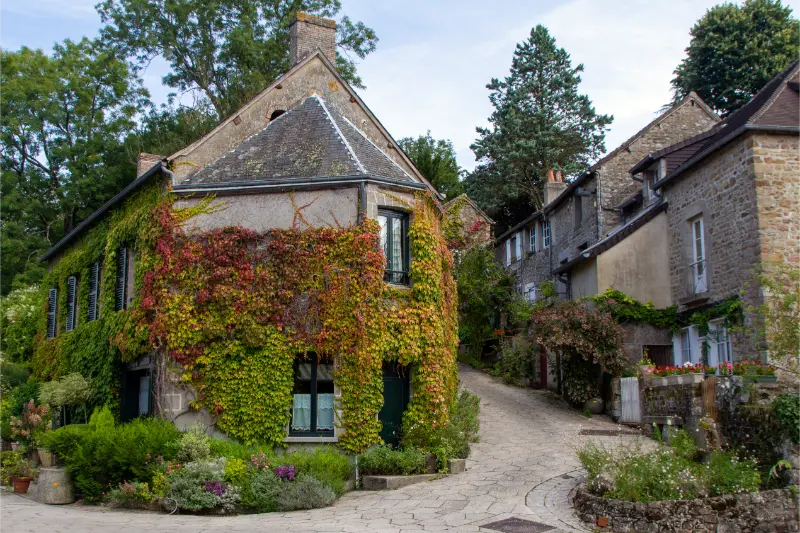
Normandy is not one destination. Rouen, Bayeux, Honfleur, Étretat and the Cotentin coast can feel like different trips, and the distances between them matter. The useful question is not “what are the prettiest towns?” but “which places belong together for the kind of trip I want?”
Useful planning links: 7-day Normandy road trip · Normandy without a car · Mont-Saint-Michel guide
How to use this list
This is not a ranking. Normandy is too varied for one “best” town to beat the others. Instead, use the places below to build a route by landscape: medieval cities, ports, seaside resorts, cliff towns and rural villages each solve a different travel problem.
For a first trip, choose three or four bases rather than sleeping in a new town every night. Day trips are easy within subregions; cross-Normandy zigzags are less efficient than the map suggests.
Rouen: best for a historic city start
Rouen combines one of Normandy’s great cathedrals with timber-framed streets, Joan of Arc history, museums and strong rail access from Paris. It is the logical eastern gateway for travellers arriving without a car.
Stay one or two nights. The city is large enough for good restaurant choice but compact enough that most first-time sights fit into walking days.
Bayeux: best base for the D-Day coast
Bayeux has a beautifully preserved centre and excellent access to guided D-Day tours. In 2026, remember that the Bayeux Tapestry Museum is closed for renovation until autumn 2027, so build your stay around the cathedral, town and war-history context rather than an unavailable exhibit.
Two to three nights work well if the landing beaches are a priority.
Caen: best for medieval and WWII layers
Caen is more urban than Bayeux and less immediately picturesque, but the castle, Abbaye aux Hommes, Abbaye aux Dames and Mémorial de Caen create one of Normandy’s strongest historical combinations.
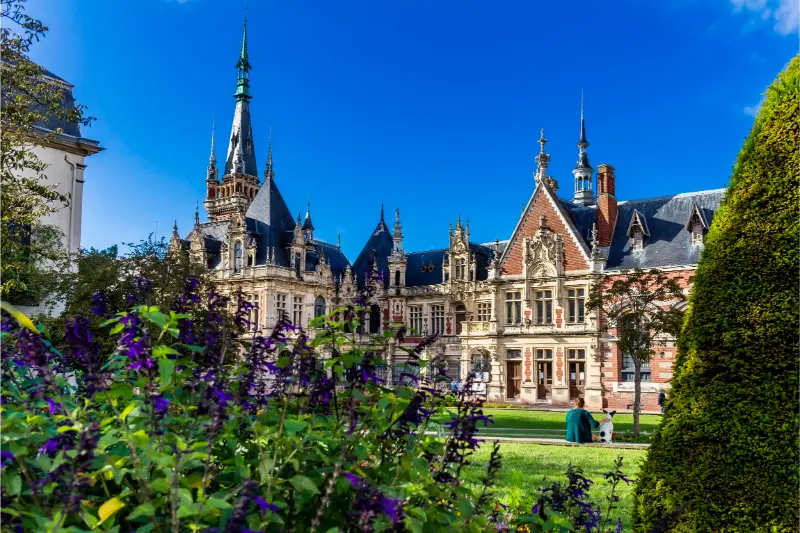
Choose it if you want a regional city base, train convenience and a broad view of Norman history rather than only postcard streets.
Honfleur: best for harbour atmosphere
Honfleur’s Vieux Bassin is iconic for good reason. The trick is timing: stay until evening or wake early enough to experience the harbour outside the busiest day-trip window.
One night can transform the visit. Pair it with Deauville/Trouville or a carefully planned coast day rather than trying to cover all of northern Normandy at once.
Étretat: best for dramatic cliffs
Étretat is about landscape first. Come for marked cliff walks, beach-level views and weather. Respect closures and rockfall warnings; this is an actively eroding coast, not a theme-park lookout.
An overnight is helpful for sunrise, evening light and avoiding peak arrival traffic, but a well-planned day can work.
Deauville and Trouville: best paired resort towns
Deauville brings grand resort architecture, Les Planches and event culture. Trouville adds fishing-port atmosphere, markets and a more casual coastal feel. Together they make one of the easiest seaside breaks by train.
They are especially useful if you want the Normandy coast without renting a car.
Fécamp: best alternative on the Alabaster Coast
Fécamp offers maritime history and a working-town feel that contrasts with Étretat. It is a logical addition for travellers who want more of the Côte d’Albâtre without spending the entire trip at famous viewpoints.
Use it as a base or half-day depending on your transport. The coast between towns is attractive, but driving or bus times still need real space in the itinerary.
Veules-les-Roses: best for a small-village stop
Veules-les-Roses is known for its compact village landscape and tiny coastal river. It works as a slower stop between larger destinations rather than a place that needs a long checklist.
Visit early or outside peak summer periods if you want the village to feel relaxed. Small places are often the first to feel crowded when parking fills.
Lyons-la-Forêt: best inland village atmosphere
Lyons-la-Forêt offers a very different Normandy image: half-timbering, forest and a small inland village setting. It is more useful on a driving itinerary than a rail trip.
Pair it with eastern Normandy rather than forcing it into a western D-Day route. Its value is the change of pace.
Barfleur: best Cotentin village for maritime character
Barfleur sits far enough into the Cotentin Peninsula that it should be part of a dedicated western route, not a casual detour from Rouen. The harbour, granite and coastal light feel distinct from the Seine estuary towns.
Combine it with other Cotentin stops if you have at least two days in that area.
Granville: best western coast base before Mont-Saint-Michel
Granville gives you a lively harbour, high town and rail access on Normandy’s western side. It can be useful for travellers who want a coastal base that is more urban and connected than a tiny village.
Its position can also fit itineraries moving toward Mont-Saint-Michel, though transport planning should be checked carefully.
Domfront and southern Normandy
Southern Normandy receives far fewer first-time visitors than the coast. Domfront’s medieval character and inland setting make it worthwhile for road trippers who want to escape the classic Paris–D-Day–Mont-Saint-Michel line.
Add it only if you are genuinely exploring the south; otherwise the detour can consume more time than the visit itself.
How to choose the right places for your trip
- For first-time history: Rouen + Bayeux + Mont-Saint-Michel.
- For coast and atmosphere: Honfleur + Étretat + Deauville/Trouville.
- For D-Day: Bayeux + Caen + one western or eastern beach sector.
- For car-free travel: Rouen + Caen/Bayeux + Deauville/Trouville.
- For slower road trips: add Fécamp, Veules-les-Roses, Lyons-la-Forêt or Cotentin villages.
The goal is not to maximise town count. It is to create contrast without losing half the trip to check-in, parking and backtracking.
Mistakes to avoid
- Changing hotels every night because villages look close on the map.
- Calling every Norman town a “day trip from Paris.”
- Skipping Caen because it is less photogenic than Bayeux.
- Visiting Honfleur only at midday.
- Treating Étretat as a casual cliff-edge photo stop.
- Adding the Cotentin Peninsula to a short eastern Normandy weekend.
How many bases for one week?
For seven nights, three bases is usually enough. For example: Rouen for two nights, Bayeux or Caen for three, then Honfleur/Deauville or Mont-Saint-Michel area for two. Adding five different hotels may increase town count but reduces time actually experiencing each place.
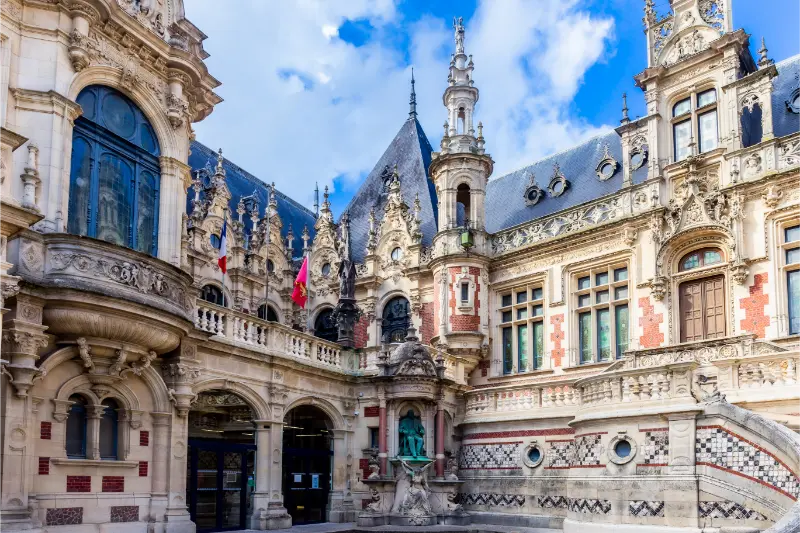
With a car, choose bases with parking outside the tightest historic cores. Without a car, choose station proximity first and day-trip range second.
Season changes the best choices
Summer favours coast and long evenings but brings crowds to Étretat, Honfleur and Mont-Saint-Michel. Spring and autumn often improve walking and city breaks. Winter can make Rouen, Bayeux and food-focused stays attractive while small coastal businesses reduce hours.
There is no single best Normandy route year-round. Adjust the town mix to daylight, weather and what is actually open.
Practical planning checklist
The first choice in a Normandy village itinerary is geographic. Rouen, Lyons-la-Forêt and parts of the Seine valley can form an eastern group; Bayeux, Caen and D-Day coast stops form a central group; Barfleur, Granville and the western coast require another cluster. Treating all twelve places as equal stops encourages exhausting travel days. With five days, choose perhaps one city base and two smaller outings in the same part of the region. Check whether your chosen village has restaurants open on the intended weekday; small-town lunch service can be more restricted than in Rouen or Caen. Rail travellers can reach major towns comfortably but should not assume a small village with a picturesque name has regular bus services. For Honfleur and Étretat, parking and traffic can decide whether a day remains enjoyable. The aim is to make time for a market square and a long walk, not to drive through a different village every forty minutes.
Normandy’s weather affects villages differently. In rainy conditions, Rouen and Caen offer museums, covered stops and cafés that can justify a longer visit. Étretat’s exposed cliff trails should be shortened or skipped in high wind, while Honfleur can still reward a brief harbour walk between showers. A small inland village such as Lyons-la-Forêt often works well for architecture and a café, but check whether shops and the market are operating before making it the only destination of the day. On the Cotentin coast, Barfleur’s maritime character remains appealing in grey light, although a lengthy seafront walk may not. Carry footwear for stone streets and gravel rather than expecting smooth urban pavements everywhere. For families, combine a short historical core, an open space and a genuine meal stop; the day works better when children are allowed to explore rather than being marched through a list of half-remembered town names.
Build a Norman week around two regions instead of every coast. An eastern option might combine Rouen, the Seine valley and Honfleur, with Étretat as a weather-dependent excursion; a central option could put Bayeux and Caen together with carefully selected landing sites. To include Barfleur or Granville, give the western part of Normandy at least a couple of nights so those places do not become motorway detours. Domfront offers a different inland landscape and historic atmosphere, but it belongs on a purposeful southern route rather than a hurried drive between the D-Day beaches and the Alabaster Coast. Choose accommodation after deciding the clusters, and check current road or train connections for the transfer day. A town is often at its best early in the morning or after day visitors leave; overnight stops let you encounter ordinary street life that a two-hour coach visit misses.
A 10-day route using these towns
A balanced ten-day route could begin with two nights in Rouen, move to Honfleur or Deauville for two nights, continue to Bayeux for three nights and finish with two nights near Mont-Saint-Michel, leaving one flexible night for Caen, the Cotentin or a slower coast stop. This is only one model, but it respects geography.
The important principle is direction. Move broadly east to west or west to east instead of bouncing between the Seine estuary, D-Day coast and Mont-Saint-Michel. Every time you reverse direction, you pay with driving or connection time that could have been spent walking, eating or resting.
Small places that deserve future standalone guides
Once the core Normandy cluster is established, places such as Dieppe, Fécamp, Veules-les-Roses, Lyons-la-Forêt, Barfleur, Cherbourg, Granville and the Suisse Normande all justify deeper articles. They appeal to different travellers and should not be compressed permanently into one list.
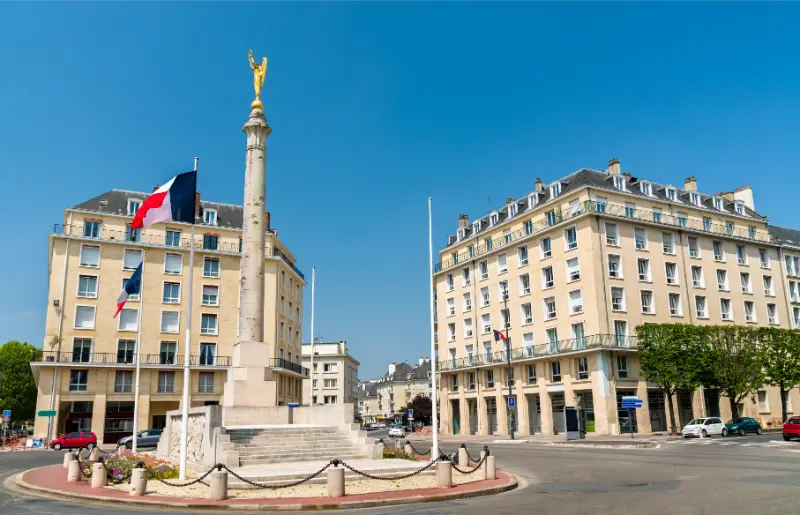
The most satisfying smaller-town stops depend on the part of Normandy you are already exploring. Veules-les-Roses fits an Alabaster Coast itinerary where a short village walk can contrast with the exposed cliffs; Barfleur makes more sense during a Cotentin coast stay than as a detour from Rouen. Lyons-la-Forêt pairs naturally with an eastern inland drive, while Domfront suits a southern Normandy route. Before setting out, choose one place with a market, heritage feature or walking circuit that actually interests you, and check what is open on that weekday. A village visit improves when you have time to sit in the square or follow an unexpected lane instead of arriving only to photograph the name sign. On a seven-day trip, two well-chosen smaller stops are often more memorable than a list of ten towns crossed off in a hurry.
Where to stay
For a towns-and-villages holiday, accommodation should support the route’s geography. Rouen suits rail arrivals and medieval city interests, Bayeux is helpful for the western landing coast, and Honfleur suits an overnight harbour stay; no single base is ideal for every place listed here. If you drive, compare parking and access to old pedestrianised streets. In small villages, confirm whether evening restaurants operate midweek and whether the property offers breakfast when bakeries are closed. Staying on the edge of a historic centre may mean easier unloading and a five-minute walk rather than difficult navigation through cobbles and one-way streets. You can compare accommodation on Booking.com, but judge location against the precise cluster you are visiting, not a generic claim that it is ‘central in Normandy.’ Two carefully placed bases will usually be more relaxing than a chain of one-night hotels.
Final thoughts
The strongest Normandy itinerary usually includes one historic city, one coastal landscape and one slower town or village. Choose fewer places, stay longer, and the region will feel much more varied than a list of twelve rushed stops.