

Villandry and Azay-le-Rideau make one of the Loire Valley’s most coherent two-château days because they offer different strengths within a manageable area. Villandry is principally a landscape-design experience: ornamental kitchen garden, water garden, terraces and seasonal planting. Azay-le-Rideau is an architectural jewel set on an island, with interiors, a mirror-like water setting and an English-style park. The pairing works only if you protect enough time for the gardens and resist adding a third admission. This itinerary explains the order, lunch strategy and transport choices from Tours.
Quick planning snapshot
| Best for | Garden design plus an intimate Renaissance château |
| Allow | A full day, not two abbreviated photo stops |
| Best order | Villandry morning in hot weather; Azay after lunch |
| Base | Tours for transport choice, or Azay for a slower stay |
Morning at Villandry
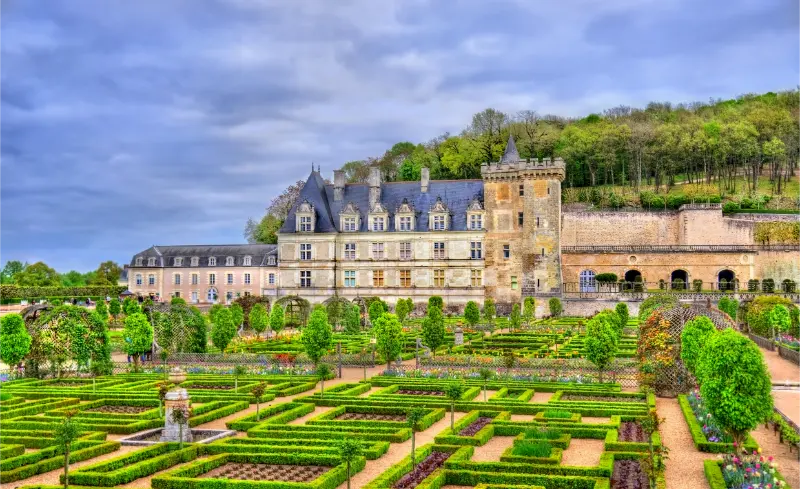
Arrive near opening and begin from the upper terraces, where the geometry is easiest to understand. The ornamental garden, kitchen garden, water garden and sun garden serve different purposes; walking only at ground level hides the design. Seasonal planting means the experience changes through the year, and a winter visit should not be judged against midsummer photographs. Include the château interior if architecture and the estate’s restoration story interest you, but prioritise gardens when time is limited.
Lunch without losing the day
Eat near Villandry or carry a picnic to an authorised area, then travel directly to Azay-le-Rideau. A long formal lunch can erase the time saved by pairing nearby sites. Check restaurant opening days, especially outside summer. Never picnic in formal gardens unless explicitly allowed, and take all waste away. If cycling, a proper meal and water refill matter because afternoon distance feels different after hours on foot.

Afternoon at Azay-le-Rideau
At Azay, first walk far enough into the park to see the château reflected in the water. Then enter and follow the chronological interpretation rather than photographing each room without context. The building’s island position, staircase and sculptural façades explain its reputation as a compact Renaissance masterpiece. Allow time after the interior for the park and town. The village has shops and cafés that make the stop feel less isolated than a rural estate.
Driving and parking
By car, the pairing is straightforward, but parking still consumes time and historic centres may use signed public lots rather than château-door access. Do not leave visible luggage in the vehicle. Enter both destinations in navigation before departure and check for works or event traffic. The short geographic distance is precisely why a third château becomes tempting; reject that temptation unless one of the main visits is intentionally gardens-only.
Cycling or public transport
Strong leisure cyclists can connect Tours, Villandry and Azay using marked and local routes, but distance, surface and the return leg need honest assessment. One-way rental or train carriage may simplify the plan only when confirmed in advance. Public transport is less seamless than the map suggests. If buses do not align, a small-group excursion or targeted taxi can cost less than a day of missed connections, particularly for two or more travellers.
Who should separate the visits
Garden enthusiasts may want most of a day at Villandry. Travellers with limited mobility should investigate terrace access, distances and lifts at both sites rather than treating them as identical. Families may prefer one château plus a bike ride or picnic. Photographers seeking morning and evening light should sleep locally and divide the sites across two days. Combining them is an efficiency option, not a requirement.
How the two design languages differ
Villandry asks you to read a landscape from terraces: colour, clipped forms, vegetables, water and axes are organised as compositions. Azay-le-Rideau asks you to move around a building whose façades, staircase and water setting change with angle. Visit in that order and the day progresses from broad plan to architectural detail. The contrast also helps children: they can decode shapes outdoors in the morning and search for carved details or reflections in the afternoon rather than enduring two similar interiors.
Seasonal garden expectations
Spring bulbs, early foliage, summer abundance and autumn structure create different Villandry experiences. Vegetable plots are working ornamental spaces, so planting, harvesting and maintenance are part of what you see. Drought, frost or extreme heat can alter the photographic ideal. At Azay, river level, wind and light affect the celebrated reflection. Treat current conditions as the real garden rather than a failed version of a promotional image. Seasonal honesty makes repeat visits meaningful.
If you stay overnight in Azay
An overnight allows the town after day visitors leave and creates room for the Musée Maurice Dufresne, Château de l’Islette or a slower cycling route on another day. Select accommodation by parking and walking access, because a rural address labelled Azay-le-Rideau may not be in the walkable centre. Dinner reservations matter in quieter periods when fewer kitchens open. The next morning can lead toward Chinon, keeping the journey linear rather than returning to Tours merely because it was the original base. This overnight also gives you a weather buffer: gardens can move to the clearer morning while château interiors absorb a wet afternoon.
Best time to visit
The character of this two-château day depends on Villandry’s gardens. In early spring you see the geometry of beds before the main summer growth; late spring brings fuller planting, and summer can produce the most colourful ornamental kitchen-garden displays. Autumn is not an inferior season: vegetables and foliage give the terraces a different composition, although daylight becomes shorter. Azay-le-Rideau offers a more reliable architectural focus outside peak gardening months, so consider beginning there when the forecast threatens rain. In warmer weather make Villandry the first stop, before the terraces and unshaded paths become tiring. Check both estates’ official opening and closing times on the actual date, as the last admission may precede the gate’s closing time.
Travelling with children
Villandry is often the easier of the two visits to turn into an outdoor discovery game. From the terraces, ask children to identify patterns in the ornamental kitchen garden, then let them choose a favourite area rather than attempting a horticultural lecture. At Azay-le-Rideau, focus on the building reflected in the water, the staircase and the park; small children may have less appetite for a long room-by-room tour. A picnic stop between visits works only where local rules permit it, so check the approved areas rather than eating inside formal garden spaces. With a stroller, assess gravel, garden gradients and access to the château interiors separately. A family that prefers unhurried visits may enjoy the sites on two mornings instead.
Accessibility and practical comfort
Neither estate should be described simply as flat or accessible. Villandry’s viewing terraces and planted compartments involve changes of level, and a visitor who can enjoy the broad outdoor perspectives may still encounter steps on a chosen path. Azay’s park is a different experience from moving through a sixteenth-century château. Before purchasing tickets, consult both official accessibility pages for step-free options, adapted restrooms and any available assistance; contact staff about the rooms you particularly want to see. Drivers should check parking location and walking distance rather than rely on a generic château address. If mobility is limited, prioritising a good experience at one estate is preferable to a rushed second visit with unexpected barriers.
Where to stay
Tours is the most flexible base for travellers arriving by train, whereas sleeping in Azay-le-Rideau changes the tone of this itinerary: you can walk the village in the evening and visit the château before a long drive elsewhere. A rural guesthouse near Villandry may be lovely, but without a car it can limit your restaurant and evening options. If you intend to cycle, choose accommodation that explicitly provides secure bike storage. Check restaurant opening days, especially outside summer, and do not assume every château village offers dinner every night. A second day in the area can connect Château de l’Islette or the literary heritage of Saché without overfilling the original two-castle route. To compare possible stays, use Compare current places to stay in Tours on Booking.com.
Tours, tickets and rental cars
The car makes the Villandry–Azay pairing relatively uncomplicated, but remember that the distance between château gates is not the whole journey: parking, ticket queues and the walk back through the grounds all take time. Public transport can be much less convenient, and an itinerary that is possible on a map may rely on an infrequent service. A bicycle route is more rewarding for confident riders who understand the road sections and allow time for both gardens and château interiors. Guided day tours from Tours can work well when transport is included, provided they allow enough free time in Villandry’s gardens. Review pickup details and what admissions are included before booking. For transport comparisons, see compare rental-car conditions and prices.
Common mistakes to avoid
- Starting Villandry at ground level and missing the overview
- Adding Ussé or Langeais simply because it looks close
- Depending on unverified bus connections
- Leaving luggage visible in a parked car
- Assuming the gardens look identical in every season
Continue through the Loire Valley cluster
The most logical extra stop from Azay is Château de l’Islette, whose lived-in scale contrasts with a major national monument. Another day could focus on Balzac’s connections at Saché. Use the wider Tours and Amboise material only when extending the trip beyond this compact two-property itinerary. Related routes and destination guides: Château de Chenonceau Guide; Château de Chambord Guide; Amboise Travel Guide; Blois Travel Guide; our five-day Loire Valley château road trip; our Loire Valley without a car itinerary.

Check before you travel
Use the official Azay-le-Rideau visitor information to check the day’s final admission time, seasonal opening and any restrictions affecting the interiors. Consult Villandry’s own website for its garden calendar and current access conditions. A split-day ticket plan should be made around the site that closes earlier, not around lunchtime alone. If rain or exceptional heat is forecast, it may be more enjoyable to switch the order or remove one stop. Do not commit to a restaurant reservation that cuts short the afternoon in Azay’s grounds. Additional source: the official visitor or destination website.
This pairing makes sense because the two sites ask you to look in different ways. Villandry is a planned landscape best understood from above as well as from within; Azay-le-Rideau combines Renaissance architecture with a setting shaped by water and parkland. Give Villandry the longer outdoor window and leave time at Azay to see the building from across the water, rather than viewing only the interior. If you have a full week in Touraine, the two deserve a day; if you have just one château afternoon, choose the one that matches your interest in formal gardens or architecture.
Separate in-depth guides: Château d’Azay-le-Rideau; Château de Villandry.
Near Azay-le-Rideau: add the inhabited Château de l’Islette for Camille Claudel and Rodin, or continue to Château de Saché and the Balzac Museum.