

The best things to do in Bordeaux are not all wine-related. Wine explains much of the city’s history and economy, but the visitor experience is equally about architecture, the Garonne, neighbourhood markets, museums, public spaces and the ability to move around without a car. This list is organised to help you build a trip rather than simply accumulate attractions. Several entries naturally combine into the same half-day, while others—especially the Cité du Vin and vineyard excursions—deserve dedicated time.
Bordeaux’s historic centre forms part of the UNESCO-listed Port of the Moon, and its scale is one of the city’s strengths. You can move from eighteenth-century monumental planning to medieval gates, a major market and contemporary waterfront architecture within a day, yet there is enough depth for a long weekend. The sequence below begins with the places that establish the city visually, then moves into culture, food and excursions.
1. See Place de la Bourse from the riverfront
Place de la Bourse is the image most travellers recognise before arriving. Its classical façades were built as Bordeaux opened itself toward the Garonne in the eighteenth century, replacing the defensive logic of the older walled city with a ceremonial river frontage. Visit once in daylight to appreciate the architecture and again around blue hour if your schedule allows. The square is public and does not require a ticket, so it is an easy anchor around which to build the rest of a walking route.
2. Walk through the Miroir d’Eau when it is operating
Opposite Place de la Bourse, the Miroir d’Eau alternates a thin reflective layer with mist and dry phases. It is especially appealing on warm days and for families, but it is seasonal. Bordeaux Tourism states that the installation is normally not in service during winter maintenance, from around November until April. If your trip falls in that period, the square remains worth visiting; just do not plan the stop around a reflection photograph that may be impossible.
3. Explore Saint-Pierre and the lanes behind the quays
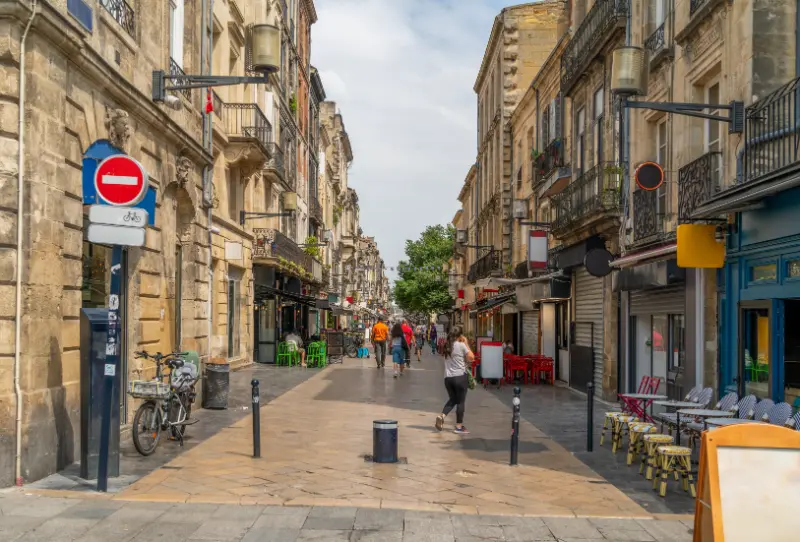
The Saint-Pierre quarter is where Bordeaux feels most immediately suited to wandering. Small squares, restaurant terraces and narrow streets sit just behind the monumental riverfront. Instead of searching for one famous street, trace a loose loop through Place du Parlement, Place Camille Jullian and the passages leading toward Porte Cailhau. Go early if you want architecture and photography; return later if you want the district’s evening atmosphere.
4. Pass under Porte Cailhau
Porte Cailhau combines ceremonial architecture with the memory of the city’s medieval defences. Even viewed only from outside, it creates a useful historical transition between the Garonne and the older streets. Interior access can vary, so check current opening information if climbing is important to you. Otherwise treat it as a stop on a route rather than a destination that dictates the day.
5. Visit the Grosse Cloche
The Grosse Cloche is one of Bordeaux’s most characterful monuments: a surviving gate and belfry whose heavy bell still marks selected civic dates. The interior includes former prison spaces. In 2026, standard visits advertised by Bordeaux Tourism are short guided tours on selected dates, with a €6 ticket. Because capacity is limited, book if the interior matters; the exterior can be seen freely at any time.
6. Stand beneath Cathédrale Saint-André
Bordeaux Cathedral gives the city a different architectural scale from the intimate old-town lanes. Its long history, sculpted portals and relationship with the separate Tour Pey-Berland make the square a natural pause between shopping streets and museums. Religious services always take priority over sightseeing, so enter quietly and check restrictions on the day.
7. Climb for a city view
Bordeaux is largely flat, which makes any legal tower climb valuable for orientation. Tour Pey-Berland is the classic central option, while the restored Flèche Saint-Michel reopened in June 2026 after five years of work. The Saint-Michel spire rises to 114 metres and its visitor route involves 230 steps. Choose one climb rather than collecting viewpoints; the best option is the one that fits naturally into the neighbourhood you are already exploring.
8. Eat at Marché des Capucins
Capucins is the market I would prioritise if food is part of the trip. It is not merely a place to buy produce: counters and surrounding businesses make it possible to build breakfast or lunch around oysters, cheese, charcuterie, bread, coffee and regional products. Weekend mornings are lively but busy. If you dislike crowds, go earlier or on a quieter weekday and remember that market schedules vary by stall.
9. Walk the quays or cycle beside the Garonne
The redesigned riverfront gives Bordeaux breathing space. A walk from the centre north toward Chartrons and Bacalan gradually shifts from historic façades to contemporary development. Cycling makes it possible to cover more distance without losing the connection to the river. The route is also useful after a museum-heavy morning because it requires no reservation and can expand or shrink depending on weather and energy.
10. Spend time in Chartrons
Chartrons carries the memory of Bordeaux’s merchant and wine-trading history but today mixes residential streets, antiques, design shops and cafés. Rue Notre-Dame is the obvious spine, yet the value comes from the slower neighbourhood rhythm. Pair it with Jardin Public or continue north to Bacalan. This is one of the easiest ways to make a Bordeaux visit feel less like a succession of major sights.
11. Give the Cité du Vin a real half-day
The Cité du Vin is the city’s major contemporary wine attraction. Its permanent course covers wine cultures worldwide, not only Bordeaux, and the standard ticket finishes with a tasting at the Belvédère. The published 2026 full adult price is €23. From 3 April through 31 October, the visiting areas are scheduled to open daily from 10:00 to 19:00. Two and a half to three hours is a sensible minimum; enthusiasts can easily spend longer.
12. Choose one art or history museum
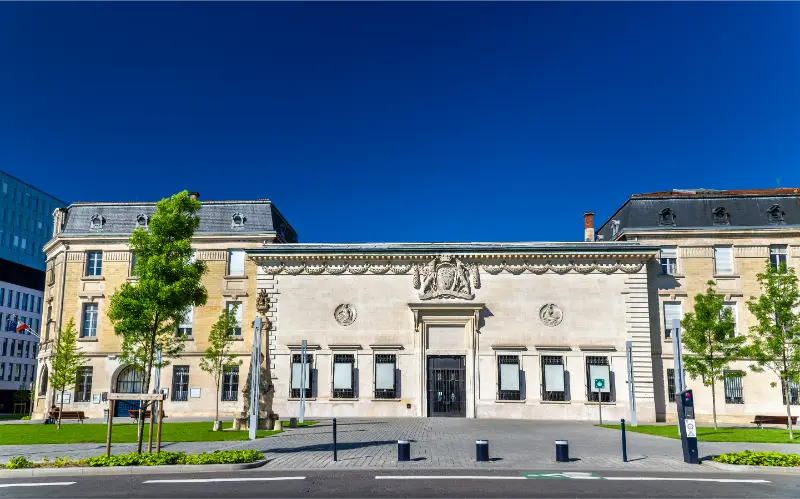
Bordeaux has enough museums that “see them all” is the wrong goal for a short trip. Musée d’Aquitaine provides regional historical context, the Musée des Beaux-Arts offers a traditional fine-arts collection, CAPC focuses on contemporary art, and Bassins des Lumières uses the submarine-base setting for large-scale digital exhibitions. Choose according to interest and weather rather than treating every museum as equally essential.
13. See the Bassins des Lumières setting
Even travellers who are cautious about immersive digital exhibitions may find the setting interesting: a former submarine base is very different from Bordeaux’s classical centre. Programming changes, so the exhibition itself should be checked for your dates. If the current theme does not appeal, do not go simply because it appears on a checklist; the city has plenty of alternatives.
14. Ride the tram instead of driving
Public transport is not only practical; it changes how much of Bordeaux you can comfortably see. The tram reaches the station, central squares, Chartrons and the Cité du Vin area. A city pass may make sense for museum-heavy itineraries because official versions bundle transport with attractions, but ordinary tickets are enough if your plans are mostly walking.
15. Try Bordeaux wine in the city before visiting vineyards
A guided tasting or thoughtful wine bar is an efficient introduction to Left Bank and Right Bank differences. Learning how Cabernet Sauvignon, Merlot, Cabernet Franc and the major appellation families relate to geography makes the later vineyard day more meaningful. It also allows everyone in the group to taste without worrying about driving.
16. Take a river cruise if the timing suits
The Garonne shaped Bordeaux, so seeing the façades from the water provides a perspective that streets cannot. Cruise formats range from simple sightseeing to meals and tastings. Compare duration and commentary rather than booking solely by departure time. A cruise is most useful when it complements, not replaces, walking the quays.
17. Spend an evening around Saint-Michel or Saint-Pierre
Bordeaux changes noticeably after the day-trip crowds thin. Saint-Pierre offers a dense choice of restaurants and bars in a historic setting; Saint-Michel is more mixed and local in character. Choose the atmosphere you prefer and keep the return journey simple. Central trams are useful, but late-night schedules should be checked rather than assumed.
18. Make a day trip to Saint-Émilion
Saint-Émilion combines wine with a medieval village and unusual underground heritage, which makes it the strongest all-round excursion for many first-time visitors. Trains reach the station below the village, while organised tours simplify château visits. The Monolithic Church cannot simply be entered independently: access to the underground monuments is through a guided tour, so reserve that component if it matters to you.
19. Escape to Arcachon Bay
Arcachon adds a completely different landscape: beaches, pine, nineteenth-century villas, oysters and the Dune du Pilat. Direct rail makes Arcachon straightforward from Bordeaux; the dune then requires onward transport. It is possible as a day trip, but one night gives much more flexibility for tides, sunset and a boat or peninsula excursion.
20. Choose the Médoc when estates are the priority
The Médoc is the classic Left Bank château route through names such as Margaux, Saint-Julien, Pauillac and Saint-Estèphe. Distances and tasting appointments make spontaneous wandering inefficient. Book estates in advance, appoint a non-drinking driver or use an organised excursion. Two thoughtful visits are usually more satisfying than four rushed tastings.
One walk that covers the classic sights
A good first walk starts at Place de la Bourse and the riverfront. Follow the quays toward Porte Cailhau, turn into the Saint-Pierre lanes and continue toward the Grosse Cloche. From there, the streets around the cathedral and Tour Pey-Berland make a natural second cluster. This is a pleasant half-day with café stops, rather than a fast circuit where every monument needs a paid entry ticket.
If you want a second neighborhood, head toward the Chartrons district and Jardin Public. Save Bacalan and the Cité du Vin for a separate part of the day: the museum is best enjoyed with at least two to three hours rather than a brief look at the building. The tram can bridge the longer stretches, but the most memorable historic streets are explored on foot.

What to reserve and what can stay spontaneous
Reserve a specific Cité du Vin workshop, a restaurant you particularly want, or a vineyard appointment in advance. The quays, public squares, churches that are open to visitors and neighborhood walks usually need much less planning. This is a good city for leaving room to change direction after a market stop or when the weather improves.
For a wine-country excursion, decide whether the focus is one estate, the village of Saint-Émilion or the appellations of the Médoc. They involve different journeys and booking patterns. Doing all three in one day would leave little time for a tour or lunch. If you’re not drinking, a visit focused on history, landscape and cellar architecture can still be worthwhile.
How many days for Bordeaux?
Two full days cover the historic core and one major museum. Three days allow Chartrons, Bacalan and a slower food-and-neighbourhood rhythm. Four or five nights make Bordeaux particularly strong because you can add Saint-Émilion or Arcachon without packing again. If wine estates are the central purpose, dedicate a separate day rather than trying to place a château tour before an evening train.
Useful official resources
Before visiting the Miroir d’Eau, check whether it is running: the water feature is seasonal and may be suspended for maintenance or weather. Tower climbs, museum visits and château tours can have timed slots, while an ordinary walk along the Garonne needs no booking. Save your advance reservations for the experiences that genuinely require them.
Continue planning your trip
For a deeper itinerary, continue with the complete Bordeaux travel guide, our Cité du Vin guide, the Saint-Émilion travel guide, and our four-day Bordeaux and wine itinerary.