

The best area to stay in Bordeaux depends less on distance to one landmark and more on how you plan to use the city. First-time visitors who want to walk everywhere usually prefer Saint-Pierre or the Golden Triangle. Food-focused travellers may enjoy Saint-Michel and the Capucins area. Chartrons offers a calmer neighbourhood atmosphere, Bacalan works well for Cité du Vin and Bassins des Lumières, and the Saint-Jean station area can be the smartest choice for an early train.
Bordeaux’s tram network makes several districts practical, so there is no single “correct” neighbourhood. The important distinctions are evening atmosphere, noise, restaurant choice, station or airport access and whether you plan vineyard day trips. This guide compares those trade-offs rather than listing individual hotels that may change price or management from season to season.
Bordeaux areas at a glance
| Saint-Pierre / Old Town | Best for first-time sightseeing and evening atmosphere |
| Golden Triangle / Grands Hommes | Best for elegant central stays and shopping |
| Chartrons | Best for neighbourhood feel, river walks and wine-trade history |
| Saint-Michel / Capucins | Best for markets, food and lively local atmosphere |
| Saint-Jean station | Best for early trains and rail day trips |
| Bacalan / Bassins à flot | Best for Cité du Vin and modern waterfront Bordeaux |
| La Bastide | Best for a quieter right-bank stay and city views |
Saint-Pierre and the Old Town: best for a first visit
Saint-Pierre places you behind the riverfront façades around Place de la Bourse and within easy walking distance of central squares, restaurants, cafés and medieval remnants. Bordeaux Tourism describes the Old Town as the historic heart behind the eighteenth-century quays, and that is exactly how it feels at street level: dense, walkable and rewarding after dark.
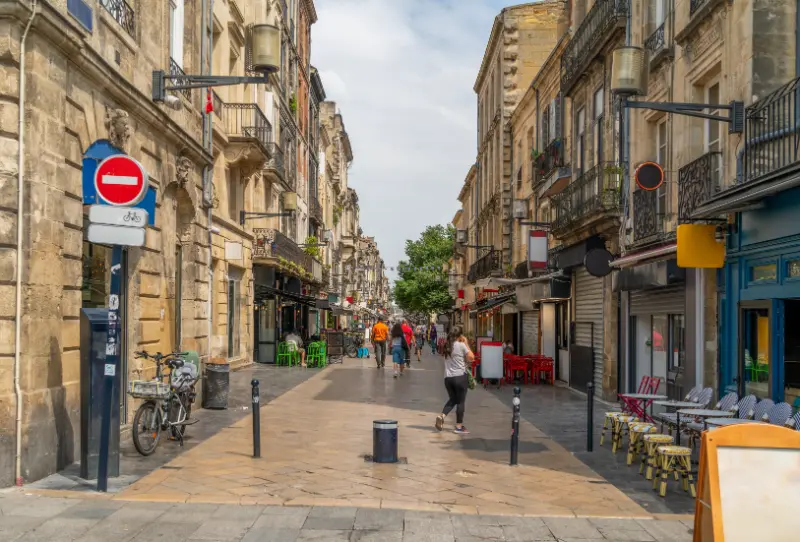
The advantage is convenience. You can return to your room between sightseeing stops, walk to dinner and reach multiple tram lines without planning every movement. The disadvantage is that central streets can be busy and noisy, especially on warm weekends. If sleep matters, check recent room reviews for street noise and ask whether the bedroom faces an internal courtyard.
Golden Triangle and Grands Hommes: elegant and extremely central
The Grands Hommes and Golden Triangle area around the Grand Théâtre, Cours de l’Intendance and Allées de Tourny suits travellers who want a polished central base. It is convenient for shopping, restaurants and major sights while feeling more formal than the lanes of Saint-Pierre. Bordeaux Tourism treats Grands Hommes as one of the city’s distinct central districts.
Prices can be higher, and the atmosphere may feel less local than Chartrons or Saint-Michel, but the location is difficult to beat for a short upscale weekend. It also works well for travellers who expect to take organised wine tours, because many operators use central meeting points that are easier to reach from this part of town.
Chartrons: best for a neighbourhood feel near the centre
Chartrons grew around Bordeaux’s historic wine trade and still mixes bourgeois architecture with antiques, restaurants, boutiques and riverside walks. Rue Notre-Dame and the market area give it a recognisable neighbourhood centre, while the quays provide an easy pedestrian or cycling route back toward central Bordeaux.
Choose Chartrons if you want evenings that feel calmer than Saint-Pierre without becoming isolated. It is especially good for a three- to five-night stay because you can develop local routines around bakeries, cafés and the market. Check the exact tram distance before booking at the northern edge of the district; “Chartrons” can cover a broader area than visitors expect.
Saint-Michel and Capucins: best for food and lively street life
Saint-Michel is one of Bordeaux’s most diverse and animated districts, with the basilica and recently reopened spire, flea-market traditions and easy access to Marché des Capucins. Bordeaux Tourism describes the broader Saint-Michel–Sainte-Croix–Saint-Jean zone as dynamic day and night, and that energy is the main reason to stay here.
Food travellers often love the area because the market and surrounding restaurants make breakfast and casual meals easy. The trade-off is noise and a rougher-around-the-edges feel on some streets compared with the Golden Triangle. Read location-specific reviews rather than judging the whole neighbourhood from one reputation; conditions can change from block to block.
Near Bordeaux Saint-Jean station: best for train-heavy itineraries
The station area is practical if you arrive late, leave early or plan rail day trips toward Saint-Émilion, Arcachon, Libourne or other parts of Nouvelle-Aquitaine. Dragging luggage across the city at 6 a.m. is rarely worth the charm of a more central address when the trip depends on trains.
You sacrifice some postcard atmosphere, although the tram connects the station with the historic centre. This is often the smartest base for a one-night stop before or after wine country, or for travellers continuing to Dordogne. Check whether the hotel has secure luggage storage so you can explore after checkout without returning for bags at an awkward time.
Bacalan and Bassins à flot: best for Cité du Vin and modern Bordeaux
Bacalan and the Bassins à flot district show a very different Bordeaux: former port infrastructure, new development, Cité du Vin and the Bassins des Lumières rather than eighteenth-century squares. Stay here if those attractions are central to your trip or if you prefer modern apartments and waterfront regeneration to an old-town atmosphere.
The tram makes the centre accessible, but you will spend more time travelling back after dinner if most of your restaurant plans are around Saint-Pierre. The area works especially well for repeat visitors who have already stayed in the historic centre and want to experience another side of the city.
La Bastide: a quieter right-bank alternative
La Bastide lies across the Garonne and has changed substantially from its industrial past. The botanical garden, riverbank spaces and views toward the classical façades of the left bank give the district a more open feeling. Bordeaux Tourism highlights its ongoing transformation and the contrast with the historic centre.
Choose La Bastide if you value space, quieter evenings and a different perspective on the city. Tram and bridge connections keep central sights accessible, but check the exact route from your accommodation because the district extends away from the river. It is less convenient for spontaneous late-night wandering in the Old Town.
Best area for Bordeaux wine tours
For organised excursions, central Bordeaux is usually easiest because tour meeting points commonly cluster around the city centre or tourist-office zone. Saint-Pierre, the Golden Triangle and nearby central districts reduce the risk of missing an early departure. Always check the exact pickup point before choosing a hotel solely for a wine tour.
If you are driving yourself to the vineyards, central parking becomes a more important question than walking distance to Place de la Bourse. Consider a hotel with confirmed parking or stay on the edge of the centre near a tram line. A rental car is unnecessary for sightseeing inside Bordeaux, so another good strategy is to collect the car only on the morning you leave for wine country.
Best area for Saint-Émilion and Arcachon day trips
Travellers relying on regional trains should look carefully at Saint-Jean station access. Direct or connecting rail services make Saint-Émilion, Libourne and Arcachon possible without a car, and staying near a direct tram line to the station can be almost as convenient as sleeping beside the platforms.
If you have several early rail days, the station district is rational even if it is not the most romantic. If only one day trip is planned, stay where you most want to spend your Bordeaux evenings and take the tram to the station. One commute is not enough reason to sacrifice the neighbourhood experience for an entire stay.
Where families may prefer to stay
Families often benefit from Chartrons, quieter central streets or apartments with easy tram access rather than the busiest nightlife lanes. Proximity to a playground, supermarket and breakfast options can matter more than being 200 metres closer to a monument. Check lift access carefully in historic buildings, especially with a stroller.
Bacalan can also work for families focused on Cité du Vin and immersive attractions, while La Bastide offers more open space. The best choice depends on children’s ages and bedtime: a beautiful square is less appealing if restaurant noise continues below the room long after everyone wants to sleep.
Where budget travellers should look
The most famous Old Town addresses are not always the best value. Search around Saint-Jean, parts of Saint-Michel, La Bastide and tram-connected districts just outside the core. A hotel that is ten minutes farther away by tram can cost significantly less while still making sightseeing easy.
Compare the full cost, not only the room rate. Parking, breakfast, late-night taxi fares and luggage storage can erase an apparent saving. If you arrive by train and explore on foot, paying a little more for a central room may actually reduce transport costs over a three-night stay.
How many nights in Bordeaux?
Two nights are enough for a fast city introduction, but three nights are much more comfortable if you want museums, markets and neighbourhood walks. Four or five nights work well when one or two days are dedicated to Saint-Émilion, the Médoc, Graves or Arcachon Bay. Keeping the same hotel can be easier than moving into wine country for every day trip.

Move hotels only when the next region genuinely benefits from an overnight stay—for example, multiple Médoc appointments, two Right Bank wine days from Libourne or an early morning in Sauternes. Otherwise Bordeaux’s transport, restaurant choice and evening atmosphere make it an efficient anchor.
Booking and practical checks before you pay
Confirm air conditioning if travelling in summer, especially in historic buildings; verify lift access if stairs are difficult; and look at the walking route from the nearest tram stop rather than the straight-line distance on a map. If you drive, ask whether parking is on site, reserved, height-limited or in a public garage.
Also check cancellation terms around major events and weekends. Bordeaux has strong business, cultural and wine tourism demand, so prices can rise sharply on specific dates. Booking early is useful, but a flexible rate can be worth the difference if your vineyard appointments are not yet confirmed.
Useful official resources
- Bordeaux Tourism – city districts
- Bordeaux Tourism – Old Town and Saint-Pierre
- Bordeaux Tourism – Chartrons
Hotel inventories, prices, parking rules and neighbourhood services change constantly. Check the latest property details and recent guest reviews before booking, then verify tram or walking routes using your exact arrival time.
Continue planning your trip
Start with our Bordeaux travel guide, compare the Bordeaux neighborhoods guide, and use the Bordeaux wine tours guide if vineyard excursions will shape your hotel choice.
Final thought: The best Bordeaux base is the one that supports your evenings and your departures. Saint-Pierre wins for first-time atmosphere, Chartrons for neighbourhood character, Saint-Jean for trains and Bacalan for modern wine attractions—but tram access makes several answers perfectly valid.