

Bordeaux is easier to understand when you stop thinking of it as one continuous historic centre. The city’s neighbourhoods have distinct rhythms: Saint-Pierre is built for first-time sightseeing, the Golden Triangle feels formal and polished, Chartrons reflects the old wine trade, Saint-Michel is energetic and multicultural, Bacalan is shaped by docks and contemporary attractions, and La Bastide gives you the right-bank perspective across the Garonne.
Choosing where to spend time — and where to stay — should depend on your trip style rather than a generic “best area” label. This guide compares the districts most useful to visitors, explains what each does well, and points out where expectations can go wrong. Bordeaux has an excellent tram network, so you do not need to sleep beside every attraction; a quieter base on a direct line can be better than the busiest central street.
At a glance
| Best for first visit | Saint-Pierre / Hôtel de Ville |
| Best for wine-trade atmosphere | Chartrons |
| Best for nightlife and diversity | Saint-Michel / Victoire |
| Best for modern attractions | Bacalan / Bassins à flot |
| Best river views | La Bastide |
Saint-Pierre: the classic historic core
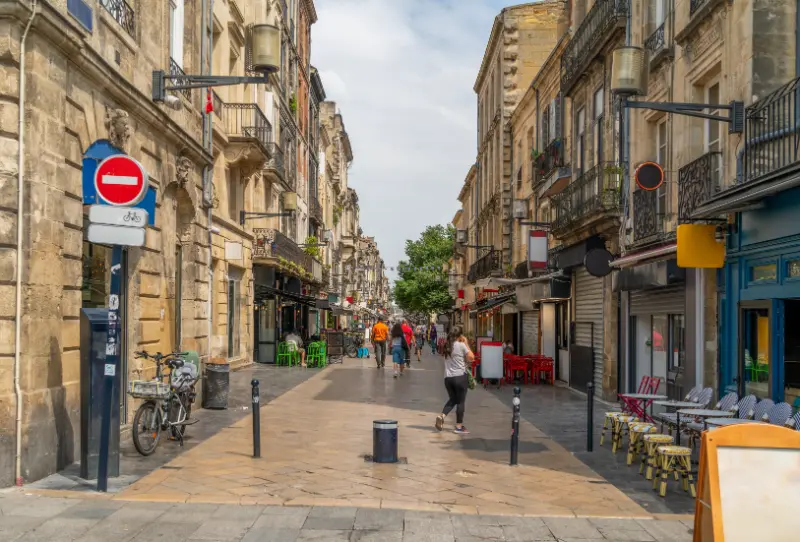
Saint-Pierre is the Bordeaux most visitors imagine before arriving: narrow streets, café terraces, stone façades, Place du Parlement and easy access to Place de la Bourse. It is the best area for a short first stay because many landmarks are within a compact walking radius. The trade-off is obvious: restaurants and accommodation can be busy, and some streets are noisy late at night. If you value sleep, choose an address one or two blocks away from the most concentrated nightlife.
The neighbourhood is also a useful orientation zone. From here you can walk to Porte Cailhau, Sainte-Catherine, Pey-Berland and the quays without immediately using public transport. That makes arrival day easier. I would not, however, spend all three days here. Saint-Pierre is the gateway, not the whole city; Chartrons, Saint-Michel and the northern docks add the contrast that makes Bordeaux more interesting.
The Golden Triangle and Grands Hommes
The triangle around Grand Théâtre, Cours de l’Intendance and Allées de Tourny is formal, central and convenient. Luxury shops, elegant architecture and direct tram access make it comfortable for travellers who want a polished base. It is particularly good for a short cultural trip where restaurants, theatre, shopping and monuments matter more than neighbourhood rough edges. Prices tend to reflect that convenience.
This is not the best area for travellers seeking a strong residential feel. Much of the experience is shaped by retail and grand public space. Still, its location is hard to beat: Saint-Pierre lies to the south-east, Jardin Public to the north-west and the river is an easy walk. If mobility is limited, the broad streets and transport connections can be more practical than staying in the steep or cobbled parts of older districts.
Chartrons: wine history without the crowds of the core
Chartrons grew around wine merchants and still feels tied to that history, even though galleries, cafés, antiques and residential life now define much of the district. Rue Notre-Dame is the obvious spine, but the best impression comes from moving between the street and the quays. On Sunday, the riverside market changes the area completely; on weekdays, the pace is calmer.
For accommodation, Chartrons suits repeat visitors, couples and anyone who wants evenings quieter than Saint-Pierre while staying close to the centre. The tram makes central sights easy, and walking along the river is pleasant. The northern end is also strategically placed for Bacalan and the Cité du Vin. If your trip is strongly wine-themed, Chartrons gives historical context before you ever leave the city for an estate.
Saint-Michel and Capucins: energetic, food-focused Bordeaux
Saint-Michel is one of the best districts for travellers who prefer a lived-in atmosphere to polished monumental streets. The basilica and spire anchor the skyline, while Marché des Capucins nearby is one of the city’s essential food stops. The streets mix North African, Iberian and French influences more visibly than the Golden Triangle, and the area stays lively into the evening.
The district is convenient for the station and central Bordeaux, but accommodation quality varies street by street. Read recent reviews carefully if noise matters. I like Saint-Michel most for eating and wandering rather than for a luxury stay. Visit in daylight first, learn the route back to your hotel, and use the tram late at night if you are staying elsewhere.
Hôtel de Ville, Pey-Berland and Saint-Seurin
The area around Hôtel de Ville and Cathédrale Saint-André is practical rather than narrowly themed. It places you near major tram intersections, museums, the cathedral and commercial streets. For first-time visitors who value logistics, this is one of the safest choices because you can reach both the river and the station without complicated transfers. It is also easier to start different walking routes from here.
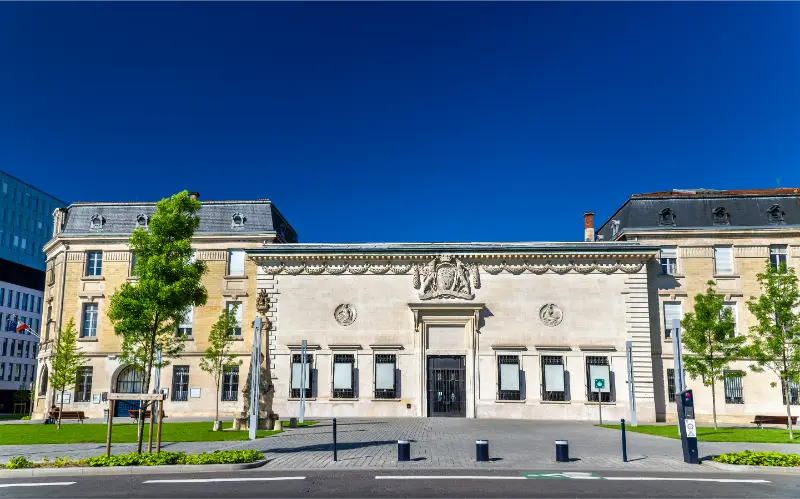
West toward Saint-Seurin and Fondaudège, the atmosphere becomes more residential. The basilica, local shops and access to Jardin Public create a softer pace. These areas suit travellers who want to be central without sleeping in the densest nightlife zone. The walk back from Saint-Pierre is longer than it looks, but the tram and buses make the difference manageable.
Bacalan and Bassins à flot: contemporary Bordeaux
Bacalan is where Bordeaux’s port and industrial landscape meets large-scale regeneration. The Cité du Vin, Les Halles de Bacalan and Bassins des Lumières are the obvious visitor attractions, but the neighbourhood itself is part of the story. Huge dock basins, warehouses and new residential buildings create a completely different visual environment from the eighteenth-century centre.
I would stay here only if the modern north is a major focus or if you find a particularly good-value hotel. For most first-time visitors, Bacalan is better as a half-day destination than as a base. Tram connections are straightforward, but spontaneous evening walks through the old centre require more travel. The advantage is space: rooms and newer buildings can feel less constrained than in the historic core.
La Bastide: the right-bank viewpoint
Cross the Garonne and Bordeaux immediately looks different. La Bastide gives broad views back toward the historic façade and offers parks, cultural spaces and a less tourist-saturated atmosphere. It is useful for travellers who enjoy cycling or morning walks, and it provides a visual reset after several days in the stone centre. The river shuttle can make the crossing part of the experience.
As a base, La Bastide can be excellent if your hotel is near a tram stop or bridge crossing. It is less convenient if you expect to return to Saint-Pierre several times a day. Choose it for space, views and a local feel, not because it is “close enough” on a map. Bordeaux is very navigable, but the river is still a real geographic divider.
Gare Saint-Jean and southern Bordeaux
The station district is the right choice when transport dominates the trip: early trains, late arrivals or several day trips by rail. It is not the most immediately beautiful area, but regeneration around the station has improved services and tram links. If you are travelling to Saint-Émilion, Arcachon or onward through Nouvelle-Aquitaine, staying near Saint-Jean can remove repeated cross-city transfers with luggage.
The compromise is atmosphere. Travellers with only one or two nights usually enjoy the historic centre more. If you choose the station, look for a hotel close to a tram stop and plan to spend evenings elsewhere. The journey back is simple enough that convenience can outweigh charm, especially on a rail-focused itinerary.
How to choose your base
Choose Saint-Pierre or Pey-Berland for a first short trip, Chartrons for a calmer repeat visit, Saint-Michel for food and energy, Bacalan for modern attractions and La Bastide for views and space. The Golden Triangle suits travellers who value polish and shopping. Station-area hotels make sense when you are building the trip around trains rather than neighbourhood life.
Before booking, map the nearest tram stop as carefully as the nearest landmark. A hotel ten minutes farther from the centre but on a direct line can save more time than an expensive address in a pedestrian zone. Also check whether your room faces a nightlife street, interior courtyard or tram corridor. In Bordeaux, micro-location matters almost as much as the district name.

A neighbourhood-based sightseeing strategy
Instead of crossing the city repeatedly, assign half-days by district. Pair Saint-Pierre with Pey-Berland, Chartrons with Bacalan, and Saint-Michel with Capucins. Use La Bastide for a morning or evening loop when the light across the river is good. This structure reduces transport time and keeps each part of the city coherent in your memory.
The same approach works for eating: have lunch where you are already sightseeing rather than returning to a favourite central square. Bordeaux is compact enough that you can always come back later, but the best city trips reduce unnecessary backtracking. Neighbourhood planning turns the tram network into a tool rather than a rescue system.
Useful official resources
For bordeaux neighborhoods, opening hours, tour schedules, transport timetables and access conditions can change. Check the official pages shortly before travel, especially for timed visits and seasonal services.
Continue planning your trip
Continue with our Bordeaux travel guide, the three-day Bordeaux itinerary and the best things to do in Bordeaux.
Final thought: The same approach works for eating: have lunch where you are already sightseeing rather than returning to a favourite central square. A good visit is not about fitting in the maximum number of stops; it is about understanding the geography well enough to choose the right ones.
Choosing a base? Our Where to Stay in Bordeaux guide compares the same neighbourhoods specifically for hotels, station access and vineyard day trips.