
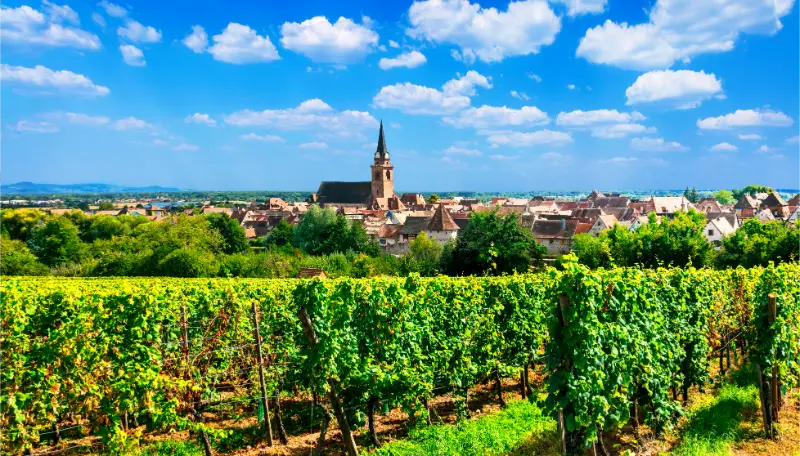
Alsace feels immediately distinct: steep roofs, timbered façades, vineyards pressed against the Vosges foothills and a cuisine shaped by border history. The official wine route stretches for roughly 170 kilometres, but trying to drive every section misses the point. Its pleasure comes from short walks, conversations, landscapes and noticing how one village differs from the next.
This four-day plan gives Strasbourg and Colmar meaningful time, then uses one or two days for the wine villages. You can travel mostly by train and excursion, or rent a car for a controlled village loop. Responsible tasting and realistic parking are central to the plan.
Quick planning overview
| Route length | The official wine route is about 170 km |
| Trip length | 4 days / 4 nights |
| City bases | Strasbourg and Colmar |
| Village day | Three villages are usually enough |
| Best seasons | Late spring, early autumn and Christmas-market period |
A four-day Alsace plan
Day 1: Strasbourg
Explore the cathedral quarter, canals and Neustadt rather than limiting the city to Petite France. Strasbourg’s European institutions and layers of urban history make it more than a picturesque gateway.
My practical advice: Use trams and walking, and see the cathedral exterior at different times of day. Reserve boat trips or special visits only if they fit your arrival schedule.
Day 2: Colmar
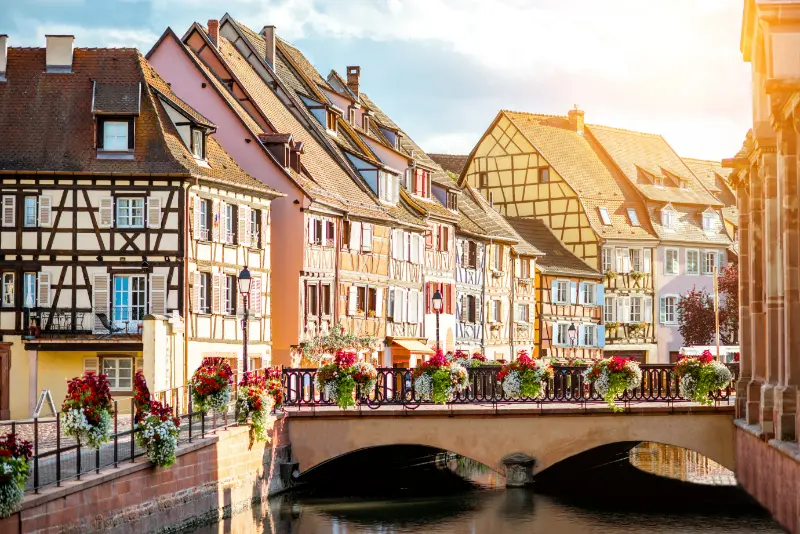
Colmar is compact, colourful and extremely popular. Begin early around the old centre, then visit a museum or walk into quieter streets after tour groups concentrate around the canals.
My practical advice: Stay overnight to experience the centre before and after peak day-trip hours. Do not mistake Little Venice for the whole city.
Day 3: Northern village loop
Choose villages such as Kaysersberg, Riquewihr and Ribeauvillé, adjusting for transport and events. Similar architectural elements appear throughout, but topography and surrounding vineyards change the mood.
My practical advice: Limit the loop to three substantial stops. Park outside walls, walk between vineyard edges where permitted and avoid blocking residents’ access.
Day 4: Southern route or castle landscape
Explore Eguisheim and another southern village, or trade village time for the heights around Haut-Koenigsbourg. This creates contrast after a day of timbered streets.
My practical advice: Castle access and buses may be seasonal. Check current arrangements before building the entire day around one connection.
Wine tasting with context
Alsace is known for aromatic grape varieties and clearly named wines. A tasting becomes more memorable when you learn about soils, slopes and food pairings rather than counting glasses.
My practical advice: Book small producers when requested, never assume English availability and use a driver, taxi, bicycle plan or organised excursion.
Christmas-market version
Advent changes atmosphere, transport demand and accommodation prices. Lights and stalls are beautiful, but cold, crowds and security arrangements require more patience.
My practical advice: Stay several nights, travel by public transport and visit popular centres early. Confirm dates on official tourism sites because each market follows its own calendar.
Car, train or guided excursion?
Train
Excellent between Strasbourg, Colmar, Sélestat and larger towns. It removes driving concerns but does not reach every village directly.
Car
Best for flexible village combinations and rural accommodation. Keep tastings limited, choose a designated driver and use signed parking outside historic centres.
Bicycle
Rewarding for active travellers who understand gradients, weather and road conditions. Use marked routes and never combine serious tasting with riding.
Guided day
A useful compromise for several villages and winery context. Check group size, tasting approach and actual time spent outside the vehicle.
Where to stay
Strasbourg has the strongest transport connections and enough culture for several nights. Colmar places you closer to the central wine route and is atmospheric in the evening. Village accommodation provides quiet and vineyard views, but restaurant choices and late transport can be limited. During Christmas markets and harvest events, book early and read cancellation conditions carefully.
Compare accommodation in Colmar on Booking.com
Getting around
The regional rail network makes a two-city itinerary straightforward. For villages, combine buses, seasonal shuttles, cycling, a tour or short car rental. Road distances are small, but parking queues and slow village streets expand journey times. If crossing into Germany or Switzerland, verify ticket coverage and rental conditions rather than assuming regional passes apply everywhere.
Food and everyday rhythm
Alsatian food reflects French and Germanic influences, with dishes such as tarte flambée, choucroute, baeckeoffe and kougelhopf. Portions can be generous, so mix traditional meals with market food and lighter lunches. Reserve dinner in small places, especially on Sundays or outside peak season, and treat wine as part of the meal rather than a driving-day challenge.
Budget and booking strategy
Strasbourg and Colmar accommodation rises sharply during famous events. Visiting on weekdays, staying near a rail station outside the most photographed core and using trains can help. Tastings may be free, paid or linked to purchases; ask politely and never treat a family producer as an unlimited bar. Village walks and vineyard views add value without admissions.
How I would prepare before departure
The Alsace Wine Route is a long regional itinerary, not a single village street. Its historic route runs roughly 170 kilometres between the north of the vineyards and the southern reaches, so a four-day visit needs clear priorities. I would sleep in Strasbourg or the Obernai area for the opening night, then shift to Colmar or a nearby village for the remainder. One day can combine Obernai and Barr, another the cluster of Ribeauvillé, Riquewihr and Hunawihr, while a third can explore Kaysersberg and Eguisheim. That leaves a final morning for Colmar itself or a southern vineyard stop. This grouping reduces backtracking and allows the character of each place to emerge beyond its half-timbered façade.
Wine tasting should be arranged according to travel logistics, not inserted casually between driving stops. Choose one or two estates per day whose wines or methods genuinely interest you, contact producers about opening periods and discuss whether a tasting requires a reservation. Riesling, Gewurztraminer and Pinot Gris offer different styles, and Crémant d’Alsace broadens the experience beyond still whites. In villages, look for a short vineyard interpretation trail and use it to understand slope, soil and exposure. Not every tasting room operates like a walk-in bar, especially during harvest. If several adults plan to taste, hire a driver or structure a rail-and-bus day instead of expecting someone to remain unaffected by small pours.
Bad-weather plans in Alsace should be genuinely local. A rainy day around Strasbourg could focus on the cathedral, museums and the Petite France district in shorter intervals, whereas Colmar offers indoor collections such as the Unterlinden Museum. A chilly harvest day can be ideal for visiting one producer and exploring a village between showers, but wet vineyard paths become slippery and muddy. In summer, the open slopes can feel hotter than the shaded lanes below; save exposed walking for morning. Winter Christmas markets bring a different experience entirely, with evening crowds and shorter daylight, so a four-day wine-route plan written for summer should not be copied unchanged into December.
Accessibility and responsible travel
The prettiest Alsatian villages can be demanding for visitors using wheelchairs or strollers. Historic lanes in Riquewihr and Eguisheim include cobbles, thresholds and narrow routes; reaching a hilltop castle such as Haut-Koenigsbourg adds gradients and access considerations. Check the attraction’s own accessible areas and parking instructions rather than assuming a village is step-free because it appears compact. With children, two villages and a short interpretive walk may be plenty in one day; add a museum or castle only when energy and weather allow. Rail services are good between cities, but the final connection to smaller wine villages can require a bus and walking, especially on weekends.
The vineyards are working landscapes. Do not walk between rows or take shortcuts across a terrace without permission, and keep cars away from agricultural entrances. During harvest, tractors and winery vehicles may need the narrow road you hoped to use for a photograph. The region’s marked walking and cycling routes provide safer alternatives, including vineyard cycling itineraries linked to villages and larger rail hubs. Choose a producer whose work you want to learn about and buy wine thoughtfully rather than collecting anonymous tastings. If travelling with children, local bakeries and markets make a pleasant village stop without requiring every family member to participate in wine activities.
Mistakes I would avoid
- Driving the entire 170 km route just to say you did
- Scheduling too many look-alike village stops
- Combining driving with unrestricted tastings
- Visiting Colmar only at peak midday
- Assuming all restaurants open every evening
For four days without a car, I would rewrite the itinerary around Strasbourg, Sélestat and Colmar rather than copying the driving route. These stations support regional services, and local buses or planned tours can cover some villages; the official Fluo route planner is useful for checking actual connections. A driver can explore more small villages but may spend disproportionate time finding parking during peak weekends. The car-free traveller should resist the temptation to promise Eguisheim, Riquewihr and Kaysersberg on one spontaneous bus loop, as frequencies and transfers vary. Selecting one reachable village for an afternoon, followed by a relaxed return to Colmar, often produces the better experience.
Frequently asked questions
How long is the Alsace Wine Route?
The official route is approximately 170 kilometres and passes numerous wine towns and villages. A rewarding visit can focus on one central section.
Do I need a car?
No for Strasbourg and Colmar, and guided excursions reach villages. A car is valuable for flexibility if tasting is managed responsibly.
Which villages should I choose?
Kaysersberg, Riquewihr, Ribeauvillé and Eguisheim are popular for good reason, but choose two or three based on route, events and crowd tolerance.
Is Alsace only for wine travellers?
No. Architecture, food, hiking, museums, castles and Christmas traditions make the region rewarding even without alcohol.

Useful official resources
Check Visit Alsace for current route information and local tourist-office updates for winery events, market dates and village traffic restrictions. The tourist authority describes a 170-kilometre Wine Route and maintains cycling and transport resources; use these for orientation but consult the local bus or train operator for exact travel times. For Haut-Koenigsbourg or other ticketed monuments, confirm the day’s opening, capacity and accessibility directly with the site. During harvest season, an estate visit may be unavailable at short notice despite a general listing that says the business is open. If walking among vines, carry water, footwear suited to dirt paths and enough time to return before dark.
Continue planning your trip
For the next step, read travelling through France by train, seasonal France planning, the first-time France guide and the Champagne route. These guides are designed to connect into a slower, more realistic France itinerary.
What makes the Alsace Wine Route more than a postcard is the relationship between the villages and their vineyards. From the walls of Riquewihr, the architecture feels compact; a short walk outside can reveal why the surrounding slopes matter to the wine. Colmar brings larger-scale museums and urban life; a smaller village shows the pace of a producer’s working day. Four days are enough to discover these contrasts, but not enough to tick off every wine village between Marlenheim and Thann. Choose two clusters, a couple of carefully planned tastings and one unscheduled café afternoon. The route will feel distinctly Alsatian without becoming a race between car parks.
New Alsace guides: Use our Alsace Travel Guide, Alsace wine guide and detailed village guides for Eguisheim, Riquewihr and Kaysersberg.
Travel without driving: The Wine Route can also be explored using trains, buses and tourist shuttles; see our Alsace without a car guide.