

Alsace is one of the easiest French regions to explore without driving because its principal cities sit on a strong north–south rail corridor and tourist shuttles fill some of the gaps toward wine villages and the Vosges.
Visit Alsace states that the region has 14 railway lines and 161 TER-served stations. It also points travellers toward Fluo Grand Est for combined train, coach, tram and bus planning, which is exactly the right tool for building a realistic itinerary.
The key is to separate ‘easy by train’ from ‘possible with planning’. Strasbourg, Colmar, Sélestat, Mulhouse and Saverne are straightforward; small wine villages and mountain ridges require a bus, tourist shuttle or carefully chosen day tour.
Quick planning snapshot
| Rail network | 14 lines and 161 TER-served stations |
| Best rail bases | Strasbourg, Sélestat, Colmar, Mulhouse, Saverne |
| Wine villages | use local buses or Kut’zig where operating |
| Vosges | seasonal Crest Shuttle and targeted transfers |
| Ideal trip | 7 days with 2–3 bases |
How the rail spine works
Strasbourg, Sélestat, Colmar and Mulhouse form the most useful main corridor. Frequent regional trains let you change base or make day trips without building the holiday around parking.
Saverne provides a western rail gateway and is about 40 minutes from Strasbourg according to the local tourist office, making it particularly useful for a forest or canal extension.
Kut’zig for the central Wine Route
Visit Alsace promotes the Kut’zig tourist bus as a car-free way to reach Colmar, Ribeauvillé, Hunawihr, Riquewihr, Kaysersberg, Turckheim, Eguisheim and Voegtlinshoffen. The published day fare is €17.
The current operating pattern is seasonal: April, May, June and October mainly Friday to Sunday and public holidays; July through September generally Wednesday to Sunday and public holidays. Always verify the exact date.
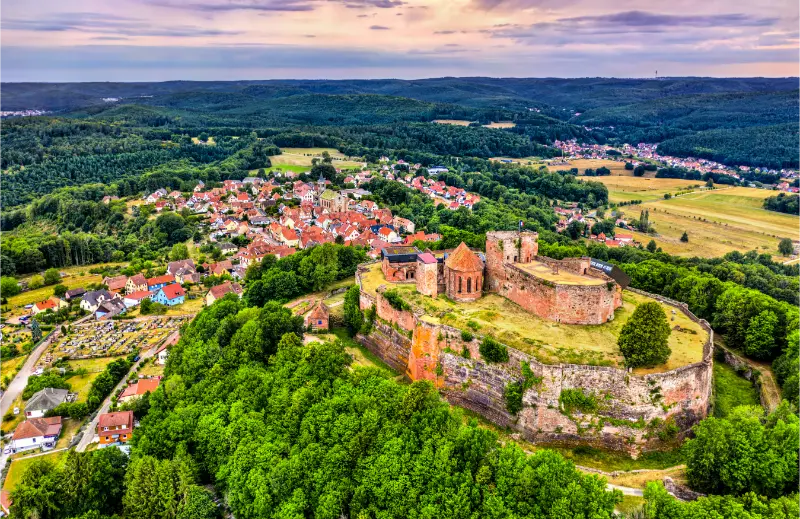
Vosges Crest Shuttle
The Navette des Crêtes links rail gateways on both sides of the Vosges with the Route des Crêtes during its operating season. Visit Alsace describes seven bus connections from stations including Colmar, Munster, Cernay and others toward ridge destinations.
This is a seasonal mountain service, not a year-round city bus. Build a fallback day in case weather or timetable changes affect the route.
Bikes on regional trains
Visit Alsace states that bicycles are generally accepted free on trains, with restrictions on the Strasbourg–Basel corridor at peak times. That can make cycling an excellent way to close the gap between a station and a village.
Check the current bicycle policy for your specific train, especially on busy summer weekends.
A practical 7-day itinerary
Days 1–2: Strasbourg on foot and tram. Day 3: train to Sélestat for the Humanist Library and an easy central Alsace day. Days 4–5: Colmar as the base, using Kut’zig or buses for wine villages. Day 6: Saverne by train for Haut-Barr and canal scenery. Day 7: keep flexible for Mulhouse museums, another village or a seasonal Vosges shuttle.
This structure avoids daily hotel changes and keeps the most timetable-sensitive excursion movable.
Where car-free travel becomes harder
Fleckenstein, remote castle ruins and some hiking trailheads are not as simple as Strasbourg or Colmar. Use a taxi for one targeted transfer, join a tour or redesign the day around a rail-accessible town instead of forcing three weak connections.
Car-free travel succeeds when you choose destinations that fit the network rather than trying to reproduce a road-trip itinerary exactly.
Christmas without a car
Rail is especially useful during Christmas market season because parking restrictions and congestion increase. Strasbourg and Colmar are natural bases, while Sélestat can act as a lower-pressure rail hub between them.
Check late-evening services before staying for lights or concerts in smaller villages.
The rail backbone and its limits
Alsace’s principal railway corridor links Strasbourg with Sélestat, Colmar and Mulhouse, giving a car-free traveller an unusually strong starting point. These towns are not interchangeable with every village on the Wine Route: stations, local buses and seasonal tourist services must be considered separately. Plan each excursion as a round trip beginning from a station, then examine the connection to the attraction rather than assuming every wine village has direct rail access.
Strasbourg is the easiest base for the first part of a week, especially if you arrive by long-distance train. Colmar becomes convenient when the trip turns toward the vineyards and southern Alsace. Moving hotels once can be worthwhile; doing so every night sacrifices time to luggage and check-in logistics. Check engineering works and weekend service differences with SNCF TER and the local Fluo network before confirming non-refundable activities.
What Kut’zig can and cannot do in 2026
The tourist shuttle Kut’zig connects Colmar with several central Wine Route villages, including Ribeauvillé, Hunawihr, Riquewihr, Kaysersberg, Turckheim and Eguisheim. Its hop-on-and-off format is valuable because the villages are difficult to connect in a single day using ordinary public transport. However, Visit Alsace lists the 2026 season as 1 July through 11 October. Do not sell it as a year-round alternative to a rental car or assume it will operate during the Christmas markets without a separate official announcement.
When the shuttle runs, choose two or three villages you genuinely want to explore instead of trying to leave the bus at every stop. Verify the route order and last departure, particularly if you book a winery appointment. Outside its published season, consider a booked local tour, an ordinary regional bus with a carefully checked timetable or a different village accessible from the rail network.
A day-by-day seven-night route
Day one: arrive in Strasbourg, walk Grande Île and get oriented around the cathedral. Day two: explore Petite France, Neustadt and one museum, leaving time for an evening meal in Krutenau. Day three: take a train-based excursion to Sélestat for its historic centre and Humanist Library, returning to Strasbourg rather than moving luggage again. Day four: travel to Colmar, check in, visit Unterlinden or the old market and walk beside the Lauch at dusk.

Day five: choose a Wine Route village circuit using a confirmed seasonal shuttle or prebooked local excursion; outside shuttle season, restrict the plan to accessible places. Day six: take the train to Mulhouse for the Cité de l’Automobile or Cité du Train, choosing one major museum as the day’s anchor. Day seven: visit a smaller rail-accessible town such as Turckheim where the schedule permits, or use the time for a longer Colmar museum and food day. Leave day eight for departure. This structure works because overnight bases remain close to stations.
Cycling, mountain buses and seasonal traps
Bicycles can extend the reach of certain station-based journeys, but a scenic wine road is not automatically an easy family cycleway. Traffic conditions, vineyard slopes and the ability to carry bicycles on trains vary. Check the current TER reservation and space rules before renting a bike, especially in peak months. For a less demanding ride, investigate flatter Rhine-plain or canal routes rather than committing to several hill villages in one afternoon.
Seasonal services toward the Route des Crêtes can create car-free mountain opportunities, but their operating calendar may be limited to summer and particular days. Mountain weather and the last bus determine whether the excursion is feasible. In the colder months, do not build a hiking day around a bus timetable downloaded from the previous summer. A guided outing from a rail-served town may be safer and more practical if remote landscapes are your priority.
Ticket choices, families and when a car really helps
Compare individual regional tickets with any currently offered passes using your precise itinerary; products, eligibility and discount terms change. A family should value shorter connections and fewer changes as well as nominal ticket price. Where possible, select accommodation within walking distance of the relevant station, carry only the luggage needed for the day and save offline maps for village visits.
A rental car is not necessary for a week centred on Strasbourg, Colmar and Mulhouse. It becomes useful if you want remote castles, dawn hikes or multiple tiny villages in one day. Rather than hiring one for the full trip, consider a single targeted car day or organised transfer—after checking whether public transport already meets your needs.
The reliable last-mile test for any car-free excursion
Before adding a village, castle or mountain stop to a train itinerary, write down four facts: the arrival station, the actual onward bus or walking route, the time required on site and the last safe return connection. A journey fails the test if its only return depends on a once-daily service or an unconfirmed seasonal shuttle. Applying this filter early prevents a good rail holiday from turning into repeated expensive taxi rides. Use official route planners with the actual travel date, not a timetable screenshot from another month.
For two travellers, a short booked taxi between neighbouring Wine Route villages can occasionally be more economical than a full-day car rental once parking and fuel are considered. For a family, a guided minibus may reduce the number of transfers and protect energy for the main sights. But an ordinary day in Strasbourg, Sélestat, Colmar or Mulhouse rarely needs such arrangements. Keep private transport for the places where it materially changes the visit.
Source for additional planning: Visit Alsace: Kut’zig dates and connections. Confirm operational details with the venue or transport provider before travelling.
Getting there and getting around
Before locking in the day for Alsace without a car, check the last connection as carefully as the first. Alsace has a dense rail and bus network, but smaller villages and castle areas can have gaps between services. Use current Fluo Grand Est, TER or local tourism information rather than an old timetable.
How long to stay
For Alsace without a car, I would allow enough time to combine the headline sight with the setting that gives it meaning. A rushed one-hour stop may cover the postcard, but it rarely explains how the town, forest, craft or transport story fits into Alsace.
Where to stay
If Alsace without a car is central to the trip, staying locally gives you quieter mornings and evenings. Use compare accommodation to compare current options, then check the exact location, parking, breakfast and cancellation terms.
Families and accessibility
Alsace without a car can work well with children when the day alternates between one structured visit and open space. Historic paving, castle stairs, forest tracks and old buildings can create access challenges, so check the exact adapted route rather than assuming the principal entrance is step-free.
For younger children, one museum or monument plus a walk, playground, forest stop or market usually works better than stacking several interiors.
Official information to check before you go
For current opening hours, tickets, transport, temporary closures and local events, use Visit Alsace – Discover Alsace without a car. Variable details should always be reconfirmed close to travel, especially for seasonal markets, tourist shuttles, museums and castle sites.
How this fits into an Alsace itinerary
Continue planning with Strasbourg guide, Colmar guide and Saverne guide. For the regional overview, use the Alsace Travel Guide and the 4-day Alsace Wine Route itinerary.
Protect your connections and your free time
Plan this week around train stations and reliable connections, not the distances on a driving map. Strasbourg and Colmar make practical rail anchors; allow each smaller village enough time to justify the extra transfer. A missed last bus can overturn an otherwise easy day, so put return times on the itinerary before adding another stop.
On a car-free week, a relaxed afternoon is worth more than another station change. Choose a walkable stop near your rail base, allow time for the town centre and return to the station well before the last connection. A village that needs two infrequent buses may be better kept for a guided outing than forced into an already full day.
Practical rail and bus preparations
Carry only what you can comfortably manage on trains and short bus walks: a light rain layer, refillable water and footwear suited to cobbled streets. Save the return schedule offline, note the exact stop for village buses and confirm Sunday and holiday service separately before leaving Strasbourg or Colmar.
Last updated: 21 October 2026