
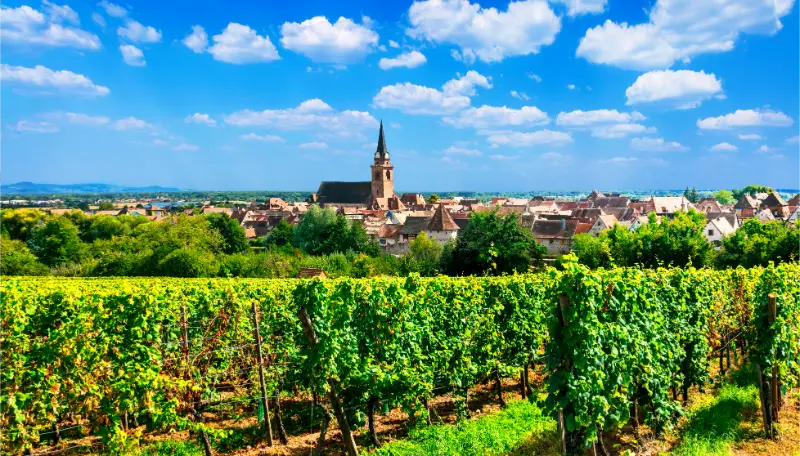
Alsace is one of the easiest French wine regions for a curious traveller to begin understanding because grape variety names often appear prominently on labels. That makes it possible to compare Riesling, Gewurztraminer, Pinot Gris, Pinot Blanc, Muscat and Pinot Noir without first learning a complex appellation map.
That apparent simplicity hides real depth. Vineyard slope, soil, producer choices, sweetness level and vintage all matter. The official Alsace Wine Route encourages visitors to slow down, meet growers, walk or cycle through vineyards and connect tasting with landscape rather than treating cellars as isolated stops.
The safest and most rewarding plan is one serious tasting session per day, with transport arranged before you arrive.
Quick planning snapshot
| Best starting grapes | Riesling, Gewurztraminer, Pinot Gris and Pinot Blanc |
| Sparkling wine | Crémant d’Alsace |
| Red grape | Pinot Noir |
| Best travel style | 1–2 cellar visits + vineyard walk |
| Driving rule | designate a driver or use a tour/public transport |
Why grape varieties are so visible
Alsace labelling has long made grape variety unusually prominent. For travellers, this is useful because you can taste the same grape from different villages or producers and begin to separate variety from place.
Start with a small comparative flight rather than ordering six completely different wines at once.
Riesling
Alsace Riesling is often associated with dry structure, acidity and the ability to express mineral or stony characters depending on site and age. It pairs naturally with food and is an excellent first wine for understanding how serious Alsace can be beyond aromatic stereotypes.
Compare a basic regional Riesling with a named vineyard or Grand Cru bottling if the producer offers both.
Gewurztraminer
Gewurztraminer is intensely aromatic and can show floral, spice and exotic-fruit notes. Sweetness levels vary, so ask whether the wine is dry, off-dry or sweeter instead of assuming the grape always produces one style.
It is particularly useful for learning how aroma and sugar perception interact.
Pinot Gris, Pinot Blanc and Muscat
Pinot Gris can produce richer, broader wines; Pinot Blanc often offers a lighter, approachable style; Alsace Muscat is frequently valued for fresh grapey aroma rather than dessert-level sweetness.
Tasting these together shows how misleading it is to reduce the region to Riesling and Gewurztraminer.
Pinot Noir and changing Alsace
Pinot Noir is the principal red grape of Alsace and has become increasingly important as producers explore more ambitious red styles alongside lighter traditional expressions.
If you usually associate Alsace only with white wine, include one Pinot Noir tasting for contrast.
Crémant d’Alsace
Crémant provides the sparkling side of the region and is widely available. It is useful both as an aperitif and as a way to understand how local grapes and traditional sparkling methods are used outside Champagne.
Ask which grapes are in the blend rather than treating all Crémant as interchangeable.
Grand Cru does not mean one flavour
Alsace Grand Cru vineyards are named sites with distinct geology, exposure and local tradition. The point of tasting Grand Cru wine is not simply to pay more, but to connect the wine with a specific slope and producer interpretation.
Walk a vineyard trail before tasting if possible; topography becomes easier to remember when you can physically see the site.
How many tastings in a day?
One substantial producer visit and one shorter second stop are enough for most travellers. More than that reduces attention and makes safe transport harder.
Use water, eat properly and share pours or spit during comparative tastings if you want to learn rather than consume.
Tasting etiquette
Check whether reservations are required, arrive on time and do not assume tasting is free. Small family estates are working businesses, not unlimited bars.
If you enjoy the wines, buying a bottle or two is appropriate, but never feel obliged to purchase something you do not want.
Car-free and guided options
The official Wine Route site highlights regional trains, cycling and the seasonal Ku’tzig hop-on/hop-off bus departing from Colmar station as alternatives to driving for parts of the central route.
Guided excursions are particularly valuable when wine tasting is the priority because they remove parking and driving concerns.
A beginner-friendly two-day wine plan
Day one from Colmar: one village walk, one vineyard trail and one producer tasting around Eguisheim or Kaysersberg. Day two: Riquewihr/Ribeauvillé with a second producer and a castle or museum to keep the day varied.
This gives you enough wine context to learn without spending two days moving from cellar to cellar.
Getting there and getting around
For Alsace wine country, decide first whether the day is urban, village-based or wine-route focused. Strasbourg, Colmar, Mulhouse and Sélestat are straightforward by train, while the smaller vineyard villages depend more on regional buses, seasonal visitor transport, bicycles, guided excursions or a car.
A wine-route itinerary needs a transport plan before it needs a list of producers. Many domaines are in villages without frequent evening buses, and a scenic road is still a road on which alcohol and driving must not mix. Consider one walkable tasting area, an organised outing or a designated driver. Regional trains serve larger towns, but the final connection into a vineyard village needs separate checking.
How long to stay
For Alsace wine country, a full day is usually the minimum if the destination is a major reason for the trip. Half-days can work for compact villages, but only when you are already staying nearby and are not trying to combine several famous places in rapid succession.
The Alsace Wine Route offers much more than a sequence of half-timbered villages. Different soils, slopes and exposures help explain why wines of the same grape may feel distinct. Instead of trying to stop everywhere, compare one or two places deliberately: perhaps a vineyard walk followed by a meeting with a producer, with a museum or historic centre reserved for another part of the day.

When to go
Spring brings the first broad landscape walks; early summer often allows longer, more comfortable visits to vineyards. In September and October, harvest activity changes the rhythm of estates, and appointments become particularly important. Ask before entering working areas and avoid blocking access for equipment. A visit timed for autumn colours is rewarding even without a formal tasting at every stop.
December wine travel should not be planned exactly like a September tasting trip. Christmas markets bring their own crowds and transport demand, while some estates open only by appointment or reduce public hours. A cellar visit can still be a fine winter experience, but verify the producer’s availability directly. Do not rely on old market calendars to plan tastings, parking or evening travel.
Where to stay
If Alsace wine country is central to your trip, use compare accommodation to compare current accommodation, then check the exact walking distance, parking arrangement and cancellation terms. In Alsace, a hotel just outside the historic core can be a better choice than a picturesque address that is difficult to reach with luggage.
For a multi-day wine trip, two nights in one central base can be better than a new hotel after each village. Colmar gives straightforward access to the southern and central vineyards, while Sélestat can suit travellers exploring different parts of the route. An overnight village stay is excellent when the cellar and dinner are within walking distance; check transport and restaurant opening days before booking.
Food and wine without overplanning
Wine is better appreciated alongside the region’s cooking than as a string of isolated samples. A dry Riesling can be explored with a meal, while Munster cheese or tarte flambée opens a different conversation about local pairings. Ask your host or restaurant what is actually made nearby, and allow enough time for food and water between appointments rather than scheduling back-to-back tastings all day.
At an Alsace estate, ask how the producer handles varieties such as Riesling, Pinot Gris, Gewurztraminer, Muscat or Pinot Noir, and what the vineyard’s position contributes. Not every tasting room is a bar open to anyone at any time; confirm appointments, fees and language options. If you prefer not to drink alcohol, vineyard walks and cellar interpretation can still make the route worthwhile.
Families and accessibility
Alsace wine country can work well for families if the day alternates between one structured visit and open walking time. Cobbles, steep castle approaches, old staircases and compact medieval lanes can create obstacles for pushchairs or reduced mobility, so check the accessible route for individual sites.
Families can enjoy the wine landscape without spending an entire day in tasting rooms. Combine a short vineyard path with a village square, castle or museum and check that any cellar you book welcomes children. Those with reduced mobility should ask about cellar steps, uneven vineyard tracks and the distance from parking. A compact village map does not guarantee an accessible route to an estate’s entrance.
Common mistakes to avoid
A common error is confusing quantity with understanding. Six quick tastings in six villages give little time to learn what separates a Grand Cru hillside from another vineyard. Choose a small number of producers, ask focused questions and leave space to look at the actual landscape. A restrained itinerary is easier to enjoy and far safer to organise when transport is considered properly.
Another mistake is assuming that the best-known grape is automatically the right choice at every producer. Estate styles and sites differ, and the person pouring may have an interesting local comparison that a checklist would overlook. Be open to tasting an unfamiliar variety where appropriate, but never let hospitality pressure you into drinking more or buying more than you want.
Official information to check before you go
For current opening hours, event dates, transport updates and temporary restrictions, use Official Alsace Wine Route. For region-wide planning, the official Visit Alsace website and the official Alsace Wine Route website are the best starting points.
Before making appointments, consult official Alsace wine tourism information for cellar contacts and current events, then confirm details with each estate. Annual harvest programmes and special tastings may change at short notice. For visits to Grand Cru areas, use designated public paths and respect signs: vine rows and working access tracks are not open invitations to wander through someone’s crop.
How this fits into an Alsace itinerary
Continue with 4-day Wine Route itinerary, Eguisheim guide and Riquewihr guide. The existing 4-day Alsace Wine Route itinerary, 3-day Strasbourg itinerary and 2-day Colmar itinerary already provide the route framework.
Use this guide to deepen one stop rather than replacing the regional itinerary with another compressed checklist.
Final advice
The best way to experience Alsace wine country is to decide what makes it different from the previous stop and give that feature enough time. Alsace is compact, but compact geography should not become an excuse to rush.
The most rewarding wine days connect what is in the glass to what you have seen outside. Walk through a village, look up at its vineyard slopes, then talk to a producer about the terrain. The route becomes richer when you remember a hillside, a cellar conversation and an unhurried meal, not merely the number of bottles or tasting rooms visited.
Food pairing: Continue with the Alsace food guide for winstubs, Munster, beer, pastries and regional dishes.
Last updated: 18 October 2026