
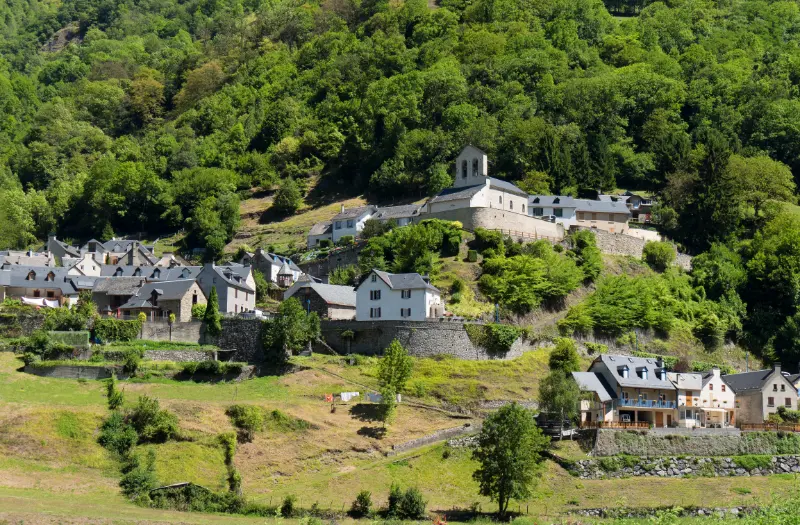
The French Pyrenees are not a single scenic road but a chain of valleys with distinct access, weather and character. Famous names such as Gavarnie, Cauterets and the Pic du Midi can suggest an easy sequence, yet crossing between valleys often takes longer than the map implies.
This guide helps choose one or two bases for a five- to seven-day trip. It focuses on the central national-park area while acknowledging the broader range toward Ariège and the Basque mountains. Mountain safety, seasonal closures and honest ability matter more than a fixed list of viewpoints.
Quick planning overview
| Recommended stay | 5–7 days |
| Best first bases | Cauterets, Luz-Saint-Sauveur or a valley town |
| Car | Very useful outside peak-season shuttles |
| Main season | June to September for many higher walks |
| Safety rule | Official conditions override saved routes |
Choosing a Pyrenees experience
Gavarnie and its cirque
Gavarnie introduces the scale of the range through a celebrated glacial amphitheatre and an approachable valley route, while higher alternatives demand more experience.
My practical advice: Arrive early, check seasonal access and never confuse a popular lower walk with guaranteed safe conditions higher up.
Cauterets and Pont d’Espagne
Cauterets combines a real mountain town with access toward waterfalls, lakes and high-country routes around Pont d’Espagne. Lifts and shuttles may simplify access when operating.
My practical advice: Verify opening dates, parking and lift status directly. Build a valley alternative for storms or low cloud.
Lourdes as a gateway
Lourdes has major religious importance and strong rail access. Even secular travellers should understand pilgrimage rhythms, while using the town as a possible gateway to surrounding valleys.
My practical advice: Accommodation demand follows religious events. Behave respectfully around worship, illness and private moments rather than treating the sanctuary as a spectacle.

Pic du Midi and observatory landscape
The Pic du Midi offers a high-altitude experience with scientific and panoramic context, generally reached through the official cable-car operation rather than a casual roadside stop.
My practical advice: Altitude affects weather and people differently. Check operation, visibility advice, health considerations and return times before committing.
Ariège and quieter eastern valleys
Ariège combines caves, fortified history, pastoral landscapes and less famous walking bases. It suits repeat visitors willing to drive more slowly and research local services.
My practical advice: Do not add Ariège to a short central-Pyrenees break. Give it a separate base and account for limited off-season opening.
Winter beyond skiing
Snowshoeing, thermal towns and valley walks can create a winter trip, but conditions require local guidance, avalanche awareness and appropriate equipment.
My practical advice: Hire a qualified professional for unfamiliar snow terrain. A summer hiking route is not automatically a winter trail.
Three realistic trip shapes
Five-day first visit
Base in Cauterets or Luz-Saint-Sauveur, with Gavarnie, one lake or waterfall day and a weather reserve.
Seven days with two bases
Combine a western or central valley with another distinct area, allowing a full transfer day and no more than one major outing daily.
Family version
Use cable cars when operating, short interpreted walks, animal parks or thermal facilities, and avoid exposed ambitions.
Car-free version
Stay in Lourdes and one shuttle-served valley during the operating season; verify every connection before booking accommodation.
Where to stay
A valley town with groceries, restaurants and weather alternatives is often better than an isolated chalet for a first trip. Cauterets and Luz-Saint-Sauveur offer useful bases, while Lourdes provides the strongest rail access. Confirm parking, heating, drying space and whether lifts or restaurants operate in your exact week; resort seasons leave genuine gaps.
Compare accommodation in Lourdes on Booking.com
Getting around
Rail reaches gateway towns, but local buses and seasonal shuttles vary. A car offers freedom between valleys, yet mountain roads demand concentration, winter equipment when required and patience around cyclists and livestock. Never use an ambitious pass as a shortcut without checking official road status. Refuel before remote days and keep offline maps.
Food and everyday rhythm
Mountain menus include cheeses, garbure-style soups, beans, trout and hearty meat dishes, with variations across valleys. Carry sufficient food and water on walks rather than depending on a refuge whose opening may be seasonal. Buy pastoral products directly where appropriate, respect farm access and never approach guardian dogs or livestock casually.
Budget and booking strategy
Walking can be inexpensive, but cable cars, guides, equipment and a rental car add meaningful costs. These are safety and access expenses, not optional luxuries when conditions demand them. Save by choosing one base, using self-catering for some meals and selecting a few paid experiences rather than moving between resorts every day.
How I would prepare before departure
The first decision for the French Pyrenees is which valley to understand, not which peaks to collect. A five-day journey based in Cauterets or Luz-Saint-Sauveur can explore waterfalls, a suitable national-park walk and one weather-dependent high view. Adding Ariège, the Basque mountains and every famous central-Pyrenees site in the same few days creates long transfers over difficult roads. Mark your accommodation, trailhead and a reliable lower-elevation alternative for each outing. Also record who is making the safety decision if clouds lower or someone in the group feels unwell. A beautiful photograph should never determine a route more strongly than current conditions.
For Gavarnie, distinguish the relatively approachable village-to-cirque outing from exposed higher mountain routes. At Cauterets, Pont d’Espagne and the surrounding approaches have specific access, parking and, seasonally, shuttle or lift arrangements. Check the tourist offices and park guidance before traveling, because a trailhead that is accessible in summer may not be straightforward in winter. The Pic du Midi’s high-altitude visitor experience relies on the official lift operation and weather; its views cannot be guaranteed. Bookings should be made only after comparing altitude, physical effort, operational status and the needs of the least experienced traveler.
A weather reserve is fundamental rather than optional in the Pyrenees. If thunderstorms are forecast, stay out of exposed ridges and choose a village, museum or suitable thermal facility instead of trying to beat a storm to a summit. Rain can raise streams and leave footbridges or slippery rock sections unsafe; in winter, snow, ice and avalanche conditions transform even familiar summer paths. Use local professional guidance where terrain is unfamiliar, especially for snowshoeing. For a cloudy day, a short lower valley walk may offer more pleasure than an expensive high viewpoint with no visibility. The goal is a sound mountain day, not a completed list.
Accessibility and responsible travel
Mountain accessibility must be evaluated route by route. Some valley promenades and visitor facilities may have adapted sections, but a national-park destination is not uniformly step-free. Gradients, loose stone, exposure, limited toilets and altitude can matter as much as total distance. In Cauterets, choose a base with practical access to food and transport; a remote chalet may be inconvenient if driving becomes unsafe. Families should look at actual ascent and return time rather than promotional labels such as ‘easy.’ People affected by altitude should consult appropriate medical advice before committing to a rapid ascent to a high cable-car destination.
The French Pyrenees include protected habitats and grazing land with rules that visitors must take seriously. Keep to permitted paths, observe national-park regulations on dogs and camping, and avoid disturbing wildlife. Pastoral animals and guardian dogs may be encountered in some areas; follow locally posted advice and do not treat livestock as photo props. Do not feed animals or enter fragile meadows to reach an apparently better viewpoint. Carry water, weather layers and all rubbish, and remember that a rescue service is not a substitute for choosing a suitable route. Using a village base for multiple outings can also reduce unnecessary driving between valleys.
Mistakes I would avoid
- Planning by distance without understanding valley roads
- Following a summer route in winter conditions
- Relying on a single mountain-weather forecast
- Assuming lifts and refuges operate year-round
- Choosing walks for photos rather than ability
The most dangerous itinerary mistake is confusing a short road distance with an easy mountain transfer. Hairpins, cyclists, snow equipment requirements, parking constraints and shuttle departures can make a journey much longer than expected. The second mistake is copying a summer hike into a winter plan without reviewing snow and avalanche conditions. A third is treating Pic du Midi, Gavarnie and the Cauterets lakes as interchangeable attractions; they involve distinct altitudes, conditions and logistics. One memorable, properly planned mountain outing is far more valuable than three partly completed excursions that strain the group’s safety and patience.
Frequently asked questions
When is the best time for hiking?
Many lower walks open earlier, but higher routes are commonly most accessible from summer into early autumn. Snow and storms vary yearly.
Do I need a car?
It is very useful. A limited car-free trip is possible around rail gateways and seasonal shuttle corridors with careful research.
Are the Pyrenees suitable for children?
Yes when routes match age, terrain and weather. Short valley walks and selected lift-accessed areas can work well.
Can I visit in winter without skiing?
Yes for thermal towns, guided snowshoeing and valley experiences, but services and road conditions must be checked.
Useful official resources
Use the Parc national des Pyrénées for protected-area guidance and route regulations, local Gavarnie and Cauterets offices for trail access, and the official Pic du Midi operator for lift status. A mapping app may help with orientation but cannot verify temporary closures or current trail conditions. Confirm public transport and seasonal shuttles with the operating provider and identify the final departure of the day. If driving, ask locally about winter equipment and current road restrictions; do not assume rental-car equipment is adequate without checking. I would save a printed or offline map before leaving a serviced town.
Continue planning your trip
For the next step, read the French Alps guide, the French Basque itinerary, France with children and driving in France. These guides are designed to connect into a slower, more realistic France itinerary.
What makes this range rewarding is the variation between inhabited mountain towns and the immense scale of the valleys above them. Gavarnie offers a dramatic glacial landscape; Cauterets links spa-town history with access to waterfalls and higher routes; Lourdes brings religious and transport significance to the foothills. These places should be experienced on their own terms. A visit might include a morning bakery in the valley, a walk matched to the weather and time to learn why mountain communities operate seasonally. The trip becomes richer when the peaks do not erase the people who live beneath them.

A final decision checklist
The best final itinerary might be three nights in one valley and two in another, but it can also be five nights in a single base. I would choose one major hike, one gentler waterfall or lake day, one cultural visit and at least one flexible reserve. A rail-based visit centered on Lourdes will require specific onward transport planning; a car-based journey should avoid switching between distant valleys every morning. If you are traveling in winter, design the entire trip around safe seasonal activities from the beginning, not by replacing the word ‘hike’ with ‘snowshoe’ in a summer plan.
Before each outing, check the forecast at elevation, the expected return time, the length and ascent of the actual route, and the availability of water or shelter. Tell someone your plans when heading to a remote trail and carry a charged phone, even if reception is patchy. At popular car parks, arrive with an alternative in case entry is controlled or spaces fill. For the Pic du Midi, use the operator’s own status and weather information. In protected areas, consult current dog, cycling and camping rules rather than assuming that all French mountain parks apply exactly the same visitor arrangements.
A mountain holiday should feel adventurous without requiring anyone to ignore limits. A child may be happiest by a stream near a village rather than on an exhausting ascent; an experienced hiker may want a more demanding trail with appropriate equipment and weather. Visitors using mobility aids need to identify verified accessible facilities instead of relying on the scenery’s popularity. Keep an easy retreat route, allow for afternoon changes in mountain weather and celebrate turning back when conditions deteriorate. That judgment is part of an excellent Pyrenees trip, not evidence that the itinerary has failed.