
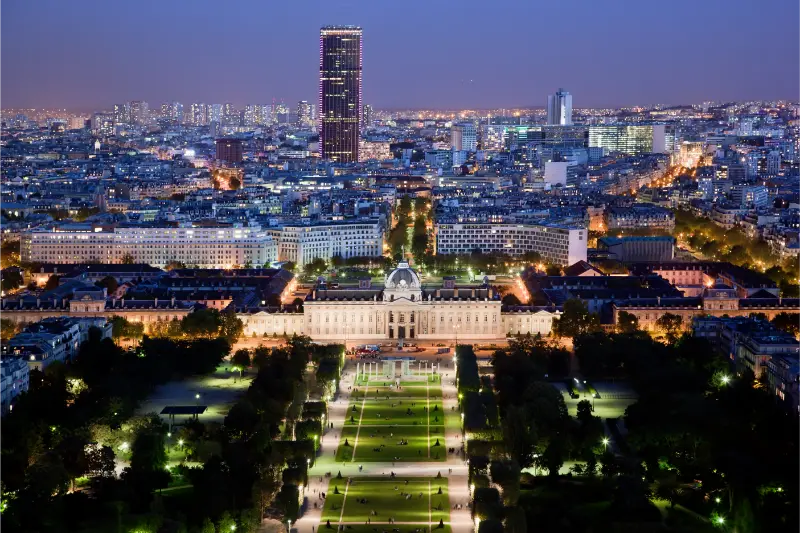
Two days in Paris is enough to understand why the city deserves a return trip, but it is not enough to see every famous attraction without turning the visit into a transport exercise. The best 2-day itinerary is selective. It groups sights geographically, gives the Louvre a realistic amount of time, keeps the Eiffel Tower separate from the historic centre and leaves at least one evening for the Seine rather than another queue.
This plan is built for first-time visitors with two full sightseeing days. If your “two days” actually means arriving at 15:00 on Friday and leaving at 11:00 on Sunday, use the reduced version later in the guide. If you have more time, our 4 days in Paris itinerary gives the city much more breathing room.
The 2-day plan at a glance
- Day 1: Notre-Dame and Île de la Cité, optional Sainte-Chapelle, the Louvre, Tuileries and a Seine evening.
- Day 2: Eiffel Tower, Arc de Triomphe or Musée d’Orsay, then Montmartre for late afternoon and evening.
- Book only the attractions where a timed slot genuinely helps; too many fixed times make a short trip fragile.
- Stay central enough that your first and last hours are usable.
- Do not add Versailles, Disneyland or another day trip to a trip with only two full days in Paris unless that destination is the main purpose of your visit.
Before you book anything: choose your two non-negotiables
On a short trip, decide which two attractions would disappoint you most if you missed them. For many first-time visitors those are the Eiffel Tower and Louvre. For someone interested in Gothic architecture, Notre-Dame and Sainte-Chapelle may matter more. Art lovers may prefer Louvre plus Musée d’Orsay.

Book the hardest timed attraction first, then shape the day around it. Do not book Eiffel Tower at 10:00, Louvre at 13:00, a river cruise at 16:00 and a dinner across town at 18:30. One delay turns the entire day into stress.
A good two-day Paris plan has structure but also buffers. The city is dense enough that you will see plenty even when you leave room to stop.
Day 1 morning: Notre-Dame and the historic centre
Begin early on Île de la Cité. Walk around Notre-Dame before entering because the river setting, reconstructed spire, buttresses and façade are part of the experience. Cathedral entry is free, while the tower circuit is separate and ticketed. Our Notre-Dame guide explains the 2026 system and the difference between the free cathedral visit and the towers.
For a two-day trip, I would not automatically climb the towers. You will already have an elevated view at the Eiffel Tower or Arc de Triomphe, and the tower circuit adds time and 424 steps. Choose it only if Gothic architecture is a major priority.
After the cathedral, decide whether to add Sainte-Chapelle. Its stained glass is one of the strongest interiors in central Paris, but security and timed entry can add friction. If you want it, book sensibly and use our Sainte-Chapelle and Conciergerie guide. If not, cross the Seine and have a coffee in the Latin Quarter before walking toward the Louvre.
Day 1 late morning: walk the Seine instead of taking the Metro
From Île de la Cité, walk west along the river. The distances are manageable, and this transition gives you views of bridges, the quays and the Louvre before you enter the museum.
Do not make a detour deep into the Latin Quarter on this day. You only have two days, so save a full neighbourhood exploration for another trip. A short riverside section is enough to give the Left Bank some presence without breaking the route.
Aim for an early lunch before the Louvre or a later lunch after it depending on your ticket time. Avoid entering a three-hour museum visit hungry.
Day 1 afternoon: give the Louvre about three focused hours
The Louvre can absorb an entire day, but that is usually the wrong choice on a first two-day trip unless art is your main reason for coming. A focused three-hour visit is a better compromise.
Use our Louvre 3-hour guide and choose a small number of priorities. The Mona Lisa can be part of the route, but do not let one famous painting dictate the whole museum. The building itself, major galleries and a few works you genuinely care about will create a better visit.
Timed admission helps, yet security and internal walking still take time. Wear comfortable shoes and resist the urge to sprint to every wing.
Day 1 late afternoon: Tuileries and Place de la Concorde
When you leave the Louvre, go outside rather than immediately entering another museum. Walk through the Tuileries Garden toward Place de la Concorde. This gives your eyes and legs a change after several indoor hours.
If you are tired, stop before Concorde. Sitting in the garden can be more valuable than completing another line on the checklist. If energy is good, continue through the square and look west toward the Champs-Élysées and Arc de Triomphe, which you can tackle on Day 2.
This section is also a useful weather buffer. On a sunny day, spend longer outside. In rain, shorten the garden and use a café break.
Day 1 evening: see Paris from the Seine
A Seine river cruise is unusually effective on a two-day trip because it shows several landmarks without another long walking route. Evening or the period around sunset is particularly useful after the Louvre, when your feet may be ready for a seat.

Choose the departure point based on where your day ends and your hotel. Do not cross Paris unnecessarily just because one cruise has more online reviews. Most standard sightseeing cruises follow broadly similar central sections of the river.
After the cruise, keep dinner simple and relatively close to your accommodation. A late cross-city reservation is rarely worth it on the first night of a compressed trip.
Day 2 morning: Eiffel Tower before the day becomes fragmented
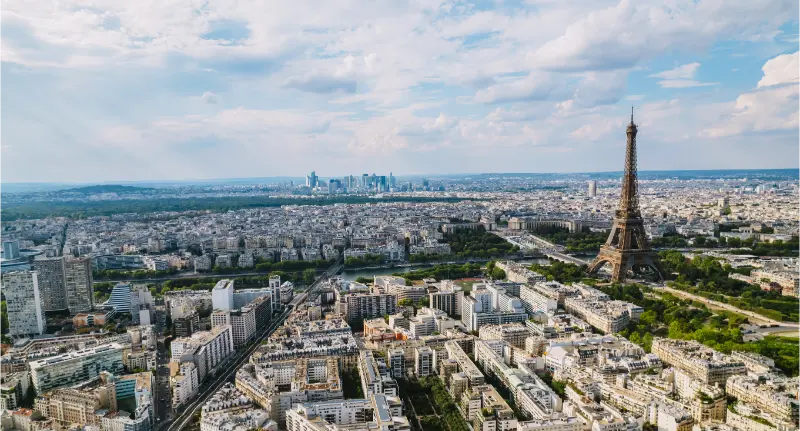
Start Day 2 in western Paris with the Eiffel Tower. If going up matters to you, reserve an official timed ticket as soon as your dates become available. If summit tickets are sold out, decide whether the second floor is enough rather than paying any price to a reseller.
Allow time for security and the area around the tower. Trocadéro gives a classic view, while the Champ de Mars offers a different perspective. You do not need both before and after the climb if that creates needless backtracking.
If you dislike heights or tickets are unavailable, seeing the tower from the ground is still worthwhile. Use the saved time for Musée d’Orsay or a longer Montmartre afternoon.
Day 2 late morning: choose Arc de Triomphe OR Musée d’Orsay
This is the main decision point in the itinerary.
Choose the Arc de Triomphe if you want another panoramic view, the geometry of the Champs-Élysées and a strong visual understanding of Paris’s avenues. The rooftop perspective complements the Eiffel Tower because you can actually see the tower in the skyline.
Choose the Musée d’Orsay if Impressionism and 19th-century art interest you more than another viewpoint. Orsay is much more manageable than the Louvre, but it still deserves at least two hours for a satisfying visit.
Do not do both unless you are very energetic and willing to shorten Montmartre. A two-day itinerary improves when each day has one or two memorable experiences rather than six rushed ones.
Lunch on Day 2: keep it geographically useful
If you choose the Arc de Triomphe, eat somewhere between western Paris and your route north toward Montmartre. If you choose Orsay, lunch around the Left Bank or 9th arrondissement can reduce your transfer later.
Our Paris food guide explains how to use bakeries, cafés and bistros without chasing viral addresses. On a two-day trip, this matters. A 45-minute detour for lunch costs a meaningful percentage of your sightseeing time.
Day 2 afternoon: Montmartre deserves a real walk
Take the Metro toward Montmartre and begin the final major neighbourhood of the trip. Sacré-Cœur is the obvious anchor, but the area is much better when you walk beyond the basilica and Place du Tertre.
Our Montmartre walking guide follows a route through quieter streets and helps avoid turning the neighbourhood into a single crowded viewpoint.
Use the funicular if the climb is a problem; otherwise walk uphill gradually. Once near Sacré-Cœur, spend time on side streets rather than repeatedly circling the busiest square.
Late afternoon is a good time because the light softens and the neighbourhood can flow naturally into dinner. Keep an eye on your energy: steep streets feel different after a full second day of walking.
Day 2 evening: stay in Montmartre or return central
If you find a restaurant you like in Montmartre, staying for dinner avoids another transfer. Move a few streets away from the highest-tourist concentration if you want more choice and a calmer meal.
Alternatively, return to your hotel area and use the final evening for a neighbourhood you have not yet seen after dark. The best choice depends on where you are staying.

Do not schedule another major attraction after dinner. Two intense days are enough. Leave one final hour for an aimless walk, a café or simply looking at the city without checking the next booking.
Paris transport in 2026: keep a two-day trip simple
Paris public transport became simpler with the flat Metro-Train-RER ticket introduced in 2025 and updated fares for 2026. Île-de-France Mobilités lists the standard Metro-Train-RER ticket at €2.55 in 2026, valid across the region except airport journeys. Bus-Tram tickets are separate, and airport travel to Orly or Charles de Gaulle uses a specific €14 ticket unless your pass includes it.
For only two days, do not buy a pass automatically. Count your likely journeys and compare the cost with your actual travel pattern. This itinerary deliberately limits transfers because central Paris is best experienced partly on foot.
Read our Paris public transport guide before choosing Navigo Easy, a pass or pay-as-you-go tickets.
Where to stay for a two-day Paris trip
Location matters more on a two-day trip than on a week-long stay. A hotel that saves €40 but adds 35 minutes each way to every major sight can cost you several usable hours.
The 1st, 4th, 5th, 6th, 8th and 9th arrondissements can all work depending on budget and atmosphere. Areas around Opéra can be especially practical for transport, while the Latin Quarter and Saint-Germain maximise walking access to the historic centre.
Use our where to stay in Paris guide for the trade-offs. You can also compare current Paris accommodation for your exact dates before deciding how far from the centre is genuinely worth the saving.
If you arrive by plane on the first morning
Do not pretend your arrival day begins when the aircraft lands. Immigration, baggage, the airport transfer, hotel access and fatigue can consume several hours. Our Paris airports to city centre guide compares Charles de Gaulle, Orly and Beauvais transfers.
If you reach your hotel before noon, start Day 1 as planned but be willing to drop Sainte-Chapelle. If you arrive mid-afternoon, skip the Louvre that day unless you already have a realistic evening slot; walk Notre-Dame and the Seine instead, then move the Louvre to the next morning and simplify Day 2.
If your two days are really 1.5 days
Use this compressed version: first afternoon Notre-Dame, Seine walk and river cruise; full second day Eiffel Tower in the morning, Louvre for a focused afternoon visit, then Montmartre only if you still have energy. Drop the Arc de Triomphe and Orsay.
That may feel like you are “missing” Paris, but the alternative is a trip remembered mostly through station corridors. A short visit should create reasons to return, not punish you for having limited time.
A romantic version
For couples, keep the same geographic logic but make more space for unstructured evening time. On Day 1, finish with a sunset cruise and dinner. On Day 2, choose Orsay over the Arc if you both enjoy art, then reach Montmartre later and linger through blue hour.
Do not add romantic clichés simply because they are famous. A quiet walk through the Tuileries or along the Seine can feel more personal than an expensive package built around the Eiffel Tower.
A family version
With children, cut one adult-focused interior each day. Day 1 could be Notre-Dame, a short Sainte-Chapelle visit, outdoor river walk and a shorter Louvre route. Day 2 could be Eiffel Tower, a park break and Montmartre using the funicular.
Our Paris with kids guide explains how pace should change by age. The biggest family mistake is keeping the adult itinerary and simply expecting children to walk faster.
What not to add to a two-day itinerary
Versailles requires enough time and attention that it deserves a substantial part of a day. Disneyland Paris is effectively its own destination day. Giverny and Fontainebleau are also better when you have extra nights.
Likewise, avoid booking a cabaret, fine-dining tasting menu and early-morning tower ticket back-to-back unless that style of packed schedule genuinely suits you. Paris after dark is part of the trip, but sleep matters too.
Common mistakes to avoid
- Booking too many timed attractions with no buffer between them.
- Adding a day trip because a list says it is “must-see”.
- Crossing the city for a specific café or bakery during prime sightseeing hours.
- Spending six hours in the Louvre by default and leaving no energy for the city outside.
- Doing Eiffel Tower, Arc de Triomphe and Notre-Dame towers simply because all three offer views.
- Ignoring airport transfer time when describing a weekend as “two days”.
- Choosing a remote hotel without calculating daily transport time.
- Using the Metro for every short central journey and missing the Seine, bridges and street transitions that make Paris memorable.
The point of two days in Paris
A good short itinerary does not prove how many attractions you can physically enter. It creates a clear first impression of the city: Gothic Paris on the islands, royal and artistic Paris around the Louvre, the great western monuments, the Seine and one neighbourhood with a different personality.
Follow that structure, accept that you will leave many things for next time, and two days can feel full rather than frantic. That is the right goal for a first Paris weekend.
More Paris planning: 3 days in Paris · 7 days in Paris