
Nice is the most useful all-round base on the eastern French Riviera, but it is easy to plan it badly. The city is large enough to reward several days, compact enough for a strong first day on foot and connected well enough by rail and bus that a rental car often becomes a burden rather than an advantage.
This guide is different from the existing 3-day Nice itinerary. That article gives you a timed route; this one explains the city itself: which areas matter, what deserves more time, how to use Nice as a base and how to avoid treating the Promenade des Anglais as the whole destination.
Quick planning snapshot
| Best for | First-time Riviera trips, food, museums, beaches and car-free day trips |
| Time to allow | 2–4 days; more if Nice is your regional base |
| Car needed? | No for the city and most classic Riviera excursions |
| Best base areas | Old Nice, Jean-Médecin, Port or the seafront depending on priorities |
Understand the city before building the day
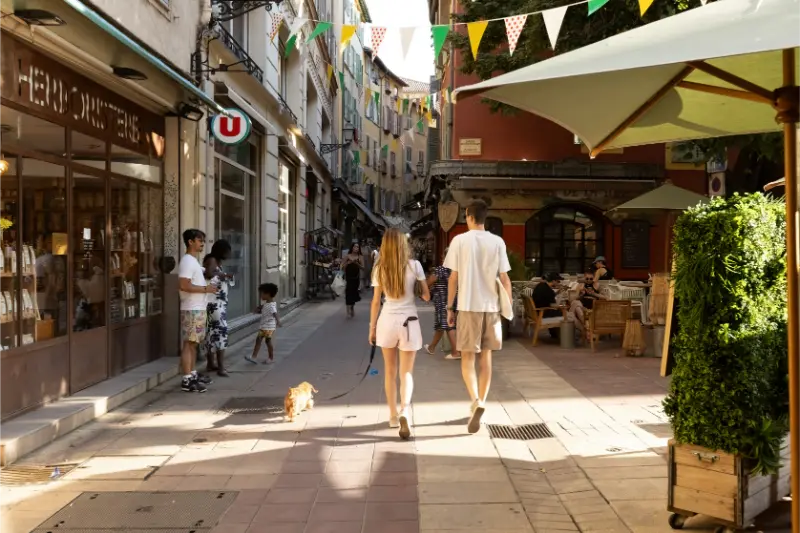
Nice works best when you think of it as several neighbouring experiences rather than one long waterfront. Vieux Nice provides narrow lanes, churches and food; the Promenade des Anglais gives open sea views; the Port has a different evening rhythm; Cimiez adds Roman remains and museums; the central shopping streets make transport and practical errands easy.
A first visit should connect two or three of those areas rather than attempting all of them. Walking from the old town to Castle Hill and down toward the Port makes geographical sense. Crossing the entire city for a museum, then returning to the beach, then heading inland again wastes more time than the map suggests.
Start with Vieux Nice and Cours Saleya
The old town is most enjoyable early, before its busiest lanes fill. Cours Saleya is a useful anchor because the flower and food market connects sightseeing with everyday ingredients. The official tourism office notes that Monday is different: the flower market gives way to an antiques market, while summer evenings can bring an arts-and-crafts market.
Do not stay only on the market street. Step into the lanes behind it, look for baroque church interiors, small food shops and quieter squares, then return toward the sea. The goal is to understand the old town as a living district rather than moving from one famous storefront to another.
Climb Castle Hill for orientation, not for a checklist
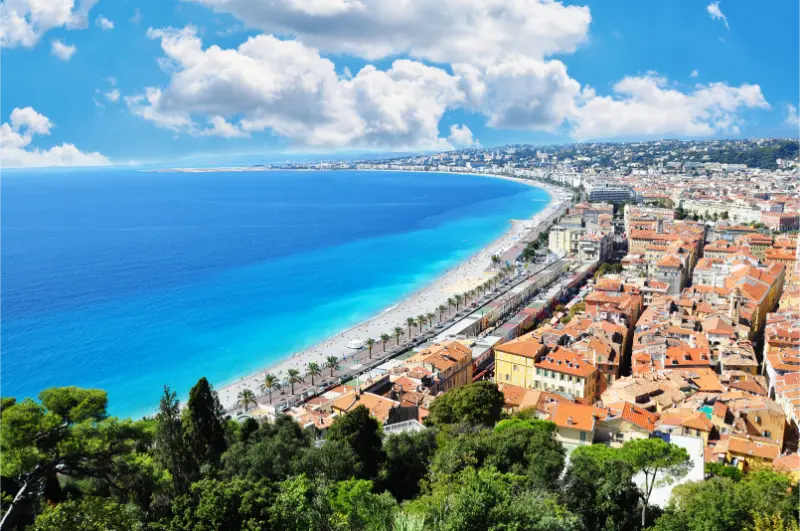
Castle Hill is the best place to understand why Nice developed where it did. From the viewpoints you can read the curve of the Baie des Anges on one side and the Port on the other. The summit is more park than castle today, so allow time for shade, views and a slower walk rather than expecting a single monument.
If stairs are difficult, check the current lift access before your visit. Weather, maintenance or local works can affect the easiest route. Going up in the morning or late afternoon is more comfortable in warm months, and the light is usually better than at noon.
Use the Promenade des Anglais without letting it consume the day
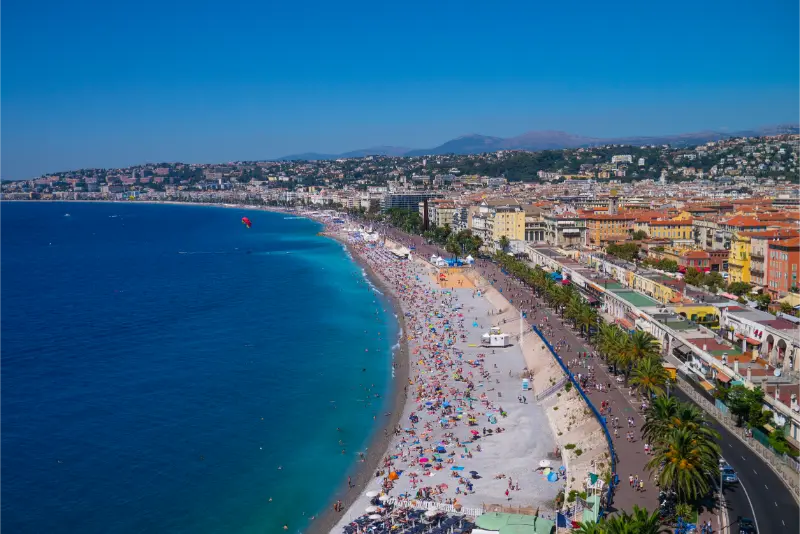
The Promenade is excellent for an early walk, sunset or a simple route between central districts. The beach below is mostly pebbled, which changes what you should bring: water shoes and a thicker mat are more useful than the lightweight beach setup you might use on sand.
Public beach sections make a swim straightforward without paying for a private beach club. Private concessions are worthwhile when you want a lounger, restaurant service and a defined half-day by the water, but they are not a requirement for enjoying the coast.
Choose museums according to your interests
Nice has enough museums that the wrong strategy is trying to collect them all. Art travellers often prioritise Matisse or Chagall, while visitors interested in archaeology can combine Cimiez with the surrounding Roman history. Contemporary art and smaller collections add alternatives for bad-weather hours or very hot afternoons.
Check opening days before fixing the itinerary because museum closures do not always align. A good pattern is one major museum per day, paired with a neighbourhood that makes sense geographically. This keeps culture from becoming a sequence of cross-city transfers.
Eat like the city is part of the trip
Niçoise food has a strong identity, and simple dishes are often more revealing than formal tasting menus. Look for socca, pissaladière, petits farcis and a properly composed salade niçoise, while remembering that recipes and presentation vary. Markets are useful for understanding ingredients before you start ordering them.
Avoid restaurants that sell every famous French dish at once on the busiest tourist lanes. A smaller menu, visible local clientele and a location one or two streets away from the most obvious route are often better signs. For a broader regional context, the site’s Provence food content complements Nice without pretending the cuisines are identical.
Getting there and getting around
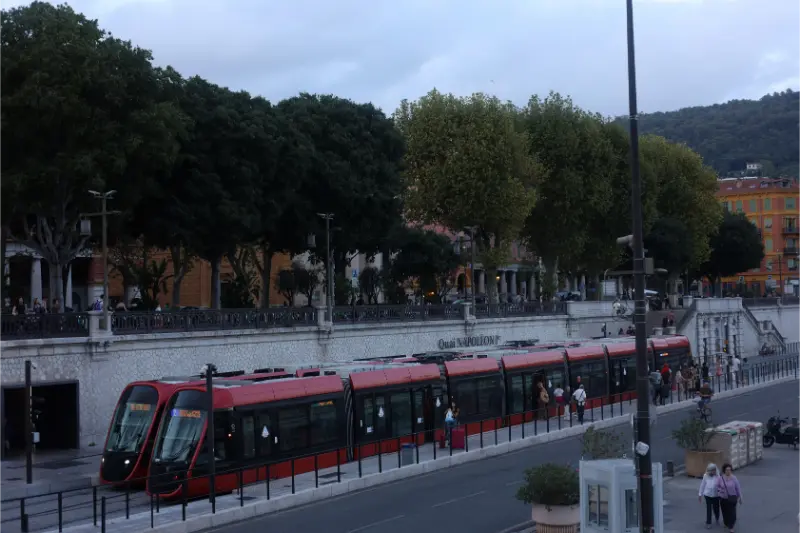
Nice Côte d’Azur Airport is close to the urban area, and the tram makes arrival without a taxi realistic for many travellers. Within the city, trams cover the most useful central corridors while buses extend into surrounding districts and villages. Validate the correct ticket and check current network rules rather than relying on old blog posts about fares.
For regional days, the railway is the key advantage. Antibes, Cannes, Monaco, Menton and Villefranche-sur-Mer sit on the coastal line, while buses fill important gaps for hill villages. The French Riviera travel guide explains the broader car-free strategy.
Best time to visit
Late April through June and September through October usually provide the most balanced conditions for walking, outdoor meals and day trips. July and August work well for swimming but demand earlier sightseeing, more shade and advance accommodation planning.
Winter is useful for museums, food and clear coastal light, though some seasonal beach services are reduced. Major events can change hotel prices and transport pressure even outside peak summer, so check the Nice calendar before assuming a quiet shoulder-season weekend.
Where to stay
Old Nice gives atmosphere and late-evening energy, but luggage and noise can be issues in narrow pedestrian streets. The Jean-Médecin area is less romantic but exceptionally practical for trams, the station and airport connections. Around the Port, evenings feel more local while Villefranche and Cap-Ferrat remain easy to reach.
The seafront suits travellers who want the Mediterranean immediately outside the hotel and are comfortable paying more for the location. Before committing, compare current places to stay on Booking.com and compare the exact walking distance to a tram stop or station rather than choosing only by sea view.
Families, accessibility and slower travel
Nice is manageable with children when the day alternates between walking, parks, food and beach time. Castle Hill provides space to reset, while the tram reduces long cross-city walks. Pebble beaches are less comfortable for toddlers than sand, so footwear and a padded mat matter.
Many central areas are relatively straightforward with a stroller, but the old town has uneven surfaces and Castle Hill involves gradients. Travellers with reduced mobility should check specific museum and viewpoint access rather than assuming every historic route is step-free.
Mistakes that make the visit harder than it needs to be
- Treating the Promenade des Anglais as the whole city.
- Driving into central Nice for day-to-day sightseeing.
- Planning several museums without checking their closure days.
- Underestimating pebble-beach comfort and bringing no water shoes.
- Using Nice only as a dormitory for day trips and never giving the city a full day.
Nice is at its best when it functions as both destination and base. The common planning failure is spending every morning leaving town and every evening returning tired, which means missing the food, neighbourhoods and light that made the base attractive in the first place.
How to combine it with nearby places
For a first coastal extension, Villefranche-sur-Mer is one of the easiest half- or full-day trips. Continue to Saint-Jean-Cap-Ferrat when you want a coastal walk and villa gardens rather than another urban stop.
Eastbound, Èze, Monaco and Menton create distinct experiences. Westbound, Antibes and Cannes are simpler by train than by car.
Useful official information
For current events, public transport, market information and attraction updates, use the official Nice Côte d’Azur tourism website. Cours Saleya information for 2026 confirms daily activity with the Monday antiques-market pattern.
Check Ligne d’Azur and TER information immediately before travel when a connection matters. Riviera transport is strong, but engineering works, events and seasonal services can change a theoretically easy transfer.
Final planning advice
If Nice is your first French Riviera stop, give it at least two nights before deciding how many day trips to add. One day should belong mainly to the city; the second can begin to explore the coast. With three or four nights, Nice becomes one of the strongest car-free bases in southern France.
The city rewards balance: old town in the morning, one cultural anchor, sea air later and a neighbourhood dinner rather than an endless list of attractions. That rhythm is more memorable than trying to prove how much of the Côte d’Azur you can cover in a day.
Easy planning from Nice: Use our best day trips from Nice and train guide to organise the coast without a car.