
The French Riviera is often presented as a driving route lined with luxury hotels, yet some of its most attractive places are easier by train and bus. From a base in Nice, I can reach beaches, art museums, old towns and borderland gardens without searching for parking or watching the road instead of the sea.
This guide focuses on a five- to seven-day, car-free stay. The coastline is compact, but the aim is not to collect town names. Choose two or three day trips, keep full days for Nice and allow the weather to decide when the beach, a museum or a hill village makes most sense.
Quick planning overview
| Best base | Nice for transport, food and evening atmosphere |
| Recommended stay | 5–7 nights |
| Transport | TER trains along the coast; buses for some villages |
| Beach style | Mostly pebbles around Nice; water shoes help |
| Sweet spot | May, June, September and early October |
The Riviera stops worth combining
Nice: more than a transport base
Give Nice at least two full days for Vieux Nice, the Cours Saleya area, Castle Hill, seafront walks and museums. The city has enough ordinary life to remain enjoyable after day-trippers leave.
My practical advice: Walk the Promenade des Anglais early, then return after dark for a different atmosphere. Explore beyond the most crowded old-town lanes.
Villefranche-sur-Mer: an easy half-day
The bay, colourful waterfront and steep old streets sit only a short rail ride from Nice. It works well as a relaxed beach morning or an evening meal beside the water.
My practical advice: The station is above the shoreline and steps are unavoidable. Combine the town with Cap Ferrat only if you enjoy a substantial walk.
Èze: dramatic views with careful timing
Èze village occupies a high rocky position and feels very different from Èze-sur-Mer below. Its lanes and exotic garden draw crowds because the setting is genuinely spectacular.
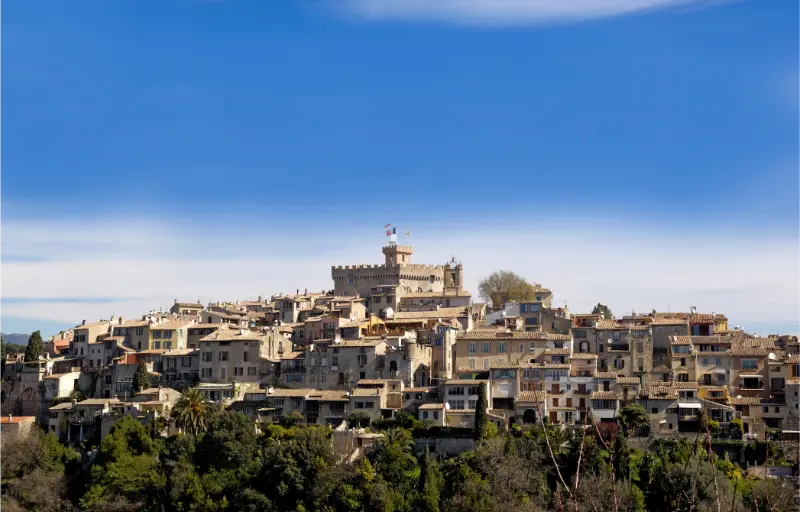
My practical advice: Do not confuse the coastal train station with the hill village. Use the appropriate bus or plan a demanding hike, and arrive early.
Antibes: old walls, market and art
Antibes balances a historic centre with a working port and accessible coastal scenery. It feels more intimate than Cannes and can absorb a full day when paired with Cap d’Antibes.
My practical advice: Check museum opening times and allow for a long lunch. The coastal path may close in poor weather, so keep an inland alternative.
Menton: gardens and an Italian edge
Near the border, Menton has warm colours, citrus associations and a gentler pace. The old town climbs sharply above the seafront, while gardens reveal the area’s unusual microclimate.
My practical advice: Menton is far enough from Nice to deserve most of a day. Sit on the correct side of the train for changing coastal views.
Monaco: a different country for the day
Monaco is not France, but it fits naturally into a Riviera rail itinerary. The old town, harbour and steep urban landscape are more interesting when treated as a functioning principality rather than only a casino stop.
My practical advice: Expect hills, lifts and tunnels. Check mobile roaming arrangements and carry identification appropriate to your journey.
A relaxed six-day plan
Days 1–2
Explore Nice by neighbourhood, reserving one museum or food experience and leaving time for the beach or Castle Hill.
Day 3
Take a short trip to Villefranche-sur-Mer and continue to Saint-Jean-Cap-Ferrat if energy and weather suit.
Day 4
Choose Antibes for art and old-town atmosphere, adding a coastal walk if conditions allow.
Days 5–6
Use one full day for Menton or Monaco and keep the final day flexible for Èze, a favourite return visit or uninterrupted beach time.
Where to stay
Nice offers the widest range of accommodation and the best evening flexibility. Staying near Nice-Ville station helps with day trips, while the old town and port provide atmosphere but can be noisy. The Carré d’Or area balances beach access and transport. Confirm air-conditioning, lift access and room orientation in summer; a balcony may be less useful than reliable soundproofing.
Compare accommodation in Nice on Booking.com
Getting around
Regional TER trains serve the coastal corridor, but platforms become busy and services can be disrupted. Buy the correct ticket, validate or activate it as required and avoid assuming that a screenshot replaces the official ticket. Buses reach hill towns but schedules can change by season. Keep a flexible day and check the official planner before leaving each morning.
Food and everyday rhythm
Look for Niçoise dishes such as socca, petits farcis, pan bagnat and pissaladière while respecting that authentic versions vary by establishment and season. Markets are enjoyable, but prices near the most photographed stalls may reflect location. I mix one waterfront meal with neighbourhood bakeries and casual addresses a few streets inland.
Budget and booking strategy
The Riviera does not have to be a luxury-only destination. Public beaches, coastal paths and old towns are free, while trains remove parking and fuel costs. Budget for beach equipment, museum tickets and occasional reservations. In high season, accommodation is the decisive expense, so compare Nice with Antibes or Menton while accounting for evening transport.
How I would prepare before departure
The French Riviera is unusually suitable for a train-based trip, but it helps to separate rail-friendly coastal stops from steep hilltop villages. Nice makes a practical main base for outings to Antibes, Cannes, Monaco and Menton on the regional network. Its old town, Castle Hill viewpoint and Promenade des Anglais also justify days without leaving the city. I would spend the first day around Vieux Nice and the seafront, then use the second for Antibes and the Cap d’Antibes area, checking any walking route before setting off. Later days can be divided between Menton and Monaco, with an optional guided excursion inland. A single well-chosen base usually works better than changing hotels every night between neighbouring resorts.

Morning and evening are the most comfortable times for the old centres. In Antibes, explore the lanes behind the ramparts and choose whether to visit the Picasso Museum rather than trying to pair every coastal museum with a beach stop. In Menton, the historic terraces and gardens need time and can be steep. Monaco works best when you select one cluster such as Monaco-Ville and the harbour instead of racing between every attraction. Èze village is not equivalent to the coastal railway station called Èze-sur-Mer: the route uphill involves a significant ascent or a connecting bus. This distinction should be visible in a car-free guide, because a station name alone can make a day look much easier than it really is.
A rainy Riviera day can still be interesting, but replace the right activity. Nice offers the Marc Chagall Museum and other galleries, while Antibes or Monaco have indoor cultural options with their own opening schedules. Strong wind or heavy rain is a reason to avoid cliffside coastal paths and sea excursions, not merely to bring an umbrella. In hot weather, move museum visits into the middle of the day and explore old-town streets earlier. Beach expectations also deserve precision: the public beaches along Nice’s Promenade are predominantly pebbly, so water shoes may be more useful than a picnic blanket. Compare supervised beaches and current flag conditions rather than assuming that every sheltered cove is safe for swimming.
Accessibility and responsible travel
The Riviera’s vertical geography can surprise travellers with limited mobility. Vieux Nice is compact but can be busy and uneven; Menton’s elevated old town and Èze village involve gradients and steps. The coastal train is useful, but station access and platform arrangements vary, and a small suitcase is easier than a heavy backpack plus beach gear. For a family with a stroller, a relaxed beach-and-market day in Nice or Antibes may provide more enjoyment than an ambitious ascent to a medieval village. Confirm lift operation and the actual route from station to attraction on the relevant official sites before promising a fully accessible visit.
Travel lightly in an area where both public space and coastal habitat are under pressure. Coastal footpaths may cross sensitive vegetation, be closed after storms or require detours for erosion; follow notices even if an older map shows the shortcut open. Do not walk across private terraces to reach the water. For restaurants, step a few streets away from the busiest harbourfront tables, where quieter neighbourhood businesses often offer a different atmosphere. Local trains reduce parking pressure in places with limited space, but crowded platforms in peak season demand patience and attention to belongings. The most rewarding Riviera day frequently includes less movement than visitors expect.
Mistakes I would avoid
- Renting a car for a purely coastal itinerary
- Confusing Èze village with Èze-sur-Mer
- Assuming every beach is sandy
- Planning a coastal hike without checking conditions
- Turning every town into a two-hour photo stop
For five days, I would allocate two full days to Nice itself, one to Antibes, one to Menton with a carefully chosen Monaco stop, and one flexible day for a beach, garden or interior village. That leaves room for a morning market at Cours Saleya, an evening on the Promenade, and an unhurried view from Castle Hill without rushing immediately to the next train. Travellers especially interested in art might substitute Saint-Paul-de-Vence, acknowledging that it requires a bus or other onward transport. If the trip is only three days, cut the extra excursion first; Nice plus two well-planned coastal outings is enough to understand the region’s different sides.
Frequently asked questions
Can I explore the French Riviera without a car?
Yes. Nice, Villefranche-sur-Mer, Monaco, Menton, Antibes and Cannes lie on the coastal rail line, with buses reaching additional villages.
How many days do I need?
Five nights provides two Nice days and two or three excursions. Seven nights allows weather flexibility and a slower beach-and-culture rhythm.
Is Nice or Cannes a better base?
Nice generally offers stronger transport connections, more neighbourhood variety and easier access east and west. Cannes may suit travellers focused on its beaches and western coast.
Are Riviera beaches free?
Public sections exist, alongside private beach clubs. Facilities, surfaces and access vary, so consult local information and never leave valuables unattended.

Useful official resources
- Explore Nice Côte d’Azur
- Côte d’Azur France tourism
- TER Sud rail information
- Visit Monaco official site
Use the regional train operator’s current timetable for connections and service disruptions rather than treating a generic ‘every few minutes’ estimate as a guarantee. Check each museum’s own admission and closing days, and follow public weather and bathing advisories during a heatwave or storm. Monaco is a separate country with its own local transport and attraction information, although geographically part of this itinerary. For Èze, verify which transport actually reaches the village above the coast. If you plan an international train leg toward Italy, confirm the correct station and whether the service is regional rather than assuming a single high-speed booking will cover the journey.
Continue planning your trip
For the next step, read a seven-day Provence road trip, France by train, the best season for France and the Corsica road trip. These guides are designed to connect into a slower, more realistic France itinerary.
I would end a Riviera visit with a slow evening in Nice rather than squeezing in one last famous viewpoint across the border. Watch the old town shift from afternoon shopping to dinner, take a modest walk beside the sea and choose one local dish such as socca or salade niçoise from a place that prepares it well. The Riviera’s appeal lies in the contrast between public seafront life, densely built historic streets and mountain-backed villages. A train-based route makes that contrast easy to appreciate, as long as the timetable serves your day instead of dictating every moment of it.
More Riviera planning: Compare our Nice destination guide and where to stay on the French Riviera before choosing a base.
Build a deeper Riviera trip: Our new 7-day car-free French Riviera itinerary, beach comparison and family guide turn the regional overview into practical trip plans.