
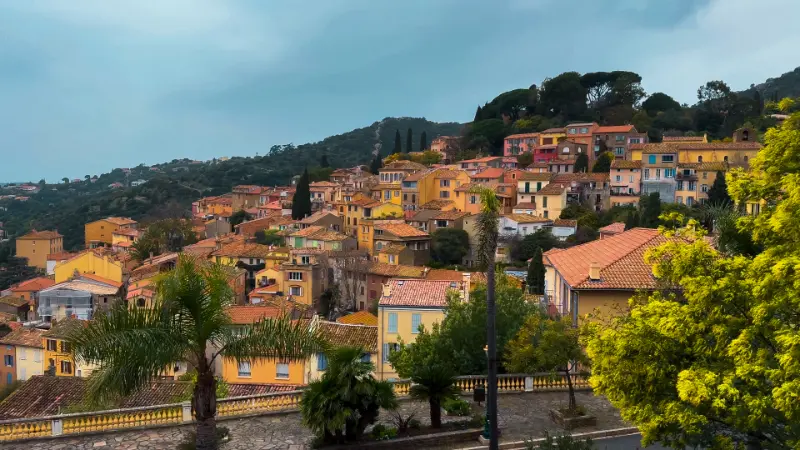
Seven days is enough to see the French Riviera well without renting a car if you accept one important principle: you cannot treat the coast as a collection of towns to tick off. The railway is excellent along much of the Mediterranean corridor, but every transfer still costs time. The best itinerary gives each day a clear geographic focus.
This plan uses Nice as the main base because it has airport access, frequent coastal trains, trams, restaurants and enough culture for bad-weather days. It then groups the eastern Riviera, western Riviera and inland excursions logically. You can adapt the same structure from Cannes or Antibes using our where to stay on the French Riviera guide.
The itinerary is deliberately car-free. That means it favours places that work well by TER, tram, bus and walking. Gourdon or deep inland Provence can wait for another trip; the goal here is to show how much variety you can experience without parking stress.
Quick planning snapshot
| Recommended base | Nice for all 7 nights, or split 4 nights Nice + 3 nights Cannes/Antibes |
| Transport | TER coastal trains, local buses, Nice trams and ferries for islands |
| Best pace | One main destination cluster per day |
| Ideal seasons | April–June and September–October; summer works with earlier starts |
Day 1: Nice without a checklist
Spend the first day entirely in Nice. Walk Vieux Nice and Cours Saleya, climb or use available access toward Castle Hill, follow part of the Promenade des Anglais and choose one museum or neighbourhood rather than trying to cover every headline sight.
The Nice travel guide gives the city in depth. Your first day should also include practical orientation: find the nearest tram stop, check Nice-Ville station access and learn where you want breakfast. A smooth base makes the six day trips that follow much easier.
Day 2: Èze and Monaco
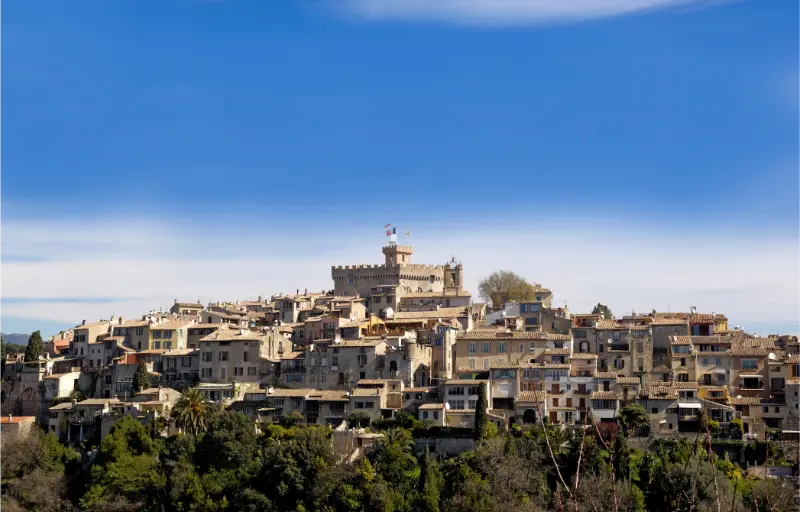
Take bus transport toward medieval Èze early so you reach the village before the busiest part of the day. Explore the lanes and, if open and suitable for your group, the Jardin Exotique. Then continue toward Monaco for the old town, palace area or Oceanographic Museum.
Use our Èze guide and Monaco day trip guide to decide what to prioritise. Do not add Menton to the same day unless you are willing to reduce Monaco to a brief walk.
Day 3: Menton and the eastern end
Use the TER to Menton and give the town a full day. The old centre, Sablettes waterfront and gardens create a different atmosphere from Nice. You are close to Italy, but crossing the border just to say you did it usually adds less value than spending more time in Menton.
Our Menton guide explains how to balance the old town and gardens. Return by train in the evening, or stop briefly in Roquebrune-Cap-Martin only if your interests strongly favour modern architecture.
Day 4: Antibes and Juan-les-Pins
Take the train west to Antibes. Spend the morning in the old town and market area, add the Picasso Museum if it matters to you, then move toward Juan-les-Pins for a beach-focused afternoon. This is one of the itinerary’s easiest culture-plus-swim days.
Use Antibes and Juan-les-Pins as a paired plan. If you prefer hiking, substitute Cap d’Antibes for some of the beach time.
Day 5: Cannes and one Lérins Island
Cannes deserves more than a photograph at the Palais des Festivals. Explore Le Suquet and Marché Forville, walk part of the Croisette, then use the afternoon for either Sainte-Marguerite or Saint-Honorat. Choosing one island is better than rushing both.
The Cannes guide and Lérins Islands guide explain the trade-offs. Ferry times, weather and last returns should shape the island day, so check them before sitting down to a long lunch.
Day 6: Villefranche, Beaulieu and Cap-Ferrat
This is the deliberately slower day. Take the train to Villefranche-sur-Mer, walk the old streets and bay, then continue toward Beaulieu-sur-Mer. Visit Villa Kérylos if architecture interests you or use the time for Baie des Fourmis.
If energy remains, connect to Saint-Jean-Cap-Ferrat for a coastal walk or Villa Ephrussi. Use Villefranche, Beaulieu and Cap-Ferrat to scale the day. You do not need to complete all three fully.
Day 7: choose art inland or a beach day
The final day should respond to weather and what you enjoyed most. For art and perfume, choose Saint-Paul-de-Vence plus Vence or Grasse. For crafts, choose Biot or Vallauris. For rest, choose the beach you liked least rushed during the week.
Leaving this day flexible is not poor planning. It is insurance against rain, fatigue, transport disruption or discovering that you want another swim instead of another village.
Why Nice works as one base
Nice reduces hotel moves and gives you strong east-west rail connections. It also provides food and evening options after day trips. The weakness is that Cannes and the far western Riviera are longer journeys, which is why some travellers prefer a split stay.

If you split, move only once: four nights in Nice and three in Cannes or Antibes. More hotel changes in a seven-day trip usually create more lost time than they save.
Tickets, trains and buses
Use current SNCF and local transport information rather than relying on a static weekly timetable. TER trains are frequent on much of the coastal corridor, but engineering works and events can change patterns. Buses are essential for some hill villages and Cap-Ferrat connections.
Buy the ticket product that matches your actual journeys rather than assuming a pass is automatically cheaper. Save the last practical return for each day, especially when dinner is away from your base.
How much to reserve
Reserve the attraction that would ruin the day if unavailable: a specific villa time, major museum, ferry in a busy period or event ticket. Do not reserve every lunch and transfer unless you enjoy travelling to a timetable.
The Riviera rewards flexibility because sea conditions, heat and crowds change. Keep one indoor alternative and one easy beach alternative for each half of the week.
Budget strategy
Rail-based travel controls parking and fuel costs, but accommodation and restaurant prices vary sharply by town and event dates. Compare Nice hotels and Antibes accommodation before fixing the base.
Use markets, bakeries and picnics for some lunches so you can spend selectively on dinners with a view or distinctive local cooking. Ferry tickets and paid beaches should be treated as optional experience costs, not automatic daily expenses.
Final planning advice
A seven-day Riviera trip succeeds when days feel different: city, hill village, border-town atmosphere, art, island, beach and quiet bay. The train network makes that possible without a car, but only if you stop trying to cross the whole region every day.
Plan the geography first, then attractions. If one day becomes too full, remove a stop instead of shortening all of them. The French Riviera is compact enough to revisit and too interesting to consume as a race.
How to adapt the week for weather
Rain does not require abandoning the trip. Move Nice museums, perfume in Grasse, Picasso collections or Vallauris ceramics into poor-weather windows and save islands or coastal walks for clearer days. A flexible itinerary is one of the main advantages of using a single base.
Wind matters as much as rain because it affects ferries, exposed beaches and swimming comfort. Check sea conditions before the Lérins day and keep Cannes itself as the fallback if crossings are unpleasant or cancelled.
During extreme heat, shorten midday outdoor time and use early trains. The coastal network makes it easy to return to the hotel for a break, which is often more enjoyable than forcing a continuous twelve-hour sightseeing day.
Alternative versions of the 7-day route
Travellers who care more about art than beaches can replace the flexible seventh day with Saint-Paul-de-Vence, Vence and one museum-focused stop, while those who want more swimming can drop Monaco or an inland village. The framework matters more than the exact list: keep eastern, western and central-coast days grouped geographically.
For families, shorten transfer-heavy days and consider using Antibes or Juan-les-Pins for two nights instead of returning to Nice after every western excursion. Teenagers may enjoy Monaco, island ferries and evening promenades more than repeated hill villages, so adapt the route to interests rather than age labels.

If your arrival or departure day is only a half day, do not count it as one of the seven full sightseeing days. Use it for Nice orientation, a beach walk or dinner. A realistic week with five and a half active days can still feel more complete than a nominal seven-day itinerary built around late flights.
Finally, keep one evening entirely local to your base. Repeatedly returning at 22:00 after day trips prevents you from experiencing the neighbourhood where you are actually staying. A slower dinner and a short waterfront walk are part of the Riviera, not wasted itinerary space.
Final checks before you go
Before setting out for French Riviera 7 day itinerary, confirm the details that can change fastest: the final transport home, any timed entry, weather or sea conditions, and seasonal access notices. Save the relevant page or screenshot rather than assuming mobile data will be perfect at the exact moment you need it. Build at least thirty minutes of margin around a connection that would be expensive or stressful to miss, and keep one simpler alternative nearby. This kind of preparation does not make a Riviera day rigid; it does the opposite. Once the essential logistics are protected, you can spend more time on the beach, in a market, at lunch or following an unexpected street without constantly worrying about the next step.
Transport detail: The French Riviera by train guide explains stations, easy stops and the places where a final bus or hike is still required.
Plan more of the French Riviera
- Best time to visit
- 3-day itinerary
- 5-day itinerary
- Food guide
- Road trip
- Budget guide
- Winter guide