
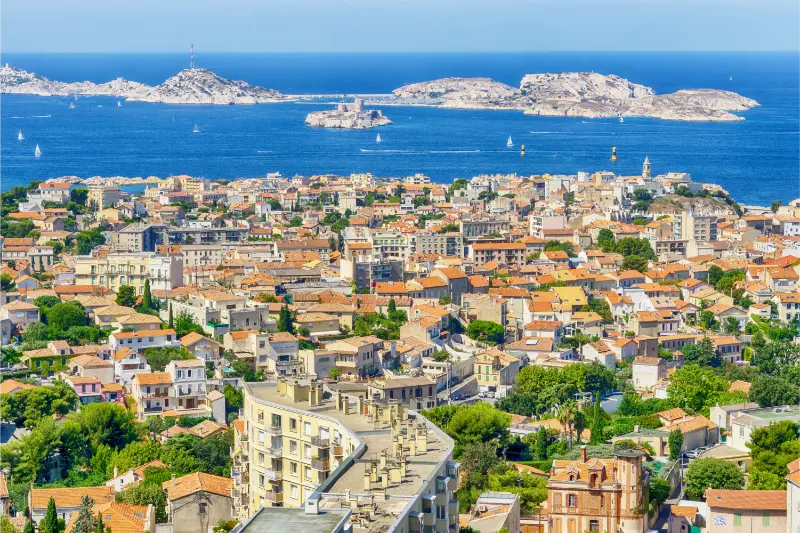
Marseille makes more sense when approached as a collection of neighbourhoods facing the sea, not as a polished monument city. Its port history, migration, hills, markets and coves create sharp changes of atmosphere within a single day.
Four days allows the Old Port and Le Panier, Notre-Dame de la Garde, coastal districts, an island trip and one carefully planned Calanques experience. The route stays flexible because wind, heat, fire risk and sea conditions can change access.
Quick planning overview
| Stay | 4 nights |
| Base | Near Vieux-Port, Castellane or a well-connected central street |
| Transport | Metro, tram, bus, boat and walking |
| Nature rule | Check official Calanques access the same day |
| Best approach | One neighbourhood cluster per half-day |
A four-day Marseille plan
Day 1: Vieux-Port and Le Panier
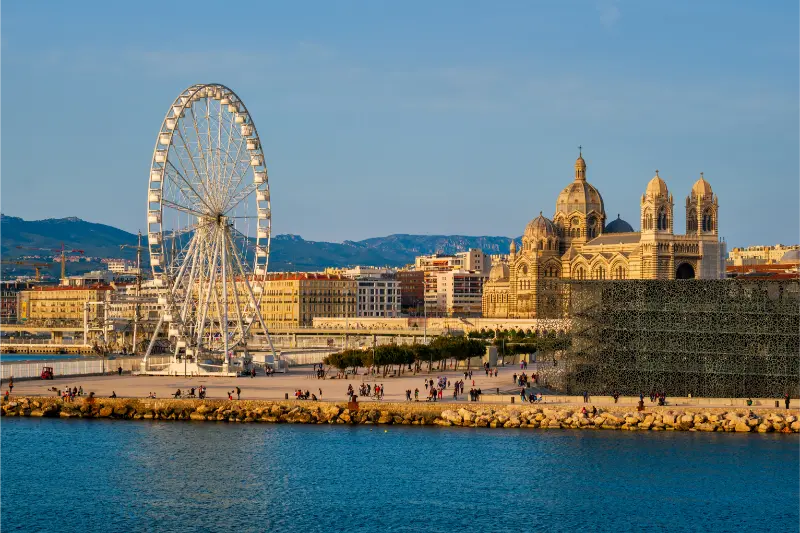
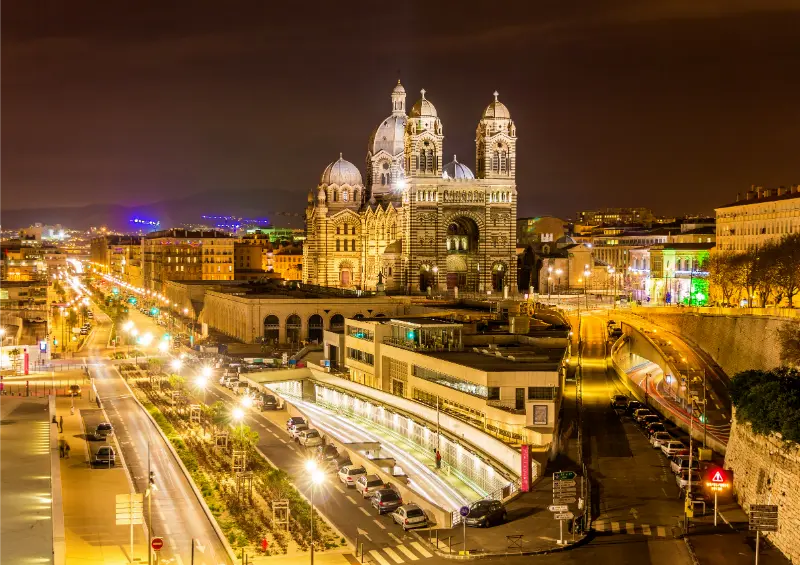
Start at the harbour, then climb through Le Panier toward the cathedral and MuCEM area to connect ancient port geography with contemporary culture.
My practical advice: Use busy public streets and remain attentive to belongings without turning normal city life into fear.
Day 2: Notre-Dame and the Corniche
Reach Notre-Dame de la Garde early, then descend toward the coast for viewpoints and neighbourhoods such as Vallon des Auffes.
My practical advice: Bus and walking combinations save energy; summer exposure and hills are more demanding than the map suggests.
Day 3: Frioul or Château d’If
A boat day reveals Marseille from the water. Choose islands according to ferry operation, weather, swimming interest and the time needed for a meaningful visit.
My practical advice: Official sailings can change in strong wind. Carry water, sun protection and a backup city plan.
Day 4: the Calanques
Approach the national park as protected terrain, not an urban beach. Route choice must reflect closures, temperature, footwear, water and personal fitness.
My practical advice: Use official access information and the Mes Calanques resources; never bypass a closure or rely on an old blog timetable.
Alternative: Noailles and Cours Julien
When weather prevents the coast, markets, street art, independent shops and food histories provide a rich urban day.
My practical advice: Explore respectfully with a local guide if you want deeper migration and commerce context.
Optional Cassis
Cassis can complement Marseille, but its harbour and nearby coves become crowded and parking is difficult.
My practical advice: Use train-plus-bus or a boat plan only after checking current connections and sea conditions.
How to handle the Calanques
Check access
Fire danger can restrict entry in the warm season; official daily information overrides every saved itinerary.
Carry enough water
Shade is limited and there may be no services on hiking routes.
Choose the right route
Distance alone does not describe steep, rocky paths; match terrain to fitness and footwear.
Consider the sea
Boat views reduce hiking demands but do not guarantee landing or calm conditions.
Where to stay
Vieux-Port is convenient and animated; Castellane has strong transport; the southern coast is attractive but less central for museums and stations. Examine the exact block, night noise and walking route rather than rejecting or accepting an entire district by reputation. Air-conditioning matters in summer.
Compare accommodation in Marseille on Booking.com
Getting around
Marseille Saint-Charles sits above the city and connects by metro. Urban transport reaches many starting points, while boats add seasonal links. A car is unnecessary for the central plan and difficult around coastal parking. Keep return times and last services visible when leaving for islands or outer districts.
Food and everyday rhythm
Bouillabaisse is a specific, labour-intensive dish and genuine versions are not cheap; reserve a trusted address if it matters. Marseille’s wider food identity includes panisse, pizza, seafood, North African influences and market produce. Drink pastis slowly and never let a famous dish dictate every meal.
Budget and booking strategy
The city’s viewpoints, markets and coast offer many low-cost hours. Boat fares, MuCEM exhibitions and guided nature experiences are the main optional expenses. A transport pass can help if the four days span multiple districts; compare actual journeys before buying.
How I would prepare before departure
I would plan Marseille by its natural zones rather than force the whole city into one walking day. Map the Vieux-Port and Le Panier together; set Notre-Dame de la Garde and the Corniche as a separate hill-and-coast day; reserve the Frioul crossing for a dependable sea-weather window. The Calanques day needs its own decisions about trail, access and fitness long before breakfast. That separation matters because the city is large, gradients are real and a boat departure cannot be treated like a museum that waits for you. Keep at least one neighbourhood meal free of advance commitments so the schedule can absorb delays.
The first checks before leaving home are ferry sailing notices, the RTM service map and the national park’s latest access rules. In 2026, authorities regulate access to the Calanques in the fire-risk season and apply additional restrictions to motor vehicles on certain roads. For Sugiton or other especially pressured sites, read the reservation information on the park’s official channels rather than relying on an old blog. The same walk can be feasible one morning and prohibited during a high-risk day. Decide on a safer urban alternative before the journey begins and never assume a coastal road is open to private cars.
A windy day can make Frioul boats uncomfortable or subject to changed sailings, but it need not spoil Marseille. Use the MuCEM and Fort Saint-Jean area to explore the city’s Mediterranean links, or devote time to markets and street life around Noailles with appropriate respect for busy local commerce. If the Calanques close because of wildfire danger, that is a safety decision, not an invitation to find an unmarked entrance. In strong heat, shorter seafront walks early or late in the day may be more sensible than a long exposed hike. Check conditions again on the morning itself, not only during trip planning.

Accessibility and responsible travel
Access requirements depend strongly on the experience you choose. Le Panier has steep lanes and steps; Notre-Dame de la Garde sits on a considerable hill; some Calanques routes involve rocky, uneven and exposed terrain. Visitors who need step-free access should verify each museum entrance, the current RTM options and the actual boarding arrangements for boats, which can differ by vessel and weather. A scenic cruise may offer a better view of the cliffs than attempting a difficult descent, but sea conditions and boarding limitations still matter. Do not describe the Calanques collectively as an easy beach stroll: individual coves have very different approaches.
The national park is a protected landscape, not just a sequence of swimming spots. Keep to authorised paths, carry out litter, avoid disturbing vegetation and do not enter closed areas during elevated fire risk. On the water, choose operators who explain the boundaries of protected zones and swimming restrictions. In Le Panier, remember that picturesque stairs and painted doorways belong to a living residential district. Local markets, independent cafés and smaller museums spread tourism’s benefits beyond a hurried harbour photo. Marseille becomes more understandable when you recognise its working-port identity alongside the dramatic scenery promoted in travel images.
Mistakes I would avoid
- Judging Marseille only from the station area
- Hiking the Calanques without same-day checks
- Renting a car for central sightseeing
- Expecting cheap authentic bouillabaisse
- Planning boats without a wind-weather alternative
The mistake I would avoid is treating Cassis and Marseille’s Calanques as interchangeable or easily combined in a few hours. Routes, public transport and access points differ; the closest-looking cove on a photograph may require a substantial walk. Likewise, island ferry tickets do not automatically include entry to Château d’If, and an island visit depends on sailing conditions. Prioritise either Frioul exploration or the fortress according to the timetable you can actually book. In the city, give Le Panier enough time to wander but keep a realistic climb allowance for the basilica. Successful planning here respects both geography and the Mediterranean weather.
Frequently asked questions
Is Marseille safe for tourists?
It is a large working city. Use ordinary urban awareness, choose well-reviewed streets and keep valuables controlled in crowds.
How many days do I need?
Three days covers the centre, coast and one major excursion; four provides weather flexibility.
Can I visit the Calanques without a car?
Yes, using public transport, boats or guided activities, but routes and seasonal rules require planning.
Is Cassis a must?
No. It is attractive, but Marseille, Frioul and accessible Calanques can fill the trip without adding another crowded stop.
Useful official resources
Use Marseille Tourism and the city’s transport network for urban logistics, the Calanques National Park for trail rules and closures, and MuCEM for exhibition and entry information. The municipality’s notices on seasonal vehicle restrictions are worth checking directly because they may be updated during the summer. For boat travel, confirm with the operating company whether routes call at Frioul or Château d’If and whether bad weather changes the ticket. General city travel guides are useful for orientation but cannot certify today’s wildfire restrictions. Save the park’s official status and an RTM route home where they will remain available offline.
Continue planning your trip
For the next step, read the Provence road trip, the French Riviera guide, the Corsica road trip and the two-week South of France itinerary. These guides are designed to connect into a slower, more realistic France itinerary.
Four days in Marseille should make room for contrasts: the dense conversations of the Old Port, the scale of the basilica above the city, the open horizon around Frioul and a protected limestone landscape beyond the built-up shoreline. There is no need to see each famous cove or sample every district in a single visit. An evening looking back toward the harbour can explain Marseille’s relationship with the sea as effectively as a crowded excursion. The itinerary gains depth when food, waterfront views and neighbourhood time sit alongside its well-known landmarks, rather than becoming filler between reservations.
A final decision checklist
I would make the outdoor decision each evening for the following day. If the forecast gives calm seas and a confirmed crossing, use that window for Frioul. If temperatures are high and trail access remains authorised, begin a carefully chosen Calanques walk early with ample water and a clear return plan. If officials close the massif, move immediately to a museum or neighbourhood day without bargaining with the rules. This flexibility is more important than keeping a strict day-number order. Anyone travelling with children should select an outing by walking difficulty and shade, not by a picture of turquoise water.
For the practical base, assess where you will return after dinner. A stay near the Vieux-Port or a dependable metro link simplifies the central days, but street noise and stairs may be issues in older accommodation. Check whether the room has a lift, whether late check-in is supported and how you reach the departure point for the boat or national-park excursion. If arriving by train at Saint-Charles, account for the station’s elevated position and stair routes with luggage. Driving in the dense centre offers little advantage for this plan; use public transport for city movements and make a separate transport decision for any outlying trailhead.
Before departure, save a specific Calanques route, its access notices and a substitute plan that does not depend on sea conditions. Keep island sailings and museum reservations separate so a cancelled boat does not unravel the entire day. Confirm which leg of the outing requires a long walk or a climb, and pack water and sun protection accordingly. Marseille is memorable because the city and wild coast feel so close together, but that proximity can be misleading. Treat each outdoor excursion as a real journey with its own restrictions, and the four-day visit will feel ambitious without becoming reckless.