

With 5 days in Alsace, you can see Strasbourg and Colmar properly, spend a day among Wine Route villages and still choose between castles or the Vosges. The route works best with two bases rather than changing hotel every night.
The Alsace Wine Route runs for more than 170 kilometres from the northern vineyards toward Thann, passing dozens of villages. Five days is not enough to “do” the whole route—and that is an advantage. Choose a compact central section and leave room for meals, tastings and walks.
Quick planning summary
- Days 1–2: Strasbourg.
- Days 3–4: Colmar + selected Wine Route villages.
- Day 5: Haut-Koenigsbourg, a castle day or the Vosges.
- Use train for Strasbourg–Colmar; rent a car only if your chosen village circuit needs it.
- Two bases are enough for most first trips.
Day 1 — Strasbourg essentials
Start with the cathedral and Grande Île, then walk Petite France and the covered bridges. Keep the afternoon for Neustadt or a museum rather than racing out of the city.
Strasbourg deserves an evening because the centre changes once day visitors leave.
Day 2 — Strasbourg beyond the postcard
Use the second day for the European Quarter, parks, museums or a food-focused walk. If you want an excursion, Obernai is an easy candidate but should replace part of the city day, not be added to it.
A second Strasbourg day gives the itinerary depth before you move south.
Day 3 — Colmar
Take the train to Colmar and explore the old town, Little Venice, covered market and Unterlinden Museum according to your interests.
Do not immediately leave for the villages. Colmar is more useful when treated as a destination and base, not just a gateway.
Day 4 — Wine Route villages
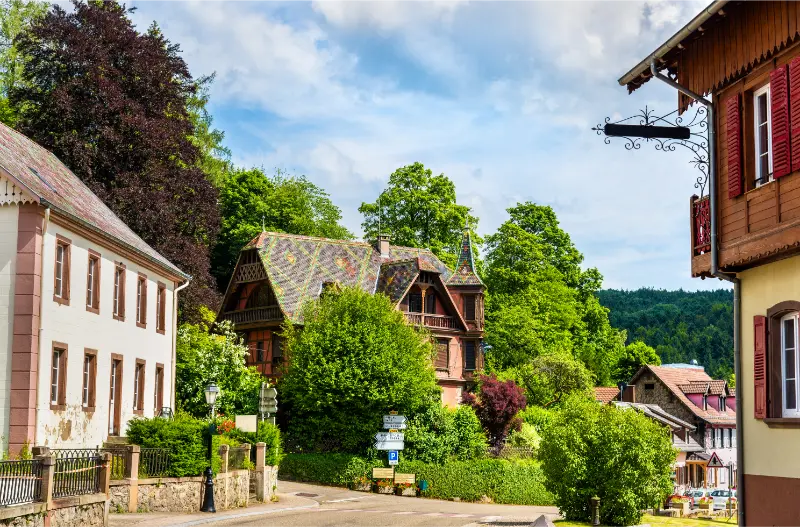
Choose three villages at most. Eguisheim, Kaysersberg, Riquewihr, Ribeauvillé, Turckheim and Bergheim are all strong, but the day improves when you spend longer in fewer places.
If you do not want to drive, seasonal tourist shuttles and organised options can cover parts of the central Wine Route.
Day 5 — castles or mountains
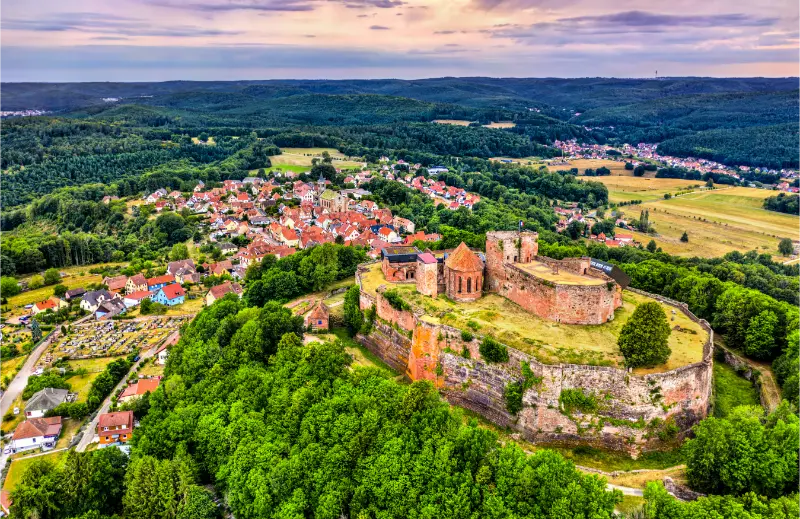
Haut-Koenigsbourg is the strongest single castle visit. For nature, use the Route des Crêtes, Munster Valley or a lower-level Vosges walk depending weather.
Make the final day conditional on the forecast; the mountain option is only worthwhile when conditions cooperate.
Where to stay
Use Strasbourg for the first two nights and Colmar for the next three. This reduces backtracking and makes the Wine Route day easier.
A village stay is atmospheric, but it is best when you have a car or when the village itself is the point of the evening.
The five-day route should change depending on whether you have a car
Without a car, make Strasbourg and Colmar the anchors and use trains for the transfer between them. Add Wine Route villages only where the bus or seasonal shuttle makes sense, and accept that two well-chosen villages are better than five awkward connections. With a car, keep the cities car-light and use the vehicle for the vineyard corridor, Haut-Koenigsbourg and the Vosges.
A useful compromise is to spend the first two nights in Strasbourg, transfer by train to Colmar, then collect a car only for the final two days. That avoids city parking while preserving freedom where it matters.
How much time Strasbourg really needs
Give Strasbourg at least a full day and preferably part of a second. The cathedral and Petite France are the obvious highlights, but the city makes more sense when you also see the Neustadt, European district, riverfront or one substantial museum. Treating Strasbourg as a three-hour photo stop leaves you with the least distinctive version of the city.
Stay for dinner if possible. The centre feels different after day-trippers leave, and a proper evening in a winstub gives the trip a food experience rather than another attraction.
How to make Colmar more than a postcard stop
Colmar is compact, which tempts people to rush it. Use the first part of the day for Little Venice, the market area and the historic streets, then choose one museum, food experience or slow neighbourhood walk. The value is in noticing the transition from tourist centre to an ordinary Alsatian town, not only photographing the same canal from three bridges.
Colmar also works as the best base for the central Wine Route. If you stay overnight, you can leave for villages before the main day-trip wave and return for dinner without another long drive.
One Wine Route day: choose a coherent cluster
Do not attempt Eguisheim, Kaysersberg, Riquewihr, Ribeauvillé and several wineries in one day. Choose a northern or southern cluster. Kaysersberg, Riquewihr and Ribeauvillé make a logical northern sequence; Eguisheim and Turckheim work well closer to Colmar. Add one tasting or vineyard walk, not both plus five villages.

The Alsace Wine Route stretches far beyond the best-known stops, so a quieter village can be more rewarding than a third famous one. The goal is to experience the landscape between villages as well as the centres themselves.
Castle day or Vosges day?
Choose Haut-Koenigsbourg if you want a major historic site with a structured visit and broad views. Pair it with Sélestat or one nearby village rather than another large detour. Choose the Vosges if landscapes, walking and mountain roads matter more than interiors. In that case, weather should decide the exact route.
Trying to combine a full castle visit, the Route des Crêtes, a long hike and a wine village makes the fifth day too fragile. Pick one dominant theme and let the final stop remain optional.
Food should shape the route
Alsatian meals can be substantial, so plan them into the day. A long lunch followed by three winery visits and a mountain drive is not a sensible sequence. Use one day for a traditional winstub meal, another for a lighter lunch in a village, and leave space for bakery stops, kougelhopf, cheese and seasonal specialities.
If wine tasting is part of the itinerary, designate a driver or use a tour/transport solution. The region is easy to enjoy without turning tasting into a quantity exercise.
A weather-proof version of the five days
Keep Strasbourg and Colmar as the two indoor-capable days and assign the best forecast to the Wine Route and Vosges. Haut-Koenigsbourg can work in mixed conditions, but views and the exterior experience are stronger when visibility is good. If heavy rain arrives, move a museum-rich city day forward rather than driving from village to village under umbrellas.
This is another reason not to pre-book every minor stop. Reserve accommodation and any essential tasting, then let the daily order respond to conditions.
Where the itinerary can go wrong—and how to fix it
The first problem is too much driving. Strasbourg, Colmar, the Wine Route, Haut-Koenigsbourg and the Vosges can fit into five days, but only if each day has a clear geographical focus. Zigzagging back to Strasbourg after every excursion or driving from southern villages to a northern castle late in the afternoon wastes the region’s compactness. A split stay between Strasbourg and Colmar is often more efficient than one base when you have a car-heavy plan.
The second problem is treating every village as a separate attraction. Once you have seen two or three famous centres, the experience improves when you add a vineyard walk, tasting, castle, mountain road or museum. This gives the trip contrast and prevents half-timbered-house fatigue. The third problem is booking tastings too tightly: allow time to park, talk to the producer and eat before driving again.
If weather disrupts the mountain day, do not force it. Move Strasbourg or Colmar forward, keep the Vosges for the clearest forecast, and use the flexibility built into the fifth day.
A simple luggage strategy for a split stay
If you divide the trip between Strasbourg and Colmar, pack so the transfer day remains a sightseeing day. Keep documents, a light layer and anything needed before hotel check-in in one small bag, while the main luggage stays closed. Travel between the two cities early enough that you can leave bags at the second hotel and continue without losing half a day to check-in logistics.
Do not collect a rental car until you are ready to leave Colmar for villages or mountains. Carrying luggage to a rental office, finding central parking and then walking back into the old town is exactly the sort of avoidable friction that makes a five-day itinerary feel rushed.
Adjust the route to your transport
If this is your first Alsace visit, decide on accommodation and transport before adding extra villages. The where-to-stay comparison explains the advantages of Strasbourg and Colmar, while Alsace without a car helps when you want to rely on rail and local buses. If five days feels too compressed for vineyards and the Vosges, see the seven-day itinerary for a gentler alternative. The Alsace travel guide provides a wider regional overview before you choose which of the five days to devote to wine villages or the Vosges.
Official information
Check TER train timetables, village bus connections, castle opening arrangements and mountain weather before finalising the two countryside days of this itinerary. You can also consult the official tourism website for local updates.
Final thoughts
Five days work best when the itinerary has two clear anchors: Strasbourg for its cathedral and urban heritage, and Colmar for nearby wine villages. Add just one memorable countryside day rather than racing through every famous stop along the route. Save the Vosges or a longer castle visit for the day with the best weather, and leave space for an unhurried winstub meal.
Tours & activities
Last updated: 21 October 2026