
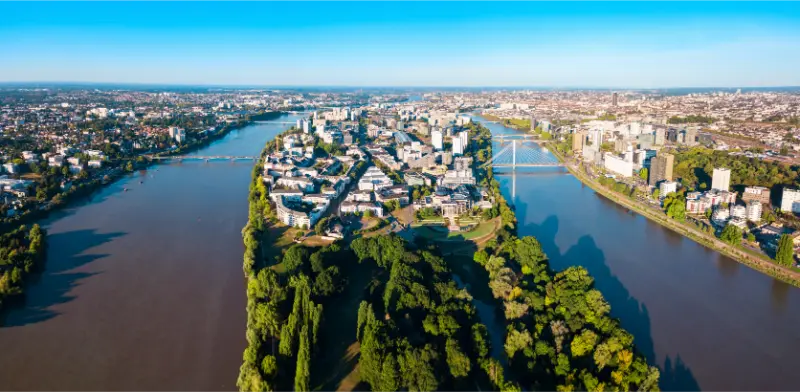
Nantes is difficult to reduce to one identity. It was a ducal capital, a major Atlantic port and an industrial city; today, art appears along streets and the former shipyard landscape has become a public cultural district. That combination makes Nantes more interesting than a single attraction weekend.
Three days allows the Château des ducs de Bretagne, the central art route, the Machines de l’Île and serious engagement with maritime history. A flexible third day can extend along the Loire estuary or into the Muscadet vineyards. The green line marked through the city helps navigation, but it should guide curiosity rather than dictate every minute.
Quick planning overview
| Stay | 3 nights |
| Best base | Centre, Bouffay edge or near a useful tram |
| Transport | Walking, tram, bicycle and seasonal boat |
| Reserve | Machines de l’Île experiences and special exhibitions |
| Planning tool | The official green-line art route |
A three-day Nantes plan
Day 1: château and historic centre
Begin at the Château des ducs de Bretagne and its city-history museum, then walk through Bouffay, the cathedral area and Passage Pommeraye. The sequence connects medieval power, commerce and the present centre.
My practical advice: Give the museum enough time and check current access around restoration or events. Cobblestones and level changes require realistic footwear.
Day 1 evening: the art trail
Follow selected sections of the green line through public artworks and lively squares. The route changes how ordinary streets are read and can lead beyond a standard monument circuit.
My practical advice: Choose a coherent section rather than completing the entire line. Temporary works and construction make the official map the current authority.
Day 2: Machines de l’Île
The former shipyard area combines engineering imagination, performance and public space. The gallery, carousel and mechanical elephant have different tickets and operating patterns.
My practical advice: Decide which experience matters before booking; seeing the district does not require purchasing every component.
Day 2: maritime memory
Continue toward the Memorial to the Abolition of Slavery and the Loire quays. Nantes’ prosperity and Atlantic connections require honest engagement with the history of the slave trade.
My practical advice: Treat the memorial as a place for reflection, keep voices low and use the interpretive material rather than reducing it to a riverfront photo stop.
Day 3: museums, gardens or Trentemoult
Choose the Musée d’Arts, Jardin des Plantes and neighbourhood streets, or cross toward colourful Trentemoult when transport and weather suit. Each creates a different final day.
My practical advice: Trentemoult is residential. Keep doorways clear and avoid treating painted homes as public sets.
Optional extension: estuary or vineyards
The Loire estuary art route toward Saint-Nazaire and the Muscadet vineyards extend the city’s stories into landscape. They require a full-day transport plan rather than an improvised afternoon.
My practical advice: Check seasonal boat, rail, bicycle and tour options directly; not every artwork is accessible by one continuous public route.
How to personalise Nantes
For families
Prioritise the Machines district, château story, parks and short public-art discoveries.
For art travellers
Add the Musée d’Arts and current Voyage à Nantes installations, checking temporary exhibition dates.
For history
Give the château museum and slavery memorial unhurried time, then connect them through the port landscape.
For cyclists
Use official routes along the Loire and understand surface, distance, ferry or train return options before departure.
Where to stay
The centre provides walking access to the château, restaurants and trams. Bouffay is lively and can be noisy, while areas near the station simplify arrival and the Jardin des Plantes. The island works for contemporary architecture but requires more transport for some evenings. Confirm which station exit and tram stop serve the accommodation.
Compare accommodation in Nantes on Booking.com
Getting around
Nantes is well suited to a car-free break. Trams, buses, bicycles and selected river services cover the city, while the main station sits close to the historic core. Estuary and vineyard trips need separate planning. A car can help rural travel but should be collected after central sightseeing rather than parked throughout the stay.
Food and everyday rhythm
Nantes connects Loire produce, Atlantic seafood, butter-rich baking and Muscadet wines. Markets and contemporary restaurants reveal more than one signature dish. Use the official local dining guide as a starting point, then choose according to current menu and sourcing. Arrange non-driving transport for winery visits and ask before photographing vendors.

Budget and booking strategy
The green-line walk, waterfront and many public artworks are free, allowing money for the château museum, Machines experiences or a guided history visit. Compare the Nantes Pass with the attractions and transport you genuinely plan to use. A central hotel can remove enough journeys to outweigh a small outer-area saving.
How I would prepare before departure
Nantes rewards a three-day plan arranged by river and island rather than by a list of attractions. Begin around the Château des ducs de Bretagne and Bouffay, continue to Passage Pommeraye and the city-centre art trail, then devote a separate day to the Île de Nantes. The Loire is not scenery at the edge of town: former shipyards and new cultural projects explain why Nantes looks so different from a preserved medieval city. Stay close to a useful tram corridor if possible, and allow walking time between sites. If arriving by train, distinguish the station exits and save the route to your accommodation before you start sightseeing with luggage.
For Les Machines de l’Île, choose the actual experience you want, because viewing the Grand Éléphant from outside is different from booking a ride or entering the Galerie des Machines. Opening days, technical closures and reservations can change, so use the operator’s ticket page instead of an old itinerary screenshot. At the château, the city-history museum adds context to Nantes’s maritime trade and its connections with the Atlantic slave trade; treating this history seriously is essential to understanding the prosperity visible in its streets. Do not plan both visits as quick photograph stops if either interpretation genuinely interests you.
When rain arrives, adjust the Nantes plan by moving from the riverfront to the château museum, Musée d’arts de Nantes or covered Passage Pommeraye. The passage is a beautiful nineteenth-century shopping arcade, but it is also a working retail space; browse respectfully rather than blocking staircases. A wet evening may still suit the central streets around Bouffay, where cafés and restaurants provide easy breaks. For a windy waterfront day, replace long bridgeside wandering with shorter walks and one carefully chosen exhibition. The Le Voyage à Nantes trail changes through exhibitions and installations, so check the current official map instead of assuming every previous work remains on view.
Accessibility and responsible travel
Accessibility in Nantes depends on which part of the city you are visiting. Central tram lines can make travel easier, while the historic château’s ramparts and older streets require individual route checks. On the Île de Nantes, some regenerated quays provide broad promenades, but temporary installations and construction may alter access. Before buying a Machines ticket, inspect each experience’s accessibility information, especially boarding procedures and lift availability. Families using strollers should also check whether their chosen river crossing and afternoon route avoid unnecessary stairs. A hotel next to a tram stop is useful only if the accessible stop and correct platform serve your real journeys.
The riverside setting makes Nantes a good place to think about responsible urban tourism. The former port and industrial zones are still part of a living metropolitan area, not an outdoor theme park. Follow rules near working docks, respect cyclists on shared paths, and keep clear of private entrances in Trentemoult, a residential village across the Loire. If visiting local markets, buy what you can eat and avoid obstructing traders while taking photographs. The city can be explored largely by foot and public transport; renting a car for an entirely urban three-day stay usually adds parking demands without bringing a useful new experience.
Mistakes I would avoid
- Visiting only the mechanical elephant
- Treating the slavery memorial as a quick attraction
- Trying to complete the entire green line in one day
- Assuming all estuary art is beside one train line
- Driving into the centre for a short city break
A frequent planning mistake is trying to combine the Machines, a full château visit, Trentemoult and a vineyard excursion in a single day. Each experience involves different travel directions and schedules, and crossings of the Loire are not instantaneous. Trentemoult is a pleasant change of pace when its transport connection is running conveniently, but it is not a substitute for the city’s maritime-history exhibits. Another error is assuming every artwork on an old green-line itinerary is permanent; check the latest Le Voyage à Nantes programme. For families, book the attraction with the tightest timeslot first, and leave the parks and riverside as flexible time.
Frequently asked questions
Is three days enough for Nantes?
Yes. Two days cover central highlights; a third allows deeper museums, neighbourhoods or an excursion.
Is Nantes walkable?
The centre is walkable and trams connect wider districts. Bicycles help along suitable riverside routes.
Do I need to reserve the Machines de l’Île?
Popular experiences and time-specific activities may require advance booking. Check the official site for the exact visit.
Can I visit the Atlantic coast?
Yes, but give Saint-Nazaire or another coastal destination a proper day and verify connections.
Useful official resources
The three official checks I would make are the Les Machines de l’Île calendar, the Château des ducs de Bretagne visitor information and the current Le Voyage à Nantes route. The local transit operator is essential for a late evening or cross-river connection. Museum exhibitions and special events may alter opening days or access, even when the main building appears open. Keep a backup daytime activity for any mechanical interruption at the Machines. If you plan to add a Loire estuary art trip, confirm the actual departure point and return rather than assuming it runs like an ordinary city tram.
Continue planning your trip
For the next step, read the Atlantic coast guide, the Brittany road trip and France by train. These guides are designed to connect into a slower, more realistic France itinerary.
Nantes is interesting because its cultural image has been reinvented without erasing its difficult history. Spend enough time at the château to learn about the port economy and the slave trade; then observe how the post-industrial island has become a setting for mechanical art and public space. The contrast between a historic fortified residence, elaborate nineteenth-century shopping architecture and converted shipyards is the story of the trip. If you are here for a weekend, pick the two sites that best illustrate that transformation rather than trying to complete a checklist. A slower visit gives you more time to notice everyday Nantes between the major sights.
A final decision checklist
My favourite three-day distribution keeps day one in the centre, day two on the Île de Nantes and day three open for either the Musée d’arts, Jardin des Plantes or Trentemoult. That gives the itinerary a museum day, a creative day and a choice day. If a child is excited by the Grand Éléphant, move the Machines to the most reliable opening slot. If you prefer contemporary art, let the seasonal art trail determine the route. Keep meals near the day’s activities: crossing town to reach a fashionable dinner address can undo the advantage of a compact plan.
Before leaving for Nantes, I would reserve the most important Machines experience, check whether the château’s permanent collections and temporary shows share admission arrangements, and verify the latest tram timetable. Save the address of your arrival station and hotel, plus an indoor alternative for rain. If adding Muscadet vineyards outside the city, decide who will drive and whether a guided or public-transport option is possible before scheduling tastings. A boat trip on the Loire has more weather sensitivity than a museum; keep its place flexible. These checks make the itinerary usable without turning each hour into a timed appointment.
The final question is whether the trip feels like Nantes rather than a generic city break. You should be able to describe something learned at the château, remember the industrial landscape around the Machines and name a street or riverside corner you enjoyed without buying a ticket. If the plan has only transport connections and admissions, add an unscheduled walk between Bouffay, Passage Pommeraye and the Loire. If the plan has only free outdoor stops, include a museum that explains the city. Nantes becomes memorable when its historical layers and current creativity are allowed to speak to each other.