
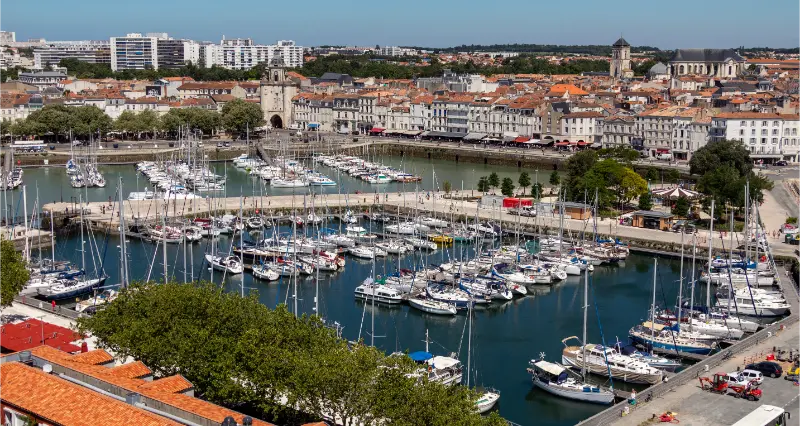
La Rochelle and Île de Ré make a natural pair, but they move at different speeds. La Rochelle is a maritime city with museums, markets and a working port identity; the island rewards bicycles, village mornings and decisions shaped by wind and tide.
Five days allows two city days and three island or coastal days. The itinerary can be largely car-free, which avoids bridge traffic and parking pressure while preserving flexibility through buses and bicycles.
Quick planning overview
| Length | 5 days |
| Base plan | 2 nights La Rochelle, 3 nights island or one city base |
| Transport | Train, bus, bicycle and boat |
| Cycle note | Match route and wind to ability |
| Sea note | Check tides, flags and local conditions |
A five-day Atlantic plan
Day 1: Old Port and historic centre
Walk the harbour towers, arcaded streets and market area to understand La Rochelle as more than a gateway.
My practical advice: Visit early and after dark; the port’s atmosphere changes when day visitors leave.
Day 2: maritime culture
Choose the aquarium, maritime museums or a boat experience, leaving room for Tasdon marsh or a cycle path.
My practical advice: Do not stack every indoor attraction; the city’s sustainability story is visible outdoors too.
Day 3: reach Île de Ré
Transfer by bus or bicycle plan and settle into one island village rather than immediately crossing the entire island.
My practical advice: Bridge wind and cycle traffic matter; use the bus if riders lack confidence.
Day 4: village cycling
Create a loop through salt-marsh or vineyard landscapes, stopping at markets and authorised viewpoints.
My practical advice: Distances feel longer in headwinds. Carry water, use lights and keep paths clear.
Day 5: beach or nature reserve
Select the coast according to wind, tide, swimming flags and transport back to La Rochelle.
My practical advice: Atlantic conditions can change quickly; supervised beaches and local advice should guide families.
Alternative mainland day
Rochefort, Île d’Aix or the Marais Poitevin can extend the trip, but each deserves its own full-day logistics.
My practical advice: Choose one alternative, confirm boats or trains and protect the final connection.
Car-free planning
Arrive by train
La Rochelle station sits within reach of the centre and cycle network.
Use island buses
They reduce bridge and parking pressure, though timetables vary seasonally.
Rent the right bicycle
Fit, locks, child equipment and repair support matter more than the cheapest rate.
Plan with wind
Ride the exposed direction earlier and shorten the loop before fatigue.
Where to stay
Central La Rochelle suits a short city break and day trips. On Île de Ré, Saint-Martin offers services and atmosphere, while smaller villages feel quieter but may require cycling for dinner. Confirm secure bicycle storage, minimum stays and whether beaches are truly walkable.
Compare accommodation in La Rochelle on Booking.com
Getting around
High-speed and regional trains serve La Rochelle. The city advertises an extensive cycle network, and buses cross to Île de Ré. Ferries and seasonal services need live checks. Cars are useful for broader Charente-Maritime but create parking constraints on the island.
Food and everyday rhythm
Markets and menus centre on fish, oysters and mussels, while island salt, potatoes and local produce add identity. Shellfish safety and origin matter; buy from established vendors. Reservations help in small island villages, especially when weather concentrates everyone indoors.
Budget and booking strategy
Cycling and beaches can make days economical, though island accommodation and summer rentals rise. Compare staying in La Rochelle with an island stay after including buses and bicycle hire. Passes are useful only if their included sites match the plan.
How I would prepare before departure
I would divide this Atlantic holiday between two nights exploring La Rochelle and three days centred on Île de Ré, without making a separate overnight move compulsory. The Old Port, arcaded streets and maritime sites belong together on the mainland. On the island, plan by village groups and cycle-friendly distances rather than drawing a line from one tip to the other. Saint-Martin-de-Ré, La Flotte and Ars-en-Ré have different rhythms and are better appreciated on two or three focused outings. A map should also show bike parking and a sheltered alternative, because wind can turn a modest-looking island loop into a tiring family ride.
Before you choose accommodation, compare the bridge, buses and any seasonal shuttles. The official Île de Ré tourism office confirms that regional bus route 150 serves the island’s villages and La Rochelle’s station, while additional shuttles vary by season. Crossing on foot or by bicycle is free, whereas motor vehicles pay a bridge charge; verify the current rules and fares rather than using an old quotation. If taking a bicycle on a bus, check capacity and reservation conditions. A rental shop’s definition of a family bike or child’s seat should be clarified in advance. Transport is part of the experience, not a minor detail to solve after arrival.
If a strong Atlantic wind makes a long island cycle uncomfortable, give La Rochelle another cultural day or choose a shorter village-to-village ride with a favourable return. The aquarium and other indoor attractions are useful alternatives in wet weather, while a quiet market and the historic arcades can fill a less ambitious morning. Beach plans should follow wind, tides and local swimming information: a beach looking broad at one hour can feel quite different later in the day. In high summer, cycle early when roads and paths are less busy, then stay in one village for a slower afternoon. Do not force the full route in poor conditions.
Accessibility and responsible travel
La Rochelle’s central streets offer many relatively level stretches, but the island is not automatically accessible merely because it is flat. Soft sand, uneven harbour paving and crowded seasonal cycling routes can create barriers. If travelling with a wheelchair or stroller, identify paved promenades, accessible public transport and the exact path from accommodation to the village centre. For children on bikes, match distance to confidence and allow frequent rest breaks; headwinds matter as much as kilometres. Families who prefer walking may be happier using island buses and exploring one village at a time rather than renting bicycles for an entire day.
Île de Ré’s salt marshes, dunes and oyster-growing areas are living and protected landscapes. Stay on authorised cycle routes, respect signs around nesting birds and avoid cutting across sensitive marsh edges. The cycle network is popular, so signal turns and give walkers and slower riders room rather than treating the path as a racetrack. In fishing and oyster harbours, remember that working access must remain clear. A modest lunch featuring local seafood or seasonal produce can connect the itinerary to the island’s traditions without intruding on private operations. La Rochelle’s maritime heritage deserves the same respect in its functioning port areas.
Mistakes I would avoid
- Cycling too far into a headwind
- Choosing beaches without tide checks
- Driving onto the island at peak time without a parking plan
- Assuming every village serves late dinner
- Making the final ferry connection too tight
A frequent mistake is assuming five days requires five different towns and a new hotel every night. Two well-chosen bases—or even one mainland base with reliable island connections—can work better. Another is underestimating the causeway journey in summer traffic or cycling a far western village without considering the return wind. Reserve any busy-season bicycle hire before the day you need it, especially with children’s equipment. If you want to visit the Phare des Baleines, check its actual access and stair requirements rather than attaching it casually to a full village cycling loop. Leave space for tides, markets and an unhurried seafood meal.
Frequently asked questions
Can I visit without a car?
Yes. Train, city transport, island buses and bicycles support a strong five-day trip.
How many days for Île de Ré?
Two or three days allows one village base, a cycle loop and beach flexibility.
Is the island flat?
Much of it is relatively flat, but wind, distance and traffic still affect difficulty.
Is this good for families?
Yes when cycling equipment, swimming conditions and distances match children’s ages.
Useful official resources
La Rochelle’s tourist office provides the mainland context, while Destination Île de Ré publishes bridge information, bus routes, cycling advice and seasonal shuttles. TER Nouvelle-Aquitaine is useful for reaching the coast by rail, and the chosen bus provider determines the practical last stretch to your accommodation. Check La Rochelle Aquarium’s official visiting information if it is part of the plan. For beaches and marsh reserves, follow the specific local notices on access and protection. Keep in mind that an advertised summer service may not run in the same form in spring or autumn, even when the island remains pleasant to visit.
Continue planning your trip
For the next step, read the Brittany road trip, France with children, Bordeaux and its surroundings and the French Basque coast. These guides are designed to connect into a slower, more realistic France itinerary.
The character of this trip lies in crossing from a historic port city to a low island of white houses, harbours, salt marshes and long horizons. Neither side needs to be reduced to a day trip done in a hurry. La Rochelle has the space for museums and lively evening streets; Ré invites a different pace as you travel by bike between villages. A market breakfast, the sight of working oyster boats and the changing Atlantic light can be as rewarding as a famous viewpoint. Five days gives the luxury of repeating a favourite village at a different time of day.
A final decision checklist
I would make the lodging choice according to transport. Without a car, a La Rochelle hotel near the station or a useful bus connection can simplify arrival, though island evenings then require checking the return service. For maximum cycling time, staying on Ré reduces bridge journeys; choose the village for its restaurants and realistic daily routes, not just the lowest price. Check bike storage, parking and late arrival conditions. If bringing a car, understand the bridge charge and seasonal parking before booking an isolated rental. A family should also check whether beaches and shops can be reached safely without a daily drive.
For the island days, choose one shorter east-side circuit and one longer outing only if weather and riders allow it. Villages such as La Flotte and Saint-Martin-de-Ré pair naturally, while Ars-en-Ré or the north-west coast deserves more time and a realistic return plan. Check the direction of the wind before you set off and avoid promising a children’s cycle day based on adult speeds. Buses and village shuttles may relieve some pressure, but their schedules and bike carriage restrictions matter. For non-cyclists, a combination of bus journeys and local walking still offers a rewarding island visit.
Before leaving, save the route from your arrival train to the chosen hotel, the current island bus timetable, any bicycle booking and a tide-aware beach plan. Reserve only the attractions that actually require it; use the rest of the time for markets, harbour walks and flexible rides. The Atlantic is not always gentle, and that variation is part of the coast’s appeal. A five-day itinerary succeeds when visitors experience both La Rochelle’s maritime history and Île de Ré’s quieter village landscapes without spending the holiday rushing between transport connections.