

Bordeaux is often introduced through wine, but the city makes more sense when you also understand its markets, bakeries, oysters, canelés, meat dishes and the food traditions that connect the Atlantic coast with inland southwest France. This guide focuses on how to build a visit that feels coherent rather than turning Bordeaux food and markets into a checklist. The practical choices—where to base yourself, how to move around and what to group together—matter as much as the headline sights.
Marché des Capucins is historically known as the “belly of Bordeaux”; the covered market traces its market role back to the eighteenth century and remains one of the best places to see the city eating in real time. That detail is a useful clue to the destination’s personality. A strong trip leaves room for atmosphere, food and unplanned pauses instead of assigning every hour to a ticketed attraction.
Bordeaux food and markets: quick planning table
| Best for | Travellers who want a focused Gironde experience with an easy-to-follow plan |
| Main highlights | Marché des Capucins, the Sunday market on the Chartrons quays, Halles de Bacalan, neighbourhood producer markets, canelés, Arcachon oysters, entrecôte and seasonal southwest produce |
| Suggested time | One full day minimum; two or three days if using it as a base |
| Transport | Most central food stops are walkable or tram-accessible. Do not rent a car just to chase restaurants; the strongest food day stays within a few connected neighbourhoods. |
| Best season | Markets are year-round experiences, but product mix changes. Summer highlights tomatoes, fruit and outdoor eating; autumn brings mushrooms and harvest-season menus; winter suits richer southwest cooking. |
What to prioritise
The core experiences are Marché des Capucins, the Sunday market on the Chartrons quays, Halles de Bacalan, neighbourhood producer markets, canelés, Arcachon oysters, entrecôte and seasonal southwest produce. Do not try to give every item equal weight. Choose two anchors for the day and let smaller stops connect them. This is especially important when weather, tides, children or transport timings can change the pace.
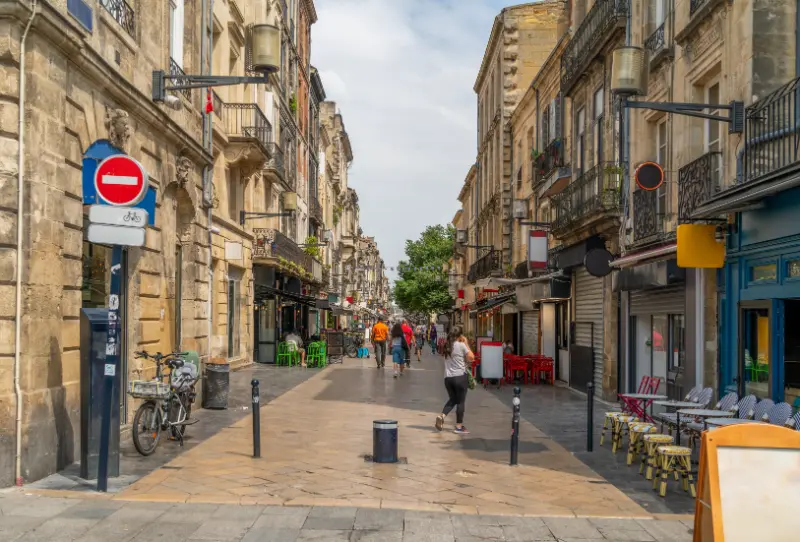
For first-time visitors, the easiest mistake is overplanning. Begin early at Capucins for breakfast or a market snack, walk toward Saint-Michel and the old centre, then save Chartrons or Bacalan for another meal rather than trying to eat continuously all day. A second morning can focus on bakeries and coffee before a wine-focused lunch. This structure reduces backtracking and lets the destination reveal its character between the obvious sights.
A realistic itinerary
Begin early at Capucins for breakfast or a market snack, walk toward Saint-Michel and the old centre, then save Chartrons or Bacalan for another meal rather than trying to eat continuously all day. A second morning can focus on bakeries and coffee before a wine-focused lunch. Build a lunch break into the middle rather than treating food as something to fit between attractions. A good Gironde itinerary should still work if one museum visit, beach stop or market takes 45 minutes longer than expected.
If you have only half a day, choose the single feature that best explains Bordeaux food and markets and add one nearby secondary stop. Short visits are more satisfying when they are geographically compact; crossing the area repeatedly to collect highlights usually costs more time than it adds value.
Getting around
Most central food stops are walkable or tram-accessible. Do not rent a car just to chase restaurants; the strongest food day stays within a few connected neighbourhoods. Check current timetables close to travel because regional and seasonal services change. In the city, public transport often beats driving; on the coast or in vineyard areas, a bike, transfer or carefully chosen tour may solve the final kilometres better than a rental car.
Around Bordeaux food and markets, if you do drive, choose parking before departure and avoid building the day around “we will find somewhere when we arrive”. Popular Gironde destinations can become congested in summer. A slightly longer walk from reliable parking is usually preferable to circling the centre or beach access roads.
Food and where to pause
The goal is not to order every regional specialty in one day. Choose one market meal, one pastry stop and one proper lunch or dinner, leaving room to notice quality rather than quantity. Plan one meal that reflects the place instead of stacking several “must-eat” stops. Markets and simple local counters are often better at preserving the rhythm of a day than a long detour to a famous address.
During a Bordeaux food and markets stay, focus reservations on evenings or days when local demand is highest. At lunch, flexibility is useful because sightseeing rarely follows an exact clock. If you have dietary requirements, verify options in advance rather than assuming every traditional menu will be adaptable.
Best time to visit
Markets are year-round experiences, but product mix changes. Summer highlights tomatoes, fruit and outdoor eating; autumn brings mushrooms and harvest-season menus; winter suits richer southwest cooking. Weather is only one part of the decision: crowd levels, tides, event calendars and transport frequency can matter just as much. Shoulder season is often the sweet spot for travellers who value space and still want services open.
On hot summer days, move the most exposed outdoor activity to morning or late afternoon. In cooler months, reverse the logic and use the brightest middle hours outside. This simple adjustment makes Bordeaux food and markets feel much more comfortable without removing anything important from the itinerary.
Who will enjoy this destination most?
Bordeaux food and markets works best for travellers whose priorities match its natural rhythm. Couples can slow the day down around meals and scenery; families benefit from open-air breaks; active travellers can add walking or cycling; repeat visitors to Bordeaux gain a broader sense of Gironde beyond the city and famous vineyards.
If your interests are very specialised, use Bordeaux food and markets as one part of a wider trip rather than asking it to provide everything. The Gironde cluster is strongest when city, vineyard, estuary and Atlantic experiences are combined across several days.
Common mistakes to avoid
- Trying to cover too many geographically separate stops in one day.
- Checking transport once when planning but not again shortly before travel.
- Ignoring heat, tide or weather when those conditions shape the experience.
- Choosing accommodation only by price without checking the exact transport connection.
- Scheduling a fixed dinner or train departure immediately after an activity with variable timing.
Where to stay
For a one-day excursion, Bordeaux can remain your base. If Bordeaux food and markets is central to the trip, staying in or near Bordeaux, France gives you quieter mornings, easier evenings and more flexibility when weather or transport changes. Compare exact map locations rather than relying only on the destination name in a hotel listing.
Useful practical details
For Bordeaux food and markets, carry water, a light layer and a small amount of flexibility. Gironde combines Atlantic weather, river environments and warm inland afternoons, so conditions can change faster than a city-only forecast suggests. Comfortable shoes matter even on “easy” days because old paving, sand, long quays and vineyard paths all add distance.
Continue planning your Gironde trip
Connect this guide with Bordeaux travel guide; Bordeaux neighborhoods guide; Bordeaux wine tours guide. Keeping the next stop geographically logical will save time and makes the wider Bordeaux + Gironde cluster feel like one journey rather than a set of unrelated day trips.
Final thought: The best way to experience Bordeaux food and markets is to protect the part of the day that gives it identity. Build around that, then add food, scenery and one secondary activity. The result is usually more memorable than trying to prove how many places you managed to fit into a single itinerary.

How to fit this into a longer Bordeaux and Gironde trip
If Bordeaux food and markets is one element of a week in Gironde, avoid alternating long east-west drives on consecutive days. Group Right Bank wine areas together, keep Médoc and Atlantic coast days on the western side, and reserve Bordeaux city days for arrival, departure or poor-weather flexibility. This regional grouping reduces time in traffic and makes each landscape easier to understand.
A practical sequence is often Bordeaux first, then one or two focused day trips, followed by a change of base only when it meaningfully improves access. For Bordeaux food and markets, ask whether sleeping nearby saves an early start or allows an evening experience you would otherwise miss. If not, keeping one base may be simpler and cheaper.
Photography and pace
Photographing Bordeaux food and markets works best when you build in pauses rather than stopping suddenly on roads or at working entrances. Use public viewpoints, quays, village streets and designated parking. In vineyards, remember that rows and tracks are agricultural spaces; at the coast or estuary, tide and light can transform the same composition within an hour.
The best images usually come from the same approach that produces the best travel day: fewer stops, better timing and time to observe. If the light is poor or a viewpoint is crowded, move on rather than forcing the photograph. Bordeaux food and markets has enough texture that a small set of varied images will tell the story better than dozens of near-identical frames.