

Alsace works unusually well for families because the region is compact and the attractions are varied enough to alternate architecture with animals, trains, castles, science and outdoor time. The mistake is assuming children will enjoy a full week of half-timbered villages simply because adults do.
Visit Alsace’s family material highlights Haut-Koenigsbourg, Monkey Mountain, Écomusée, Le Vaisseau, Parc du Petit Prince, Wesserling, Mulhouse’s zoo, the Cité du Train, Eagle Park and Fleckenstein among its core family experiences.
The strongest family itinerary uses only one or two villages at a time, then switches activity type. A castle morning followed by animals or a train museum is more sustainable than four consecutive historic centres.
Quick planning snapshot
| Best ages | works across preschool to teens with different pacing |
| Top heritage | Haut-Koenigsbourg and Fleckenstein |
| Top transport museum | Cité du Train, Mulhouse |
| Living heritage | Écomusée d’Alsace |
| Best strategy | alternate one structured visit with one active experience |
Strasbourg with children
Use trams, parks and Le Vaisseau to break up cathedral and old-town sightseeing. A boat trip can also reduce walking fatigue while still giving adults an architectural overview.
Do not attempt every museum in one day; choose one major interior and leave time for open space.
Castles that feel like adventures
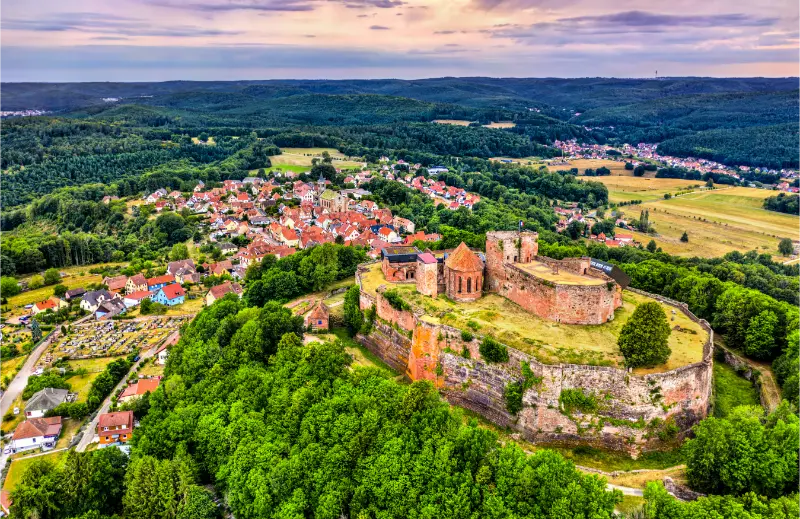
Haut-Koenigsbourg works because the reconstructed fortress has towers, courtyards and mountain views, while Fleckenstein’s sandstone setting and Castle of Challenges add more physical exploration.
Check stairs and age suitability before promising every tower to a stroller or mobility-limited family.
Animals and wildlife
Monkey Mountain, Eagle Park, Naturoparc and Mulhouse’s zoo provide very different animal experiences. Pick one that fits the route rather than crossing the region simply to add another wildlife stop.
Use official welfare and feeding rules; children get a better experience when they observe rather than chase interactions.
Écomusée as a full family day
The Écomusée combines buildings, animals, crafts and scheduled activities, making it one of the easiest all-day choices for mixed ages. In 2026 the family ticket for two adults and two children is €50.
Arrive early enough to choose activities from the daily programme rather than wandering until something starts.
Mulhouse for rainy days
Cité du Train and the automobile museum make Mulhouse one of the best poor-weather family bases in the region. Large objects and transport themes tend to work even when children have limited patience for art museums.
Use the city’s indoor strengths strategically when mountain weather deteriorates.
A realistic 7-day family structure
Days 1–2: Strasbourg with one interactive attraction. Day 3: Haut-Koenigsbourg plus one animal park. Days 4–5: Colmar and only two or three wine villages, not six. Day 6: Écomusée or Mulhouse transport museums. Day 7: choose Munster Valley nature or Fleckenstein according to your route home.
This leaves room for naps, weather and spontaneous playground stops instead of treating children as passengers on an adult sightseeing schedule.
Choose family bases by the days you will actually spend outside
Strasbourg and Colmar both work well for Alsace families, but they solve different logistical problems. Strasbourg makes it easy to combine the historic center, a boat trip, parks and train-based outings; staying close to a tram stop usually matters more than staying on the prettiest lane. Colmar reduces travel distances to several wine villages and is convenient for a quieter, smaller-city rhythm. Mulhouse is a strong choice for families who care more about museums, machines and the zoo than half-timbered streets. Do not switch accommodation nightly just to follow every attraction on a map. With preschoolers, two nights in each of two bases, plus one longer stay, is often easier than an uninterrupted sightseeing circuit. Check access for strollers in historic buildings, which can have steep staircases or cobbled approaches. A short walk and a playground may be the day's most appreciated activity.
Three very different ways to spend a rainy day
A family trip needs alternatives to an outdoor castle or a vineyard picnic. In Mulhouse, the Cité de l'Automobile and Cité du Train offer machines on a scale that is interesting even to children who know nothing about industrial history; museum visits become easier if adults choose only the galleries appropriate to their children's attention span. In Strasbourg, a boat tour can give tired legs a break, although boarding conditions and the operating schedule should be checked ahead. In the wine villages, a short workshop or regional museum may be better than an all-day drive to a larger city. Parents with toddlers should check whether an activity is noisy or includes dark spaces. Do not promise that every attraction has a child play area simply because it markets itself to families. Having one sheltered option near your hotel prevents a wet morning from unraveling an entire itinerary.
Castles, open-air heritage and animal encounters
Haut-Koenigsbourg is impressive, but a real medieval fortress entails stone stairs and irregular passageways; some rooms are not convenient for strollers, and certain viewpoints feel exposed. Decide whether younger children will enjoy a focused visit more than every historical room. The Écomusée d'Alsace near Ungersheim is best treated as a half-day or longer outdoor visit because its traditional houses and demonstrations spread across a village-like site. Activities and demonstrations vary by season, so select the date before telling children which craft they will see. At Mulhouse's Zoological and Botanical Garden, build in time for the planted grounds rather than rushing from animal to animal. Teach children not to knock on glass, feed wildlife or leave marked visitor areas. In each case, check accessibility, opening calendars and last admission with the operator, not an undated online list.

A seven-day family rhythm with room for rest
One practical arrangement begins with two or three nights in Strasbourg for a canal-side walk, the old center and one low-pressure excursion. Move to Colmar for another three nights and allocate a single day to nearby villages, one day to a castle or open-air museum, and a flexible day for gardens or a short ride. Finish near Mulhouse only if its attractions are a priority; otherwise use the last day as a weather buffer. For a week with a rental car, avoid planning an hour of driving on both sides of every activity. Without a car, keep the itinerary close to dependable regional rail and local transport. Meals need not be elaborate: seek a bakery, market food and an early restaurant table, and remember that a family vacation should not demand adult-length museum days from children.
Getting there and getting around
Before fixing the day around Alsace with kids, check the final transport leg rather than only the main train or motorway. Alsace is compact, but a mountain road, rural bus, museum shuttle or limited parking area can determine whether the plan feels easy or rushed.
How long to stay
For Alsace with kids, I would allow enough time to combine the headline sight with the context that makes it meaningful. One major visit plus a walk, meal or landscape stop generally produces a stronger day than three separate attractions joined by driving.
When to go
Where to stay
If Alsace with kids is central to the trip, staying locally removes unnecessary backtracking and gives you quieter mornings or evenings. Use compare accommodation to compare current accommodation, then verify exact location, parking, breakfast and cancellation terms.
Families and accessibility
Alsace with kids can work well with children when the day alternates between one structured visit and something active or open-air. Historic paving, fortress stairs, steep mountain paths and old buildings can create barriers, so check the adapted route for the exact site rather than assuming the principal approach is accessible.
Official information to check before you go
For current opening hours, tickets, transport, events and temporary restrictions, use Visit Alsace – Alsace for families. Recheck variable details close to travel, especially for museums with seasonal calendars, mountain roads, guided military sites and family attractions.
How this fits into an Alsace itinerary
Continue planning with Écomusée guide, Fleckenstein guide and 7-day Alsace itinerary. For the regional framework, use the Alsace Travel Guide and the 4-day Alsace Wine Route itinerary.
Final advice
The best way to experience Alsace with kids is to identify what makes it different and give that feature room. Alsace is compact enough that you do not need to prove anything by collecting stops.
Leave a little unassigned time. A market, a mountain view, an unexpected museum or a slower lunch often becomes the part of the day you remember.
How to plan Alsace with Kids without rushing
Alsace with Kids makes more sense when it is planned as part of the wider Alsace landscape rather than as an isolated postcard stop. The plain, vineyards and Vosges foothills sit very close together, so a day can combine a historic centre with a short vineyard walk or a second nearby village. The key is restraint: two well-chosen places usually allow more time for streets, viewpoints and lunch than a rapid circuit of five villages.
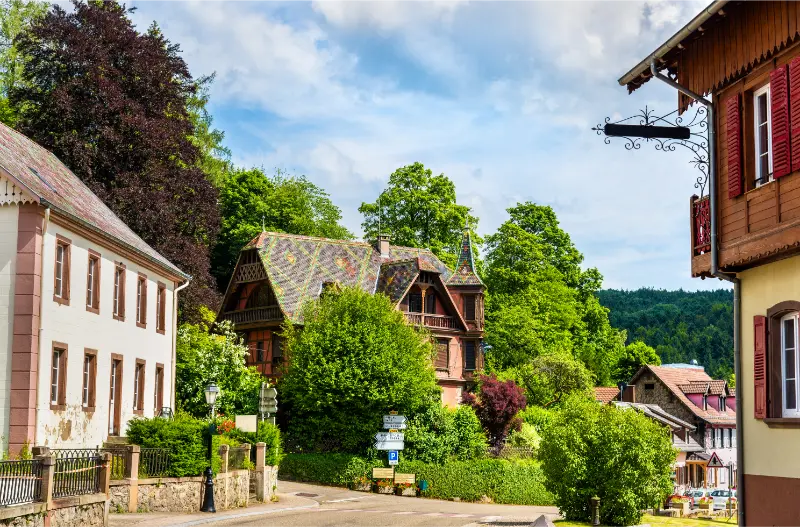
For Alsace with Kids, start walking before thinking about tastings or shopping. The compact centres of Alsace reward a slow first circuit because details are easy to miss: gateways, wells, courtyards, painted signs and the relationship between old walls and vineyard slopes. Once you know the layout, it is easier to decide where to spend more time. This also keeps the visit interesting for travellers who are not primarily focused on wine.
The Alsace Wine Route influences the rhythm around Alsace with Kids, but wine should not dominate every hour. Tastings are better when they are planned, spaced and combined with food. If you are driving, keep consumption limited and use spit cups where offered; alternatively, choose a base with rail or bus access for part of the route. A single thoughtful tasting often provides more understanding than moving quickly between several cellars.
Season makes a major difference to Alsace with Kids. Late spring and early autumn are excellent for vineyard walking, summer brings long days and busy streets, and the Christmas period transforms many towns with markets and decorations. Winter outside the festive weeks can be much quieter. Decide what you want most — walking, wine, festivals or calm streets — before choosing dates, because the same place can feel completely different across the year.
Official sources for current access and planning: Mulhouse Tourism — Visiting with Family Mulhouse Zoo and Botanical Garden. Confirm opening times, route access and reservations with the operator before traveling.