

Saint-Malo and Dinan are close enough to pair but different enough to justify the combination. Saint-Malo is a granite maritime city shaped by tides, privateers, war and reconstruction. Dinan turns inward toward the Rance, with medieval streets, ramparts and a steep connection between the upper town and old port.
Three days let you give Saint-Malo two different moods—daylight and evening—while using one full day for Dinan. You can do the trip without a car if you plan the transfer rather than treating local transport as an afterthought.
Quick planning overview
| Ideal stay | 3 days |
| Best base | Saint-Malo for rail and coastal atmosphere |
| Car needed? | No for this short pairing |
| Main experiences | Ramparts, tides, Intra-Muros, medieval Dinan |
| Extension | Mont-Saint-Michel or a longer Brittany road trip |
Day 1: walk Saint-Malo from the walls down
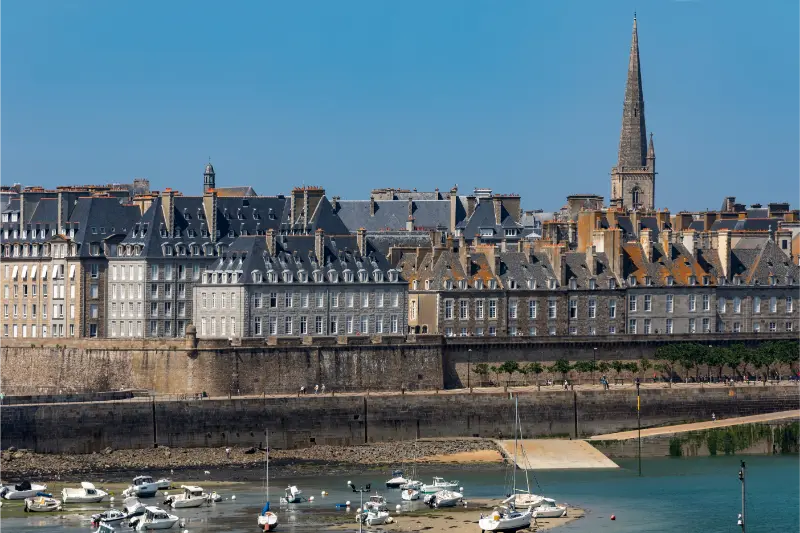
Start with the ramparts because they explain the city’s geography. The fortifications surround Intra-Muros for roughly 1.75 kilometres, and the circuit gives changing views over beaches, harbour and islands. The official tourism route describes a panoramic walk of about two kilometres, which is short enough to stop often rather than treating it as exercise.
After the walls, explore the streets inside rather than assuming the rebuilt city is less “authentic” because of wartime destruction. Reconstruction is part of Saint-Malo’s history. Look at the relationship between gates, squares and sea-facing defenses, then come back outside as the tide changes.
Tides are part of the itinerary, not background scenery
Saint-Malo has one of the strongest tidal personalities of any French city. Beaches, causeways and offshore forts can look completely different within hours. This makes repeat walks worthwhile, but it also creates safety obligations. Never assume a route you crossed at low water will remain available on the return.
Use local tide information and posted warnings, especially before walking toward tidal islands. If you are unsure, stay on the ramparts and beaches rather than turning a scenic walk into a race against the sea.
Day 2: Dinan deserves more than a lunch stop
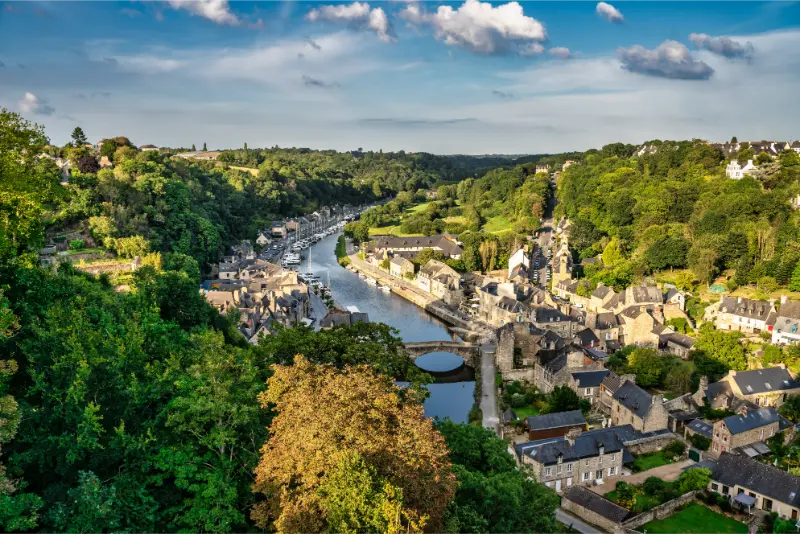
Dinan’s upper town is surrounded by an extensive belt of ramparts and contains more than a hundred half-timbered houses. Start high, then descend Rue du Jerzual toward the port. The gradient is part of the experience: merchants once moved between river trade and the fortified town above, and the street still makes that connection visible.
At the port, do not immediately climb back. Walk along the Rance or sit by the water before returning by a different route if your legs allow. The tourism office promotes an 8.2-kilometre urban walk that links the medieval city, port and Léhon area; you can use sections of it rather than feeling obliged to complete the whole route.
Day 3: give Saint-Malo a second face
Use the final day for whatever the first day could not provide: a beach at a suitable tide, a longer coastal walk, a museum or an excursion toward Cancale. The value of staying two nights is that poor weather on arrival does not erase the maritime part of the trip.
If Mont-Saint-Michel is next, leave enough time to reach it without sacrificing your Saint-Malo morning. My new Mont-Saint-Michel guide explains why an early or late visit is more satisfying than arriving in the middle of peak day-trip traffic.
What to eat: use the coast and the market, not a checklist
Galettes and crêpes are obvious Breton foods, but seafood, butter-rich pastries and local cider give you a broader picture. In Saint-Malo, restaurant location inside Intra-Muros can come with tourist pricing, so compare menus and do not assume a sea view guarantees the best meal.
Dinan is a good place for a slower lunch, especially if Saint-Malo evenings are busy. If you continue to Cancale, oysters become a stronger regional theme. The broader regional food guide to France places Breton dishes in context.
Where to stay and how I would choose a base
Saint-Malo is the easier base for a first short trip because of rail connections and the pleasure of walking the walls after day visitors leave. Staying Intra-Muros gives atmosphere; areas near the station can be practical if you have luggage and early transport.
Dinan can also be an excellent overnight if medieval streets matter more than the coast. For only three days, however, I would avoid changing hotels and use one base unless a specific property is part of the experience.
Compare accommodation in Saint-Malo on Booking.com
Best time to go
Late spring and early autumn offer long enough days for coast and town without peak summer density. Summer brings fuller services and beach energy but more traffic and accommodation pressure.
Winter can be dramatic and atmospheric, especially for stormy sea views, but daylight is short and exposed walks can be uncomfortable. Tide awareness matters in every season.
Mistakes that can weaken this trip
- Walking onto tidal causeways without checking when the sea returns.
- Treating Dinan as a one-hour photo stop and never descending toward the port.
- Changing hotels between Saint-Malo and Dinan for a three-day trip when one base would be simpler.
- Trying to add Mont-Saint-Michel to the same day as a full Dinan visit.
How this fits into a longer France itinerary
This short itinerary is a concentrated version of my ten-day Brittany road trip. It works well before continuing west along the coast or east toward Mont-Saint-Michel and Normandy.

If your France trip is mostly by train, Saint-Malo gives you a strong coastal contrast to Paris and the Loire. Combine it with the rail-planning guide rather than assuming every Brittany village is equally easy without a car.
Practical FAQ
Can I visit Saint-Malo and Dinan without a car?
Yes. Rail and bus combinations make the pairing possible, though current timetables should be checked. A car becomes more valuable for Cap Fréhel, small coastal villages and a wider Brittany loop.
How long do I need in Saint-Malo?
One full day covers the ramparts and old city, but two nights let you experience different tides and quieter evening or morning hours.
Is Dinan very steep?
The upper old town itself is manageable, but the famous connection down Rue du Jerzual to the port is steep. Wear good footwear and plan the return according to your mobility.
Can I combine Saint-Malo with Mont-Saint-Michel?
Yes, and the combination is logical. Give Mont-Saint-Michel its own half or full day rather than squeezing it after Dinan.
Balancing Saint-Malo tides and the Dinan connection
Organize the trip around two different townscapes rather than three interchangeable sightseeing days. Saint-Malo’s fortified waterfront and tidal beaches belong to the first day; Dinan’s timber-framed lanes and steep descent to the Rance port deserve most of the second. Return to Saint-Malo for a third day devoted to the Sillon seafront, local history or another district outside Intra-Muros. The transfer to Dinan should be planned from an actual bus or rail timetable rather than a map distance. Some routes require changes and weekend service can be thinner, so check the last departure that still leaves enough time to climb from Dinan’s port to the upper town.
Tides determine whether many Saint-Malo views are accessible, not only how dramatic the waves appear. Causeways toward small offshore islands can become hazardous as water rises, and large tidal coefficients bring especially strong conditions. Use local tide predictions and posted warnings, and do not attempt a crossing unless there is enough time for a safe return. For families, the ramparts and public beaches provide memorable alternatives without entering an exposed tidal area. If winds are high, an inland walk through Dinan’s centre may be the better outdoor choice. Watching the sea from a safe promenade can be an experience in itself during rough conditions.
Budgeting Saint-Malo and Dinan without a car
A night inside Saint-Malo’s Intra-Muros quarter puts restaurants and evening walks immediately outside the door, but access for vehicles and luggage may be awkward. Near the station is more practical when arriving by train and taking a regional bus onward. Choose a Dinan overnight only if you want quieter evenings along its riverfront and can manage the hill between the port and upper town. A car is not required for this pairing, yet timetable discipline matters more than it would on a self-drive loop. Before booking a nonrefundable room, verify the public transport you will use on the exact day, including Sundays and holidays.
The most effective way to save money here is to reduce unnecessary transfers and peak-day parking, not to cut the main experience. Saint-Malo’s wall walks, street exploration and beach views are largely outdoors; reserve paid museum visits for poor weather or a specific interest in maritime history. Dinan rewards walking time without needing a string of admission tickets, although individual attractions have their own schedules. Compare an overnight base at Saint-Malo’s station with one inside the walls based on your real arrival time. If you would otherwise use several taxis, the difference in room price may vanish quickly. Tide-dependent attractions should never be pre-paid without reading their access advice.
What to bring to the Breton coast
Bring shoes that grip on wet granite and can handle Dinan’s steep Rue du Jerzual, plus a windproof waterproof outer layer for the walls and Sillon. The weather can change rapidly on the coast, while Dinan’s riverfront may feel comparatively sheltered. Carry a transport timetable offline; bus information is particularly valuable when a Sunday return has limited options. If travelling with young children or anyone with mobility limitations, budget extra time for the climb between Dinan’s port and historic centre, or arrange suitable transport. Keep valuables and phones secure on exposed ramparts in strong wind, and respect any sections closed for safety.
Saint-Malo and Dinan make a stronger pair when their differences are allowed to show. Saint-Malo is defined by its relationship with the sea, trade, fortification and reconstruction; Dinan offers a river port below a medieval upper town. Use your third day to revisit whichever atmosphere you preferred rather than chasing another distant stop simply because there is time on the calendar. In fair weather, walking from Intra-Muros toward the Sillon broadens the sense of the coast; in rain, a museum or a long lunch in Dinan can be just as satisfying. Plan Mont-Saint-Michel separately unless you have confirmed a practical excursion schedule.
Official planning links
Saint-Malo and Dinan make a strong pair because the journey shifts from open sea to river, from granite defenses to timber-framed streets. Give each place enough time to reveal that contrast and three days can feel far richer than a long list of Breton stops.