
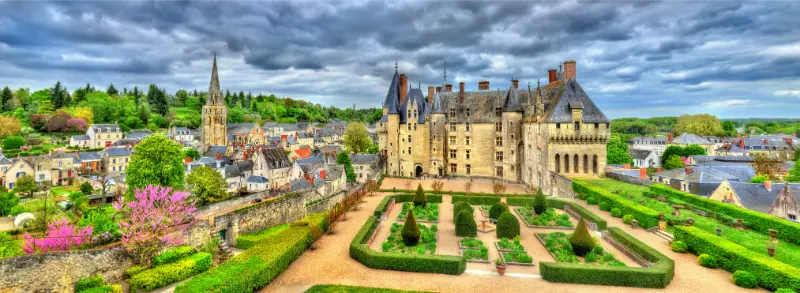
The Loire Valley can become a test of endurance if every turret on the map turns into a mandatory stop. After two elaborate interiors, details begin to merge. The route becomes richer when each day combines one major château with a town, garden, river walk or tasting that reveals how the region lives beyond its grand façades.
This five-day itinerary centres on Blois, Amboise and Tours. It works best by car, although a train-based version is possible with guided excursions, bicycles and careful selection. The goal is not to identify a universal ‘best’ château, but to compare architecture, landscape and stories without museum fatigue.
Quick planning overview
| Trip length | 5 days / 4–5 nights |
| Good bases | Blois, Amboise or Tours |
| Daily rhythm | One major château, one secondary experience |
| Transport | Car for flexibility; train plus tours for key sites |
| Best seasons | Spring gardens and early autumn light |
A five-day Loire Valley route
Day 1: Blois and its royal château
Begin in a town where urban streets and royal history sit together. The Château Royal de Blois introduces several architectural periods without requiring a rural detour.
My practical advice: Walk the town after the château and stay for evening rather than driving immediately to the next icon.
Day 2: Chambord and a quieter counterpoint
Chambord’s scale and silhouette justify an early start. Explore the surrounding estate as well as the building, then pair it with a smaller château or the village atmosphere around Cheverny.
My practical advice: Reserve enough time for the roof terraces and grounds. The approach and exterior are part of the experience, not merely a path to the rooms.
Day 3: Amboise and Leonardo’s final chapter
Amboise provides a lively base, a royal château above the Loire and Clos Lucé, associated with Leonardo da Vinci’s final years. The town is compact enough to slow down between visits.

My practical advice: Choose two substantial admissions at most. A riverside view of the château at sunset can be as memorable as another interior.
Day 4: Chenonceau and river landscape
Chenonceau’s gallery across the Cher creates one of France’s most recognisable château views. Its wartime history, gardens and relation to the river deserve more than a quick photograph.
My practical advice: Book a timed entry when offered and arrive early. Consider seeing the estate from the water or nearby paths if conditions and operators allow.
Day 5: Villandry, Tours and gardens
Finish with Villandry’s formal gardens, then return to Tours for old streets, a market or a relaxed meal. This final day shifts emphasis from grand interiors to design and city life.
My practical advice: Garden conditions change with the season; appreciate structure and perspective rather than expecting peak blooms on a fixed date.
Alternative: Azay-le-Rideau and Chinon
Travellers who prefer smaller scale can replace a headline site with Azay-le-Rideau, then continue to Chinon for fortress views and wine-country atmosphere.
My practical advice: This western extension suits a second base near Tours and should not be squeezed between Chambord and Chenonceau on the same day.
How to avoid château fatigue
Vary the experience
Alternate furnished interiors, gardens, architecture and towns. Read the broad story before arrival, then focus on details that genuinely interest you.
Leave space for the Loire
The river and its tributaries explain the geography of the estates. Walk or cycle a section instead of seeing the valley only through a windscreen.
Choose bases by evening life
Amboise is atmospheric and compact; Tours has more restaurants and transport; Blois suits eastern châteaux. Two bases are enough for five days.
Book selectively
Reserve your most important château and any guided experience. Keep a lesser-known estate flexible for weather and energy.
Where to stay
Amboise is appealing for a first visit because you can walk to restaurants and two major sights. Tours offers the best rail links and a broader dining scene. Blois places you close to Chambord and Cheverny. Rural château hotels and guesthouses add atmosphere but can require driving after dinner. Confirm parking, restaurant closing days and late check-in procedures.
Compare accommodation in Tours on Booking.com
Getting around
A car makes the classic circuit simple, but use peripheral parking in historic towns and never underestimate summer queues. Without a car, base in Tours or Amboise, combine regional trains with bicycles and book reputable day tours to sites not served directly. The Loire à Vélo network creates excellent short rides, but distances and road sections should match your confidence.
Food and everyday rhythm
The valley’s pleasures include goat cheeses, river fish, rillettes, seasonal produce and wines from distinct appellations. Tastings are more meaningful when they include conversation and context, so book smaller producers where required and designate a driver. A market picnic can reset the palate after formal dining and adds time beside the river.
Budget and booking strategy
Individual château admissions accumulate quickly. Select the estates that differ most, check official combination offers and do not buy a broad pass until you confirm realistic opening times. Gardens, town walks and cycling create lower-cost days. Staying in one base reduces fuel and repeated check-in time, even if a few drives are longer.
How I would prepare before departure
The Loire Valley works best as a sequence of distinct places rather than a count of château tickets. I would use Tours or Amboise as a base and assign the first day to one major estate plus its surrounding town. Chenonceau tells a river-and-courtly-history story, Chambord reveals royal ambition on an enormous estate, and Villandry is especially appealing for its structured gardens. Those are different experiences, so there is no need to visit all three before lunch. A five-day road trip could begin with Amboise and nearby Clos Lucé, devote another day to Chenonceau, then explore Villandry and Azay-le-Rideau before a final Chambord-focused day. Check travel times with the chosen hotel location rather than assuming every château is adjacent.

Before buying an attraction bundle, decide whether the group is more interested in Renaissance architecture, formal gardens or the river landscapes between estates. At Chenonceau, allow time for the gallery spanning the Cher and for the grounds, not only the best-known photograph. At Villandry, garden layout is a central part of the visit, so shoulder-season planting and weather may influence its appeal. The Château Royal d’Amboise and Clos Lucé can complement each other if you want to understand Leonardo da Vinci’s final years in France. Mix a large monument with a small town café or riverside walk; repeated palace interiors can blur together even when each building is historically important.
Rain does not automatically ruin the Loire, but it shifts the balance toward interiors. Chenonceau or the Château Royal d’Amboise can offer meaningful time under cover, while a day selected solely for Villandry’s gardens deserves a weather alternative. At Chambord, the scale of the estate means that the walk from parking and movement between different areas can still involve exposure. Strong river conditions should discourage improvised cycling near flooded paths; choose signed, open portions of the Loire à Vélo network. If it is hot, visit exposed gardens early, allow a shaded lunch, and do not plan an afternoon bicycle loop without adequate water. The valley’s changing weather is part of the landscape, not a failure of planning.
Accessibility and responsible travel
Access is an important reason to select the estate, not merely the nearest car park. Many châteaux contain historic staircases, narrow thresholds and surfaces that cannot be altered easily; the accessible route may cover a different set of rooms or gardens. Ask each operator about lifts, loaned wheelchairs and the path between visitor entrance and key spaces. With small children, limit each morning to one substantial interior and leave afternoon space for the gardens or a river walk. A family-friendly visit at a smaller estate can be more successful than an exhausting queue at a celebrated one. Cyclists should confirm whether a route is suitable for trailers and whether secure bike parking exists.
The Loire landscape is also agricultural and inhabited. Vineyards near Vouvray or Montlouis-sur-Loire, river islands and historic stone villages are not interchangeable tourist backdrops. Use signed paths, avoid picking crops and respect seasonal work on vineyard roads. Keep to marked sections of Loire à Vélo rather than taking a shortcut across a private field. At a tasting, arrange a designated driver or choose a wine village accessible by a safe alternative means of transport. Supporting a local bakery, guide or small museum can make the trip more meaningful than buying another rushed monument ticket. This is a region to linger in, especially outside the obvious château forecourts.
Mistakes I would avoid
- Visiting three or four major châteaux every day
- Ignoring towns and river landscapes
- Arriving without checking timed-entry rules
- Wine tasting without a safe transport plan
- Choosing a rural stay with no evening food nearby
A practical five-day plan would use day one for Amboise and Clos Lucé, day two for Chenonceau, day three for Villandry and Tours, day four for Azay-le-Rideau with time on country roads, and day five for Chambord if the departure route makes that realistic. Travellers without a car should simplify further; certain towns have rail access, but not every estate entrance is an easy walk from a station. Check local buses, cycling options and organised excursions before treating the five-day driving order as a public-transport itinerary. Three well-explored estates can give a stronger account of Loire history than five rushed transfers with bags and no time for the towns.
Frequently asked questions
Which Loire château should I visit first?
Chambord for scale, Chenonceau for its river setting, Blois for architectural layers and Villandry for gardens. Choose according to interest, not rankings.
Can I visit without a car?
Yes with a base in Tours or Amboise, but you must be selective. Trains, bicycles and organised excursions can reach a strong group of highlights.
How many châteaux per day?
One major château plus one lighter stop is a comfortable rhythm. Two interiors can work if they are close and meaningfully different.
Where should I stay?
Tours for transport and restaurants, Amboise for compact atmosphere, or Blois for the eastern group. Split bases only if your route extends west toward Chinon.

Useful official resources
- Touraine Loire Valley tourism
- Tours Loire Valley tourism office
- Château de Chambord official site
- Château de Chenonceau official site
Consult the individual château operators for current admission, free-entry criteria and garden access before booking. Chambord has used differentiated ticket conditions in 2026, so do not repeat an old single-price figure as a guarantee for everyone. Rail timetables should be checked for the actual date and nearby station, particularly when a train option depends on a short local connection. For the Loire à Vélo network, use official mapped stages and any notices about riverside flooding or repair work. Save the parking location and final admission time; a place that closes at the end of the afternoon may stop letting visitors enter substantially earlier.
Continue planning your trip
For the next step, read the first-time France guide, planning France by train, visiting France with children and the Dordogne road trip. These guides are designed to connect into a slower, more realistic France itinerary.
The Loire stays with visitors when its stories connect across several days. Begin with the river crossing at Chenonceau, compare the grand scale of Chambord with a more intimate château, and notice how Tours or Amboise carries history into ordinary streets and markets. I would gladly sacrifice a sixth palace visit for an afternoon cycle ride, a quiet garden or a tasting arranged without a driving conflict. The best five-day route balances royal splendour with human-scale towns and the river that links them. It should feel like travelling through a valley, not working through an inventory of castles.
Go deeper than the château circuit: understand the UNESCO cultural landscape, compare the best Loire châteaux by travel style and see the best gardens in the Loire Valley.