
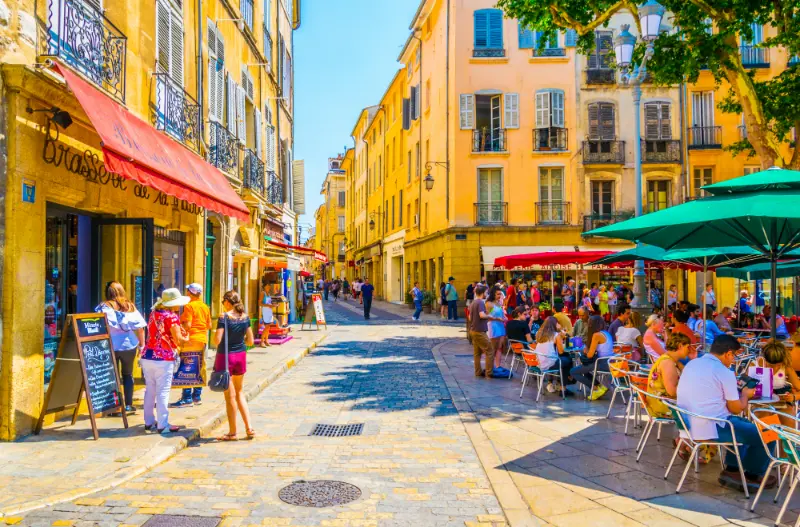
Choosing where to stay in Provence has a bigger effect on the trip than choosing one extra attraction. Provence is spread across cities, vineyards, hill villages, wetlands, mountains and lake country. A base that looks central on a map may still be poor for your priorities because of parking, slow rural roads or the direction you need to travel every day.
For a first visit, the strongest approach is usually to use two bases rather than changing hotel every night. Avignon, Aix-en-Provence, Arles and Saint-Rémy offer different advantages; a Luberon village gives atmosphere but less transport flexibility; the Verdon deserves its own base if the canyon and lake are a major part of the trip. This guide compares them by travel style rather than pretending there is one universal winner.
Quick planning summary
- Best first base without a car: Avignon.
- Best for elegant city life and eastern Provence: Aix-en-Provence.
- Best for Roman heritage and the Camargue: Arles.
- Best small-town base for the Alpilles: Saint-Rémy-de-Provence.
- Best for village atmosphere: Luberon, provided you have a car.
- Best for canyon and lake days: Moustiers-Sainte-Marie or Verdon area.
The decision that matters: city base or countryside base?
A city base gives you restaurants, evening life, transport and a reliable plan when the weather changes. A countryside base gives you quiet mornings, landscapes and the feeling many travellers associate with Provence. The choice is not about which is more authentic; it is about how much driving you want to do and what you expect after 18:00.
For a short first trip, a city or substantial town usually works better. On a longer road trip, combine one urban base with one rural base. That balance lets you enjoy markets and monuments without spending every day searching for parking in a different place.

| Base | Best for | Car? |
|---|---|---|
| Avignon | First trips, western Provence, rail arrivals | Optional |
| Aix-en-Provence | City life, Sainte-Victoire, eastern day trips | Optional but useful |
| Arles | Roman sites, Camargue, photography | Optional |
| Saint-Rémy | Alpilles, slower evenings | Useful |
| Luberon village | Hill villages, rural atmosphere | Recommended |
| Verdon/Moustiers | Canyon, lake, outdoor days | Recommended |
Avignon: the easiest all-round base for a first trip
Avignon is practical because the historic centre is compact, rail access is strong and several classic day trips sit within reasonable reach. You can spend a full day in the city, then use tours, regional transport or a rental car for the Luberon, Pont du Gard, Châteauneuf-du-Pape or western Provence. It is also a useful arrival point if you do not want to rent a car immediately.
Stay inside or close to the walls if evening atmosphere matters, but check parking before booking a car-based stay. A hotel that advertises “Avignon” can be several kilometres from the centre, which may be fine for drivers but disappointing if you imagined stepping straight into the old town.
Aix-en-Provence: the best base for cafés, markets and eastern Provence
Aix is a strong choice for travellers who want to return each evening to a lively, attractive city rather than a tiny village. It suits day trips toward Sainte-Victoire, the southern Luberon, Marseille and parts of the coast. The old centre is made for walking, and the café-and-market rhythm works well on trips where not every day needs a major attraction.
The trade-off is location: Aix is less convenient for the far western side of Provence and for Mont Ventoux. If your must-see list is Avignon, Gordes, Roussillon and the northern Vaucluse, do not choose Aix simply because it is famous. Base choice should follow the itinerary.
Arles: best for Roman Provence and the Camargue
Arles works particularly well when the Camargue, Roman heritage and photography matter. The historic core has enough restaurants and culture for evenings, while Saintes-Maries-de-la-Mer, wetlands and rural Camargue landscapes can become day trips. It is also a better base than many visitors expect for the western Alpilles.
If you are sensitive to driving, build several days around Arles rather than commuting from Aix. Shorter daily distances create more time for markets, museums and spontaneous stops. That is especially useful in hot weather, when a compressed schedule becomes exhausting.
Saint-Rémy-de-Provence: a small-town base with excellent balance
Saint-Rémy is one of the best compromises between atmosphere and practicality. It feels smaller than Avignon or Aix but still has restaurants, shops and a strong weekly rhythm. The Alpilles, Les Baux, Glanum and scenic drives are close, and the town works well for travellers who want relaxed evenings after sightseeing.
A car is the sensible choice. If you plan to rely entirely on public transport, Saint-Rémy is less flexible than Avignon. Parking and exact hotel location also matter during busy periods, so check whether your accommodation offers private parking or whether you will use public facilities.

The Luberon: where to stay if the villages are the trip
Gordes, Roussillon, Bonnieux, Ménerbes and Lourmarin are not interchangeable as bases. Gordes is iconic but can be busy; Lourmarin has a lively village feel; Bonnieux and Ménerbes place you in classic hill country; L’Isle-sur-la-Sorgue is more practical if you want markets and a larger choice of services.
For a rural Luberon stay, do less. Pick two or three villages for full exploration instead of turning every day into a parking challenge. A farmhouse or mas with a pool can become part of the experience, which is a good reason to stop sightseeing by late afternoon rather than racing to one more viewpoint.
For a second price check, the Expedia search below can be useful when you want to compare flight-and-stay options or simply see a different accommodation inventory while planning where to stay in Provence.
Verdon and Moustiers: give the canyon its own nights
The Verdon is often treated as a day trip from somewhere else, but that can create a long and tiring day. If kayaking, viewpoints, hiking or swimming at Lac de Sainte-Croix are priorities, stay near Moustiers-Sainte-Marie, the lake or another Verdon base for at least two nights.
This is especially important in summer. Traffic, parking and heat all reduce how much you can sensibly do. Sleeping nearby lets you enjoy early and late hours, when the landscape is calmer and the light is better.
How many bases for 5, 7 or 10 days?
For five days, choose one base unless your priorities sit on opposite sides of the region. For seven days, two bases are usually ideal. For ten days, two or three bases give variety without turning the holiday into a moving exercise. A simple combination might be Avignon plus Saint-Rémy, or Aix plus the Luberon, or Avignon plus Verdon for a stronger contrast.
Avoid moving for the sake of geographic perfection. Checking out, packing, driving, parking and checking in can consume the best part of a day. An extra 30-minute drive on two day trips may be better than changing accommodation.
Where to stay without a car
Avignon is the easiest first choice, followed by Aix and Arles depending on your route. Build the trip around rail-connected towns and organised day trips rather than forcing rural villages into a car-free itinerary. The official regional network and local tourist offices are useful for confirming current bus services.
A car-free Provence trip can be excellent if you accept that it will be a different trip. You gain relaxed city evenings and avoid parking stress, but you lose some flexibility in remote landscapes. The key is designing around public transport from the start rather than trying to imitate a road trip.
How to choose the actual hotel, not just the town
Check five things before paying: exact location, parking, air-conditioning if travelling in heat, cancellation conditions and whether the property matches your evening plans. A beautiful isolated property is wonderful if you want quiet dinners on site; it is inconvenient if you expect to walk to restaurants every night.
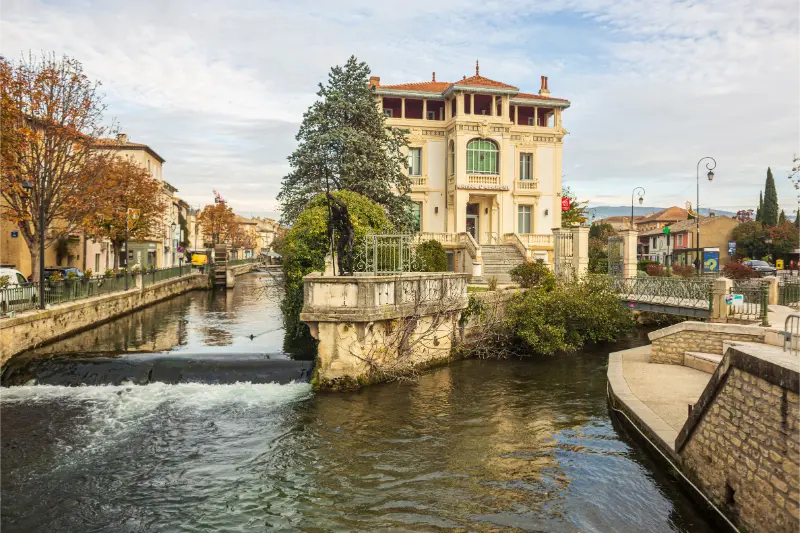
Read the map before the reviews. In Provence, the difference between “near the centre” and genuinely walkable can affect every day. For drivers, a secure or simple parking arrangement is often worth more than a slightly larger room.
Useful guides to read next
If you are building a wider itinerary, these guides fit naturally with this article: Avignon guide, Aix-en-Provence guide, Luberon road trip, Provence without a car.
Official planning resource
For current practical information that may affect where to stay in Provence, check Provence-Alpes-Côte d’Azur Tourism before your trip. Opening arrangements, transport services and event calendars can change, especially outside the main season.
Frequently asked questions
What is the best base for a first trip to Provence?
Avignon is the easiest all-round choice for many first-time visitors, particularly if you arrive by train. Aix and Arles are better when your priorities are farther east or focused on the Camargue.
Should I stay in a village or a city?
Use a city for convenience and a village for atmosphere. On a week-long trip, combining one of each often works better than committing to only one style.
Do I need a car in Provence?
Not for Avignon, Aix or Arles themselves. A car becomes much more useful for the Luberon, Verdon, lavender areas and small villages.
How many hotel changes are sensible in one week?
Usually one change. Two bases give variety while preserving enough time to enjoy each place.
Final thoughts
The best base is the one that shortens the days you care about most. For a first visit, prioritise location and ease over a romantic address that creates hours of extra driving. Provence feels slower and more enjoyable when your accommodation supports the itinerary rather than fighting it.