

Alsace has too many attractive villages for a useful article to be a ranking. The right choice depends on whether you want wine tasting, architectural concentration, a castle walk, a quiet evening, Christmas atmosphere or easy public transport.
The Wine Route stretches for more than 170 kilometres and passes through more than a hundred towns and villages. Trying to collect as many names as possible produces exactly the wrong experience.
This guide groups villages by travel style so you can choose two or three that complement each other instead of visiting five similar centres in a single day.
Quick planning snapshot
| Best postcard loop | Eguisheim + Kaysersberg |
| Best wine-and-castle day | Ribeauvillé + Riquewihr |
| Best quieter choices | Bergheim + Hunawihr |
| Best near Strasbourg | Obernai |
| Best evening tradition | Turckheim |
Eguisheim: choose it for the circular street plan
Eguisheim’s concentric lanes give it a shape that feels different from almost every other Wine Route village. It works particularly well early in the morning before group traffic builds.
Pair it with Colmar or Turckheim rather than driving far north for another famous village.
Kaysersberg: choose it for river and castle
Kaysersberg combines a fortified bridge, riverside old town and castle walk above the village. It therefore offers more landscape variety than a purely architectural stop.
Give the castle ascent enough time instead of treating it as a quick viewpoint.
Riquewihr: choose it for concentrated historic architecture
Riquewihr is one of the most visually concentrated villages, with Dolder, fortifications and dense historic streets. That popularity also makes timing crucial.
Arrive early, late or outside peak summer weekends if you want to notice details rather than crowds.
Ribeauvillé: choose it for a larger wine town and castle hike
Ribeauvillé has more scale than the smallest villages and a strong hiking identity through the three castle ruins above town.
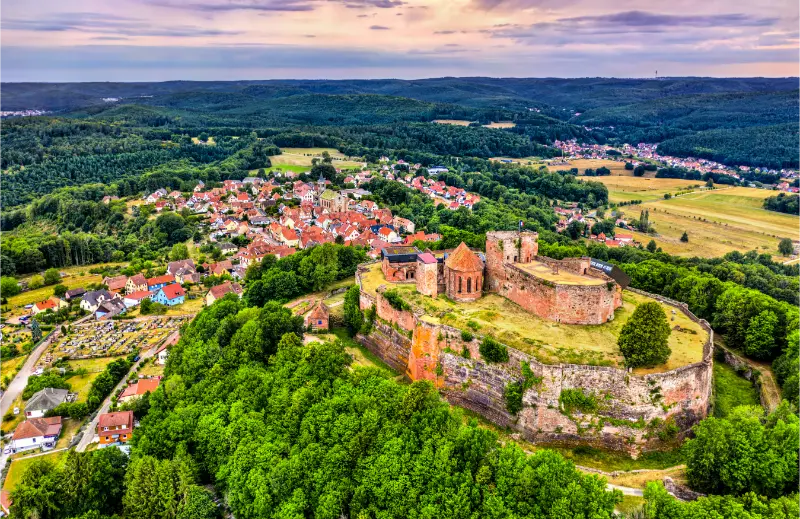
It makes an excellent base if you want restaurants and wine estates without sleeping in Colmar.
Bergheim: choose it for ramparts and a calmer rhythm
Bergheim’s one-hour wall circuit gives the village a clear structure and is a strong alternative to more crowded stops. It was named France’s Favourite Village in 2022.
Pair it with Ribeauvillé or Sélestat for a coherent central Alsace day.
Hunawihr: choose it for vineyards and the fortified church
Hunawihr is less about shops and more about landscape. The fortified church, vineyard paths and close relationship with Rosacker make it ideal for a slower wine-route stop.
Walk part of the vineyard edge if weather permits.
Turckheim: choose it for evening atmosphere
Turckheim’s three gates and Night Watchman tradition distinguish it from the more famous villages. In the main season the watchman’s 22:00 round rewards travellers who stay after dinner.
This is one of the few villages where I would deliberately plan the visit late rather than early.
Obernai: choose it for easy Strasbourg access
Obernai is larger and more urban than tiny Wine Route villages, with stronger services and an easier role as a base near Strasbourg and Mont Sainte-Odile.
It is especially useful for travellers who want village atmosphere without giving up restaurants and transport.
Hunspach: choose it for northern Alsace
Hunspach looks different from the colourful central Wine Route stereotype, with whitewashed half-timbered houses and curved window panes. It won France’s Favourite Village title in 2020.
Use it as part of a Northern Alsace trip rather than a rushed detour from Colmar.
How to combine villages without exhausting yourself
Choose one anchor village for a full exploration, one smaller contrasting stop and one vineyard or food experience. That is enough for a rewarding day.
Three village centres plus a castle or tasting already create a full schedule. Anything beyond that should be optional.
Getting there and getting around
For Alsace villages, solve transport before adding extra sights. Alsace is unusually easy to combine by regional train along the Strasbourg–Sélestat–Colmar–Mulhouse corridor, but villages and mountain sites may require local buses, bicycles, a car or a carefully chosen taxi.
The Wine Route can be confusing on a map because its best-known villages sit close together, but parking and small roads make driving time less predictable than distance suggests. Build short clusters around Colmar, Ribeauvillé and the northern villages rather than zigzagging across Alsace. If tasting is part of the day, use a designated driver or arranged transport; trying to navigate multiple estates after sampling wine is unsafe.
How long to stay
I would give Alsace villages enough time for one major cultural or landscape experience plus a slower walk, meal or neighbourhood. That usually means at least a substantial half-day and often a full day.
A village shortlist is more useful when each stop adds something different. Eguisheim has circular streets, Kaysersberg a river and castle, Ribeauvillé a larger town and hilltop ruins, and Hunspach the distinctive rural architecture of northern Alsace. With three days you can appreciate these differences, but with one day select a compact cluster instead of driving from one end of the region to the other.
When to go
Late spring is ideal for flowers and moderate walks, while early autumn adds changing vineyard colours and visible harvest activity. The busiest summer periods reward early village starts and quiet afternoons away from the narrow central lanes. Some northern villages feel different from the central Wine Route in every season, so do not assume all fifteen places share exactly the same crowd patterns or landscape calendar.
A Christmas-village itinerary needs separate planning from an ordinary wine-route road trip. Not every town runs a market on the same dates, and places famous for summer vineyard walks may have a limited festive programme. Verify individual event calendars and any temporary parking restrictions. If you travel in January, expect a more residential atmosphere and reduced availability at some small tourist businesses.
Where to stay
Choose a base for the villages you genuinely intend to visit, not for an average point on a map. Colmar works well for Eguisheim, Kaysersberg and Riquewihr-area outings; Sélestat can reduce driving to several central stops; northern Alsace requires a different geographic strategy. You can compare accommodation for the broader village area, then inspect each property’s exact location, access and parking provisions.
The rail corridor connects major towns, not every picturesque village. If travelling without a car, start with places served by an actual regional connection or book an organised trip covering a sensible cluster. Turckheim is one option to examine from Colmar, while isolated rural stops demand more careful planning. Always check the last return before building an evening around a winery or restaurant.

Food, wine and responsible tasting
Food is one way to give villages different personalities without turning the itinerary into a race. Choose a proper lunch in a town with restaurant choice, perhaps Ribeauvillé or Obernai, and keep the smaller stops for walks and viewpoints. A tarte flambée may be enough between visits; save a heavier traditional meal for an evening when you can sit comfortably rather than drive straight to another crowded centre.
Wine tasting should have a purpose within a villages itinerary. Near Riquewihr or Eguisheim, a single booked producer can help you understand the slopes you have been seeing from the paths. Avoid filling every village stop with a cellar visit. Producers need appointment time, harvest work can intervene, and a non-drinking driver or suitable transport is essential if the day includes a car.
Families and accessibility
Alsace villages can work well for families if the day mixes one structured visit with open space. Historic paving, steep castle paths and old buildings can create barriers, so check the specific accessible route rather than assuming the main entrance suits everyone.
For a family itinerary, the castle ascent above Kaysersberg or a short walk around Bergheim’s walls may be more engaging than a long sequence of similar streets. Consider age, route gradients and weather before adding hikes. Travellers with reduced mobility should check designated parking and accessible routes individually; village centres can have cobbles, steps and old building thresholds despite looking very small on a map.
Common mistakes to avoid
The biggest mistake in an Alsace villages itinerary is measuring success by a high village count. Spend a morning in Eguisheim and the afternoon at a contrasting place rather than making five near-identical stops. Leave room for a meal, a vineyard path or a castle where conditions permit. The reason to explore the route is to notice differences, not prove you reached every village sign.
Northern Alsace also deserves respect as a different geographical trip. A visit to Hunspach belongs naturally with other places in the north, not as a last-minute detour from central Wine Route villages near Colmar. Look at real road or public transport connections before adding it. The attractive village photographs can hide the amount of time lost when travelling between distant clusters.
Official information to check before you go
For current opening hours, transport changes, temporary closures and local events, use Visit Alsace – favourite villages. I treat official tourism and attraction websites as the final authority for details that can change between planning and travel.
How this fits into an Alsace itinerary
Continue planning with Eguisheim guide, Kaysersberg guide and Bergheim guide. For the regional overview, use the Alsace Travel Guide and the 4-day Alsace Wine Route itinerary.
Build the itinerary in distinct blocks: a Colmar-area day for Eguisheim and Turckheim, a central Wine Route day for Kaysersberg, Riquewihr or Ribeauvillé, and a separate northern extension only if you have time. This arrangement can change according to accommodation and transport, but the underlying principle is useful: preserve walking time by reducing cross-region returns and unnecessary hotel changes.
Choose villages for different experiences, not just façades
If you have only one day around Colmar, pair Eguisheim’s concentric streets with Kaysersberg’s riverfront and the walk toward its castle. They are not interchangeable: one explains the unusual form of a walled village, while the other connects a fortified bridge with the Vosges foothills. Riquewihr has a dense concentration of historic buildings and boutiques, whereas Ribeauvillé offers a livelier town centre and hiking routes to ruined castles. Bergheim makes a more restful choice when crowds are an issue, with a circuit linked to the medieval ramparts. Think of each village as a different landscape lesson.
Northern Alsace is a separate trip
Hunspach should not be squeezed into a fast central Wine Route day. The village belongs to the northern Outre-Forêt, where whitewashed half-timbered farmhouses and broad courtyards tell a different story from the bright facades around Colmar. The surrounding area also offers the Schoenenbourg fort, pottery traditions and the neighbouring villages of Seebach and Wissembourg. If these places interest you, give Northern Alsace a full day or night. The drive north is worthwhile, but treating Hunspach as one more “photo stop” after Eguisheim wastes the distinctiveness of the area.
A practical three-day route by geographic cluster
Day one: concentrate on Eguisheim, the Colmar area and perhaps Turckheim toward evening. Day two: choose Kaysersberg, Riquewihr and either Ribeauvillé or Bergheim, knowing that castle hikes need their own time. Day three: stay farther north around Obernai and Barr, or make the deliberate trip to Hunspach and neighbouring Outre-Forêt villages. A slow itinerary often means skipping a famous name to enjoy a quieter place properly. If using rail and buses, rebuild the days around actual timetables and station locations rather than copying this car-oriented sequence.
Best season depends on the experience
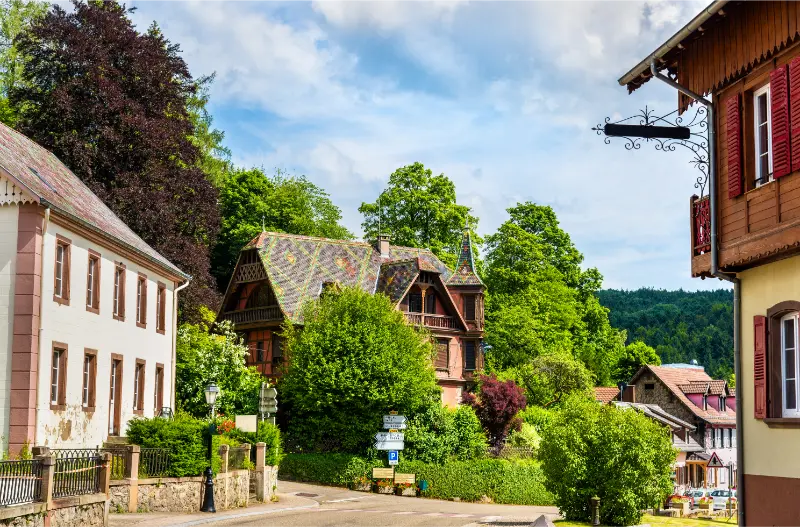
Late spring suits planted balconies and vineyard walks, while early autumn lets visitors observe harvest activity from appropriate public paths without obstructing workers. Christmas changes village centres dramatically: markets, lights and seasonal parking plans can make a familiar village feel like a different destination. Check each market’s own dates before booking, because “Alsace Christmas” is not one continuous event. Summer weekends can be busy, especially in Riquewihr and Eguisheim. For a calm photography visit, the first part of the morning is often more useful than racing from one village to another at midday.
Accessibility, parking and respectful visits
Traditional Wine Route centres often combine cobbles, slopes and restricted vehicle access. A village that looks compact on a map may still require a considerable walk from designated outer parking. For wheelchair users, choose an accessible ground-level circuit and confirm specific restaurant or museum access in advance; castle ruins reached by trails are usually a separate challenge. Please remember that picturesque doorways are often private homes. Keep noise down in residential lanes, avoid photographing people through windows and never park across farm access. A wine tasting needs a booking and a responsible transport plan, not an assumption that estates welcome walk-ins.
Official planning references
The Strasbourg tourism office explains the regional Wine Route, and Visit Alsace describes the differences between celebrated villages. The regional tourism route guidance is especially useful before adding Northern Alsace, which has a distinct geographical focus. Consult individual tourist offices for current parking restrictions, market dates and tasting reservations instead of treating the wider route as one attraction with shared hours.
Last updated: 18 October 2026