
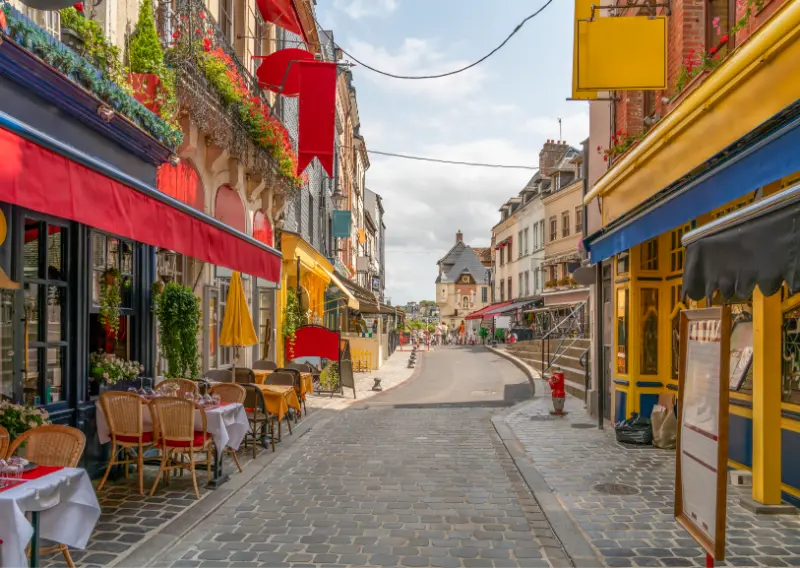
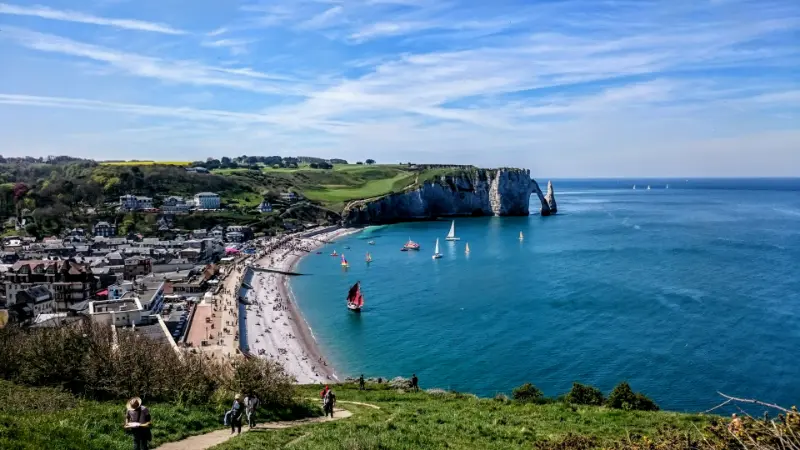
Honfleur and Étretat are two of Normandy’s most photographed places, but the coast between them deserves more than a sequence of camera stops. Honfleur is built around a historic harbour and artistic history. Étretat is defined by chalk cliffs, arches, pebble beach and exposed coastal paths. Put them together over three days and the result can feel like a real Normandy coast trip rather than a day-tour checklist.
I would not base the whole plan on seeing both in a single day from Paris. That is possible, but it leaves little room for tides, weather, walking or the atmosphere after tour buses leave. If you are already travelling around the region, connect this route to our seven-day Normandy road trip.
Three days at a glance
- Day 1: Honfleur harbour, old streets, Sainte-Catherine and the estuary.
- Day 2: drive toward Étretat with an optional stop in Le Havre or along the Alabaster Coast.
- Day 3: early cliff walk, town, gardens or Fécamp, then continue your Normandy route.
- Best with: a car, although sections can be done by rail and coach.
- Key rule: treat cliff-edge warnings as safety instructions, not suggestions.
Day 1: Honfleur beyond the Vieux Bassin
The Vieux Bassin is the image everybody knows: narrow houses reflected around the harbour, boats in the centre and restaurant terraces around the edge. Visit it early, then leave it. Honfleur becomes more interesting when you step into the streets behind the waterfront and notice how the town’s maritime life, timber architecture and religious buildings fit together.
Sainte-Catherine church is especially distinctive because of its timber construction and separate bell tower. The building reflects shipbuilding skills in a town whose history was tied to the sea. Nearby streets reward slow wandering more than a rigid route. Honfleur also has deep links with artists, including Eugène Boudin, and the shifting estuary light helps explain why painters were drawn here.
In the afternoon, walk toward viewpoints over the Seine estuary or spend time in a museum if the weather turns. Do not force a sunset schedule if fog or rain is moving in; Normandy’s atmosphere is part of the place, not a failure of the trip.
Where to eat in Honfleur without falling into the harbour-menu trap
The most visible waterfront restaurants are convenient, but walk a few streets back before deciding. Normandy’s coastal cooking can include seafood, sole, mussels, scallops in season, cider and dairy-rich dishes. Ask what is local and seasonal rather than choosing solely from pictures on a multilingual menu.
A market morning, when your dates align, gives a better sense of local products. If regional food is important to your trip, use our French regional food guide to understand how Normandy differs from Brittany and northern France.
Day 2: cross the estuary and slow down on the way to Étretat
The Pont de Normandie makes the geography look simple, but I would not rush directly from Honfleur to Étretat. Le Havre can be a worthwhile architectural stop if you are interested in post-war urbanism; its rebuilt centre designed under Auguste Perret is UNESCO-listed. That creates a remarkable contrast with Honfleur’s older harbour streets.
Alternatively, keep the day coastal and stop around small ports or viewpoints before reaching Étretat later. The advantage of sleeping near Étretat is that you can experience the cliffs outside the busiest 11:00–16:00 period. Normandy Tourism specifically recommends early morning or evening for a calmer visit.
Étretat is a landscape, not a selfie platform
The chalk cliffs and arches are shaped by erosion, and erosion is still active. Stay on marked paths, keep well back from cliff edges and never stand beneath unstable cliff sections because someone else is doing it. Pebbles on the beach are also protected and should not be removed. These rules preserve both visitors and the landscape.
Walk one side of the cliffs first rather than trying to cover every viewpoint in a single session. Weather can make exposed paths slippery, and wind changes the effort required. If conditions are poor, use the town, Le Clos Lupin or the gardens as alternatives rather than pushing through a dangerous coastal walk for a photograph.
Day 3: see the cliffs before the crowds
Wake early and return to the viewpoints in different light. Étretat’s relationship with painters such as Monet is easier to understand when you watch the cliff colour change rather than simply recognise the famous arch. A quiet morning also gives you space on narrow paths.
After the walk, decide whether to stay local or continue along the Alabaster Coast toward Fécamp. Fécamp offers a larger working-town atmosphere and maritime history, making it a useful counterpoint to compact Étretat. If you are heading west instead, return through the Seine estuary toward the central Normandy itinerary.
Tides and weather matter more than your spreadsheet
Always check local tide information before beach-level exploration. A route that looks open at low tide may not remain safe. Do not enter caves, arches or narrow sections without understanding the tide. The safest coastal itinerary is one that can be shortened without disappointment.
Wind is equally important. A sunny forecast does not guarantee comfortable cliff walking. Pack a light waterproof and a layer even in summer, and wear shoes with grip. This is not alpine terrain, but exposure and wet chalk can create real hazards.
Where to stay: Honfleur, Étretat or between them?
Honfleur has the larger choice of restaurants and accommodation and works well for the first night. Compare places to stay in Honfleur on Booking.com. For the second night, staying in or near Étretat buys you the most valuable thing on this route: access to the cliffs early and late, when day-trip crowds are lower.
If accommodation in Étretat is expensive, consider nearby towns and drive in for the early walk. Verify parking arrangements in advance because the small town can become heavily congested. Normandy Tourism notes that free parking is available on the approach from Criquetot-l’Esneval, with a walk into town; local arrangements can change, so check current signage.
Can you do this itinerary without a car?
Yes, but the journey becomes more linear and timetable-dependent. Honfleur has no mainline railway station, and Étretat also requires coach connections from rail hubs for many journeys. In season, combined train-and-coach options may operate. If you prefer public transport, reduce intermediate stops and plan around one base at a time.
A car gives you flexibility for smaller coastal places, but remember that parking — not distance — is often the limiting factor. Our France driving guide covers tolls, parking and low-emission rules for a wider road trip.
Pairing this route with D-Day Normandy
Honfleur and Étretat tell a different story from the landing coast. If you have enough time, follow this trip with our three-day D-Day beaches itinerary from Bayeux. Moving from the Seine estuary to Bayeux gives you a strong historical progression without trying to mix remembrance sites and scenic cliffs in the same day.
Further west, Mont-Saint-Michel can complete a longer Normandy journey. The region rewards these distinct two- or three-day clusters more than a single frantic circuit.
Best time to go
Late spring, early summer weekdays and September are excellent if you want longer daylight without the heaviest August pressure. Normandy Tourism explicitly recommends off-season visits to Étretat, including autumn and winter, when the town is quieter. In colder months, check attraction opening hours and plan shorter outdoor windows.
Rain should not automatically cancel the trip. Low cloud, wet streets and changing light belong to the Norman coast. The real reason to change plans is unsafe wind, slippery cliff conditions or poor visibility on exposed routes.
Official planning links
Photography without taking unnecessary risks
Étretat encourages dramatic photography, but the safest viewpoint is not always the most spectacular image you have seen online. Long lenses can compress perspective and make photographers appear closer to edges than they are; copying their position without context is dangerous. Stay on legal paths and use composition rather than proximity to create scale.
In Honfleur, early morning gives cleaner reflections in the Vieux Bassin and fewer people, while evening light often adds warmth to the façades. Bad weather can be visually excellent on this coast. Protect equipment from wind-driven rain and salt spray, and give yourself permission to put the camera away when conditions demand attention to footing.

Where to slow down on this coast
The best way to improve this itinerary is to protect time that has no formal attraction attached to it. In Honfleur, that can mean walking one street back from the harbour and noticing how quickly the atmosphere changes away from the restaurant terraces. It can also mean crossing to a quieter angle of the Vieux Bassin instead of circling the same photogenic façades several times. A coastal trip becomes more memorable when you give the towns enough time to become places rather than backgrounds.
Around Étretat, build the day around walking conditions rather than a rigid checklist. Wind, rain and visibility can change the character of the cliffs in minutes. If the upper paths feel uncomfortable, spend more time at village level, have a long lunch or return later when conditions improve. You lose very little by being cautious and gain far more than you would by forcing a cliff walk in poor weather.
A better final evening
If you can, avoid driving away immediately after your main sightseeing. A final evening near the water lets day-trip crowds thin and gives you a different impression of the Normandy coast. Eat locally, take a short walk and review the next morning’s route before bed. That simple pause is one reason a three-day trip feels much richer than trying to combine Honfleur and Étretat as a single rushed excursion from Paris.
More coast detail: Honfleur guide · Étretat cliffs guide · Deauville and Trouville.
Extend the Alabaster Coast: Fécamp · Le Havre · Veules-les-Roses.