
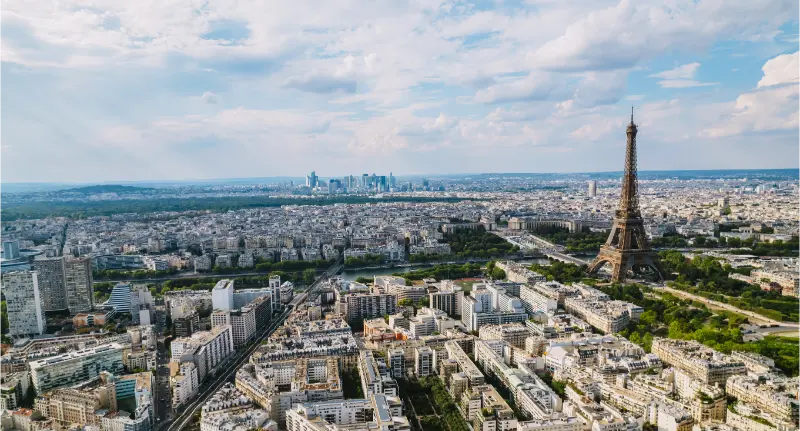
France can look deceptively simple on a map. Paris is the obvious beginning, high-speed trains connect many major cities, and familiar names such as Provence, Normandy and the Riviera create the impression that everything can be combined in one holiday. My most enjoyable journeys in France have followed the opposite logic: choose fewer bases, allow time for ordinary streets and meals, and treat the journey between regions as part of the experience.
This guide is for a first visit, but it is not a checklist of every famous sight. It explains how I would build a trip around your available days, preferred pace and transport style. The aim is to leave France with clear memories rather than a blur of stations, hotel changes and rushed photographs.
Quick planning overview
| Ideal first trip | 7–14 days with two or three bases |
| Best transport | Trains between cities; a car only for rural areas |
| Good gateway | Paris, Lyon, Nice, Marseille or Bordeaux |
| Best seasons | Late spring and early autumn for balance |
| Planning rule | Reserve major trains and headline attractions early |
Choose the France that matches your travel style
Paris for art, neighbourhoods and an easy arrival
Paris rewards travellers who alternate major monuments with small-scale exploration. I would pair the Louvre or Musée d’Orsay with a neighbourhood walk, a market and an unhurried evening rather than stack several museums into one day.
My practical advice: Stay near a Metro line rather than paying only for a famous postcode. Four nights gives a first-time visitor enough room to recover from the journey and see more than the postcard landmarks.
Provence for markets, villages and changing light
Provence works best when the schedule follows local rhythms. Morning markets, a shaded lunch and a late-afternoon village walk often feel more satisfying than driving to five hill towns in a day.
My practical advice: A car creates freedom in the Luberon and around smaller villages, but Avignon, Arles, Aix-en-Provence and Marseille can form a train-based trip.
The Riviera for a car-free Mediterranean break
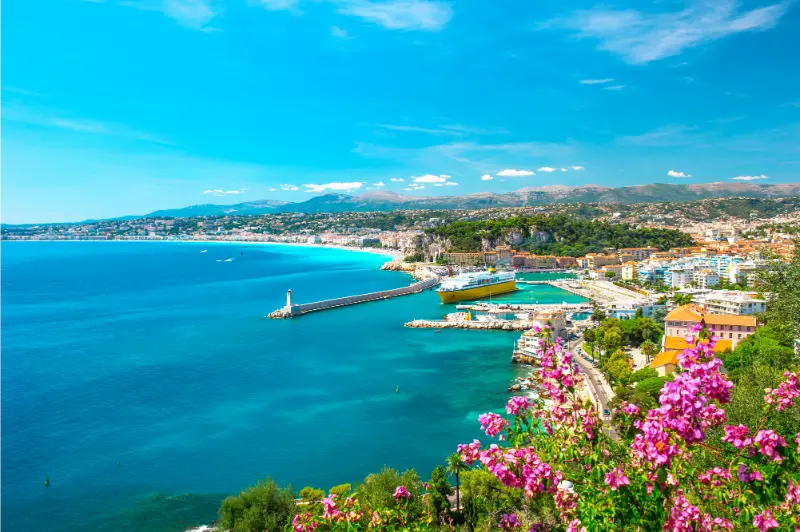
Nice is one of the easiest bases in southern France because local trains connect Antibes, Cannes, Monaco and Menton. The coast can feel glamorous, but public beaches, old-town markets and coastal walks keep the experience grounded.
My practical advice: Visit in May, June, September or early October if swimming weather matters but peak crowds do not.
Normandy for history and dramatic coast
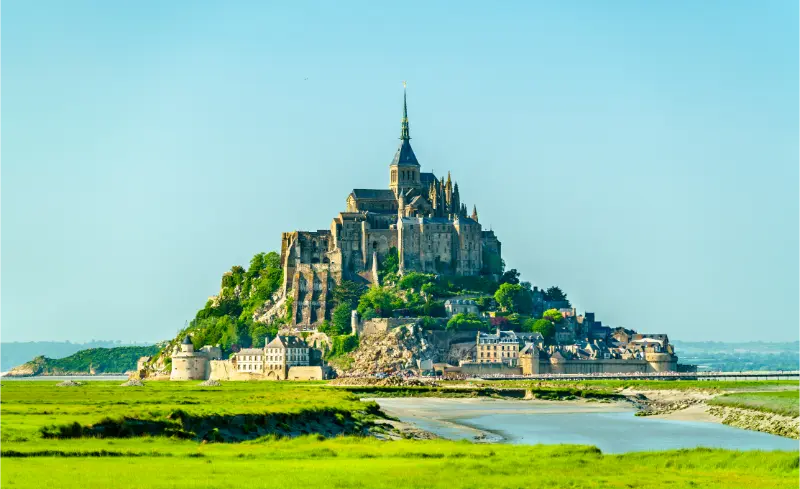
Normandy combines medieval architecture, wartime history, dairy-rich food and wide beaches. The D-Day sites deserve time and context; Mont-Saint-Michel deserves an early morning or evening rather than a rushed midday stop.
My practical advice: A car is useful beyond the main rail cities. Base yourself in Bayeux for the landing beaches and spend a separate night near Mont-Saint-Michel.
The Loire Valley for châteaux and gentle cycling
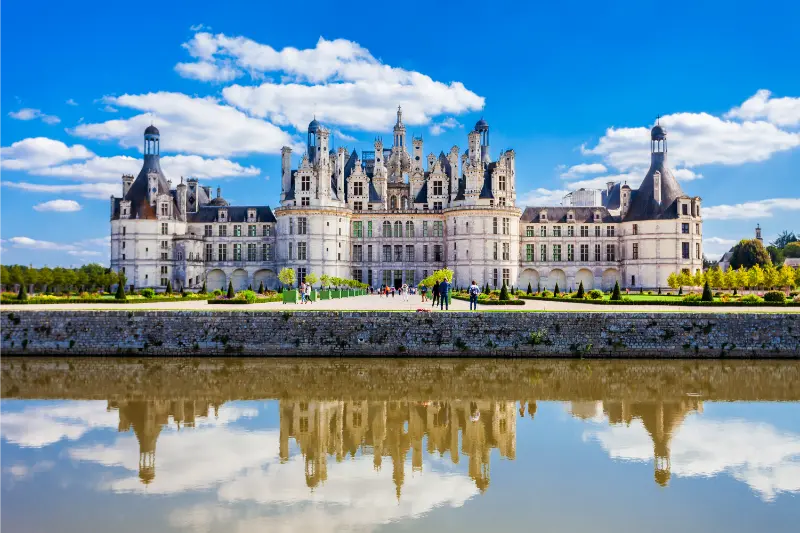
The Loire is not about collecting castles. Chambord, Chenonceau and smaller estates each tell a different story, while gardens, riverside towns and wine villages provide the pauses that make the route enjoyable.
My practical advice: Tours or Amboise are convenient bases. A car offers flexibility, but organised excursions and sections of the Loire à Vélo make a car-free visit possible.
Alsace for storybook villages and regional character
Alsace feels distinct in architecture, food and language. Strasbourg and Colmar provide excellent rail bases, while the wine route links villages set between vineyards and the Vosges foothills.
My practical advice: Two city nights plus two nights in or near the villages creates a better rhythm than treating the region as one long day trip.
Three realistic first-trip itineraries
7 days: Paris and one contrast
Spend four nights in Paris, then choose three nights in either the Loire Valley, Normandy or Lyon. This keeps the trip legible and limits your longest travel day.
10 days: Paris, countryside and a regional city
Combine four nights in Paris, three in the Loire or Normandy, and three in Lyon, Bordeaux or Strasbourg. Choose a route with direct or simple rail connections.
14 days: a north-to-south journey
Use Paris for four nights, the Loire Valley or Burgundy for three, Provence for four and Nice for three. Travel south by train and rent a car only for the rural middle section if needed.
What I would not do
I would not combine Paris, Normandy, the Loire, Provence, the Riviera and Alsace in ten days. France is larger and more varied than it first appears, and every hotel change consumes useful hours.
Where to stay
For a first journey, I prefer central accommodation within a ten-minute walk of a station or reliable urban transport. In cities, this usually matters more than having a famous view. In the countryside, a village guesthouse or small hotel with parking can become part of the trip, but check evening restaurant options before committing. French hotel rooms can be compact; families should verify bed configuration, lift access and air-conditioning rather than relying on category labels alone.
Compare accommodation in France on Booking.com
Getting around
Book long-distance journeys through SNCF Connect and compare departure stations carefully, because Paris has several major terminals. TGV services are often cheaper when booked early and reservations are tied to a specific train. Regional TER trains are more flexible, although frequencies can thin out on Sundays and holidays. Rent a car for countryside freedom, not for central Paris, Nice or Lyon. If you drive, learn about toll roads, parking rules and Crit’Air low-emission requirements before arrival.
Food and everyday rhythm
Let meals shape the day without letting restaurant research dominate it. Bakeries solve breakfast and picnic lunches; covered markets reveal regional produce; a fixed-price lunch menu can be better value than dinner. I keep one special reservation and leave the remaining meals flexible. Saying bonjour before making a request, waiting to be seated and asking for l’addition when ready make everyday interactions smoother.
Budget and booking strategy
The largest variables are accommodation and intercity transport. Reduce both by staying longer in fewer places, travelling outside major event dates and booking high-speed trains in advance. Museums and monuments deserve a separate daily allowance, but some of France’s best experiences—markets, public gardens, coastal walks, village streets and cathedral interiors—cost little or nothing. Keep contingency money for taxis after late arrivals, luggage storage and the occasional change of plan.
How I would prepare before departure
When building a first visit, I would start with the arrival airport and the final departure city rather than filling a map with pins. Paris makes an excellent beginning, but three nights do not allow both major museums, neighbourhood walks, Versailles and several day trips. After four nights there, choose a region whose character genuinely contrasts with the capital. For a history-focused week, Bayeux and the Normandy coast work; for gardens and châteaux, consider Tours or Amboise; for food and Roman heritage, choose Lyon. Each choice changes the transport problem. A direct train from Paris is very different from a three-transfer day that ends after the last village bus. Put actual station names beside each overnight stay before buying tickets.
I would prepare the crucial bookings in three stages. First, reserve accommodation with practical arrival arrangements and confirm whether the selected Paris station is Gare de Lyon, Montparnasse, Saint-Lazare or another terminal. Next, buy long-distance trains once the suitable services are on sale and compare conditions before choosing the cheapest fare. Finally, reserve attractions where entry times control the day: the Louvre, Château de Versailles or a specific guided heritage visit. A first-time visitor should not mistake a ticket screenshot for the whole plan: check airport transfers, last-mile access and where luggage will go before hotel check-in. Save the confirmation addresses offline and give every important day one attraction that can move if the weather or rail timetable changes.
Bad weather will affect each region differently, so the useful replacement is regional rather than a generic museum. In Paris, a rainy afternoon can mean the Musée d’Orsay followed by a covered passage, but choose a ticketed museum only when a suitable entry is available. In Lyon, substitute a museum of city or silk history for an exposed riverside walk, then sample a neighbourhood bouchon. Around Amboise, visit one château interior rather than driving between several wet formal gardens; in Normandy, choose a museum in Caen or Bayeux rather than a wind-lashed cliff viewpoint. If conditions improve, recover one small outdoor stop. A first visit succeeds when the alternatives deepen the destination instead of mimicking the abandoned itinerary.
Accessibility and responsible travel
First-time visitors often underestimate the physical differences between French city centres. Older Paris Metro stations can require stairs, and a lift at one entrance does not guarantee step-free access at the next transfer. Mont-Saint-Michel involves long approaches and steep medieval lanes; the hill towns of Provence have uneven paving and a parking area below the core. On the Riviera, local trains connect accessible coastal towns but the historic quarters of Èze and parts of Menton add significant gradients. Before booking accommodation, ask the property about the exact entrance and lift, not simply whether it is ‘central’. For mobility needs, consult official accessible-route planners and reserve any specialist assistance through the train operator in the required timeframe.
Choosing fewer overnight bases also makes it easier to travel with care. Rather than racing through the Luberon with two photographs in each village, use one base near Avignon and explore places whose parking and access rules you understand. In the Loire, formal gardens and inhabited towns deserve the same respect as château interiors; follow marked paths and avoid treating orchards or vineyards as shortcuts. On the coast, keep away from unstable cliff edges, protected dunes and closed footpaths even if an image online shows people crossing them. Trains suit most city-to-city movements, but a car may still make sense for scattered rural sites. The practical calculation is transport efficiency and local impact, not a claim that one mode is always correct.
Mistakes I would avoid
- Changing hotels every night or two
- Assuming every rural attraction is easy by public transport
- Ignoring lunch closures and limited Sunday services
- Booking headline attractions only after arriving
- Treating French etiquette as formality instead of simple courtesy
To make ten days feel like a holiday rather than an endurance test, compare two plans side by side. One is Paris for four nights, Lyon for three and Avignon for three, using rail between bases. The other is Paris for four, a Loire base for three and Normandy for three, with an organised excursion or a short rental period only where needed. The second plan is more history-heavy; the first combines urban culture and a southern landscape. Do not add Nice at the end simply because a fast train exists. Count door-to-door travel, check-in restrictions and recovery time. A single two-hour local walk can be more memorable than a hurried landmark reached after four hours of transfers.
Frequently asked questions
How many days are enough for a first trip to France?
Seven days works for Paris plus one nearby region. Ten to fourteen days allows two or three contrasting bases without turning the holiday into a transfer schedule.
Do I need a car?
Not for Paris or a city-focused itinerary. A car becomes valuable for the Luberon, rural Normandy, smaller Loire châteaux and the Alsace wine villages.
Can I visit France without speaking French?
Yes, particularly in established visitor destinations. A few greetings, numbers and polite phrases improve interactions and help in rural areas.
Should I buy a rail pass?
Compare the pass price with point-to-point fares for your exact route. Advance tickets can be cheaper, while a pass offers flexibility only where reservations and supplements do not erase that advantage.
Useful official resources
- Explore France practical information
- SNCF Connect journey planner
- France-Visas official portal
- Official French destination guide
Information should be checked at the level of the operator, not through a generic travel search result. SNCF Connect explains fare rules and ticket-release windows, whereas the regional TER provider gives local train and bus details. For monuments, use the Louvre, Chambord, Versailles and other venues’ own pages for exhibitions and reservations. Notre-Dame de Paris reopened to visitors in December 2024; visiting the cathedral is different from reserving the separately managed tower route, so check those arrangements independently. In summer, consult local weather warnings before rural hikes or mountain drives. Save contact numbers and copies of reservations in a place you can reach without mobile data, especially when moving between bases.
Continue planning your trip
For the next step, read France by train, the best time to visit France, travelling around France with children and the two-week France itinerary. These guides are designed to connect into a slower, more realistic France itinerary.
My final advice for a first visit is to make room for recognisable French routines rather than chase a perfect cross-country checklist. Leave a morning in Paris for a market street and a café after a major museum; in Lyon, walk both banks of the rivers before dinner; in the Loire, notice how a small town continues around its famous château. The route is ready when you know where you will sleep, how you reach that base, and what you can pleasantly do within walking distance if plans change. An itinerary with three excellent bases, some quiet lunches and one unscheduled half-day is a stronger introduction than six regions seen mostly from a train window.