

Chamonix is not a mountain theme park where every famous lift should be ridden on a fixed schedule. Weather decides what the high mountains reveal, seasonal maintenance closes installations, and altitude can turn a sunny valley morning into a very different experience at 3,842 metres. A good three-day itinerary therefore needs priorities and backup plans rather than a rigid sequence.
My approach is to keep the clearest forecast day for the Aiguille du Midi, use another day for Montenvers–Mer de Glace, and protect the third day for a lower walk, valley exploration or whatever the weather allows. That flexibility is more valuable than booking every hour weeks in advance.
Quick planning overview
| Ideal stay | 3 days minimum |
| Headline experience | Aiguille du Midi at 3,842 m |
| Second classic | Montenvers train and Mer de Glace |
| Car needed? | No for central Chamonix and major lifts |
| Main planning rule | Build around weather and seasonal lift openings |
Day 1: use your clearest weather window for Aiguille du Midi
The Aiguille du Midi cable car climbs from Chamonix to 3,842 metres in about twenty minutes, which is exactly why the experience should be treated with respect. The temperature, wind and sun exposure can be radically different from the valley. Take warm layers, sunglasses and sunscreen even when cafés in town feel summery.
Once at the top, slow down. The 360-degree panorama is the point, not racing between viewing platforms. Altitude affects people differently, so move gently and follow operator guidance. If you have relevant health concerns, check the official recommendations before booking rather than assuming a lift ride is physiologically trivial.
Day 2: Montenvers and Mer de Glace
The rack railway to Montenvers has been carrying visitors above Chamonix since the early twentieth century. The ride itself is part of the experience, and the arrival gives a very different perspective on the valley and glacier system from the Aiguille du Midi.
Operational details matter. In September 2026, Chamonix published specific maintenance closures for the Mer de Glace gondola and ice cave, with the gondola closed from 28 September to 16 October and the cave closed during part of that period. This is a good example of why a Chamonix itinerary should never be copied blindly from a generic summer article. Check live lift information shortly before travel.
Day 3: lower altitude does not mean second best
A lower walk can be the most enjoyable day of the trip because you are actually moving through the landscape instead of viewing it from infrastructure. Choose a route based on current conditions, your footwear and your comfort with exposure. “Easy” in the Alps still requires attention to weather and terrain.
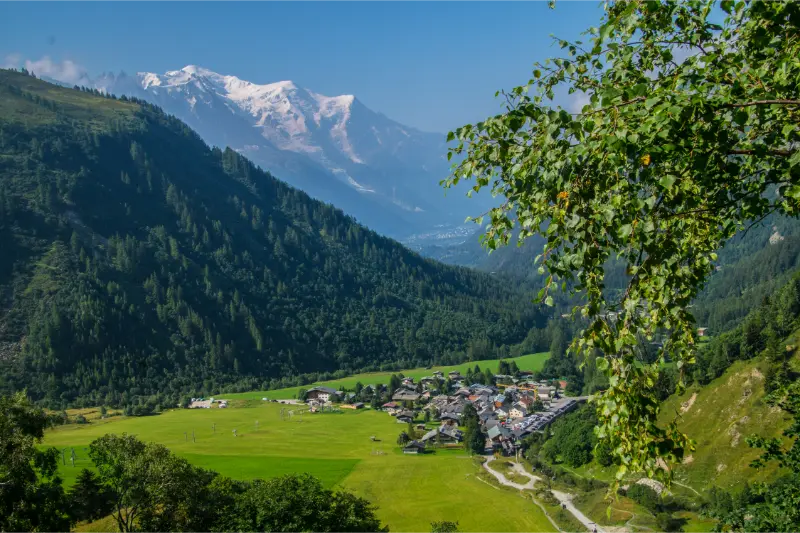
If rain or cloud closes the high views, use the valley: walk between villages, visit museums, explore cafés and learn about mountaineering history. Chamonix has enough identity to remain interesting when Mont Blanc disappears behind cloud.
Why lift calendars matter more than many visitors expect
Mountain infrastructure does not operate like an urban metro. Annual maintenance, weather, wind and seasonal closures affect different lifts on different dates. In 2026, the official Chamonix live-information page listed closures across Aiguille du Midi, Panoramic Mont-Blanc, Montenvers, Planpraz and other installations on different autumn dates.
If one specific cable car is the reason for your trip, verify its operating calendar before reserving non-refundable travel. Then check again close to the day because weather can still intervene. A flexible three-night stay gives you much better odds than a fixed four-hour stop.
Chamonix for non-hikers and families
You do not need to be a mountaineer to enjoy Chamonix, but you should separate sightseeing infrastructure from true mountain activities. Cable cars, valley walks and some viewpoints are accessible to ordinary visitors; glaciers, exposed trails and high-altitude routes are a different category that may require equipment, experience or professional guidance.
For families, think in terms of one major activity per half-day. Altitude, queues and temperature changes can exhaust children faster than the distance suggests. My France with kids guide has broader advice on pacing and accommodation.
Where to stay and how I would choose a base
Central Chamonix is the easiest first base because restaurants, the Aiguille du Midi departure and Montenvers station are accessible without a car. Les Praz or other valley villages can feel quieter and scenic, but check bus and train frequency for the dates you are visiting.
If you are arriving for hiking, ski or climbing objectives rather than sightseeing, base choice should follow your trailhead or lift system. For a first three-day visit, convenience usually beats a remote chalet with a beautiful view.
Compare accommodation in Chamonix on Booking.com
Best time to go
Summer gives the broadest pedestrian lift network and hiking access, but thunderstorms and heat still affect mountain plans. September can be excellent, though lift maintenance begins to matter more as the season transitions.
Winter turns Chamonix into a snow-sports destination with different risks and transport patterns. Spring and late autumn can fall between seasons, with limited lift operation. Always plan from the exact operational calendar, not from a generic statement that Chamonix is “year-round.”
Mistakes that can weaken this trip
- Booking a one-day Chamonix trip and assuming high mountain views are guaranteed.
- Wearing valley-temperature clothing to Aiguille du Midi.
- Using a previous year’s lift timetable or assuming every installation operates through autumn.
- Calling a trail “easy” without checking distance, elevation gain, exposure and current conditions.
How this fits into a longer France itinerary
Chamonix fits naturally into a French Alps trip after Annecy or Lyon. Use the French Alps guide to compare mountain bases, then the new Annecy article if you want lake scenery before high-altitude Chamonix.
For a train-heavy France trip, Chamonix requires more local connections than Lyon or Annecy, so leave enough transfer margin. My France by train guide explains why rural and mountain legs need a different planning mindset from TGV city hops.
Practical FAQ
Is three days enough for Chamonix?
Three days are enough for a strong first visit if weather cooperates. Four or five are better if hiking is important or you want a larger weather buffer.
Can I visit Chamonix without a car?
Yes. Central Chamonix, major lifts and many valley connections work well with local public transport. A car is more useful for a wider Alpine road trip.
Is Aiguille du Midi suitable for everyone?
It is a tourist cable-car attraction, but the summit is at very high altitude. Visitors should follow operator health guidance, dress for mountain conditions and not treat the rapid ascent as an ordinary city elevator.
What if the weather is bad?
Do not force a high-mountain ticket into poor visibility simply because it was the original plan. Use lower walks, museums and valley activities, then move the lift to another day if your stay allows.
Choosing lift days and valley alternatives in Chamonix
Chamonix is a weather-dependent destination, so do not assign Aiguille du Midi permanently to the first morning. Check the lift forecast and reserve the high-altitude experience for your clearest viable window. At 3,842 meters, the upper station is not simply a viewpoint reached by a city cable car; altitude, cold and wind are real considerations. Plan time to acclimatize to the sudden ascent and follow the operator’s health guidance. On a separate day, use the Montenvers railway to understand the Mer de Glace landscape. If the gondola or ice cave is closed, the railway panorama may still offer value, but the visit will differ from a full cave excursion.
The lift calendar for autumn 2026 needs special attention. Chamonix’s tourist office lists the Aiguille du Midi cable car as closed from November 2 through December 18, 2026, and shows the Montenvers Mer de Glace gondola reopening on October 17 and the ice cave on November 2 after autumn maintenance. Those are published schedules, not promises: weather and operational work can alter them. If travelling in October or early November, check each component of a combined ticket independently. A train running to Montenvers does not automatically mean the gondola or cave is open on the same day.
Lift tickets and travel costs in Chamonix
Central Chamonix is convenient for the Aiguille du Midi and Montenvers departures, shops and dinner, but quieter villages along the valley may suit longer hiking stays. Before choosing a lower-priced property outside town, examine the actual bus and Mont-Blanc Express schedules for the dates of your trip. Lift opening hours can make a very early start worthwhile, while a late return after dinner is less useful if public transport has stopped. Parking near central lift stations can be difficult in peak season. If you plan to use several lifts, compare the current ticket products against the outings that remain possible after weather and maintenance are considered.
High-altitude lift tickets are the major discretionary expense here, not the valley walking. Buy around the experience you genuinely want rather than assuming an all-access pass is always efficient. One good Aiguille du Midi visit and a separate Montenvers day can be more satisfying than attempting both during unstable weather. If cloud covers the summits, lower valley paths, mountain heritage exhibits or the railway corridor provide alternatives without paying for a view you cannot see. Consider the cancellation and exchange terms before committing to an expensive timed departure. Read the latest official status on the morning itself, especially when wind is forecast.

Clothing and equipment for Chamonix
Packing for Chamonix should reflect the destination’s vertical range. Even on a warm valley afternoon, a visit to Aiguille du Midi calls for warm layers, sturdy footwear and protection from intense sun and glare. Carry water, but do not assume a high-altitude observation deck is an appropriate place for people with certain health conditions; consult the operator’s medical recommendations. For valley walks, pack a rain shell and offline trail map, and choose routes suited to your group’s experience. If the weather threatens storms, turn back rather than trying to complete a panoramic route just because it is scheduled for the final day.
Chamonix rewards a flexible three-day stay more than a rigid checklist. Keep one high-altitude lift as the main prize, one day for the glacier landscape and one for the valley itself. The third day might mean an easy walk through Les Praz or Argentière, a museum and a café, or an extra mountain outing if conditions are exceptional. This also leaves room to appreciate the human scale of a place famous for extreme climbing: historic routes, mountain guides and the way the town sits beneath the massif are part of the story. A clear morning should be used immediately rather than saved for a future day that may be cloudy.
Official planning links
- Chamonix-Mont-Blanc Tourist Office
- Official Aiguille du Midi information
- Official Mer de Glace gondola information
Chamonix rewards travellers who leave space for the mountains to set the timetable. Prioritize one or two high experiences, keep a lower-altitude day in reserve, and the trip will feel like time in the Alps rather than a race between cable-car stations.