

Dordogne is often described as a land of a thousand and one châteaux. The exact number matters less than the practical problem it creates for travellers: there are far more castles than you can sensibly visit in one trip. Some are medieval fortresses, others are Renaissance residences, some are known for gardens or literary history, and a few work especially well with children. The best castle for you depends on what kind of experience you want.
For a first visit, I would not plan more than one major château interior per day. Stone staircases, exhibitions and historical interpretation quickly blur together if you rush through several sites. A stronger itinerary combines one castle with a village, garden, river outing or market. This guide compares twelve worthwhile choices so you can build a route rather than collect entrance tickets.
1. Château de Castelnaud: best for medieval warfare and families
Château de Castelnaud is the clearest first choice for travellers who want a classic medieval fortress. High above the Dordogne, it looks across the valley toward Beynac and contains a museum focused on medieval warfare. Reconstructed weapons, armour and demonstrations make the history more tangible for children and adults who prefer objects and engineering to decorated rooms.
The location is part of the visit. From the terraces you can understand why castles controlled river corridors and why this stretch of the Dordogne became strategically important. Allow at least two hours, longer if demonstrations are running or you are visiting with children.
2. Château des Milandes: best for Joséphine Baker and a varied family day
Château des Milandes offers a very different experience. The residence is closely associated with Joséphine Baker, while the estate also includes gardens, a chapel and seasonal bird-of-prey demonstrations. It is one of the easiest castles to recommend to mixed-interest groups because the visit moves between biography, architecture, landscape and outdoor activity.

In 2026 the official site lists a broad opening season and includes the castle, gardens, chapel, audio guide and scheduled activities in the standard visit. Check the day’s programme before arrival because the bird presentations vary by season and weather.
3. Château de Beynac: best for atmosphere above the river
Beynac’s fortress rises directly above Beynac-et-Cazenac and the Dordogne. The climb through the village is part of the experience. Inside, the appeal is less about a huge museum collection and more about architecture, defensive position and the feeling of occupying one of the valley’s most dramatic strongholds.
Choose Beynac if you want the castle and village to function as one destination. It pairs beautifully with a river viewpoint or canoe day, but the steep climb means you should allow more time than the map suggests.
4. Château de Hautefort: best for grand architecture and formal gardens
Hautefort feels closer to a stately château than a rugged river fortress. The architecture, interiors and formal gardens create a different mood from Castelnaud or Beynac. The official Château de Hautefort site recommends allowing around two hours for a complete visit and publishes 2026 seasonal opening hours.
Hautefort makes most sense when you are exploring the north-eastern part of Dordogne or combining it with Lascaux, Tourtoirac or Périgueux. It is too far from the main Sarlat river villages to treat as a casual extra at the end of the day.
5. Château de Biron: best for architectural layers and bastide country
Biron dominates the southern countryside near Monpazier. Its scale and changing architectural styles make it rewarding for visitors who enjoy seeing how a fortified site evolved over centuries. The official 2026 information lists seasonal access and family rates.
The strongest combination is Monpazier in the morning and Biron in the afternoon. The planned bastide and hilltop castle explain two different forms of medieval power and settlement within a very small area.
6. Château de Bourdeilles: best for comparing medieval and Renaissance architecture
Bourdeilles is essentially two architectural experiences in one site: a medieval fortress with a tall keep and a Renaissance residence with period collections. That contrast is its main advantage. It also sits close to Brantôme, making it easy to build a focused Périgord Vert day rather than another long cross-department drive.
The official Château de Bourdeilles site publishes 2026 hours and tickets. Allow enough time to see both parts rather than climbing the keep and leaving.
7. Château de Commarque: best for ruins in a hidden valley
Commarque is one of the most atmospheric sites in Dordogne because the medieval complex rises in a secluded valley near prehistoric shelters and woodland. It feels less polished than the grand residences and more archaeological. The approach itself contributes to the sense of discovery.
Choose Commarque if you enjoy ruins, walking and layered landscapes. It is especially effective after a day in Les Eyzies because it continues the theme of long human occupation without repeating another museum.
8. Château de Losse: best for Renaissance interiors and gardens near Montignac
Losse stands beside the Vézère not far from Montignac. Its Renaissance residence and gardens provide a refined counterpoint to the prehistoric sites nearby. The château is particularly useful on a Lascaux-focused itinerary because it lets you switch periods completely without driving to the Dordogne Valley.
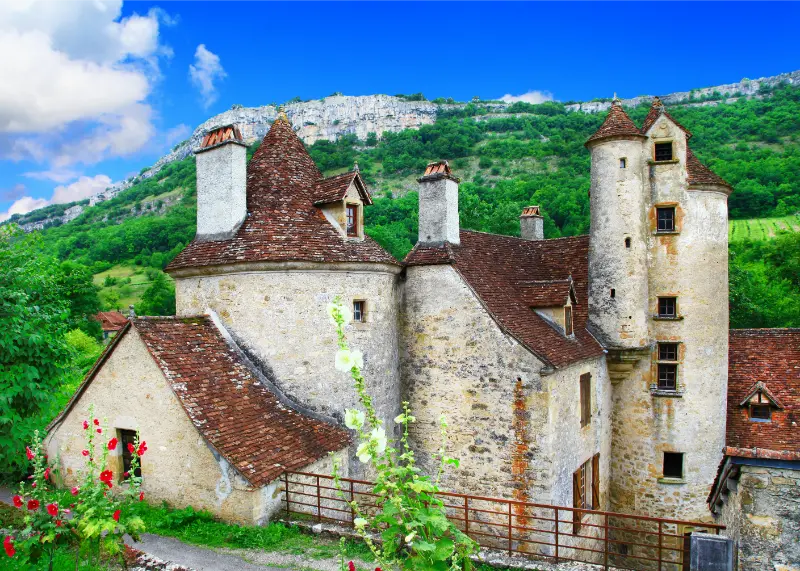
Plan Losse as a proper visit, not a filler between two cave reservations. Gardens and interiors reward a slower pace, and special evening events can change the character of the estate in summer.
9. Château de Bridoire: best for hands-on family activities
Bridoire is designed to be active. Traditional games, challenges and family-oriented activities distinguish it from castles where children are mainly asked to look and listen. That makes it useful for families who have already visited several museums or historic interiors.
It sits in the Bergerac area, so combine it with vineyards, Monbazillac or a countryside stay rather than driving from Sarlat solely for the castle. Check seasonal opening because family activities can vary through the year.
10. Château de Monbazillac: best for combining a château and wine
The Château de Monbazillac overlooks vineyards south of Bergerac and blends Renaissance architecture with a wine-country visit. The official tourism listing describes furnished rooms, vineyard views and a tasting associated with the visit. This is the most efficient choice for travellers who want one cultural stop and one wine experience without moving between several properties.
Because tasting is part of the appeal, plan transport responsibly. One designated driver, a taxi arrangement or a guided wine outing is better than building an afternoon around multiple spontaneous tastings.
11. Château de Puymartin: best for a romantic château legend
Puymartin, between Sarlat and Les Eyzies, is known for its furnished interiors and the legend of the White Lady. It fits neatly into the central Périgord Noir circuit and can be a useful alternative when you want a residential château rather than another fortress.
The site works best for travellers interested in interiors, family history and storytelling. Pair it with Sarlat or the Vézère rather than another large castle on the same day.
12. Château de Jumilhac: best for northern Dordogne architecture
Jumilhac-le-Grand lies well north of the main Sarlat circuit and rewards travellers who are deliberately exploring Périgord Vert. Its distinctive roofs and long architectural history make it visually different from river fortresses. It is not a convenient detour from Beynac, but it becomes logical on a northern route.
Which castle should you choose?
| Medieval fortress | Castelnaud or Beynac |
| Family activities | Castelnaud, Milandes or Bridoire |
| Gardens and elegance | Hautefort, Losse or Milandes |
| Joséphine Baker | Milandes |
| Wine country | Monbazillac |
| Bastide route | Biron |
| Ruins and atmosphere | Commarque |
| Medieval + Renaissance comparison | Bourdeilles |
How many castles in a one-week Dordogne trip?
Three or four is usually enough. A balanced first week might include Castelnaud, Milandes and either Beynac or Hautefort, with Biron added only if you are moving toward Monpazier. That still leaves time for caves, markets, villages and the river. Visiting seven castles in seven days gives you less understanding, not more.
Build castles into geographic clusters
- Dordogne Valley: Castelnaud, Beynac and Milandes are close enough to combine intelligently over two days.
- Vézère: Commarque and Losse fit with Les Eyzies, Montignac and Lascaux.
- Bergerac and bastides: Monbazillac, Bridoire and Biron make sense from a western base.
- Périgord Vert: Bourdeilles and Jumilhac work with Brantôme and northern Dordogne.
- North-east: Hautefort pairs with caves and countryside around the upper Vézère.
Tickets, hours and seasonal planning
Opening dates vary much more than the distances on your map. Some castles close or reduce hours in winter, while summer adds demonstrations, evening events and family programmes. Always check the official site within a few days of the visit. When an attraction has timed activities, plan around the activity you care about rather than arriving at random.

Castles with children
One interactive castle will usually be more successful than two formal interiors. Castelnaud’s warfare displays, Milandes’ outdoor programme and Bridoire’s games are obvious family choices. For toddlers, stairs and unprotected historic surfaces can be more important than the theme, so check pushchair and accessibility information before arrival.
Where to stay for a castle-focused trip
Sarlat remains the best all-round base for the Dordogne Valley castles. Bergerac is stronger for Monbazillac, Bridoire and Biron; Brantôme or Périgueux works better for northern sites. Use our where to stay in Dordogne guide before choosing a hotel solely because it looks central on a department-wide map.
Compare accommodation in Sarlat-la-Canéda on Booking.com
Final advice
Choose castles for contrast. A medieval fortress, a Renaissance residence and a biography-rich estate will teach you more about Dordogne than three similar strongholds. The region’s château culture is impressive because of its variety; build your itinerary to preserve that variety rather than exhausting it.
More castle and garden ideas: Compare the Château de Hautefort and Marqueyssac Gardens with the main Dordogne Valley castles.
More castle planning: Read the detailed Château de Biron guide and Maison Forte de Reignac guide for two very different fortified experiences.
Detailed castle guides: Compare Château de Beynac, Château de Castelnaud, Château de Bourdeilles, Château de Fénelon and Château de Commarque before choosing which fortresses to enter.