

Brittany is too large for one hotel base to make sense. The right place to stay depends on which coast you actually want to experience, whether you are travelling by car and how much you value evening atmosphere over day-trip efficiency.
For a first trip I usually recommend two or three bases rather than changing accommodation every night. That gives you access to different landscapes without turning the holiday into a sequence of check-ins.
The guide below compares the strongest bases by trip style, including car-free travel, islands, coast walking, family beaches and road trips.
Quick decision table
| Saint-Malo | north coast, first visit, car-free trips |
| Perros-Guirec | Pink Granite Coast and beaches |
| Brest or Crozon | wild western Finistère |
| Quimper or Concarneau | South Finistère and culture |
| Vannes | Gulf of Morbihan and Carnac |
| Belle-Île | island-focused slow trip |
Saint-Malo: best for a first north-Brittany base
Saint-Malo combines strong evening atmosphere, direct rail access and easy links toward Dinan, Cancale and the Emerald Coast. It is especially efficient for travellers without a car because the city itself is walkable and several classic excursions are possible by bus, boat or organised tour.
Stay inside Intra-Muros for atmosphere if you do not mind noise and limited parking; choose near the station for easy luggage logistics; consider the Sillon side for beach access. Compare Saint-Malo accommodation.
Dinan or Rennes: choose history or transport
Dinan is better if you want a smaller medieval setting and evening walks after the day-trippers leave. Rennes is better if trains, restaurants and a broad range of services matter more. Rennes can support a car-free itinerary; Dinan feels more romantic but less connected for far-flung coastal days.
If your trip begins or ends by TGV, one night in Rennes can remove a stressful connection while still giving you a worthwhile city day.

Perros-Guirec: best for the Pink Granite Coast
Perros-Guirec is the most practical base for Ploumanac’h, beaches and repeated GR34 walks. Staying locally lets you experience the pink granite in early or late light instead of arriving with the same midday crowds as every day visitor.
Choose accommodation according to whether you prioritise Trestraou beach, the town centre or direct access toward Ploumanac’h. Compare Perros-Guirec accommodation.
Brest or Crozon: two very different western bases
Brest wins on rail access, museums, weather-proof attractions and car rental logistics. Crozon wins on immediate landscape. If your main goal is Pen-Hir, Cap de la Chèvre and beaches, sleeping on the peninsula saves hours of repeated road travel.
A hybrid plan works well: one or two nights in Brest, then two or three on Crozon.
Quimper or Concarneau: culture versus sea
Quimper is a better rail-connected city base with cathedral, museums and a wider restaurant choice. Concarneau is better if you want to wake up beside the sea, walk the Ville Close early and keep a Glénan excursion within easy reach.
For a four-night South Finistère stay, either can work; choose based on evenings rather than trying to calculate which is geographically central to every attraction. Compare Quimper accommodation.
Vannes: best all-round southern Brittany base
Vannes gives you a historic centre, restaurants, rail access and immediate entry to the Gulf of Morbihan. Carnac, Auray and boat trips become natural extensions, making Vannes one of the easiest first-time bases in the region.
Stay near the old town or port if you want evenings on foot; use an outer hotel only when parking and road access matter more. Compare Vannes accommodation.
Belle-Île: stay overnight if the island is a priority
Belle-Île is the case where an overnight stay changes the trip most. A day visitor experiences ferry times; an overnight visitor gets early and late light, quieter ports and enough time to separate the wild west coast from Sauzon or Le Palais.
Two or three nights are ideal for a first island-focused stay. Compare Belle-Île accommodation.
Best bases without a car
For a car-free trip, build first around Saint-Malo, Rennes, Quimper, Brest and Vannes because rail access is clear. Then add one smaller destination via bus, boat or local transfer rather than changing to a remote coastal base every night.
Check seasonal bus and ferry schedules before booking non-refundable accommodation. A beautiful rural hotel can become inconvenient if the last connection ends before dinner.
Best structure for a 7–10 day road trip
A strong first road trip uses three bases: north coast, western or southern Finistère, and Morbihan. For example, Saint-Malo for three nights, Quimper or Crozon for three, then Vannes for three. A fourth base only makes sense if Belle-Île or the Pink Granite Coast is a major priority.
This structure reduces packing, makes weather changes easier and still covers several distinct Breton landscapes.
When to book
Book islands and small coastal resorts first for July and August. City hotels usually offer more inventory, although major festivals can change availability quickly.
Outside peak summer, flexible rates are valuable because Atlantic weather can influence which part of the trip you want to emphasise.

Official accommodation resources
The official Brittany Tourism accommodation directory lists hotels, campsites, gîtes, guesthouses and other options by destination and accessibility features. Use it alongside commercial comparison sites to verify location and category.
How to choose in one sentence
Stay where you want to spend your evenings. Day trips are easier to tolerate when the base itself is enjoyable after 18:00, while a supposedly central hotel beside a ring road often adds transport to every meal.
For regional context, read the Brittany Travel Guide, 10-day road trip and best things to do in Brittany.
Common accommodation mistakes
Do not compare only nightly price. Parking fees, ferry parking, breakfast, laundry, resort location and the cost of taxis after the last bus can change the real total substantially.
Also check whether the property name uses a famous destination loosely. In rural Brittany, an address marketed as ‘near’ a coastal town may be 20 or 30 minutes away by car, which is fine only if you planned for it.
Final advice
Three good bases usually create a better Brittany holiday than seven average ones. Protect evenings from driving, keep one or two stays long enough to unpack properly and let the most weather-sensitive coast have more than one possible day.
Once you know the kind of Brittany you want—walled towns, granite coast, wild Finistère, islands or Morbihan—the accommodation decision becomes much easier.
Practical checks before choosing a base
Choose accommodation with the kind of day trips you will actually make. For north-Brittany sights, Saint-Malo and Dinan serve different needs: the first suits seafront evenings and access to the Emerald Coast, while the second offers a quieter historic base. If the Pink Granite Coast is the main reason for travelling, sleeping near Perros-Guirec is far more practical than commuting repeatedly from Rennes.
Before booking an island stay, compare the ferry arrival and departure times with your check-in arrangements and luggage needs. On Belle-Île, an overnight visit gives the coast more breathing room than a rushed round trip, but you should know how you will reach your accommodation from the port. Keep your booking reference and property address available offline on travel days.
For road trips, calculate journeys to the places you intend to visit rather than to the nearest city shown on a map. A holiday rental on the far side of an estuary can turn a short-looking distance into a long drive. Check whether parking is included, whether narrow historic streets permit unloading, and if you can leave the car parked while exploring the town on foot.
Without a car, prioritise a base close to a usable station or bus stop and check evening services before choosing an outlying guesthouse. Rennes is convenient for rail connections; Saint-Malo works well when the coast is your focus; Vannes makes sense for the Gulf of Morbihan. A cheaper room is not really cheaper if every day requires an expensive transfer.
A good Brittany base should leave you time to come back to it. After an afternoon on the coast, being able to stroll to dinner or the harbour is more valuable than squeezing in a distant final viewpoint. For a week or more, two carefully placed bases often work better than either one exhausting daily drive or a different hotel every night.
How to plan Where to Stay in Brittany without rushing
Where to Stay in Brittany is easier to appreciate when the itinerary follows Brittany’s geography instead of trying to jump between distant highlights. Coastal roads, estuaries and peninsulas make travel times less predictable than straight-line distances suggest. Choose one compact area for the day, combine a town or village with one coastal walk, and leave a margin for viewpoints. This produces a much richer visit than spending the afternoon in the car trying to link places that belong to different parts of the region.
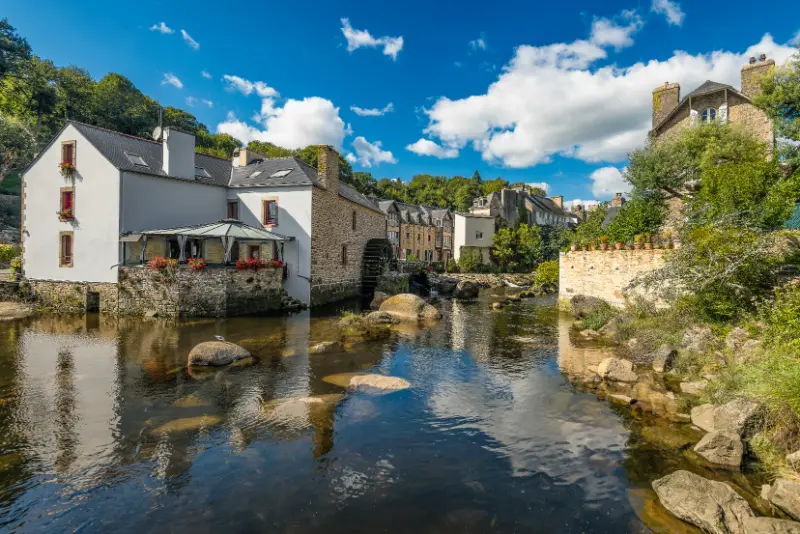
Tides can completely change the appearance of the coast around Where to Stay in Brittany. A harbour, beach or causeway may look very different only a few hours later, so checking the local tide table is useful even when you are not planning a beach day. Low tide can reveal wide sands, rocks and shellfish areas; higher water can make ports and cliffs more dramatic. Treat the tide as part of the landscape rather than as a minor technical detail.
Weather in Brittany is another reason to avoid an over-rigid schedule for Where to Stay in Brittany. Sunshine, wind and showers can alternate quickly, and that is normal rather than a sign that the day is lost. Keep one indoor visit available, carry a light waterproof layer and use clearer periods for exposed coastal sections. The changing weather is also part of Brittany’s visual character, especially when clouds and light move quickly across the sea.
A good visit to Where to Stay in Brittany should include time for local food, but it does not need to become a restaurant itinerary. Crêperies, seafood, bakeries and markets are practical ways to build regional flavour into the day. Near the coast, menus often reflect what is landed locally, while inland towns may offer a stronger market and produce culture. One well-chosen meal plus a simple snack is usually enough to keep the day flexible.
Last updated: 21 October 2026